
AI Risk Stack - Where Risks Occur and How Policy Responds
The Expanding Governance Challenge of Artificial Intelligence
Artificial intelligence (AI) systems are increasingly embedded in economic and social infrastructure. They are being adopted in financial services, healthcare diagnostics, hiring systems, and public administration. But while these systems improve efficiency and decision-making, they also introduce new forms of technological risk.
Unlike conventional software, AI systems learn patterns from data and continue to evolve as they run. This poses governance issues since risks can arise throughout the AI life cycle, whether at the coding level or in their implementation.
The latest regulatory frameworks, such as the European Union’s AI Act (EU AI Act) and the UNESCO Recommendation on the Ethics of Artificial Intelligence, note that responsible AI governance depends on the realisation of where risks emerge across the development process.
This article maps the AI system lifecycle, identifies the risks that emerge at each stage and evaluates the policy tools used to mitigate them using the lifecycle framework developed by the Organisation of Economic Co-operation and Development (OECD).
The Lifecycle of an AI System
AI systems are developed through a structured process that includes problem definition, dataset collection and preparation, model development, testing and validation, deployment, and monitoring.
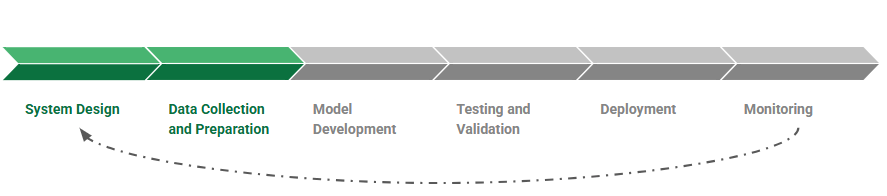
The OECD conceptualises this development process as the AI system lifecycle. Each stage entails various technical and administrative procedures, since choices made during these stages will dictate the goals and limits of an AI system. Further, the quality and representativeness of training sets will have a strong effect on the behaviour of models after implementation.
Since this is an iterative and not a linear procedure, risks can be introduced at each stage of the AI lifecycle. New data can be retrained into different models, and systems are regularly updated once they have been deployed, to address performance degradation, model errors, or unintended outputs. This iterative process means governance must address risks across the entire lifecycle, not just at deployment.
Where AI Risks Emerge
AI risks usually emerge earlier in the development process, especially in the phases when system objectives are formulated and training data are chosen. The EU AI Act and the UNESCO Recommendation on the Ethics of AI outline the following risks: bias and discrimination, privacy and data security violations, the absence of transparency in automated decision-making, and risks to fundamental rights.
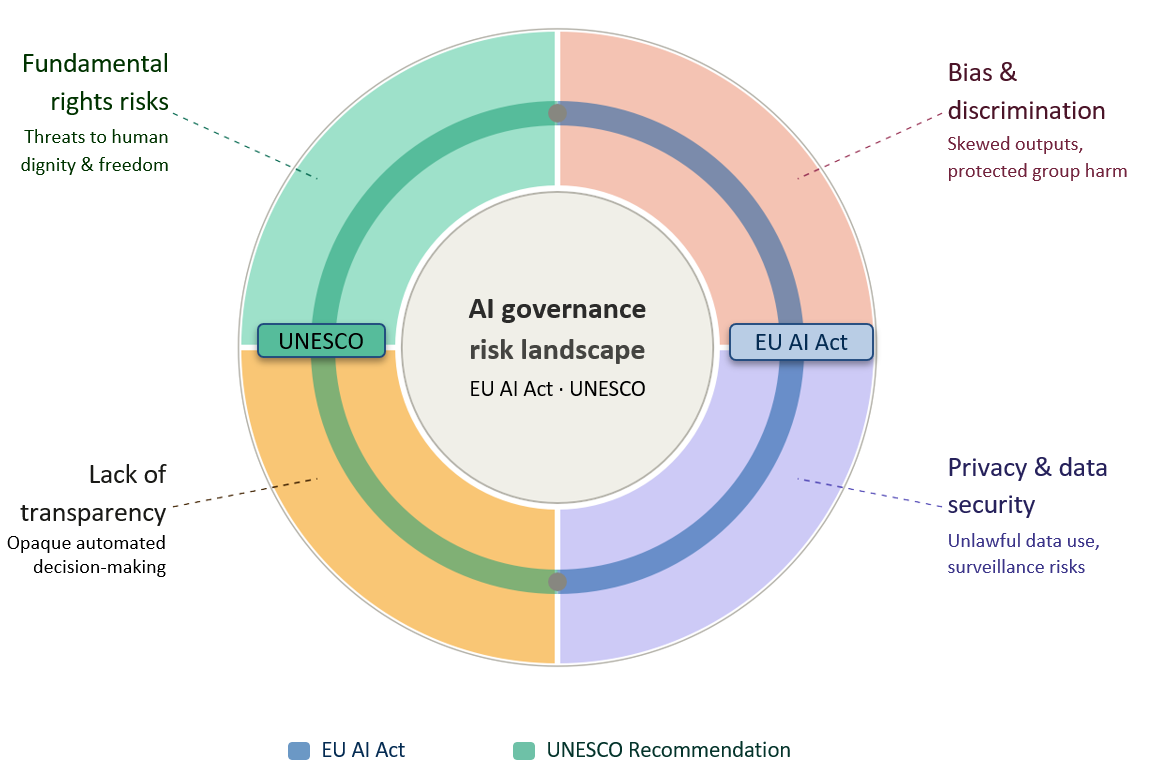
AI Governance Risk Landscape: Core Risk Categories Under International Frameworks
Risk categories jointly identified by the EU AI Act and UNESCO Recommendation on the Ethics of Artificial Intelligence
Outlining the risks throughout the AI lifecycle helps understand the areas where governance interventions are most necessary. For example, discriminatory outcomes often result from biased or unrepresentative training data, while safety failures are typically linked to inadequate testing before deployment. Risks such as misinformation arise post the development process, when generative AI systems are deployed at scale on digital platforms.
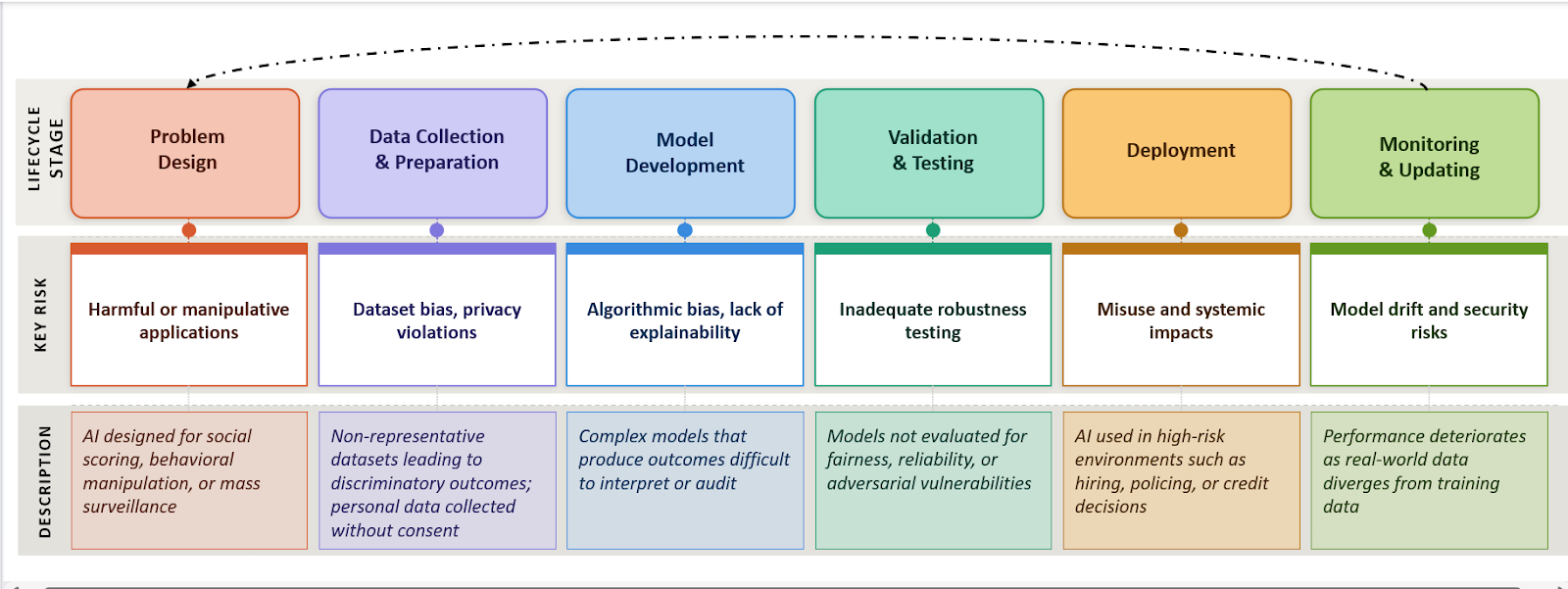
AI System Lifecycle: Key Risks at Each Stage
Risks identified per the EU AI Act and UNESCO Recommendation on the Ethics of AI
Understanding where risks emerge across the lifecycle explains why governance frameworks classify AI systems by risk and apply oversight at multiple stages.
Policy Tools for Mitigating AI Risks
Governments and international organisations have developed regulatory tools to help mitigate AI risks in the lifecycle. These tools are meant to make sure that AI technologies are identified as up to standard in safety, accountability and fairness prior to and after deployment.
For example, the OECD AI Policy Observatory recommends that governments adopt policy instruments such as risk evaluations, algorithmic auditing necessities, regulatory sandboxes, and transparency necessities of AI systems. The European Union’s Artificial Intelligence Act (AI Act) is one of the most comprehensive systems of governance that introduces a risk-oriented regulation strategy. It mandates adherence to requirements concerning data governance, documentation, human oversight, and robustness, and cybersecurity. Such requirements bring regulatory checkpoints to the lifecycle of AI systems.
Mapping these policy tools across the lifecycle illustrates how governance mechanisms can intervene at different stages of AI development.
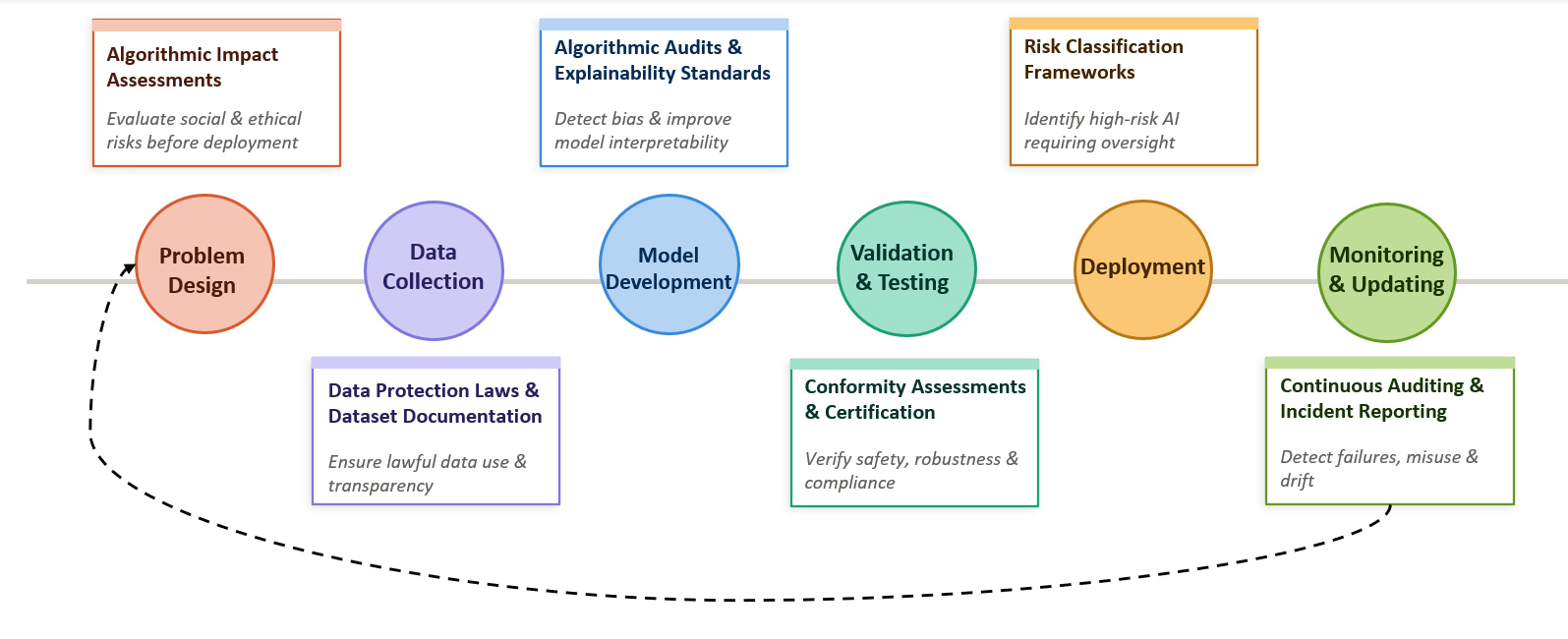
Governance Overlay: Policy Interventions Across the AI Lifecycle
Regulatory tools mapped at each stage of AI development per the EU AI Act and UNESCO Recommendation on the Ethics of AI
Several policy tools are directed at the risks that occur in the pre-developmental stages. In one example, algorithmic impact assessment has been applied in various jurisdictions to measure the possible consequences of automated decision systems on society before implementation. On the same note, the requirements of dataset documentation, including dataset transparency requirements and model cards, are aimed at enhancing accountability during the training and development stages of the AI systems. Therefore, lifecycle-based policy design allows regulators to intervene before harmful outcomes occur, rather than responding only after AI systems have caused damage in real-world environments.
The Policy Gap in AI Governance
The misalignment between risks and governance tools across the AI lifecycle indicates a critical structural gap in existing regulations. Numerous governance processes become activated after AI systems are classified as “high risk” or after they are implemented in the real world. But the most serious sources of damage have their roots in earlier stages of the development procedure.
An example is that prejudiced or unbalanced training data is almost inevitably a source of discriminative results in automated decision systems. When these types of models are applied in areas like staffing, credit rating, or in providing services to the public, such biases can quickly spread to large populations and undermine democratic rights. In the same way, the lack of transparency in model design might result in the fact that the regulator or individuals are affected by the decision-making process. This reflects a broader timing gap in AI governance, where risks originate during design and development, but regulatory intervention typically occurs only after deployment.
Analysis
1. Key risks originate before deployment: As depicted in the lifecycle mapping, the data collection and model development phase presents several significant governance risks as opposed to the deployment phase. Structural issues can be entrenched within AI systems even before they are deployed in practice due to bias in data sets, incomplete reporting of training sets, and obscured network designs.
2. Data governance is a primary point of vulnerability: Most of the instances of algorithmic discrimination listed above are associated with training material that is not representative of some population groups or is historical. Since machine learning models are optimisations of patterns that exist in datasets, these biases can be carried through the whole lifecycle and reproduced after deployment.
3. Regulatory approaches remain mismatched across jurisdictions: Different countries adopt varying approaches to AI governance, ranging from risk-based frameworks such as the EU AI Act to more sector-specific or voluntary guidelines in other regions. This divergence creates inconsistencies in safety, accountability, and enforcement standards, allowing risks to persist across borders and potentially undermining the protection of users in globally deployed AI systems.
4. Governance interventions remain uneven across the lifecycle: Whereas the various regulatory instruments aim at deployment and monitoring, fewer instruments systematically tackle the risks that are posed by the previous design and development phases.
Recommendations
1. Introduce mandatory lifecycle risk assessments: The regulatory systems need to demand systemic risk evaluation at the beginning of AI development, especially at the problem design and dataset selection phases. This would assist in detecting possible harmful applications in advance, before systems are constructed and installed.
2. Strengthen dataset governance standards: Training datasets must be supplemented with documentation as to their provenance, composition and limitations. Standardised documentation frameworks of data sets can assist in the discovery by regulators and auditors of the potential sources of bias or privacy threats.
3. Expand independent algorithmic auditing: AI systems can be assessed by regular third-party audits based on fairness, strength, and security weaknesses. The auditing mechanisms especially apply to high-risk systems employed in employment, finance or the public services.
4. Integrate continuous monitoring requirements: AI systems may be monitored regularly after implementation to identify model drift, unforeseen consequences, or abuse. Reporting systems can facilitate the process where the regulators can see the emerging risks and modify the governance systems.
Conclusion - The Need for Global AI Governance
Despite growing regulatory attention, global air governance remains fragmented. Different jurisdictions adopt varying approaches to risk classification, oversight, and enforcement, leading to inconsistencies in safety and accountability standards. Given that AI systems are often developed, deployed, and used across borders, this lack of coordination allows risks to persist beyond national regulatory frameworks.
Addressing these challenges requires a shift towards greater international cooperation and lifecycle-based governance. Developing shared standards, improving cross-border regulatory alignment, and embedding oversight across all stages of AI development will be essential to ensuring that AI systems are safe, transparent, and accountable in a globally interconnected environment.
References
- OECD AI lifecycle
- OECD AI system lifecycle description
- OECD AI governance lifecycle framework
- EU AI Act overview
- EU AI Act risk categories
- UNESCO Recommendation on the Ethics of AI
- AI governance lifecycle analysis
- OECD AI policy tools database

Related Blogs
Executive Summary
A video of US Secretary of State Marco Rubio is rapidly going viral on social media, in which he can allegedly be heard making a statement regarding the 2025 India-Pakistan conflict. Along with the video, it is being claimed that the US played a crucial role in ending the conflict between the two countries, but India was the first to initiate a ceasefire with Pakistan. Users are sharing this video believing it to be true.
Research by the CyberPeace Research Wing revealed that the video has been digitally manipulated. Rubio did state that the United States played a role in ending the conflict, but he never said that India was the first to request a ceasefire from Pakistan. This alleged statement was not part of the original video and was added later to alter the clip.
Claim
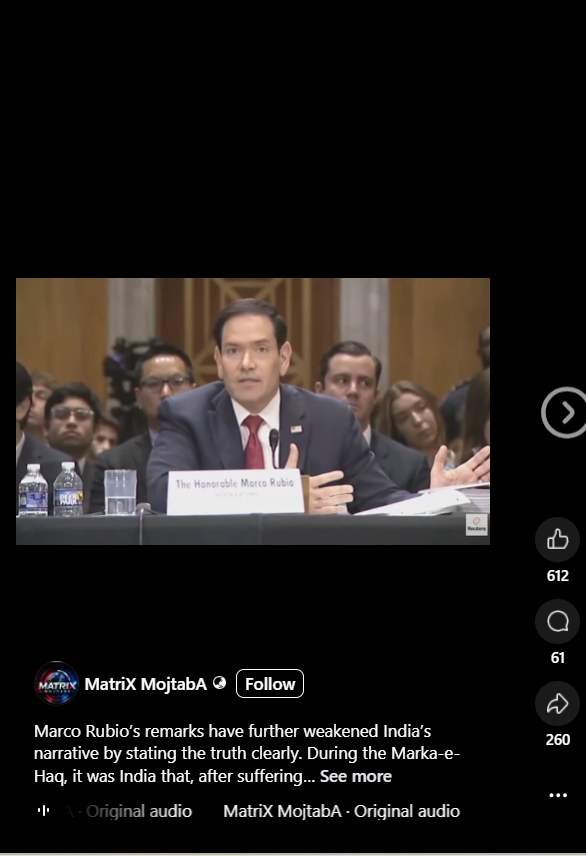
A user on a Facebook page shared the viral video and wrote, "Marco Rubio's statement has clearly brought out the truth, weakening India's claim. During 'Maarka-e-Haq', after suffering heavy losses, India was the first party to request a ceasefire from Pakistan. This highlights the gap between India's public claims and the ground reality, where the military..." The post link, archive link, and screenshot can be seen below. https://www.facebook.com/reel/1015648544746728
https://www.facebook.com/reel/1015648544746728
Fact Check
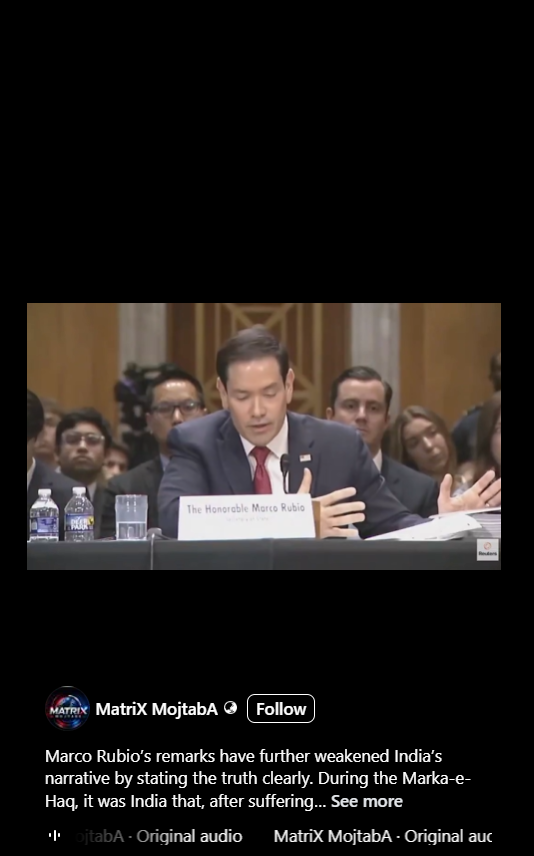
We investigated the viral video using the InVid tool and extracted several of its keyframes. These keyframes were then subjected to a reverse image search via Google Lens. The investigation revealed that the exact same video had been shared on social media previously, showing the same background and setting. The post link and screenshot can be seen below.
https://www.facebook.com/reel/1015648544746728
In the next step of our investigation, we found a video published on Reuters' official YouTube channel on June 2, 2026, whose background matches the viral video. However, nowhere in this original video is Marco Rubio heard saying that India was the first to request a ceasefire from Pakistan. The post link and screenshot can be seen below.
https://www.youtube.com/watch?v=qSpp5IYO6Cs
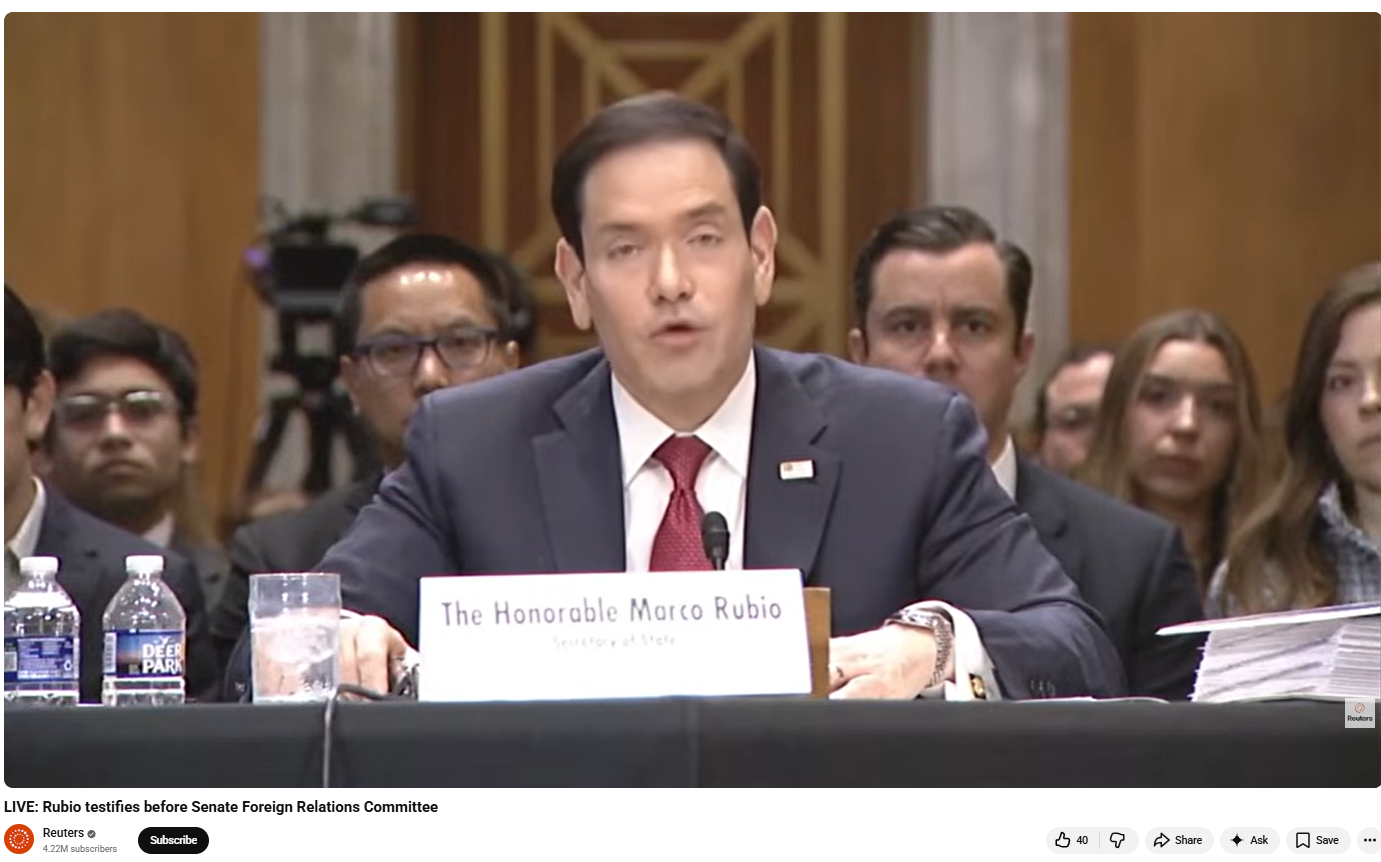
At the 2-hour 8-minute 55-second mark of the Reuters video, Rubio only states that the US played a role in ending the India-Pakistan conflict. Following this, he discusses the Thailand-Cambodia conflict. This makes it clear that the alleged statement in the viral video was digitally added or edited in, and is not part of the original footage.
Taking the investigation further, we scanned the suspicious audio portion of the viral video using the AI detection tool 'Resemble AI'. According to the analysis results, clear signs of audio manipulation were detected.
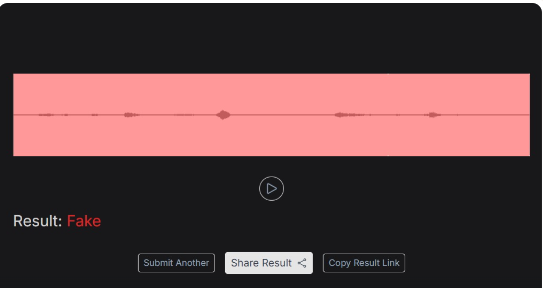
Conclusion:
Our investigation revealed that the video has been digitally manipulated. Rubio did state that the United States played a role in ending the conflict, but he never said that India was the first to request a ceasefire from Pakistan. This alleged statement was not part of the original video and was altered by adding it later.

Introduction
Misinformation in India has emerged as a significant societal challenge, wielding a potent influence on public perception, political discourse, and social dynamics. A potential number of first-time voters across India identified fake news as a real problem in the nation. With the widespread adoption of digital platforms, false narratives, manipulated content, and fake news have found fertile ground to spread unchecked information and news.
In the backdrop of India being the largest market of WhatsApp users, who forward more content on chats than anywhere else, the practice of fact-checking forwarded information continues to remain low. The heavy reliance on print media, television, unreliable news channels and primarily, social media platforms acts as a catalyst since studies reveal that most Indians trust any content forwarded by family and friends. It is noted that out of all risks, misinformation and disinformation ranked the highest in India, coming before infectious diseases, illicit economic activity, inequality and labour shortages. World Economic Forum analysts, in connection with their 2024 Global Risk Report, note that “misinformation and disinformation in electoral processes could seriously destabilise the real and perceived legitimacy of newly elected governments, risking political unrest, violence and terrorism and long-term erosion of democratic processes.”
The Supreme Court of India on Misinformation
The Supreme Court of India, through various judgements, has noted the impact of misinformation on democratic processes within the country, especially during elections and voting. In 1995, while adjudicating a matter pertaining to keeping the broadcasting media under the control of the public, it noted that democracy becomes a farce when the medium of information is monopolized either by partisan central authority or by private individuals or oligarchic organizations.
In 2003, the Court stated that “Right to participate by casting a vote at the time of election would be meaningless unless the voters are well informed about all sides of the issue in respect of which they are called upon to express their views by casting their votes. Disinformation, misinformation, non-information all equally create an uninformed citizenry which would finally make democracy a mobocracy and a farce.” It noted that elections would be a useless procedure if voters remained unaware of the antecedents of the candidates contesting elections. Thus, a necessary aspect of a voter’s duty to cast intelligent and rational votes is being well-informed. Such information forms one facet of the fundamental right under Article 19 (1)(a) pertaining to freedom of speech and expression. Quoting James Madison, it stated that a citizen’s right to know the true facts about their country’s administration is one of the pillars of a democratic State.
On a similar note, the Supreme Court, while discussing the disclosure of information by an election candidate, gave weightage to the High Court of Bombay‘s opinion on the matter, which opined that non-disclosure of information resulted in misinformation and disinformation, thereby influencing voters to take uninformed decisions. It stated that a voter had the elementary right to know the full particulars of a candidate who is to represent him in Parliament/Assemblies.
While misinformation was discussed primarily in relation to elections, the effects of misinformation in other sectors have also been discussed from time to time. In particular, The court highlighted the World Health Organisation’s observation in 2021 while discussing the spread of COVID-19, noting that the pandemic was not only an epidemic but also an “infodemic” due to the overabundance of information on the internet, which was riddled with misinformation and disinformation. While condemning governments’ direct or indirect threats of prosecution to citizens, it noted that various citizens who relied on the internet to provide help in securing medical facilities and oxygen tanks were being targeted by alleging that the information posted by them was false and was posted to create panic, defame the administration or damage national image. It instructed authorities to cease such threats and prevent clampdown on information sharing.
More recently, in Facebook v. Delhi Legislative Assembly [(2022) 3 SCC 529], the apex court, while upholding the summons issued to Facebook by the Delhi Legislative Assembly in the aftermath of the 2020 Delhi Riots, noted that while social media enables equal and open dialogue between citizens and policymakers, it is also a tool in the where extremist views are peddled into mainstream media, thereby spreading misinformation. It noted Facebook’s role in the Mynmar, where misinformation and posts that Facebook employees missed fueled offline violence. Since Facebook is one of the most popular social media applications, the platform itself acts as a power center by hosting various opinions and voices on its forum. This directly impacts the governance of States, and some form of liability must be attached to the platform. The Supreme Court objected to Facebook taking contrary stands in various jurisdictions; while in the US, it projected itself as a publisher, which enabled it to maintain control over the material disseminated from its platform, while in India, “it has chosen to identify itself purely as a social media platform, despite its similar functions and services in the two countries.”
Conclusion
The pervasive issue of misinformation in India is a multifaceted challenge with profound implications for democratic processes, public awareness, and social harmony. The alarming statistics of fake news recognition among first-time voters, coupled with a lack of awareness regarding fact-checking organizations, underscore the urgency of addressing this issue. The Supreme Court of India has consistently recognized the detrimental impact of misinformation, particularly in elections. The judiciary has stressed the pivotal role of an informed citizenry in upholding the essence of democracy. It has emphasized the right to access accurate information as a fundamental aspect of freedom of speech and expression. As India grapples with the challenges of misinformation, the intersection of technology, media literacy and legal frameworks will be crucial in mitigating the adverse effects and fostering a more resilient and informed society.
References
- https://thewire.in/media/survey-finds-false-information-risk-highest-in-india
- https://www.statista.com/topics/5846/fake-news-in-india/#topicOverview
- https://www.weforum.org/publications/global-risks-report-2024/digest/
- https://main.sci.gov.in/supremecourt/2020/20428/20428_2020_37_1501_28386_Judgement_08-Jul-2021.pdf
- Secretary, Ministry of Information & Broadcasting, Govt, of India and Others v. Cricket Association of Bengal and Another [(1995) 2 SCC 161]
- People’s Union for Civil Liberties (PUCL) v. Union of India [(2003) 4 SCC 399]
- Kisan Shankar Kathore v. Arun Dattatray Sawant and Others [(2014) 14 SCC 162]
- Distribution of Essential Supplies & Services During Pandemic, In re [(2021) 18 SCC 201]
- Facebook v. Delhi Legislative Assembly [(2022) 3 SCC 529]

Executive Summary:
A viral video circulating on social media platforms, claimed to show the final moments of an Air India flight carrying passengers inside the cabin just before it crashed near Ahmedabad on June 12, 2025, is false. However, upon further research, the footage was found to originate from the Yeti Airlines Flight 691 crash that occurred in Pokhara, Nepal, on January 15, 2023. For all details, please follow the report.

Claim:
Viral videos circulating on social media claiming to show the final moments inside Air India flight AI‑171 before it crashed near Ahmedabad on June 12, 2025. The footage appears to have been recorded by a passenger during the flight and is being shared as real-time visuals from the recent tragedy. Many users have believed the clip to be genuine and linked it directly to the Air India incident.


Fact Check:
To confirm the validity of the video going viral depicting the alleged final moments of Air India's AI-171 that crashed near Ahmedabad on 12 June 2025, we engaged in a comprehensive reverse image search and keyframe analysis then we got to know that the footage occurs back in January 2023, namely Yeti Airlines Flight 691 that crashed in Pokhara, Nepal. The visuals shared in the viral video match up, including cabin and passenger details, identically to the original livestream made by a passenger aboard the Nepal flight, confirming that the video is being reused out of context.

Moreover, well-respected and reliable news organisations, including New York Post and NDTV, have shared reports confirming that the video originated from the 2023 Nepal plane crash and has no relation to the recent Air India incident. The Press Information Bureau (PIB) also released a clarification dismissing the video as disinformation. Reliable reports from the past, visual evidence, and reverse search verification all provide complete agreement in that the viral video is falsely attributed to the AI-171 tragedy.


Conclusion:
The viral footage does not show the AI-171 crash near Ahmedabad on 12 June 2025. It is an irrelevant, previously recorded livestream from the January 2023 Yeti Airlines crash in Pokhara, Nepal, falsely repurposed as breaking news. It’s essential to rely on verified and credible news agencies. Please refer to official investigation reports when discussing such sensitive events.
- Claim: A dramatic clip of passengers inside a crashing plane is being falsely linked to the recent Air India tragedy in Ahmedabad.
- Claimed On: Social Media
- Fact Check: False and Misleading
