
#FactCheck:Fake Poster Falsely Claims ₹699 Prize Offer on PM Modi’s Birthday
Executive Summary
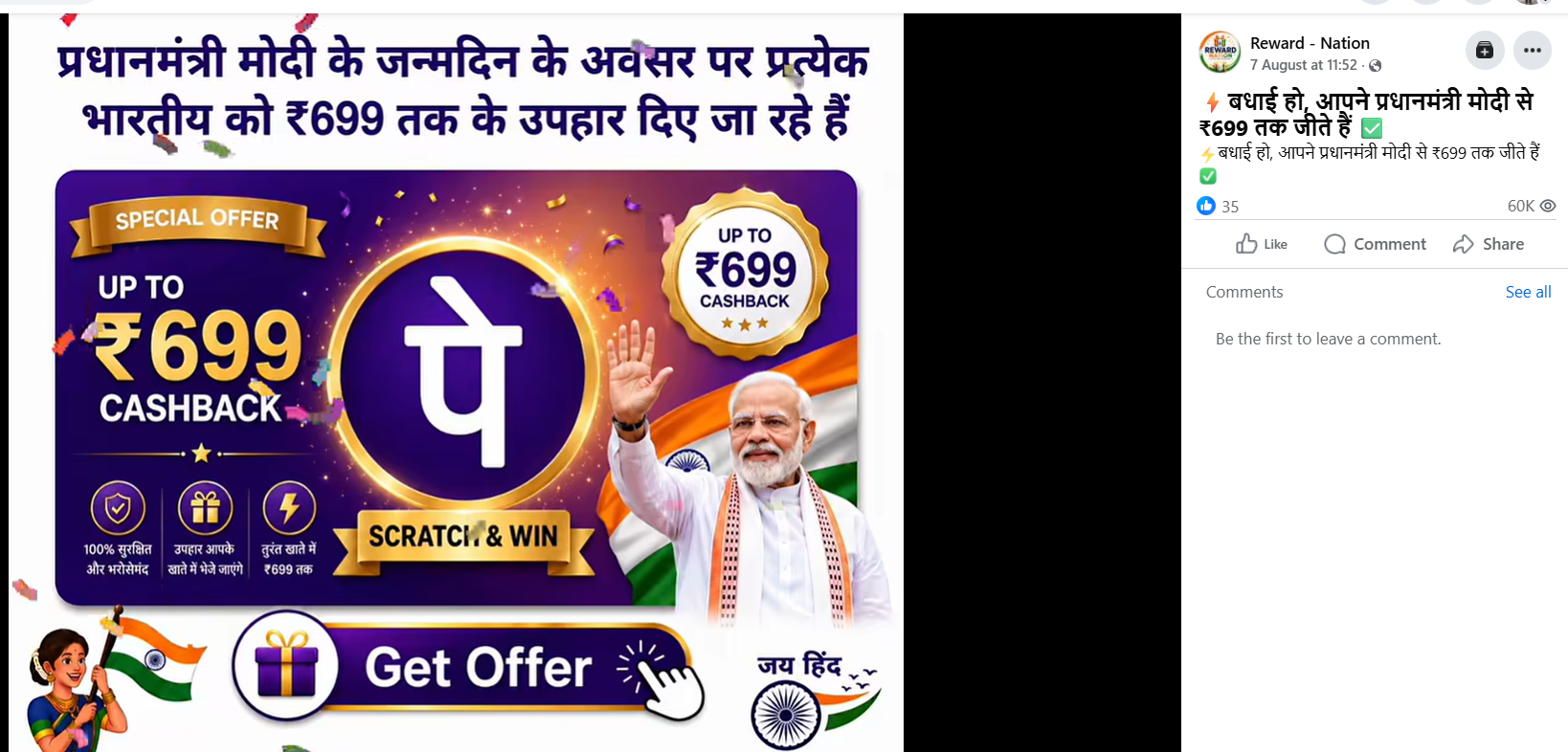
A poster is being shared on social media claiming that people have an opportunity to win up to ₹699 on Prime Minister Narendra Modi’s birthday. The poster carries a “GET OFFER” button and asks users to click on it.
The CyberPeace Research Wing found the claim to be false. The research found that the Government of India has made no such announcement offering ₹699 to people on Prime Minister Narendra Modi’s birthday. The viral post is misleading and fake.
Claim
A Facebook user shared the viral poster with the caption:“Congratulations, you have won up to ₹699 from Prime Minister Modi.”
https://www.facebook.com/100083035017578/videos/1533904658280321/
FactCheck
To verify the claim, we conducted a Google search using relevant keywords. However, we did not find any credible media report confirming that the Government of India had announced such an offer.
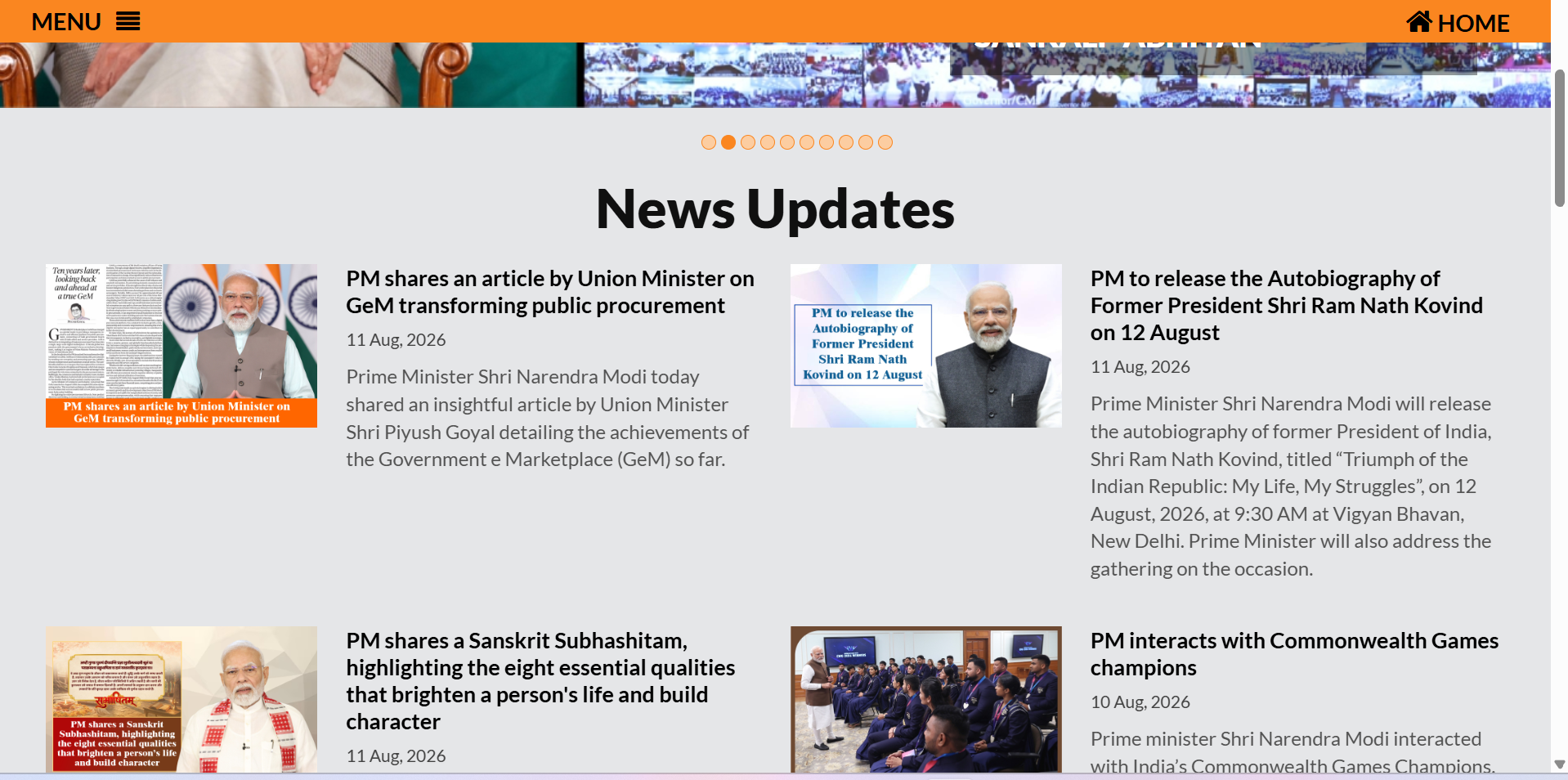
We then checked the official website of the Prime Minister’s Office (PMO) for any announcement related to the alleged ₹699 prize offer. No official notification or report supporting the claim was found.
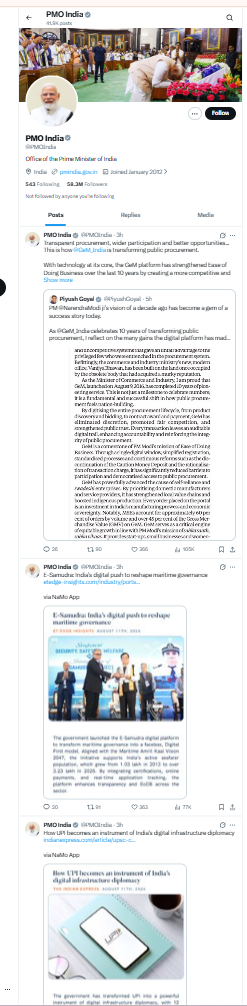
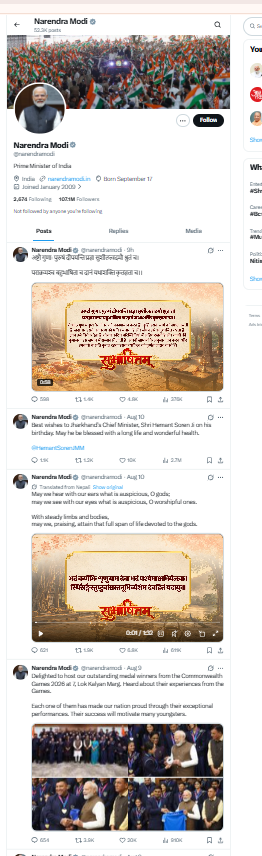
As part of the next stage of verification, we also checked the official X accounts of the PMO and Prime Minister Narendra Modi. We found no post or official announcement confirming the viral claim.
https://x.com/narendramodi
Conclusion
Our research found that the Government of India has not announced any ₹699 prize or offer on the occasion of Prime Minister Narendra Modi’s birthday. The viral poster is therefore fake and misleading. Users should avoid clicking on such suspicious “GET OFFER” links, as they may be designed to redirect users to fraudulent or deceptive websites.

Related Blogs
Executive Summary
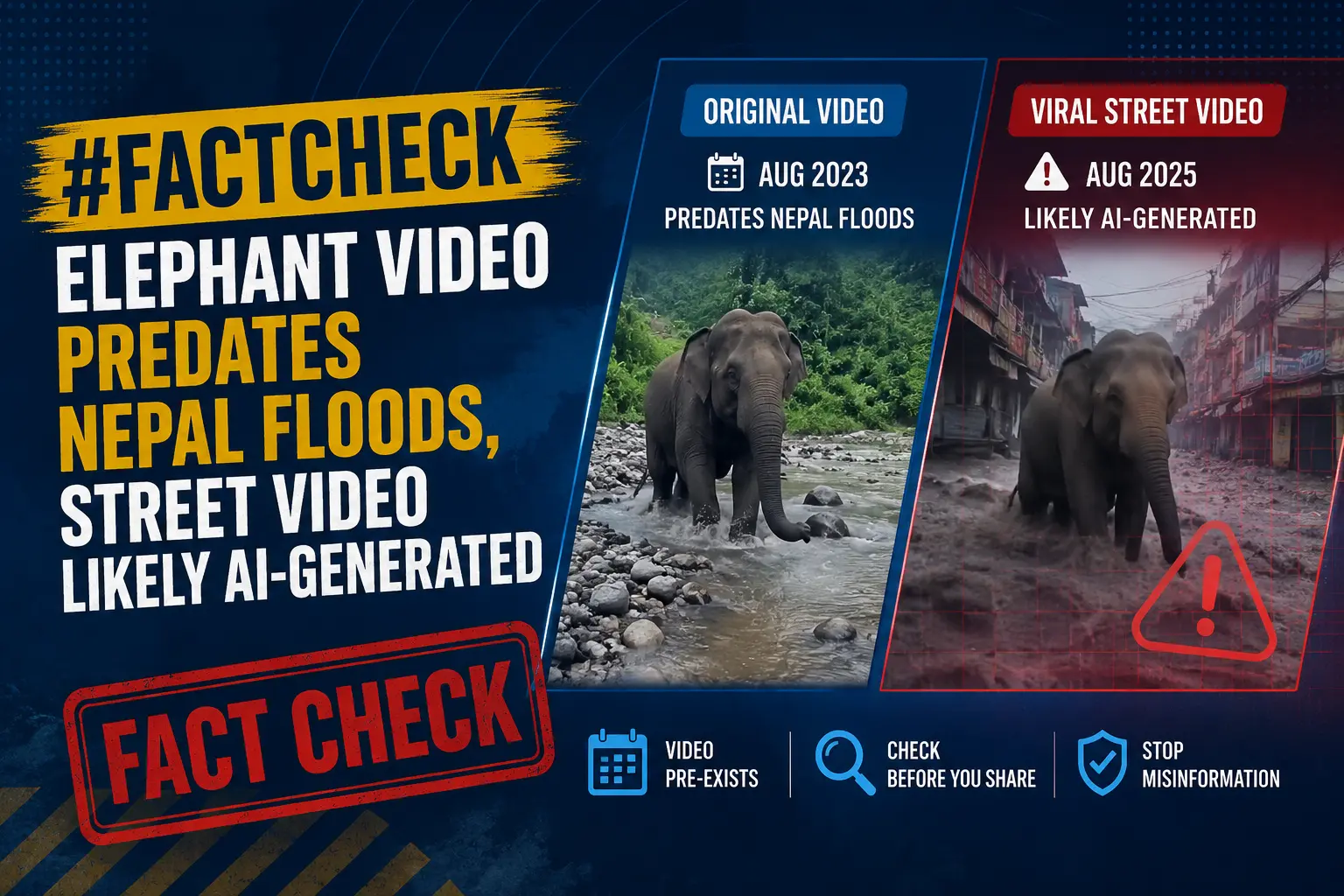
Amid the floods in Nepal, several videos are being shared on social media, claiming to show the current situation in the country. A research done by the Research Wing of the CyberPeace found that the video showing elephants is from an incident that occurred before the floods in Nepal, while the video showing the street is likely AI-generated.
Claim 1
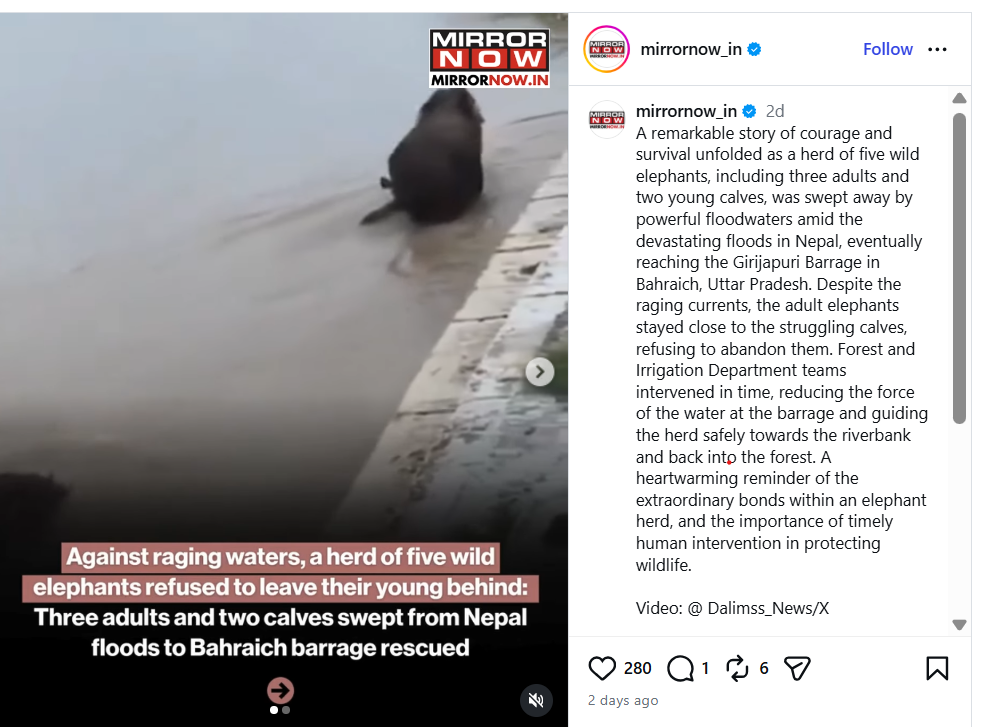
Videos claiming to show a street being swept away by flash floods in Nepal and a herd of elephants being carried away by the floods and reaching Uttar Pradesh are going viral on social media.
https://www.instagram.com/p/DcimGaiiCa7/
Claim 2
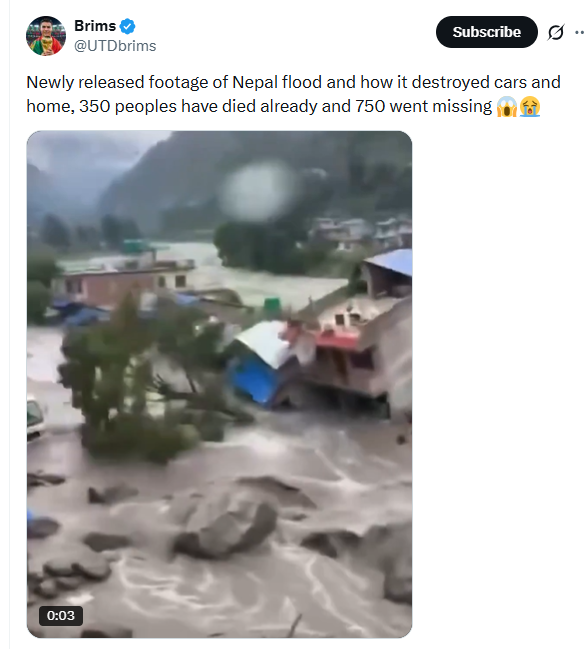
A newly surfaced video purportedly shows the devastation caused by floods in Nepal, with cars and homes being destroyed. It is being claimed that 350 people have died and 750 are missing so far
https://x.com/UTDbrims/status/2092829398462341484?s=48
Fact Check 1
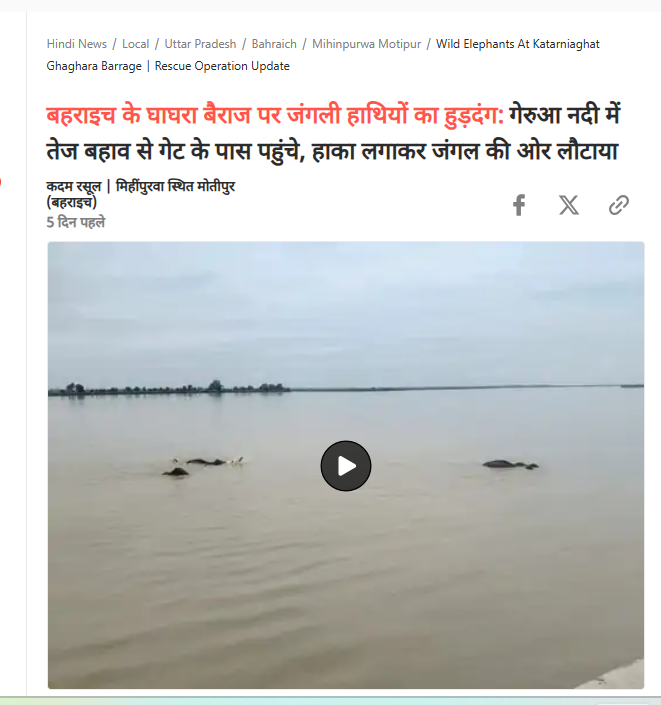
The first video claims to show a herd of wild elephants that was swept away by the floods in Nepal and reached Uttar Pradesh. We conducted a reverse image search of the first video using Google Lens and found a report by Hindi news publication Dainik Bhaskar, which shared a video featuring visuals similar to those in the viral clip. According to the report, a herd of wild elephants coming from the Gerua River reached the gates of the Chaudhary Charan Singh Ghaghra Barrage in Bahraich district, Uttar Pradesh, due to the strong current of the river. The report also quoted the Forest Range Officer as saying that the area is adjacent to an elephant corridor, which is why elephants frequently move through the region.
Fact Check 2
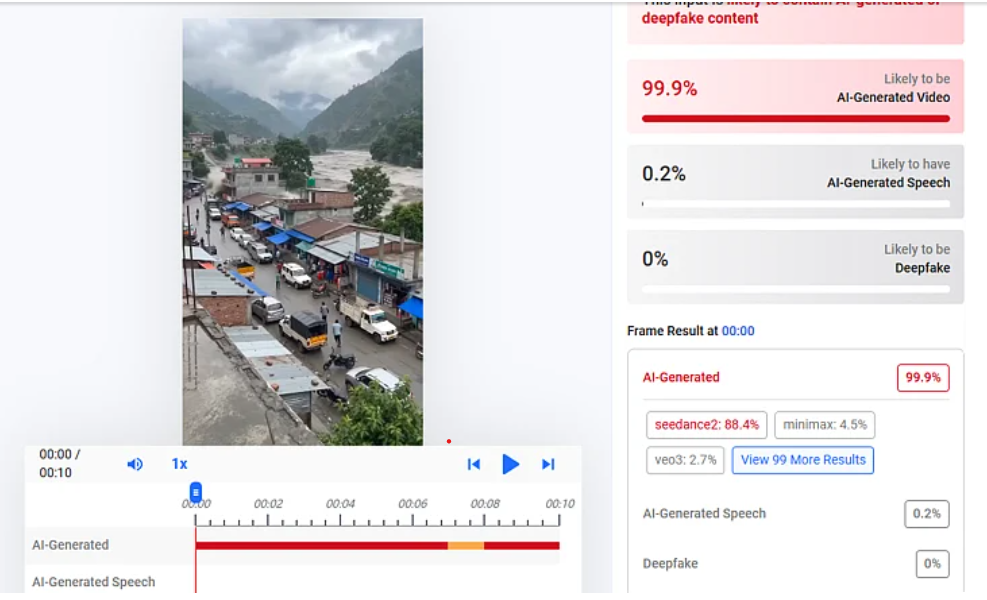
The second video shows a street being completely swept away by floodwaters. We conducted a reverse image search of the video using Google Lens but could not find any credible source that had shared the footage. Following this, we ran the video through the AI detection tool Hive Moderation, which flagged it as 99 percent likely to be AI-generated.
Conclusion
Our research found that the viral videos being shared as scenes of devastation caused by the recent floods in Nepal are misleading. The video showing a herd of elephants is from a separate incident in Bahraich, Uttar Pradesh, and predates the Nepal floods. Meanwhile, the video showing a street being swept away could not be traced to any credible source and was flagged as 99 percent likely to be AI-generated by Hive Moderation.
.webp)
Introduction
The AI Action Summit is a global forum that brings together world leaders, policymakers, technology experts, and industry representatives to discuss AI governance, ethics, and its role in society. This year, the week-long Paris AI Action Summit officially culminated on the 11th of February, 2025. It brought together experts from the industry, policymakers, and other dignitaries to discuss Artificial Intelligence and its challenges. The event was co-chaired by Indian Prime Minister Narendra Modi and French President Emmanuel Macron. In line with the summit, the Indian delegation actively engaged in the 2nd India-France AI Policy Roundtable, an official side event of the summit, and the 14th India-France CEOs Forum. These discussions were on diverse sectors including defense, aerospace, technology, etc. among other things.
Prime Minister Modi’s Address
During the AI Action Summit in Paris, Prime Minister Narendra Modi drew attention to the revolutionary effect of AI in politics, the economy, security, and society. Stressing the requirement of international cooperation, he promoted strong frameworks of governance to combat AI-based risks and consequently, build public confidence in new technologies. Needed efforts with respect to cybersecurity issues such as deepfakes and disinformation were also acknowledged.
Democratising AI, and sharing its benefits, particularly with the Global South not only aligned with Sustainable Development Goals (SDGs) but also affirmed India’s resolve towards sharing expertise and best practices. India’s remarkable feat of creating a Digital Public Infrastructure, that caters to a population of 1.4 billion through open and accessible technology was highlighted as well.
Among the key announcements, India revealed its plans to create its own Large Language Model (LLM) that reflects the country's linguistic diversity, strengthening its AI aspirations. Further, India will be hosting the next AI Action Summit, reaffirming its position in international AI leadership. The Prime Minister also welcomed France's initiatives, such as the launch of the "AI Foundation" and the "Council for Sustainable AI", initiated by President Emmanuel Macron. He emphasized the necessity to extend the Global Partnership for AI and to get it more representative and inclusive so that Global South voices are actually incorporated into AI innovation and governance.
Other Perspectives
Though there were 58 countries that signed the international agreement on a more open, inclusive, sustainable, and ethical approach to AI development (including India, France, and China), the UK and the US have refused to sign the international agreement at the AI Summit stating their issues with global governance and national security. While the former raised concerns about the lack of sufficient details regarding the establishment of global AI governance and AI’s effect on national security as their reason, the latter showcased its reservations about the overly wide AI regulations which had the potential to hamper a transformative industry. Meanwhile, the US is also looking forward to ‘Stargate’, its $500 billion AI infrastructure project alongside the companies- OpenAI, Softbank, and Oracle.
CyberPeace Insights
The Summit has garnered greater significance with the backdrop of the release of platforms such as DeepSeek R1, China’s AI assistant system similar to that of OpenAI’s ChatGPT. On its release, it was the top-rated free application on Apple’s app store and sent the technology stocks tumbling. Moreover, investors world over appreciated the creation of the model which was made roughly in about $5 million while other AI companies spent more in comparison (keeping in mind the restrictions caused by the chip export controls in China). This breakthrough challenges the conventional notion that massive funding is a prerequisite for innovation, offering hope for India’s burgeoning AI ecosystem. With the IndiaAI mission and fewer geopolitical restrictions, India stands at a pivotal moment to drive responsible AI advancements.
References:
- https://www.mea.gov.in/press-releases.htm?dtl/39023/Prime_Minister_cochairs_AI_Action_Summit_in_Paris_February_11_2025
- https://indianexpress.com/article/explained/explained-sci-tech/what-is-stargate-trumps-500-billion-ai-project-9793165/
- https://pib.gov.in/PressReleasePage.aspx?PRID=2102056
- https://pib.gov.in/PressReleasePage.aspx?PRID=2101947
- https://pib.gov.in/PressReleasePage.aspx?PRID=2101896
- https://www.timesnownews.com/technology-science/uk-and-us-decline-to-sign-global-ai-agreement-at-paris-ai-action-summit-here-is-why-article-118164497
- https://www.thehindu.com/sci-tech/technology/india-57-others-sign-paris-joint-statement-on-inclusive-sustainable-ai/article69207937.ece
Executive Summary
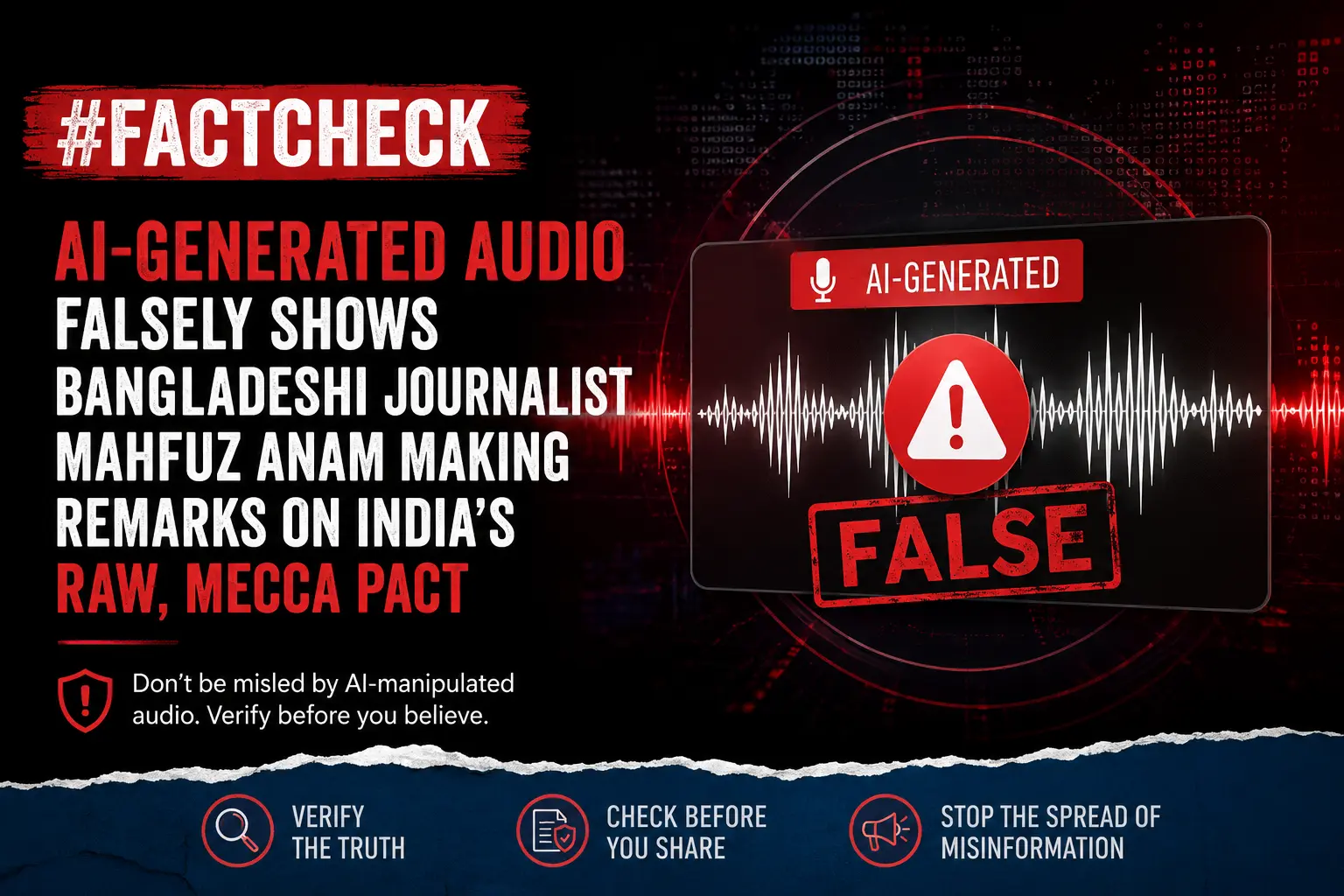
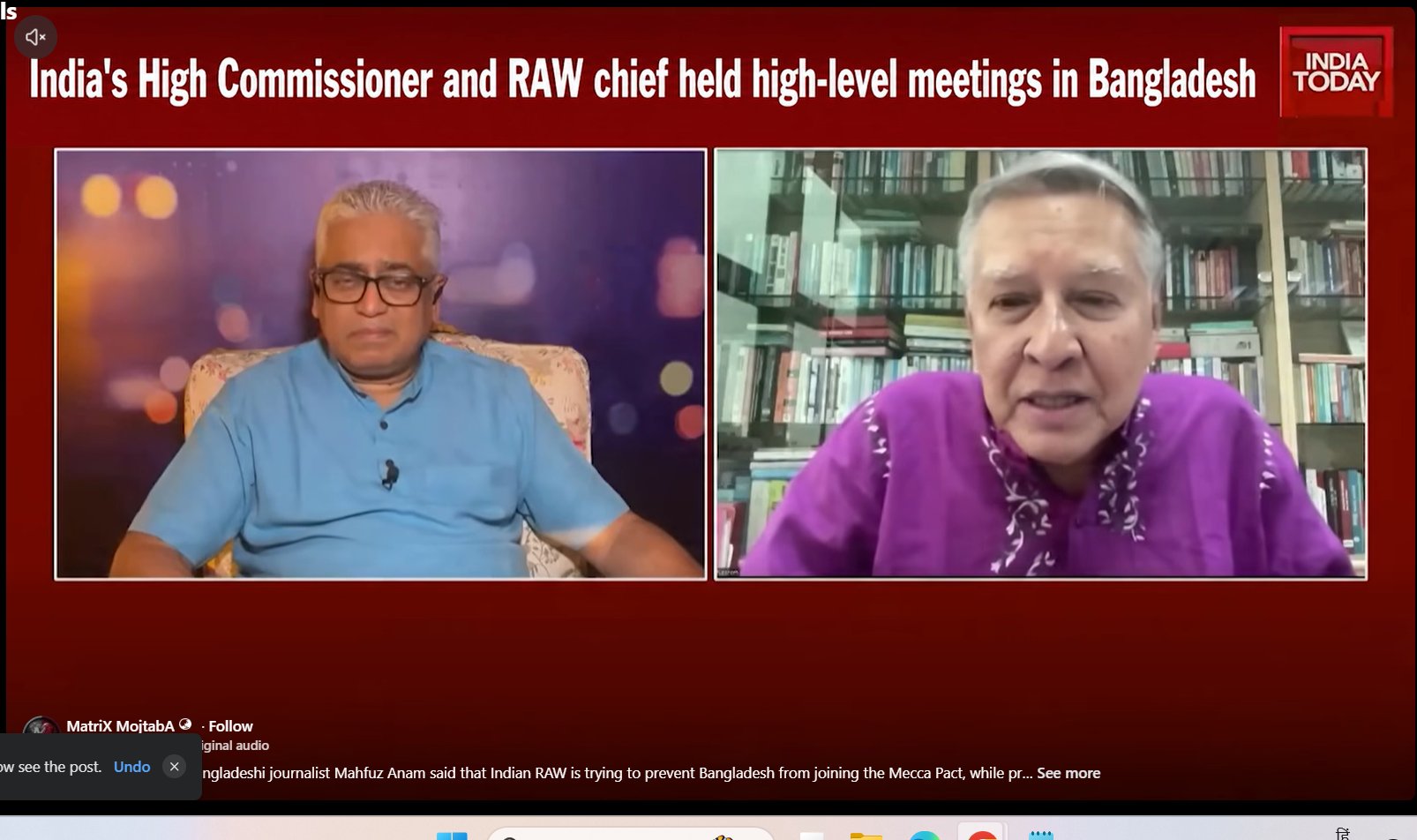
Several social media users shared an India Today news clipping showing an exclusive interaction between senior journalist Rajdeep Sardesai and Bangladeshi journalist Mahfuz Anam. In the purported conversation, Anam was heard claiming that India’s intelligence agency RAW was trying to prevent Bangladesh from joining the Mecca Pact. He was also allegedly heard saying that New Delhi was promoting an alternative defence pact with Bangladesh involving a Middle Eastern country and Israel. However, the CyberPeace Research Wing found that the viral video had been digitally manipulated using AI-generated audio. The original video, uploaded by India Today, showed Anam in conversation with Sardesai in 2024, discussing Bangladesh’s July uprising and the developments that followed.
Claim
A Facebook page, ‘MatriX MojtabA’, shared an India Today news clipping on August 12 showing senior journalist Rajdeep Sardesai interviewing Bangladeshi journalist Mahfuz Anam. In the purported conversation, Anam was heard saying that RAW was trying to prevent Bangladesh from joining the Mecca Pact. He was also allegedly heard claiming that New Delhi was promoting an alternative defence pact with Bangladesh involving a Middle Eastern country and Israel.
https://www.facebook.com/reel/1804199927691664/
Fact Check
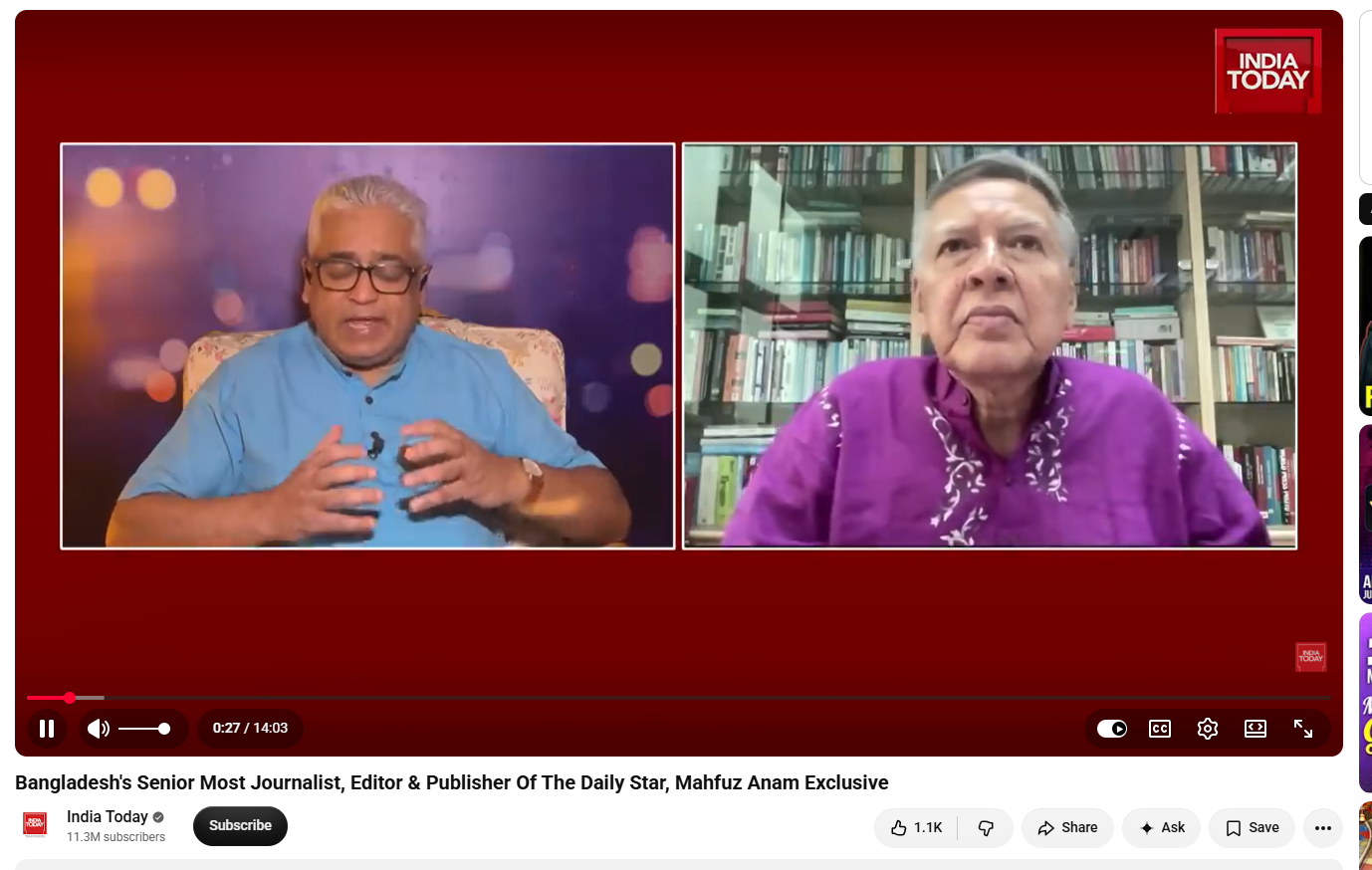
Based on the clue that the viral clip was taken from an exclusive conversation between Mahfuz Anam and India Today, the Desk conducted a customised keyword search on Google. The search led to an extended version of the same interaction uploaded on India Today’s official YouTube channel. The Desk identified the original footage by comparing the background setting and the clothes worn by both Sardesai and Anam, which appeared identical in the viral and original clips. However, an analysis of the original video established that it was an old recording from August 2024. The video showed Anam and Sardesai discussing Bangladesh’s July 2024 uprising and the developments that followed. The Desk analysed the complete 14-minute-and-three-second video and found that Anam did not mention RAW or the Mecca Pact anywhere in the interaction. The Mecca Pact was signed by Pakistan, Saudi Arabia and Turkey on August 7, 2026. This established that the statement attributed to Anam in the viral video was not part of the original conversation and had been digitally manipulated.
https://www.youtube.com/watch?v=gEoyTkOZ8xE
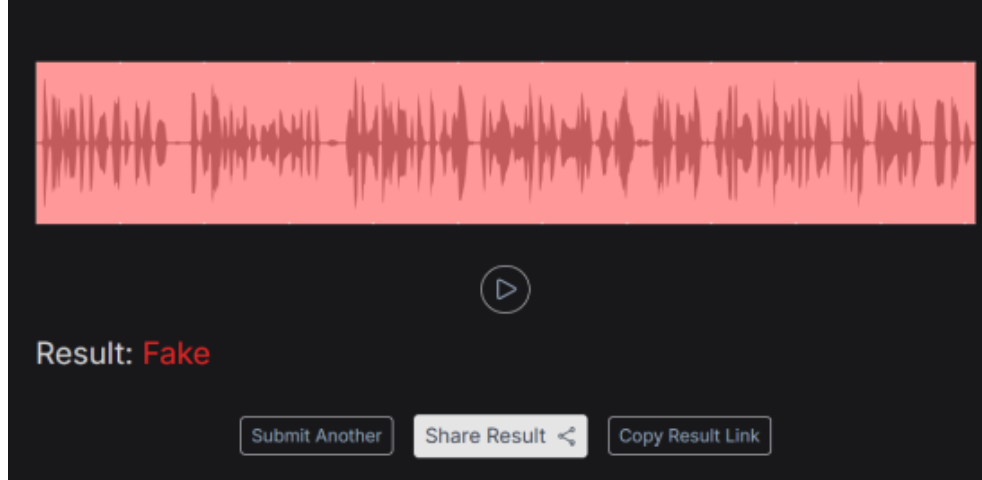
Further, after finding indications that the audio in the viral clip may have been AI-generated, the Desk extracted the audio from the video and analysed it using Resemble AI, an AI audio detection tool. The analysis indicated that the audio was AI-generated and did not contain Mahfuz Anam’s original statement.
Conclusion
The viral video showing Bangladeshi journalist Mahfuz Anam purportedly claiming that India’s RAW was trying to prevent Bangladesh from joining the Mecca Pact is digitally manipulated. The audio in the viral clip was replaced with AI-generated audio to attribute a false statement to Anam. The original India Today video, recorded in 2024, shows Anam speaking with Rajdeep Sardesai about Bangladesh’s July uprising and the developments that followed. He does not make any remarks about RAW, the Mecca Pact or an alternative defence pact involving India, a Middle Eastern country and Israel.
