
#FactCheck -Claim That India’s GDP Was “Fake for 10 Years” is Misleading
Executive Summary
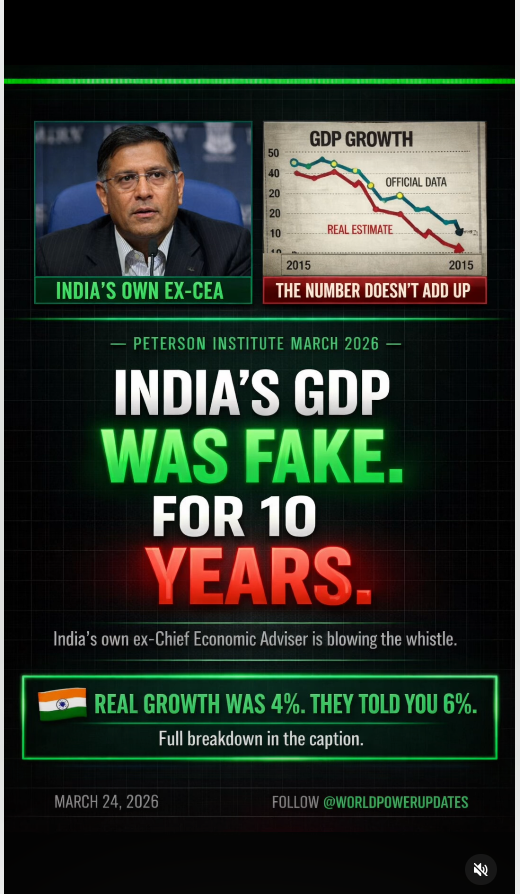
A viral graphic post on social media claims that India’s GDP (Gross Domestic Product) was “fake for 10 years.” The post also states that the real economic growth was around 4%, while official figures reported it at 6%. It further cites a former Chief Economic Adviser (Ex-CEA) and presents the claim as a “revelation.”
Research by CyberPeace Research Wing found this claim to be misleading. No official government document, nor India’s Ministry of Statistics and Programme Implementation (MoSPI), the Reserve Bank of India (RBI), or any recognised international institution has stated that India’s GDP was “fake.”
Claim
On the social media platform Instagram, a user shared a post claiming that the Chief Economic Adviser said India’s GDP (Gross Domestic Product) was “fake for 10 years.” The link to the post and its archive link are given below, along with a screenshot.
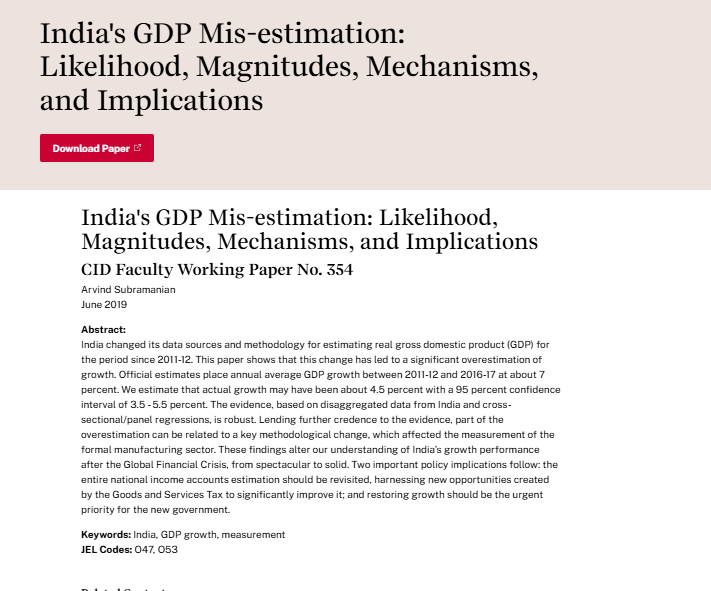
The viral post refers to a 2019 research paper linked to former Chief Economic Adviser (Ex-CEA) Arvind Subramanian. In this study, he raised questions about India’s GDP growth estimation and suggested that during 2011–12 to 2016–17, the actual growth could have been around 4.5%, while the official estimate was close to 7%.
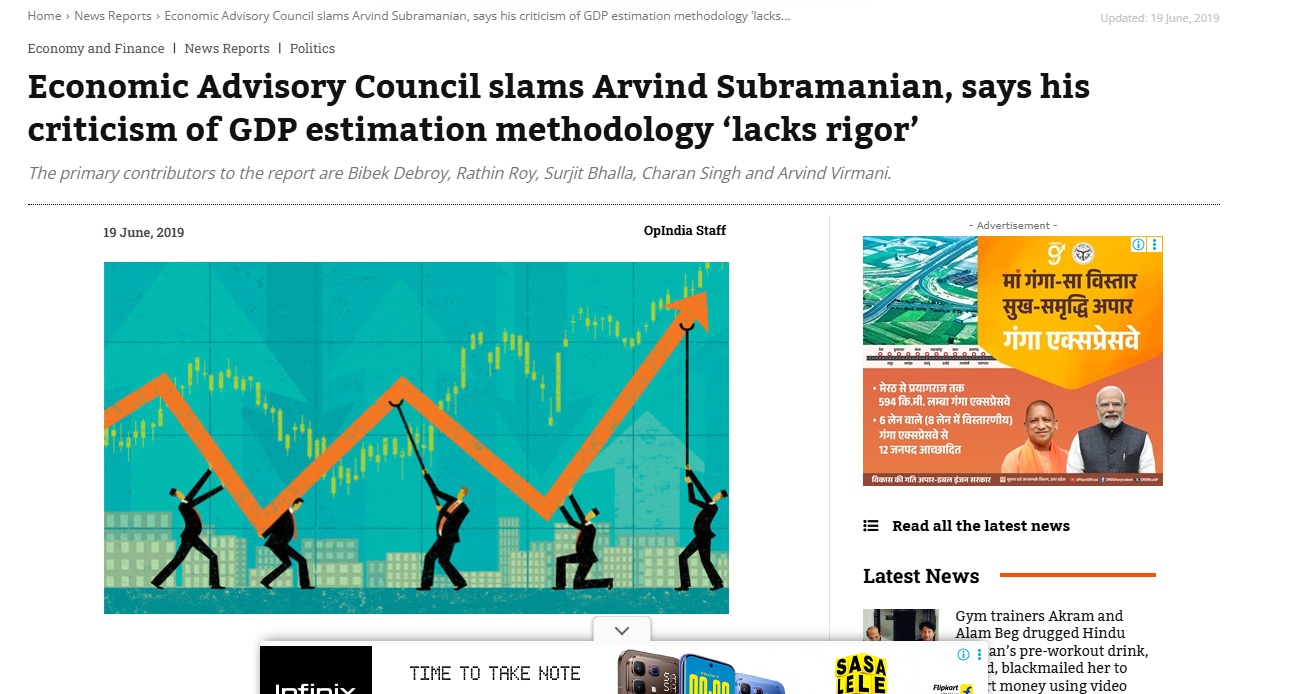
However, the study does not conclude anywhere that India’s GDP was “fake” or entirely incorrect. It only presents an alternative estimation based on different assumptions and methods, which has also been challenged by other economists and government agencies.
- https://www.hks.harvard.edu/centers/cid/publications/faculty-working-papers/india-gdp-overestimate?utm_source
- https://www.hks.harvard.edu/centers/cid/publications/faculty-working-papers/india-gdp-overestimate?utm_source
Conclusion:
The claim circulating on social media is misleading. The former Chief Economic Adviser provided an academic view on GDP estimation, but there is no evidence or official confirmation that India’s GDP was “fake for 10 years.” The data released by the Government of India was not validated by the figures circulated on social media.

Related Blogs

Introduction
In the digital landscape, there is a rapid advancement of technologies such as generative AI(Artificial Intelligence), deepfake, machine learning, etc. Such technologies offer convenience to users in performing several tasks and are capable of assisting individuals and business entities. Certain regulatory mechanisms are also established for the ethical and reasonable use of such advanced technologies. However, these technologies are easily accessible; hence, cyber-criminals leverage AI tools and technologies for malicious activities or for committing various cyber frauds. By such misuse of advanced technologies, new cyber threats have emerged.
Deepfake Scams
Deepfake is an AI-based technology. Deepfake is capable of creating realistic images or videos which in actuality are created by machine algorithms. Deepfake technology, since easily accessible, is misused by fraudsters to commit various cyber crimes or deceive and scam people through fake images or videos that look realistic. By using the Deepfake technology, cybercriminals manipulate audio and video content, which looks very realistic but, in actuality, is fake.
Voice cloning
To create a voice clone of anyone's, audio can be deepfaked too, which closely resembles a real one but, in actuality, is a fake voice created through deepfake technology. Recently, in Kerala, a man fell victim to an AI-based video call on WhatsApp. He received a video call from a person claiming to be his former colleague. The scammer, using AI deepfake technology, impersonated the face of his former colleague and asked for financial help of 40,000.
Uttarakhand Police issues warning admitting the rising trend of AI-based scams
Recently, Uttarakhand police’s Special Task Force (STF) has issued a warning admitting the widespread of AI technology-based scams such as deepfake or voice cloning scams targeting innocent people. Police expressed concern that several incidents have been reported where innocent people are lured by cybercriminals. Cybercriminals exploit advanced technologies and manipulate innocent people to believe that they are talking to their close ones or friends, but in actuality, they are fake voice clones or deepfake video calls. In this way, cybercriminals ask for immediate financial help, which ultimately leads to financial losses for victims of such scams.
Tamil Nadu Police Issues advisory on deepfake scams
To deceive people, cyber criminals misuse deepfake technologies and target them for financial gain. Recently, Tamilnadu Police Cyberwing have issued an advisory on rising deepfake scams. Fraudsters are creating highly convincing images, videos or voice clones to defraud innocent people and make them victims of financial fraud. The advisory states that you limit the personal data you share you share online and adjust privacy settings. Advisory says to promptly report any suspicious activity or cyber crimes to 1930 or the National Cyber Crime Reporting portal.
Best practices
- Pay attention if you notice compromised video quality because deepfake videos often have compromised or poor video quality and unusual blur resolution, which poses a question to its genuineness. Deepfake videos often loop or unusually freeze, which indicates that the video content might be fabricated.
- Whenever you receive requests for any immediate financial help, act responsively and verify the situation by directly contacting the person on his primary contact number.
- You need to be vigilant and cautious, since scammers often possess a sense of urgency, leading to giving no time for the victim to think about it and deceiving them by making a quick decision. Scammers pose sudden emergencies and demand financial support on an urgent basis.
- Be aware of the recent scams and follow the best practices to stay protected from rising cyber frauds.
- Verify the identity of unknown callers.
- Utilise privacy settings on your social media.
- Pay attention if you notice any suspicious nature, and avoid sharing voice notes with unknown users because scammers might use them as voice samples and create your voice clone.
- If you fall victim to such frauds, one powerful resource available is the National Cyber Crime Reporting Portal (www.cybercrime.gov.in) and the 1930 toll-free helpline number where you can report cyber fraud, including any financial crimes.
Conclusion
AI-powered technologies are leveraged by cybercriminals to commit cyber crimes such as deepfake scams, voice clone scams, etc. Where innocent people are lured by scammers. Hence there is a need for awareness and caution among the people. We should be vigilant and aware of the growing incidents of AI-based cyber scams. Must follow the best practices to stay protected.
References:
- https://www.the420.in/ai-voice-cloning-cyber-crime-alert-uttarakhand-police/
- https://www.trendmicro.com/vinfo/us/security/news/cybercrime-and-digital-threats/exploiting-ai-how-cybercriminals-misuse-abuse-ai-and-ml#:~:text=AI%20and%20ML%20Misuses%20and%20Abuses%20in%20the%20Future&text=Through%20the%20use%20of%20AI,and%20business%20processes%20are%20compromised.
- https://www.ndtv.com/india-news/kerala-man-loses-rs-40-000-to-ai-based-deepfake-scam-heres-what-it-is-4217841
- https://news.bharattimes.co.in/t-n-cybercrime-police-issue-advisory-on-deepfake-scams/
Introduction
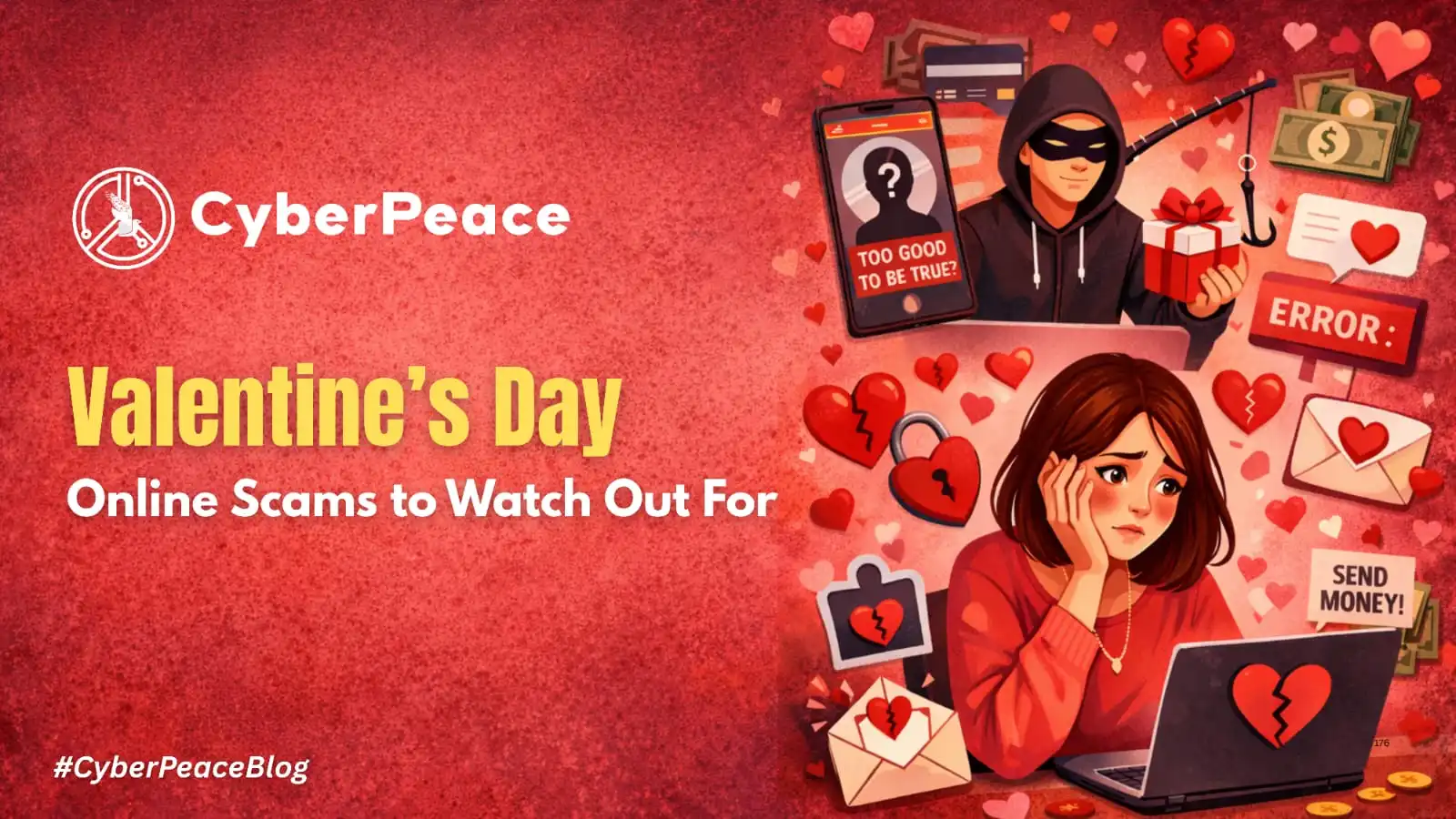
Valentine’s Day celebrates the bond between people, their romantic love, and their deep relationships with others. The increasing use of digital platforms in modern relationships has created a situation where cybercriminals use this time of year to exploit human emotions for money-making schemes. The period around 14 February often sees a rise in online romance scams, phishing attacks, and fake shopping websites that specifically target people who are emotionally vulnerable and active online. People need to be aware of these scams because this awareness helps them protect their personal information and their financial resources.
The Rise of Romance Scams
Modern romance scams have evolved from their original form because criminals now execute their schemes through more advanced methods. Fraudsters create authentic-looking fake identities, which they use to deceive victims through dating applications, social media platforms and networking websites. The profiles use stolen images and fake job histories, together with convincing emotional stories, which help them establish trust with potential victims.
Scammers usually begin their deception after they have built an emotional connection with their targets. Once trust is established, they introduce a crisis or an opportunity that pressures the victim to act quickly. This is often presented as a problem that needs urgent help or a chance that should not be missed, such as:
- A sudden medical emergency that requires money for treatment
- Requests for travel expenses to finally come and meet in person
- Fake investment opportunities that promise quick or guaranteed returns
- Demands for customs, courier, or clearance fees to release a supposed package or gift
They make the victim give money to them and buy gift cards and handle personal banking details. The scam takes place for several weeks or months until the victim starts to show doubt about what is happening. The psychological manipulation that occurs in romance scams causes severe harm to their victims. Victims experience two types of damage because criminals steal their money, and they suffer emotional pain, and their social standing gets damaged.
Fake E-Commerce and “Valentine’s Deals”
Valentine's Day marks the beginning of a shopping rush, which leads people to buy various gifts, including flowers, jewellery and customised products, as well as making reservations for events. Cybercriminals create fake websites to exploit this demand by providing fake discounts and temporary promotional offers.
Common warning signs include:
- Newly registered domains that lack valid user reviews
- Websites that contain multiple spelling mistakes and display poor design
- Payment requests through methods that cannot be tracked
- Online platforms that lack secure payment processing systems
Consumers who make purchases on such sites face the risk of losing money while their card information is stolen for future fraudulent activities.
Phishing in the Name of Love
During the holiday season, phishing campaigns increase their focus on particular targets. Users may receive:
- Valentine's Day discount emails
- Messages that claim to show secret admirer intentions
- Links that lead to supposed romantic surprises
- Delivery notifications that inform about unreceived gifts
Malicious links result in credential theft, malware installation and unauthorised financial transactions. At first glance, these attacks show resemblance to authentic brands and logistics companies, which makes them hard to identify.
Investment and Crypto Romance Fraud
A rising type of romance scams now uses cryptocurrency and online trading platforms as their new approach. Scammers who establish trust with their victims will convince them to invest in digital assets that appear to generate high returns. The fake dashboards display excellent investment results to convince investors to commit more funds. The process stops when they block all withdrawal requests and stop all contact with the user. The combination of emotional manipulation with financial fraud shows how cybercrime develops according to technological advancements.
Why Seasonal Scams Work
Seasonal scams succeed because they match the predictable behaviour patterns that people exhibit during specific times of the year. During Valentine’s season:
- People experience their highest emotional vulnerability
- People shop more frequently through online platforms
- People use digital platforms at increased rates
- Users will decrease their level of scepticism while trying to establish connections with others
Cybercriminals use urgent situations together with emotional ties and social norms as their primary attack methods. The combination of psychological triggers and digital convenience creates fertile ground for deception.
CyberPeace Recommendations for Staying Safe This Valentine’s Season
The digital platforms provide people who search for connections with valuable opportunities to connect with others, yet users must remain careful about their online activities. People can protect themselves from online fraud by following these steps:
- They should confirm identity details before they give away their private data.
- They should not send money to people whom they met only through internet platforms.
- They should verify website ownership and examine customer feedback before making online purchases.
- They should activate multi-factor authentication for their social media accounts and financial accounts.
- People should treat unexpected links with great care, especially those links that create a sense of urgency.
- The Cybercrime reporting portal www.cybercrime.gov.in with 24x7 helpline 1930 is an effective tool at the disposal of victims of cybercrimes to report their complaints.
- In case of any cyber threat, issue or discrepancy, you can also seek assistance from the CyberPeace Helpline at +91 9570000066 or write to us at helpline@cyberpeace.net. Immediate reporting protects victims and helps to combat cybercrime.
Conlusion
Online safety during festive seasons requires shared responsibility among multiple parties. Digital resilience is strengthened through the combined efforts of platforms, financial institutions, regulators, and civil society organisations. The digital ecosystem becomes safer through three essential elements, which include awareness campaigns, stronger verification systems, and timely reporting mechanisms.
Valentine’s Day centres on the building of trust between people who want to connect with each other. To maintain trust in digital environments, users need to practice digital literacy skills, which should be shared by everyone. People who stay updated about cybersecurity threats can celebrate Valentine’s Day more safely, because their expressions of love remain protected from online scams.
References
- https://www.cloudsek.com/blog/valentines-day-cyber-attack-landscape-exploiting-love-through-digital-deception
- https://about.fb.com/news/2025/02/how-avoid-romance-scams-this-valentines-day/
- https://www.fbi.gov/contact-us/field-offices/sanfrancisco/fbi-san-francisco-warns-romance-scams-increasing-across-the-bay-area-this-valentines-day
- https://abc11.com/post/romance-scams-surge-ahead-valentines-day/18581079/
- https://www.moneycontrol.com/technology/5-common-online-scams-you-should-avoid-this-valentine-s-day-article-13820108.html

The evolution of technology has presented both profound benefits and considerable challenges. It has benefited us with global interconnectivity, optimisation of the workforce, faster and solution-oriented approach, but at the same time increases risks of cybercrimes and the misuse of technology via online theft, fraud, and abuse. As the reliance on technology increases, it makes the users vulnerable to cyberattacks.
One way to address this nuisance is to set global standards and initiate measures for cooperation by integrating the efforts of international institutions such as UN bodies and others. The United Nations Interregional Crime and Justice Research Institute, which combats cybercrime and promotes the responsible use of technology, is making waves in these issues.
Understanding the Scope of the Problem
Crowdstrike had estimated the cybersecurity market at $207.77 billion in 2024 and expected it to reach $376.55 billion by 2029 and continue growing at a CAGR of 12.63% during the forecast period. In October of 2024, Forbes predicted that the cost of cyber attacks on the global economy would be over $10.5 trillion.
The developments in technology have provided cybercriminals with more sophisticated means to commit cybercrimes. These include cybercrimes like data breaches, which are increasingly common, such as phishing attacks, ransomware, social engineering, and IoT attacks. Their impact is evident across various domains, including economic and social spheres. The victims of cybercrimes can often suffer from stress, anxiety, fear of being victimised again, a lack of trust and social polarisation/stigmatisation.
UNICRI’s Strategic Approach
UNICRI actively combats cybercrimes and technology misuse, focusing on cybersecurity, organized crime in cyberspace, and terrorists' internet use. Since 2020, it has monitored social media misuse, analysed tools to debunk misinformation and balanced security with human rights.
The key focus areas of UNICRI’s strategic approach include cybersecurity in robotics, critical infrastructure, and SCADA systems, digital forensics, child online protection and addressing online profiling and discrimination. It further supports LEAs (judges, prosecutors, and investigators) by providing them with specialised training. Its strategies to counter cybercrime and tech misuse include capacity-building exercises for law enforcement, developing international legal frameworks, and fostering public-private collaborations.
Key Initiatives under UNICRI Strategic Programme Framework of 2023-2026
The key initiatives under UNICRI set out the strategic priority areas that will guide its work. It includes:
- Prevent and Counter Violent Extremism: By addressing the drivers of radicalisation, gender-based discrimination, and leveraging sports for prevention.
- Combat Organised Crime: Via tackling illicit financial flows, counterfeiting, and supply chain crimes while promoting asset recovery.
- Promotion of Emerging Technology Governance: Encouraging responsible AI use, mitigating cybercrime risks, and fostering digital inclusivity.
- Rule of Law and Justice Access: Enhancing justice systems for women and vulnerable populations while advancing criminal law education.
- CBRN Risk Mitigation: Leveraging expert networks and whole-of-society strategies to address chemical, biological, radiological, and nuclear risks.
The Challenges and Opportunities: CyberPeace Takeaways
The challenges that affect the regulation of cybercrimes are most often caused due to jurisdictional barriers, the lack of resources, and the rapid pace of technological change. This is due to the cross-border nature of cybercrimes and as many nations lack the expertise or infrastructure to address sophisticated cyber threats. The regulatory or legislative frameworks often get outpaced by technology developments, including quantum computing, deepfakes, or blockchain misuse. Due to this, these crimes are often unpunished.
The opportunities that have been developing for innovation in cybercrime prevention, include AI and machine learning tools to detect cybercrimes, enhanced international cooperation that can strengthen the collective defence mechanisms, like multi-stakeholder approaches. Capacity Building initiatives for continuous training and education help LEAs and judicial systems adapt to emerging threats, is a continuous effort that requires participation from all sectors, be it public or private.
Conclusion
Due to cybercrimes and the threats they induce on individuals, communities, and global security, the proactive approach by UNICRI of combining international cooperation, capacity-building and innovative strategies is pivotal in combating these challenges. By addressing the challenges of organised crime in cyberspace, child online protection, and emerging technology governance, UNICRI exemplifies the power of strategic engagement. While jurisdictional barriers and resource limitations persist, the opportunities in AI, global collaboration, and education offer a path forward. With the evolution of technology, our defences must also be dynamic and ever evolving, and UNICRI’s efforts are essential to building a safer, more inclusive digital future for all.
References
- https://unicri.it/special_topics/securing_cyberspace
- https://www.forbes.com/sites/bernardmarr/2023/10/11/the-10-biggest-cyber-security-trends-in-2024-everyone-must-be-ready-for-now/
