
#FactCheck: Fake AI Video Falsely Shows Rohit Sharma Seeking Support to Play Next World Cup
Executive Summary
A video of Indian cricketer Rohit Sharma is being widely shared on social media, purportedly showing him saying, “If you want me to play in the next World Cup and you are with me, then share and like this video.” However, CyberPeace Research Wing found the viral claim to be false. Our research found that the viral video is not authentic but AI-generated and is being circulated with a misleading claim.
Claim:
A Facebook user shared the viral video on September 28 with the caption, “If you want me to play in the next World Cup and you are with me, then share and like this video.” The post link, archived link and screenshot are provided below.
https://www.facebook.com/reel/27349791221308658

Fact check
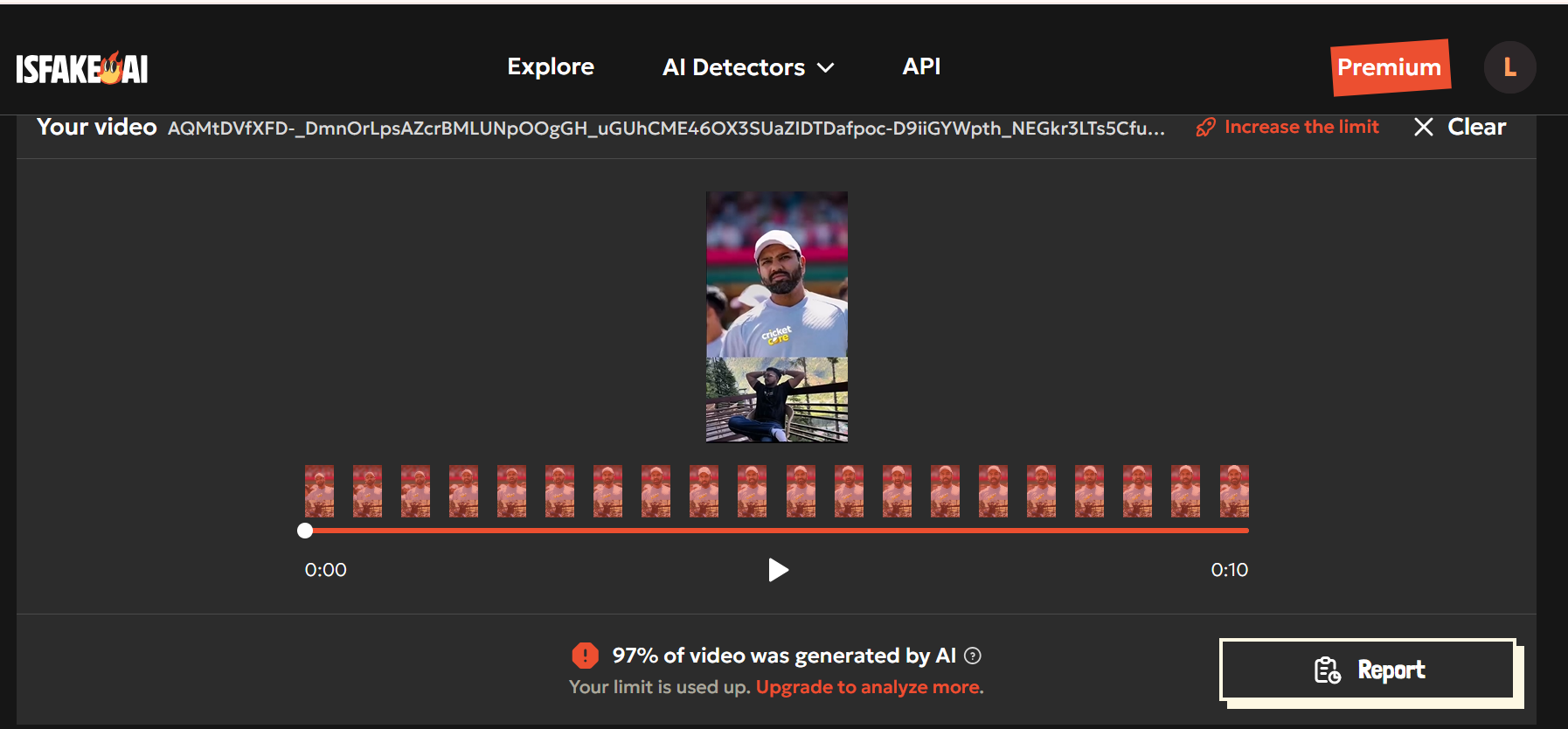
To verify the viral claim, we conducted a Google search using relevant keywords. During the search, we did not find any credible media reports corroborating the claim. As part of our research, we scanned the viral video using the AI detection tool ISFAKEAI. According to the tool’s results, the video was 97 per cent AI-generated.
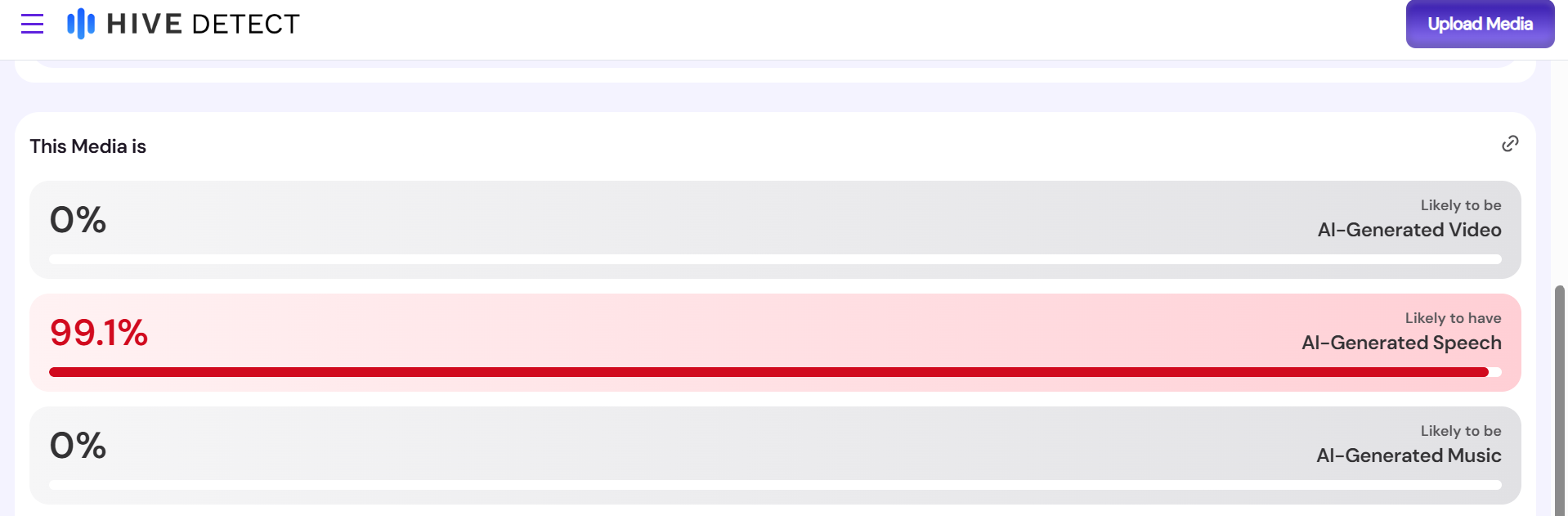
We further analysed the video using Hive Detect, which found that the speech in the viral video was 99 per cent AI-generated.
Conclusion:
Our research found that the viral video is not authentic but AI-generated. The video is being circulated on social media with a misleading claim that it shows an aeroplane being affected by the alleged ‘Arnab’ cyclone in Ahmedabad.

Related Blogs

Introduction
The mysteries of the universe have been a subject of curiosity for humans over thousands of years. To solve these unfolding mysteries of the universe, astrophysicists are always busy, and with the growing technology this seems to be achievable. Recently, with the help of Artificial Intelligence (AI), scientists have discovered the depths of the cosmos. AI has revealed the secret equation that properly “weighs” galaxy clusters. This groundbreaking discovery not only sheds light on the formation and behavior of these clusters but also marks a turning point in the investigation and discoveries of new cosmos. Scientists and AI have collaborated to uncover an astounding 430,000 galaxies strewn throughout the cosmos. The large haul includes 30,000 ring galaxies, which are considered the most unusual of all galaxy forms. The discoveries are the first outcomes of the "GALAXY CRUISE" citizen science initiative. They were given by 10,000 volunteers who sifted through data from the Subaru Telescope. After training the AI on 20,000 human-classified galaxies, scientists released it loose on 700,000 galaxies from the Subaru data.
Brief Analysis
A group of astronomers from the National Astronomical Observatory of Japan (NAOJ) have successfully applied AI to ultra-wide field-of-view images captured by the Subaru Telescope. The researchers achieved a high accuracy rate in finding and classifying spiral galaxies, with the technique being used alongside citizen science for future discoveries.
Astronomers are increasingly using AI to analyse and clean raw astronomical images for scientific research. This involves feeding photos of galaxies into neural network algorithms, which can identify patterns in real data more quickly and less prone to error than manual classification. These networks have numerous interconnected nodes and can recognise patterns, with algorithms now 98% accurate in categorising galaxies.
Another application of AI is to explore the nature of the universe, particularly dark matter and dark energy, which make up over 95% energy of the universe. The quantity and changes in these elements have significant implications for everything from galaxy arrangement.
AI is capable of analysing massive amounts of data, as training data for dark matter and energy comes from complex computer simulations. The neural network is fed these findings to learn about the changing parameters of the universe, allowing cosmologists to target the network towards actual data.
These methods are becoming increasingly important as astronomical observatories generate enormous amounts of data. High-resolution photographs of the sky will be produced from over 60 petabytes of raw data by the Vera C. AI-assisted computers are being utilized for this.
Data annotation techniques for training neural networks include simple tagging and more advanced types like image classification, which classify an image to understand it as a whole. More advanced data annotation methods, such as semantic segmentation, involve grouping an image into clusters and giving each cluster a label.
This way, AI is being used for space exploration and is becoming a crucial tool. It also enables the processing and analysis of vast amounts of data. This advanced technology is fostering the understanding of the universe. However, clear policy guidelines and ethical use of technology should be prioritized while harnessing the true potential of contemporary technology.
Policy Recommendation
- Real-Time Data Sharing and Collaboration - Effective policies and frameworks should be established to promote real-time data sharing among astronomers, AI developers and research institutes. Open access to astronomical data should be encouraged to facilitate better innovation and bolster the application of AI in space exploration.
- Ethical AI Use - Proper guidelines and a well-structured ethical framework can facilitate judicious AI use in space exploration. The framework can play a critical role in addressing AI issues pertaining to data privacy, AI Algorithm bias and transparent decision-making processes involving AI-based tech.
- Investing in Research and Development (R&D) in the AI sector - Government and corporate giants should prioritise this opportunity to capitalise on the avenue of AI R&D in the field of space tech and exploration. Such as funding initiatives focusing on developing AI algorithms coded for processing astronomical data, optimising telescope operations and detecting celestial bodies.
- Citizen Science and Public Engagement - Promotion of citizen science initiatives can allow better leverage of AI tools to involve the public in astronomical research. Prominent examples include the SETI @ Home program (Search for Extraterrestrial Intelligence), encouraging better outreach to educate and engage citizens in AI-enabled discovery programs such as the identification of exoplanets, classification of galaxies and discovery of life beyond earth through detecting anomalies in radio waves.
- Education and Training - Training programs should be implemented to educate astronomers in AI techniques and the intricacies of data science. There is a need to foster collaboration between AI experts, data scientists and astronomers to harness the full potential of AI in space exploration.
- Bolster Computing Infrastructure - Authorities should ensure proper computing infrastructure should be implemented to facilitate better application of AI in astronomy. This further calls for greater investment in high-performance computing devices and structures to process large amounts of data and AI modelling to analyze astronomical data.
Conclusion
AI has seen an expansive growth in the field of space exploration. As seen, its multifaceted use cases include discovering new galaxies and classifying celestial objects by analyzing the changing parameters of outer space. Nevertheless, to fully harness its potential, robust policy and regulatory initiatives are required to bolster real-time data sharing not just within the scientific community but also between nations. Policy considerations such as investment in research, promoting citizen scientific initiatives and ensuring education and funding for astronomers. A critical aspect is improving key computing infrastructure, which is crucial for processing the vast amount of data generated by astronomical observatories.
References
- https://mindy-support.com/news-post/astronomers-are-using-ai-to-make-discoveries/
- https://www.space.com/citizen-scientists-artificial-intelligence-galaxy-discovery
- https://www.sciencedaily.com/releases/2024/03/240325114118.htm
- https://phys.org/news/2023-03-artificial-intelligence-secret-equation-galaxy.html
- https://www.space.com/astronomy-research-ai-future

Executive Summary
Prime Minister Narendra Modi recently appealed to citizens to reduce the consumption of gold and edible oil for a year. He also urged people to conserve petrol, diesel, and cooking gas amid the crisis arising from the ongoing tensions in West Asia involving the United States, Israel, and Iran. Amid this backdrop, a purported image of Union Home Minister Amit Shah and his son Jay Shah, who currently serves as Chairman of the International Cricket Council, has gone viral on social media. The image shows them seated inside a chartered aircraft along with two other individuals. Several social media users shared the picture as genuine while targeting the central government and Amit Shah.
However, CyberPeace Research Wing reseach found that the viral image is fake and was generated using Artificial Intelligence (AI).
Claim
An Instagram user named “Om Prakash Shukla” shared the viral image on May 24, 2026, with the caption:“People are sacrificing their desires for the nation, while they are enjoying luxury.”
https://www.instagram.com/p/DYuFqnmCh7T

Fact Check
To verify the authenticity of the viral image, we conducted a Google Lens search. However, the image was not found on any credible news platform, which raised suspicion about its authenticity. We also performed keyword-based searches related to the image using Google Search, but found no authentic reports or media coverage associated with the picture.
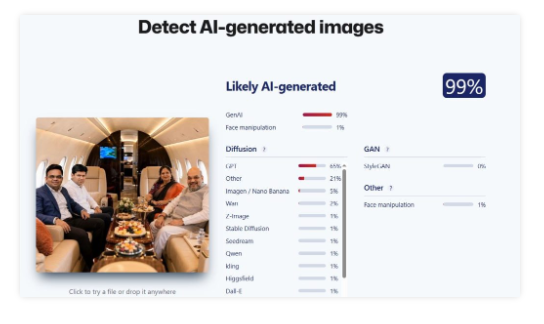
Further reseach involved analysing the image using AI detection tools. We first examined the picture using the “Sight Engine” AI detection tool, which indicated a 99 percent probability that the image was AI-generated.
We also tested the image using another AI detection platform called “TruthScan.” This tool likewise suggested, with around 97 percent probability, that the image had been created using artificial intelligence

Conclusion
The reseach found that the viral image featuring Union Home Minister Amit Shah and ICC Chairman Jay Shah inside a chartered aircraft is AI-generated. The image was digitally created using AI tools, and the viral claim associated with it is false.

Executive Summary:
This report discloses a new cyber threat contributing to the list of threats targeting internet users in the name of "Aarong Ramadan Gifts". The fraudsters are imitating the popular Bangladeshi brand Aarong, which is known for its Bengali ethnic wear and handicrafts, and allure the victims with the offer of exclusive gifts for Ramadan. The moment when users click on the link, they are taken through a fictitious path of quizzes, gift boxes, and social proof, that simply could damage their personal information and system devices. Through knowing how this is done we can educate users to take caution and stop themselves from falling into cyber threats.
False Claim:
The false message accompanied by a link on social media, claims that Aarong, one of the most respected brands in Bangladesh for their exquisite ethnic wear and handicrafts, is providing Ramadan gifts exclusively through online promotion. And while that may be the facade of the scam, its real aim is to lead users to click on harmful links that may end up in their personal data and devices being compromised.

The Deceptive Journey:
- The Landing page starts with a salutation and a catchy photo of Aarong store, and later moves ahead encouraging the visitors to take a part of a short quiz to claim the gift. This is designed for the purpose of creating a false image of authenticity and trustworthiness.
- A certain area at the end of the page looks like a social media comment section, and users are posting the positive impacts the claim has on them. This is one of the techniques to build the image of a solid base of support and many partakers.
- The quiz starts with a few easy questions on how much the user knows about Aarong and their demographics. This data is vital in the development of more complex threats and can be used to address specific targets in the future.
- After the user hits the OK button, the screen displays a matrix of the Gift boxes, and the user then needs to make at least 3 attempts to attain the reward. This is a commonly used approach which allows the scammer to keep users engaged longer and increases the chances of making them comply with the fraudulent scheme.
- The user is instructed to share the campaign on WhatsApp from this point of the campaign, and the user must keep clicking the WhatsApp button until the progress bar is complete. This is a way to both expand and perpetuate the scam, affecting many more users.
- After completing the steps, the user is shown instructions on how to claim the prize.
The Analysis:
- The home page and quiz are structured to maintain a false impression of genuineness and proficiency, thus allowing the victims to partake in the fraudulent design. The compulsion to forward the message in WhatsApp is the way they inspire more and more users and eventually get into the scam.
- The final purpose of the scam could be to obtain personal data from the user and eventually enter their devices, which could lead to a higher risk of cyber threats, such as identity theft, financial theft, or malware installation.
- We have also cross-checked and as of now there is no well established and credible source or any official notification that has confirmed such an offer advertised by Aarong.
- The campaign is hosted on a third party domain instead of the official Website, this raised suspicion. Also the domain has been registered recently.
- The intercepted request revealed a connection to a China-linked analytical service, Baidu in the backend.

- Domain Name: apronicon.top
- Registry Domain ID: D20231130G10001G_13716168-top
- Registrar WHOIS Server: whois.west263[.]com
- Registrar URL: www.west263[.]com
- Updated Date: 2024-02-28T07:21:18Z
- Creation Date: 2023-11-30T03:27:17Z (Recently created)
- Registry Expiry Date: 2024-11-30T03:27:17Z
- Registrar: Chengdu west dimension digital
- Registrant State/Province: Hei Long Jiang
- Registrant Country: CN (China)
- Name Server: amos.ns.cloudflare[.]com
- Name Server: zara.ns.cloudflare[.]com
Note: Cybercriminal used Cloudflare technology to mask the actual IP address of the fraudulent website.
CyberPeace Advisory:
- Do not open those messages received from social platforms in which you think that such messages are suspicious or unsolicited. In the beginning, your own discretion can become your best weapon.
- Falling prey to such scams could compromise your entire system, potentially granting unauthorized access to your microphone, camera, text messages, contacts, pictures, videos, banking applications, and more. Keep your cyber world safe against any attacks.
- Never, in any case, reveal such sensitive data as your login credentials and banking details to entities you haven't validated as reliable ones.
- Before sharing any content or clicking on links within messages, always verify the legitimacy of the source. Protect not only yourself but also those in your digital circle.
- For the sake of the truthfulness of offers and messages, find the official sources and companies directly. Verify the authenticity of alluring offers before taking any action.
Conclusion:
Aarong Ramadan Gift scam is a fraudulent act that takes advantage of the victims' loyalty to a reputable brand. The realization of the mechanism used to make the campaign look real, can actually help us become more conscious and take measures to our community not to be inattentive against cyberthreats. Be aware, check the credibility, and spread awareness to others wherever you can, to contribute in building a security conscious digital space.
