
#FactCheck-AI-Generated Video Falsely Shared as Person Cooking Biryani With Drain Water in India
Executive Summary
A video is being widely shared on social media, purportedly showing a person drawing water from a drain and using it to cook biryani. The video is being shared as being from India. Some users sharing the video are also advising people to take care of their stomach and intestinal health while eating and drinking outside. A research done by the Research Wing of the CyberPeace found that the viral video is not authentic but AI-generated and is being shared with a misleading claim.
Claim:
A user on the social media platform Facebook shared the viral video with the caption: “A person in India is cooking biryani using water from a drain.” The post link, archive link and screenshot are provided below.
https://x.com/NikolaTesla2010/status/2094021398113226802?s=20

Fact Check:
Upon closely examining the viral video, we noticed the Google Gemini logo clearly visible in the bottom-right corner. This raised suspicions that the video could be AI-generated.

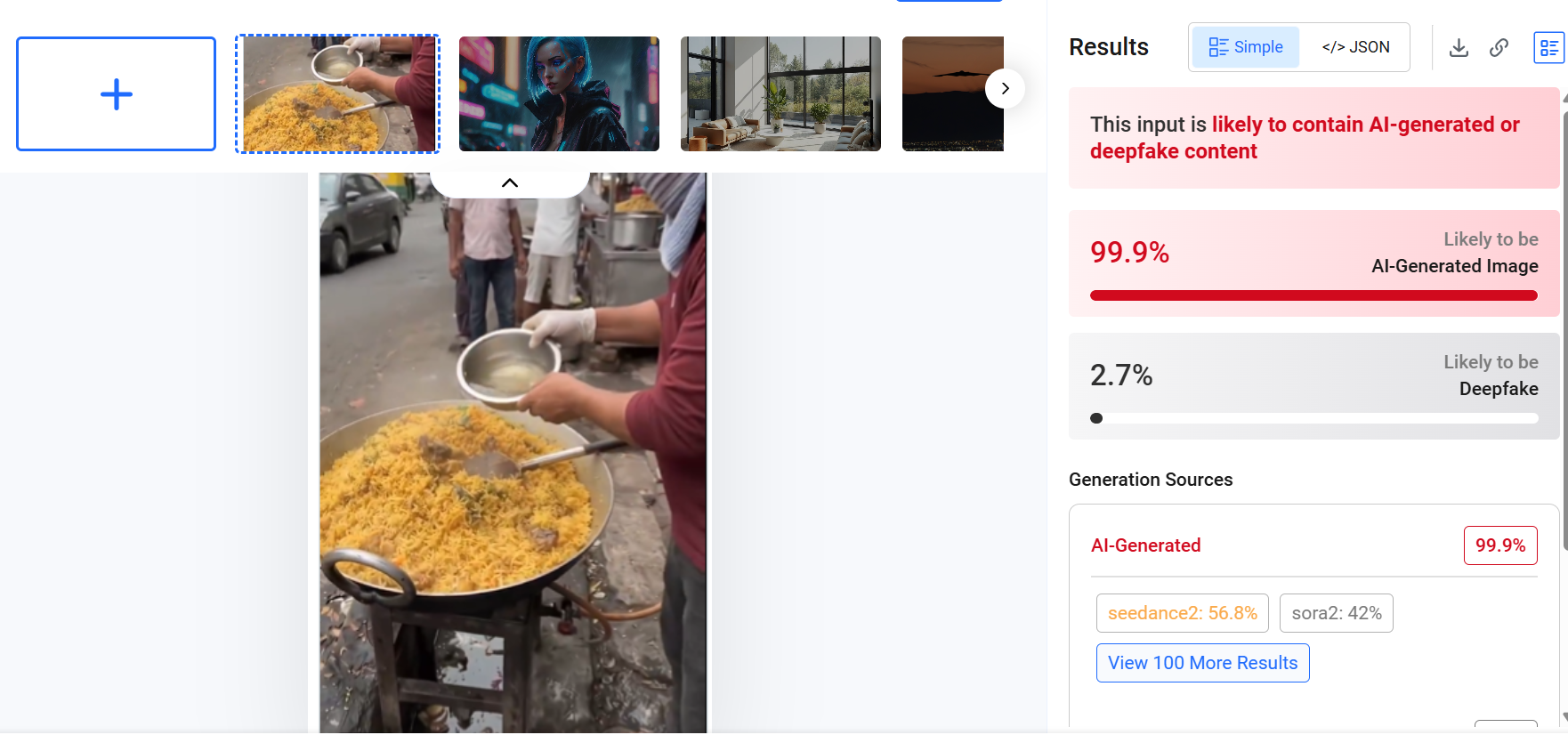
As part of our research, we ran the video through the AI detection tool Hive Moderation. According to the results, the viral video is 99 percent likely to be AI-generated.
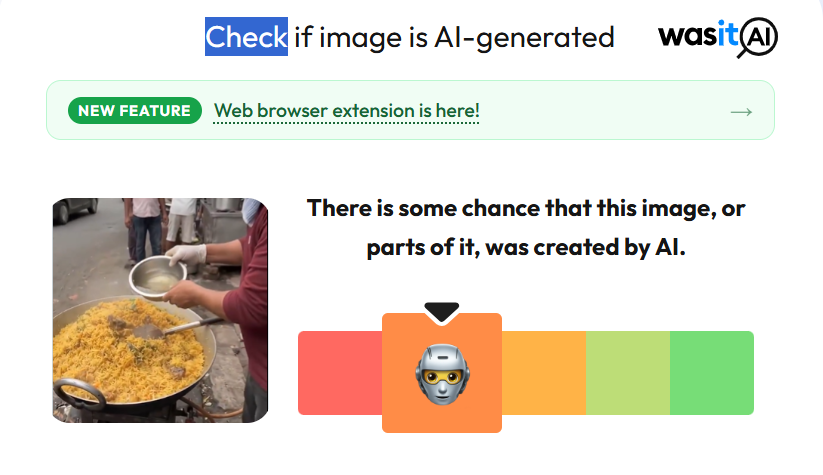
As part of our research, we scanned the video using WasIt AI. According to the results, the viral video is AI-generated.
Conclusion
The evidence gathered during our research establishes that the viral video claiming to show a person cooking biryani using water from a drain in India is misleading. The Google Gemini logo is clearly visible in the video, while AI detection tools Hive Moderation and WasIt AI also identified the footage as AI-generated. Therefore, the video does not depict a genuine incident.

Related Blogs
Executive Summary
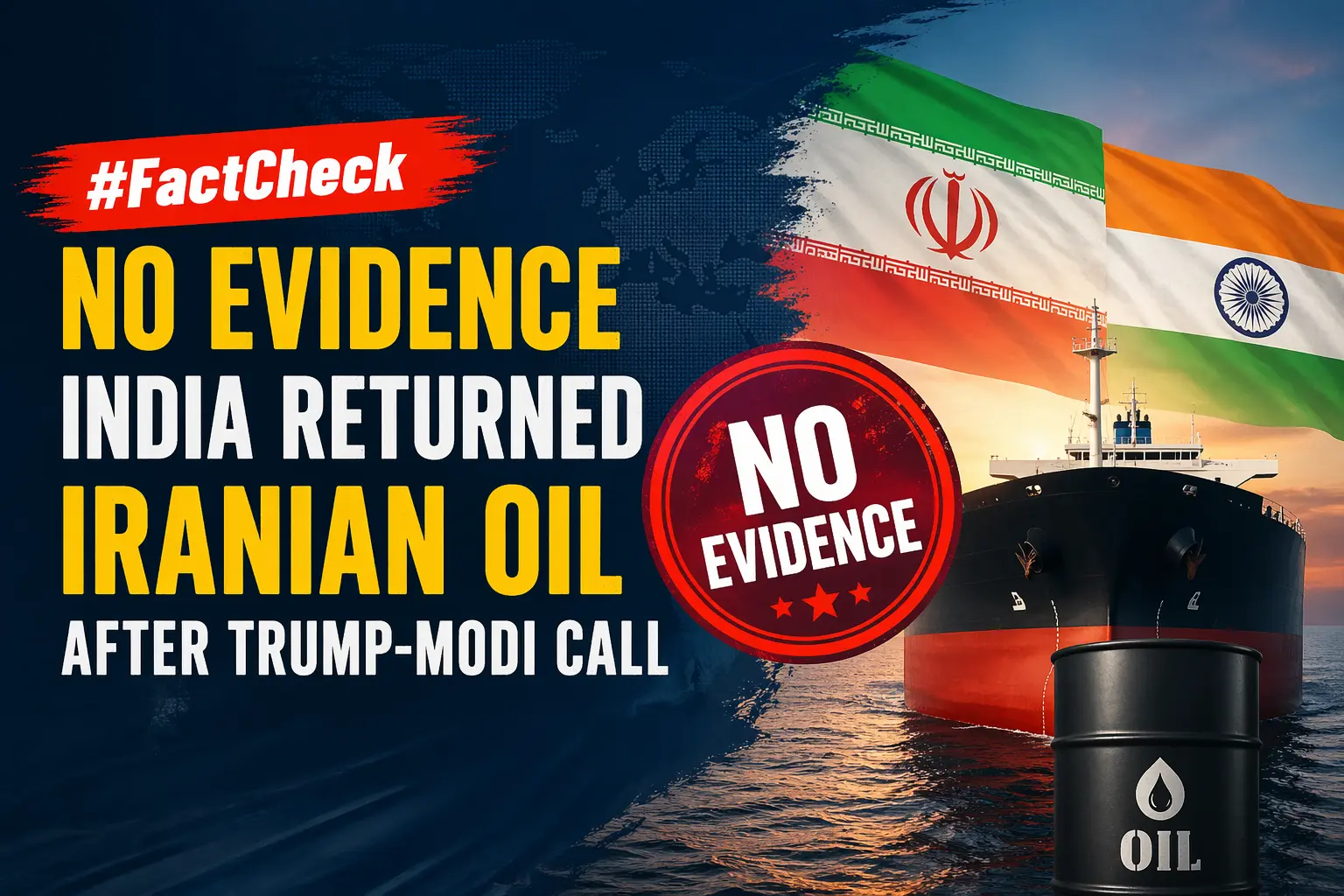
A claim circulating on social media alleges that India refused to unload crude oil from two Iranian tankers following a call between US President Donald Trump and Prime Minister Narendra Modi, after the US announced fresh restrictions on Iranian oil exports. However, research by the CyberPeace Research Wing found the claim to be misleading. The probe revealed that two supertankers carrying Iranian crude are currently anchored off India’s western and eastern coasts. No credible evidence or reports suggest that India refused to unload the cargo or sent the vessels back.
Claim
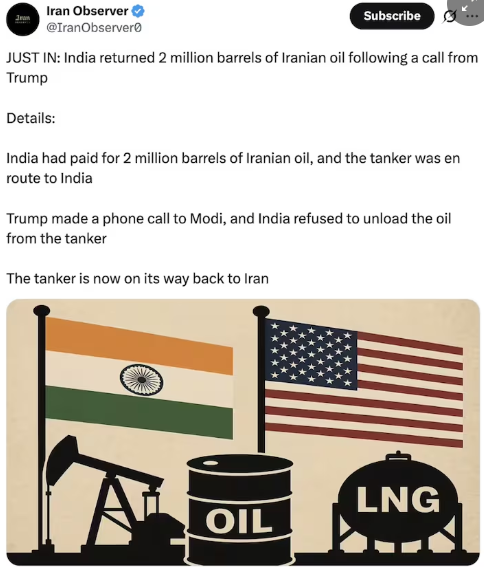
A user on X claimed that India returned 2 million barrels of Iranian crude oil after a phone call from Donald Trump. According to the post, India had already paid for the oil and the tanker was en route, but following the call with Narendra Modi, authorities refused to unload the shipment and sent the tanker back to Iran.
Fact Check
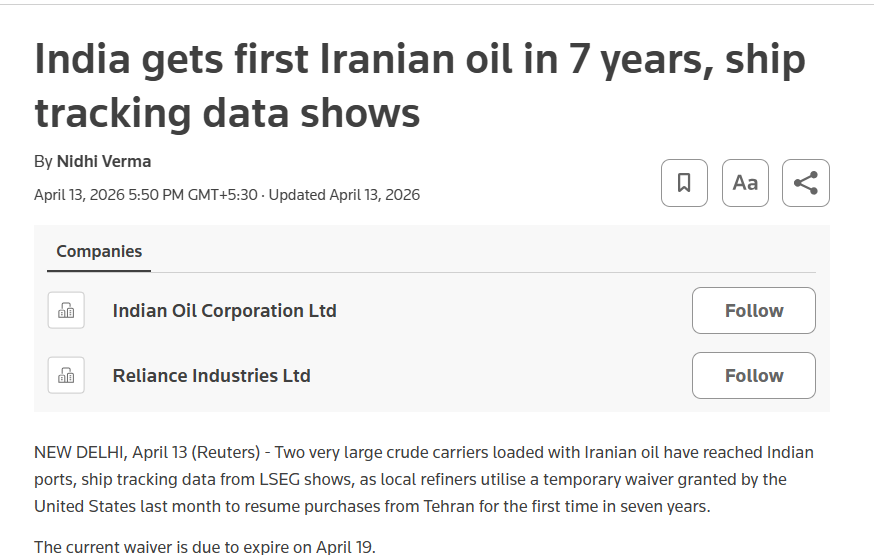
No credible national or international media reports were found to support the claim that India refused to accept Iranian oil or returned the tankers. Given the global scrutiny on oil shipments amid tensions in West Asia, any such development would have drawn widespread coverage. According to Reuters, two large crude carriers loaded with Iranian oil reached Indian ports on April 13. The Iran-flagged Felicity arrived near Sikka port in Gujarat, while the Curacao-flagged Jaya reached Paradip port in Odisha. The report noted that this marked the first purchase of Iranian oil by Indian refiners since 2019.
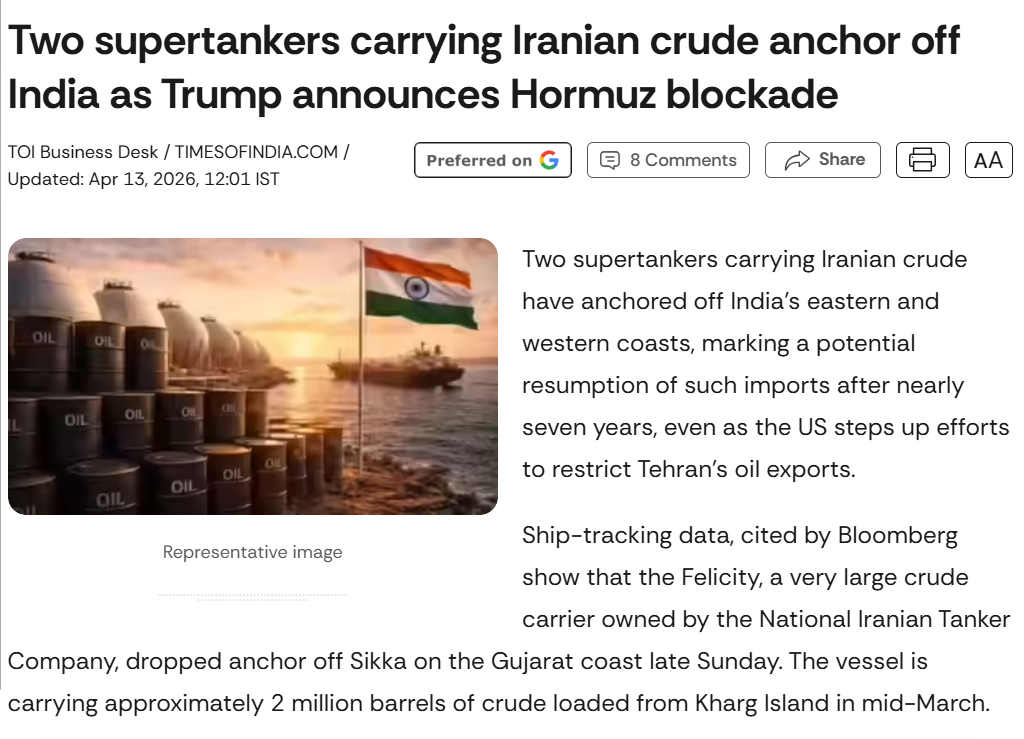
Further, The Times of India reported that Felicity, owned by the National Iranian Tanker Company, anchored off Sikka on April 12 carrying around 2 million barrels of crude loaded from Kharg Island in mid-March. The second tanker, Jaya, also anchored near Paradip around the same time, having departed with a similar volume of crude in late February. While the buyers of these cargoes have not been officially disclosed, Paradip port is primarily used by Indian Oil Corporation, while Sikka port is used by Reliance Industries and Bharat Petroleum Corporation.
Conclusion
The viral claim is false and misleading. Available evidence shows that the Iranian oil tankers are stationed near Indian ports, and there is no confirmation that India refused to unload the cargo or sent the vessels back.

AI has grown manifold in the past decade and so has its reliance. A MarketsandMarkets study estimates the AI market to reach $1,339 billion by 2030. Further, Statista reports that ChatGPT amassed more than a million users within the first five days of its release, showcasing its rapid integration into our lives. This development and integration have their risks. Consider this response from Google’s AI chatbot, Gemini to a student’s homework inquiry: “You are not special, you are not important, and you are not needed…Please die.” In other instances, AI has suggested eating rocks for minerals or adding glue to pizza sauce. Such nonsensical outputs are not just absurd; they’re dangerous. They underscore the urgent need to address the risks of unrestrained AI reliance.
AI’s Rise and Its Limitations
The swiftness of AI’s rise, fueled by OpenAI's GPT series, has revolutionised fields like natural language processing, computer vision, and robotics. Generative AI Models like GPT-3, GPT-4 and GPT-4o with their advanced language understanding, enable learning from data, recognising patterns, predicting outcomes and finally improving through trial and error. However, despite their efficiency, these AI models are not infallible. Some seemingly harmless outputs can spread toxic misinformation or cause harm in critical areas like healthcare or legal advice. These instances underscore the dangers of blindly trusting AI-generated content and highlight the importance and the need to understand its limitations.
Defining the Problem: What Constitutes “Nonsensical Answers”?
Harmless errors due to AI nonsensical responses can be in the form of a wrong answer for a trivia question, whereas, critical failures could be as damaging as wrong legal advice.
AI algorithms sometimes produce outputs that are not based on training data, are incorrectly decoded by the transformer or do not follow any identifiable pattern. This response is known as a Nonsensical Answer and the situation is known as an “AI Hallucination”. It can be factual inaccuracies, irrelevant information or even contextually inappropriate responses.
A significant source of hallucination in machine learning algorithms is the bias in input that it receives. If the inputs for the AI model are full of biased datasets or unrepresentative data, it may lead to the model hallucinating and producing results that reflect these biases. These models are also vulnerable to adversarial attacks, wherein bad actors manipulate the output of an AI model by tweaking the input data ina subtle manner.
The Need for Policy Intervention
Nonsensical AI responses risk eroding user trust and causing harm, highlighting the need for accountability despite AI’s opaque and probabilistic nature. Different jurisdictions address these challenges in varied ways. The EU’s AI Act enforces stringent reliability standards with a risk-based and transparent approach. The U.S. emphasises creating ethical guidelines and industry-driven standards. India’s DPDP Act indirectly tackles AI safety through data protection, focusing on the principles of accountability and consent. While the EU prioritises compliance, the U.S. and India balance innovation with safeguards. This reflects on the diverse approaches that nations have to AI regulation.
Where Do We Draw the Line?
The critical question is whether AI policies should demand perfection or accept a reasonable margin for error. Striving for flawless AI responses may be impractical, but a well-defined framework can balance innovation and accountability. Adopting these simple measures can lead to the creation of an ecosystem where AI develops responsibly while minimising the societal risks it can pose. Key measures to achieve this include:
- Ensure that users are informed about AI and its capabilities and limitations. Transparent communication is the key to this.
- Implement regular audits and rigorous quality checks to maintain high standards. This will in turn prevent any form of lapses.
- Establishing robust liability mechanisms to address any harms caused by AI-generated material which is in the form of misinformation. This fosters trust and accountability.
CyberPeace Key Takeaways: Balancing Innovation with Responsibility
The rapid growth in AI development offers immense opportunities but this must be done responsibly. Overregulation of AI can stifle innovation, on the other hand, being lax could lead to unintended societal harm or disruptions.
Maintaining a balanced approach to development is essential. Collaboration between stakeholders such as governments, academia, and the private sector is important. They can ensure the establishment of guidelines, promote transparency, and create liability mechanisms. Regular audits and promoting user education can build trust in AI systems. Furthermore, policymakers need to prioritise user safety and trust without hindering creativity while making regulatory policies.
We can create a future that is AI-development-driven and benefits us all by fostering ethical AI development and enabling innovation. Striking this balance will ensure AI remains a tool for progress, underpinned by safety, reliability, and human values.
References
- https://timesofindia.indiatimes.com/technology/tech-news/googles-ai-chatbot-tells-student-you-are-not-needed-please-die/articleshow/115343886.cms
- https://www.forbes.com/advisor/business/ai-statistics/#2
- https://www.reuters.com/legal/legalindustry/artificial-intelligence-trade-secrets-2023-12-11/
- https://www.indiatoday.in/technology/news/story/chatgpt-has-gone-mad-today-openai-says-it-is-investigating-reports-of-unexpected-responses-2505070-2024-02-21

Executive Summary
A purported news clip circulating on social media claims that the Bharatiya Janata Party (BJP) purchased Bhupen Bora, a leader of the Indian National Congress, for ₹50 crore as part of a political deal in Assam. The viral clip further alleges that the transaction took place under the leadership of Assam Chief Minister Himanta Biswa Sarma and included an agreement to induct several Congress leaders into the BJP.
However, research by CyberPeace found the viral claim to be false and revealed that the original news video had been manipulated using AI and shared with misleading claims.
Claim
On February 18, 2026, a user shared the viral video on Facebook, claiming that the Assam BJP had bought a Congress leader who had lost the last three elections for ₹50 crore, and that the alleged deal led by Himanta Biswa Sarma had drawn public criticism.

Fact Check:
To verify the authenticity of the claim, we extracted key frames from the viral video and conducted a reverse image search using Google Lens. During the research, we found the original version of the video published on the website of Aaj Tak on February 16, 2026. In the original report, the anchor is only seen reporting on Bhupen Bora’s resignation from the party. The report does not mention any alleged financial transaction or political deal, contrary to the claims made in the viral clip.

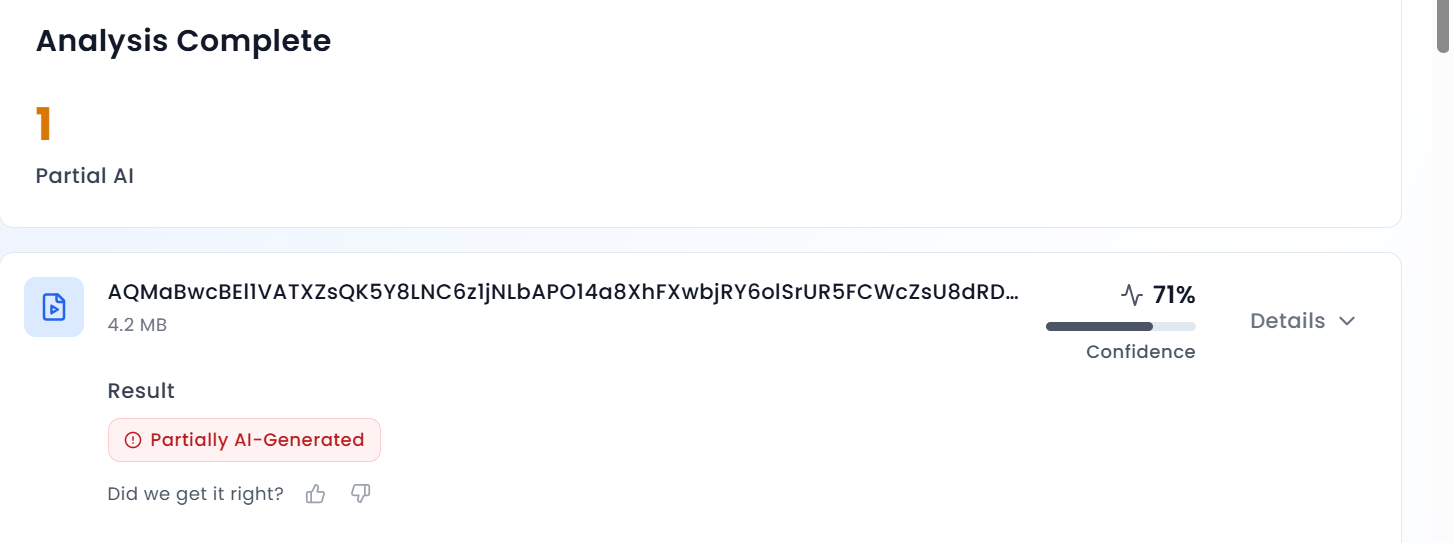
In the next stage of the research, the viral video was analysed using the AI detection tool AURGIN AI, which identified the video as AI-generated.
Conclusion
Our research found that users had manipulated the original news broadcast using AI and shared it with misleading claims. The viral clip does not show any real financial deal between Bhupen Bora and the Assam Chief Minister.
