
#FactCheck-AI-Generated Video Falsely Linked to Fresh US Strikes on Iran
Executive Summary
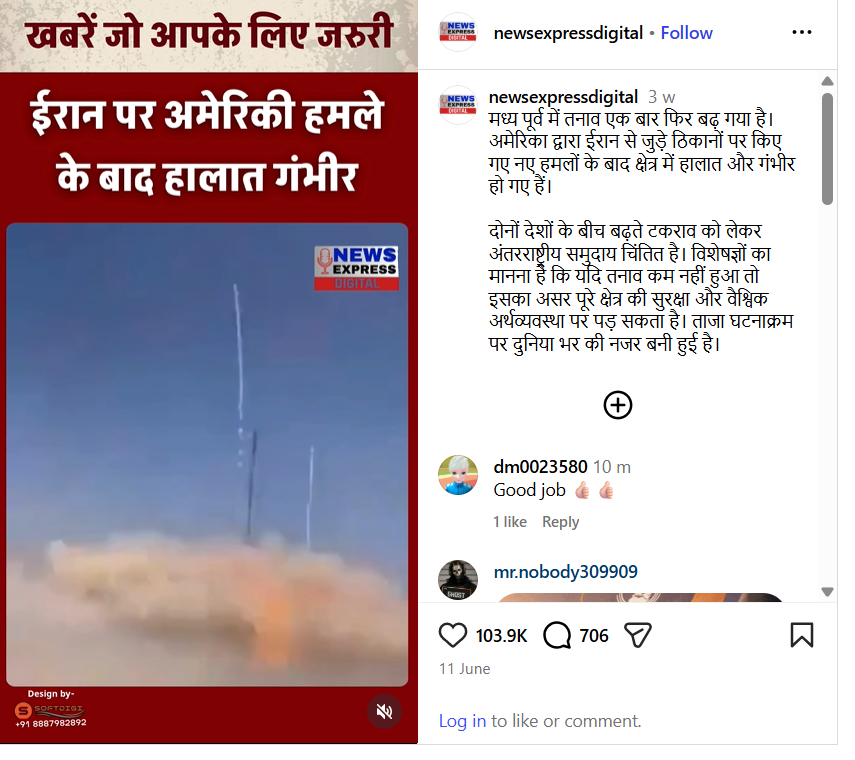
A video is being widely shared on social media showing what appears to be a military facility coming under heavy aerial bombardment. Soldiers can be seen running for cover as explosions occur, followed by thick plumes of smoke rising from the site. Users sharing the clip claim that tensions in the Middle East have escalated once again and that the United States has launched fresh strikes on Iranian-linked military positions. CyberPeace Research Wing's research found the viral claim to be false. Our research revealed that the circulating video is AI-generated and has no connection with the ongoing tensions between the United States and Iran.
Claim
An Instagram user shared the video claiming that fresh US strikes on Iranian-linked targets had significantly escalated the situation in the Middle East.
https://www.instagram.com/reel/DZeaatFNv2E/?igsh=aWRvaTZvNTV2aDR3
https://www.instagram.com/reel/DZeaatFNv2E/?igsh=aWRvaTZvNTV2aDR3
Fact Check
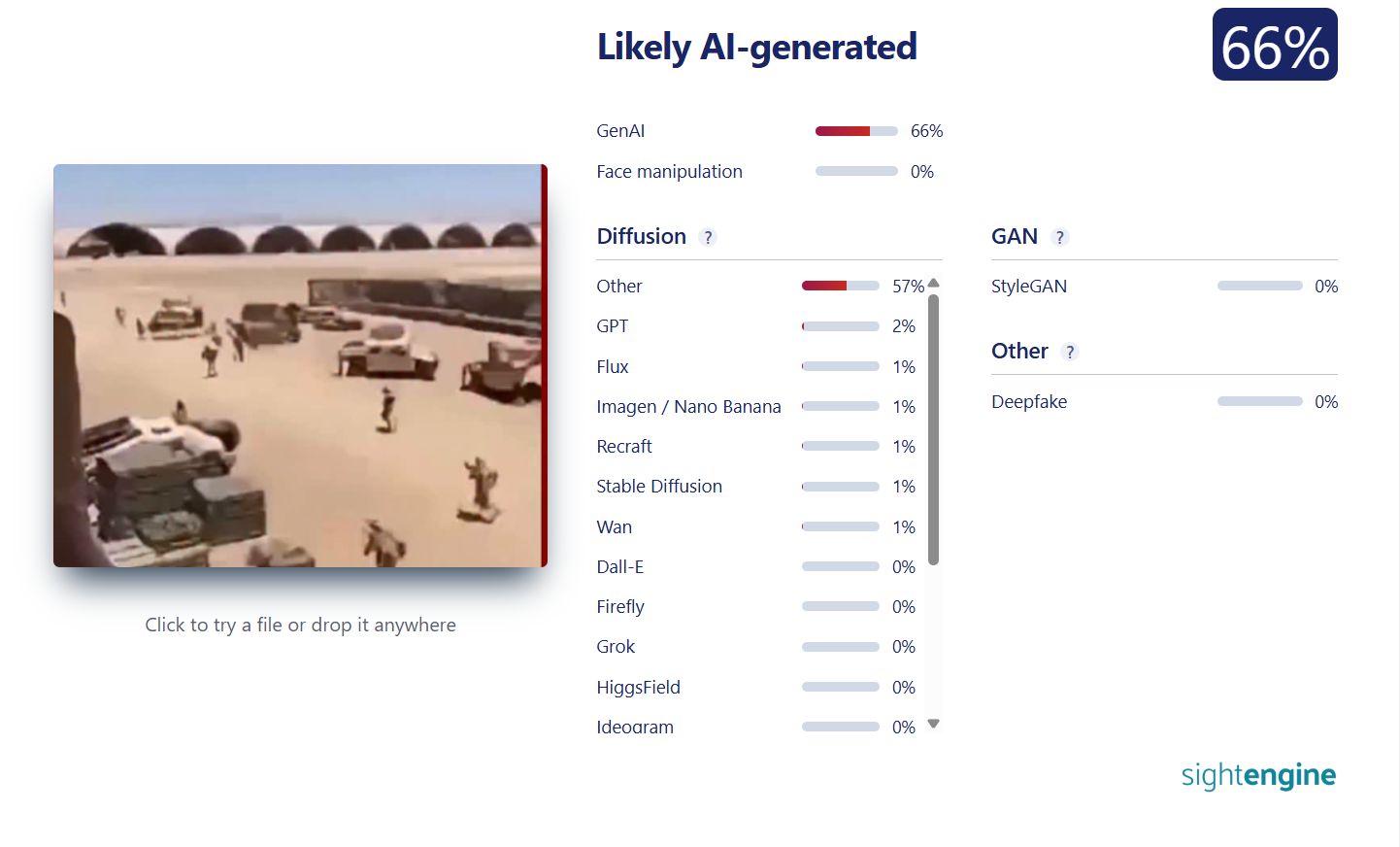
We extracted several keyframes from the viral video and conducted a reverse image search using Google Lens. The search did not lead to any credible news reports or verified sources related to the footage. We then closely examined the video and observed several visual inconsistencies. In the opening frames, the soldiers, military vehicles, and surrounding objects display unnatural shapes and distortions—artifacts commonly associated with AI-generated content. In the next stage of our research, we analysed the clip using the AI detection tool Sightengine. The analysis indicated that the video is approximately 66 per cent AI-generated, further supporting our findings that the footage is not authentic.
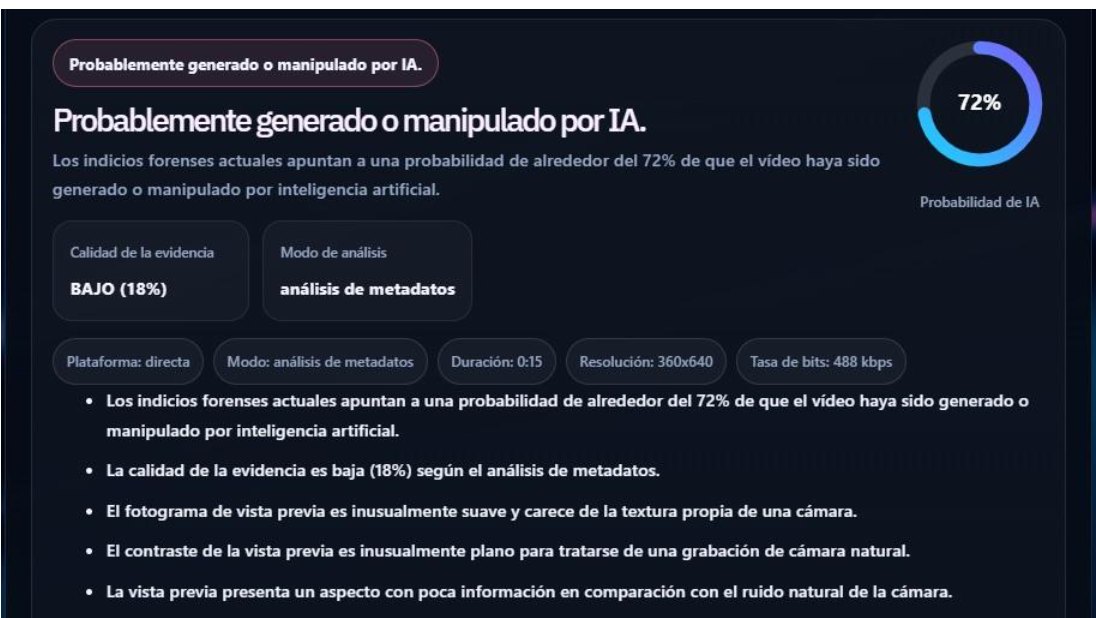
Another analysis of the recording using the DetectVideo AI tool found a 72 per cent probability that it was generated using artificial intelligence (AI).
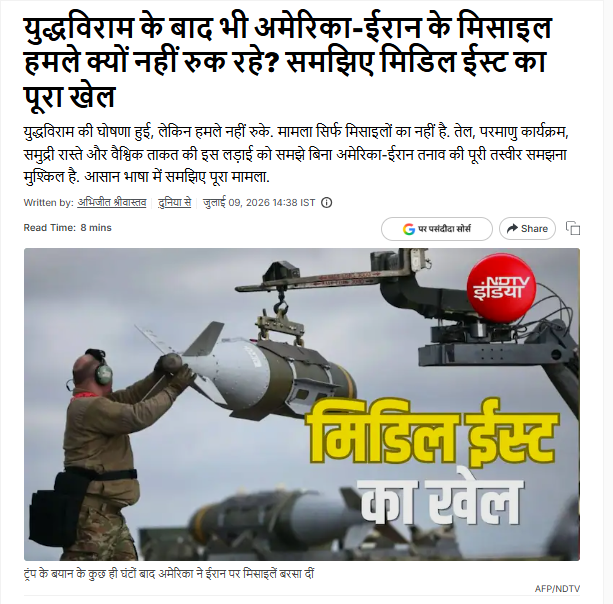
Finally, we searched for recent developments related to the US-Iran tensions using relevant keywords on Google. During the search, we found an NDTV report published on July 9, 2026. The report explains that despite ongoing diplomatic engagement, tensions between the United States and Iran continue to persist due to decades-old political, strategic, and geopolitical disputes. It discusses why incidents of military escalation continue to occur despite repeated attempts at dialogue and de-escalation.
https://ndtv.in/world-news/us-iran-conflict-explained-why-peace-remains-so-elusive-11747960
Conclusion
Our research found that the viral video is not genuine. It is an AI-generated video being circulated with a false claim linking it to recent US military strikes on Iran. There is no credible evidence to suggest that the video depicts any real incident connected to the current US-Iran conflict.

Related Blogs

Introduction
As we delve deeper into the intricate, almost esoteric digital landscape of the 21st century, we are confronted by a new and troubling phenomenon that threatens the very bastions of our personal security. This is not a mere subplot in some dystopian novel but a harsh and palatable reality firmly rooted in today's technologically driven society. We must grapple with the consequences of the alarming evolution of cyber threats, particularly the sophisticated use of artificial intelligence in creating face swaps—a technique now cleverly harnessed by nefarious actors to undermine the bedrock of biometric security systems.
What is GoldPickaxe?
It was amidst the hum of countless servers and data centers that the term 'GoldPickaxe' began to echo, sending shivers down the spines of cybersecurity experts. Originating from the intricate web spun by a group of Chinese hackers as reported in Dark Reading. GoldPickaxe represents the latest in a long lineage of digital predators. It is an astute embodiment of the disguise, blending into the digital environment as a seemingly harmless government service app. But behind its innocuous facade, it bears the intent to ensnare and deceive, with the elderly demographic being especially susceptible to its trap.
Victims, unassuming and trustful, are cajoled into revealing their most sensitive information: phone numbers, private details, and, most alarmingly, their facial data. These virtual reflections, intended to be the safeguard of one's digital persona, are snatched away and misused in a perilous transformation. The attackers harness such biometric data, feeding it into the arcane furnaces of deepfake technology, wherein AI face-swapping crafts eerily accurate and deceptive facsimiles. These digital doppelgängers become the master keys, effortlessly bypassing the sentinel eyes of facial recognition systems that lock the vaults of Southeast Asia's financial institutions.
Through the diligent and unyielding work of the research team at Group-IB, the trajectory of one victim's harrowing ordeal—a Vietnamese individual pilfered of a life-altering $40,000—sheds light on the severity of this technological betrayal. The advancements in deep face technology, once seen as a marvel of AI, now present a clear and present danger, outpacing the mechanisms meant to deter unauthorized access, and leaving the unenlightened multitude unaware and exposed.
Adding weight to the discussion, experts, a potentate in biometric technology, commented with a somber tone: 'This is why we see face swaps as a tool of choice for hackers. It gives the threat actor this incredible level of power and control.' This chilling testament to the potency of digital fraudulence further emphasizes that even seemingly impregnable ecosystems, such as that of Apple’s, are not beyond the reach of these relentless invaders.
New Threat
Emerging from this landscape is the doppelgänger of GoldPickaxe specifically tailored for the iOS landscape—GoldDigger's mutation into GoldPickaxe for Apple's hallowed platform is nothing short of a wake-up call. It engenders not just a single threat but an evolving suite of menaces, including its uncanny offspring, 'GoldDiggerPlus,' which is wielding the terrifying power to piggyback on real-time communications of the affected devices. Continuously refined and updated, these threats become chimeras, each iteration more elusive, more formidable than its predecessor.
One ingenious and insidious tactic exploited by these cyber adversaries is the diversionary use of Apple's TestFlight, a trusted beta testing platform, as a trojan horse for their malware. Upon clampdown by Apple, the hackers, exhibiting an unsettling level of adaptability, inveigle users to endorse MDM profiles, hitherto reserved for corporate device management, thereby chaining these unknowing participants to their will.
How To Protect
Against this stark backdrop, the question of how one might armor oneself against such predation looms large. It is a question with no simple answer, demanding vigilance and proactive measures.
General Vigilance : Aware of the Trojan's advance, Apple is striving to devise countermeasures, yet individuals can take concrete steps to safeguard their digital lives.
Consider Lockdown Mode: It is imperative to exhibit discernment with TestFlight installations, to warily examine MDM profiles, and seriously consider embracing the protective embrace of Lockdown Mode. Activating Lockdown Mode on an iPhone is akin to drawing the portcullis and manning the battlements of one's digital stronghold. The process is straightforward: a journey to the settings menu, a descent into privacy and security, and finally, the sanctification of Lockdown Mode, followed by a device restart. It is a curtailment of convenience, yes, but a potent defense against the malevolence lurking in the unseen digital thicket.
As 'GoldPickaxe' insidiously carves its path into the iOS realm—a rare and unsettling occurrence—it flags the possible twilight of the iPhone's vaunted reputation for tight security. Should these shadow operators set their sights beyond Southeast Asia, angling their digital scalpels towards the U.S., Canada, and other English-speaking enclaves, the consequences could be dire.
Conclusion
Thus, it is imperative that as digital citizens, we fortify ourselves with best practices in cybersecurity. Our journey through cyberspace must be cautious, our digital trails deliberate and sparse. Let the specter of iPhone malware serve as a compelling reason to arm ourselves with knowledge and prudence, the twin guardians that will let us navigate the murky waters of the internet with assurance, outwitting those who weave webs of deceit. In heeding these words, we preserve not only our financial assets but the sanctity of our digital identities against the underhanded schemes of those who would see them usurped.
References
- https://www.timesnownews.com/technology-science/new-ios-malware-stealing-face-id-data-bank-infos-on-iphones-how-to-protect-yourself-article-107761568
- https://www.darkreading.com/application-security/ios-malware-steals-faces-defeat-biometrics-ai-swaps
- https://www.tomsguide.com/computing/malware-adware/first-ever-ios-trojan-discovered-and-its-stealing-face-id-data-to-break-into-bank-accounts
Executive Summary:
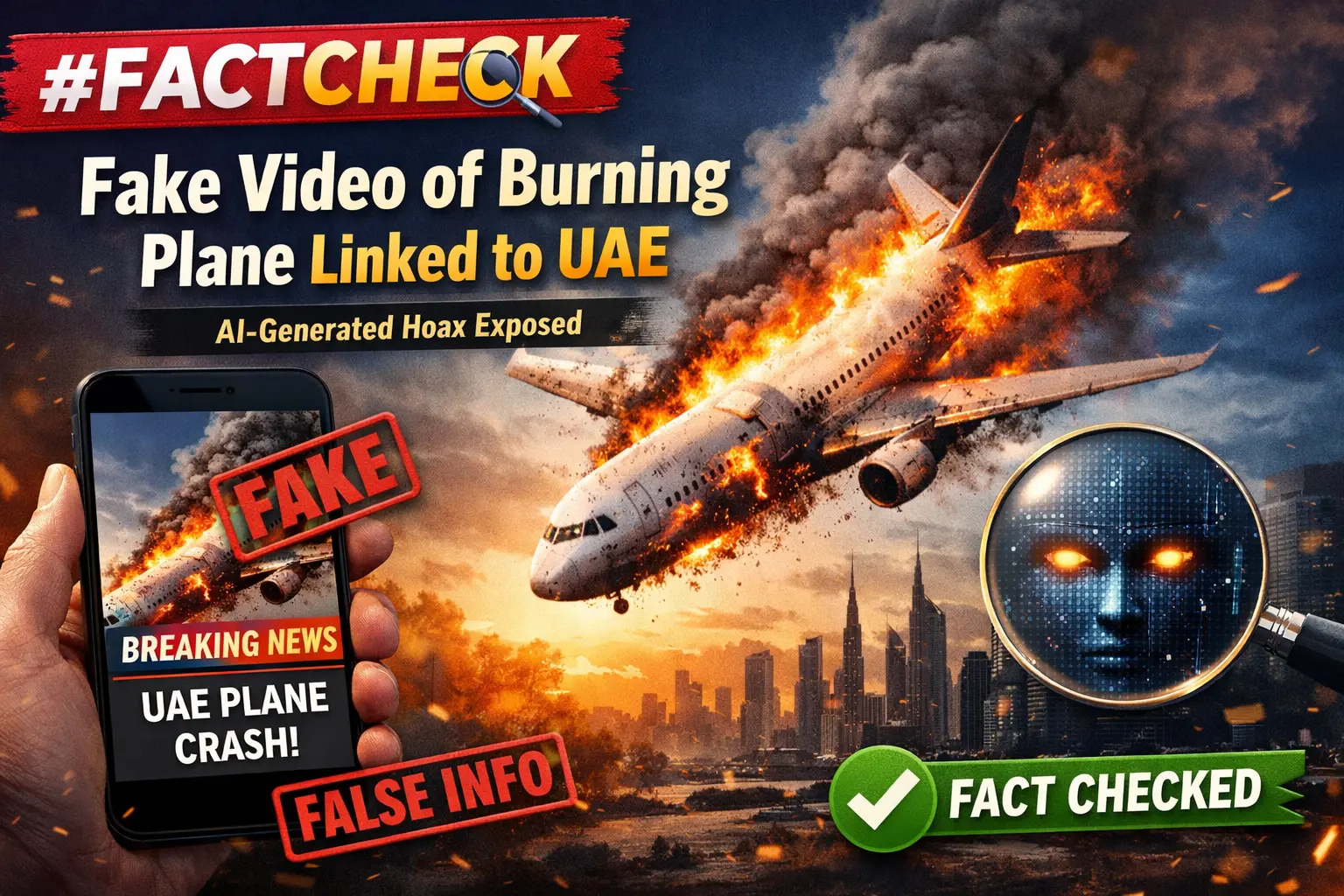
A video is being shared on social media showing an aircraft engulfed in massive flames on an airport runway. The video is being linked to the UAE. It is being claimed that a UAE airport was completely destroyed due to recent drone and missile attacks by Iran. Research by the CyberPeace found the viral claim to be false. Our research revealed that the viral video is not real, but AI-generated.
Claim:
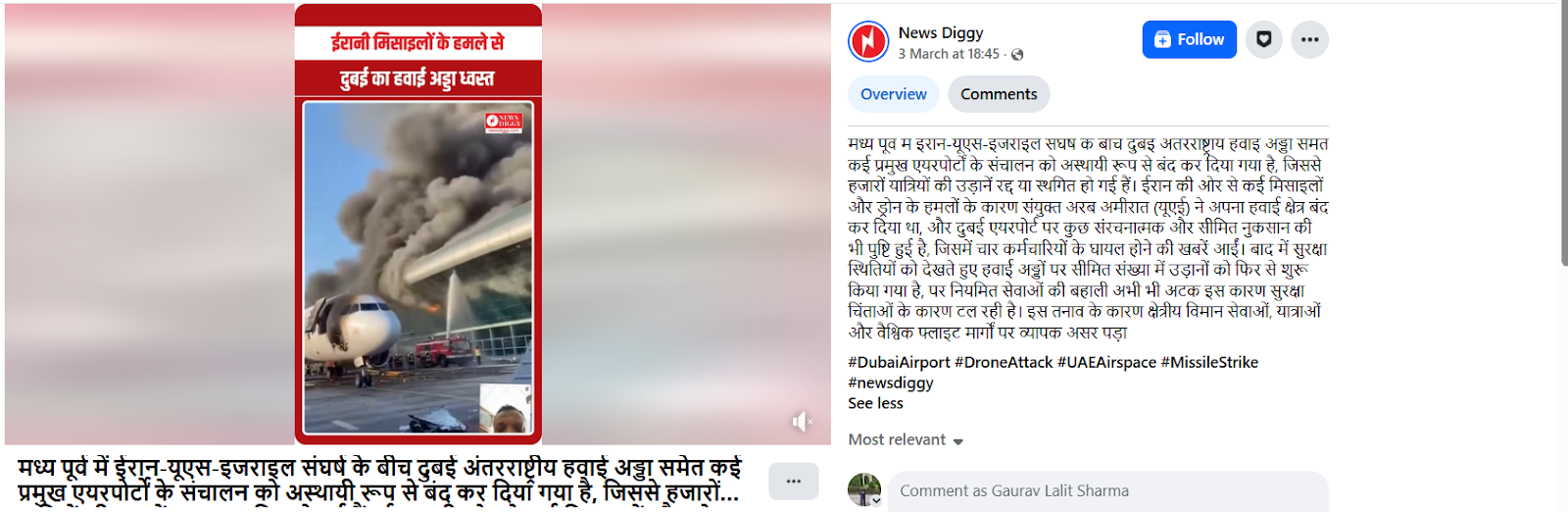
On social media platform Facebook, a user shared the viral video on March 3, 2026, and wrote, “Amid the Iran-US-Israel conflict in the Middle East, operations at several major airports, including Dubai International Airport, have been temporarily suspended, causing thousands of flight cancellations and delays. Due to multiple missile and drone attacks from Iran, the United Arab Emirates (UAE) had shut its airspace, and limited structural damage at Dubai Airport was also confirmed, with reports of four staff members being injured. Later, considering the security situation, a limited number of flights were resumed, but full operations are still delayed due to ongoing safety concerns. This tension has significantly impacted regional aviation, travel, and global flight routes.”
Fact Check:
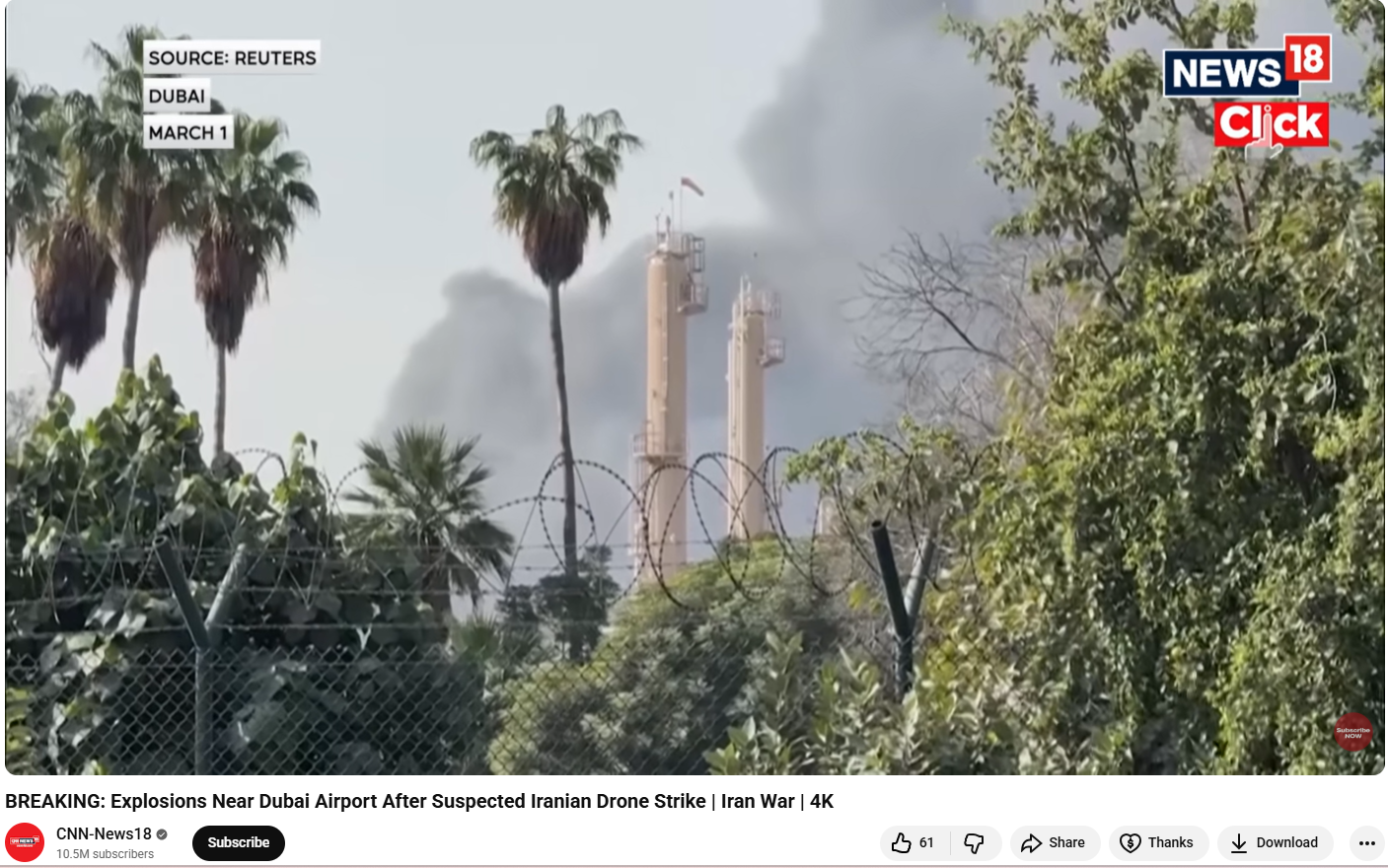
To verify the viral video, we searched relevant keywords on Google. However, we did not find any credible media report confirming the claim.However, we found a video report on the YouTube channel of CNN-News18 mentioning explosions near Dubai Airport after a suspected Iranian drone strike. But the visuals shown in that report are completely different from the viral video.
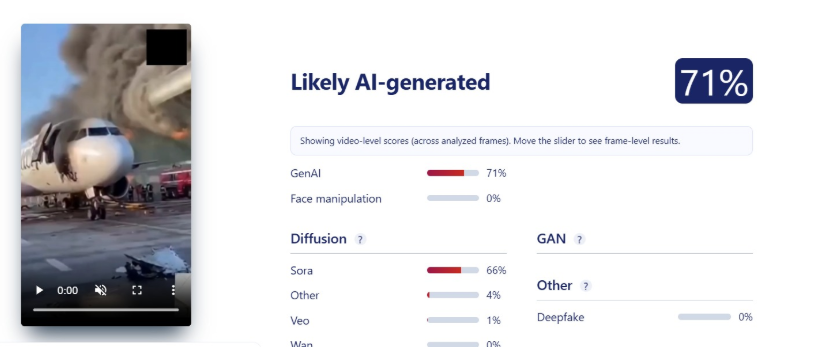
Upon closely examining the viral video, we noticed several inconsistencies, raising suspicion that it might be AI-generated. We then analyzed the video using the AI detection tool Sightengine. The results indicated that the video is 71 percent likely to be AI-generated.
Conclusion:
Our research found that the viral video is not real, but AI-generated.
Executive Summary
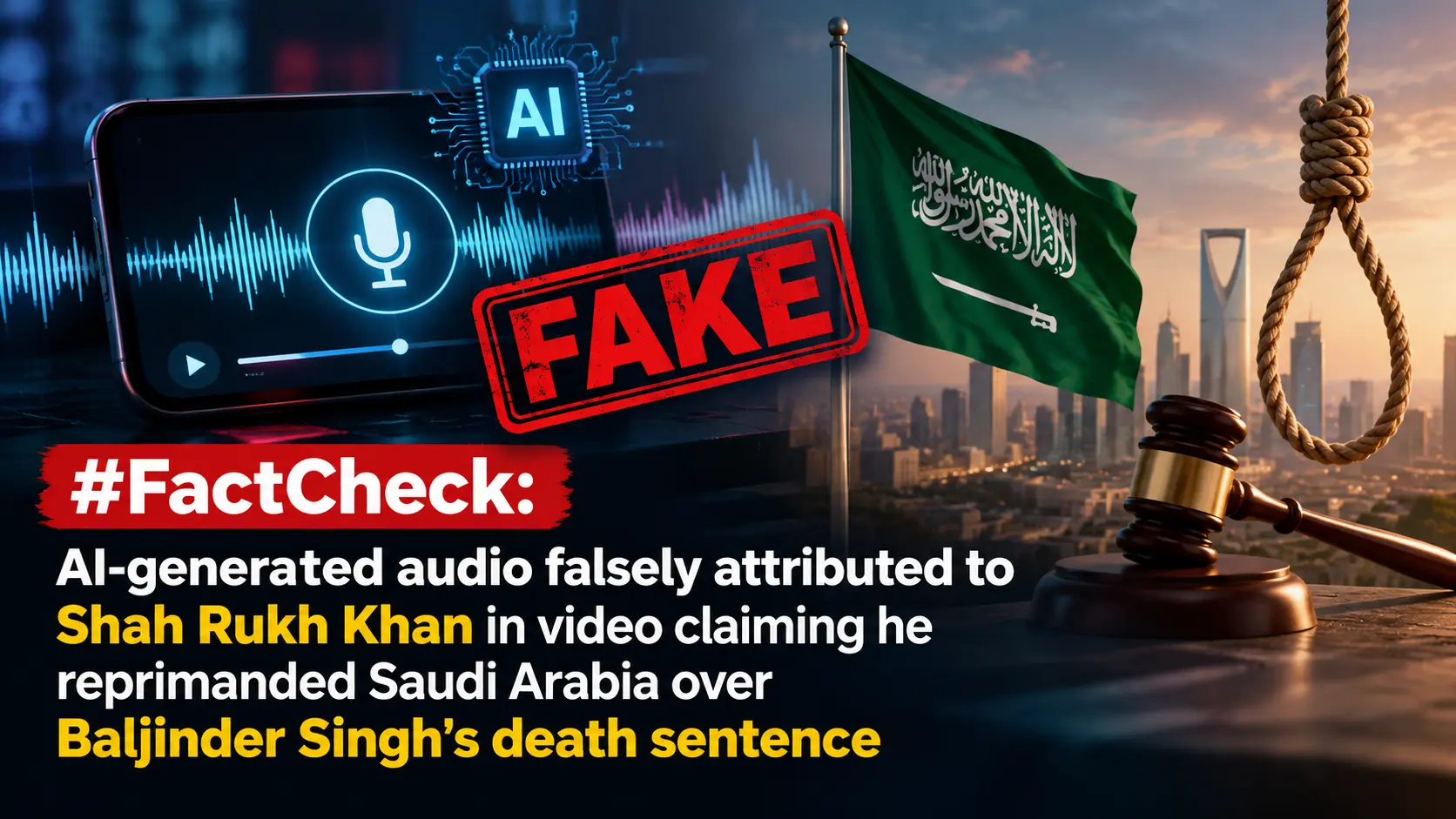
A video is being shared on social media with the claim that actor Shah Rukh Khan reprimanded Saudi Arabia over the death sentence awarded to Baljinder Singh.In the viral video, Shah Rukh Khan is purportedly heard saying, “Our simple and innocent brother Baljinder Singh, a resident of Sujanpur in Punjab’s Pathankot district, has been sentenced to death in Saudi Arabia after being falsely implicated in a drug case as part of a deep conspiracy. But stay strong, my brother.
Nothing will happen to you. I will definitely save you. Your brother is alive, and I swear that I will not let you die alone on that dreaded noose. Instead, I will put all my strength on the line and risk my life to pull you out of that hellish prison and bring you safely back to the soil of Punjab and the land of India.”
CyberPeace Research Wing’s research found the claim to be false. Our research found that the audio used in the viral video is AI-generated.
Claim:
A video is being shared on social media with the claim that actor Shah Rukh Khan reprimanded Saudi Arabia over the death sentence awarded to Baljinder Singh.
https://www.facebook.com/reel/1491107586179716

Fact Check
To verify the claim that Shah Rukh Khan reprimanded Saudi Arabia over the death sentence awarded to Baljinder Singh, we first conducted a Google search using relevant keywords. During the search, we did not find any information related to the viral claim in any credible media report.A reverse image search of the keyframes from the video led us to a video uploaded on The University of Edinburgh’s YouTube account on October 16, 2015, which contains the same segment seen in the viral clip. Notably, the background in the original video is identical to that seen in the viral clip.
In the original video, Shah Rukh Khan can be seen speaking about “life lessons”. During the event, he was conferred an honorary doctorate by the University of Edinburgh. In his address, he shared several unique lessons about life through some of his popular film characters. Shah Rukh Khan spoke about the importance of embracing one’s individuality, while combining humour with self-reflection. He also spoke about facing one’s fears and maintaining self-confidence amid challenges. Sharing anecdotes from his journey in films, Shah Rukh Khan explained how different characters had taught him to look at life from new perspectives.However, he makes no mention of Baljinder Singh anywhere in the video.
https://www.youtube.com/watch?v=VnnXAiTOLbo

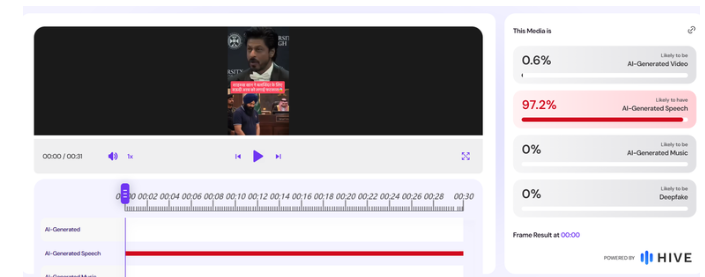
We then checked the viral video using Hive Detect, an AI detection tool. The tool’s analysis indicated that the voice of Shah Rukh Khan in the video was AI-generated, with a 97.2 per cent probability.
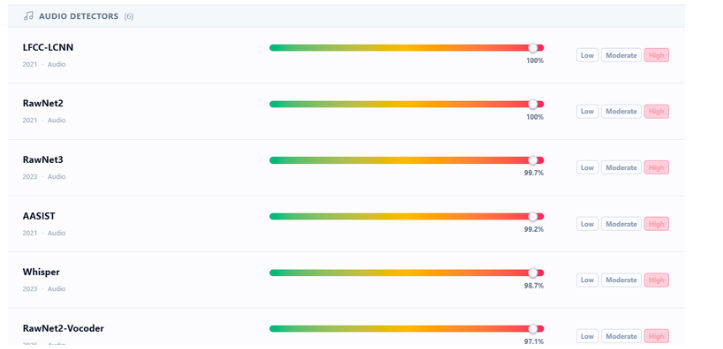
Additionally, six detectors on another AI detection tool, Deepfake-O-Meter, identified Shah Rukh Khan’s voice in the video as highly likely to be AI-generated.
Conclusion
The evidence gathered during our research makes it clear that the claim that Shah Rukh Khan reprimanded Saudi Arabia over the death sentence awarded to Baljinder Singh is false. The audio of Shah Rukh Khan in the viral video is AI-generated.
