
#FactCheck- Viral ‘Prison Torture’ Video Not from Israel, Taken from Iraqi TV Show
Executive Summary
Israel’s parliament, the Knesset, recently passed a bill allowing military courts to impose the death penalty on Palestinians convicted of killing Israelis. Amid this backdrop, a video has gone viral on social media showing men in black uniforms beating detainees inside a prison, with claims linking it to alleged torture by Israeli forces. However, a research by the CyberPeace found the claim to be false. The viral video is not related to Israel or any real incident, but is actually from an Iraqi television series titled “Beit Umm Layla.”
Claim
Sharing the video, a user on X (formerly Twitter) wrote:“Live footage: IDF soldiers always torture Palestinian hostages before executing them. Please don’t let us die in silence.”

Fact Check
To verify the claim, we extracted keyframes from the viral video and conducted a reverse image search. This led us to a longer version of the clip posted on March 9 by the Iraqi channel Al-Iraqiya on its Facebook and Instagram pages.
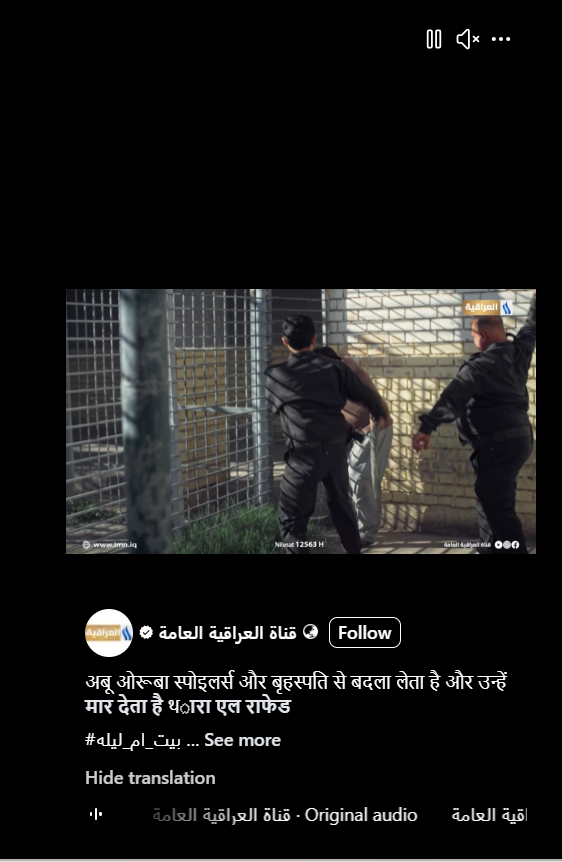
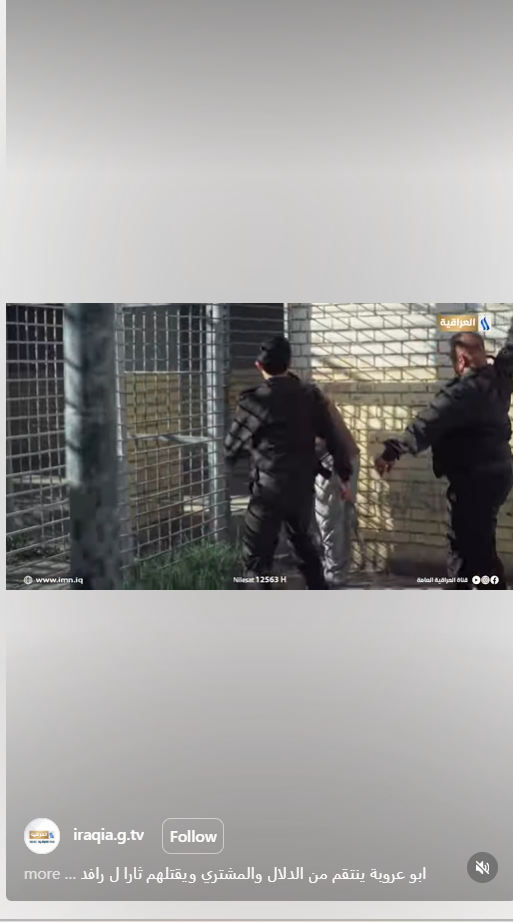
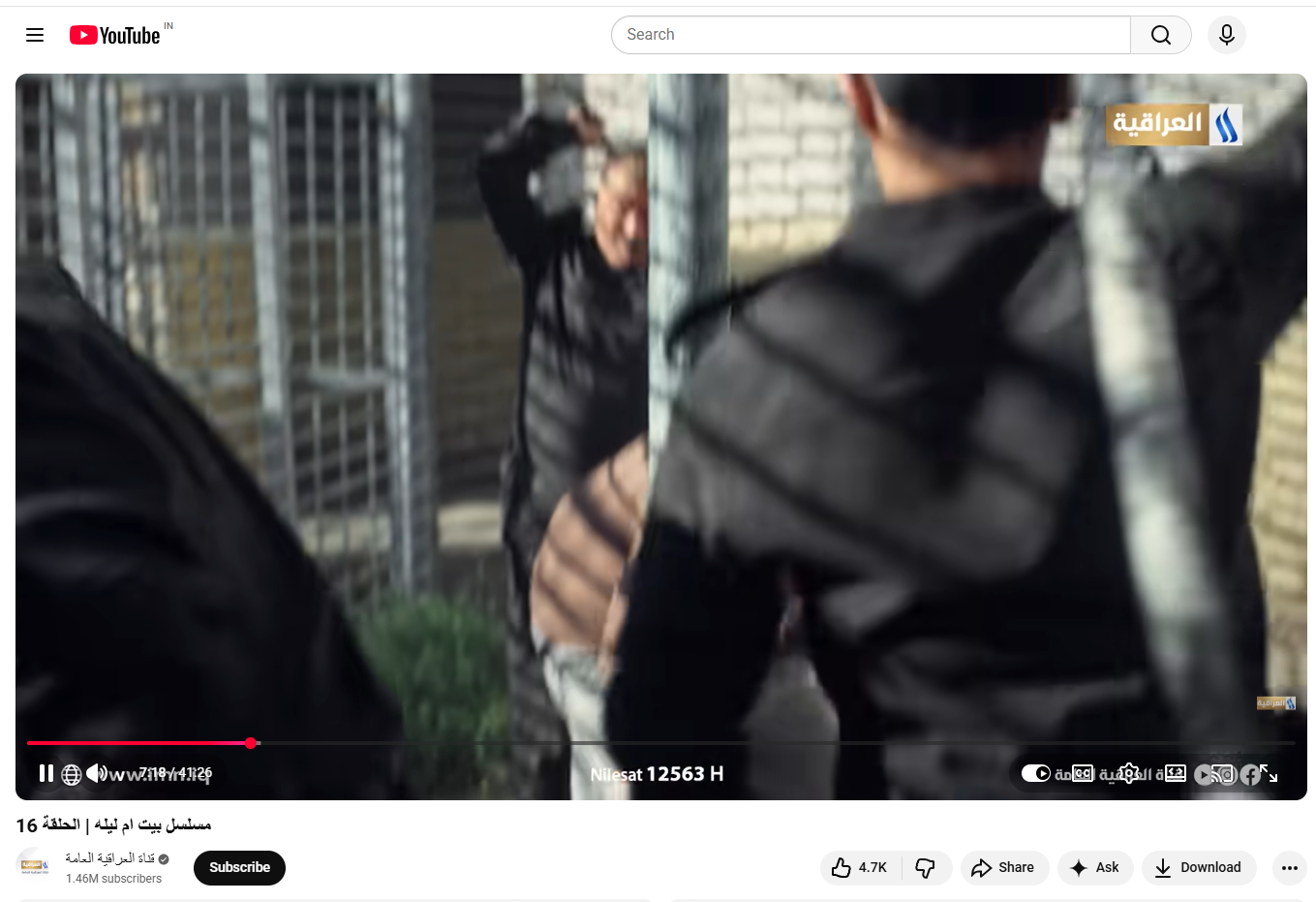
The posts clearly identified the footage as part of “Beit Umm Layla,” a popular Iraqi TV series. Further research showed that the full series is available on Al-Iraqiya’s official YouTube channel, where 25 episodes were uploaded between February 19 and March 20. The viral clip corresponds to Episode 16 of the show.
Additionally, information available on the Arabic entertainment website elCinema indicates that the series, released on February 18, is a socio-political drama focusing on prisoners and the psychological struggles faced by them and their families.
Conclusion
The viral claim is false and misleading. The video does not depict any real incident involving Israeli forces or Palestinian detainees. Instead, it is a fictional scene from an Iraqi television drama series.There is no credible evidence to support the claim that the footage shows torture by Israeli soldiers. The clip has been taken out of context and shared with a misleading narrative to provoke emotional reactions.

Related Blogs
Executive Summary
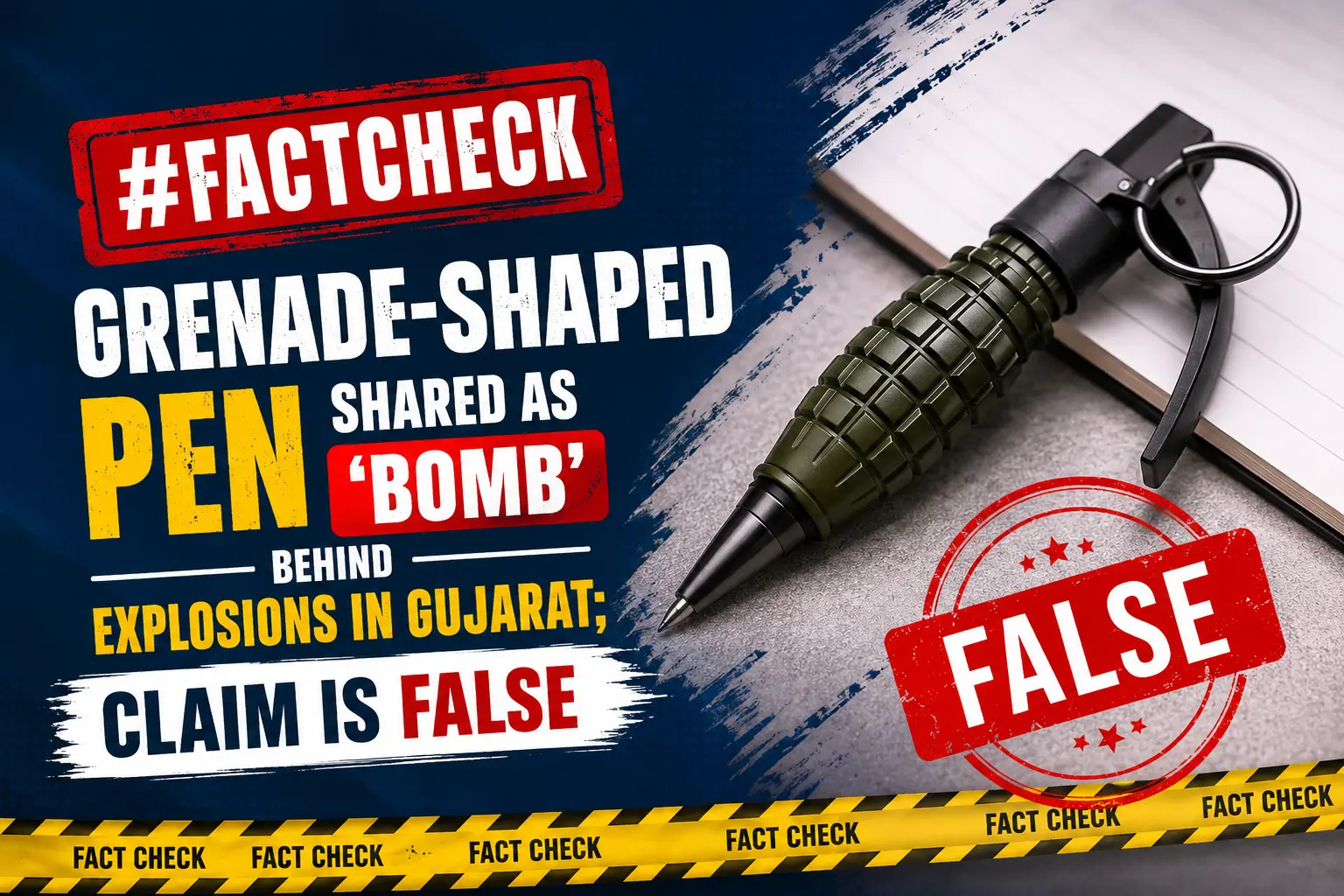
A picture of grenade-style pens is being circulated on social media with the claim that they are actually small bombs responsible for explosions in Gujarat. Users are being warned not to pick up any object resembling the pen, with posts alleging that similar devices are causing blasts in different parts of the state. CyberPeace Research Wing research found the claim to be completely false. The viral image shows a novelty military-style pen, not an explosive device. The same product is listed on the American e-commerce platform Etsy, where it is described as a military tank or grenade-style ink pen that uses refillable ink cartridges.
Claim
The viral image shows five grenade-shaped pens. It is being shared with a caption claiming: “Do not pick up anything that looks like this pen. If you find one lying somewhere, do not touch it. It is a small bomb, and incidents like this are happening wherever such pens are found in Gujarat.”The post also includes photographs of injured individuals to reinforce the claim.
https://www.facebook.com/groups/273456550609813/posts/1721798935775560/
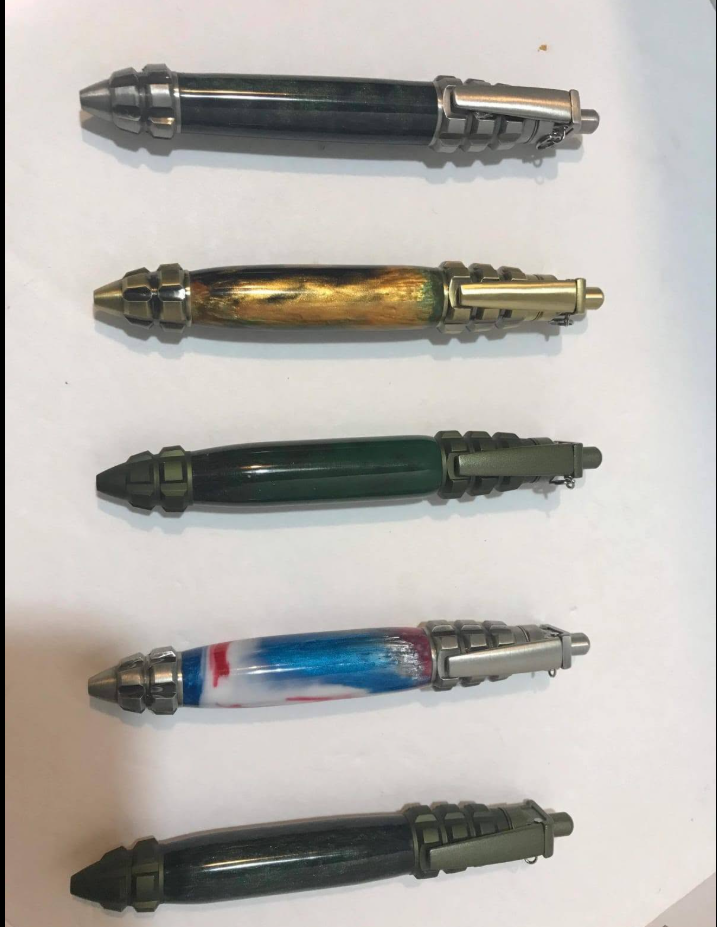
Fact Check
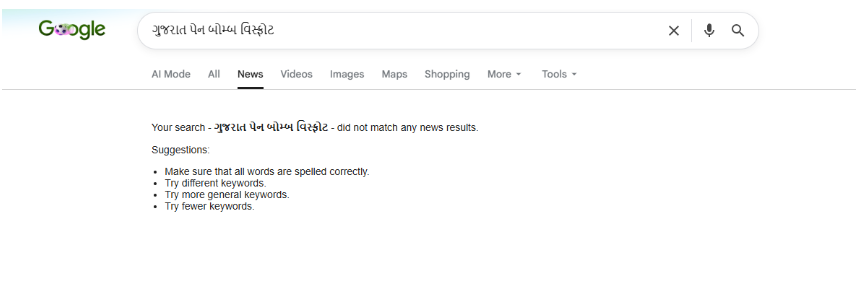
To verify the claim, we first searched for relevant news reports using English and Gujarati keywords. However, we found no credible media reports linking grenade-shaped pens to any explosions in Gujarat. During the search, we came across reports mentioning that certain Khalistani groups had allegedly sent emails threatening blasts in Ahmedabad and Gandhinagar. However, none of those reports mentioned grenade-style pens or any similar explosive devices.
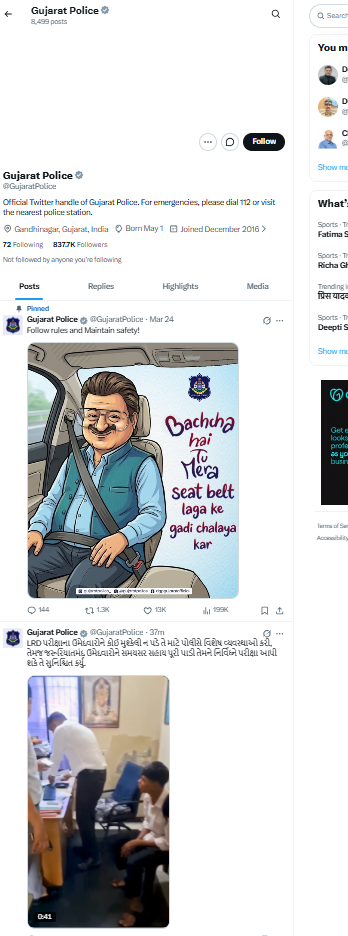
We also checked whether Gujarat Police had issued any warning, advisory, or public notice regarding such objects. However, no such advisory was found on any official Gujarat Police social media handle or public platform.
Next, we conducted a reverse image search of the viral photograph. The search led us to a listing on the American e-commerce website Etsy, where the product is described as a “Military Novelty Tank or Grenade Ink Pen.”
https://www.etsy.com/listing/889188479/military-novelty-tank-or-grenade-ink
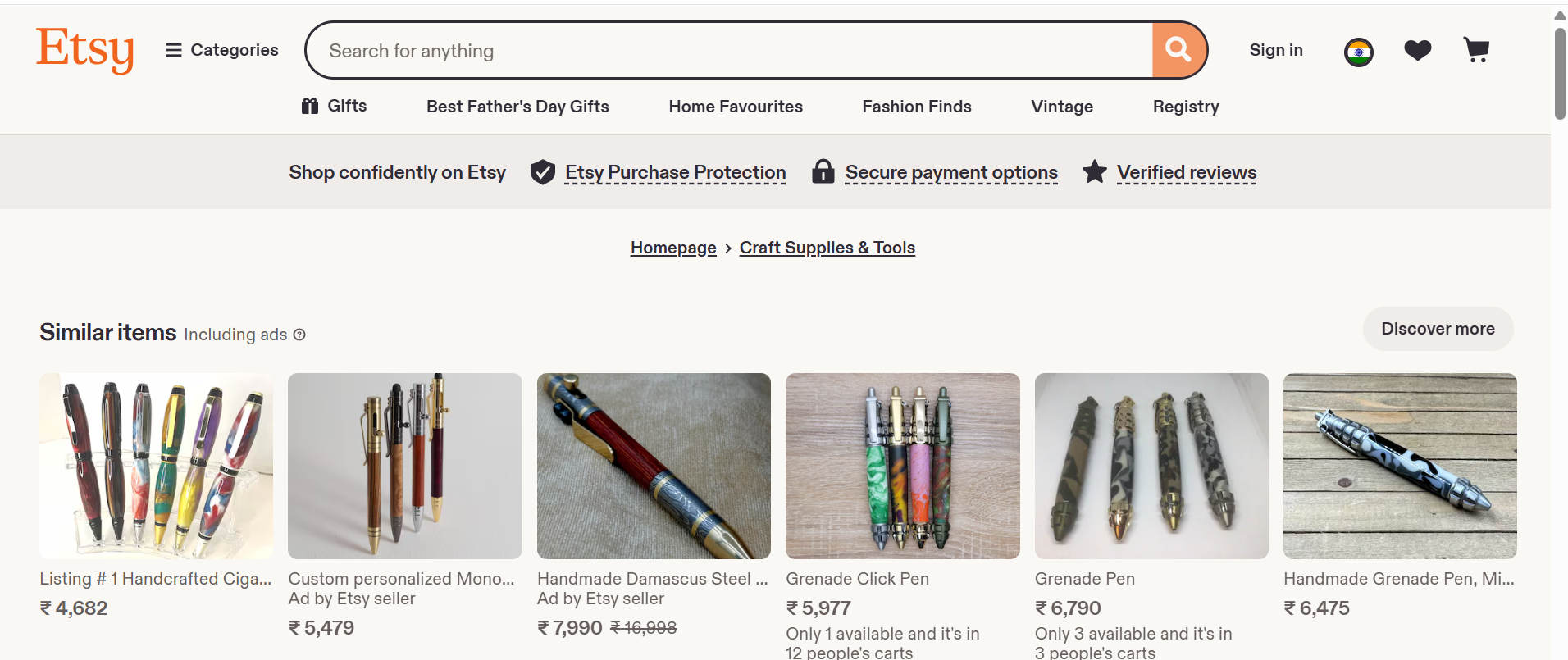
The product description indicates that it is a novelty writing instrument that uses refillable ink cartridges and is intended purely as a decorative or novelty item. We also reviewed Etsy’s prohibited items policy. According to the platform, weapons, explosives, and other dangerous items are not permitted to be sold on the website.
https://www.etsy.com/legal/prohibited/
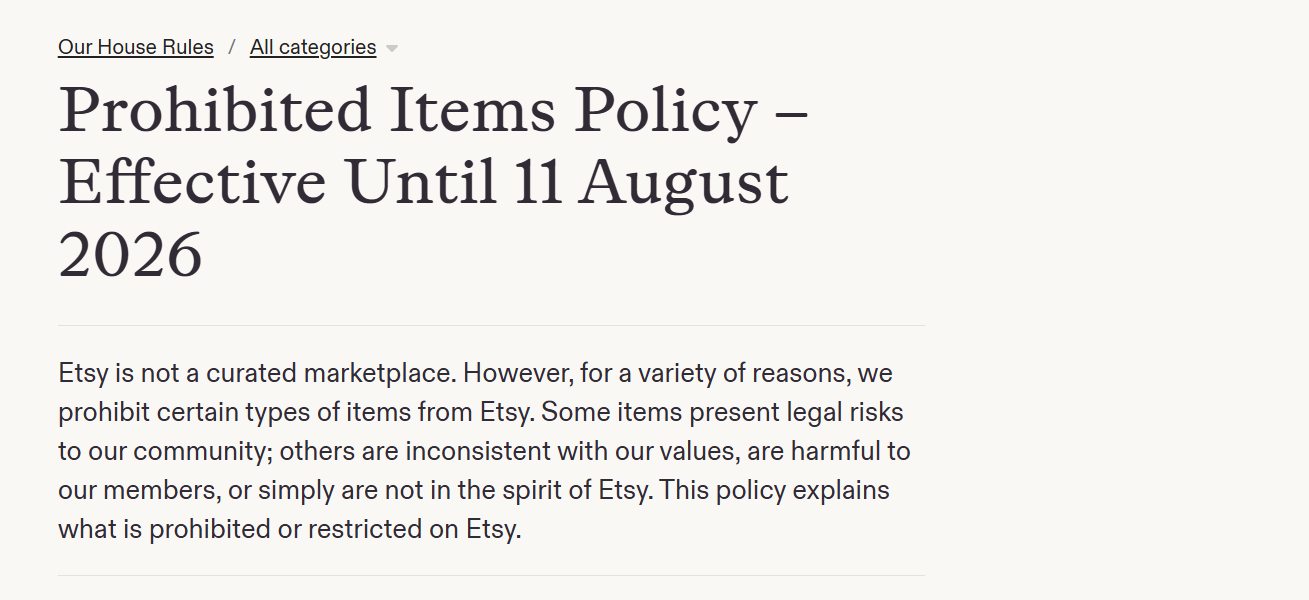
Additionally, we attempted to contact Michael Dobbs, associated with the product listing, for clarification. This report will be updated if a response is received.
Conclusion
The evidence gathered during our research clearly shows that the claim is false. The viral image does not depict a bomb but a novelty grenade-style ink pen sold online. There is no evidence that such pens are causing explosions in Gujarat, and the claim being circulated on social media is entirely misleading.

As e-commerce companies expand their base and sell a wide range of products on their platforms, attackers continue to look for newer avenues to exploit and potential loopholes to perpetuate scams. A recent method used by scammers is the brushing scam, which targets online shoppers to drive sales. As per reports, it is already being conducted on popular and trusted e-commerce websites such as Amazon and Alibaba Express, and online shoppers must exercise caution with regard to the packages they receive.
The Brushing Scam
Deriving its name from China’s e-commerce practice, this scam includes sellers creating and sending fake orders to unsuspecting individuals, posing to be from e-commerce websites in order to ‘brush up’ the sales figures of their product. The products received are usually low quality and contain items such as low-cost jewellery, seeds, and random gadgets, among other things. The aim is to manipulate reviews for a particular product and make it seem popular so other buyers online are encouraged to purchase the items marketed. Most online shoppers today check reviews before making a purchase, and popular items and seemingly-trustworthy reviews can go a long way towards influencing customer behaviour. Since many platforms do include labels to authenticate reviews tied to genuine purchases to counter fake reviews, scammers have evolved a step further to develop an MO for fake reviews that holds up against basic levels of scrutiny. Some of the packages received under the brushing scam also have QR codes which once scanned lead the receiver to malicious websites.
CyberPeace Insights
Mysterious deliveries that have no information but your name and address may seem tempting to many, as receivers might assume that it could be a marketing gig and free products to try for the sake of promoting a product. The credibility of such deliveries increases as they are packaged to show that these are delivered through trusted online shopping and e-commerce sites. However, even though receiving products for free might seem harmless, it is advised that unknown items be dealt with carefully, more so when addressed to an individual with personal details. Receiving an order itself is an indication that personal information such as one’s name and address has been compromised, and it is likely that the sellers are involved in procuring personal information through a third party, often using illegal methods.
Registering complaints to the concerned e-commerce websites is encouraged, as the frequency of cases raises questions and encourages platforms to take action to ensure a secure buying and delivery experience from their end. An awareness of such scams being carried out for their customers could encourage caution on the part of these platforms and prove to be helpful in addressing the issue on multiple levels. On the part of the receivers, they can change the passwords of their e-commerce accounts and use a 2FA (2-factor authentication) for better security. They should also exercise caution while receiving such parcels, and avoid scanning QR codes on suspicious items.
References
- https://www.livemint.com/technology/tech-news/brushing-scam-explained-from-fake-orders-to-reviews-how-fraudsters-are-manipulating-online-shopping-platforms-11735824384866.html
- https://www.indiatvnews.com/technology/news/beware-of-amazon-scams-how-fraudsters-use-fake-reviews-to-sell-counterfeit-products-2025-01-02-969115
- https://www.indiatoday.in/technology/news/story/brushing-scam-now-makes-buzz-as-it-targets-online-shoppers-everything-you-need-to-know-2659172-2025-01-03
- https://www.msn.com/en-in/money/news/brushing-scam-now-makes-buzz-as-it-targets-online-shoppers-everything-you-need-to-know/ar-AA1wTvon
Executive Summary
A picture is rapidly going viral on social media, showing Indian cricketer Virat Kohli and actor Anushka Sharma having breakfast together. Users are sharing this photo, presenting it as a "candid" (real) moment.
Research by the CyberPeace Research Wing revealed that the photo of Virat Kohli and Anushka Sharma having breakfast is completely fake. This image does not depict a real moment, but has been created using Artificial Intelligence (AI).
Claim
A picture is rapidly going viral on social media, showing Indian cricketer Virat Kohli and actor Anushka Sharma having breakfast together. Users are sharing this photo, presenting it as a "candid" (real) moment.
https://www.facebook.com/reel/951138134598230
Fact Check
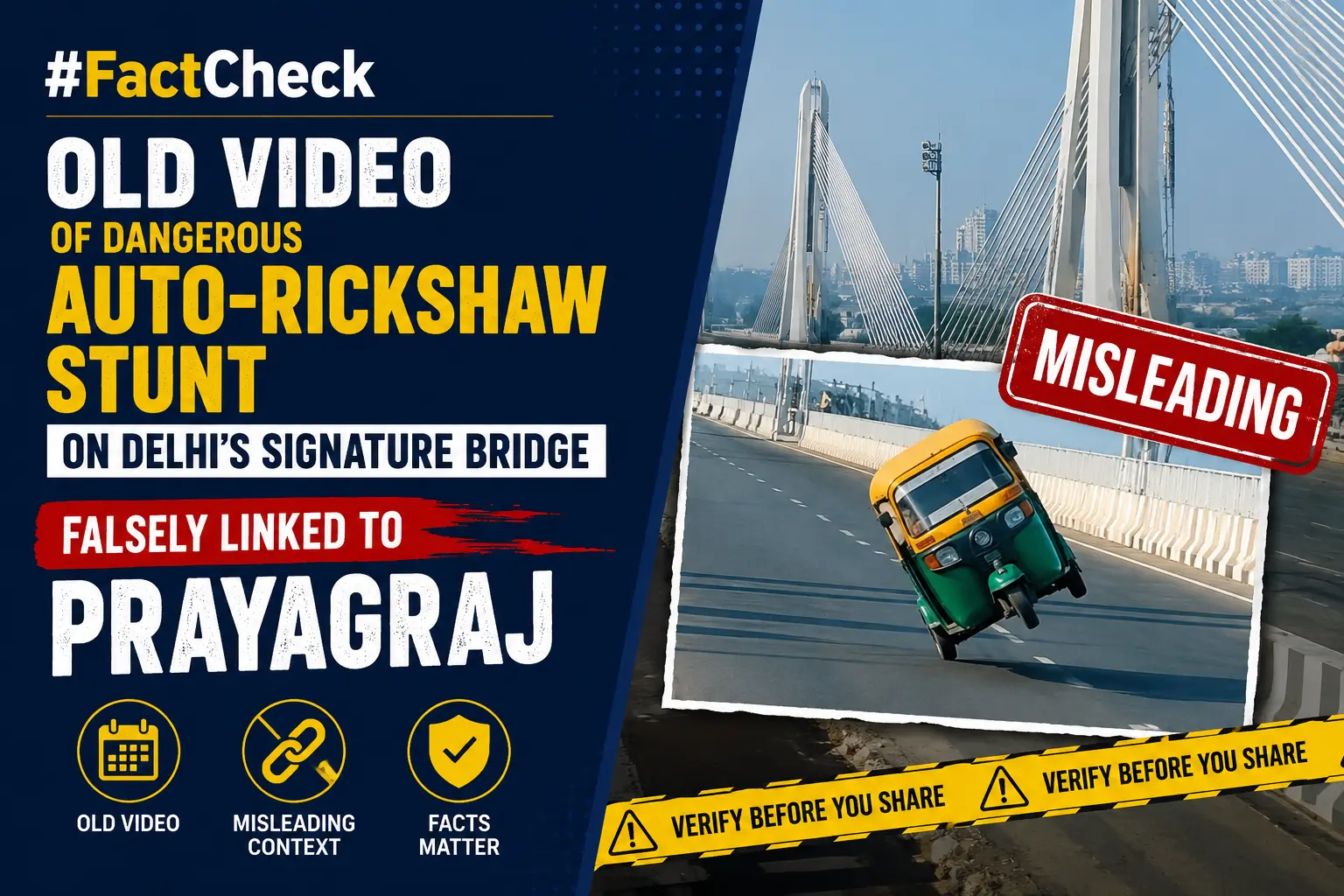
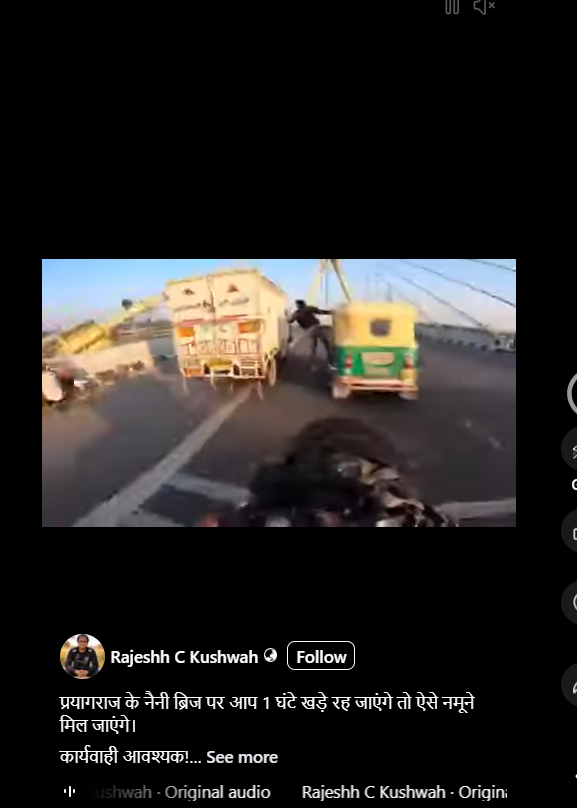
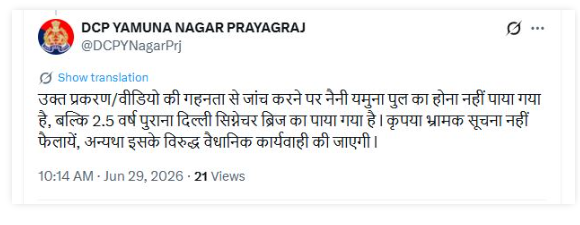
We extracted several keyframes from the viral video and searched them using the Google Lens tool. We found that this video was also quite viral on X (formerly Twitter). Responding to users, the official X handle of DCP Yamuna Nagar, Prayagraj, stated, “Upon a detailed research of the said matter/video, it has been found that it is not from the Naini Yamuna Bridge, but is a 2.5-year-old video from Delhi’s Signature Bridge. Please do not spread misleading information, otherwise legal action will be initiated against it.”
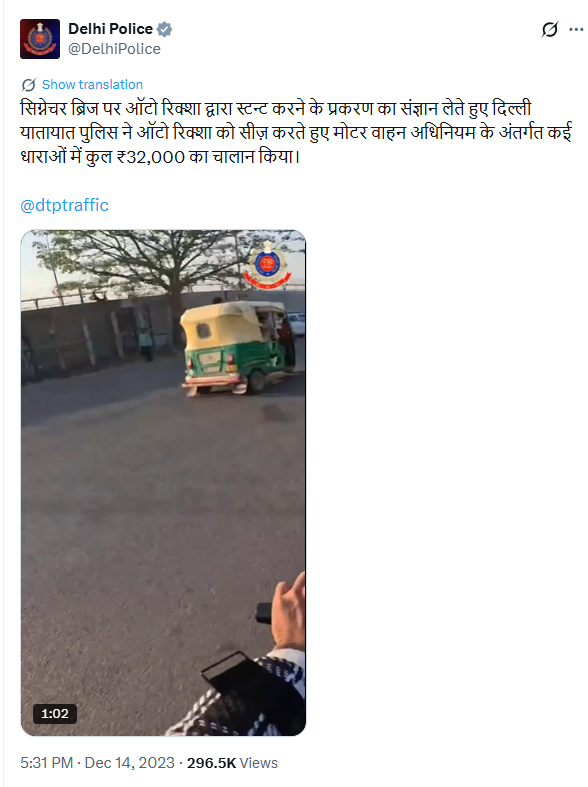
During our search, we found a post on the official X handle of the Delhi Police. Sharing the viral video, they wrote that taking cognizance of the auto-rickshaw stunt incident on the Signature Bridge, the Delhi Traffic Police seized the auto-rickshaw and issued a challan totaling ₹32,000 under various sections of the Motor Vehicles Act.
https://x.com/DelhiPolice/status/1735268792434057352?s=20
Conclusion
In our research, the viral post turned out to be fake. A video of an incident that took place on Delhi's Signature Bridge in 2023 is now being falsely circulated to spread misinformation as an incident from a bridge in Prayagraj. No such incident has taken place on the Naini Bridge in Prayagraj.
