
#FactCheck- Old Ladakh Protest Video Falsely Shared as Violence Following Sonam Wangchuk’s Arrest
Executive Summary
Last September, protests were held in Ladakh over several demands, including full statehood, extension of Sixth Schedule protections, separate Lok Sabha seats for Leh and Kargil, and reservation in jobs. During that period, some demonstrations turned violent. Since then, talks between stakeholders and the government have continued regarding these demands. Amid this backdrop, Pakistani propaganda handles on social media are sharing a video of a protest and claiming that violent demonstrations have erupted in Ladakh following the arrest of education reformer Sonam Wangchuk. CyberPeace Research Wing research found the claim to be misleading. The claim regarding Sonam Wangchuk’s arrest is false, while the viral video is actually from protests that took place in September last year.
Claim:
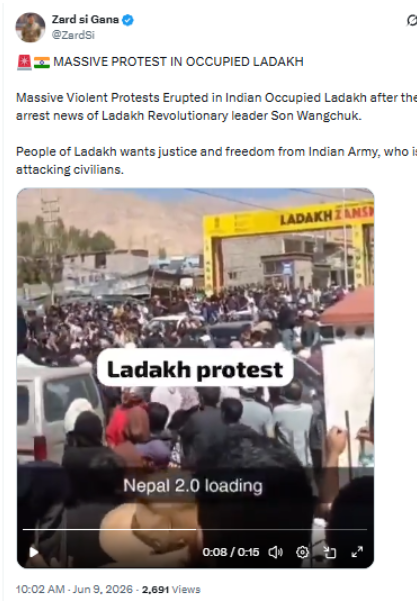
Sharing the video, a user wrote: “Massive protests in Ladakh. Violent demonstrations have erupted after reports of the arrest of Ladakh’s revolutionary leader Sonam Wangchuk. The people of Ladakh seek justice and freedom from the Indian Army, which is attacking civilians.”
https://x.com/ZardSi/status/2064204063248695393?s=20
Fact Check:
Our research found the claim to be misleading. The viral video is from protests held in September last year, and the claim that Sonam Wangchuk has been arrested is also false. We first converted the video into keyframes and conducted a reverse image search using Google Lens. This led us to several videos and news reports covering the same incident. The viral footage was found in a news report uploaded on September 24, 2025, by Asianet News English on YouTube.
https://www.youtube.com/@asianetnewsenglish
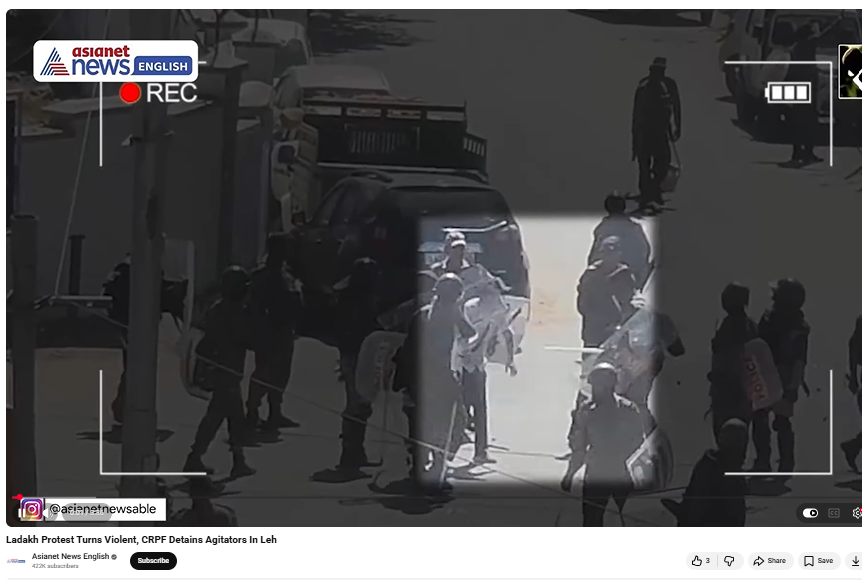
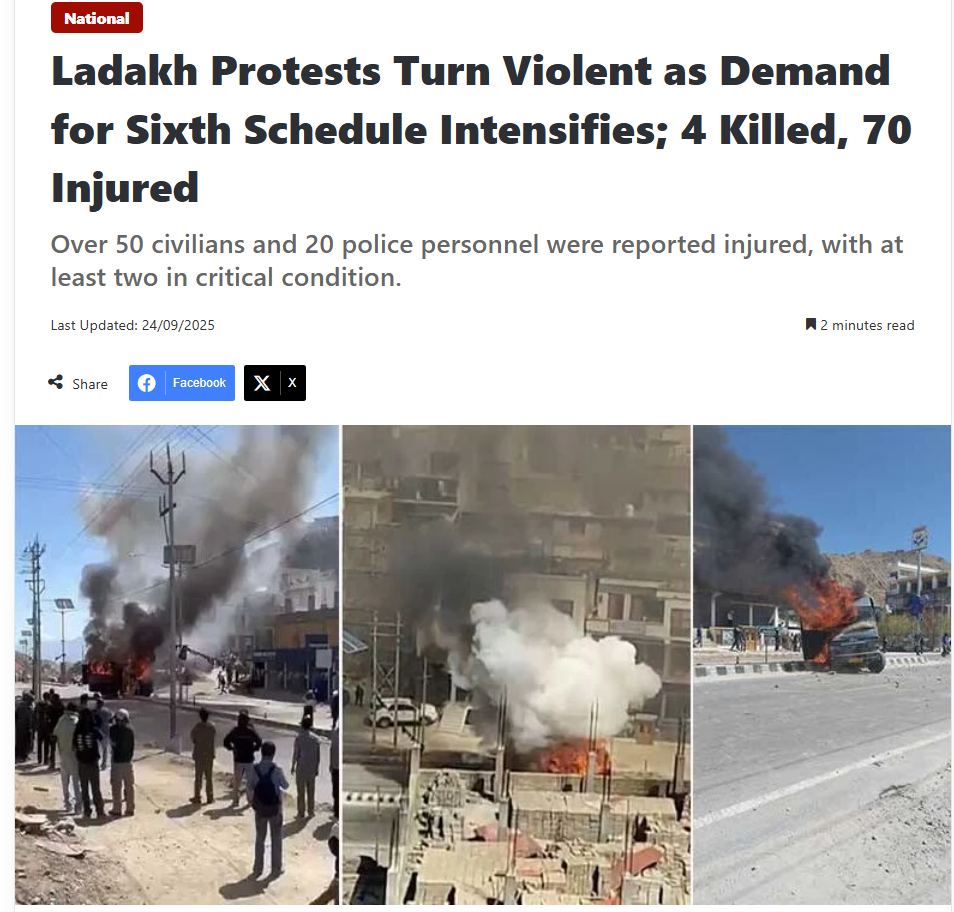
According to the information provided with the video, large-scale protests took place in Leh in support of demands for Sixth Schedule status and full statehood for Ladakh. The movement turned violent following clashes with police, and protesters allegedly set fire to a BJP office in Leh. CRPF personnel and local police later detained several protesters, bringing the situation under control. We also found a report published by Arunachal24, which stated that at least four people were killed and more than 70 injured in violent clashes between protesters demanding statehood and constitutional safeguards for Ladakh and security forces. The report further mentioned that protesters set fire to a local BJP office and a CRPF vehicle, following which authorities imposed a strict curfew across Leh.
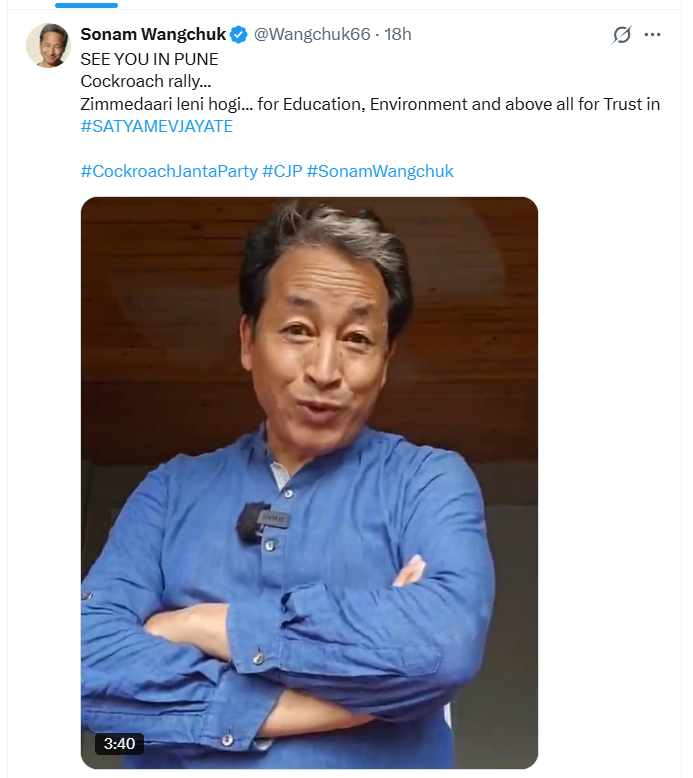
Our team also found that the claim about Sonam Wangchuk’s arrest is entirely false. Wangchuk remains active on social media and had posted an update on June 10, indicating that he had not been detained.
Conclusion:
The fact-check clearly shows that the viral claim is misleading. There is no evidence that Sonam Wangchuk has been arrested. The viral video is not recent and actually shows protests that took place in Ladakh in September 2025.

Related Blogs

Executive Summary
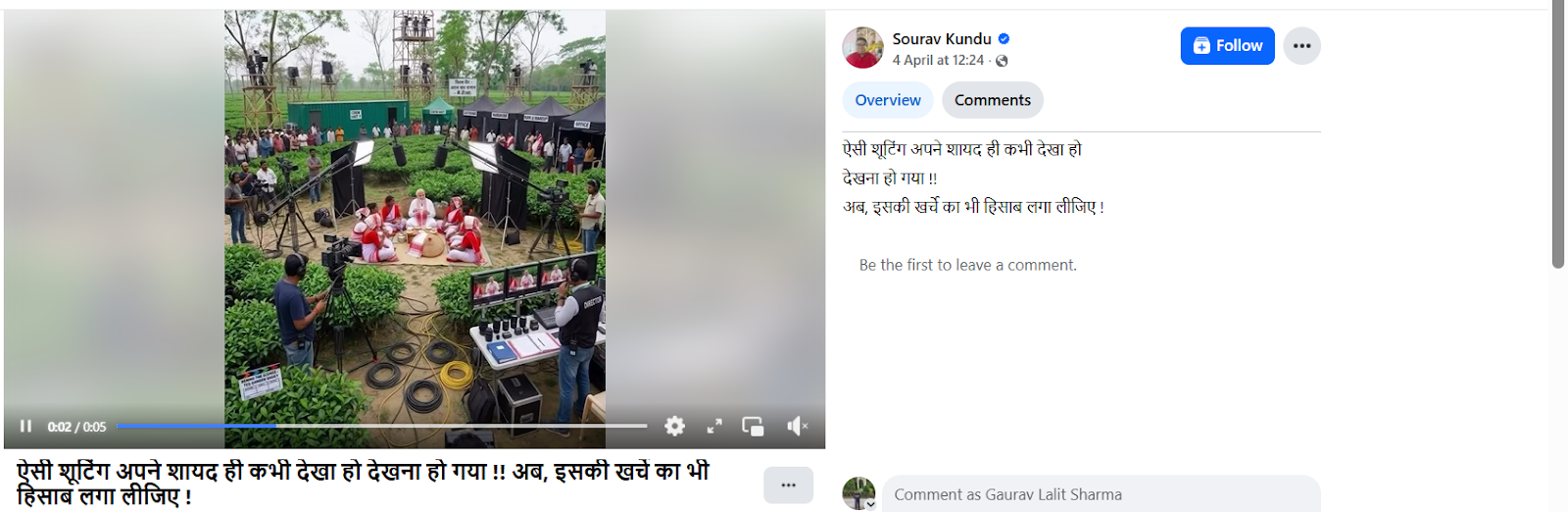
An image of Prime Minister Narendra Modi is being widely circulated on social media. The picture is being shared with the claim that during an election campaign in Assam, a full-fledged shooting set was arranged in a tea garden where Modi interacted with women workers, complete with cameras, microphones, lights, and a director-led production team. However, research by the CyberPeace has found the claim to be false. Our research reveals that the viral image is AI-generated and is being shared with a misleading narrative.
Claim
An Instagram user shared the viral image with the caption suggesting that such a large-scale “shoot” setup had been arranged and questioned the cost involved.
Post link:
Fact Check
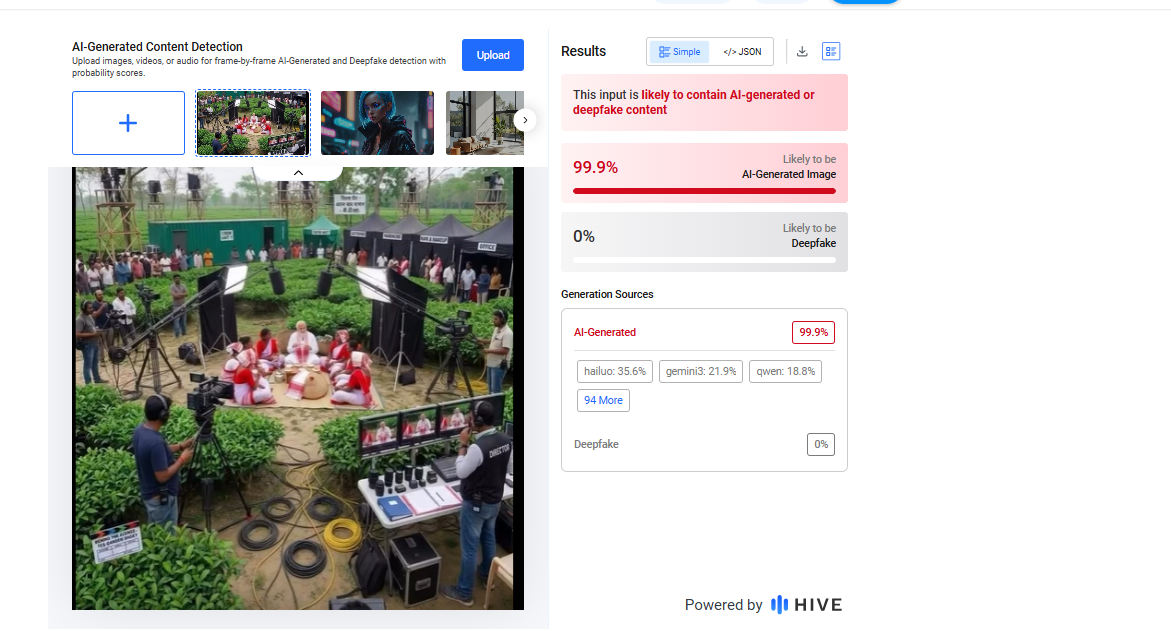
To verify the claim, we conducted a keyword-based search on Google. However, we did not find any credible media reports supporting the claim that such a shooting setup was arranged during Prime Minister Modi’s visit to Assam. Upon closely examining the viral image, we noticed several visual inconsistencies that raised suspicion about it being artificially generated. To confirm this, we analyzed the image using the AI detection tool Hive Moderation, which indicated that the image is approximately 99% AI-generated.
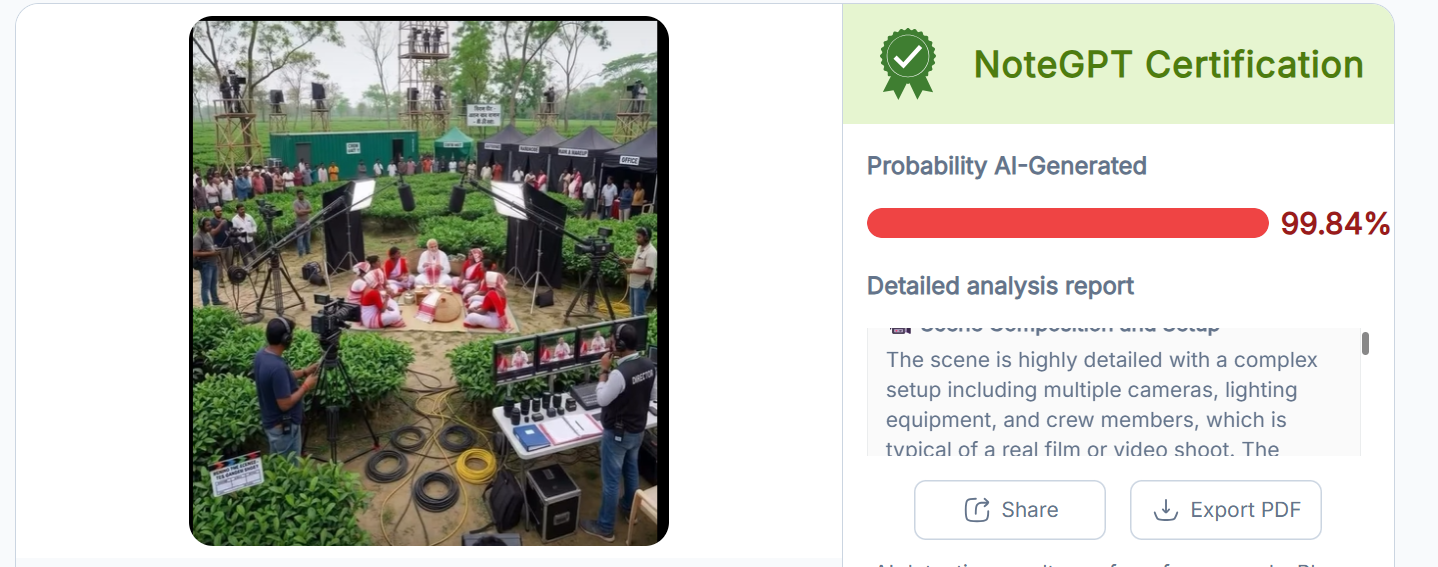
To further validate the findings, we also tested the image using another AI detection tool, NoteGPT, which similarly classified the image as 99% AI-generated.
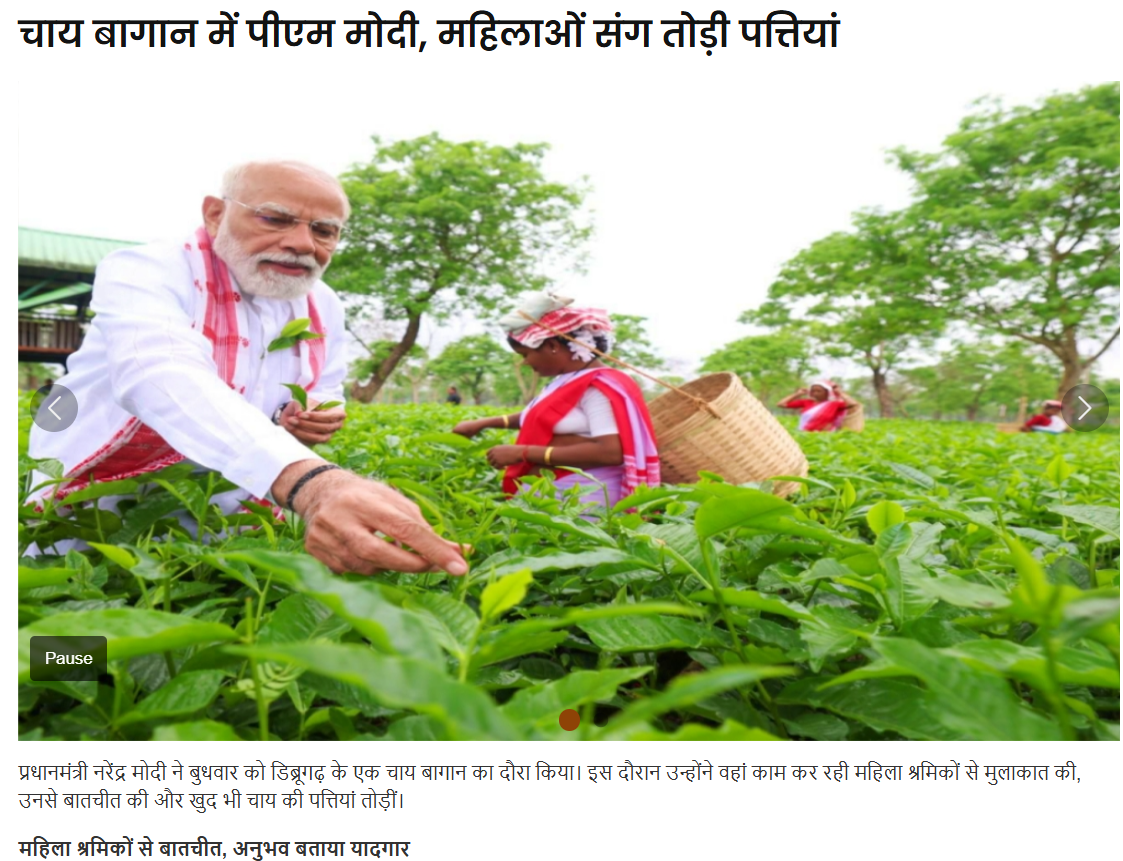
For context, ahead of the 2026 Assam Assembly elections, Prime Minister Narendra Modi has been on a campaign visit to the state. According to a report by DD News, he visited a tea garden in Dibrugarh, where he interacted with women workers and even plucked tea leaves himself.
Conclusion
Our research clearly establishes that the viral image of Prime Minister Narendra Modi is not authentic and has been digitally created using AI tools. There is no evidence to support the claim that a staged shooting setup involving cameras, lights, and a production crew was arranged during his visit. The image is being circulated with a misleading narrative to create a false impression. This case highlights how AI-generated visuals can be used to distort real events and spread misinformation.
.jpeg)
Introduction
Quantum mechanics is not a new field. It finds its roots in the works of physicists such as Niels Bohr in the 1920s, and has informed the development of technologies like nuclear power in the past. But with developments in science and engineering, we are at the cusp of harnessing quantum mechanics for a new wave of real-world uses in sensing and metrology, computing, networking, security, and more. While at different stages of development, quantum technologies have the potential to revolutionise global security, economic systems, and digital infrastructure. The science is dazzling, but it is equally urgent to start preparing for its broader impact on society, especially regarding privacy and digital security. This article explores quantum computing, its threat to information integrity, and global interdependencies as they exist today, and discusses policy areas that should be addressed.
What Is Quantum Computing?
Classical computers use binary bits (0 or 1) to represent and process information. This binary system forms the base of modern computing. But quantum computers use qubits (quantum bits) as a basic unit, which can exist in multiple states ( 0, 1, both, or with other qubits) simultaneously due to quantum principles like superposition and entanglement. This creates an infinite range of possibilities in information processing and allows quantum machines to perform complex computations at speeds impossible for traditional computers. While still in their early stages, large-scale quantum computers could eventually:
- Break modern encryption systems
- Model complex molecules for drug discovery
- Optimise global logistics and financial systems
- Accelerate AI and machine learning
While this could eventually present significant opportunities in fields such as health innovation, material sciences, climate modelling, and cybersecurity, challenges will continue to arise even before the technology is ready for commercial application. Policymakers must start anticipating their impact.
Threats
Policy solutions surrounding quantum technologies will depend on the pace of development of the elements of the quantum ecosystem. However, the most urgent concerns regarding quantum computing applications are the risk to encryption and the impact on market competition.
1. Cybersecurity Threat: Digital infrastructure today (e.g., cloud services, networks, servers, etc.) across sectors such as government, banking and finance, healthcare, energy, etc., depends on encryption for secure data handling and communications. Threat actors can utilise quantum computers to break this encryption. Widely used asymmetric encryption keys, such as RSA or ECC, are particularly susceptible to being broken. Threat actors could "harvest now, decrypt later”- steal encrypted data now and decrypt it later when quantum capabilities mature. Although AES-256, a symmetric encryption standard, is currently considered resistant to quantum decryption, it only protects data after a secure connection is established through a process that today relies on RSA or ECC. This is why governments and companies are racing to adopt Post- Quantum Cryptography (PQC) and quantum key distribution (QKD) to protect security and privacy in digital infrastructure.
2. Market Monopoly: Quantum computing demands significant investments in infrastructure, talent, and research, which only a handful of countries and companies currently possess. As a result, firms that develop early quantum advantage may gain unprecedented competitive leverage through offerings such as quantum-as-a-service, disrupting encryption-dependent industries, or accelerating innovation in pharmaceuticals, finance, and logistics. This could reinforce the existing power asymmetries in the global digital economy. Given these challenges, proactive and forward-looking policy frameworks are critical.
What Should Quantum Computing Policy Cover?
Commercial quantum computing will transform many industries. Policy will have to be flexible and be developed in iterations to account for fast-paced developments in the field. It will also require enduring international collaboration to effectively address a broad range of concerns, including ethics, security, privacy, competition, and workforce implications.
1. Cybersecurity and Encryption: Quantum policy should prioritise the development and standardisation of quantum-resistant encryption methods. This includes ongoing research into Post-Quantum Cryptography (PQC) algorithms and their integration into digital infrastructure. Global policy will need to align national efforts with international standards to create unified quantum-safe encryption protocols.
2. Market Competition and Access: Given the high barriers to entry, regulatory frameworks should promote fair competition, enabling smaller players like startups and developing economies to participate meaningfully in the quantum economy. Frameworks to ensure equitable access, interoperability, and fair competition will become imperative as the quantum ecosystem matures so that society can reap its benefits as a whole.
4. Ethical Considerations: Policymakers will have to consider the impact on privacy and security, and push for the responsible use of quantum capabilities. This includes ensuring that quantum advances do not contribute to cybercrime, disproportionate surveillance, or human rights violations.
5. International Standard-Setting: Setting benchmarks, shared terminologies, and measurement standards will ensure interoperability and security across diverse stakeholders and facilitate global collaboration in quantum research and infrastructure.
6. Military and Defence Implications: Militarisation of quantum technologies is a growing concern, and national security affairs related to quantum espionage are being urgently explored. Nations will have to develop regulations to protect sensitive data and intellectual property from quantum-enabled attacks.
7. Workforce Development and Education: Policies should encourage quantum computing education at various levels to ensure a steady pipeline of talent and foster cross-disciplinary programs that blend quantum computing with fields like machine learning, AI, and engineering.
8. Environmental and Societal Impact: Quantum computing hardware requires specialised conditions such as extreme cooling. Policy will have to address the environmental footprint of the infrastructure and energy consumption of large-scale quantum systems. Broader societal impacts of quantum computing, including potential job displacement, accessibility issues, and the equitable distribution of quantum computing benefits, will have to be explored.
Conclusion
Like nuclear power and AI, the new wave of quantum technologies is expected to be an exciting paradigm shift for society. While they can bring numerous benefits to commercial operations and address societal challenges, they also pose significant risks to global information security. Quantum policy will require regulatory, strategic, and ethical frameworks to govern the rise of these technologies, especially as they intersect with national security, global competition, and privacy. Policymakers must act in collaboration to mitigate unethical use of these technologies and the entrenchment of digital divides across countries. The OECD’s Anticipatory Governance of Emerging Technologies provides a framework of essential values like respect for human rights, privacy, and sustainable development, which can be used to set a baseline, so that quantum computing and related technologies benefit society as a whole.
References
- https://www.weforum.org/stories/2024/07/explainer-what-is-quantum-technology/
- https://www.paconsulting.com/insights/what-is-quantum-technology
- https://delinea.com/blog/quantum-safe-encryption#:~:text=This%20can%20result%20in%20AES,%2D128%20to%20AES%2D256.
- https://www.oecd.org/en/publications/a-quantum-technologies-policy-primer_fd1153c3-en.html

Executive Summary
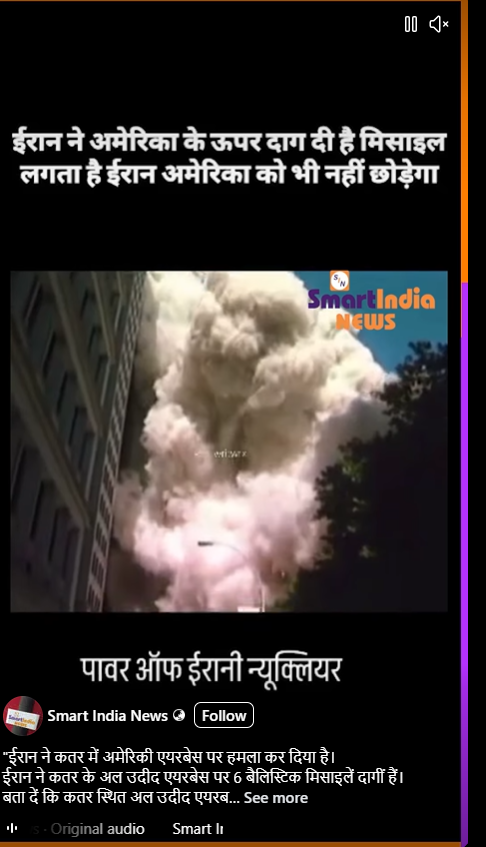
A video showing thick smoke rising from a building and people running in panic is being shared on social media. The video is being circulated with the claim that it shows Iran launching a missile attack on the United States.CyberPeace’s research found the claim to be misleading. Our probe revealed that the video is not related to any recent incident. The viral clip is actually from the September 11, 2001 terrorist attacks on the World Trade Center in the United States and is being falsely shared as footage of an alleged Iranian missile strike on the US.
Claim:
An Instagram user shared the video claiming, “Iran has attacked a US airbase in Qatar. Iran has fired six ballistic missiles at the Al Udeid Airbase in Qatar. Al Udeid Airbase is the largest US military base in West Asia.”
Links to the post and its archived version are provided below.
Fact Check:
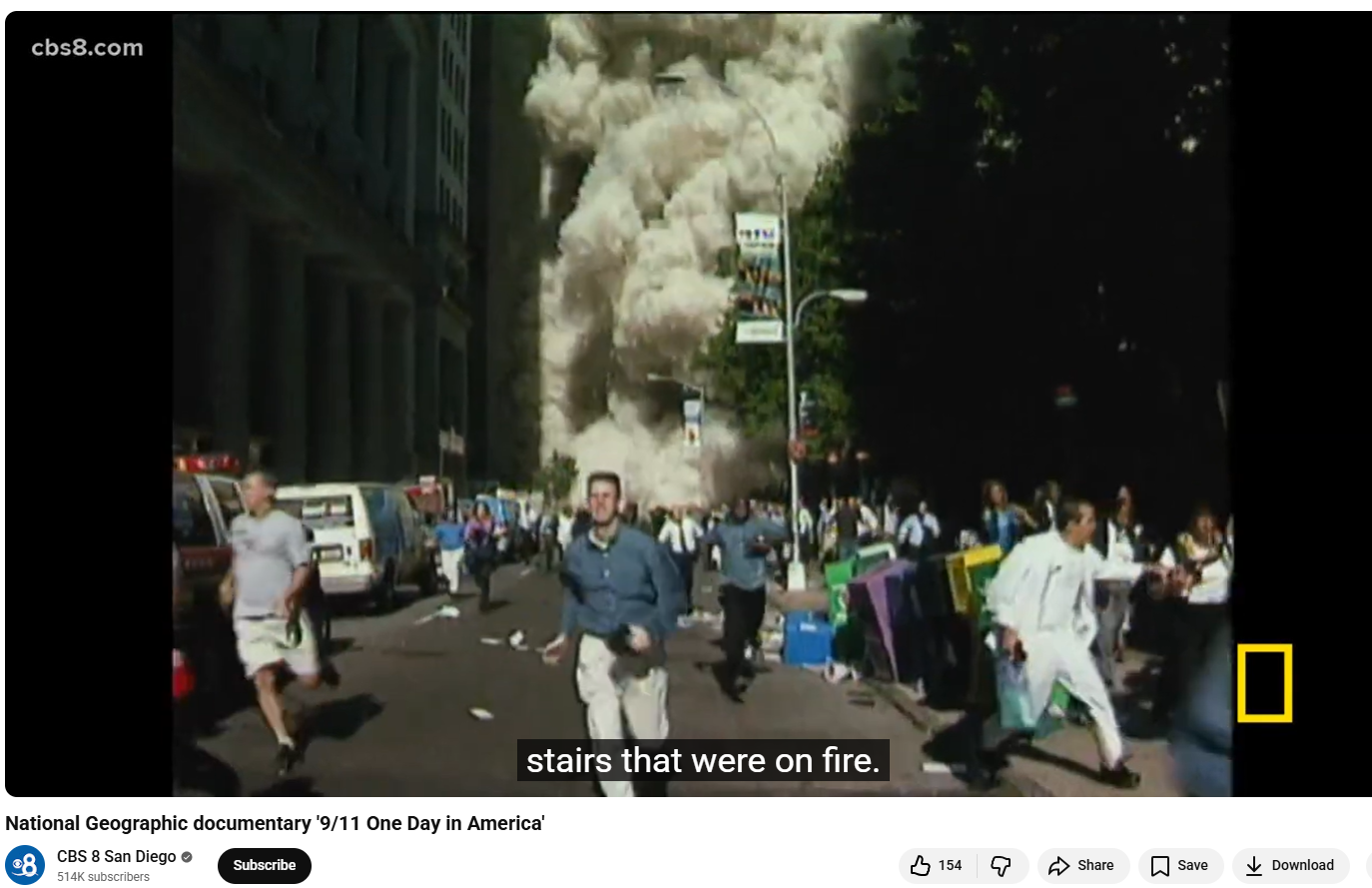
To verify the claim, we extracted key frames from the viral video and ran a reverse image search using Google Lens. During the search, we found visuals matching the viral clip in a report published by Wion on September 11, 2021. The report, titled “In pics | A look back at the scenes from the 9/11 attacks,” included an image that closely resembled the visuals seen in the viral video. The caption of the image stated that it was a file photo from September 11, 2001, showing pedestrians running as one of the World Trade Center towers collapsed in New York City.

Further research led us to the same footage on the YouTube channel CBS 8 San Diego. At the 01:11 timestamp of the video, visuals matching the viral clip can be clearly seen.
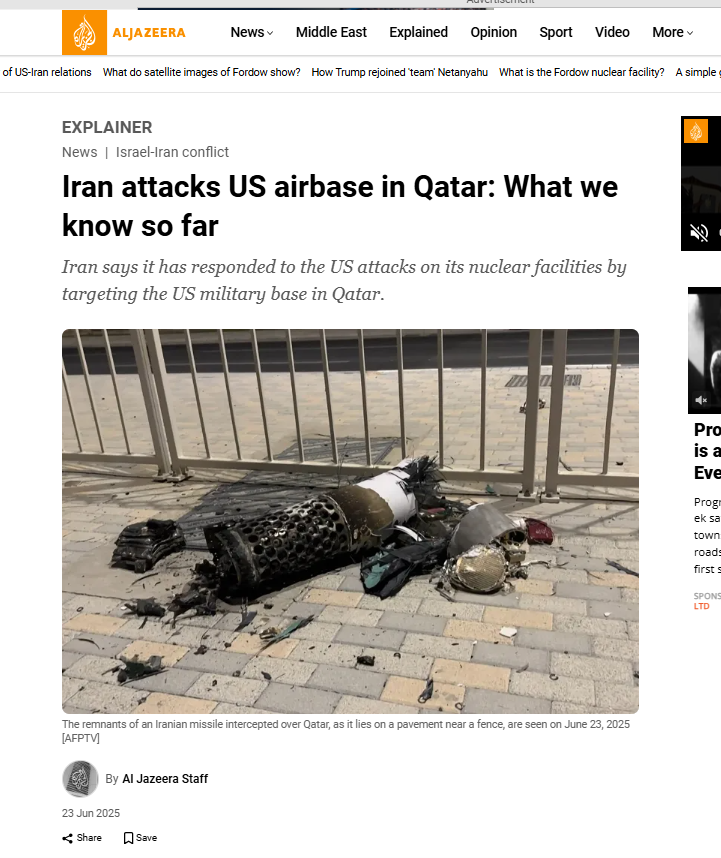
We also found an Al Jazeera report dated June 23, 2025, which confirmed that Iran had attacked US forces stationed at the Al Udeid airbase in Qatar in retaliation for US strikes on Iran’s uclear facilities. However, the visuals used in the viral video do not correspond to this incident.
Conclusion
The viral video does not show a recent Iranian attack on a US airbase in Qatar. The clip actually dates back to the September 11, 2001 terrorist attacks on the World Trade Center in the United States. Old 9/11 footage has been falsely shared with a misleading claim linking it to Iran’s alleged missile strike on the US.
