
#FactCheck- Edited Video Falsely Shows Aaj Tak Anchor Anjana Om Kashyap Apologizing
Executive Summary
A purported video of Hindi news channel Aaj Tak anchor Anjana Om Kashyap is being widely shared on social media. In the viral clip, Kashyap appears to be apologising and questioning her own journalistic credibility. The CyberPeace Research Wing research found the claim to be false. The probe revealed that the viral video was created by manipulating an original video of Anjana Om Kashyap. Her voice and statements were altered to falsely portray her as issuing an apology, whereas she made no such remarks in the original footage.
Claim:
A YouTube user shared the viral video claiming that Anjana Om Kashyap was apologising. The post can be seen here:

Fact Check
The keyframes of the viral video were analysed using reverse image search. During the research , the original reel was found on Anjana Om Kashyap’s Instagram account, where it was posted on December 26, 2023. In the original reel, Kashyap is seen praising Bihar. At no point does she apologise or make any statements similar to those heard in the viral clip.

Further research led to the original version of the video on Anjana Om Kashyap’s YouTube channel, uploaded on October 17, 2023. According to the video description, the speech was delivered during the ‘Bihar Meet’ event organised by the Indian People Forum in the UAE. Notably, none of the statements heard in the viral clip appear in the original speech.

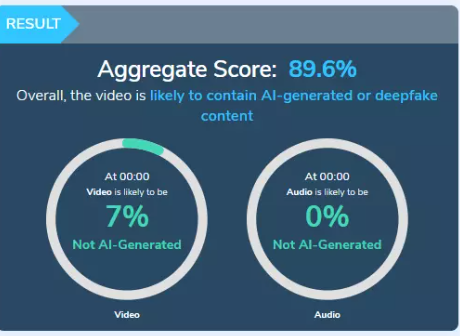
The viral video was also analysed using the AI-detection tool Hive Moderation, which indicated a high likelihood of AI-generated or deepfake manipulation.
Conclusion
The research found that the viral video has been digitally altered and falsely shared on social media. The original video of Anjana Om Kashyap was edited, and the audio was manipulated to create the misleading impression that she was apologising. No such statement was made by her in the authentic video.

Related Blogs

Introduction
With mobile phones at the centre of our working and personal lives, the SIM card, which was once just a plain chip that links phones with networks, has turned into a vital component of our online identity, SIM cloning has become a sneaky but powerful cyber-attack, where attackers are able to subvert multi-factor authentication (MFA), intercept sensitive messages, and empty bank accounts, frequently without the victim's immediate awareness. As threat actors are becoming more sophisticated, knowing the process, effects, and prevention of SIM cloning is essential for security professionals, telecom operators, and individuals alike.
Understanding SIM Cloning
SIM cloning is the act of making an exact copy of a victim's original SIM card. After cloning, the attacker's phone acts like the victim's, receiving calls, messages, and OTPs. This allows for a variety of cybercrimes, ranging from unauthorised financial transactions to social media account hijacking. The attacker virtually impersonates the victim, often leading to disastrous outcomes.
The cloning can be executed through various means:
● Phishing or Social Engineering: The attack compels the victim or a mobile carrier into divulging personal information or requesting a replacement SIM.
● SIM Swap Requests: Attackers use fake IDs or stolen credentials to make telecom providers port the victim's number to a new SIM.
● SS7 Protocol Exploitation: Certain sophisticated attacks target weaknesses in the Signalling System No. 7 (SS7) protocol employed by cellular networks to communicate.
● Hardware based SIM Cloning: Although uncommon, experienced attackers will clone SIMs through the use of specialized hardware and malware that steals authentication keys.
The Real-World Consequences
The harm inflicted by SIM cloning is systemic as well as personal. The victims are deprived of their phones and online accounts, realising the breach only when improper dealings or login attempts have occurred. The FBI reported over $50 million loss in 2023 from crimes associated with SIM, most of which involved cryptocurrency account and high net-worth persons.
Closer to home, Indian entrepreneurs, journalists, and fintech users have reported losing access to their numbers, only to have their WhatsApp, UPI, and banking apps taken over. In a few instances, the attackers even contacted contacts, posing as the victim to scam others.
Why the Threat Is Growing
Dependence on SMS-based OTPs is still a core vulnerability. Even as there are attempts to move towards app-based two-factor authentication (2FA), most banking, government, and e-commerce websites continue to employ SMS as their main authentication method. This reliance provides an entry point for attackers who can replicate a SIM and obtain OTPs without detection.
Vulnerabilities in telecom infrastructure are also a part of the issue. Insider attacks at telecom operators, where malicious employees handle fraud SIM swap requests, also keep cropping up. On top of that, most users are not even aware of what exactly SIM cloning is or how to identify it, leaving attackers with a head start.
Very often, the victims are only aware that their SIM has been cloned when they lose mobile service or notice unusual activity on their accounts. Red flags include loss of signal, failure to send or receive messages, and inability to receive OTPs. Alerts on password changes or unusual login attempts must never be taken lightly, particularly if this is coupled with loss of mobile service.
How Users Can Protect Themselves
● Use A Strong SIM Pin: This protects your SIM from access by unauthorized users should your phone be lost or stolen.
● Secure Personal Information: Don't post sensitive personal information online that can have a place in social engineering.
● Notify your Carrier of Suspicious Activity: If your phone suddenly has lost service or is behaving strangely, contact your mobile operator immediately.
● Register for Telecom Alerts: Many providers offer alerts to SIM swap or porting requests that are useful to preliminarily detect a possible takeover.
● Verify SIM card status using Sanchar Saathi: Visit [https://sancharsaathi.gov.in](https://sancharsaathi.gov.in) to check how many mobile numbers are issued using your ID. This government portal allows you to identify unauthorized or unknown SIM cards, helping prevent SIM swapping fraud. You can also request to block suspicious numbers linked to your identity.
Conclusion
SIM cloning is not a retrograde nod to vintage cybercrime; it's an effective method of exploitation, especially where there's a strong presence of SMS-based authentication. The attack vector is simple, but the damage it causes can be profound, both financial and reputational. With telecommunication networks forming the backbone of digital identity, users, regulators, and telecom service providers have to move in tandem. For the users, awareness is the best protection. For Telecoms, security must be a baseline requirement, not a value-add option. It's time to redefine mobile security, before your identity is in anyone else's hands.
References
● https://www.trai.gov.in/faqcategory/mobile-number-portability
● https://www.cert-in.org.in/PDF/Digital_Threat_Report_2024.pdf
● https://www.ic3.gov/PSA/2022/PSA220208/
● https://www.hdfcbank.com/personal/useful-links/security/beware-of-fraud/sim-swap
● https://security-gen.com/SecurityGen-Article-Cloning-SimCard.pdf
● https://www.p1sec.com/blog/understanding-ss7-attacks-vulnerabilities-impacts-and-protection-measures
Executive Summary
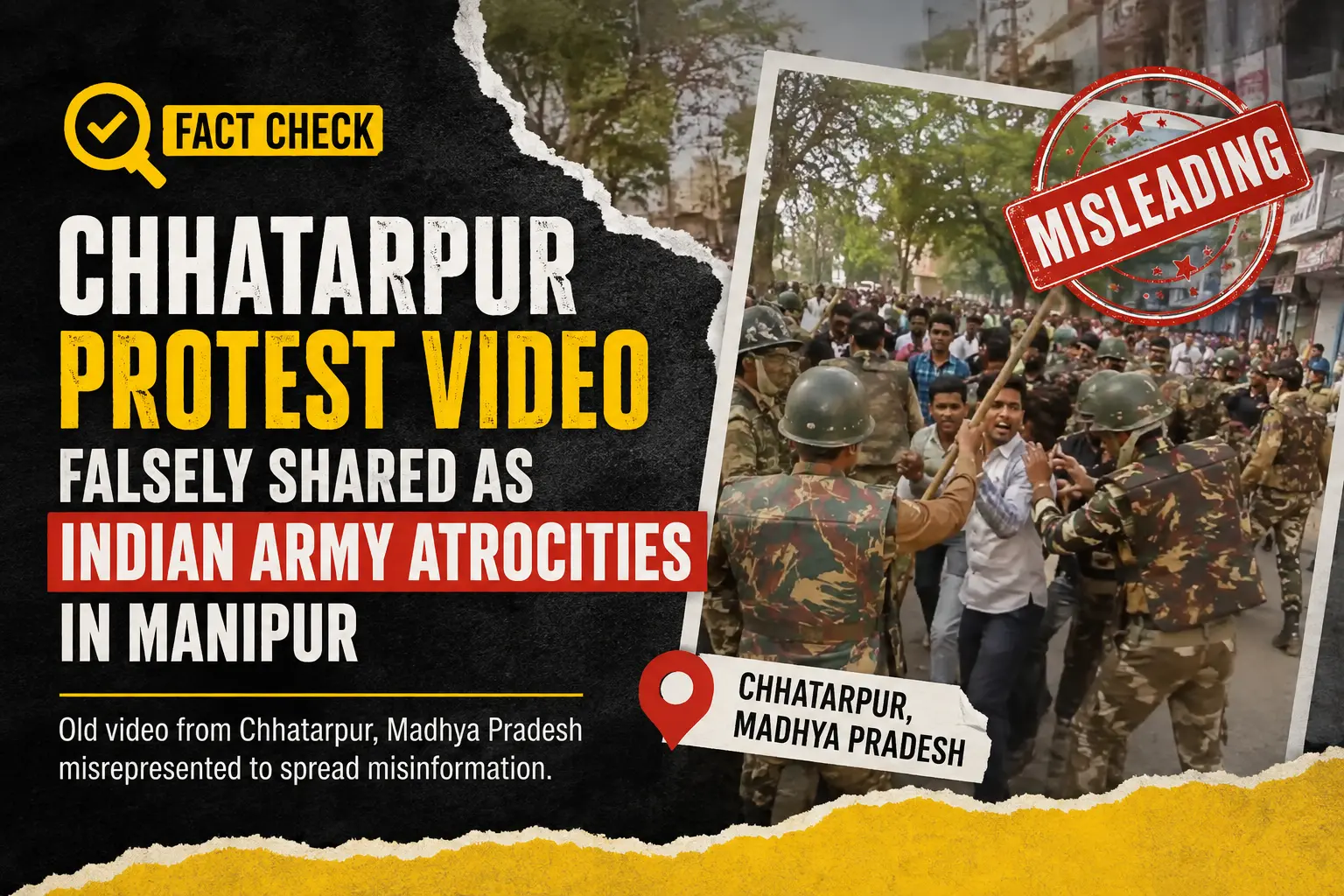
A video is going viral on social media showing police personnel allegedly dragging an elderly woman. The video is being shared with the claim that it was filmed in Manipur and shows the Indian Army committing atrocities against women. The CyberPeace Research Wing found that the viral video is not from Manipur. It was recorded during protests against the Ken-Betwa Link Project in Chhatarpur, Madhya Pradesh, and is being circulated with a misleading claim.
Claim:
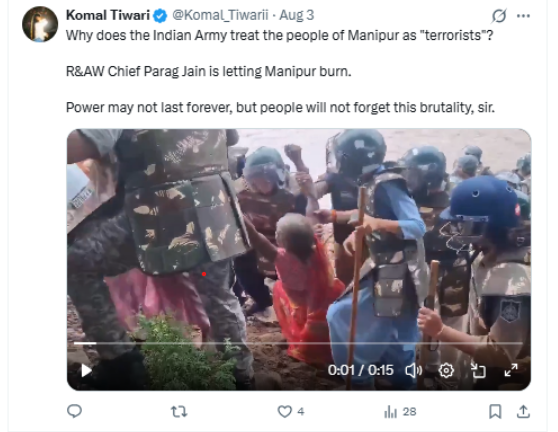
A video shared on social media claims that the Indian Army is committing atrocities against local people, particularly women, in Manipur. The post further alleges that R&AW chief Parag Jain is allowing Manipur to burn and that people will never forget the alleged brutality.
https://x.com/i/status/2084180049285005687
Factcheck
To verify the claim, our team extracted keyframes from the viral video and conducted a reverse image search using Google Lens. During the search, we found the same video uploaded on the Facebook page of Public Vani News on July 31. The accompanying description stated: “Police action against an elderly tribal woman is shameful. During protests against the Ken-Betwa Link Project in Chhatarpur, a video showing police removing an elderly tribal woman has gone viral. Protesters claim they were holding a Jal Satyagraha, hunger strike and Chita Andolan while demanding fair compensation and protection of their land, forests and homes.”
The post and screenshot are provided below:
https://www.facebook.com/reel/1031078973033873

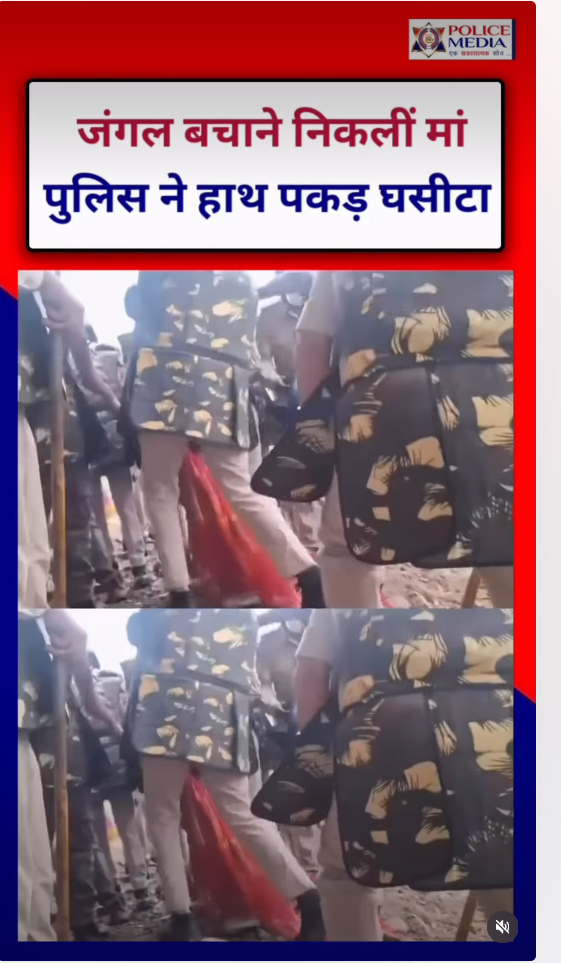
In the next step of the research, we found the same video on an Instagram channel named policemedianews, where it was shared without the misleading Manipur-related claim. The post link and screenshot are provided below
https://www.instagram.com/reels/DbfALvaT4mH/
Conclusion:
The research found that the viral claim is misleading. The video is not from Manipur and does not show Indian Army personnel targeting women there. The footage is from protests against the Ken-Betwa Link Project in Chhatarpur, Madhya Pradesh, where police were seen removing an elderly tribal woman during the demonstration. The video is being shared on social media with a false context.

The recent Promotion and Regulation of Online Gaming Act, 2025, that came into force in August, has been one of the most widely anticipated regulations in the digital entertainment industry. Among provisions such as promoting esports and licensing of online gaming, the legislation notably introduces a blanket ban on real-money gaming (RMG). The rationale behind this was to reduce its addictive effects, protect minors, and limit the circulation of black-money. However, in reality, the Act has spawned apprehension about the legislative process, regulatory redundancy, and unintended consequences that can shift users and revenue to offshore operators.
From Debate to Prohibition: How the Act was Passed
The Promotion and Regulation of Online Gaming Act was passed as a central law, providing the earlier fragmented state laws on online betting and gambling with an overarching framework. Proponents argue that, among other provisions, some kind of unified national framework was needed to deal with the scale of online betting due to its detrimental impact on young users. The current Act is a direct transition to criminalisation rather than the swings of self-regulation and partial restrictions used during the previous decade of incremental experiments in regulation. Stakeholders in the industry believe that this type of sudden, blanket action creates uncertainty and erodes confidence in the system in the long run. Further, critics have pointed out that the Bill was passed without adequate Parliamentary deliberation. A question has been raised about whether procedural safeguards were upheld.
Prohibition of Online RMG
Within the Indian context, a distinction has long been drawn between games of skill and games of chance, with the latter, like a lottery or a casino, being severely prohibited under state laws, whereas the former, like rummy or fantasy sports, have generally been allowed after being recognized as skill-based by court authorities. The Online Gaming Act of 2025 abolishes this distinction on the internet, thus banning all RMG actions that include cash transactions, regardless of skill or chance. The act also criminalises the advertising, facilitation, and hosting of such sites, thereby penalizing offshore operators with an Indian customer focus, and subjecting their payment gateways, app stores, and advertisers under its jurisdiction to penalties.
The Problem of Overlap
One potential issue that the Act presents is its overlap with the existing laws. The IT Rules 2023 mandate intermediaries in the gaming sector to appoint compliance officers, submit monthly reports, and undergo due diligence. The new Act introduces a three-level classification of games, whereas the advisories of the Central Consumer Protection Authority (CCPA) under the Consumer Protection Act treat online betting as an unfair trade practice.
This multiplicity of regulations builds a maze where different Ministries and state governments have overlapping jurisdiction. Policy experts caution that such an overlap can create enforcement challenges, punish players who act within the law, and leave offshore malefactors undetected.
Unintended Consequences: Driving Users Offshore
Outright prohibition will hardly ever remove demand; it will only push it out. Offshore sites have taken advantage of the situation as Indian operators like Dream11 shut down their money games after the ban. It has already been reported that there is aggressive advertising by foreign betting companies that are not registered in India, most of which have backend infrastructure that cannot be regulated by the Act (Storyboard18).
This diversion of users to unregulated markets has two main risks. First, Indian players are deprived of the consumer protection offered to them in local regulation, and their data can be sent to suspicious foreign organizations. Second, the government loses control over the money flow that can be transferred via informal channels or cryptocurrencies or other obscure systems. Industry analysts are alerting that such developments may only worsen the issue of black-money instead of solving it (IGamingBusiness).
Advertising, Age Gating, and Digital Rights
The Act has also strengthened advertisement regulations, aligning with advisories issued by the Advertising Standards Council of India, which prohibits the targeting of minors. However, critics believe that the application remains inadequately enforced, and children can with comparative ease access unregulated overseas applications. In the absence of complementary digital literacy programs and strong parental controls, these limitations can be effectively superficial instead of real.
Privacy advocates also warn that frequent prompts, vague messages, or invasive surveillance can weaken the digital rights of users instead of strengthening them. Overregulation has also been found to create banner blindness in global contexts where users ignore warnings without first clearly understanding them.
Enforcement Challenges
The Act puts a lot of responsibilities on many stakeholders, including the Ministry of Information and Broadcasting (MIB) and the Reserve Bank of India (RBI). Platforms like Google Play and Apple App Store are expected to verify government-approved lists of compliant gaming apps and remove non-compliant or banned ones, as directed by the MIB and the RBI. Although this pressure may motivate intermediaries to collaborate, it may also have a risk of overreach when it is applied unequally or in a political way.
According to the experts, the solution should be underpinned by technology itself. Artificial intelligence can be used to identify illegal advertisements, track illegal gaming in children, and trace payment streams. At the same time, the regulators should be able to issue final lists of either compliant or non-compliant applications to advise the consumers and intermediaries alike. Without such practical provisions, enforcement risks remaining patchy.
Online Gaming Rules
On 1 October 2025, the government issued a draft of the Online Gaming Rules in accordance with the Promotion and Regulation of Online Gaming Act. The regulations focus on the creation of the compliance frameworks, define the classification of the allowed gaming activities, and prescribe grievance-redressal mechanisms aiming to promote the protection of the players and procedural transparency. However, the draft does not revisit or soften the existing blanket prohibition on real-money gaming (RMG) and, hence, the questions about the effectiveness of enforcement and regulatory clarity remain open (Times of India, 2025).
Protecting Consumers Without Stifling Innovation
The ban highlights a larger conflict, i.e., the protection of the vulnerable users without stifling an industry that has traditionally contributed to innovation, jobs, and the collection of tax revenue. Online gaming has significantly added to the GST collections, and the sudden shakeup brings fiscal concerns (Reuters).
Several legal objections to the Act have already been brought, asking whether the Act is constitutional, especially as to whether the restrictions are proportional to the right to trade. The outcome of such cases will define the future trajectory of the digital economy of India (Reuters).
Way Forward
Instead of outright prohibition, a more balanced approach that incorporates regulation and consumer protection is suggested by the experts. Key measures could include:
- A definite difference between games of skill and games of chance, with proportionate regulation.
- Age confirmation and campaign against online illiteracy to protect the underage population.
- Enhanced advertising and payments compliance requirements and enforceable non-compliance penalty.
- Coordinated oversight among different ministries to prevent duplication and regulatory struggle.
- Leveraging AI and fintech to track illegal financial activities (black money flows) and developing innovation.
Conclusion
The Online Gaming Act 2025 addresses social issues, such as addiction, monetary risk, and child safety, that require governance interventions. However, the path it follows to this end, that of total prohibition, is more likely to spawn a new set of issues instead of providing solutions because it will send consumers to offshore sites, undermine consumer rights, and slow innovation.
For India, the real challenge is not whether to prohibit online money gaming but how to create a balanced, transparent, and enforceable framework that protects users while fostering a responsible gaming ecosystem. India can reduce the adverse consequences of online betting without keeping the industry in the shadows with better coordination, reasonable use of technology, and balanced protection.
References:
- India's Dream11, top gaming apps halt money-based games after ban
- India online gambling ban could drive punters to black market
- Offshore betting firms with backend ops in India not covered by online gaming law
- The Great Gamble: India’s Online Gaming Ban, The GST Battle, And What Lies Ahead.
- Game Over for Online Money Games? An Analysis of the Online Gaming Act 2025
- Government gambles heavily on prohibiting online money gaming
- Online gaming regulation: New rules to take effect from October 1; government stresses consultative approach with industry
