
#FactCheck -Deepfake Audio Misuses Old Jaishankar Podcast to Fabricate False Claims About “Operation Sindoor”
Executive Summary
A deepfake video is being widely circulated on social media with a false claim that External Affairs Minister S. Jaishankar admitted in a podcast interview that India was surprised by Pakistan’s counter-response during “Operation Sindoor” and suffered some losses. However, a fact-check by CyberPeace Research Wing has found the claim to be fake. The research shows that AI-generated audio has been used to misrepresent the External Affairs Minister’s remarks.
Claim
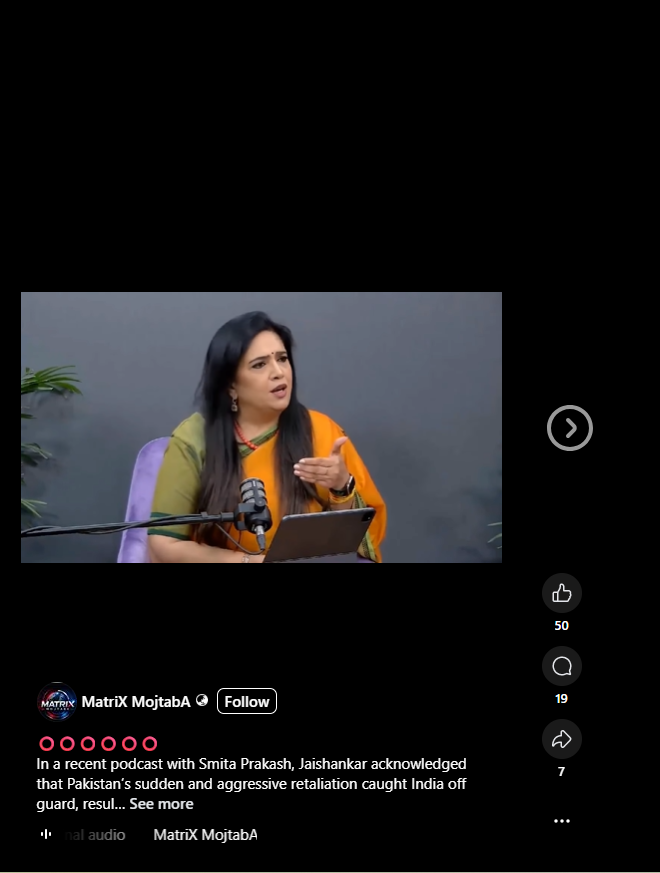
A Facebook user shared the viral video claiming that in a recent podcast with journalist Smita Prakash, Jaishankar admitted that Pakistan’s aggressive response during Operation Sindoor had caught India off guard.
Fact Check
A review of the original interview on ANI’s YouTube channel shows that the conversation between Smita Prakash and S. Jaishankar was uploaded on May 24, 2024—well before Operation Sindoor.
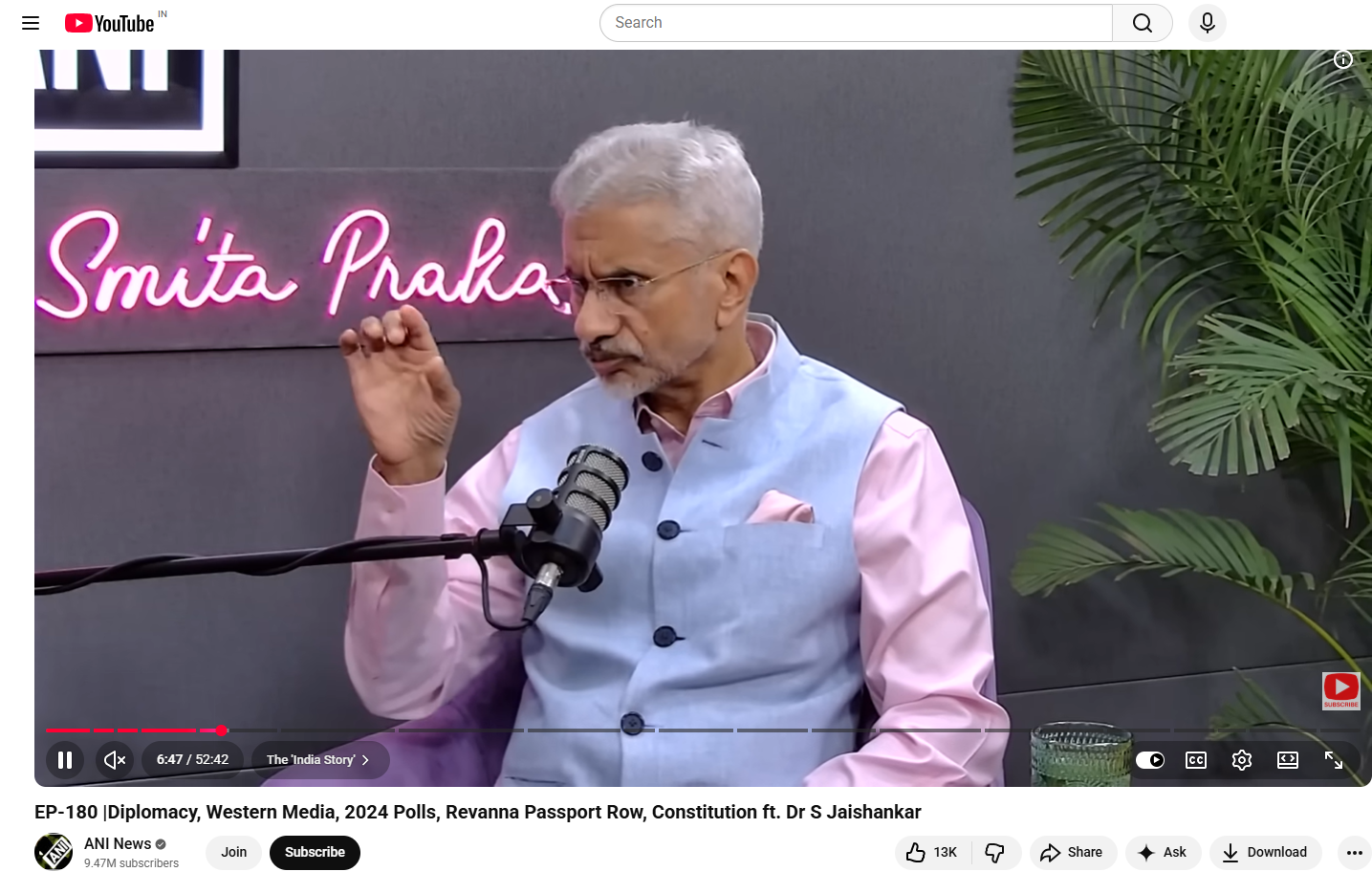
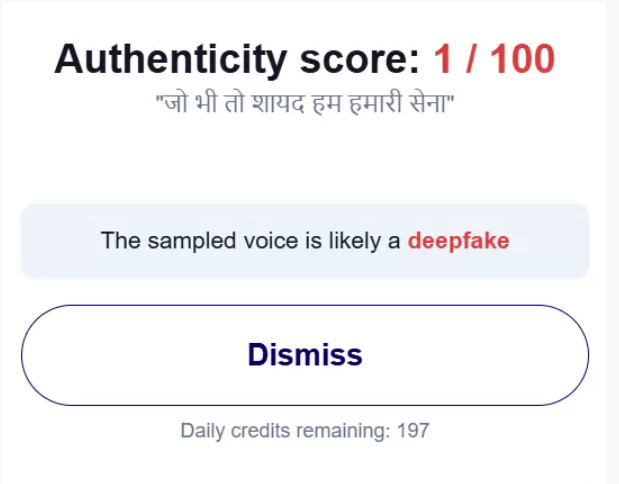
Operation Sindoor reportedly began on May 7, 2025. In the original video, there is no mention of Operation Sindoor or any Pakistani counter-response, making the viral claim baseless. Further analysis using AI detection tools such as Hive Moderation and Hiya indicated that the audio in the viral clip is likely AI-generated, suggesting manipulation of the original content.
Conclusion
The viral video is fake. AI-generated audio has been used to alter an old interview and falsely attribute statements to External Affairs Minister S. Jaishankar.

Related Blogs

Executive Summary:
Apple has quickly responded to two severe zero-day threats, CVE-2024-44308 and CVE-2024-44309 in iOS, macOS, visionOS, and Safari. These defects, actively used in more focused attacks presumably by state actors, allow for code execution and cross-site scripting (XSS). In a report shared by Google’s Threat Analysis Group, the existing gaps prove that modern attacks are highly developed. Apple’s mitigation comprises memory management, especially state management to strengthen device security. Users are encouraged to update their devices as soon as possible, turn on automatic updates and be careful in the internet space to avoid these new threats.
Introduction
Apple has proved its devotion to the security issue releasing the updates fixing two zero-day bugs actively exploited by hackers. The bugs, with the IDs CVE-2024-44308 and CVE-2024-44309, are dangerous and can lead to code execution and cross-site scripting attacks. The vulnerabilities have been employed in attack and the significance of quick patch release for the safety of the users.
Vulnerabilities in Detail
The discovery of vulnerabilities (CVE-2024-44308, CVE-2024-44309) is credited to Clément Lecigne and Benoît Sevens of Google's Threat Analysis Group (TAG). These vulnerabilities were found in JavaScriptCore and WebKit, integral components of Apple’s web rendering framework. The details of these vulnerabilities are mentioned below:
CVE-2024-44308
- Severity: High (CVSS score: 8.8)
- Description: A flaw in the JavaScriptCore component of WebKit. Malicious web content could cause code to be executed on the target system and make the system vulnerable to the full control of the attacker.
- Technical Finding: This vulnerability involves bad handling of memory in the course of executing JavaScript, allowing the use of injected payloads remotely by the attackers.
CVE-2024-44309
- Severity: Moderate (CVSS score: 6.1)
- Description: A cookie management flaw in WebKit which might result in cross site scripting (XSS). This vulnerability enables the attackers to embed unauthorized scripts into genuine websites and endanger the privacy of users as well as their identities.
- Technical Finding: This issue arises because of wrong handling of cookies at the state level while processing the maliciously crafted web content and provides an unauthorized route to session data.
Affected Systems
These vulnerabilities impact a wide range of Apple devices and software versions:
- iOS 18.1.1 and iPadOS 18.1.1: For devices including iPhone XS and later, iPad Pro (13-inch), and iPad mini 5th generation onwards.
- iOS 17.7.2 and iPadOS 17.7.2: Supports earlier models such as iPad Pro (10.5-inch) and iPad Air 3rd generation.
- macOS Sequoia 15.1.1: Specifically targets systems running macOS Sequoia.
- visionOS 2.1.1: Exclusively for Apple Vision Pro.
- Safari 18.1.1: For Macs running macOS Ventura and Sonoma.
Apple's Mitigation Approach
Apple has implemented the following fixes:
- CVE-2024-44308: Enhanced input validation and robust memory checks to prevent arbitrary code execution.
- CVE-2024-44309: Improved state management to eliminate cookie mismanagement vulnerabilities.
These measures ensure stronger protection against exploitation and bolster the underlying security architecture of affected components.
Broader Implications
The exploitation of these zero-days highlights the evolving nature of threat landscapes:
- Increasing Sophistication: Attackers are refining techniques to target niche vulnerabilities, bypassing traditional defenses.
- Spyware Concerns: These flaws align with the modus operandi of spyware tools, potentially impacting privacy and national security.
- Call for Timely Updates: Users delaying updates inadvertently increase their risk exposure
Technical Recommendations for Users
To mitigate potential risks:
- Update Devices Promptly: Install the latest patches for iOS, macOS, visionOS, and Safari.
- Enable Automatic Updates: Ensures timely application of future patches.
- Restrict WebKit Access: Avoid visiting untrusted websites until updates are installed.
- Monitor System Behavior: Look for anomalies that could indicate exploitation.
Conclusion
The exploitation of CVE-2024-44308 and CVE-2024-44309 targeting Apple devices highlight the importance of timely software updates to protect users from potential exploitation. The swift action of Apple by providing immediate improved checks, state management and security patches. Users are therefore encouraged to install updates as soon as possible to guard against these zero day flaws.
References:
- https://support.apple.com/en-us/121752
- https://cve.mitre.org/cgi-bin/cvename.cgi?name=CVE-2024-44308
- https://securityonline.info/cve-2024-44308-and-cve-2024-44309-apple-addresses-zero-day-vulnerabilities/
Executive Summary
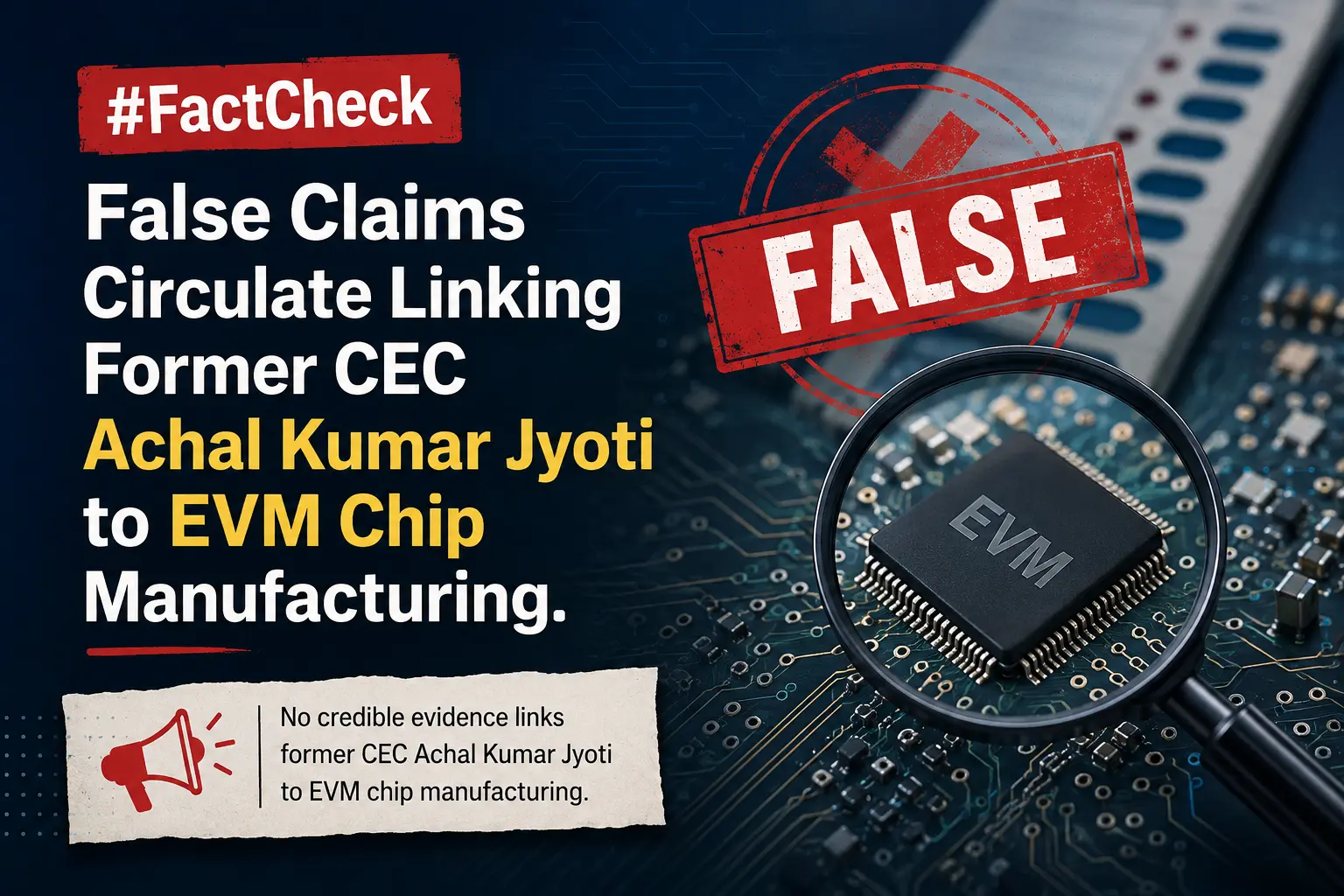
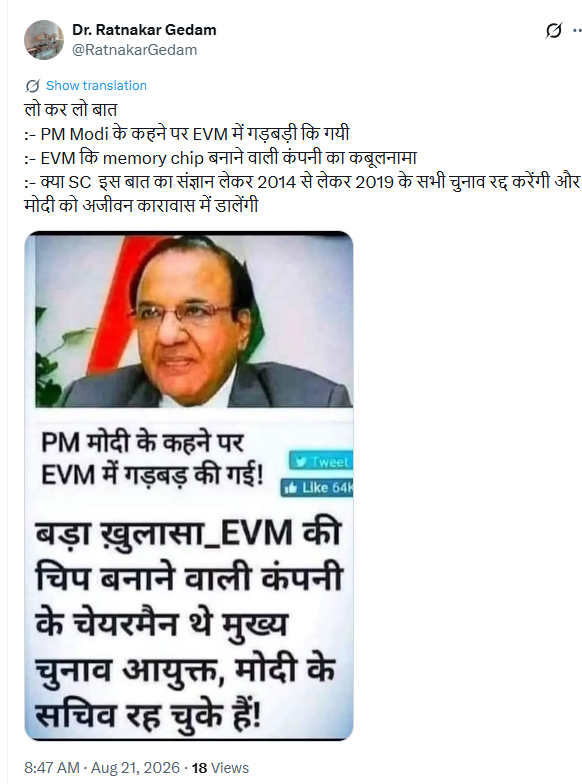
A viral social media post featuring a picture of former Chief Election Commissioner Achal Kumar Jyoti claims he served as the chairman of the company manufacturing EVM microchips and altered EVM settings at the behest of PM Modi. According to a research done by CyberPeace's research wing, the claim that former Chief Election Commissioner Achal Kumar Jyoti was the chairman of an EVM chip manufacturing company and altered EVMs at the behest of PM Modi is completely false.
Claim
Social media posts circulated statements claiming: "PM Modi ordered EVM tampering; the company manufacturing EVM memory chips confessed. Will the SC take note, cancel all elections from 2014 to 2019, and send Modi to life imprisonment?"
https://x.com/RatnakarGedam/status/2090639442411470936?s=20
Fact-Check
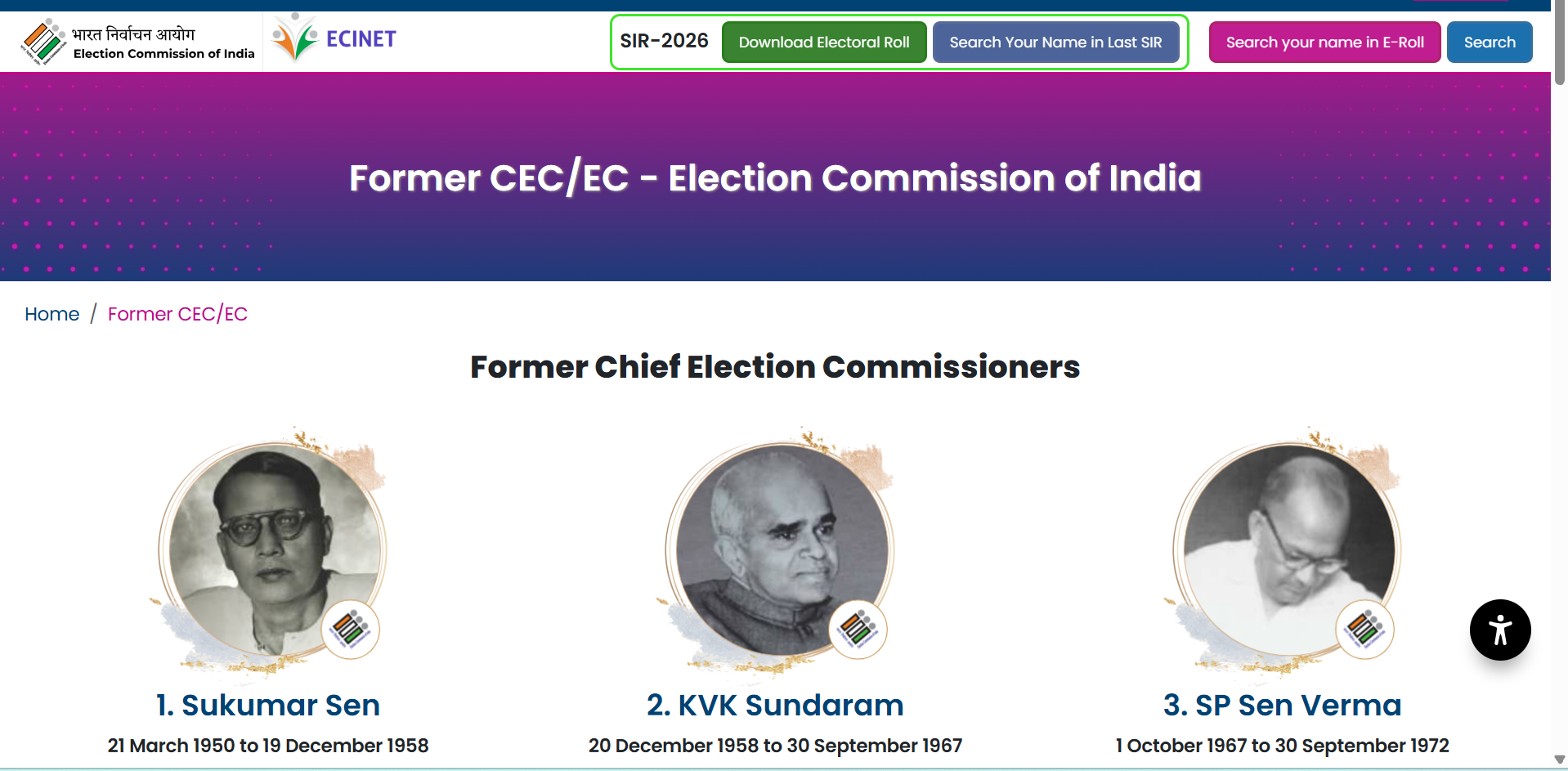
Relevant keyword searches yield no credible news reports, official statements, or legal documentation supporting claims that Achal Kumar Jyoti tampered with EVMs or issued any such confession. Achal Kumar Jyoti served as the Chief Election Commissioner of India from July 6, 2017, to January 22, 2018. Prior to this, he was a 1975-batch IAS officer of the Gujarat cadre who served in various administrative roles, including Chief Secretary of Gujarat.
https://www.eci.gov.in/former-cec-ec?utm_source
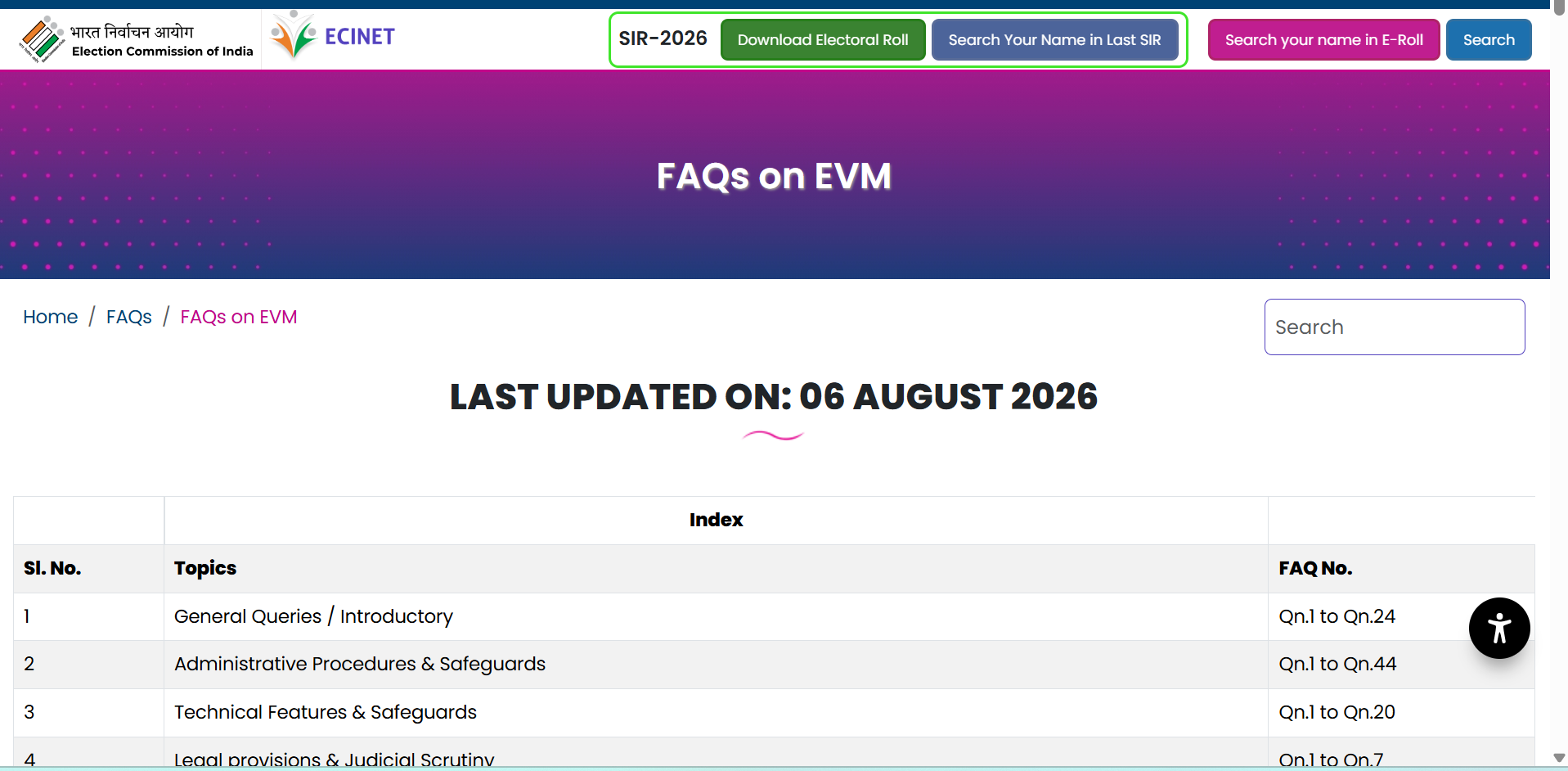
According to official information, Electronic Voting Machines (EVMs) used in Indian elections are manufactured exclusively by two Public Sector Undertakings (PSUs): Bharat Electronics Limited (BEL) and Electronics Corporation of India Limited (ECIL). Official records confirm that Achal Kumar Jyoti was never appointed as the Chairman or Director of BEL, ECIL, or any entity manufacturing microchips for EVMs.
https://www.eci.gov.in/evm-faqs/?utm_source
Conclusion
The claim that former Chief Election Commissioner Achal Kumar Jyoti headed an EVM chip manufacturing company and tampered with voting machines is completely fabricated and baseless.
Introduction
In the contemporary information environment, misinformation has emerged as a subtle yet powerful force capable of shaping public perception, influencing behavior, and undermining institutional credibility. Unlike overt falsehoods, misinformation often gains traction because it appears authentic, familiar, and authoritative. The rapid circulation of content through digital platforms has intensified this challenge, allowing altered or misleading material to reach wide audiences before verification mechanisms can respond. When misinformation mimics official communication, its impact becomes especially concerning, as citizens tend to place implicit trust in documents that carry the appearance of state authority. This growing vulnerability of public information systems was illustrated by the calendar incident in Himachal Pradesh in January 2026.
The calendar incident of Himachal Pradesh in January 2026 shows how a small lie can lead to large social and governance problems. A person whose identity is still unknown posted a modified version of the Government Calendar 2026, changing the official dates and resulting in public confusion and reputational damage to the Printing and Stationery Department. The incident may not appear very serious at first sight, but it indicates a deeper systemic issue. Misinformation is posing increasing dangers to public information ecosystems, especially when official documents are misrepresented and disseminated through digital platforms.
Misinformation as a Governance Challenge
Government calendars and official documents are necessary for public awareness and administrative coordination, and their manipulation impedes the credibility of institutions and the trustworthiness of governance. In Himachal Pradesh, modified dates might have led to confusion regarding public holidays, interference in school and administrative planning, and misinformation among the people. Such misinformation is a direct interference in the social contract that exists between the citizens and the State, where accurate information is the foundation of trust, compliance, and participation.
Impact on Citizens: Confusion, Distrust, and Digital Fatigue
For the general public, the dissemination of fake government information leads to a situation where people are confused and, at the same time, lose their trust in the government communication channels. If someone continuously gets to see the changed or misleading information misrepresented as credible, that person will find it hard to differentiate the truth from lies in the end.
This results in:
- Decision paralysis occurs when the public cannot make up their minds and either postpones or refrains from action due to the doubts they have
- Erosion of trust, not only in one department but also in the whole government communications department
- Digital fatigue occurs when people stop following public information completely, since they think that all content can be unreliable
Misinformation in a digital society is not limited to one platform only. It spreads quickly through direct messaging apps, community groups, and social networks, thus creating greater confusion among people before the official clarifications can reach the same audience.
Institutional Harm and Reputational Damage
The intentional tampering with official documents is not only a violation of ethics but also a crime and an immoral act from a governance perspective. The Printing and Stationery Department noted that such practices tarnish the public image of government bodies, which are based on accuracy, neutrality, and trust.
When untrue material gets to be known as official content:
- Departments have to communicate reactively.
- Money and manpower that could have been used for the normal administrative work are now spent on the control of the situation.
The registration of a First Information Report (FIR) in this matter is an indication of the gradual shift in the perception of law enforcement agencies that misinformation is not a playful act but rather a technology-assisted crime with serious consequences.
The Role of Verifiable Information and Trusted Sources
Such occurrences stress the need for trustworthy information as well as confirmed sources to be at the centre of the digital era. It should be the responsibility of the authorities to lead the citizens to practice and ENABLING to depend on official websites, verified social media accounts, government portals, and press releases for authentication.
Platform Responsibility and Digital Literacy
The spread of misinformation poses a significant challenge for social media platforms, which frequently amplify highly engaging content. There are some ways that the social media networks can try to limit the damage, and these are: tagging of non-verified material, limiting the sharing and working with authorities in the area of fact-checking support. However, one more thing which is crucial here is ‘public knowledge’ about digital platforms, as even unintentional dissemination of fake “official” materials can lead to legal and social repercussions. The advice of the Himachal state government is a good thing, but constantly informing the public is still a requirement.
Legal Accountability as a Deterrent
The active participation of the Cyber Crime Cells unequivocally indicates that digital misinformation, especially involving government documents, will face severe consequences. The establishment of legal responsibility acts as a preventive measure and reiterates the notion that the right to speak one's mind does not cover the right to lie or undermine public institutions. Nonetheless, to have an effective enforcement, it has to be accompanied by preventive actions such as good communication, strong governance, and public trust-building. Consistent enforcement against digital misinformation can contribute to greater accountability within society. Digital Literacy programs should be conducted periodically for netizens and institutions.
Conclusion
The incident of the creation of fake calendars in Himachal Pradesh served as a signal for the authorities to adopt accurate communication strategies. The ratification of misinformation can be achieved only if there is shared participation of governments, digital platforms, citizens and civil societies. The main goal of all this is to maintain public trust and the dissemination of information in democratic processes.
