
#FactCheck- Burning Helicopter Video Not From Iran, Dates Back to 2020 Syria
Executive Summary
A video showing a helicopter engulfed in flames is being widely circulated on social media with the claim that it depicts an American Black Hawk helicopter shot down by Iran during the ongoing Middle East conflict. However, research by the CyberPeace Research Wing found the claim to be false. The viral footage is old and dates back to February 2020, showing a helicopter shot down in Syria, not Iran.
Claim
A Facebook post shared from Nigeria on April 6, 2026, claimed: “The moment an American Black Hawk helicopter was struck by an Iranian heat-seeking missile.” The post, which has been shared over 100 times, includes a 50-second video showing a helicopter exploding mid-air and crashing to the ground.

Fact Check
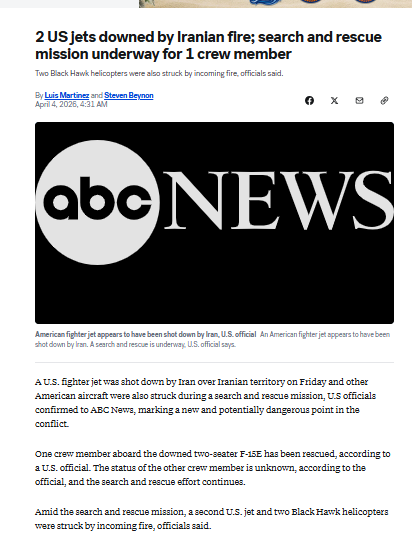
On April 3, a US F-15E Strike Eagle was reportedly shot down over Iran, marking the first such incident since the start of the ongoing Middle East conflict.
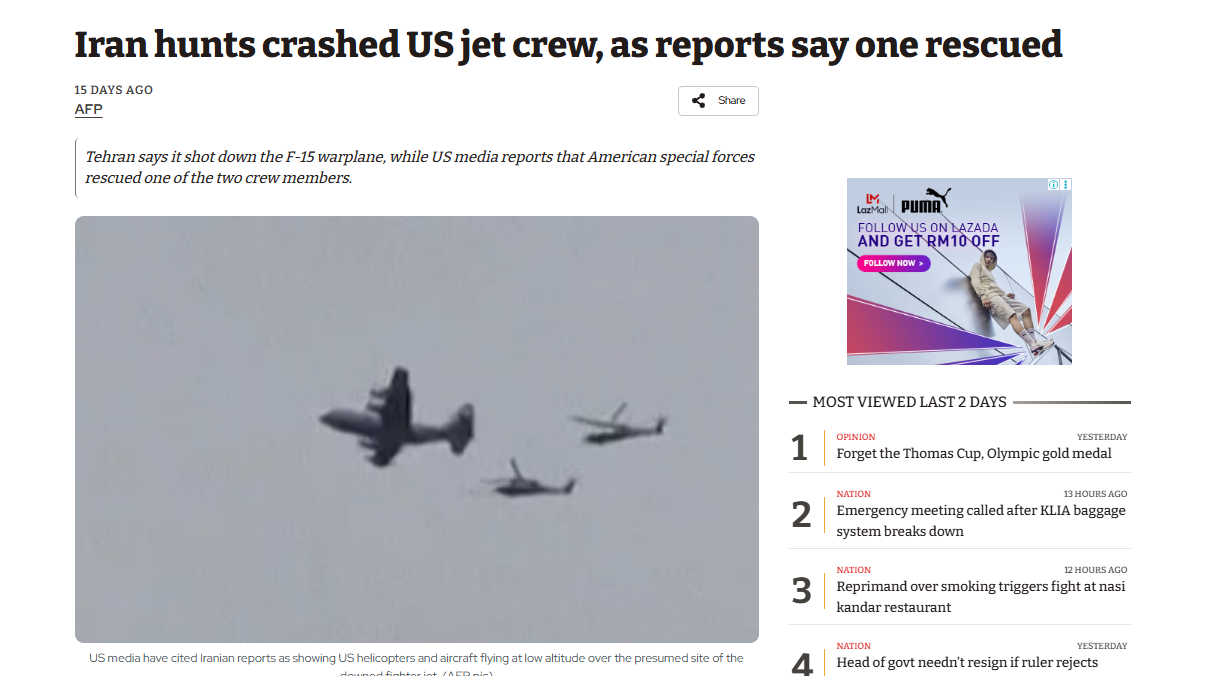
Two Black Hawk helicopter deployed for a search-and-rescue mission for the jet’s crew were also hit by Iranian fire but managed to return to base, despite some crew members being injured.
- http://abcnews.com/Politics/us-fighter-jet-iran-search-rescue-officials/story?id=131685787&utm_source=chatgpt.com
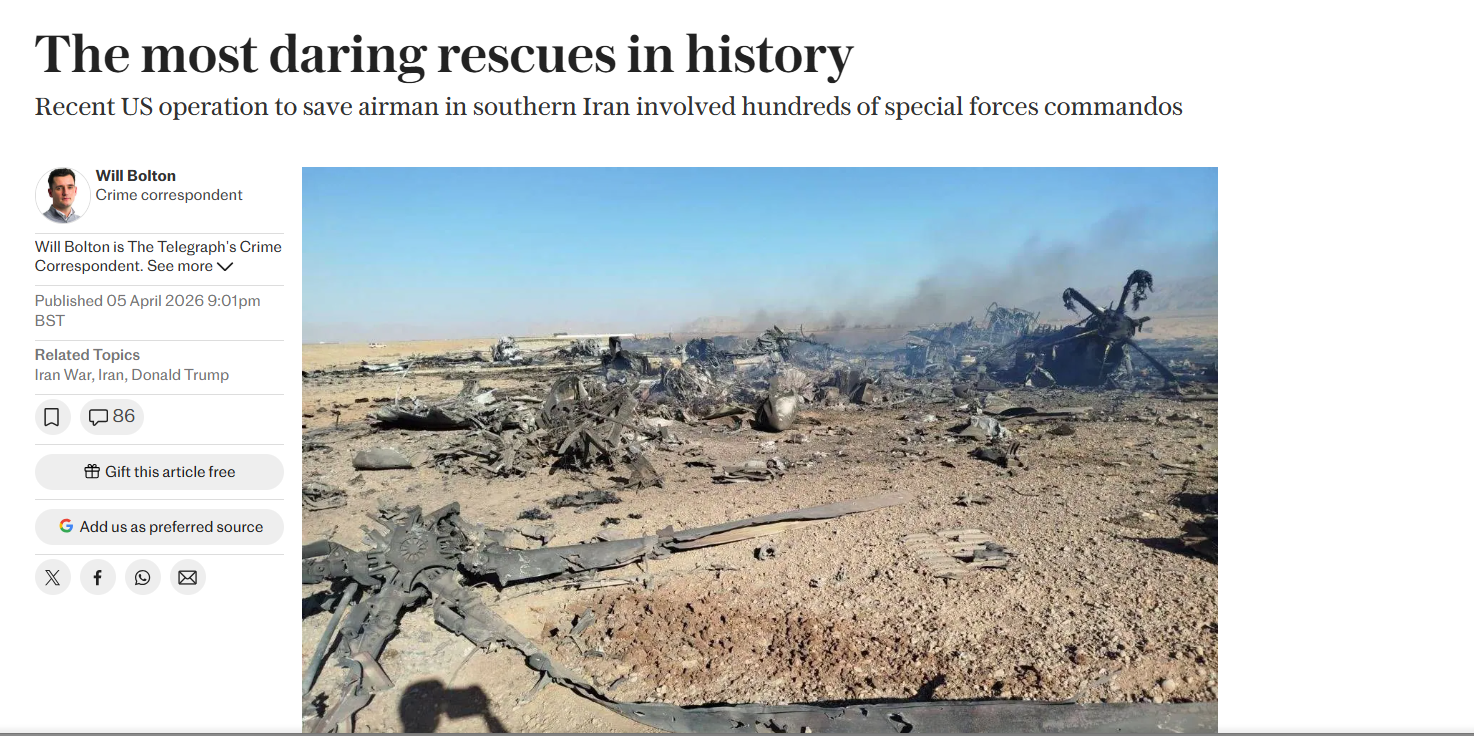
US President Donald Trump had earlier announced the recovery of a missing pilot, describing it as “one of the most daring search and rescue operations in US history.
”
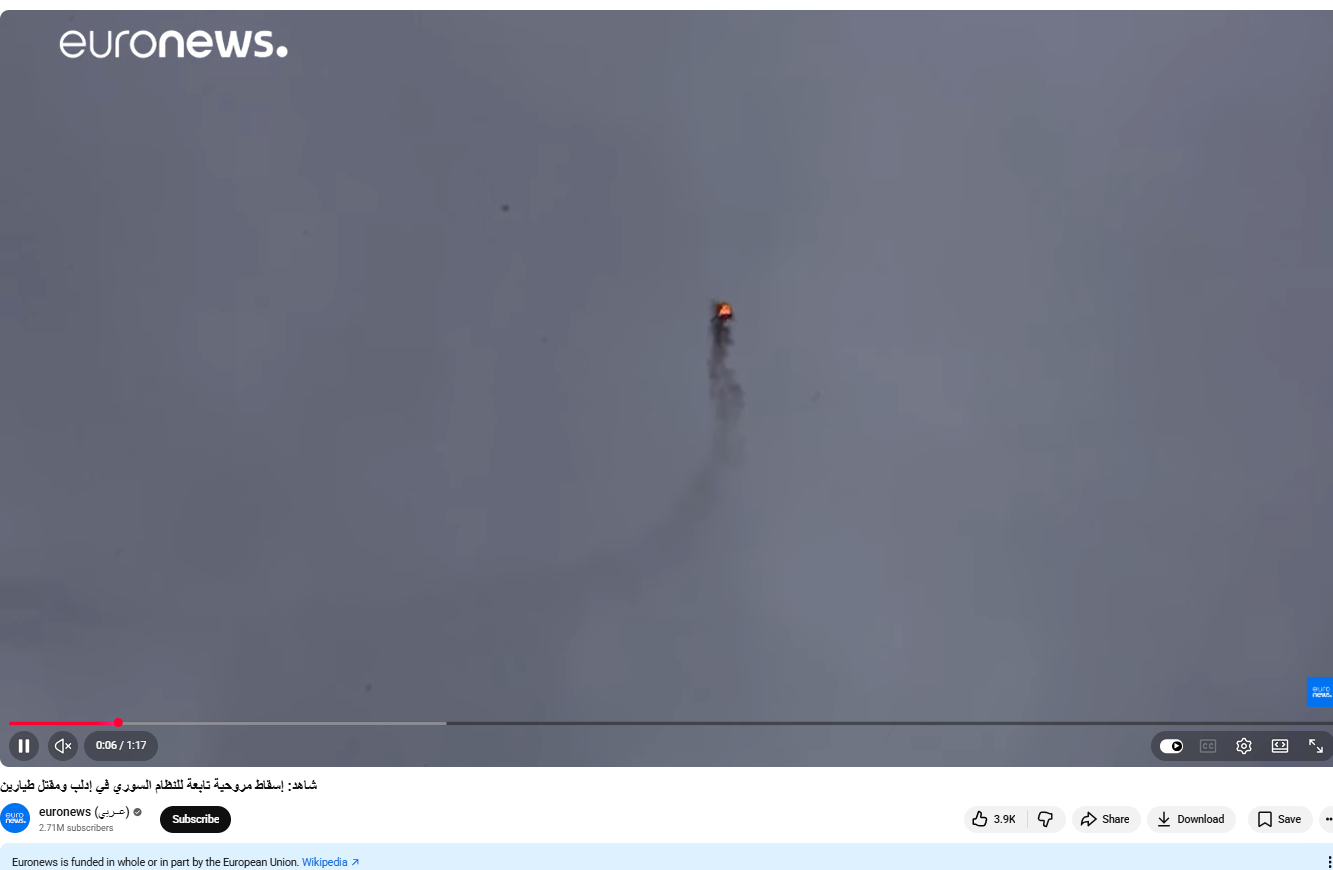
However, the viral video being shared as evidence of the downing of a US aircraft predates these events. Using reverse image search on keyframes from the clip, we found a longer version published by Euronews on February 11, 2020. The Arabic title of the video translates to: “Syrian regime helicopter shot down in Idlib, two pilots killed.” Reports indicate that the incident occurred in Idlib, Syria, in February 2020, where a military helicopter was shot down and caught fire before crashing.
The incident was also covered by other international media outlets, including AFP, which distributed images and videos of the crash.
- https://www.afpforum.com/AFPForum/Search/ViewMedia.aspx?mui=1&hid=5DFA75509C25E3CDC3F24CA3B41C1A9A854C8AA3EB2BC1C64FCC0192F0506138

Conclusion
The viral claim is false. The footage does not show an American helicopter shot down by Iran. Instead, it is an old video from February 2020 depicting a helicopter crash in Syria, which is being shared with a misleading and unrelated narrative.

Related Blogs

Introduction
Mr Rajeev Chanderashekhar, MoS, Ministry of Electronics and Information Technology, on 09 March 2023, held a stakeholder consultation on the Digital India Bill. This bill will be the successor to the Information technology Act 2000 and provide a set of regulations and laws which will govern cyberspace in times to come. The consultation was held in Bangalore and was the first of many such consultations where the Digital India bill is to be discussed. These public stakeholder consultations will provide direct public feedback to the ministry, and this will help create a safe and secure ecosystem of Indian Cyber Laws.
What is the Digital India Act?
Cyberspace has evolved the fastest as compared to any other industry, and the evolution of the growth cannot be presumed to be stagnant or stuck as we see new technologies and gadgets being invented all across the globe. The ease created by using technology has changed how we live and function. However, bad actors often use these advantages or fruits of technology to wreak havoc upon the nation’s cyberspace. The use of technology is always governed by the application of usage and safeguard policies and laws. As technology is growing exponentially, it is pertinent that we have laws which are in congruence with today’s time and technology. This is keenly addressed by the Digital India Act, which will be the legislation governing Indian Cyberspace in times to come. This was the need of the hour in order to have the judiciary, legislature and law enforcement agencies ahead of the curve when it comes to cyber crimes and laws.
What is the Digital India Bill’s primary goal?
The Digital India Bill’s goal is to guarantee an institutional structure for accountability and that the internet in India is accessible, unhindered by user harm or criminal activity. The law will apply to new technologies, algorithmic social media platforms, artificial intelligence, user risks, the diversity of the internet, and the regulation of intermediaries. The diversity of the internet, user hazards, artificial intelligence, social media platforms, and intermediary regulation are all discussed.
Why is the Digital India Bill necessary?
The number of internet users in the country currently exceeds 760 million; in the upcoming years, this number will reach 1.2 billion. Despite the fact that the internet is useful and promotes connectivity, there are a number of user damages nearby. Thus, it is crucial to enact legislation to set forth new guidelines for individuals’ rights and responsibilities and mention the requirement to gather data.
Major Elements of the Digital India Act
Major Elements of the Digital India Bill, which will eventually become an Act, which will contribute massively towards a safe cyber-ecosystem, some of these elements aim towards the following-
- The legislation attempts to establish an internet regulator.
- Women and Child safety.
- Safe harbour for intermediaries.
- The right of the individual to secure his information and the requirement to utilise personal data for legal purposes provide the main obstacles to data protection or regulation. The law tries to deal with this difficulty.
- A limit will be placed on how far a person’s personal information can be accessed for legal reasons.
- The majority of the bill’s characteristics are contrasted with the EU’s General Data Protection Regulation.
The Way Ahead
As we ride the wave of developments in cyberspace regarding emerging technologies and automated gadgets, it becomes pertinent that the state takes due note of such technologies and the courts take cognisance of offences committed by using technology. Law enforcement agencies must also train police personnel who can effectively and efficiently investigate cybercrime cases. The ministry also released a few bills last year, such as – the Telecommunication Bill, 2022, Intermediary Rules and the Digital Personal Data Protection Bill, 2022, to better address the shortcomings and the issues in cyberspace and how to safeguard the netizens. The Digital India Act will essentially create a synergy between the current bills and the new ones to come in order to create a wholesome, safe and secure Indian cyber ecosystem.
Conclusion
Digital India Bill is necessary to address the challenges of cyberspace, like personal data and privacy, and policies related to online child and women safety to create a and create a modern and comprehensive legal framework that aligns with global standards of cyber laws. The draft of the bill is expected to come out by July. The ministry looks forward to maximising the impact of the bill through such continuous and effective public consultation to understand and fulfil the expectations and requirements of the Indian netizen, thus empowering him/her equivalent to the netizen of a developed country.

EXECUTIVE SUMMARY:
A viral video is surfacing claiming to capture an aerial view of Mount Kailash that has breathtaking scenery apparently providing a rare real-life shot of Tibet's sacred mountain. Its authenticity was investigated, and authenticity versus digitally manipulative features were analyzed.
CLAIMS:
The viral video claims to reveal the real aerial shot of Mount Kailash, as if exposing us to the natural beauty of such a hallowed mountain. The video was circulated widely in social media, with users crediting it to be the actual footage of Mount Kailash.


FACTS:
The viral video that was circulated through social media was not real footage of Mount Kailash. The reverse image search revealed that it is an AI-generated video created by Sonam and Namgyal, two Tibet based graphic artists on Midjourney. The advanced digital techniques used helped to provide a realistic lifelike scene in the video.
No media or geographical source has reported or published the video as authentic footage of Mount Kailash. Besides, several visual aspects, including lighting and environmental features, indicate that it is computer-generated.
For further verification, we used Hive Moderation, a deep fake detection tool to conclude whether the video is AI-Generated or Real. It was found to be AI generated.

CONCLUSION:
The viral video claiming to show an aerial view of Mount Kailash is an AI-manipulated creation, not authentic footage of the sacred mountain. This incident highlights the growing influence of AI and CGI in creating realistic but misleading content, emphasizing the need for viewers to verify such visuals through trusted sources before sharing.
- Claim: Digitally Morphed Video of Mt. Kailash, Showcasing Stunning White Clouds
- Claimed On: X (Formerly Known As Twitter), Instagram
- Fact Check: AI-Generated (Checked using Hive Moderation).

Executive Summary
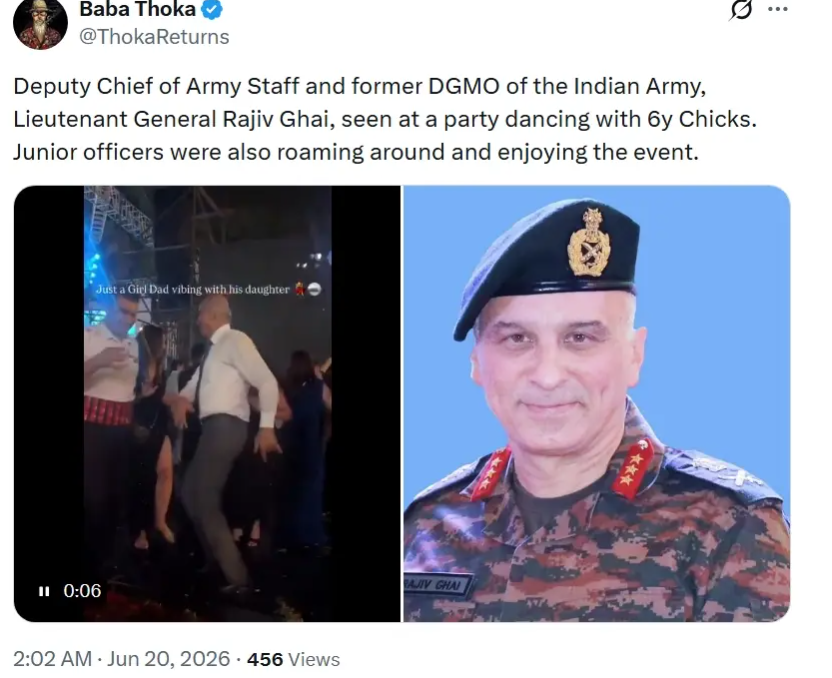
A video circulating on social media claims to show the Deputy Chief of Army Staff and former DGMO of the Indian Army, Lieutenant General Rajiv Ghai, dancing with a young woman at a party. Users sharing the clip further allege that other junior military officers were also present at the event. CyberPeace Research Wing research found the claim to be misleading. The viral video has no connection with the Indian Army, Lt Gen Rajiv Ghai, or any official military function. The person seen in the video is actually the father of content creator Akanksha Sehgal, who has featured him in multiple videos on her social media accounts.
Claim:
A Pakistani handle ‘Baba Thoka’ shared the video on X, alleging that Lt Gen Rajiv Ghai was seen dancing with young women at a party and that junior officers were also present.
- https://x.com/ThokaReturns/status/2068069535715147896?s=20
- https://archive.ph/H9EA0
Fact Check:
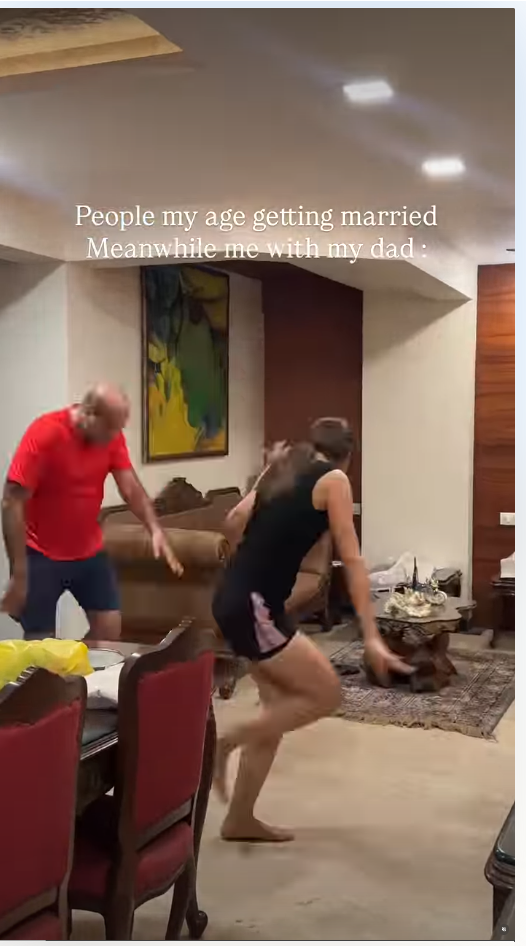
A reverse image search of keyframes from the viral video led to the same clip being found on Instagram handle ‘akku_sehgal_’, posted on December 14, 2025. The video caption read: “POV – when your dad and your music taste match.”

Further examination of the content creator Akanksha Sehgal’s Instagram profile showed multiple videos featuring the same father-daughter duo, confirming that the man in the viral clip frequently appears in her content.
Conclusion:
The viral video claiming to show Lieutenant General Rajiv Ghai dancing at a party is misleading. The individual seen in the video is not the senior Indian Army officer but the father of content creator Akanksha Sehgal.
