
#FactCheck- 2019 Fighter Jet Escort Video Falsely Linked to Iran Delegation
Executive Summary
Iran’s official news agencies have denied claims that senior officials, including Foreign Minister Abbas Araghchi and Parliament Speaker Mohammad Bagher Ghalibaf, have arrived in Pakistan for talks. A senior official told Iran’s Tasnim News Agency that Tehran is considering Pakistan’s proposal for peace talks, but any dialogue would depend on the United States fulfilling its commitment to halt military actions on all fronts.
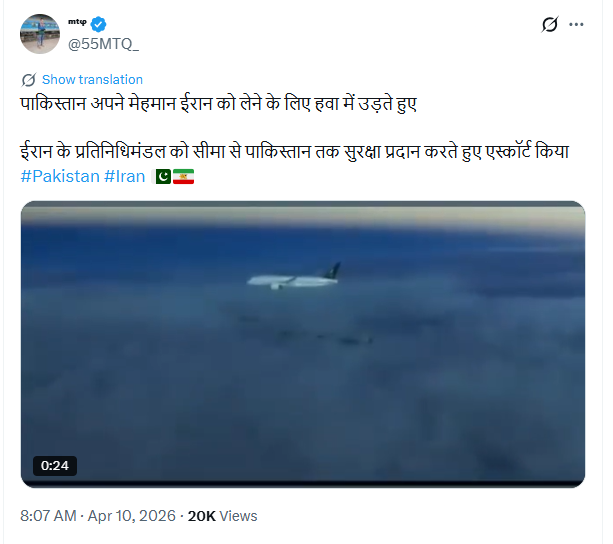
Notably, the United States and Iran had agreed to a two-week ceasefire on April 8, 2026, with discussions reportedly scheduled for April 11 in Islamabad. Amid this backdrop, a video showing fighter jets escorting a large aircraft is being widely circulated on social media. Users claim that Pakistan deployed these jets to escort an Iranian delegation into the country.
However, an research by the CyberPeace found the claim to be false. The viral video is not recent and dates back to 2019.
Claim
An X (formerly Twitter) user shared the video claiming that Pakistan Air Force jets were escorting an Iranian delegation into Pakistan.
Fact Check
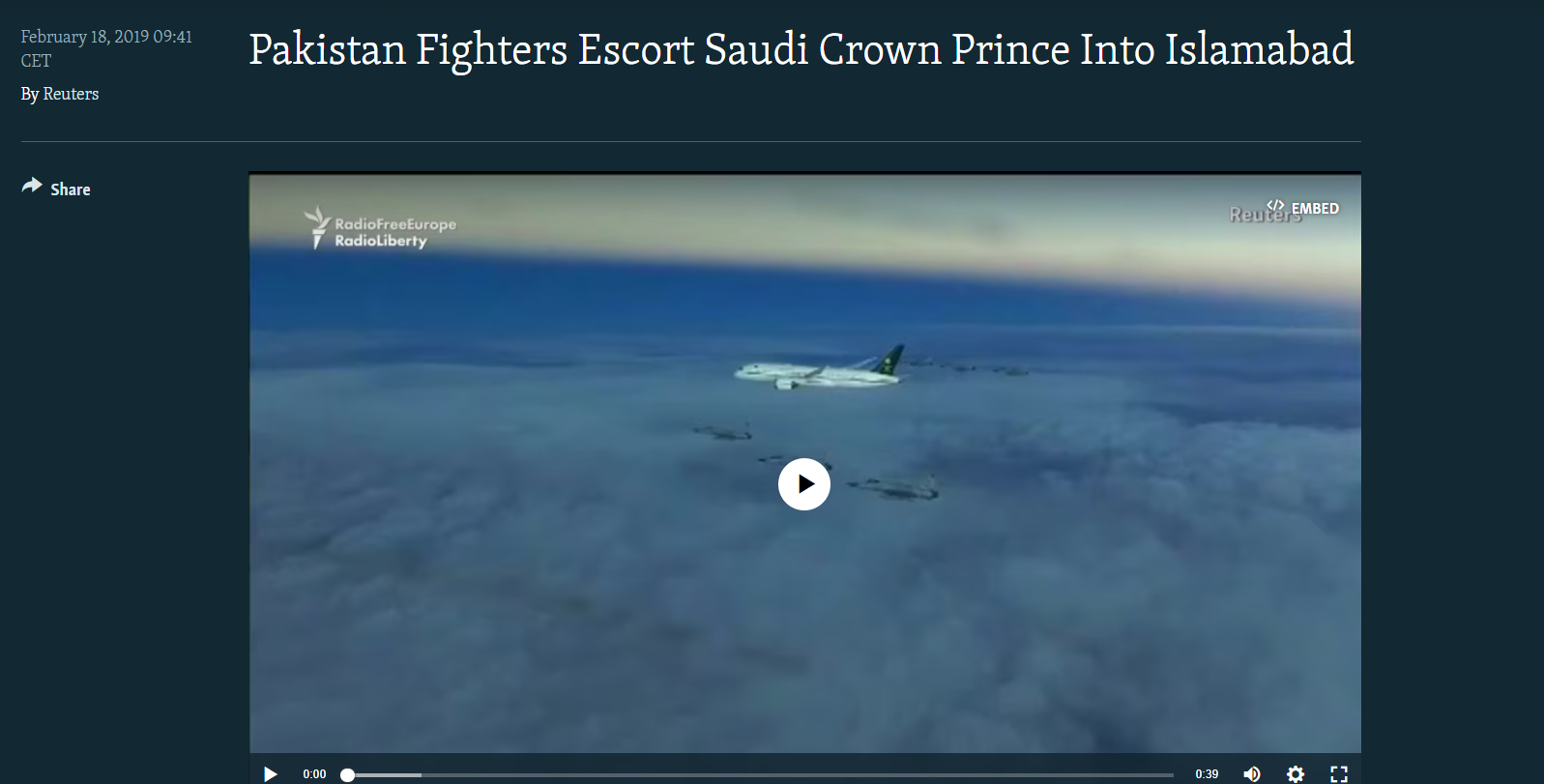
Reverse image search of keyframes from the viral video led us to a February 18, 2019 report by Radio Free Europe/Radio Liberty. The report stated that the fighter jets were deployed by Pakistan to escort the aircraft of Saudi Crown Prince Mohammed bin Salman during his visit to Pakistan on February 17, 2019.
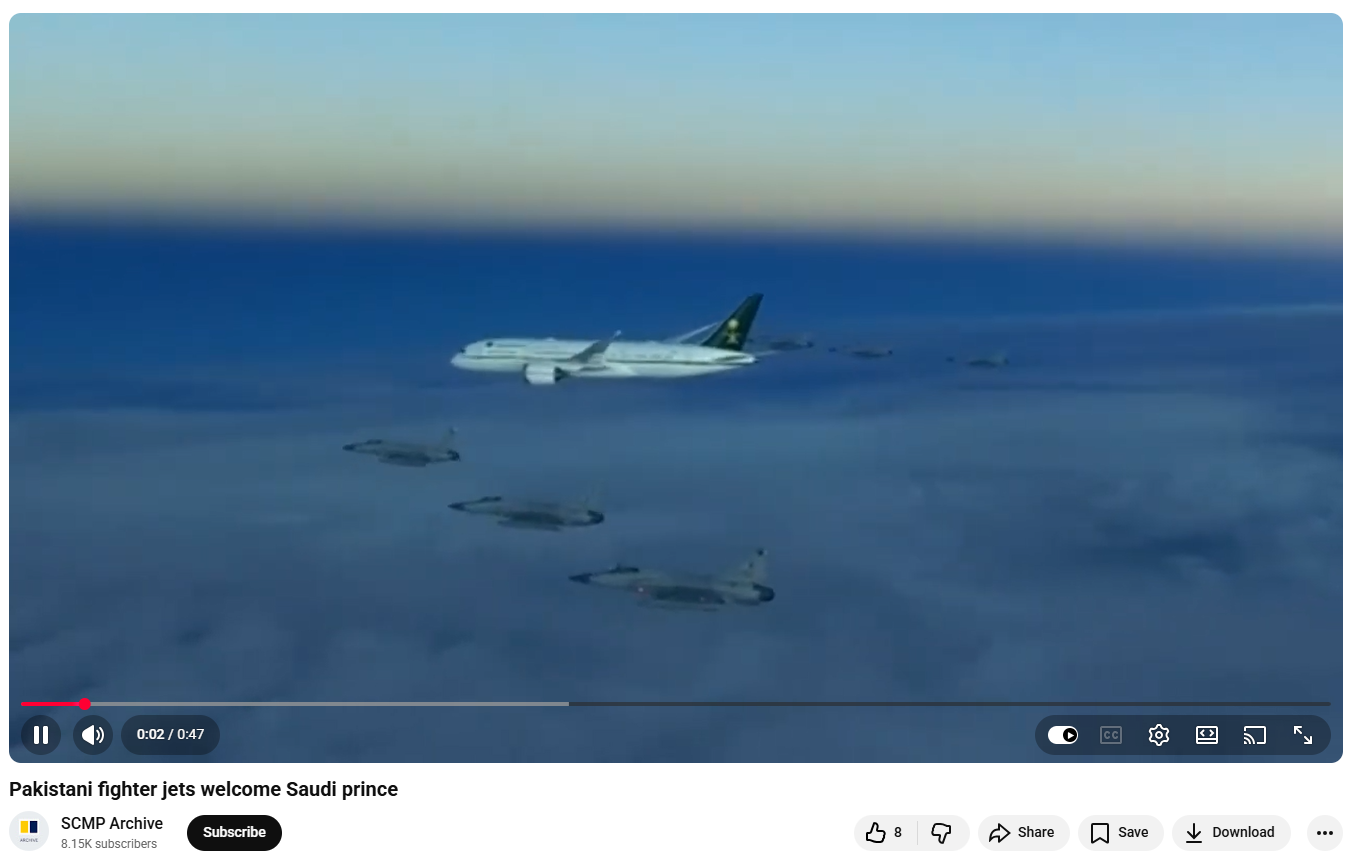
Further verification led us to the same footage uploaded on YouTube by the channel “SCMP Archive” on July 6, 2020. At the time, Pakistan’s Air Force had described the escort as part of a ceremonial welcome tradition for visiting dignitaries.
Conclusion
The viral claim is misleading. The video does not show Pakistani fighter jets escorting an Iranian delegation amid ongoing ceasefire talks. Instead, it is an old clip from 2019, when Pakistan deployed JF-17 fighter jets to welcome Saudi Crown Prince Mohammed bin Salman during his official visit. There is no evidence linking the video to current geopolitical developments involving Iran and Pakistan. The footage has been taken out of context and reshared with a false narrative to mislead viewers.

Related Blogs

Introduction:
The Indian Ministry of Communications has come up with a feature known as "Quick SMS Header Information" to provide citizens with more control over their messaging services. This feature would help users access crucial information about the sender through text message, therefore making the details readily available at their fingertips.
The Quick SMS Header service is the key to providing users with the feature to ensure that they are receiving messages from the correct source. Users can instantly learn all the necessary data about the sender of a certain SMS. This data is invaluable for making the distinction between real messages and suspicious spam or phishing, so the user can have a higher level of defense against online threats and scam activities.
Importance of Checking the Header:
1. Authenticity Verification: SMS header data represents another way to confirm the sender. This feature keeps the end user from wrongly assuming that the SMS is from a trusted source or an unknown sender. Hence, the end user is able to make a choice about the authenticity of the message.
2. Mitigating Spam and Phishing: The rise of SMS and phishing scams has created some significant hurdles for users in the process of differentiating between real and fake messages. Through the Quick SMS Header Information service, people will be able to look up any suspicious messages in order to be able to take appropriate steps to prevent links that lead to malicious websites or requests for personal information.
3. Enhancing User Security: The SMS header information plays an important role in ensuring that the user is secure and has no privacy issues. The checking of the message headers will help us limit the possibilities of bad activities and reduce the chances of being a victim of cybercriminals.
4. Empowering Consumer Awareness: This feature is designed to encourage the people involved to take responsibility for the security of their devices and establish a safer and more dependable digital platform.
Benefits:
- Enhanced Transparency: By giving access to the header information to the users, it is transparency that is promoted within the telecommunications ecosystem.
- Empowered Decision-Making: Now that users have information about the SMS header, they can make informed decisions regarding their communications and privacy.
- Efficient Resolution of Concerns: The Quick SMS Header Information serves the purpose of providing the needed resolution by telling us the message’s origin in cases where users come across any suspicious messages.
- User-Friendly Interface: With its easy and clear process, this feature caters to users of all technical proficiency levels, ensuring accessibility for all.
Working:
1. Compose Your SMS: Write a message with the header you wish to find the information about. For example, if you want to know details about a header labeled "SBIINB," your SMS should be in the format "DETAILS OF SBIINB." Note, all letters are in capital only.

2. Send it to 1909: Once your message is ready, send it to: 1909. Please note, this may charge you depending upon your current plan.

3. Receive Response: The response to your SMS will be sent to you by the concerned telecommunication service provider or directly by 1909, a few seconds after you have sent your message. This response will have the data associated with the header above.

Another method to find SMS header information:
TRAI (Telecom Regulatory Authority of India) has made a tool on the webpage (https://smsheader.trai.gov.in/) to check for the SMS header associated with the message.
TRAI has also mandated header registration for messages pertaining to transactional or promotional purposes. This has helped people identify the SMS header by simply looking into the database as made by TRAI.
Steps:
1. Go to https://smsheader.trai.gov.in/. The page looks like as shown below:

2. Enter your Email, Name and complete the captcha under the Download/View Header Details and click on continue

3. Enter the OTP received on your email with the captcha and click on continue
4. Now enter your SMS header in the format of AA-AAAA, where “AA” is your prefix and “AAAA” is your header name. For example, we have taken “AX-HDFCBK” as our sample header, so “AX” is our prefix and “HDFCBK” is our header name.

5. As soon as we press enter, the site returns the query with the information of the header, as shown below

Conclusion:
The importance of checking SMS headers is something that simply cannot be overemphasized. This is the principal procedure for identifying incoming messages as authentic, and on that basis, the users are able to make informed choices about the messages they receive. It also contributes to the rise of user safety and privacy.
The development of more transparent controls and a stronger decision-making process will make it easier for users to handle their digital lives. The Quick SMS Header Information service is easy and convenient to use, as its interface is simple and understandable for users of all technical levels.
In addition to this, TRAI's attempt to make available an online tool for the maintenance of a comprehensive database of SMS headers strengthens its position towards ensuring security for its users in the telecommunications sector.
Executive Summary
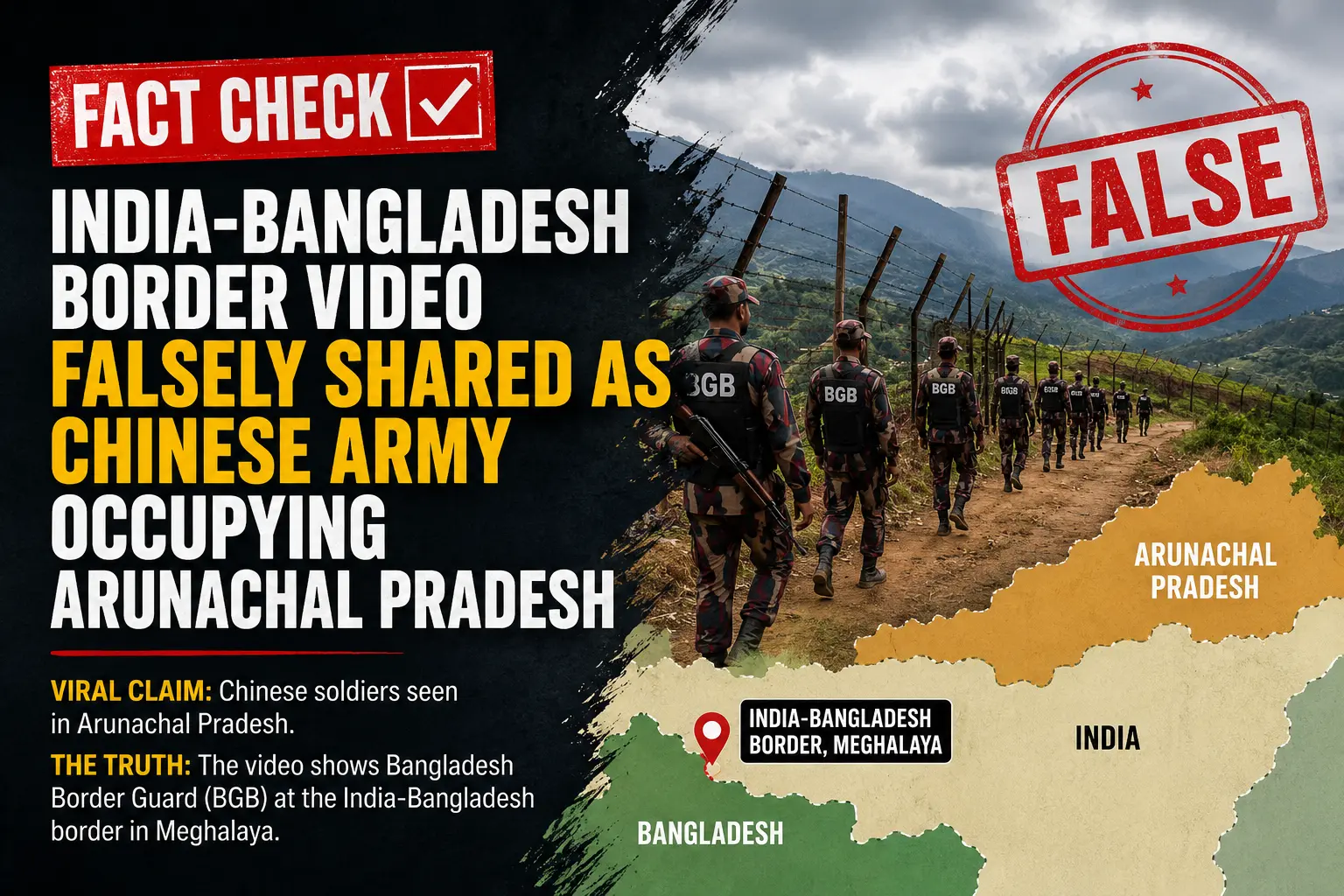
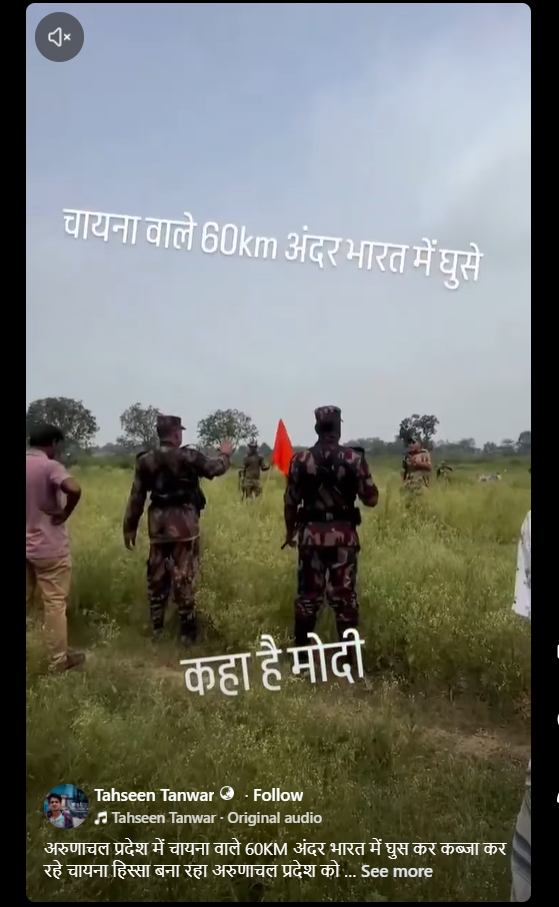
A video is being widely shared on social media with the claim that the Chinese Army has entered 60 kilometres inside Arunachal Pradesh and occupied Indian territory. In the video, a man appears to be recording the situation using his selfie camera, while soldiers can be seen standing face-to-face and arguing with each other in the background. The CyberPeace Research Wing found that the claim is false. The viral video is not from Arunachal Pradesh. It shows a confrontation between India’s Border Security Force (BSF) and Bangladesh’s Border Guard Bangladesh (BGB) along the India-Bangladesh border.
Claim
A Facebook user shared the video with the caption:
"China is entering 60 km inside India and occupying Arunachal Pradesh. China is turning Arunachal Pradesh into its territory. Where are Prime Minister Modi, Defence Minister Rajnath Singh and Home Minister Amit Shah?"
Post link:
https://www.facebook.com/reel/1736825064305394
https://www.facebook.com/reel/1736825064305394
FactCheck
Our research found no credible news report confirming that Chinese troops had entered 60 kilometres inside Arunachal Pradesh or occupied Indian territory.
The people in the viral video can be heard speaking in Bengali, suggesting that the footage could be from the India-Bangladesh border rather than Arunachal Pradesh.
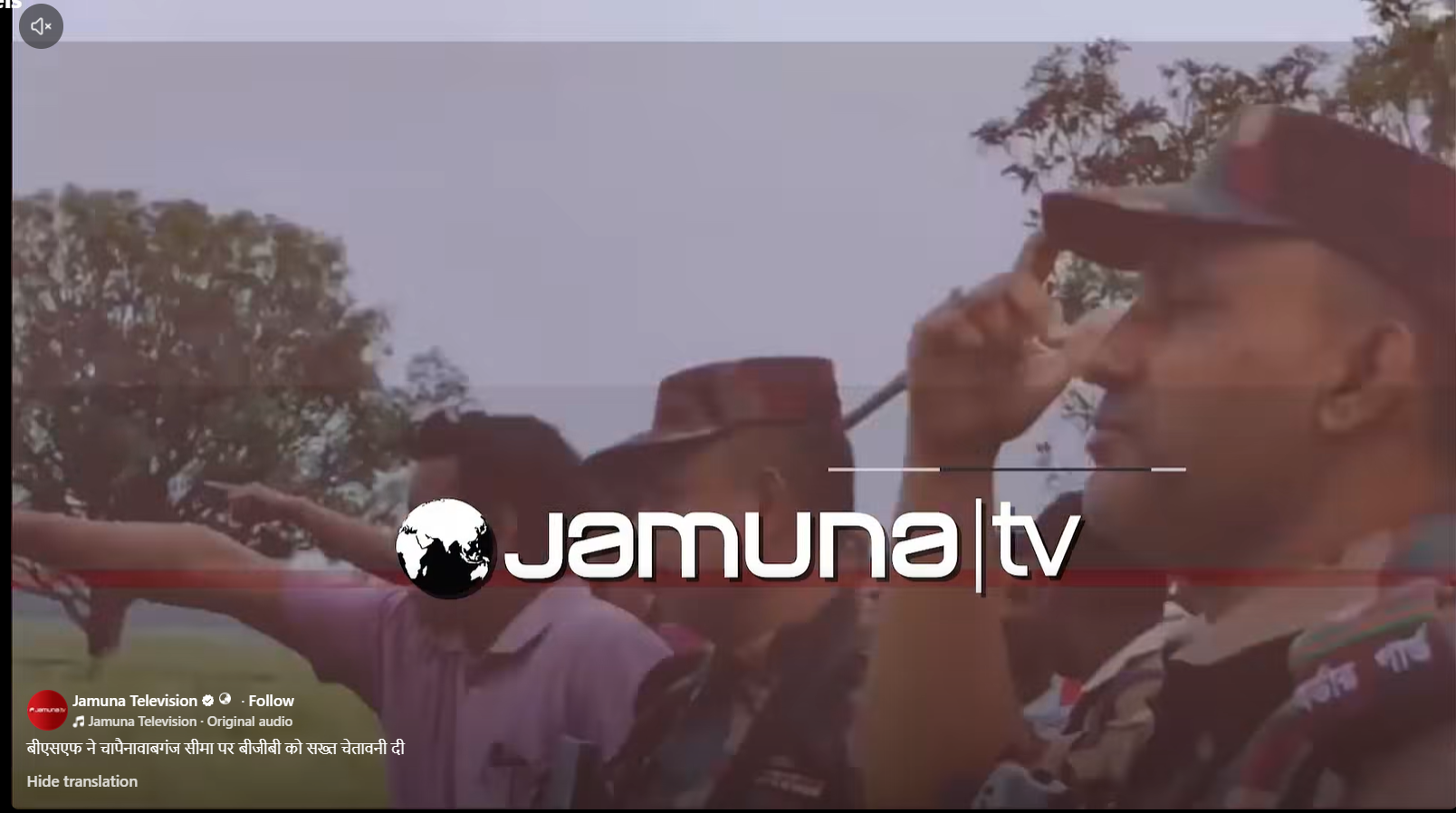
A reverse image search of keyframes from the viral video led us to an identical video posted on the Facebook page of Bangladeshi news channel Jamuna TV on June 20. According to the caption, the incident took place along the Chapainawabganj border in Bangladesh, where personnel of India’s BSF and Bangladesh’s BGB had confronted each other.
https://www.facebook.com/reel/1049262804595610
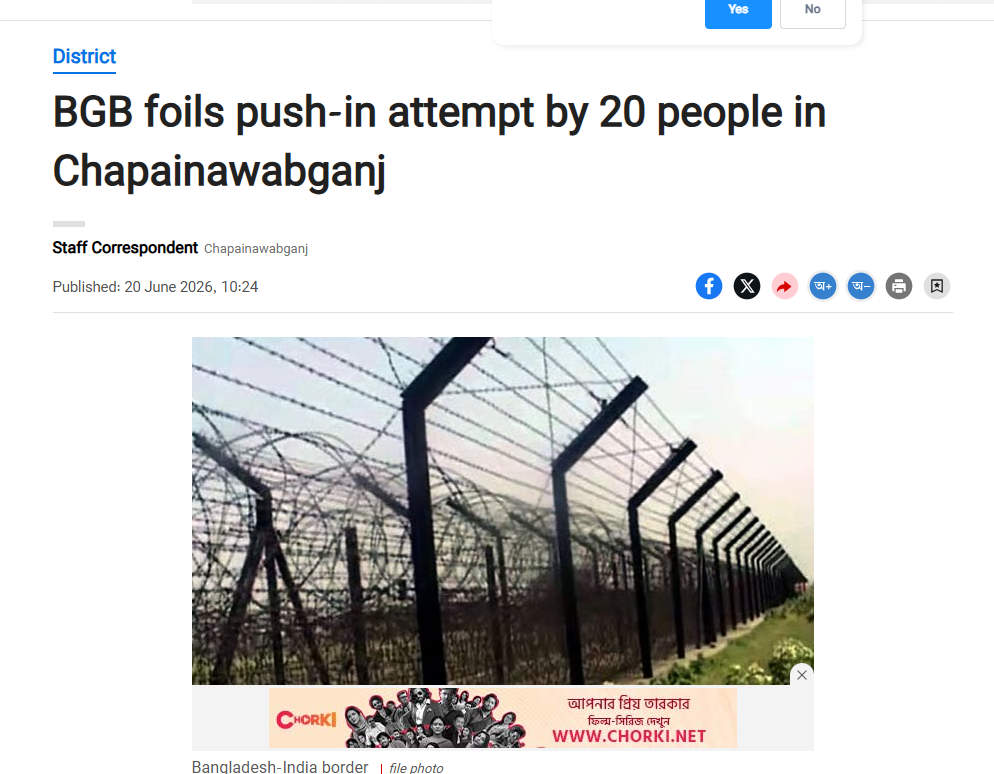
We also found reports from Bangladeshi media outlet Prothom Alo about the incident. According to the reports, Bangladeshi security personnel had stopped around 20 people who were attempting to return to Bangladesh from India, following which a verbal altercation took place between BSF and BGB personnel.
https://www.prothomalo.com/bangladesh/district/syzkfootaq
Conclusion
The viral claim is false. The video does not show Chinese troops entering or occupying 60 kilometres of territory inside Arunachal Pradesh. It actually shows a confrontation between BSF and BGB personnel along the India-Bangladesh border in the Chapainawabganj area of Bangladesh. The footage is being circulated with a false Arunachal Pradesh-related narrative.

Introduction
The enactment of the Online Gaming (Promotion and Regulation) Act, 2025 has a significant impact, resulting in considerable changes to the structure of the Indian gaming industry. The ban on Real-Money Games (RMG), including fantasy sports, rummy, and poker, aims to curb addiction, illegal betting and most importantly, financial exploitation.
However, this decision sent ripples throughout the industry, resulting in players, companies and their investors re-strategising their plans to move forward. This approach, however, is a sharp contrast to how other nations, including the UK, Singapore and others, regulate online gaming. This, as a result, has also raised doubts about the ban and calls into question whether this is the right move.
Industry in Flux - The resultant Fallout
- MPL’s Layoffs: The Mobile Premiere League has so far laid off nearly 60 per cent of its workforce, with the CEO of the company openly admitting that the company is no longer able to make money in India.
- Dream11’s Lost Revenue: Having seen a position of being a market leader, the company has now witnessed its 95 per cent revenue wiped out, resulting in raised alarms among investors.
- A23’s Legal Move: The company chose to move the Karnataka High Court under the argument that the ban also ends up unfairly criminalising skill-based games that were earlier classified differently from gambling by the courts.
The new face of eSports: With RMGs outlawed, the focus is now on esports, including casual mobile gaming, console/PC gaming, and creating new opportunities and also leaving a void for RMG revenue companies.
Regulations Around the World - & India
India has adopted a prohibition model, whereas many other countries have developed regulatory frameworks that allow sectoral expansion under monitoring.
United Kingdom:
- Online gaming is regulated by the UK Gambling Commission.
- RMGs are legal but subject to strict licensing, age verification and advertising rules.
- Self-exclusion schemes are a must, offered by operators along with tools to prevent gambling addictions.
United States
- State-driven regulations that vary from state to state.
- States including Nevada and New Jersey allow casinos both online and offline, while other states prohibit them completely.
- Regulation for skill-based fantasy games is fragmented but generally legal.
China
- Great focus on controlling and restricting gaming addictions among minors.
- Time limits are enforced for players under 18 (usually as little as 3 hours per week).
- Gambling has been deemed illegal; however, esports and casual gaming operate within China’s regulated gaming ecosystem, subject to certain compliance.
Singapore
- The Remote Gambling Act regulates chance-based games, while other eSports and skill-based games operate out of its jurisdiction and are regulated separately.
- Online gambling isn't completely banned, but is operated under restrictions.
- Only Licensed operators under strict controls are allowed by the government to operate to avoid and prevent black-market alternatives.
Australia
- Regulates under the Interactive Gambling Act.
- Sports betting and certain licensed operators are allowed, while most of the other online gambling services are prohibited.
- Restrictions on advertising and real-time interventions allow emphasis on harm minimisation.
India’s Approach - Comparison
The Online Gaming (Promotion and Regulation) Act, 2025 introduces a prohibition model for real money games. This differs from jurisdictions such as the UK and US, which have implemented regulatory frameworks to oversee the sector. In India, earlier legal interpretations distinguished between games of skill and games of chance. The new legislation provides a single treatment for both categories, which marks a departure from previous judicial pronouncements.
Conclusion
At present, India’s gaming sector is navigating layoffs, court cases, and a pivot towards esports post the RMG ban. Keeping in mind that the intent of said ban is the protection of citizens, the industry also argues that regulation, instead of prohibition, offers a sustainable approach to the issues. On the other hand, on the global scale, most nations prefer controlled and licensed models that ensure consumer safety and work on preserving both jobs and revenues. However, India’s step is diverging from such a model. The lack of safeguards and engagement in the real money gaming industry led to a prohibition model, underscoring that in sensitive digital sectors, early regulatory alignment is essential.
References
- India online gaming ban: Global rules & regulation bill 2025
- Level up or game over? Decoding India’s gaming industry post RMG ban
- MPL lays off 350 employees after GST rules, RMG crackdown
- India’s Dream11 hit by online gaming ban, revenue slumps
- Online gaming ban: A23 moves Karnataka HC against government decision
- UK Gambling Commission – Licensing and Regulations
- Fantasy Sports & Gambling Law – State by State
- China’s gaming restrictions for minors
- Singapore Remote Gambling Act – Ministry of Home Affairs
- Australian Communications and Media Authority – Interactive Gambling Act
