
#FactCheck - Viral Video Falsely Linked to India; Actually from Bangladesh
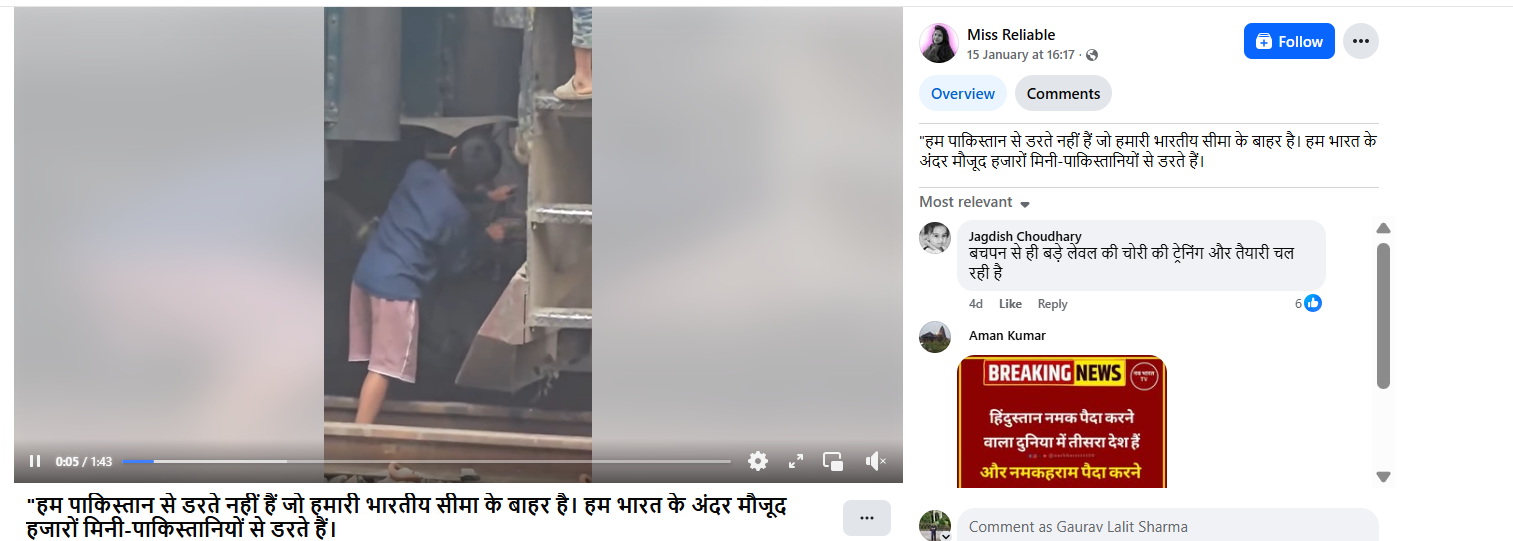
A video circulating widely on social media shows a child throwing stones at a moving train, while a few other children can also be seen climbing onto the engine. The video is being shared with a communal narrative, with claims that the incident took place in India.
Cyber Peace Foundation’s research found the viral claim to be misleading. Our research revealed that the video is not from India, but from Bangladesh, and is being falsely linked to India on social media.
Claim:
On January 15, 2026, a Facebook user shared the viral video claiming it depicted an incident from India. The post carried a provocative caption stating, “We are not afraid of Pakistan outside our borders. We are afraid of the thousands of mini-Pakistans within India.” The post has been widely circulated, amplifying communal sentiments.
Fact Check:
To verify the authenticity of the video, we conducted a reverse image search using Google Lens by extracting keyframes from the viral clip. During this process, we found the same video uploaded on a Bangladeshi Facebook account named AL Amin Babukhali on December 28, 2025. The caption of the original post mentions Kamalapur, which is a well-known railway station in Bangladesh. This strongly indicates that the incident did not occur in India.
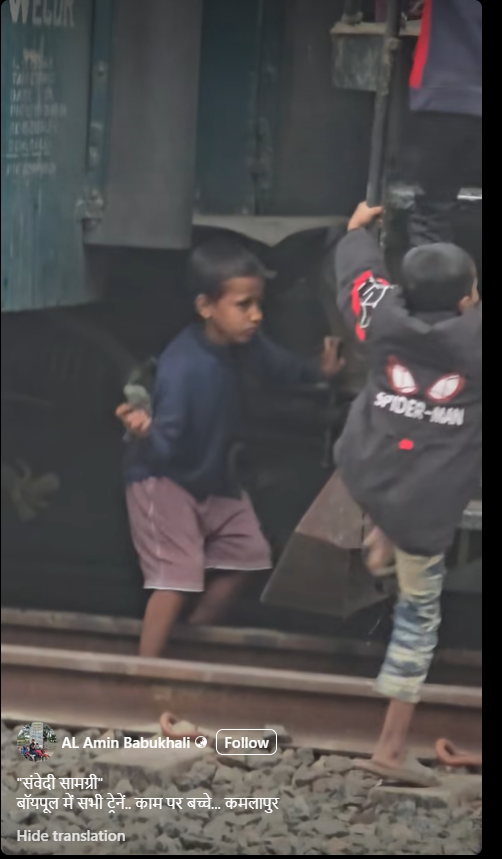
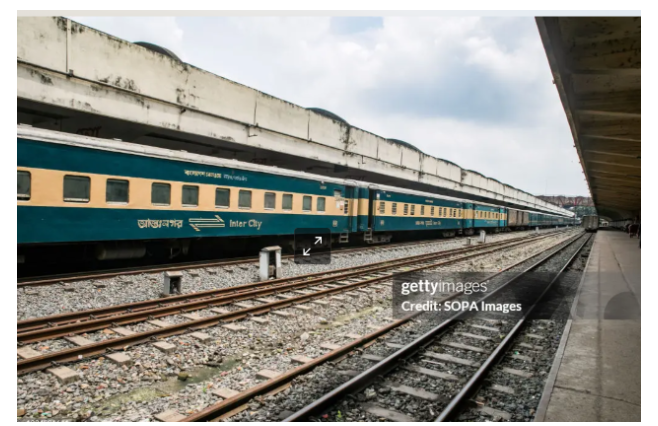
Further analysis of the video shows that the train engine carries the marking “BR”, along with text written in the Bengali language. “BR” stands for Bangladesh Railways, confirming the origin of the train. To corroborate this further, we searched for images related to Bangladesh Railways using Google’s open tools. We found multiple images on Getty Images showing train engines with the same design and markings as seen in the viral video. The visual match clearly establishes that the train belongs to Bangladesh Railways.
Conclusion
Our research confirms that the viral video is from Bangladesh, not India. It is being shared on social media with a false and misleading claim to give it a communal angle and link it to India.

Related Blogs

Introduction
In a groundbreaking move, India's Reserve Bank has embarked on a transformative journey with its Central Bank Digital Currency (CBDC) project. As the world grapples with the evolving landscape of digital finance, the implications of India's CBDC initiative extend beyond its borders, potentially reshaping global payment systems. The Union Minister of State for Finance, Shri Pankaj Chaudhary, revealed that on October 7, 2022, the Reserve Bank of India released a proposal note on Central Bank Digital Currency (CBDC). Two pilot projects using blockchain-based technology are described in the concept note: Digital Rupee-Wholesale (e₹-W) and Digital Rupee-Retail (e₹-R). Launched on November 1, 2022, the bulk trading pilot aims to increase intermediary competitiveness, particularly in the resolution of trades in the secondary market involving sovereign debt. In parallel, on December 1, 2022, the retail banking pilot, known as e₹-R, got underway in a limited user group with eight banks taking part in stages.
The digital asset known as e₳-R is issued across financial institutions for Person-to-Person (P2P) and Person-to-Merchant (P2M) transactions. It is intended to serve as a virtual currency that represents legal money and exhibits characteristics similar to actual cash. Based on input gathered during the continuing trial phases, the RBI intends to progressively broaden the pilot project's scope.
Central Bank Digital Currency Pilot Projects
Central Bank Digital Currency (CBDC), which the Central Bank of India is promoting, may easily perform an essential part in payments made across borders, according to Reserve Bank Governor Shaktikanta Das. The CBDC is going to be expanded to the international financial markets after being implemented as a trial in both the retail and wholesale industries.
CBDC in International Payments
He emphasized that although physical currency will still exist, the CBDC will eventually replace all forms of money worldwide.
"CBDC is going to be the future currency of the world and it is necessary that every central bank, every country works on CBDC," he stated. He also stated that as worldwide commerce moves more and more around science and technology, CBDCs will play a significant role since they can effectively and affordably speed up payment processing across different countries. Regarding India's foreign exchange reserves, the governor stated that the selection to increase the resources as a safety net and protection versus contagion possibilities was made consciously.
CBDCs' Place in the Transnational Economic Revolution
In certain economies worldwide, having a CBDC internationally accessible could lead to more replacements for foreign currencies rather than the home currencies, which could cause financial aggregates to become volatile and change the mix of instruments of exchange.
CBDC may have benefits related to first-mover savings of scale, and other consequences even in everyday circumstances. If nations with global currencies have established CBDCs, they could strengthen current advantages and disadvantages, including consequences, particularly in terms of revenue. In a similar vein, CBDC might alter the structure of international liquidity while safeguarding asset supply. Additionally, and particularly if imposed abruptly, CBDC may, in certain circumstances, result in significant capital movements and associated repercussions on the foreign exchange rate as well as additional asset prices. Furthermore, nations may encounter difficulties in getting ready for virtual currencies issued by central banks.
The worldwide and international scope of CBDCs accessible to immigrants may become particularly apparent in situations where there is a widespread flight safety concern. In these circumstances, converting a CBDC into a foreign currency would make it possible for capital markets to deleverage more quickly. The elimination of debt challenges could show up as tight finance constraints and abrupt swings in foreign exchange markets if CBDCS expedited its flight from uncertainty.
Deposits of Foreign Exchange and Self-Dependency
Reserve Bank Governor Shaktikanta Das stated "We must rely on ourselves. We must maintain our robust reserves. In order to achieve that goal, we have been amassing quite substantial reserves, and the outside world has come to feel quite confident that India would be able to fulfil its contractual responsibilities to the international community no matter what the obstacles,"
Involvement of RBI in the Currency Market
Given that the trading community was confident that the Reserve Bank of India would be capable of and able to fulfil its contractual responsibilities, the value of the Indian rupee did not decline as dramatically. The RBI governor stated that the RBI does participate in the economy, but that "our engagement operates in two ways," he would not hesitate to acknowledge this.
The Value of Macroeconomic and Budgetary Cooperation
According to RBI Governor Das, the RBI makes purchases and sales of dollars based on the direction in which the financial sector is trending. However, the RBI does not intend to set a certain level for the rupee because it does not consider any specific threshold for the Indian rupee's conversion rate against the US dollar. He also emphasized how crucial it is for both the financial and monetary authorities to work together.
Conclusion
India's CBDC project signals a transformative shift in the global digital finance landscape. Governor Shaktikanta Das envisions CBDCs as the future global currency, emphasizing their role in international payments. The potential impact on financial systems, cross-border transactions, and the need for self-reliance underscore the significance of India's CBDC initiative in shaping the evolving dynamics of the digital economy. As the project progresses, close cooperation between financial and monetary authorities becomes imperative for navigating the challenges and opportunities associated with this groundbreaking venture.
References
- https://economictimes.indiatimes.com/news/economy/policy/central-bank-digital-currency-can-play-important-role-in-cross-border-payment-rbi-guv/articleshow/104706717.cms
- https://www.bis.org/cpmi/publ/d174.pdf
- https://bfsi.economictimes.indiatimes.com/news/fintech/explained-how-rbi-is-leveraging-upi-to-push-the-use-of-retail-cbdc/103591989
- https://www.imf.org/en/News/Articles/2022/02/09/sp020922-the-future-of-money-gearing-up-for-central-bank-digital-currency
- https://www.business-standard.com/economy/news/cbdc-pilot-projects-show-promising-results-rbi-governor-shaktikanta-das-123102601171_1.html

Executive Summary:
A photo that has gone viral on social media alleges that the Indian company Patanjali founded by Yoga Guru Baba Ramdev is selling a product called “Recipe Mix for Beef Biryani”. The image incorporates Ramdev’s name in its promotional package. However, upon looking into the matter, CyberPeace Research Team revealed that the viral image is not genuine. The original image was altered and it has been wrongly claimed which does not even exist. Patanjali is an Indian brand designed for vegetarians and an intervention of Ayurveda. For that reason, the image in context is fake and misleading.

Claims:
An image circulating on social media shows Patanjali selling "Recipe Mix for Beef Biryani”.

Fact Check:
Upon receiving the viral image, the CyberPeace Research Team immediately conducted an in-depth investigation. A reverse image search revealed that the viral image was taken from an unrelated context and digitally altered to be associated with the fabricated packaging of "National Recipe Mix for Biryani".

The analysis of the image confirmed signs of manipulation. Patanjali, a well-established Indian brand known for its vegetarian products, has no record of producing or promoting a product called “Recipe mix for Beef Biryani”. We also found a similar image with the product specified as “National Biryani” in another online store.

Comparing both photos, we found that there are several differences.
Further examination of Patanjali's product catalog and public information verified that this viral image is part of a deliberate attempt to spread misinformation, likely to damage the reputation of the brand and its founder. The entire claim is based on a falsified image aimed at provoking controversy, and therefore, is categorically false.
Conclusions:
The viral image associating Patanjali and Baba Ramdev with "Recipe mix for Beef Biryani" is entirely fake. This image was deliberately manipulated to spread false information and damage the brand’s reputation. Social media users are encouraged to fact-check before sharing any such claims, as the spread of misinformation can have significant consequences. The CyberPeace Research Team emphasizes the importance of verifying information before circulating it to avoid spreading false narratives.
- Claim: Patanjali and Baba Ramdev endorse "Recipe mix for Beef Biryani"
- Claimed on: X
- Fact Check: Fake & Misleading

Executive Summary
A picture is rapidly going viral on social media, showing Indian cricketer Virat Kohli and actor Anushka Sharma having breakfast together. Users are sharing this photo, presenting it as a "candid" (real) moment.
Research by the CyberPeace Research Wing revealed that the photo of Virat Kohli and Anushka Sharma having breakfast is completely fake. This image does not depict a real moment, but has been created using Artificial Intelligence (AI).
Claim
A picture is rapidly going viral on social media, showing Indian cricketer Virat Kohli and actor Anushka Sharma having breakfast together. Users are sharing this photo, presenting it as a "candid" (real) moment.
https://www.facebook.com/reel/951138134598230
Fact Check
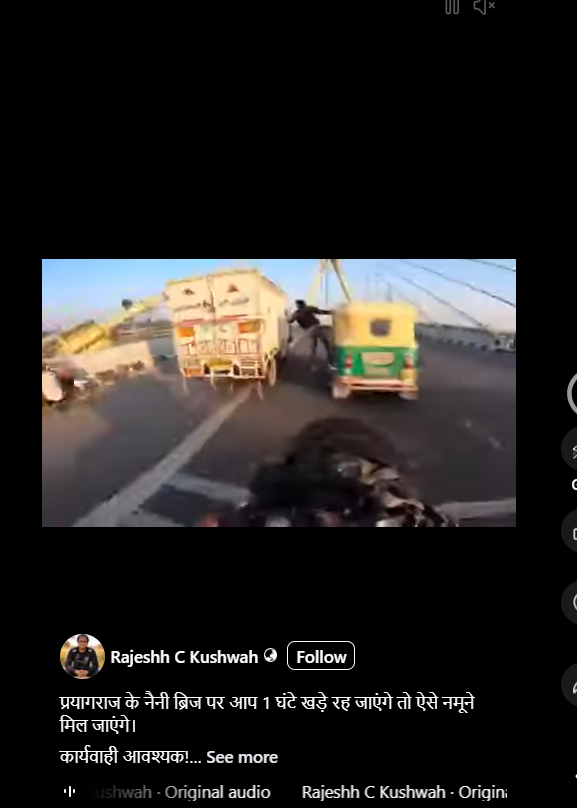
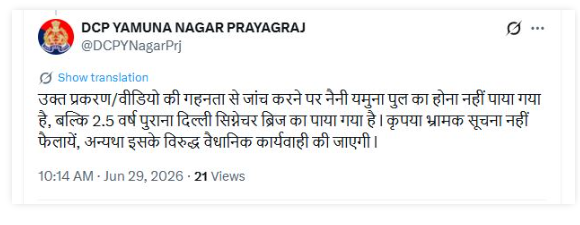
We extracted several keyframes from the viral video and searched them using the Google Lens tool. We found that this video was also quite viral on X (formerly Twitter). Responding to users, the official X handle of DCP Yamuna Nagar, Prayagraj, stated, “Upon a detailed research of the said matter/video, it has been found that it is not from the Naini Yamuna Bridge, but is a 2.5-year-old video from Delhi’s Signature Bridge. Please do not spread misleading information, otherwise legal action will be initiated against it.”
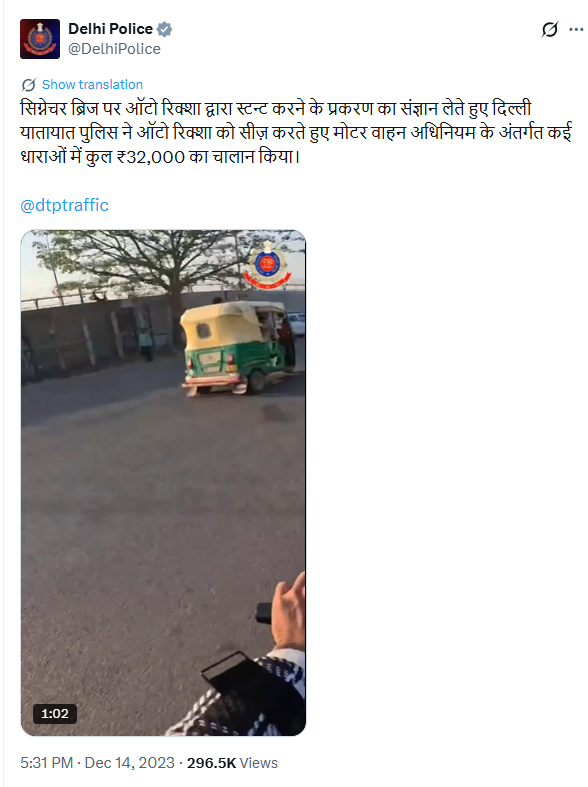
During our search, we found a post on the official X handle of the Delhi Police. Sharing the viral video, they wrote that taking cognizance of the auto-rickshaw stunt incident on the Signature Bridge, the Delhi Traffic Police seized the auto-rickshaw and issued a challan totaling ₹32,000 under various sections of the Motor Vehicles Act.
https://x.com/DelhiPolice/status/1735268792434057352?s=20
Conclusion
In our research, the viral post turned out to be fake. A video of an incident that took place on Delhi's Signature Bridge in 2023 is now being falsely circulated to spread misinformation as an incident from a bridge in Prayagraj. No such incident has taken place on the Naini Bridge in Prayagraj.
