
#FactCheck - Viral Photo of Modi and Rahul Gandhi in Parliament Found to Be AI-Generated
Executive Summary
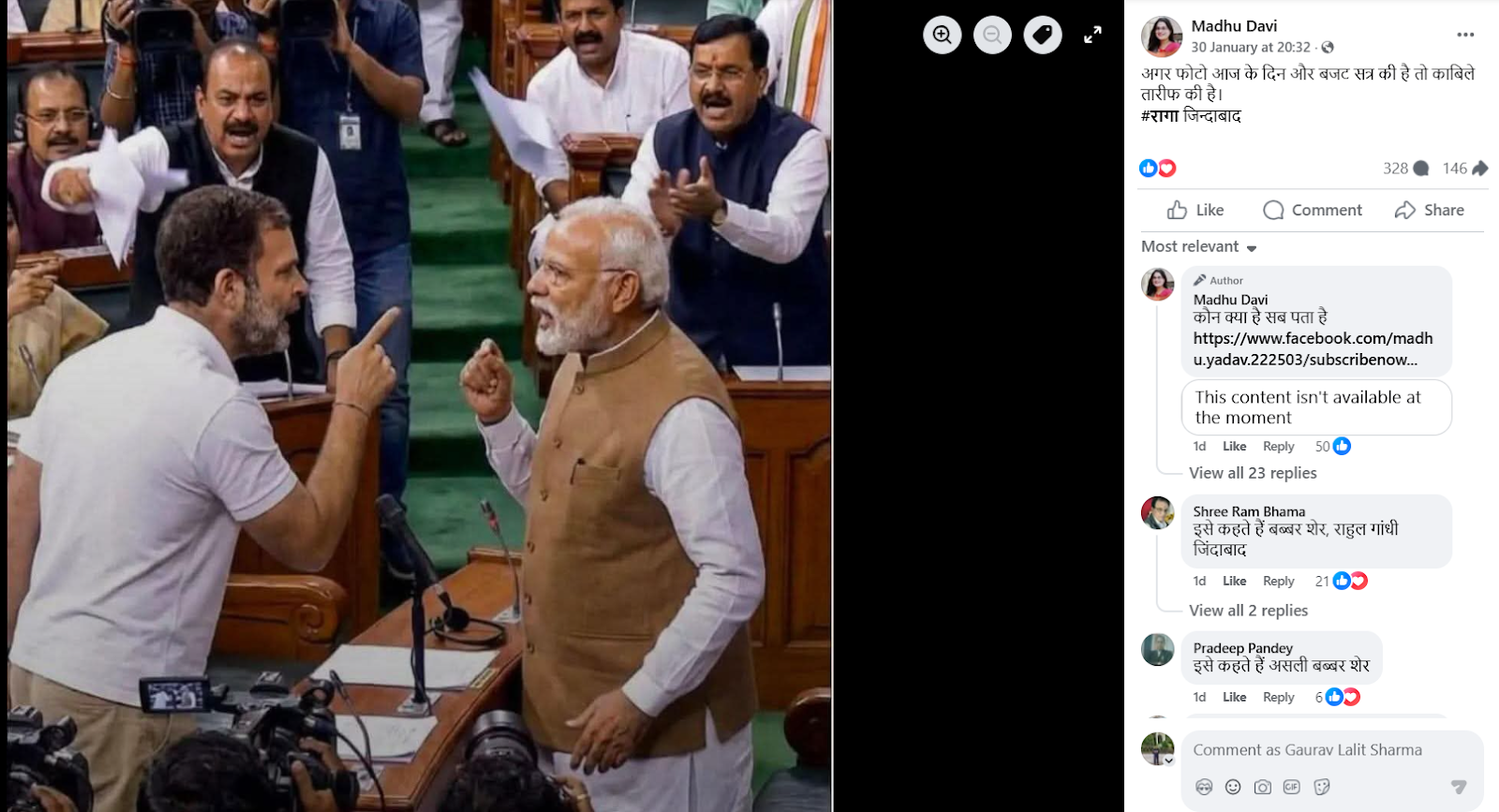
An image showing Prime Minister Narendra Modi and Leader of Opposition in the Lok Sabha and Congress MP Rahul Gandhi standing face to face inside Parliament is going viral on social media. Several users are sharing the image claiming that the photograph was taken during the ongoing Budget Session, suggesting a direct face-off between the two leaders inside Parliament. However, research conducted by the CyberPeacehas found that the viral claim is false. The image in question is not real but has been generated using Artificial Intelligence (AI). The AI-generated image is now being shared on social media with a misleading claim.
Claim
A Facebook user named Madhu Davi shared the viral image on January 30, 2026, with the caption: “If this photo is from today and the Budget Session, it is commendable. RAGA Zindabad.”
(Archived version of the post available here.)
- https://www.facebook.com/photo/?fbid=759145877237871&set=a.110639115421887
- https://perma.cc/N2XD-TZ32?type=image
Fact Check:
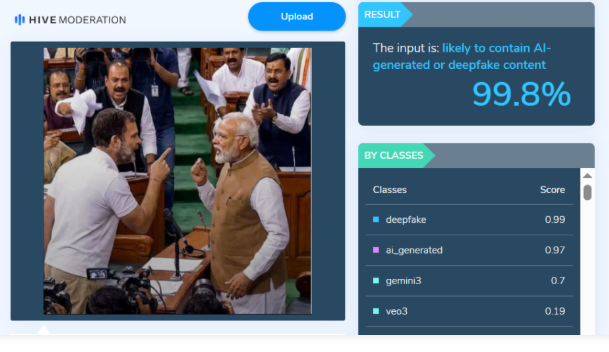
To verify the viral claim, we first conducted a keyword search on Google to check whether any credible media outlet had reported such an incident during the Budget Session. However, no news reports supporting the claim were found. We then performed a reverse image search using Google Lens, but this too did not yield any reliable media reports or evidence confirming the authenticity of the image. This raised suspicion that the image might be AI-generated. To further verify, the image was analysed using the AI detection tool Hive Moderation. The tool indicated a probability of over 99 per cent that the image was generated using Artificial Intelligence.
Conclusion
CyberPeace research confirms that the image being circulated with the claim that Prime Minister Narendra Modi and Rahul Gandhi came face to face during the Budget Session is fake. The viral image has been created using AI and is being shared with a false and misleading narrative.

Related Blogs
Executive Summary
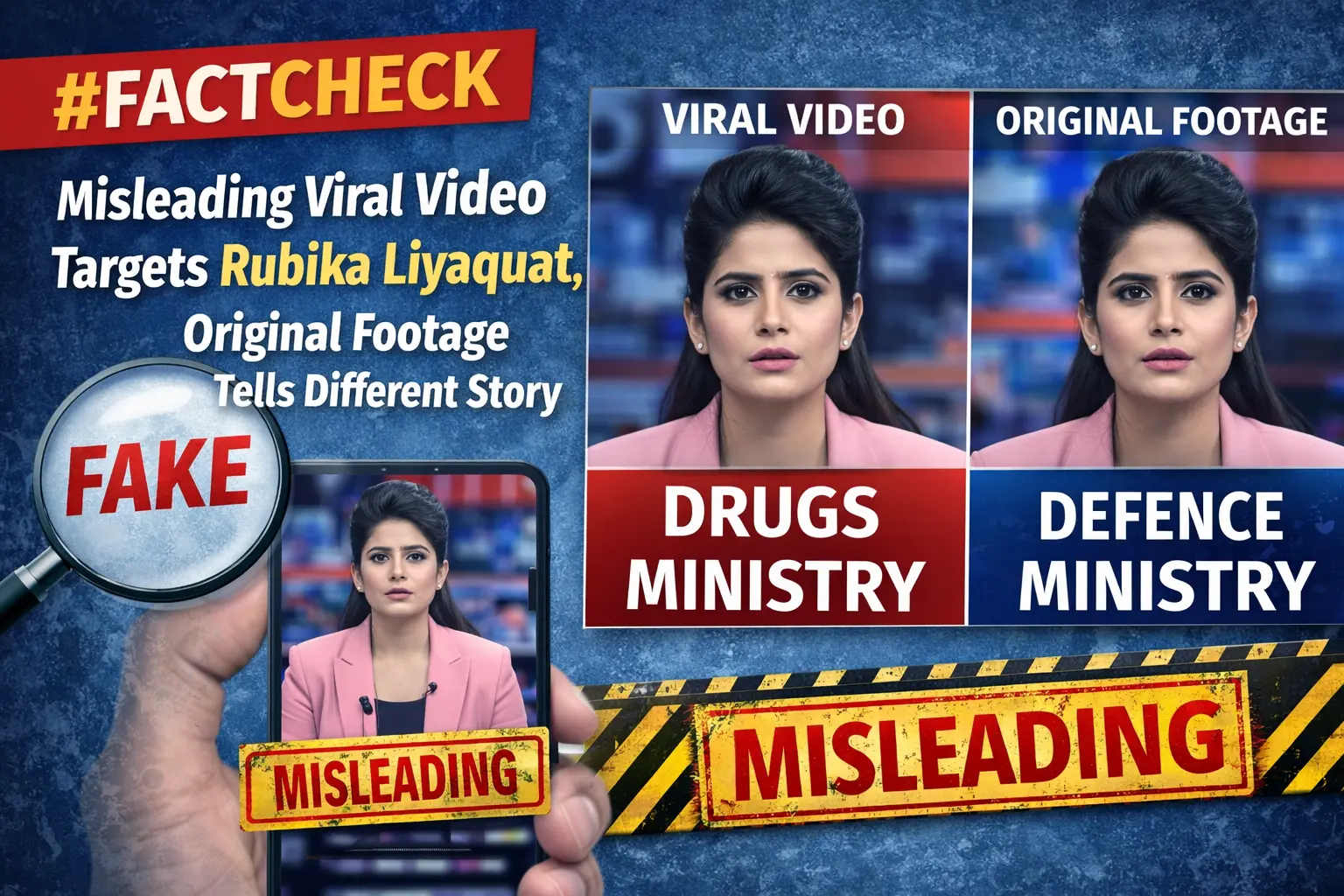
A video circulating on social media claims that a Pakistani man misbehaved with TV anchor Rubika Liyaquat during a live television debate. Users sharing the clip alleged that the Pakistani participant silenced the anchor on live TV.
However, research by CyberPeace found the viral claim to be false and revealed that the video being shared on social media is edited. In the original video, published on YouTube on November 26, 2025, the alleged Pakistani man was not present in the TV debate.
Claim
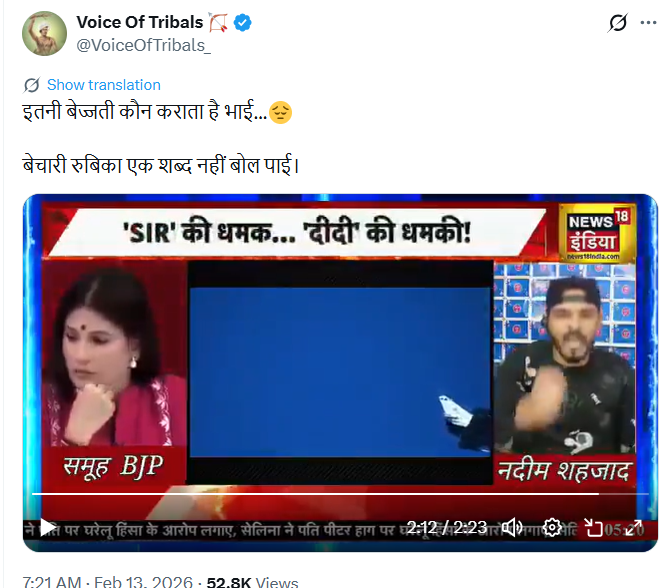
On February 13, 2026, a user shared the viral clip on X (formerly Twitter), claiming that the anchor was insulted during the debate and was left speechless. Another user on February 11, 2026, asked News18 India to verify the video and questioned who allowed such behaviour towards the journalist on air.
Fact Check:
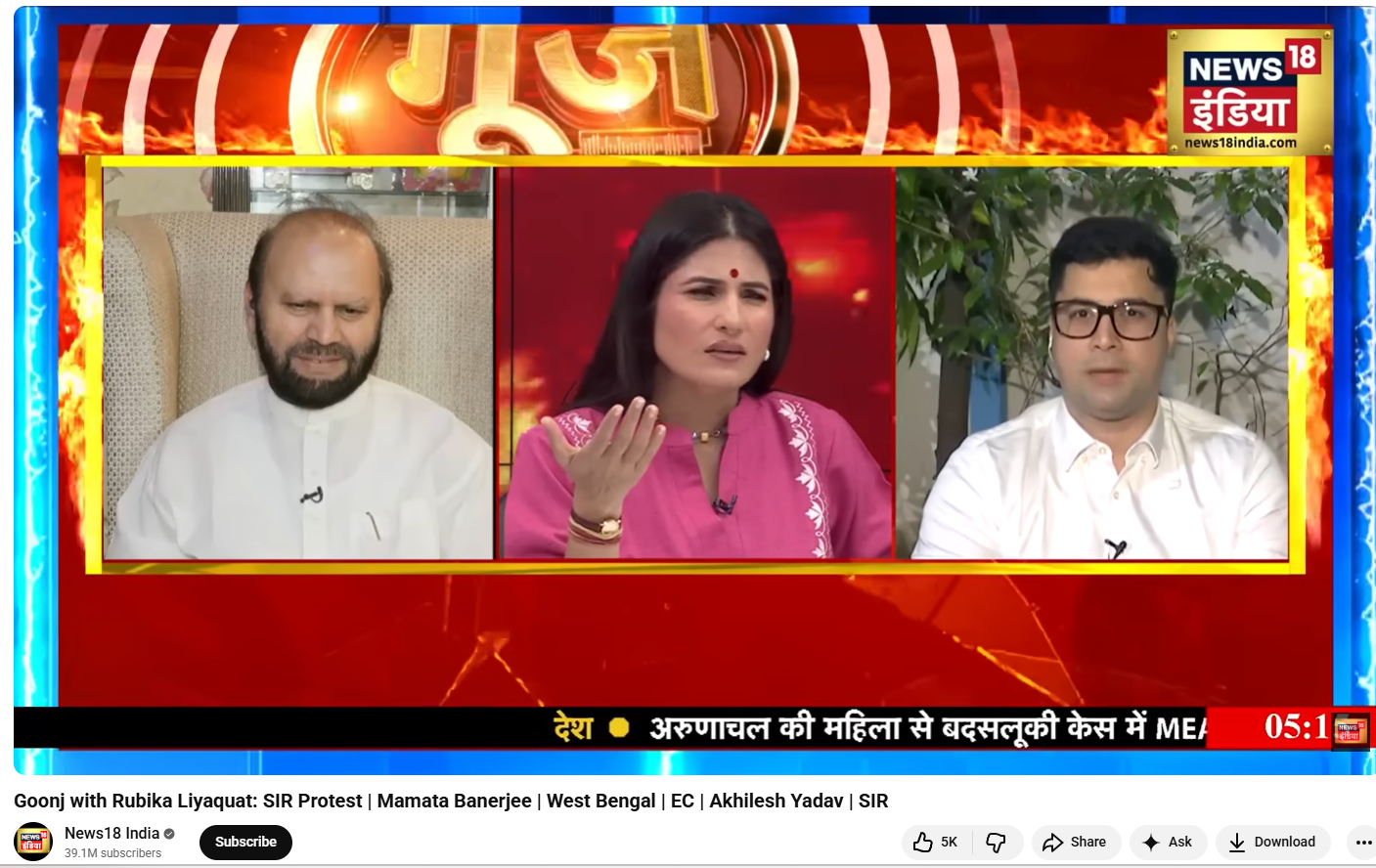
To verify the claim, we extracted key frames from the viral video and conducted a reverse image search using Google Lens. During the research, we found the full version of the debate uploaded on the official YouTube channel of News18 India on November 26, 2025. The nearly 40-minute original broadcast featured anchor Rubika Liyaquat along with panelists Zafar Islam, Varun Purohit, Prateek Kumar, Arvind Kumar Vajpayee, Tausif Ahmed Khan, and Aziz Khan. However, the person seen misbehaving with the anchor in the viral clip was not present in the original video.
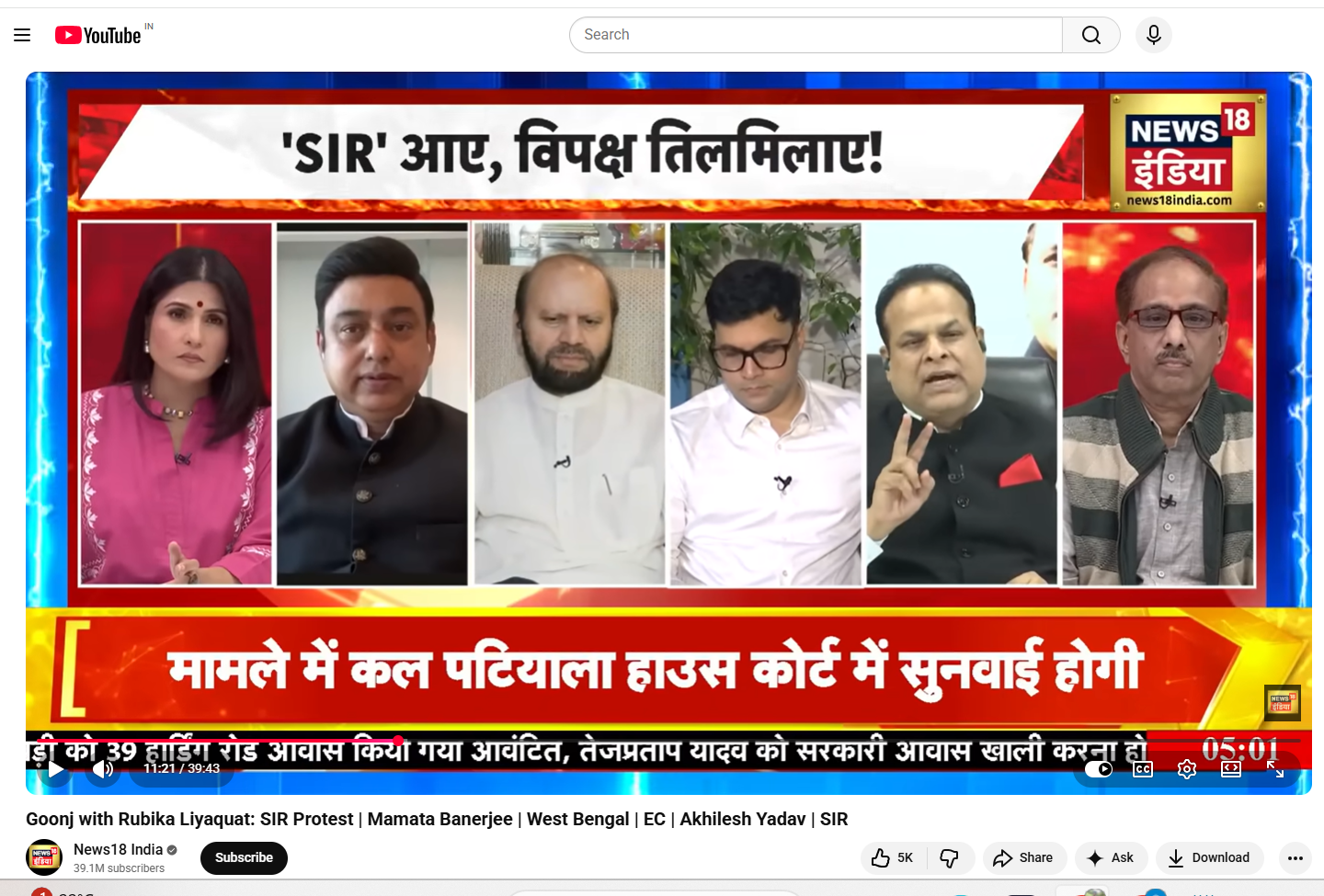
Upon carefully reviewing the footage, we located the actual segment around the 25-minute 40-second mark. In this portion, the anchor can be heard asking panelist Tausif Ahmed Khan to leave the show, using the same words heard in the viral clip. However, the original broadcast does not feature any Pakistani participant or any individual named “Nadeem Shahzad.”
Conclusion
Our research found that the viral claim is false. The circulating video has been edited, and the alleged Pakistani participant does not appear in the original debate uploaded on November 26, 2025.
.webp)
The Delhi High Court vide order dated 21st November 2024 directed the Centre to nominate members for a committee constituted to examine the issue of deepfakes. The court was informed by the Union Ministry of Electronics and Information Technology (MeitY) that a committee had been formed on 20 November 2024 on deepfake matters. The Delhi High Court passed an order while hearing two writ petitions against the non-regulation of deepfake technology in the country and the threat of its potential misuse. The Centre submitted that it was actively taking measures to address and mitigate the issues related to deepfake technology. The court directed the central government to nominate the members within a week.
The court further stated that the committee shall examine and take into consideration the suggestions filed by the petitioners and consider the regulations as well as statutory frameworks in foreign countries like the European Union. The court has directed the committee to invite the experiences and suggestions of stakeholders such as intermediary platforms, telecom service providers, victims of deepfakes, and websites which provide and deploy deepfakes. The counsel for the petitioners stated that delay in the creation, detection and removal of deepfakes is causing immense hardship to the public at large. Further, the court has directed the said committee to submit its report, as expeditiously as possible, preferably within three months. The matter is further listed on 24th March 2025.
CyberPeace Outlook
Through the issue of misuse of deepfakes by bad actors, it has become increasingly difficult for users to differentiate between genuine and altered content created by deepfakes. This increasing misuse has led to a rise in cyber crimes and poses dangers to users' privacy. Bad actors use any number of random pictures or images collected from the internet to create such non-consensual deepfake content. Such deepfake videos further pose risks of misinformation and fake news campaigns with the potential to sway elections, cause confusion and mistrust in authorities, and more.
The conceivable legislation governing the deepfake is the need of the hour. It is important to foster regulated, ethical and responsible consumption of technology. The comprehensive legislation governing the issue can help ensure technology can be used in a better manner. The dedicated deepfake regulation and deploying ethical practices through a coordinated approach by concerned stakeholders can effectively manage the problems presented by the misuse of deepfake technology. Legal frameworks in this regard need to be equipped to handle the challenges posed by deepfake and AI. Accountability in AI is also a complex issue that requires comprehensive legal reforms. The government should draft policies and regulations that balance innovation and regulation. Through a multifaceted approach and comprehensive regulatory landscape, we can mitigate the risks posed by deepfakes and safeguard privacy, trust, and security in the digital age.
References
- https://www.devdiscourse.com/article/law-order/3168452-delhi-high-court-calls-for-action-on-deepfake-regulation
- https://images.assettype.com/barandbench/2024-11-23/w63zribm/Chaitanya_Rohilla_vs_Union_of_India.pdf
Executive Summary
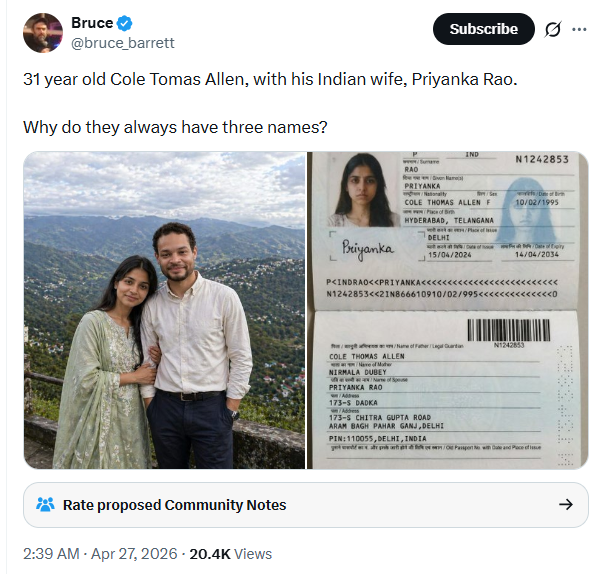
After reports identifying Cole Thomas Allen as the accused in the shooting incident at the White House Correspondents’ Association (WHCA) dinner, several Pakistani propaganda-linked social media accounts began circulating a new claim alleging that the suspect’s wife is an Indian woman named Priyanka Rao. Users shared a photo purportedly showing Cole Thomas Allen with Priyanka Rao, along with an alleged Indian passport in her name. One user posted the image with the caption: “31-year-old Cole Thomas Allen with his Indian wife Priyanka Rao. Why do they always have three names?”
However, research by the CyberPeace Research Wing found the claim to be fake. The viral passport and accompanying image appear to be AI-generated.
Claim:
Social media users claimed that Cole Thomas Allen, accused in the WHCA dinner shooting, is married to an Indian woman named Priyanka Rao.
Fact Check:
During the research, multiple inconsistencies were found in the viral passport image, strongly indicating it is fabricated. A close review of the document revealed several obvious errors commonly seen in AI-generated content. For instance, in the “Nationality” field, the name “Cole Thomas Allen” was written instead of a country name. Such a basic mistake would not appear in any genuine government-issued passport.
The Hindi text on the document was also highly inaccurate and unnatural. Examples included:
- “राष्ट्रीयता” misspelled as “राष्ट्रीयाय”
- “जन्मतिथि” replaced with meaningless text
- “जन्म स्थान” incorrectly written
- “Issue” mistranslated as unrelated wording
- “Date of Expiry” left untranslated in Hindi format
Further analysis using an AI detection tool indicated that the viral passport image had a 69 percent probability of being AI-generated.

Conclusion:
The claim that WHCA dinner shooting accused Cole Thomas Allen has an Indian wife named Priyanka Rao is fake. The viral passport and image being shared online are likely AI-generated and part of a misinformation campaign.
