
#FactCheck - Old Spanish Military Drill Photo Falsely Linked To 2026 Cruise Ship Hantavirus Outbreak
Executive Summary
A photograph circulating widely on social media has been falsely linked to the reported hantavirus outbreak on a cruise ship in May 2026. The image is being shared with claims that it shows a cameraman filming evacuation operations without wearing personal protective equipment (PPE), suggesting that the global health scare was staged. However, the claim is misleading. The viral image has no connection to the hantavirus outbreak or any real evacuation related to the incident. research found that the photograph actually originates from a Spanish military exercise conducted a year earlier.
Claim
A post on X dated May 13, 2026, shared the image with the caption, “Don’t be fooled! The #Hantavirus HOAX,” alleging that the evacuations were staged events filmed from a movie set. The image shows several individuals in full personal protective equipment (PPE) carrying a patient on a biocontainment stretcher across a dock in front of a large vessel. A cameraman, dressed in plain clothes, is seen descending a ramp connected to the ship while apparently recording the scene.

Fact Check
The image went viral across X, Threads and Instagram in multiple languages, with users claiming the hantavirus outbreak was a “hoax” or that evacuation operations were staged. These posts emerged as authorities were monitoring passengers aboard the Dutch-flagged MV Hondius and others potentially exposed to the virus following reports of an outbreak during its Atlantic voyage.


Health officials have repeatedly stressed that the overall public health risk from the Andes strain of hantavirus remains low. It is a rare rodent-borne virus and the only variant known to transmit between humans.

Reverse image search traced the photograph to the official website of the Port of Almería in Spain, where it was published in a May 7, 2025 article documenting an international maritime exercise involving the Spanish Navy and the health ministry.

The exercise simulated the arrival of a vessel carrying suspected Ebola cases. Ebola is a rare but highly lethal disease that can cause fever, bleeding and organ failure.
Conclusion
The viral claim is false. The photograph has no connection to the reported hantavirus outbreak. It is from a Spanish military exercise conducted in 2025 and is being falsely shared out of context.

Related Blogs
Introduction
In the sprawling online world, trusted relationships are frequently taken advantage of by cybercriminals seeking to penetrate guarded systems. The Watering Hole Attack is one advanced method, which focuses on a user’s ecosystem by compromising the genuine sites they often use. This attack method is different from phishing or direct attacks as it quietly exploits the everyday browsing of the target to serve malicious content. The quiet and exact nature of watering hole attacks makes them prevalent amongst Advanced Persistent Threat (APT) groups, especially in conjunction with state-sponsored cyber-espionage operations.
What Qualifies as a Watering Hole Attack?
A Watering Hole Attack targets and infects a trusted website. The targeted website is one that is used by a particular organization or community, such as a specific industry sector. This type of cyberattack is analogous to the method of attack used by animals and predators waiting by the water’s edge for prey to drink. Attackers prey on their targets by injecting malicious code, such as an exploit kit or malware loader, into websites that are popular with their victims. These victims are then infected when they visit said websites unknowingly. This opens as a gateway for attackers to infiltrate corporate systems, harvest credentials, and pivot across internal networks.
How Watering Hole Attacks Unfold
The attack lifecycle usually progresses as follows:
- Reconnaissance - Attackers gather intelligence on the websites frequented by the target audience, including specialized communities, partner websites, or local news sites.
- Website Exploitation - Through the use of outdated CMS software and insecure plugins, attackers gain access to the target website and insert malicious code such as JS or iframe redirections.
- Delivery and Exploitation - The visitor’s browser executes the malicious code injected into the page. The code might include a redirection payload which sends the user to an exploit kit that checks the user’s browser, plugins, operating system, and other components for vulnerabilities.
- Infection and Persistence - The infected system malware such as RATs, keyloggers, or backdoors. These enable lateral and long-term movements within the organisation for espionage.
- Command and Control (C2) - For further instructions, additional payload delivery, and stolen data retrieval, infected devices connect to servers managed by the attackers.
Key Features of Watering Hole Attacks
- Indirect Approach: Instead of going after the main target, attackers focus on sites that the main target trusts.
- Supply-Chain-Like Impact: An infected industry portal can affect many companies at the same time.
- Low Profile: It is difficult to identify since the traffic comes from real websites.
- Advanced Customization: Exploit kits are known to specialize in making custom payloads for specific browsers or OS versions to increase the chance of success.
Why Are These Attacks Dangerous?
Worming hole attacks shift the battlefield to new grounds in cyber warfare on the web. They eliminate the need for firewalls, email shields, and other security measures because they operate on the traffic to and from real, trusted websites. When the attacks work as intended, the following consequences can be expected:
- Stealing Credentials: Including privileged accounts and VPN credentials.
- Espionage: Theft of intellectual property, defense blueprints, or government confidential information.
- Supply Chain Attacks: Resulting in a series of infections among related companies.
- Zero-Day Exploits: Including automated attacks using zero-day exploits for full damage.
Incidents of Primary Concern
The implications of watering hole attacks have been felt in the real world for quite some time. An example from 2019 reveals this, where a known VoIP firm’s site was compromised and used to spread data-stealing malware to its users. Likewise, in 2014, the Operation Snowman campaign—which seems to have a state-backed origin—attempted to infect users of a U.S. veterans’ portal in order to gain access to visitors from government, defense, and related fields. Rounding up the list, in 2021, cybercriminals attacked regional publications focusing on energy, using the publications to spread malware to company officials and engineers working on critical infrastructure, as well as to steal data from their systems. These attacks show the widespread and dangerous impact of watering hole attacks in the world of cybersecurity.
Detection Issues
Due to the following reasons, traditional approaches to security fail to detect watering hole attacks:
- Use of Authentic Websites: Attacks involving trusted and popular domains evade detection via blacklisting.
- Encrypted Traffic: Delivering payloads over HTTPS conceals malicious scripts from being inspected at the network level.
- Fileless Methods: Using in-memory execution is a modern campaign technique, and detection based on signatures is futile.
Mitigation Strategies
To effectively neutralize the threat of watering hole attacks, an organization should implement a defense-in-depth strategy that incorporates the following elements:
- Patch Management and Hardening -
- Conduct routine updates on operating systems, web browsers, and extensions to eliminate exploit opportunities.
- Either remove or reduce the use of high-risk elements such as Flash and Java, if feasible.
- Network Segmentation - Minimize lateral movement by isolating critical systems from the general user network.
- Behavioral Analytics - Implement Endpoint Detection and Response (EDR) tools to oversee unusual behaviors on processes—for example, script execution or dubious outgoing connections.
- DNS Filtering and Web Isolation - Implement DNS-layer security to deny access to known malicious domains and use browser isolation for dangerous sites.
- Threat Intelligence Integration - Track watering hole threats and campaigns for indicators of compromise (IoCs) on advisories and threat feeds.
- Multi-Layer Email and Web Security - Use web gateways integrated with dynamic content scanning, heuristic analysis, and sandboxing.
- Zero Trust Architecture - Apply least privilege access, require device attestation, and continuous authentication for accessing sensitive resources.
Incident Response Best Practices
- Forensic Analysis: Check affected endpoints for any mechanisms set up for persistence and communication with C2 servers.
- Log Review: Look through proxy, DNS, and firewall logs to detect suspicious traffic.
- Threat Hunting: Search your environment for known Indicators of Compromise (IoCs) related to recent watering hole attacks.
- User Awareness Training: Help employees understand the dangers related to visiting external industry websites and promote safe browsing practices.
The Immediate Need for Action
The adoption of cloud computing and remote working models has significantly increased the attack surface for watering hole attacks. Trust and healthcare sectors are increasingly targeted by nation-state groups and cybercrime gangs using this technique. Not taking action may lead to data leaks, legal fines, and break-ins through the supply chain, which damage the trustworthiness and operational capacity of the enterprise.
Conclusion
Watering hole attacks demonstrate how phishing attacks evolve from a broad attack to a very specific, trust-based attack. Protecting against these advanced attacks requires the zero-trust mindset, adaptive defenses, and continuous monitoring, which is multicentral security. Advanced response measures, proactive threat intelligence, and detection technologies integration enable organizations to turn this silent threat from a lurking predator to a manageable risk.
References
- https://www.fortinet.com/resources/cyberglossary/watering-hole-attack
- https://en.wikipedia.org/wiki/Watering_hole_attack
- https://www.proofpoint.com/us/threat-reference/watering-hole
- https://www.techtarget.com/searchsecurity/definition/watering-hole-attack
Introduction
The trajectory of India's digital economy is growing at an unprecedented rate, and so is India's cybercrime ecosystem. Parliamentary data tabled before the Rajya Sabha in May 2024 by the MHA suggests an overwhelming 900% growth in cybercrime complaints from 2021 to '25, while annual losses crossed 22,800 crore in 2024. The structural issues like the low victim restitution rate, the lack of forensic infrastructure, issues of jurisdiction related to offshore fraud factories targeting Indian citizens, and the huge disparity in awareness levels amongst India's youngest online citizens continue to exist. This brief brings out the clear trends in cybercrime, the role of institutional mechanisms in its prevention and response, failure points, and recommends appropriate policy interventions from the perspective of CyberPeace.
The Data Imperative
Since its operationalisation in 2019 by the Indian Cyber Crime Coordination Centre (I4C), the NCRP serves as India's most significant institutional apparatus for cybercrime reporting and response. Data placed before the Rajya Sabha by the Ministry of Home Affairs on 30 July 2025 show that, with almost no exception, complaints of cybercrime have increased far more quickly than most traditional indicators of public safety. Between 2021 and June 2025, the NCRP received 6.59 million complaints, evidence of both a sustained and escalating expansion of India's cyber threat profile. Complaints per year more than quadrupled from 4.52 lakh in 2021 to 19.18 lakh in 2024 (324% over the period); by 2025, the NCRP had received 28.15 lakh complaints, a 523 percent rise compared with the 2021 baseline:
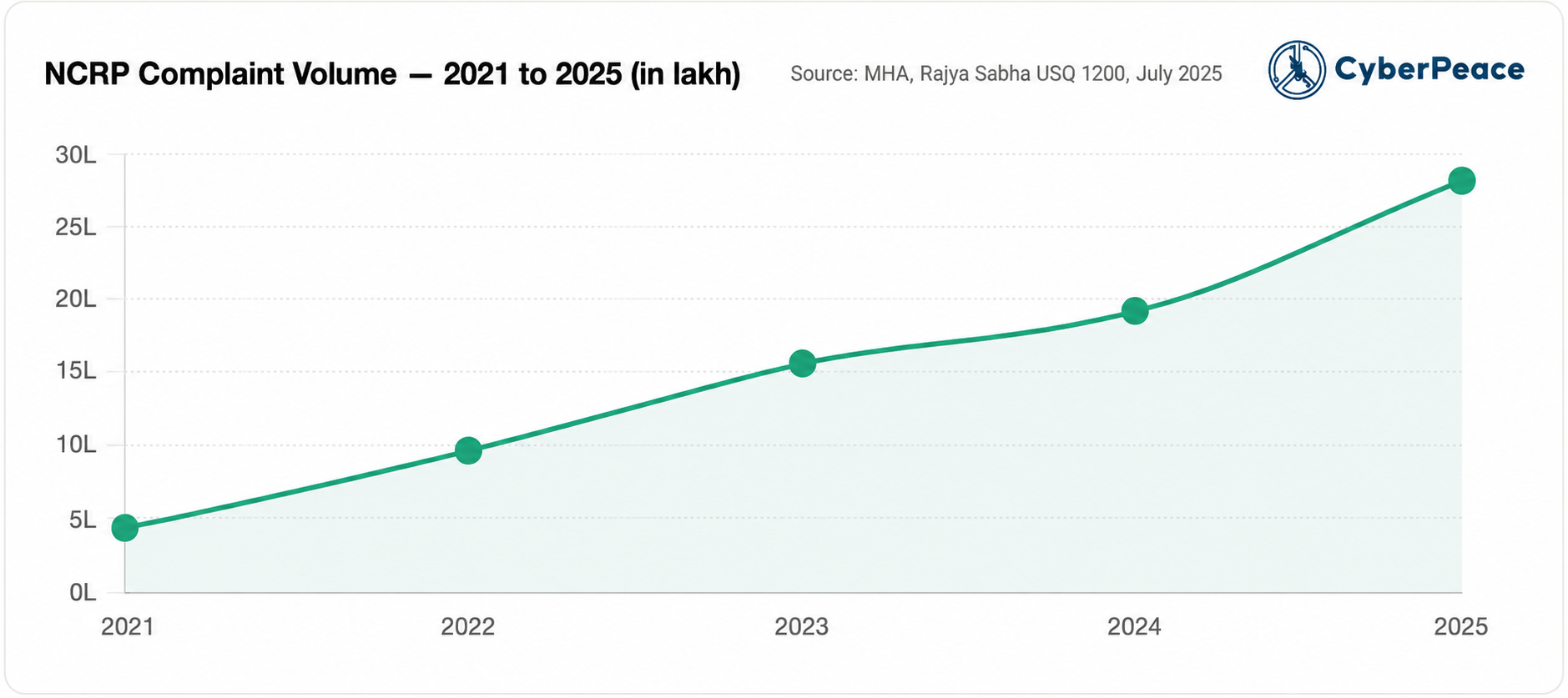
Clearly, cyber-enabled crime is no longer an occasional crisis but a systemic governance issue requiring consistent regulation and institution-building.
The financial fallout has also accelerated dramatically. Figures indicate that reported financial losses due to cybercrime jumped from 2,290 crore in 2022 to 22,812 crore in 2024 a 895% leap in two years:
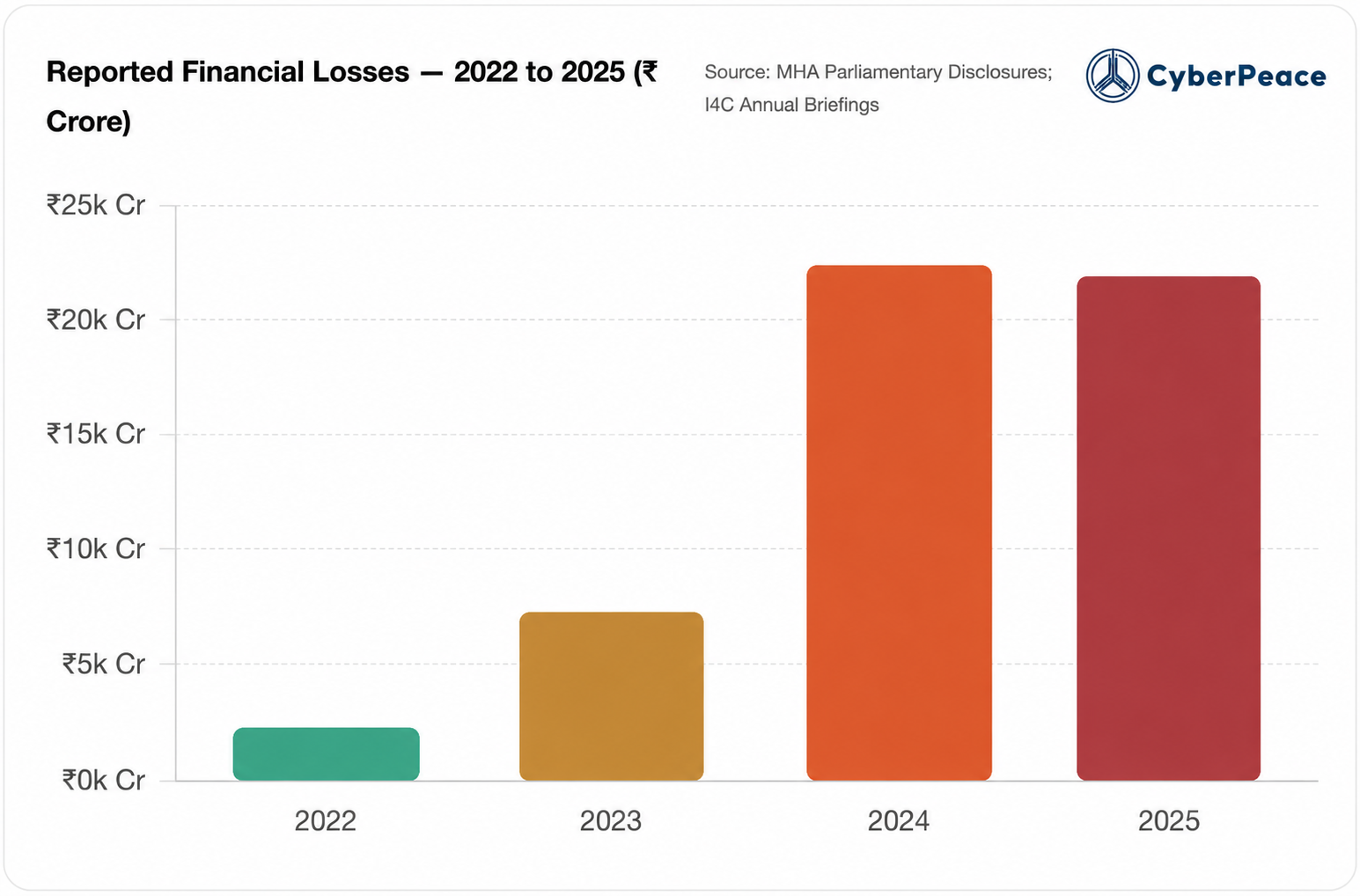
Though response mechanisms such as the Citizen Financial Cyber Fraud Reporting and Management System (CFCFRMS) successfully blocked or recovered close to 8,690 crore as of January 2026, victims appear to get back only about 2.18 percent of the losses they report.
In most areas, reporting and response have expanded greatly, but both the rate and scale of cyber-enabled financial fraud continue to outstrip India's remediation and law enforcement capacity.
Threat Typology of India’s Fraud Ecosystem
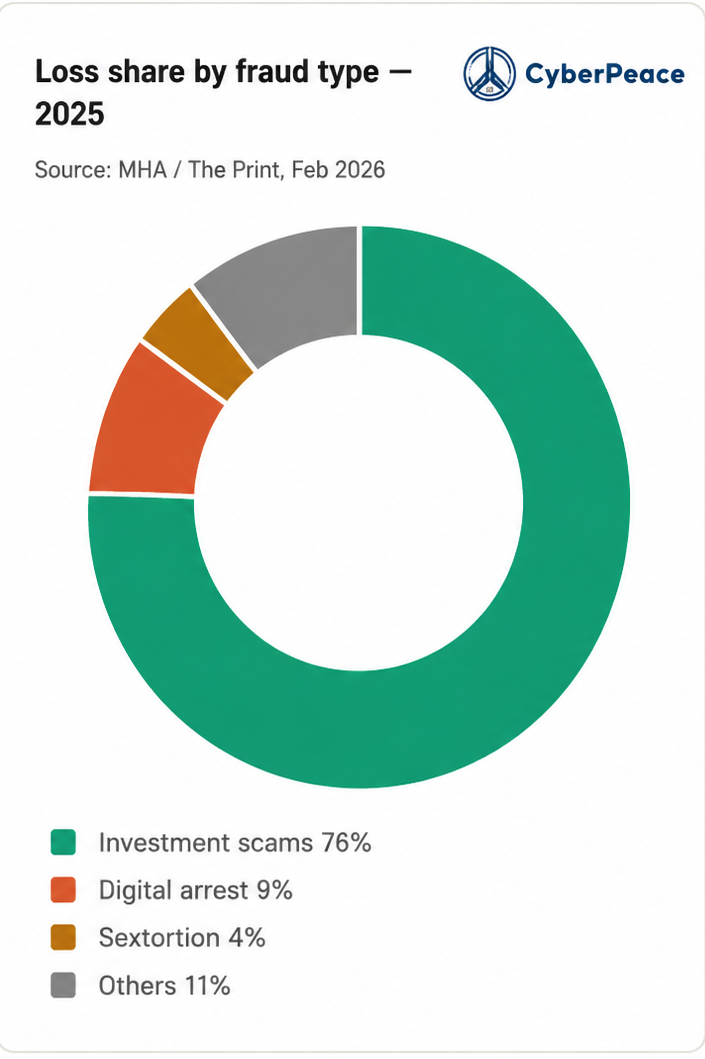
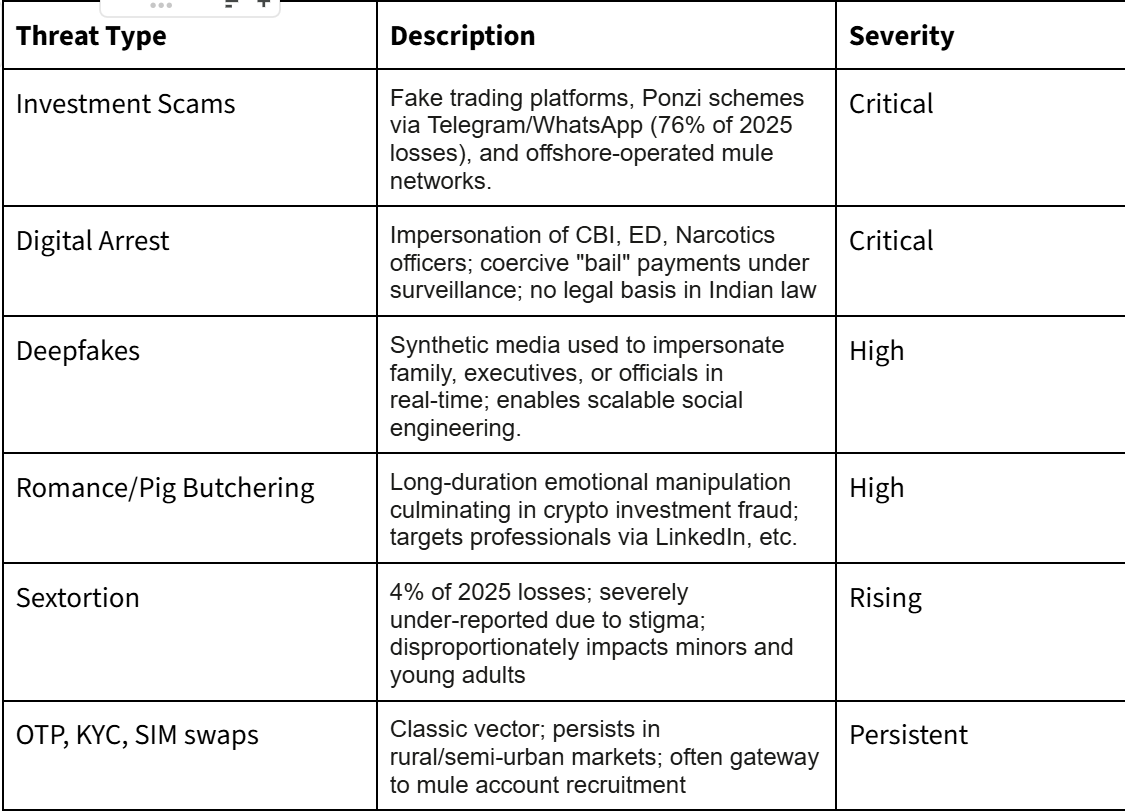
The nature of cyber crime in India has evolved from an opportunistic volume-based activity to a layered transnational criminal environment. I4C intelligence as tabled in Parliament reveals investment scams as the biggest threat: they accounted for 76% of the financial fraud lost in 2025 (although only 35% of complaints were filed, thus, a very high value per case was lost).
Digital arrest frauds, which tap on citizens' unawareness that "digital arrest" is not permissible under Indian law, rose from 39,925 cases (91 crore) in 2022 to 123,672 cases (1,935crore) in 2024.
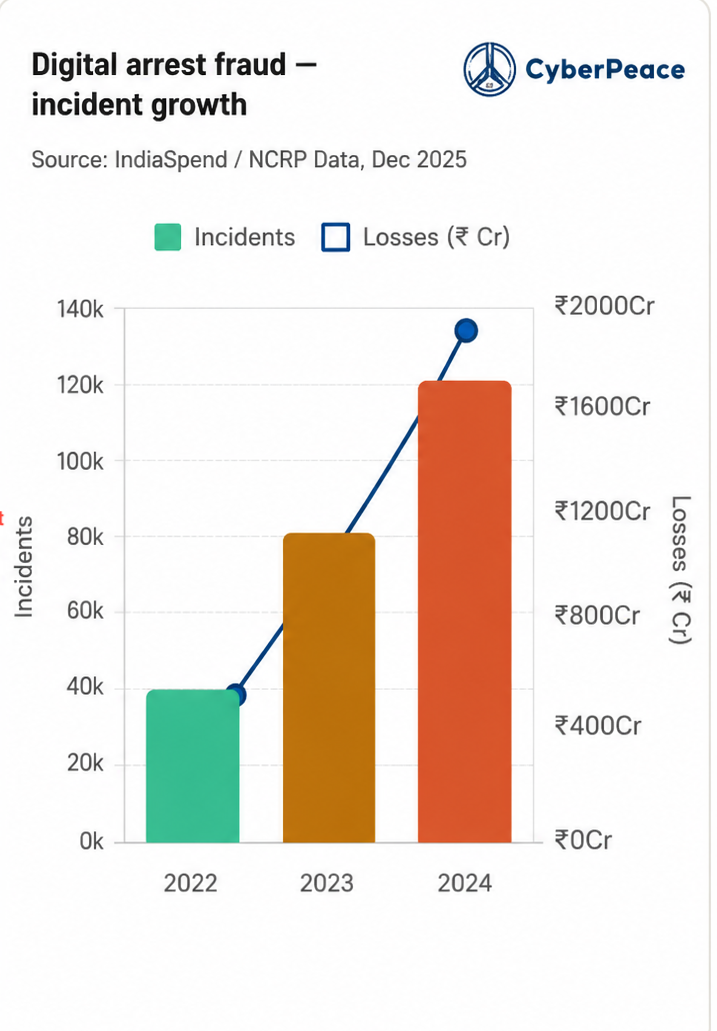
The fast rise in the number of incidents as well as in the volume of fraud clearly points out that digital arrest fraud has moved away from the phase of novel scam typology to a formidable cyber-extortion landscape. The main orchestrators of investment, trading, dating, and digital arrest scams targeting Indian citizens were recently identified by the I4C CEO Rajesh Kumar as transnational criminal scam networks in Cambodia, Myanmar, and Laos. Hence, this issue does not only fall within the domain of domestic law enforcement but constitutes a transnational cybercrime requiring parallel financial intelligence, diplomatic initiative, platform responsibility, and international investigative collaboration.
Geographic Concentration
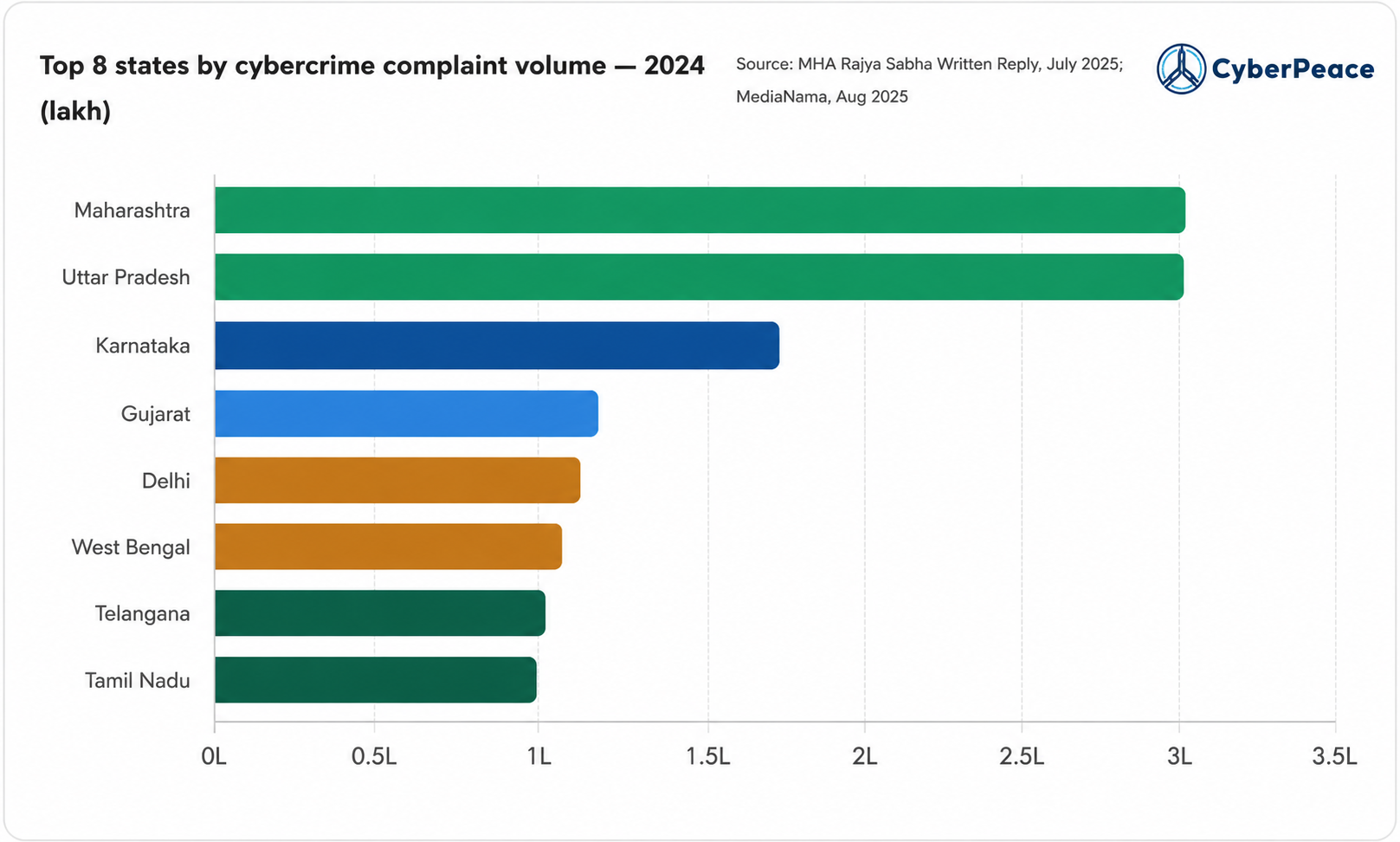
Maharashtra and UP register the highest volumes in total complaints at 3.03 lakh and 3.01 lakh, owing to them being the financial capital and most populous state, respectively. Karnataka, Gujarat, Delhi, WB, Telangana, TN, Rajasthan, and Haryana register above 1 lakh complaints each. However, the critical information that is being missed is that while complaint rate growth is the fastest in Tier 2 and 3 geographies (Haryana leads per-capita complaint rate with 381/100k people in 2023; Telangana (261); Uttarakhand (243)), this signifies rural digital growth as a risk multiplier.
Institutional Architecture: Mechanisms and Performances
India's institutional response to cybercrime, led by the Ministry of Home Affairs' Indian Cyber Crime Coordination Centre (I4C), is one of the world's largest real-time fraud detection and prevention ecosystems. The backbone of this is the Citizen Financial Cyber Fraud Reporting and Management System (CFCFRMS), which has onboarded over 700 banks, payment service providers, e-commerce portals, digital wallets, and, since the Standard Operating Procedure was issued on 2nd January 2026, virtual asset service providers and crypto exchanges. This interconnected network allows for prompt freezing of funds and timely fraud intervention during the 'golden hour' of a cybercrime report.
Institutional capacity is robust, with approximately 8,690 crore saved via the CFCFRMS since its inception for over 24.65 lakh complaints. The national cybercrime helpline (1930) receives close to 10,000 calls daily, while the Suspect Registry has enabled the rejection of 9,519 crore via the detection of 23.05 lakh suspect entities and 27.37 lakh mule accounts. In parallel, the CyTrain platform has expanded training by registering 151,081 police and judicial officers and issuing 142,025 certificates. Cyberforensic labs in all 33 States and Union Territories have received central assistance totalling 132.93 crore, and data-driven interstate crime analytics and offender linkages through the Samanvaya and Pratibimb platforms have led to 21,857 arrests.
Ecosystem Gaps
Through I4C, CFCFRMS, CyTrain, and the establishment of forensic infrastructure in states, India’s cybercrime ecosystem has greatly grown. But due to the rapid proliferation of cybercrime, systemic shortcomings are revealed regarding the restoration of victims, investigation, forensic capacity, cross-border enforcement, awareness, and stakeholder coordination:
- Victim Restitution Deficit: Although the total of ₹ 8,690 crore frozen has increased, the refund for victim compensation is limited to only ₹ 167 crore (2.18%) due to lengthy restoration processes relying on court orders.
- Forensic Capacity Limitations: 2 national, state-level, unevenly equipped cyber forensic labs can’t match the needs of over 10 million cybercrime complaints per year.
- Low conviction rate: The investigations of cybercrimes suffer from evidence collection and criminal proceedings, leading to limited conviction rates.
- Cross-border enforcement challenges: Many of the investment and digital arrest scams, in fact, are originating from Cambodia, Myanmar, and Laos, rendering the cybercrime response mechanisms of India helpless.
- Lack of Awareness: First-time digital users are quite prone to online scams and fraud, and many of the victims continue not reporting due to social stigma and lack of confidence.
- Partial Stakeholder Integration: Banks and small financial institutions, small companies, and emerging virtual asset providers not yet on board allow the money to slip through without being tracked.
CyberPeace Insights: Strategic Way Forward
India has already built a relatively mature response structure for cybercrime with I4C, CFCFRMS, and CyTrain and is coordinating the financial sector on it. The way ahead lies in outcome-oriented improvements and not just in the ability to report and intercept more. Here are the priority interventions that address the most important institutional shortcomings identified in the current ecosystem:
- Fast-track victim restoration: Introduce time-bound victim restoration mechanisms for low-value incidents through simplified processes and mandate national-level roll-out of successful Lok Adalat-based settlement mechanisms.
- District-level cyber forensics: Establish cyber forensic support units at the district level and enhance access to mobile, cloud, and blockchain forensic capabilities.
- AI-powered fraud prevention: Mandate deep-fake and voice-clone detection mechanisms across all financial institutions and telecom networks; embed predictive risk analytics into transaction screening frameworks.
- Cyber Suraksha Gram initiative: Increase digital fraud awareness across all common service centres, Jan Dhan enrollment schemes, and rural banking channels, and tackle the awareness asymmetry.
- Regional cybercrime coordination: Establish real-time, operational intelligence-sharing mechanisms with Southeast Asian economies, which have become home to large scam networks preying on Indian citizens.
- Specialised cyber prosecution ecosystem: Develop exclusive cyber courts, standardise digital evidence procedures, and broaden the scope of CyTrain to include the development of specialised cadres of investigators and prosecutors capable of handling increasingly complex cybercrime cases.
Conclusion
The 22,812 crore lost due to cybercrime in 2024 was more than a mere figure; it signifies a serious concern regarding citizen trust, economic security, and digital inclusion. Though India's institutional response to cybercrime is one of the largest, with an operational I4C and a CFCFRMS functioning in real time, the victim compensation and prosecution mechanism falls short. It's time for implementation: faster recovery of resources, increased enforcement, a larger scale of awareness, and finally, translating the institutional innovations into concrete justice for victims nationwide.
References
- https://sansad.in/getFile/annex/270/AU1341_tmaxdx.pdf?source=pqars
- https://www.mha.gov.in/MHA1/Par2017/pdfs/par2025-pdfs/LS02122025/452.pdf
- https://www.pib.gov.in/PressReleasePage.aspx?PRID=2244504®=3&lang=2
- https://static.pib.gov.in/WriteReadData/specificdocs/documents/2025/oct/doc2025107659501.pdf
- https://www.medianama.com/2025/08/223-india-cybercrime-500-percent-increase-2021-2024/
- https://theprint.in/india/cybercrime-saw-24-spike-in-2025-indians-lost-rs-22495-crore-mainly-in-investment-scams/2859930/

Executive Summary:
A social media viral post claims to show a mosque being set on fire in India, contributing to growing communal tensions and misinformation. However, a detailed fact-check has revealed that the footage actually comes from Indonesia. The spread of such misleading content can dangerously escalate social unrest, making it crucial to rely on verified facts to prevent further division and harm.

Claim:
The viral video claims to show a mosque being set on fire in India, suggesting it is linked to communal violence.

Fact Check
The investigation revealed that the video was originally posted on 8th December 2024. A reverse image search allowed us to trace the source and confirm that the footage is not linked to any recent incidents. The original post, written in Indonesian, explained that the fire took place at the Central Market in Luwuk, Banggai, Indonesia, not in India.

Conclusion: The viral claim that a mosque was set on fire in India isn’t True. The video is actually from Indonesia and has been intentionally misrepresented to circulate false information. This event underscores the need to verify information before spreading it. Misinformation can spread quickly and cause harm. By taking the time to check facts and rely on credible sources, we can prevent false information from escalating and protect harmony in our communities.
- Claim: The video shows a mosque set on fire in India
- Claimed On: Social Media
- Fact Check: False and Misleading
