
#FactCheck - Gorakhpur Holika Dahan Video Shared With False Claim About Delhi Murder
Executive Summary
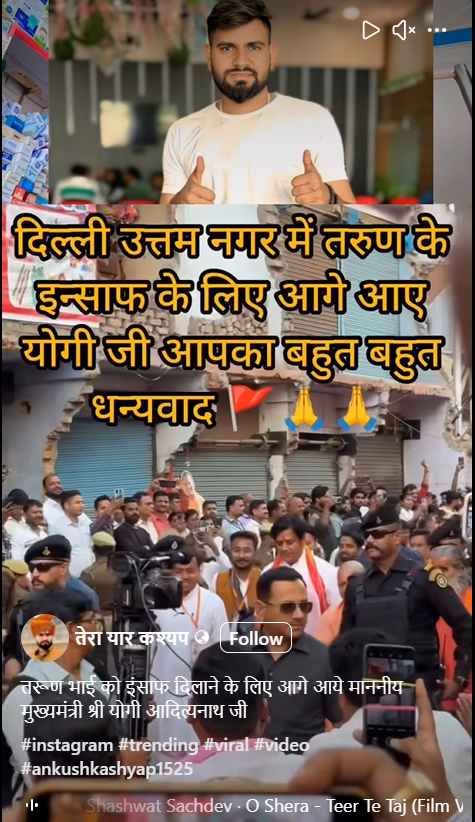
A dispute over water balloons on the day of Holi in the Uttam Nagar area of Delhi reportedly turned violent, resulting in the brutal murder of a young man named Tarun Khatik. Following the incident, a video is being widely shared on social media and linked to the murder case. In the viral video, Yogi Adityanath, Chief Minister of Uttar Pradesh, can be seen walking alongside Ravi Kishan, Member of Parliament from Gorakhpur. People standing along the route are seen showering flowers on them. Several users claim that the video shows the chief minister visiting the house of Tarun Khatik to meet his family.
However, research by CyberPeace found the viral claim to be misleading. Our research revealed that the video has no connection to the Tarun Khatik murder case. In fact, the video is from a Holika Dahan celebration held in Gorakhpur, which is now being shared on social media with a misleading claim.
Claim Post:
An Instagram user shared the viral video on March 10, 2026, writing: “Tarun bhai ko insaaf dilane ke liye aage aaye maananiya mukhyamantri Shri Yogi Adityanath ji.”
Fact Check:
To verify the claim, we extracted several key frames from the viral video and conducted a reverse image search using Google Lens. During the search, we found the same video posted on a Facebook account on March 2, 2026.
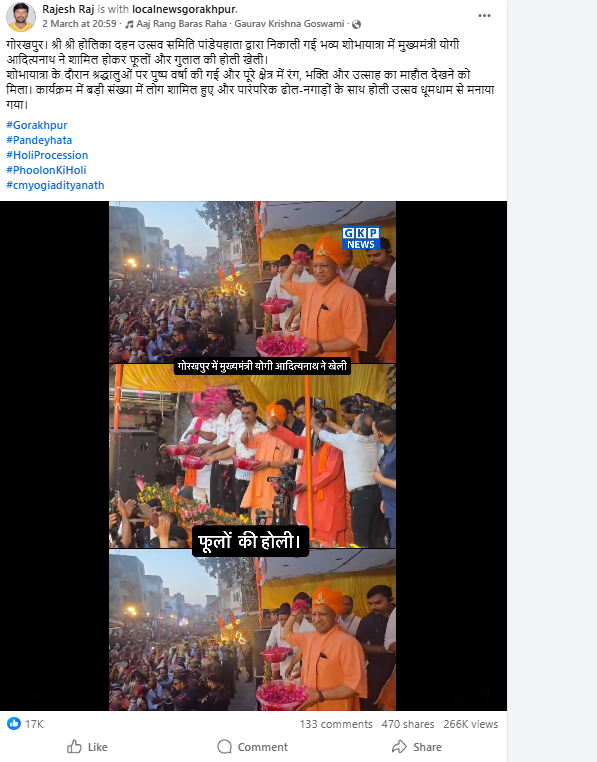
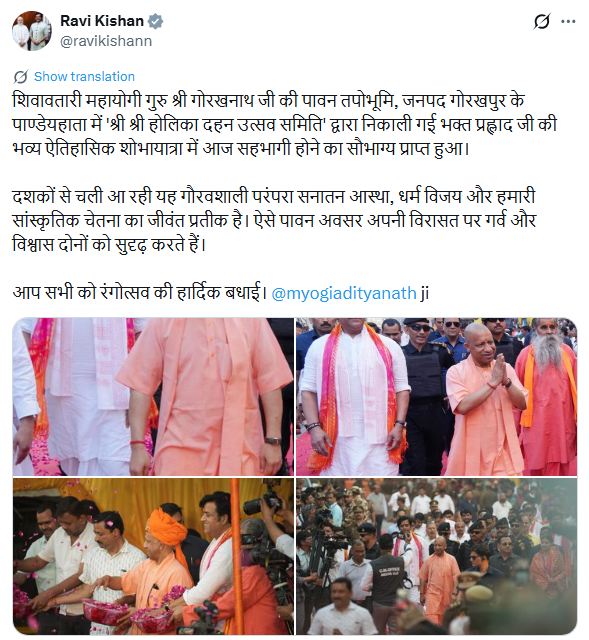
According to the caption of the Facebook post, the video shows a grand procession organised by the Shri Shri Holika Dahan Utsav Samiti, Pandeyhata in Gorakhpur. Yogi Adityanath attended the procession and was seen celebrating Holi with people by playing with flowers and coloured powder. During the procession, flower petals were showered on devotees, and the entire area witnessed a festive atmosphere filled with colours, devotion, and enthusiasm. A large number of people participated in the celebration, and the festival was celebrated with traditional drums and music. During further research, we also found images related to the viral video on the official X (formerly Twitter) account of Ravi Kishan. These images were shared on March 2, 2026, and the caption confirmed that they were taken during the Holika Dahan celebration in Gorakhpur.
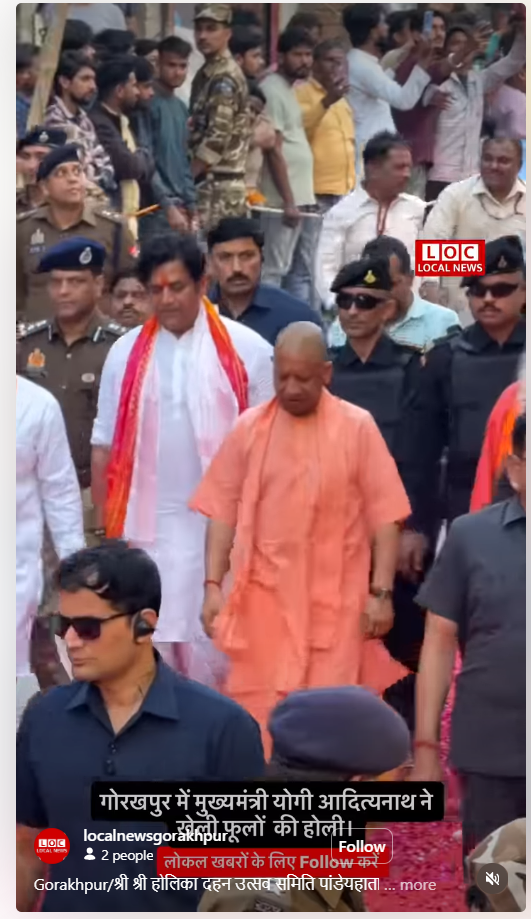
At the end of the research, we also found the same video uploaded on March 3, 2026 on the Instagram page Local News Gorakhpur. According to the information in the post, Yogi Adityanath and several other leaders participated in the grand procession organised by the Shri Shri Holika Dahan Utsav Samiti, Pandeyhata. People celebrated Holi with flowers and coloured powder during the event.
Conclusion:
Our research found that the viral video has no connection with the Tarun Khatik murder case in Uttam Nagar, Delhi. The video actually shows Yogi Adityanath participating in a Holika Dahan celebration in Gorakhpur. Therefore, the video is being shared on social media with a misleading claim.

Related Blogs
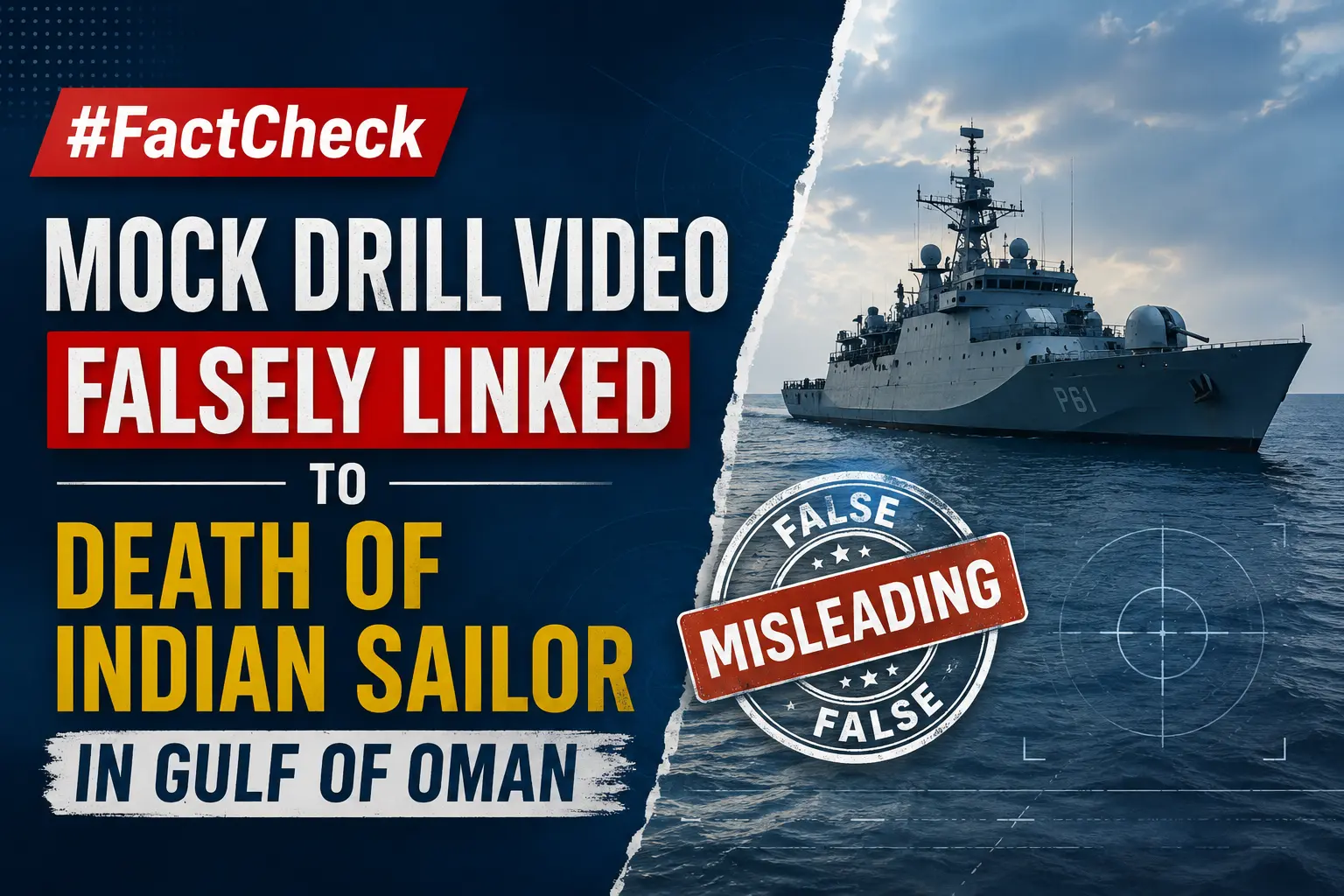
Executive Summary
Amid reports of attacks on ships in the Gulf of Oman that led to the death of three Indian nationals, a video showing a person lying injured on a ship is being widely circulated on social media. The clip is being shared with the claim that the United States sent the body of a deceased Indian sailor to India in a “wrapped” condition. CyberPeace Research Wing research found the claim to be misleading. The viral video is unrelated to any recent incident involving Indian nationals and is, in fact, from a mock drill conducted on board a ship.
Claim:
An Instagram user ‘fakirchand.sharma’ shared the video on June 15, 2026, claiming that an Indian sailor, identified as Nishant Urthnathan, died due to health complications on a vessel anchored at Duqm port, Oman. The post further alleged that the United States returned the body in a “wrapped” condition, sparking outrage on social media. https://www.instagram.com/fakirchand.sharma/reel/DZlsxj9TIaS , https://perma.cc/C9SF-J8ZR
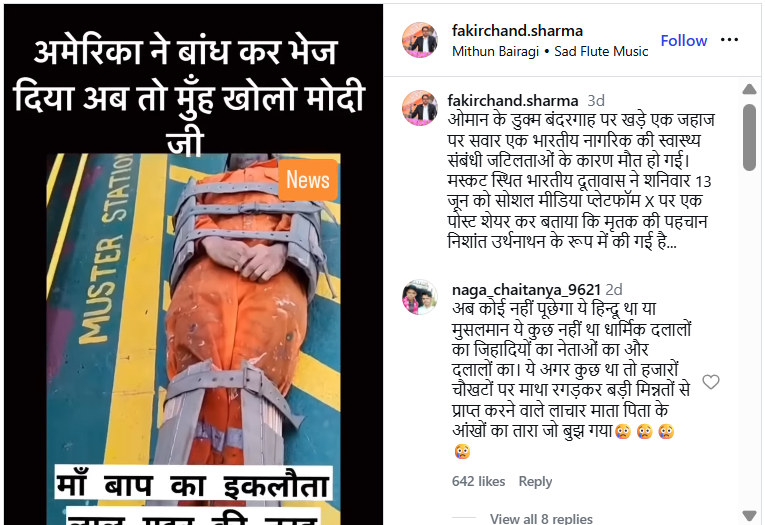
Fact Check:
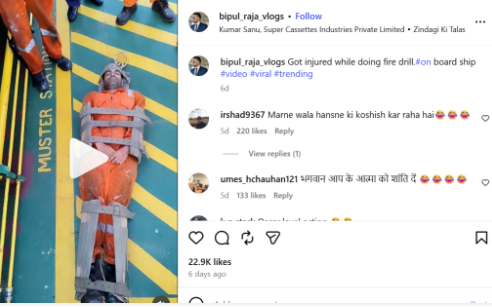
A reverse image search of keyframes from the viral video led to an Instagram account ‘bipul_raja_vlogs’, where the same video was posted on June 10, 2026. The original caption clearly stated that the visuals were from a fire drill conducted on board a ship. https://www.instagram.com/p/DZbnZlGPAlL
Further posts from the same account on June 15 and June 17, 2026, also show similar mock drill visuals and clarify that the content is being misused online. The account features multiple posts related to routine ship operations and training exercises. https://www.instagram.com/p/DZnEXOzCc2X
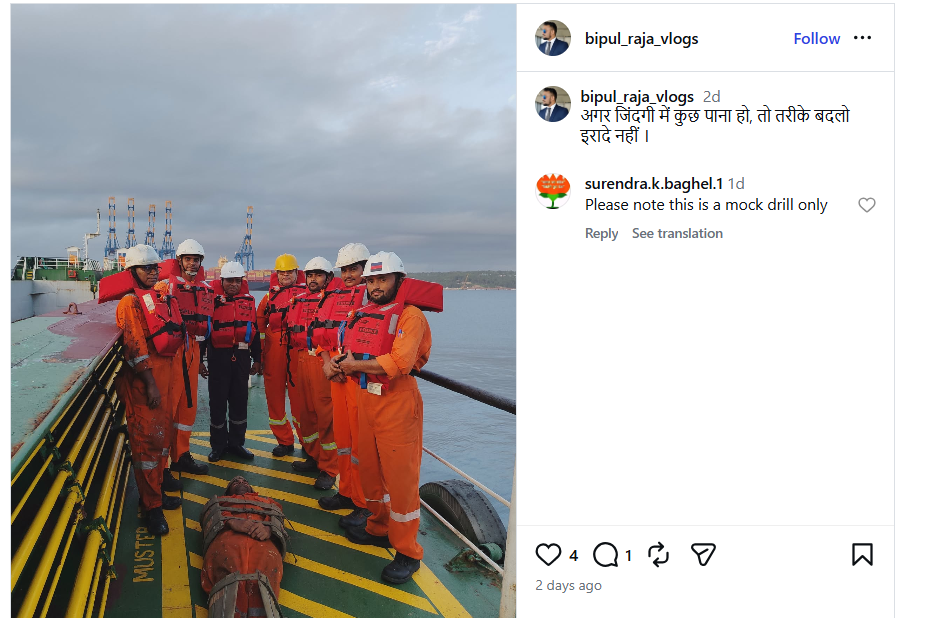
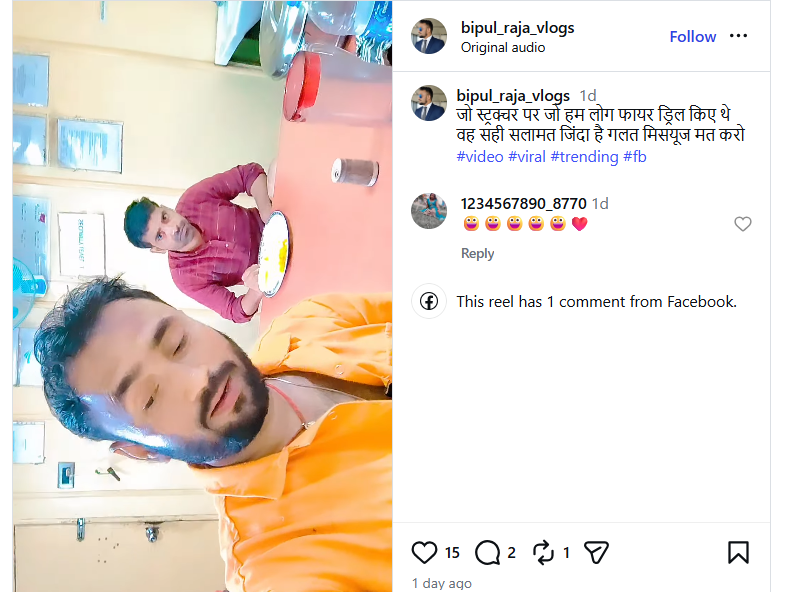
The profile also contains several other photos and videos of crew members working on the ship. We also checked the YouTube channel linked in this profile, “Sunnybabu,” where a mock drill video was uploaded on January 21, 2026. https://www.instagram.com/bipul_raja_vlogs

Conclusion:
The research confirms that the viral video is unrelated to the death of any Indian sailor in the Gulf of Oman. The clip actually shows a mock drill conducted on a ship and is being falsely shared with a misleading narrative.

Executive Summary:
Microsoft rolled out a set of major security updates in August, 2024 that fixed 90 cracks in the MS operating systems and the office suite; 10 of these had been exploited in actual hacker attacks and were zero-days. In the following discussion, these vulnerabilities are first outlined and then a general analysis of the contemporary cyber security threats is also undertaken in this blog. This blog seeks to give an acquainted and non-acquainted audience about these updates, the threat that these exploits pose, and prevent measures concerning such dangers.
1. Introduction
Nowadays, people and organisations face the problem of cybersecurity as technologies develop and more and more actions take place online. These cyber threats have not ceased to mutate and hence safeguarding organisations’ digital assets requires a proactive stand. This report is concerned with the vulnerabilities fixed by Microsoft in August 2024 that comprised a cumulative of 90 security weaknesses where six of them were zero-day exploits. All these make a terrible risk pose and thus, it is important to understand them as we seek to safeguard virtual properties.
2. Overview of Microsoft’s August 2024 Security Updates
August 2024 security update provided by Microsoft to its products involved 90 vulnerabilities for Windows, Office, and well known programs and applications. These updates are of the latest type which are released by Microsoft under its Patch Tuesday program, a regular cum monthly release of all Patch updates.
- Critical Flaws: As expected, seven of the 90 were categorised as Critical, meaning that these are flaws that could be leveraged by hackers to compromise the targeted systems or bring operations to a halt.
- Zero-Day Exploits: A zero-day attack can be defined as exploits, which are as of now being exploited by attackers while the software vendor has not yet developed a patch for the same. It had managed 10 zero-days with the August update, which underlines that Microsoft and its ecosystems remain at risk.
- Broader Impact: These are not isolated to the products of Microsoft only They still persist Despite this, these vulnerabilities are not exclusive to the Microsoft products only. Other vendors such as Adobe, Cisco, Google, and others also released security advisories to fix a variety of issues which proves today’s security world is highly connected.
3. Detailed Analysis of Key Vulnerabilities
This section provides an in-depth analysis of some of the most critical vulnerabilities patched in August 2024. Each vulnerability is explained in layman’s terms to ensure accessibility for all readers.
3. 1 CVE-2024-38189: Microsoft Project Remote Code Execution Vulnerability (CVSS score:8. 8) :
The problem is in programs that belong to the Microsoft Project family which is known to be a popular project management system. The vulnerability enables an attacker to produce a file to entice an user into opening it and in the process execute code on the affected system. This could possibly get the attacker full control of the user’s system as mentioned in the following section.
Explanation for Non-Technical Readers: Let us assume that one day you received a file which appears to be a normal word document. When it is opened, it is in a format that it secretly downloads a problematic program in the computer and this goes unnoticed. This is what could happen with this vulnerability, that is why it is very dangerous.
3. 2 CVE-2024-38178: Windows Scripting Engine Memory Corruption Vulnerability (CVSS score: 7.5):
Some of the risks relate to a feature known as the Windows Scripting Engine, which is an important system allowing a browser or an application to run scripts in a web page or an application. The weak point can result in corruption of memory space and an attacker can perform remote code execution with the possibility to affect the entire system.
Explanation for Non-Technical Readers: For the purpose of understanding how your computer memory works, imagine if your computer’s memory is a library. This vulnerability corrupts the structure of the library so that an intruder can inject malicious books (programs) which you may read (execute) on your computer and create havoc.
3. 3 CVE-2024-38193: WinSock Elevation of Privilege Vulnerability (CVSS score: 7. 8 )
It opens up a security weakness in the Windows Ancillary Function Driver for WinSock, which is an essential model that masks the communication between the two. It enables the attacker to gain new privileges on the particular system they have attacked, in this case they gain some more privileges on the attacked system and can access other higher activities or details.
Explanation for Non-Technical Readers: This flaw is like somebody gaining access to the key to your house master bedroom. They can also steal all your valuable items that were earlier locked and could only be accessed by you. It lets the attacker cause more havoc as soon as he gets inside your computer.
3. 4 CVE-2024-38106: Windows Kernel Elevation of Privilege Vulnerability (CVSS score: 7. 0)
This vulnerability targets what is known as the Windows Kernel which forms the heart or main frameworks of the operating system that controls and oversees the functions of the computer components. This particular weakness can be exploited and an opponent will be able to get high-level access and ownership of the system.
Explanation for Non-Technical Readers: The kernel can be compared to the brain of your computer. It is especially dangerous that if someone can control the brain he can control all the rest, which makes it a severe weakness.
3. 5 CVE-2024-38213: Windows Mark of the Web Security Feature Bypass Vulnerability (CVSS score: 6.5).
This vulnerability enables the attackers to evade the SmartScreen component of Windows which is used to safeguard users from accessing unsafe files. This weakness can be easily used by the attackers to influence the users to open files that are otherwise malicious.
Explanation for Non-Technical Readers: Usually, before opening a file your computer would ask you in advance that opening the file may harm your computer. This weak point makes your computer believe that this dangerous file is good and then no warning will be given to you.
4. Implications of the Vulnerabilities
These vulnerabilities, importantly the zero-day exploits, have significant implications on all users.
- Data Breaches: These weaknesses can therefore be manipulated to cause exposures of various data, occasioning data leaks that put individual and corporate information and wealth.
- System Compromise: The bad guys could end up fully compromising the impacted systems meaning that they can put in malware, pilfer data or simply shut down a program.
- Financial Loss: The organisations that do not patch these vulnerabilities on the shortest notice may end up experiencing a lot of losses because of having to deal with a lot of downtimes on their systems, having to incur the costs of remediating the systems that have been breached and also dealing with legal repercussions.
- Reputation Damage: Security breaches and IT system corruptions can result in loss of customer and partner confidence in an organisation’s ability to protect their information affecting its reputation and its position in the market.
5. Recommendations for Mitigating Risks
Immediate measures should be taken regarding the risks linked to these issues since such weaknesses pose a rather high threat. The following are recommendations suitable for both technical and non-technical users.
5. 1 Regular Software Updates
Make it a point that all the software, particularly operating systems and all Microsoft applications are updated. Any system out there needs to update it from Microsoft, and its Patch Tuesday release is crucial.
For Non-Technical Users: As much as possible, reply ‘yes’ to updates whenever your computer or smartphone prompts for it. These updates correct security matters and secure your instruments.
5. 2 Realisation of Phishing Attacks
Most of the risks are normally realised through phishing techniques. People should be taught diversifiable actions that come with crazy emails like clicking on links and opening attachments.
For Non-Technical Users: Do not respond to emails from unknown people and if they make you follow a link or download a file, do not do it. If it looks like spam, do not click on it.
5. 3 Security Software
Strong and reliable antivirus and anti-malware software can be used to identify and avoid the attacks that might have high chances of using these vulnerabilities.
For Non-Technical Users: Ensure you download a quality antivirus and always update it. This works like a security guard to your computer by preventing bad programs.
5. 4 Introduce Multi Factor Authentication (MFA)
MFA works in a way to enforce a second factor of authentication before the account can be accessed; for instance, a user will be asked to input a text message or an authentication application.
For Non-Technical Users: NS is to make use of two-factor authentication on your accounts. It is like increasing the security measures that a man who has to burgle a house has to undergo by having to hammer an additional lock on the door.
5. 5 Network segmentations and Privileges management
Network segmentation should be adopted by organisations to prevent the spread of attacks while users should only be granted the privileges required to do their activities.
For Non- Technical Users: Perform the assessments of user privileges and the networks frequently and alter them in an effort of reducing the extent of the attacks.
6. Global Cybersecurity Landscape and Vendor Patches
The other major vendors have also released patches to address security vulnerabilities in their products. The interdependent nature of technology has the effect on the entire digital ecosystem.
- Adobe, Cisco, Google, and Others: These companies have released updates to address the weaknesses in their products that are applied in different sectors. These patches should be applied promptly to enhance cybersecurity.
- Collaboration and Information Sharing:Security vendors as well as researchers and experts in the cybersecurity domain, need to remain vigilant and keep on sharing information on emerging threats in cyberspace.
7. Conclusion
The security updates companies such as Microsoft and other vendors illustrate the present day fight between cybersecurity experts and cybercriminals. All the vulnerabilities addressed in this August 2024 update cycle are a call for prudence and constant protection of digital platforms. These vulnerabilities explain the importance of maintaining up-to-date systems, being aware of potential threats, and implementing robust security practices. Therefore, it is important to fortify our shield in this ever expanding threat domain, in order to be safe from attackers who use this weakness for their malicious purposes.
Introduction
At 4 pm on August 3, 2026, representatives of Meta, X, Snapchat and Google walked into a room in Parliament to face India's Standing Committee on Communications and Information Technology. On paper, it looked like one more instance of a routine that has repeated for half a decade: a Big Tech company gets called in, questioned, and sent away with a warning. But this summons, and the fortnight of scrutiny that has followed it, reveals something different about the direction of India's digital governance in 2026. The government's question has stopped being, "Will you take this post down?" It has increasingly become, "How does your platform actually work, and can we redesign the parts we don't like?"
The trigger: A technical glitch that became a systemic complaint
The proximate cause of the August 3 hearing was almost trivial by itself. On July 23, Prime Minister Narendra Modi posted a video on Instagram and Facebook about the government's crackdown on examination paper leaks. Meta briefly restricted the Facebook version before restoring it, blaming the removal on a technical error in its automated filters.
That explanation didn't satisfy the Ministry of Electronics and Information Technology (MEITY), which called it inadequate, and the incident became the occasion for a much broader reckoning. Committee chairperson Nishikant Dubey summoned Meta, X, Snapchat and Google to examine three things: the online safety of women and children; the data privacy of ordinary citizens, including farmers and labourers; and how far platforms actually comply with India's law-and-order requirements. Days later, MeitY brought Meta's global team in for two days of direct questioning that stretched into a third day of technical discussions covering child sexual abuse material (CSAM), deepfakes, bot accounts and, notably, the design of Instagram's content-recommendation algorithm itself.
From takedown notices to systems audits
For most of the last decade, India's approach to online harm ran through blocking orders and the "notice-and-takedown" machinery built into the IT Rules, 2021: a court or government authority flags a specific URL or post, the platform has a fixed window to act, and non-compliance risks the loss of legal immunity. It was a model built around individual pieces of content.
What is unfolding now looks structurally different. Officials aren't only asking Meta to remove a video; they are asking why its recommendation systems keep resurfacing flagged material, why "verified" accounts belonging to prominent or official figures don't have extra layers of human review before restriction, and why bot-detection and CSAM-screening pipelines aren't catching harmful content before it spreads. The Supreme Court-monitored committee tracking "digital arrest" fraud has gone further still, directing MeitY, the Department of Telecommunications and the Indian Cyber Crime Coordination Centre (I4C) to study time-based restrictions on audio and video calls altogether, a proposal that touches the basic architecture of how calling features work, not any single conversation.
Parliament's committee has separately pushed for a national registration system that would require every intermediary operating in India to publicly list its grievance officer, nodal contact and compliance officer as a response to law enforcement's repeated difficulty simply reaching a platform when something goes wrong. It has also asked for tighter regulation of digital advertising, which officials say is routinely exploited for cyber fraud, and for rules under Section 67C of the IT Act governing how long intermediaries must preserve user data. None of this is about any one post; it is about redesigning the infrastructure platforms use to operate in India.
Messaging apps and the encryption problem
Nowhere is the shift from "content" to "architecture" clearer than in the government's dealings with peer-to-peer messaging platforms. WhatsApp has spent years contesting the traceability requirement under Rule 4(2) of the IT Rules in the Delhi High Court, arguing it would rather exit India than build a permanent capability to identify the "first originator" of every message since doing so would mean re-engineering its end-to-end encryption for all users, not just suspects.
That fight has resurfaced in a new form. In a submission to the parliamentary committee, WhatsApp argued that new rules requiring platforms to detect and label AI-generated "synthetic" content cannot technically apply inside encrypted chats because no one outside a conversation "not even WhatsApp" can see what's inside it. Signal has proven even harder to engage with: MeitY told the committee it has struggled to establish formal contact with the app, which does not publicly list a grievance officer, exposing how little leverage the government currently has over encrypted, minimally staffed platforms compared with advertising-funded giants like Meta and Google. The proposal to cap or restrict call durations to fight "digital arrest" scams is, in effect, an attempt to regulate a messaging feature rather than any message sent through it, perhaps the clearest sign yet that the fight has moved from posts to plumbing.
The future of "safe harbour"
Underpinning all of this is Section 79 of the IT Act, the "safe harbour" clause that shields platforms from liability for what their users post, provided they exercise due diligence. That protection is now being squeezed from three directions at once. The parliamentary committee has unanimously recommended withdrawing safe harbour from platforms that don't comply with Indian law and said it should be pulled specifically from Meta unless its CEO apologises over the PM's video takedown, though a committee cannot itself revoke a statutory protection; only Parliament can amend Section 79. Separately, the Supreme Court-monitored panel on digital-arrest fraud is examining an explicit provision making intermediaries liable for the misuse of their platforms so that fraud victims could claim compensation directly. And MeitY's draft Second Amendment Rules, circulated in March 2026, go furthest of all: they propose making safe harbour conditional on real-time compliance with executive directions, rather than a general protection available to any platform that follows published rules, which is a more direct, command-driven model than even the European Union's Digital Services Act.
Why this matters beyond the headlines
For the ordinary internet user, none of this is abstract. A registration-and-disclosure regime, together with faster and more accountable grievance handling, could make it easier to get genuinely harmful content addressed. But architecture-level intervention cuts both ways. Rules aimed at traceability or at labelling encrypted content risk weakening the very privacy protections that make messaging apps trustworthy in the first place, and a safe harbour that hinges on obeying informal executive directions, rather than settled published law, hands the government far more day-to-day leverage over what stays online. The Supreme Court has listed the digital-arrest matter for September 16; how it, and Parliament, ultimately treat Section 79 will decide whether India's platforms remain neutral pipes carrying other people's speech or become extensions of state enforcement.
Conclusion
India’s digital-governance battle is no longer confined to individual posts or takedown orders. It is increasingly about the architecture beneath the internet: recommendation engines, encryption, verification, data retention and safe-harbour protections. That shift may strengthen accountability and user safety, but it also expands the state’s influence over digital infrastructure. As Parliament and the Supreme Court confront these questions, India faces a fundamental choice: regulate platforms or reshape how they operate.
Sources
- Parliament panel summons Meta, X, Google, Snapchat over digital safety — Hindustan Times
- Parliamentary panel summons Meta, Google, X and Snapchat over social media regulation — Economic Times
- Parliamentary Panel Summons Meta, X, Google on Digital Safety Rules — Asianet Newsable
- Panel Summons Meta, X, Snapchat, Google for Safety Review — New Kerala
- Meta, X, Google and Snapchat summoned by parliamentary panel on August 3 — BestMediaInfo
