
#FactCheck - Video falsely links a man slapping a cleric to Iran protests
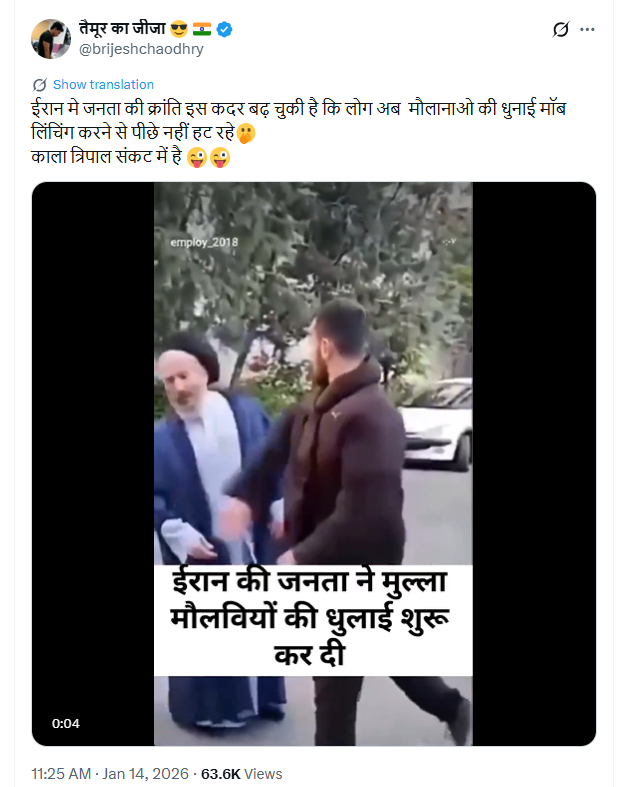
Amid reports that the death toll in Iran’s ongoing protests has risen to 2,571, a video has been widely circulated on social media showing a man slapping a person dressed in clerical attire after an argument. Users sharing the clip claim that public anger in Iran has escalated to the point where people are now physically attacking religious clerics. However, research by the Cyber Peace Foundation has found this claim to be misleading. The research established that the video is not recent and has no connection to the current protests in Iran. In fact, the clip dates back to 2021 and was entirely scripted.
Claim
On January 14, 2026, users on X (formerly Twitter) shared the viral video with captions suggesting that Iranian citizens are openly assaulting clerics amid the ongoing unrest. One such post stated that the situation in Iran had deteriorated so badly that people were now beating religious leaders.
The link, archived version, and screenshot of the post are available below:
Factcheck:
To verify the authenticity of the claim, the Cyber Peace Foundation extracted keyframes from the viral video and conducted a Google reverse image search. This led investigators to a report published on April 19, 2021, on the Persian-language website of Deutsche Welle (DW). The visuals matched the viral clip exactly, confirming that the footage is nearly five years old, not recent. Here is the link to the original video, along with a screenshot:
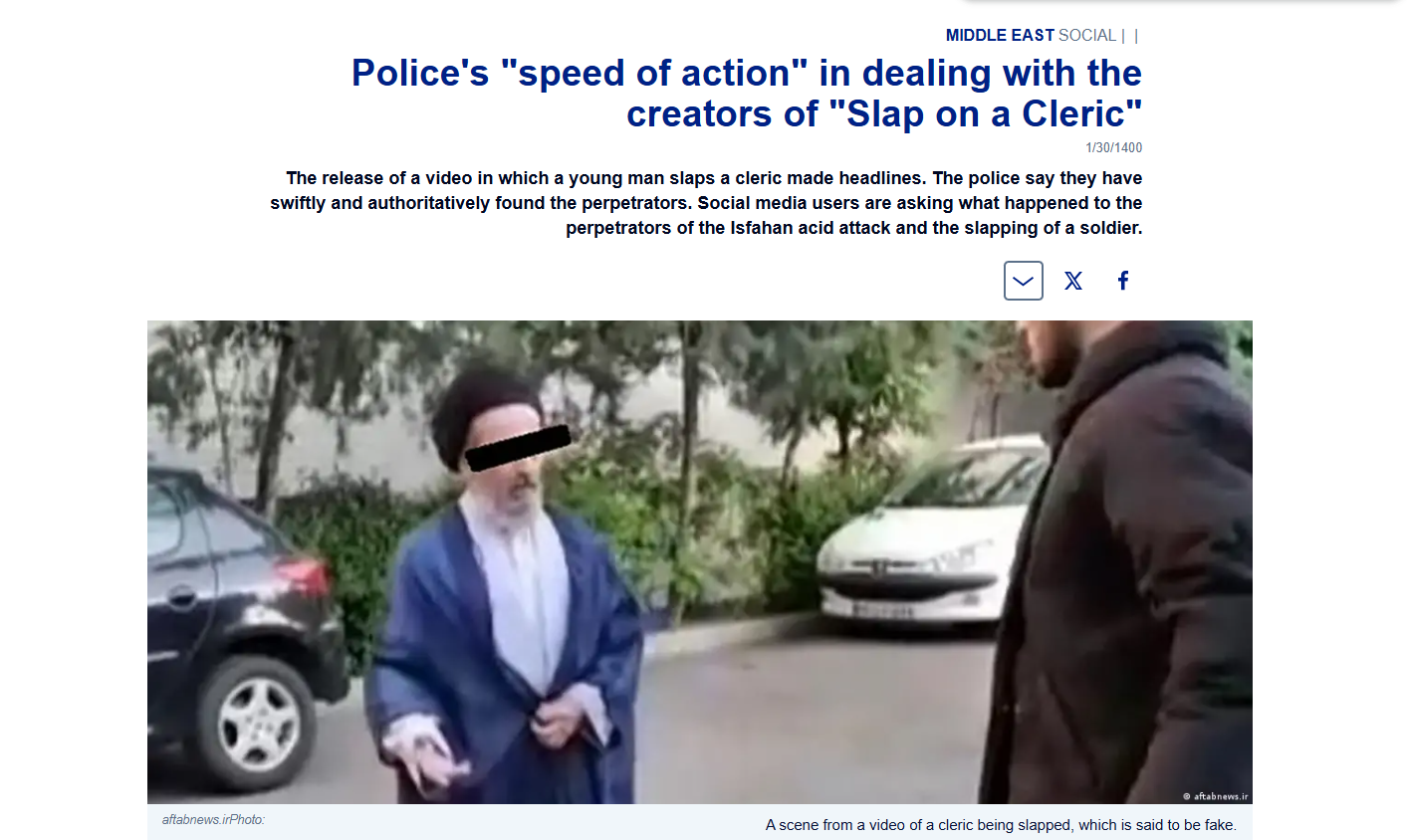
Further examination of reports by Fars News Agency revealed that Tehran police had conducted a detailed probe into the video at the time and declared it fake and pre-scripted. According to Tehran Police Chief Hossein Rahimi, the individual seen wearing religious attire was not a cleric. Here is the link to the original video, along with a screenshot: He was actually employed at a carpet cleaning shop in Tehran, while the man seen slapping him was his own son.
Police stated that the video was deliberately staged and circulated to provoke public sentiment and create unrest by falsely linking it to religious tensions. Both the father and son were arrested, and images of them in police custody were published in contemporaneous reports. Additional confirmation was found on the Independent Persian website, which had also reported on the incident on April 19, 2021, reiterating that the video was fabricated and unrelated to any protest movement. Here is the link to the original video, along with a screenshot:

Conclusion
The claim that the viral video shows an Iranian protester slapping a cleric during the current wave of protests is false. The video is from 2021, was scripted, and has no link to the ongoing demonstrations in Iran. It is being reshared with a misleading narrative to spread disinformation and inflame public sentiment.c

Related Blogs

Executive Summary
A video showing a massive gathering of people dressed in black is widely circulating on social media. The clip is being shared with the claim that it shows crowds mourning the funeral of Iran’s Supreme Leader Ayatollah Ali Khamenei following his alleged killing in February 2026 However, research by the CyberPeace found that the claim is misleading and the video is unrelated to Iran.
Claim:
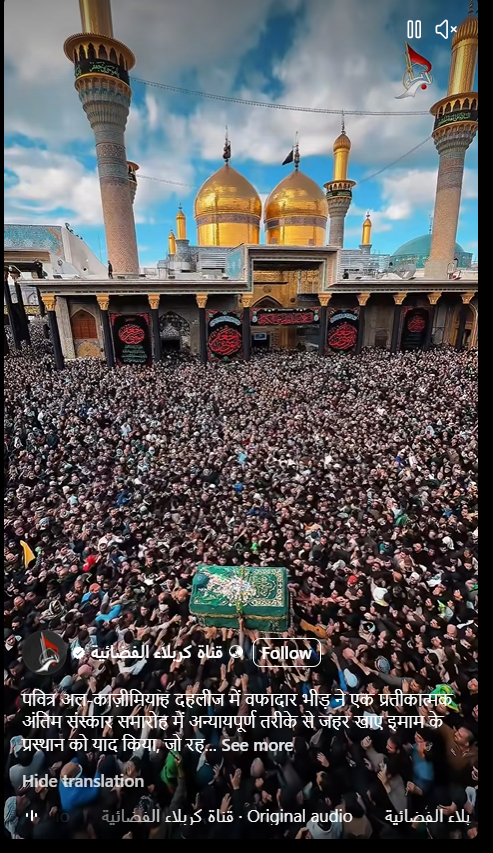
The viral video shows a large crowd gathered in a public square, with a mosque featuring a golden dome visible in the background. Social media posts claim that the footage captures mourners attending Ayatollah Khamenei’s funeral after his reported death in a joint US-Israel operation.

Fact Check:
To verify the claim, we extracted keyframes from the video and conducted a reverse image search. This led us to a similar clip uploaded on January 15 by an Iraqi broadcaster, Karbala TV, on Facebook. In the footage, a large crowd can be seen carrying a symbolic coffin near a shrine with a golden dome—matching the visuals seen in the viral video. According to the Arabic caption, the video shows a “symbolic funeral” procession held at the Kazimayn Shrine in Baghdad, Iraq. The event is part of an annual religious observance commemorating Imam Musa al-Kazim, the seventh Imam in Shia Islam, who is believed to have died after being poisoned in the 8th century.
Every year, large numbers of Shia devotees gather at the shrine in Baghdad to pay their respects during this commemoration. The visuals seen in the viral clip are consistent with this annual gathering.
Conclusion:
The claim that the video shows crowds at Ayatollah Khamenei’s funeral is false. The footage is unrelated and actually depicts a religious gathering in Baghdad, Iraq, held as part of an annual Shia ritual.

Introduction
Digital Public Infrastructure (DPI) serves as the backbone of e-governance, enabling governments to deliver services more efficiently, transparently, and inclusively. By leveraging information and communication technology (ICT), digital governance systems reconfigure traditional administrative processes, making them more accessible and citizen-centric. However, the successful implementation of such systems hinges on overcoming several challenges, from ensuring data security to fostering digital literacy and addressing infrastructural gaps.
This article delves into the key enablers that drive effective DPI and outlines the measures already undertaken by the government to enhance its functionality. Furthermore, it outlines strategies for their enhancement, emphasizing the need for a collaborative, secure, and adaptive approach to building robust e-governance systems.
Key Enablers of DPI
Digital Public Infrastructure (DPI), the foundation for e-governance, relies on common design, robust governance, and private sector participation for efficiency and inclusivity. This requires common principles, frameworks for collaboration, capacity building, and the development of common standards. Some of the key measures undertaken by the government in this regard include:
- Data Protection Framework: The Digital Personal Data Protection (DPDP) Act of 2023 establishes a framework to ensure consent-based data sharing and regulate the processing of digital personal data. It delineates the responsibilities of data fiduciaries in safeguarding users' digital personal data.
- Increasing Public-Private Partnerships: Refining collaboration between the government and the private sector has accelerated the development, maintenance, expansion, and trust of the infrastructure of DPIs, such as the AADHAR, UPI, and Data Empowerment and Protection Architecture (DEPA). For example, the Asian Development Bank attributes the success of UPI to its “consortium ownership structure”, which enables the wide participation of major financial stakeholders in the country.
- Coordinated Planning: The PM-Gati Shakti establishes a clear coordination framework involving various inter-governmental stakeholders at the state and union levels. This aims to significantly reduce project duplications, delays, and cost escalations by streamlining communication, harmonizing project appraisal and approval processes, and providing a comprehensive database of major infrastructure projects in the country. This database called the National Master Plan, is jointly accessible by various government stakeholders through APIs.
- Capacity Building for Government Employees: The National e-Governance Division of the Ministry of Electronics and Information Technology routinely rolls out multiple training programs to build the technological and managerial skills required by government employees to manage Digital Public Goods (DPGs). For instance, it recently held a program on “Managing Large Digital Transformative Projects”. Additionally, the Ministry of Personnel, Public Grievances, and Pensions has launched the Integrated Government Online Training platform (iGOT) Karmayogi for the continuous learning of civil servants across various domains.
Digital Governance; Way Forward
E-governance utilizes information and communication technology (ICT) such as Wide Area Networks, the Internet, and mobile computing to implement existing government activities, reconfiguring the structures and processes of governance systems. This warrants addressing certain inter-related challenges such as :
- Data Security: The dynamic and ever-changing landscape of cyber threats necessitates regular advancements in data and information security technologies, policy frameworks, and legal provisions. Consequently, the digital public ecosystem must incorporate robust data cybersecurity measures, advanced encryption technologies, and stringent privacy compliance standards to safeguard against data breaches.
- Creating Feedback Loops: Regular feedback surveys will help government agencies improve the quality, efficiency, and accessibility of digital governance services by tailoring them to be more user-friendly and enhancing administrative design. This is necessary to build trust in government services and improve their uptake among beneficiaries. Conducting the decennial census is essential to gather updated data that can serve as a foundation for more informed and effective decision-making.
- Capacity Building for End-Users: The beneficiaries of key e-governance projects like Aadhar and UPI may have inadequate technological skills, especially in regions with weak internet network infrastructure like hilly or rural areas. This can present challenges in the access to and usage of technological solutions. Robust capacity-building campaigns for beneficiaries can provide an impetus to the digital inclusion efforts of the government.
- Increasing the Availability of Real-Time Data: By prioritizing the availability of up-to-date information, governments and third-party enterprises can enable quick and informed decision-making. They can effectively track service usage, assess quality, and monitor key metrics by leveraging real-time data. This approach is essential for enhancing operational efficiency and delivering improved user experience.
- Resistance to Change: Any resistance among beneficiaries or government employees to adopt digital governance goods may stem from a limited understanding of digital processes and a lack of experience with transitioning from legacy systems. Hand-holding employees during the transitionary phase can help create more trust in the process and strengthen the new systems.
Conclusion
Digital governance is crucial to transforming public services, ensuring transparency, and fostering inclusivity in a rapidly digitizing world. The successful implementation of such projects requires addressing challenges like data security, skill gaps, infrastructural limitations, feedback mechanisms, and resistance to change. Addressing these challenges with a strategic, multi-stakeholder approach can ensure the successful execution and long-term impact of large digital governance projects. By adopting robust cybersecurity frameworks, fostering public-private partnerships, and emphasizing capacity building, governments can create efficient and resilient systems that are user-centric, secure, and accessible to all.
References
- https://www.adb.org/sites/default/files/publication/865106/adbi-wp1363.pdf
- https://www.jotform.com/blog/government-digital-transformation-challenges/
- https://aapti.in/wp-content/uploads/2024/06/AaptixONI-DPIGovernancePlaybook_compressed.pdf
- https://community.nasscom.in/sites/default/files/publicreport/Digital%20Public%20Infrastructure%2022-2-2024_compressed.pdf
- https://proteantech.in/articles/Decoding-Digital-Public-Infrastructure-in-India/

Executive Summary
A video is being widely shared on social media showing a monk walking through a dense forest, with several lions seen around him. Users sharing the video claim that the monk is fearlessly walking among lions. CyberPeace Research Wing’s research found that the viral claim is false. The research revealed that the video is not real and was created using artificial intelligence (AI).
Claim
An Instagram user shared the viral video on July 27, 2026, claiming that a video of a monk fearlessly walking among several lions in a forest is going viral on social media. The caption accompanying the post reads:
"A video of a baba fearlessly passing through several lions in the jungle is rapidly going viral on social media. After watching the video, people are linking it with faith, courage and divine power. However, the authenticity of the video and the circumstances shown in it have not been independently verified.
Therefore, before considering it a miracle, viewers should exercise caution and verify the source and facts before believing any viral video. What do you think—faith, courage or something else?"
The post link, archive link and screenshot are provided below:
https://www.instagram.com/reel/DbTOIuRRYFe/

FactCheck
To verify the claim, we conducted a keyword search on Google. During the search, we did not find any credible media reports confirming the viral claim. Upon closely examining the viral video, we suspected that it could have been created using AI. We then analysed the video using the AI detection tool Sightengine. According to the tool’s analysis, the video has a 99 per cent probability of being AI-generated.
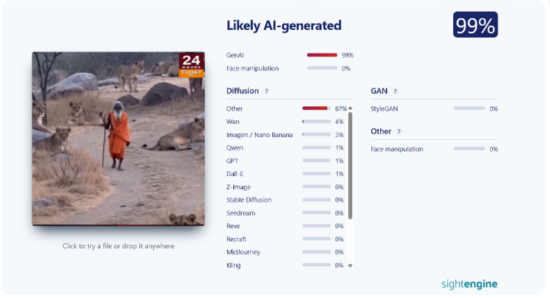
In the next step of our research , we scanned the viral video using another AI detection tool, WasIt AI. The results indicated that the video was generated using artificial intelligence.

Finally, we analysed the video using the AI detection tool AI or Not, which also concluded that the viral video was created with the help of AI.

Conclusion
CyberPeace Research Wing’s research found that the viral claim is false. The video showing a monk walking among lions in a dense forest is not authentic but an AI-generated creation. The video is being shared with a misleading claim.
