
The Evidence Problem in the Age of Deepfakes
Introduction
Digital evidence has become part of almost every modern investigation. A photograph can place a person at a location, an audio recording can capture a conversation, and a video can appear to show an event as it happened. For years, the main forensic concern was whether such material had been altered. The rapid growth of generative artificial intelligence has added a harder question: even when a file is preserved exactly as received, can investigators still trust what it appears to show?
Deepfakes have made this question practical rather than theoretical. Synthetic or manipulated audio, video and images can imitate real people and real events with increasing realism. CERT-In describes deepfakes as a high-risk threat because they can support disinformation, fraud, social engineering and reputational harm.[1] NIST research likewise treats AI-generated media as a digital-forensics challenge that requires systematic evaluation of detection technologies.[2]
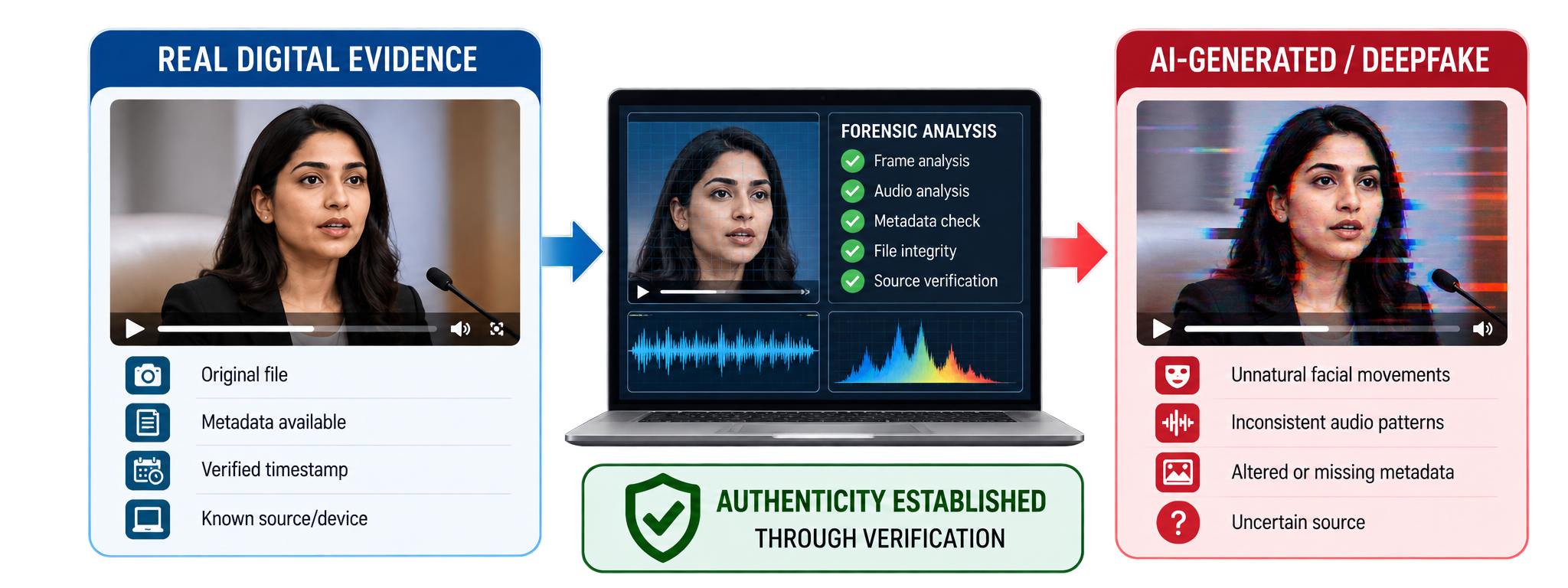
The result is an evidence problem. The answer is not to stop trusting digital evidence, but to become more disciplined about establishing its origin, integrity, context and authenticity.
The evidence problem begins before the laboratory
When a suspicious video reaches an investigator through WhatsApp, Telegram, email or social media, the file may already have passed through several transformations. It may have been compressed, re-encoded, cropped, renamed or stripped of metadata. A screenshot may preserve what is visible but lose the original file structure. A forwarded audio clip may contain no reliable information about where it was first recorded.
For that reason, forensic examination should begin with acquisition and provenance, not with a quick “deepfake detector” result. Investigators should ask: Who supplied the file? Where was it obtained? Is there an original version? What device or account produced it? What happened to the file before it reached the investigator?
Cryptographic hashing remains important because it can demonstrate that an acquired working copy has not changed during examination. But a valid hash does not prove that the underlying event was genuine. A perfectly preserved fake is still a fake.
What a professional examination should look for
A reliable assessment combines several forms of evidence rather than relying on one technical indicator.
Source and acquisition. The original artefact should be preserved whenever possible. Investigators should record the acquisition method, date and time, source account or device, and any known transformations before collection. A documented chain of custody is essential when material may later support a legal, disciplinary or regulatory decision.
Metadata and file structure. Metadata may provide useful clues about creation, encoding, editing software and timestamps. File structure, compression behaviour and related technical characteristics can also reveal inconsistencies. However, these indicators are supporting evidence, not proof on their own, because metadata can be removed or rewritten during normal processing.
Content-level examination. Forensic analysis can include frame-by-frame video review, audio waveform and spectral examination, and inspection for inconsistencies in lighting, reflections, facial movement, lip synchronisation or background elements. Such signs may help guide an investigation, but they are not a permanent checklist. Generative systems continue to improve.
Independent corroboration. This is often the strongest step. If a recording allegedly shows that a person was in a particular place at a particular time, investigators can compare it with CCTV, access-control records, device artefacts, communications, location information, eyewitness accounts or other independent records. The goal is to determine whether the wider evidence supports the event represented by the media.
A real-world lesson: the Pikesville case
The 2024 Pikesville High School incident in Maryland provides a practical example of why authenticity cannot be assumed from appearance alone. An audio recording circulated online that was presented as the principal making racist and antisemitic comments. On January 17, 2024, Baltimore County Public Schools said it could not yet confirm the recording’s veracity and opened an investigation.[3]
Several months later, the school district reported that investigators, with assistance from the FBI and other experts, had verified that the audio had been created using artificial intelligence.[4] Police subsequently arrested the school’s former athletic director in connection with the fabricated recording.[5]
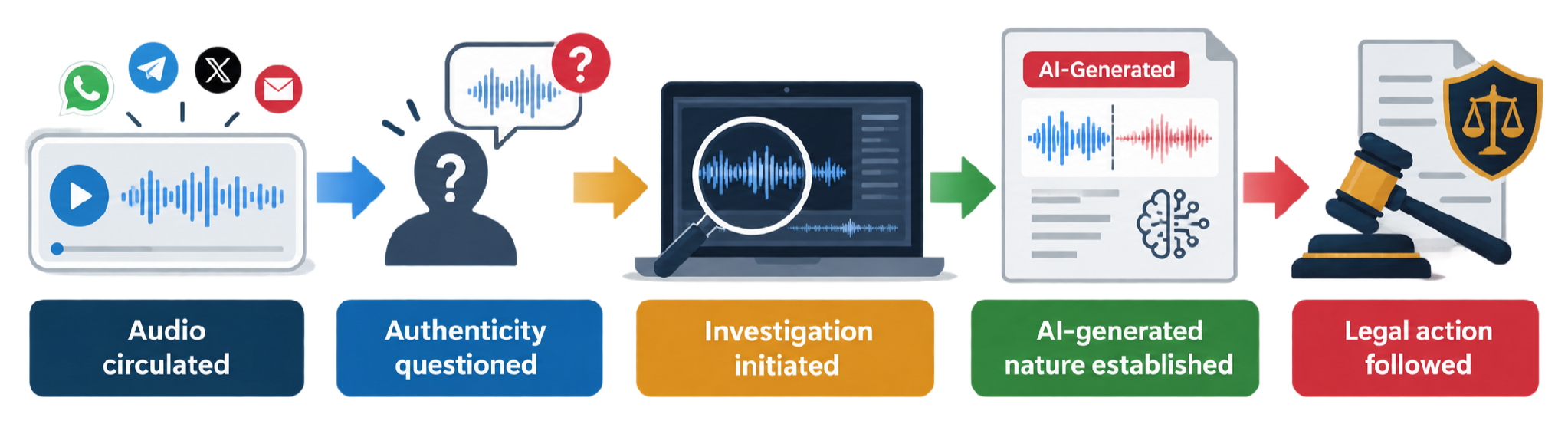
The forensic lesson is larger than the incident itself. The recording had social consequences before its authenticity was established. In a fast-moving online environment, the first version of an event can travel much further than the later correction. Deepfake investigations therefore have to consider not only whether media is authentic, but also how quickly unverified material can influence decisions.
From deepfake detection to content provenance
Detection tools will remain useful, but they should be treated as part of an examination rather than an automatic verdict. NIST’s Guardians of Forensic Evidence work reflects the need to evaluate how analytic systems perform against changing forms of AI-generated media and how well they generalise beyond controlled conditions.[2]
Another important direction is content provenance. The Coalition for Content Provenance and Authenticity (C2PA) has developed a technical framework for recording verifiable information about how digital content was created and changed. Content Credentials can bind provenance information to an asset using cryptographic techniques, allowing later users to inspect a recorded content history when that information is available.[6]
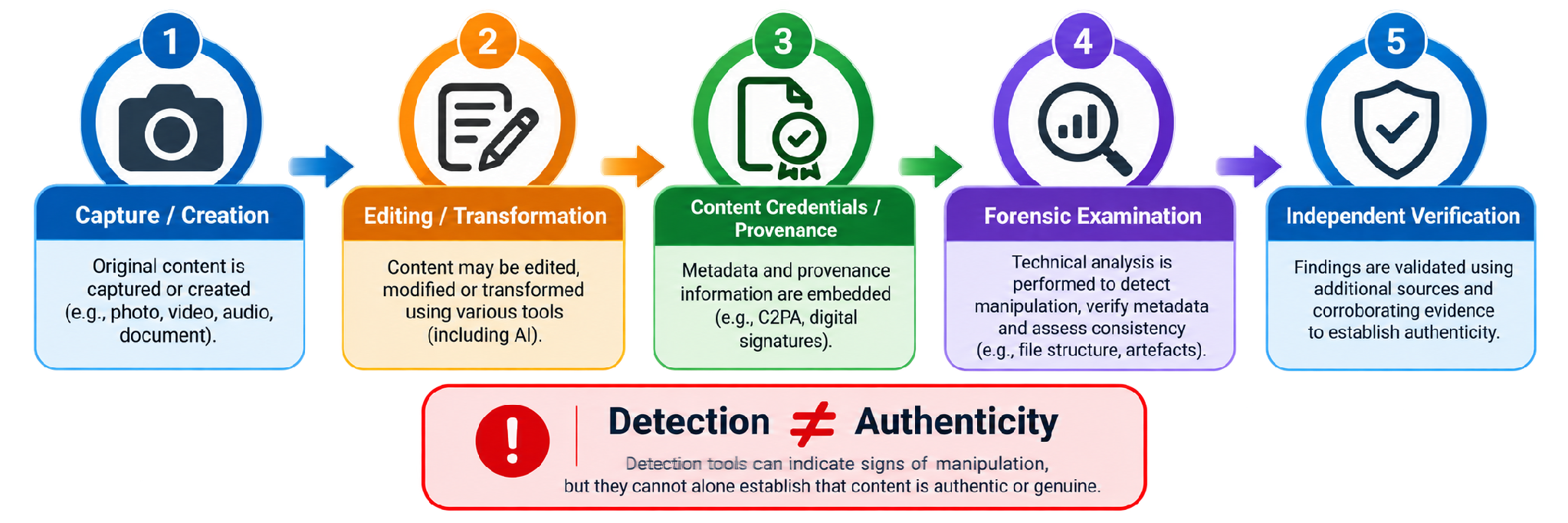
Provenance does not mean that every claim associated with a file is automatically true. It adds context: who created it, what actions were taken and how the asset changed. In a deepfake environment, that context can be as important as the content itself.
Why this matters in India
The issue is especially relevant to India’s fast-growing digital environment. CERT-In’s 2024 advisory identifies misinformation, fraud and reputational damage among the risks associated with synthetic media.[1] In August 2026, the Government of India stated that the regulatory framework addresses AI-generated deepfakes and noted amendments to the IT Rules in February 2026 concerning harms arising from synthetically generated information, including requirements related to labelling and traceable metadata for permissible AI-generated content.[7]
For organisations, deepfake response should therefore not be treated only as a media or public-relations issue. It can become an incident-response and forensic issue. A suspicious executive voice note, a manipulated employee video or a fabricated screen recording may require preservation, technical examination and independent corroboration before any action is taken.
Conclusion
Deepfakes do not make digital evidence useless. Deepfakes make handling of evidence more dangerous. The professional response is not to believe everything or to doubt everything. The professional response is to build a process around evidence: preserve the original where possible document how evidence was acquired, calculate and record hashes, examine metadata and technical characteristics use detection tools while understanding their limitations compare media with independent evidence and examine provenance information where it is available.
Importantly investigators and decision-makers should separate three questions: Is the file intact? Is the content authentic? Does the content actually prove the event being alleged? Deepfakes can pass the test while failing the other two.
In the age of AI evidence will increasingly be judged not only by how convincing it looks but, by how well its origin, integrity, context and history can be demonstrated. That is the standard that can help preserve trust when seeing and hearing're no longer enough.
References
1. CERT-In, “Deepfakes - Threats and Countermeasures,” Advisory CIAD-2024-0060, 27 November 2024. View source
2. NIST, “Guardians of Forensic Evidence: Evaluating Analytic Systems Against AI-Generated Deepfakes,” 27 January 2025. View source
3. Baltimore County Public Schools, “January 17, 2024, Community Update: Message from Superintendent Dr. Myriam Rogers Regarding Pikesville High School.” View source
4. Baltimore County Public Schools, “April 24, 2024 Staff and Community Update: Message from Superintendent Dr. Myriam Rogers Regarding Pikesville High School Investigation.” View source
5. The Baltimore Banner / WYPR, “Ex-athletic director framed principal with AI-generated voice, police say,” 25 April 2024. View source
6. Coalition for Content Provenance and Authenticity (C2PA), “Content Credentials: C2PA Technical Specification,” Version 2.1. View source
7. Government of India, Ministry of Electronics & Information Technology, “Government Strengthens Regulatory Framework to Address AI-Generated Deepfakes,” 6 August 2026. View source

Related Blogs
Introduction
Over the last few years, several public data breaches in Venezuela have revealed a lack of cohesion and progress in its data privacy system and left many people susceptible to fraud, identity theft and long-term harm via the internet. It is clear from these data breaches that when organizations fail to adequately protect their data, both through cybersecurity failures and weak legal protections, they can lead to problems throughout an entire system through which all individuals in the system could potentially suffer.
Among the more notable breaches are the Movistar Venezuela data breach from 2025 and the Cashea App data leak from earlier this year. Each of these examples demonstrates to some extent how the absence of an adequate privacy regulatory scheme can worsen the results of a data breach.
The Movistar Breach: A Regulatory Warning (2025)
Venezuelan digital rights group VE Sin Filtro published a report late in April 2025, which found a database revealed to have been opened onto the internet containing personal information belonging to over 3.2 million Movistar customers. The initial breach contained personal, and confidential, data of Venezuelan citizens such as national identification numbers, full names, city of residence, and phone numbers which could have been exploited to commit identity theft, SIM-swap fraud, and targeted scams.
One significant issue with this situation was that Movistar failed to disclose the breach publicly or contact impacted customers at the time of the disclosure. As a result, there appears to be a significant gap in Sanctions / Other Means of Enforcing Security Countermeasures Laws. Since there are numerous countries that enforce GDPR-style regulations and as such, this matter should lead to a complete investigation and possible fines against those responsible but in Venezuela there is still a lack of accountability.
Cashea App Leak: A 2026 Data Shock
A second alleged data breach came to light in February of 2026. It involved a Venezuelan buy-now-pay-later (BNPL) fintech called Cashea App, which is typically heavily utilized domestically. Reports have circulated that threat actors have been offering a database, believed to hold more than 79 million transaction records. This is more than double the size and sensitivity of the data involved in the Movistar Breach.
According to reports, the leaked data included:
- Bank account details and payment methods
- Merchant profiles and internal business identifiers
- Detailed transaction histories with names, national ID numbers, timestamps, and installment data
This level of exposure goes far beyond basic identifiers. Financial transaction histories combined with personal identifiers enable sophisticated fraud, targeted social engineering, and long-term misuse of financial identities. As with the Movistar breach, no official acknowledgment or notification was issued by Cashea at the time of reporting, again underscoring Venezuela’s weak enforcement environment.
Why These Breaches Matter: The Legal Dimension
The incidents show us that there is a bigger problem with the way Venezuela has set up its framework for protecting data. For instance, the Venezuelan Constitution recognises the principles of data protection and privacy; however, these rights only exist in a theoretical manner; they lack implementing legislation, procedural clarity, and institutional enforcement.
Constitutional Basis of Data Protection
The Supreme Tribunal of Justice (TSJ) stated the core principles for protecting data are found in the Venezuelan Constitution. After the TSJ issued its 2011 ruling, Article 28 of the Venezuelan Constitution gives individuals the right to know what data the state has about them, how the state uses that data, and to correct or delete any harmful data. Article 60 of the Venezuelan Constitution protects individuals' privacy and restricts excessive data collection by the state.
The Constitutional Chamber also put into place additional guiding principles for how to protect personal data, including:
- The data subject must give prior informed and revocable consent.
- The purpose for which the data is collected must be specified and only the minimum amount of information necessary can be collected.
- The data collected must be accurate and of good quality.
- There are confidentiality obligations for third parties regarding the use of the data.
- It is the government's responsibility to put into place procedures and mechanisms to monitor compliance with the data protection laws.
- There are civil, criminal and administrative liabilities for individuals and legal entities that violate the data protection laws.
But, in a civil law country, when courts make rulings, they usually are persuasive only as opposed to being legally binding, and even constitutional rulings cannot be implemented until enabling legislation is passed.
Absence of a Comprehensive Data Protection Law
In contrast to the European Union's GDPR (General Data Protection Regulation), the United States' sectoral approach, and emerging Latin American data protection systems such as the ones in Brazil, Chile and Colombia, Venezuela has no independent data protection law. This lack of law leads to numerous types of uncertainty in the realm of data protection laws:
- No defined data controller or processor obligations
- No standardized lawful bases for processing
- No clear breach notification timelines
- No independent data protection authority
- No procedural pathway for individuals to seek redress
As a result, data protection in Venezuela is not treated as an independent legal discipline but instead becomes derivative, arising incidentally within constitutional litigation or sector-specific disputes.
Regulatory Fragmentation and Institutional Weakness
Due to the TSJ decisions made in 2011, there has been a lack of regulatory action taken in a systematic fashion and instead most actions have been done on a case by case basis as valid incidents arise. The National Cybersecurity Council was established in 2024; however, its function is to support the establishment of cybersecurity infrastructure and has no defined powers regarding the enforcement of privacy.
This creates a fragmented institutional landscape where:
- Authorities lack clear jurisdiction over privacy violations
- Companies face minimal compliance guidance
- Individuals struggle to understand or enforce their rights
The Movistar and Cashea incidents highlight how this fragmentation translates into practical impunity following major data exposures.
What’s Next? A Legal Opportunity for Reform
The repercussions of insufficient safeguards for data protection extend past the damage incurred to a person's privacy:
- Loss of trust in both financial and digital services
- Heightened likelihood of financial fraud and crime
- Lack of willingness from foreign companies to conduct business with Venezuela’s platforms.
- Long-term negative impact on the reputation of domestic companies.
- Possible inability to access cross-border transfer of data due to other jurisdictions’ decisions to restrict transfers into jurisdictions without cutting-edge enforcement of protections for privacy.
In a digital economy that increasingly requires robust data protection to function successfully, a lack of action to create strong protections will cause a significant economic impact.
Conclusion
Major data breaches such as the ones at Movistar in 2025 and Cashea App in 2026 show that constitutional privacy rights alone are insufficient without enforceable legal framework. Privacy laws must move from being just a principle to being a law that has institutions, procedures, and accountability to make sure the privacy of the users is protected.
Now with the global digital economy being so interconnected, not having regulations creates openings for vulnerabilities for people. If Venezuela hopes to protect their citizens, create an innovation-friendly environment, and compete in the global market, they must implement comprehensive data privacy reforms as soon as possible.
REFERENCES
- https://iapp.org/news/a/venezuela-data-breach-highlights-scattered-privacy-regulation
- https://www.apolocybersecurity.com/en/blog-posts/ciberataque-a-movistar-que-ha-pasado-a-quien-afecta-y-como-proteger-tus-datos
- https://darknetsearch.com/knowledge/news/en/cashea-app-data-leak-79m-records-exposed-in-venezuela/
- https://www.binance.com/en-IN/square/post/294369884695410

The recent Promotion and Regulation of Online Gaming Act, 2025, that came into force in August, has been one of the most widely anticipated regulations in the digital entertainment industry. Among provisions such as promoting esports and licensing of online gaming, the legislation notably introduces a blanket ban on real-money gaming (RMG). The rationale behind this was to reduce its addictive effects, protect minors, and limit the circulation of black-money. However, in reality, the Act has spawned apprehension about the legislative process, regulatory redundancy, and unintended consequences that can shift users and revenue to offshore operators.
From Debate to Prohibition: How the Act was Passed
The Promotion and Regulation of Online Gaming Act was passed as a central law, providing the earlier fragmented state laws on online betting and gambling with an overarching framework. Proponents argue that, among other provisions, some kind of unified national framework was needed to deal with the scale of online betting due to its detrimental impact on young users. The current Act is a direct transition to criminalisation rather than the swings of self-regulation and partial restrictions used during the previous decade of incremental experiments in regulation. Stakeholders in the industry believe that this type of sudden, blanket action creates uncertainty and erodes confidence in the system in the long run. Further, critics have pointed out that the Bill was passed without adequate Parliamentary deliberation. A question has been raised about whether procedural safeguards were upheld.
Prohibition of Online RMG
Within the Indian context, a distinction has long been drawn between games of skill and games of chance, with the latter, like a lottery or a casino, being severely prohibited under state laws, whereas the former, like rummy or fantasy sports, have generally been allowed after being recognized as skill-based by court authorities. The Online Gaming Act of 2025 abolishes this distinction on the internet, thus banning all RMG actions that include cash transactions, regardless of skill or chance. The act also criminalises the advertising, facilitation, and hosting of such sites, thereby penalizing offshore operators with an Indian customer focus, and subjecting their payment gateways, app stores, and advertisers under its jurisdiction to penalties.
The Problem of Overlap
One potential issue that the Act presents is its overlap with the existing laws. The IT Rules 2023 mandate intermediaries in the gaming sector to appoint compliance officers, submit monthly reports, and undergo due diligence. The new Act introduces a three-level classification of games, whereas the advisories of the Central Consumer Protection Authority (CCPA) under the Consumer Protection Act treat online betting as an unfair trade practice.
This multiplicity of regulations builds a maze where different Ministries and state governments have overlapping jurisdiction. Policy experts caution that such an overlap can create enforcement challenges, punish players who act within the law, and leave offshore malefactors undetected.
Unintended Consequences: Driving Users Offshore
Outright prohibition will hardly ever remove demand; it will only push it out. Offshore sites have taken advantage of the situation as Indian operators like Dream11 shut down their money games after the ban. It has already been reported that there is aggressive advertising by foreign betting companies that are not registered in India, most of which have backend infrastructure that cannot be regulated by the Act (Storyboard18).
This diversion of users to unregulated markets has two main risks. First, Indian players are deprived of the consumer protection offered to them in local regulation, and their data can be sent to suspicious foreign organizations. Second, the government loses control over the money flow that can be transferred via informal channels or cryptocurrencies or other obscure systems. Industry analysts are alerting that such developments may only worsen the issue of black-money instead of solving it (IGamingBusiness).
Advertising, Age Gating, and Digital Rights
The Act has also strengthened advertisement regulations, aligning with advisories issued by the Advertising Standards Council of India, which prohibits the targeting of minors. However, critics believe that the application remains inadequately enforced, and children can with comparative ease access unregulated overseas applications. In the absence of complementary digital literacy programs and strong parental controls, these limitations can be effectively superficial instead of real.
Privacy advocates also warn that frequent prompts, vague messages, or invasive surveillance can weaken the digital rights of users instead of strengthening them. Overregulation has also been found to create banner blindness in global contexts where users ignore warnings without first clearly understanding them.
Enforcement Challenges
The Act puts a lot of responsibilities on many stakeholders, including the Ministry of Information and Broadcasting (MIB) and the Reserve Bank of India (RBI). Platforms like Google Play and Apple App Store are expected to verify government-approved lists of compliant gaming apps and remove non-compliant or banned ones, as directed by the MIB and the RBI. Although this pressure may motivate intermediaries to collaborate, it may also have a risk of overreach when it is applied unequally or in a political way.
According to the experts, the solution should be underpinned by technology itself. Artificial intelligence can be used to identify illegal advertisements, track illegal gaming in children, and trace payment streams. At the same time, the regulators should be able to issue final lists of either compliant or non-compliant applications to advise the consumers and intermediaries alike. Without such practical provisions, enforcement risks remaining patchy.
Online Gaming Rules
On 1 October 2025, the government issued a draft of the Online Gaming Rules in accordance with the Promotion and Regulation of Online Gaming Act. The regulations focus on the creation of the compliance frameworks, define the classification of the allowed gaming activities, and prescribe grievance-redressal mechanisms aiming to promote the protection of the players and procedural transparency. However, the draft does not revisit or soften the existing blanket prohibition on real-money gaming (RMG) and, hence, the questions about the effectiveness of enforcement and regulatory clarity remain open (Times of India, 2025).
Protecting Consumers Without Stifling Innovation
The ban highlights a larger conflict, i.e., the protection of the vulnerable users without stifling an industry that has traditionally contributed to innovation, jobs, and the collection of tax revenue. Online gaming has significantly added to the GST collections, and the sudden shakeup brings fiscal concerns (Reuters).
Several legal objections to the Act have already been brought, asking whether the Act is constitutional, especially as to whether the restrictions are proportional to the right to trade. The outcome of such cases will define the future trajectory of the digital economy of India (Reuters).
Way Forward
Instead of outright prohibition, a more balanced approach that incorporates regulation and consumer protection is suggested by the experts. Key measures could include:
- A definite difference between games of skill and games of chance, with proportionate regulation.
- Age confirmation and campaign against online illiteracy to protect the underage population.
- Enhanced advertising and payments compliance requirements and enforceable non-compliance penalty.
- Coordinated oversight among different ministries to prevent duplication and regulatory struggle.
- Leveraging AI and fintech to track illegal financial activities (black money flows) and developing innovation.
Conclusion
The Online Gaming Act 2025 addresses social issues, such as addiction, monetary risk, and child safety, that require governance interventions. However, the path it follows to this end, that of total prohibition, is more likely to spawn a new set of issues instead of providing solutions because it will send consumers to offshore sites, undermine consumer rights, and slow innovation.
For India, the real challenge is not whether to prohibit online money gaming but how to create a balanced, transparent, and enforceable framework that protects users while fostering a responsible gaming ecosystem. India can reduce the adverse consequences of online betting without keeping the industry in the shadows with better coordination, reasonable use of technology, and balanced protection.
References:
- India's Dream11, top gaming apps halt money-based games after ban
- India online gambling ban could drive punters to black market
- Offshore betting firms with backend ops in India not covered by online gaming law
- The Great Gamble: India’s Online Gaming Ban, The GST Battle, And What Lies Ahead.
- Game Over for Online Money Games? An Analysis of the Online Gaming Act 2025
- Government gambles heavily on prohibiting online money gaming
- Online gaming regulation: New rules to take effect from October 1; government stresses consultative approach with industry
Executive Summary
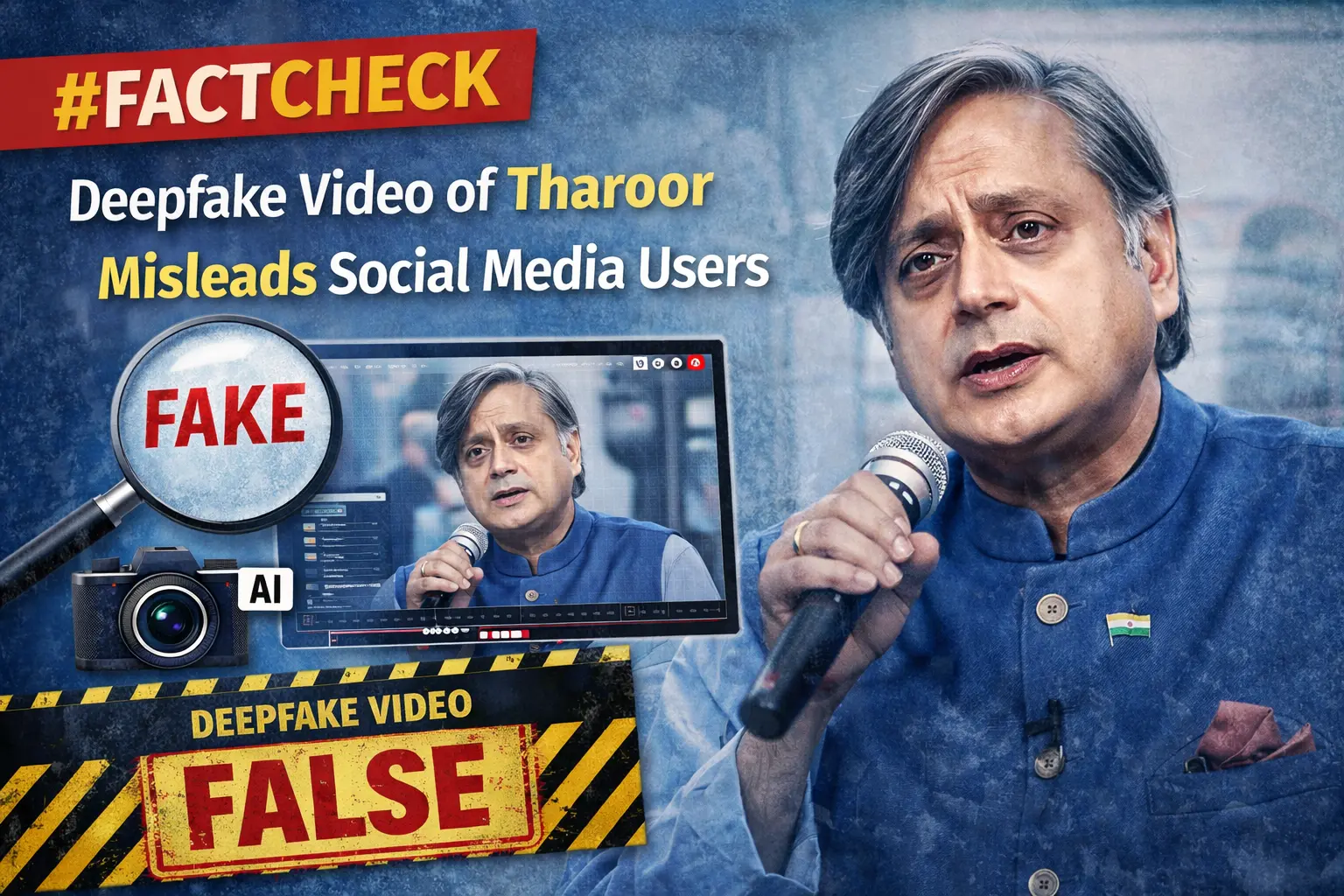
A video of senior Congress leader Shashi Tharoor is widely circulating on social media, allegedly showing him praising Pakistan’s diplomatic stance over the ICC T20 World Cup issue. Many users are sharing the clip believing it to be genuine. However, research by the CyberPeace found the claim to be false. The viral video of Tharoor is a deepfake, and the Congress leader himself has described it as fabricated and fake.
Claim
A Facebook page named “Vok Sports” shared the video on February 11, 2026, claiming that Tharoor praised Pakistan. In the viral clip, he is purportedly heard saying in English that Pakistan’s diplomatic handling of the matter was “brilliant” and that it had outmanoeuvred the Indian cricket board, adding that good diplomacy could make a weak nation appear powerful.
The video was widely shared by social media users as authentic. (Archive links and post details provided.)
Fact Check
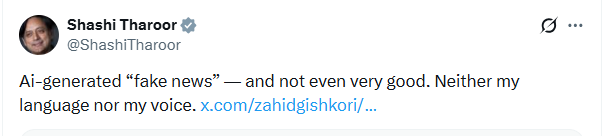
To verify the claim, we first scanned Tharoor’s official X (formerly Twitter) handle. We found a post dated February 12 in which he responded to a Pakistani journalist who had shared the video. Tharoor stated that the clip was AI-generated “fake news,” adding that neither the language nor the voice in the video was his.
A reverse image search using Google Lens led the Desk to a video uploaded on February 10, 2026, by India Today on its official YouTube channel. The visuals in this original video exactly matched those seen in the viral clip showing Tharoor speaking to the media. However, upon analysing the original footage, we found that Tharoor was speaking in Hindi about the controversy surrounding the T20 World Cup. He stated that politics should not be mixed with cricket or sports and did not praise Pakistan or the Pakistan Cricket Board at any point. This indicates that the audio in the viral clip had been manipulated and replaced. In the original video, Tharoor said that politicians should conduct politics separately, diplomats should handle diplomacy, and cricket players should focus on the game, expressing hope that cricket would move forward with the match.
- https://www.youtube.com/watch?v=GkA1mLlAT8Q&t=3s

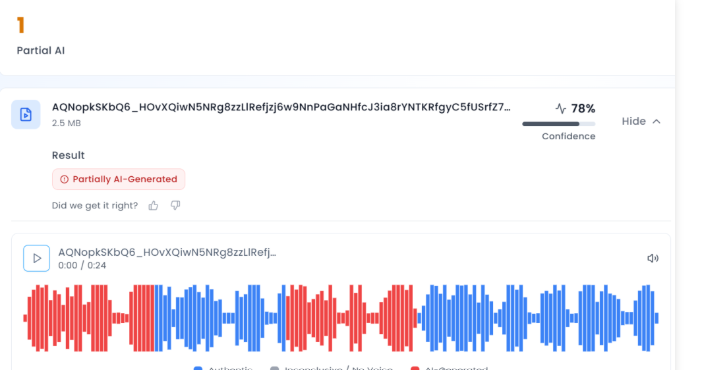
To further verify the authenticity of the video, several AI detection tools were used. Analysis through Aurigin.ai suggested a 78 percent probability that the audio in the viral clip was AI-generated.
Conclusion
The CyberPeace confirmed that the viral video is a deepfake. Tharoor did not praise Pakistan’s diplomatic stance during the T20 World Cup controversy, and the circulating clip has been digitally manipulated.
