
#FactCheck-PM Narendra Modi’s Viral Statement Linking His Father to Netaji Subhash Chandra Bose is Fake
Executive Summary
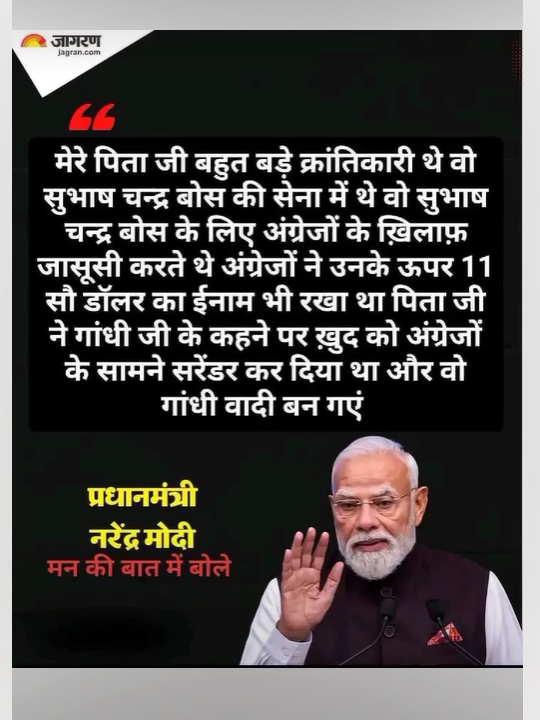
A fabricated graphic designed to look like a Dainik Jagran postcard is viral on social media. The viral post claims that Prime Minister Narendra Modi made a statement regarding his father, alleging that he was part of Netaji Subhash Chandra Bose's army and spied against the British. The post further claims that his father later surrendered on Mahatma Gandhi's advice and became a Gandhian. Research by the CyberPeace Research Wing has revealed that this claim is entirely fake and misleading. There is no record or evidence of PM Modi ever making such a statement, and the viral postcard has been digitally altered.
The Claim
An Instagram user shared the viral graphic claiming that PM Modi stated his father was associated with Netaji Subhash Chandra Bose's army, worked as a spy against the British, and later surrendered on Mahatma Gandhi's advice to become a follower of his ideology. https://www.instagram.com/reels/DZ7BAHdP5u , https://archive.ph/wip/7ajAK
Fact Check
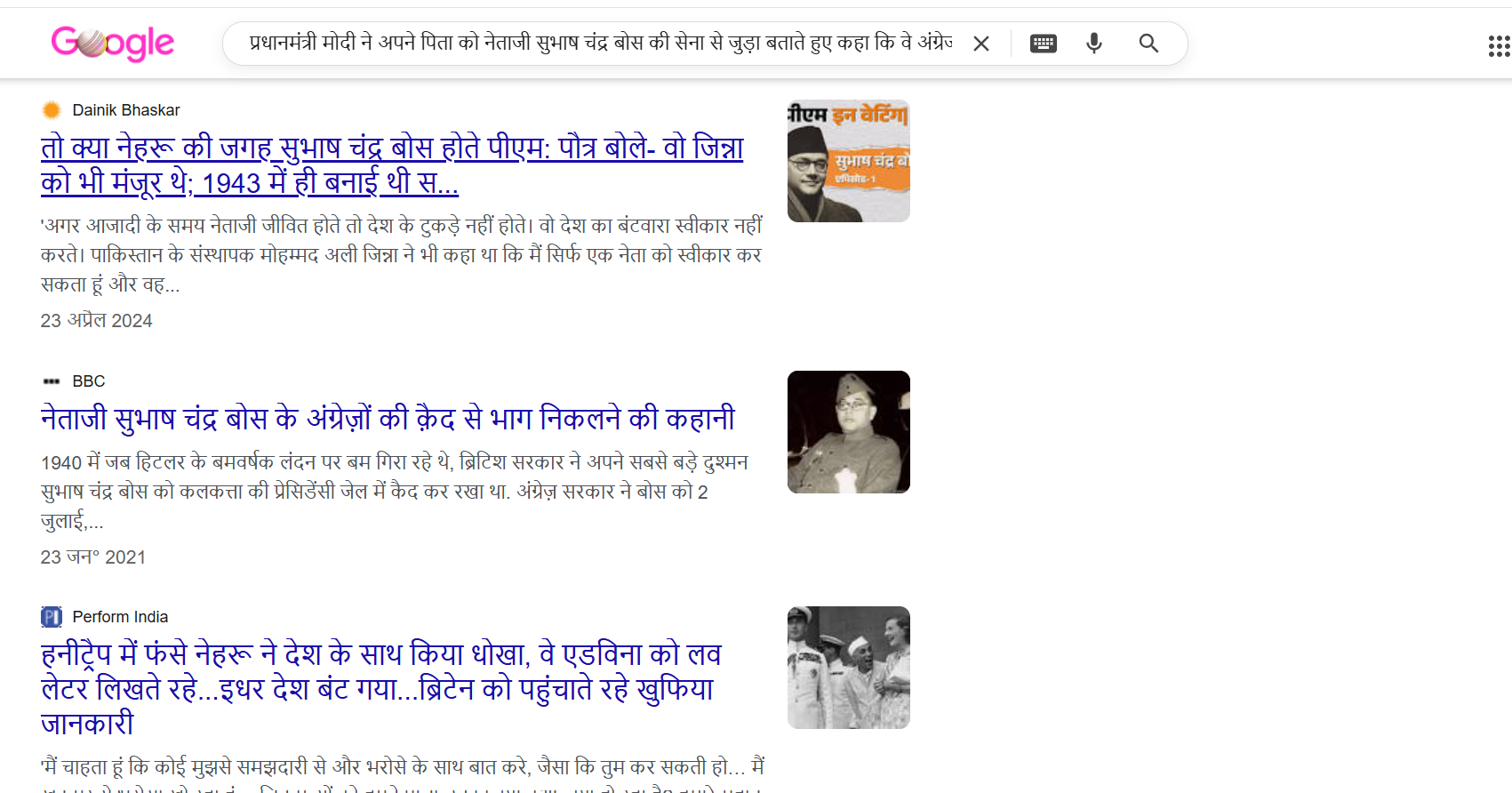
A thorough Google keyword search was conducted using relevant terms, but no credible news reports or official sources were found to back up the viral claim.
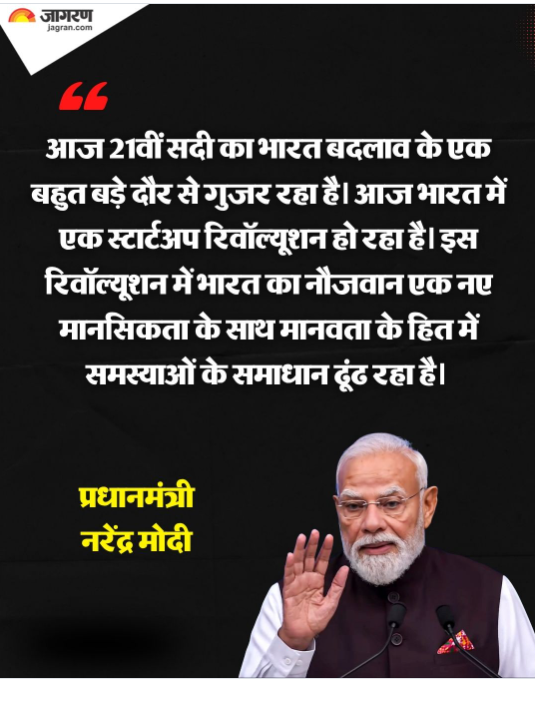
During the research, the original, authentic postcard published by Dainik Jagran was located. The original post actually quoted PM Modi speaking about India's startup ecosystem. Today, 21st-century India is going through a massive phase of transformation. A startup revolution is taking place in India today. In this revolution, the youth of India, with a fresh mindset, are finding solutions to problems for the welfare of humanity." https://www.instagram.com/p/DZkRUY2n2hi/
Conclusion
The research confirms that Prime Minister Narendra Modi never made any statement linking his father to Netaji Subhash Chandra Bose or Mahatma Gandhi's surrender advice. The viral image circulating on social media is morphed and edited to spread misinformation.

Related Blogs

Introduction
It’s a proud moment for Indians that India will host the G- 20 administration, which will bring the world’s 20 largest profitable nations together on a single platform during the post-economic recovery and the Russia- Ukraine conflict, which has increased geopolitical pressures among nations over the last many times and made the G- 20 a precedence of nations. With this administration, India has to make cybersecurity precedence, as the security and integrity of the critical structure and digital platforms are top precedence in 2023. The necessity for a secure cyberspace is pivotal given the exponential increase in the volume and kind of cyber-attacks, particularly to crucial structures the most recent illustration is the ongoing interruption at New Delhi’s All India Institute of Medical lores caused by a ransomware assault. It has been observed that the mode of attacks are more sophisticated and targets communication structure, critical structure, transport systems, and especially the information technology sector and fiscal system.
The structure that enables the delivery of government services to be more effective. As a result,cyber-secured critical structures and digital public forums are necessary for public security, bettered governance, and, most importantly, maintaining people’s trust. The G20 can be enhanced and contribute towards securing digital public platforms and the integrity of the critical structure. This time, in 2023, digital security is the top precedence.
G20 cybersecurity enterprises and politic sweat
The emphasis on cybersecurity was maintained throughout the Italian and Indonesian regulations in 2021 and 2022, independently, by emphasizing the significance of cyberspace during Digital Economy Working Group addresses. Specifically, under the Indonesian Presidency, the prominent cybersecurity focus was clear in the recent Bali Leaders’ protestation, which noted, among other effects, the significance of fighting misinformation juggernauts and cyber attacks, as well as guaranteeing connectivity structure security. The cyber incident report by the Financial Stability Board on carrying further uniformity in cyber incident reporting In 2016, a G20 digital task force was created under the Chinese administration to understand digital technology issues. Under the Saudi administration, the cybersecurity gap at the G20 was bridged by addressing the issues of MSMs. India has also refocused on the significance of creating secure, secure, and stronger-friendly digital platforms.
G20- India’s digital invention alliance( G-20-DIA) a cyber-secure Bharat
- Under India’s administration, the G20’s Digital Economy Working Group is led by the Ministry of Electronics and Information Technology( MeitY, DEWG).
- The Ministry concentrated on three major areas during India’s G20 administration digital skill development, digital public structure, and cyber security.
- The EWG’s DIA and Stay Safe Online enterprise further the ideal of lesser digital metamorphosis by guaranteeing a safe and creative cyber terrain. They want to offer a smooth and secure delivery of public services.

The G20 Digital Innovation Alliance
(G20- DIA) strives to find, admit, and encourage the relinquishment of innovative and poignant digital technologies produced by invited G20 startups and-member governments.
- These technologies must meet humanity’s conditions in six crucial areas husbandry, health, education, finance, secure digital structure, and indirect frugality.
- The inventions created around these motifs will be supported by the Digital Public Goods structure, allowing them to be espoused encyclopedically, closing the digital gap and icing sustainable and indifferent growth.
- The G20 Digital Innovation Alliance( G20- DIA) conference will be held on the perimeters of the Digital Economy Working Group( DEWG) meeting in Bengaluru.
- Top-nominated entrepreneurs from each order will present their ideas to a worldwide community of investors, instructors, pots, and other stakeholders at this event.
India’s” Stay Safe Online crusade”
The” Stay Safe Online” crusade attempts to raise mindfulness about the significance of remaining safe in the online world amid our adding reliance on it. With the fast expansion of the technical terrain and the growing number of internet druggies in India, new difficulties are arising. The Stay Safe Online crusade aims to educate individuals about cyber pitfalls and how to avoid them. The time-long crusade will target children, women, scholars, and aged citizens, as well as individuals with disabilities, preceptors, and government officers in particular. It’ll be done in Hindi, English, and indigenous languages to reach a larger followership. It’ll distribute mindfulness information in infographics, short pictures, cartoon stories, and so on through extensively employed social media platforms and other channels. The primary stakeholders will be government agencies, civil societies, and NGOs.
Conclusion
To wind up, it can be said that cyber security has become the most essential part of transnational affairs. As India hosts the G20 administration in 2023, the docket relating to cybersecurity gains a global stage, where cyber-related issues are addressed and honored encyclopedically, and nations can combat these issues; also, India aims to raise cyber mindfulness among its citizens.

Executive Summary:
After the reported attacks by Israel and the United States on Iran, a video allegedly showing footballer Cristiano Ronaldo has been widely circulated on social media. In the clip, Ronaldo appears to be holding a Palestinian flag and chanting “Free Palestine.” Several users are sharing the video with the claim that Ronaldo waved the Palestinian flag and raised “Free Palestine” slogans after the death of Iran’s Supreme Leader Ali Khamenei. However, a research by CyberPeace found that the claim is false. The viral clip does not depict a real event and has been generated using artificial intelligence. The fabricated video is being shared online with misleading claims.
Claim
An Instagram user “ham_313_ka_admi” shared the viral video on March 2, 2026. The text on the video reads: “Cristiano Ronaldo waved the Palestinian flag after Khamenei’s death. Mashallah. Free Palestine.”
Fact Check:
To verify the claim, we searched Google using relevant keywords but found no credible news reports supporting the viral claim. We also reviewed the official social media accounts of Cristiano Ronaldo, where no such video or statement was posted. This raised suspicion that the clip might be AI-generated.
To further examine the video, we analyzed it using AI detection tools. The tool Hive Moderation indicated a 99.9% probability that the video was created using artificial intelligence.
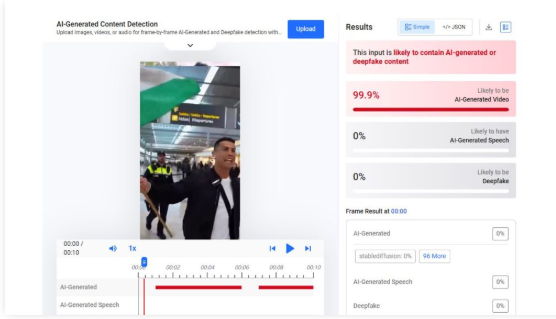
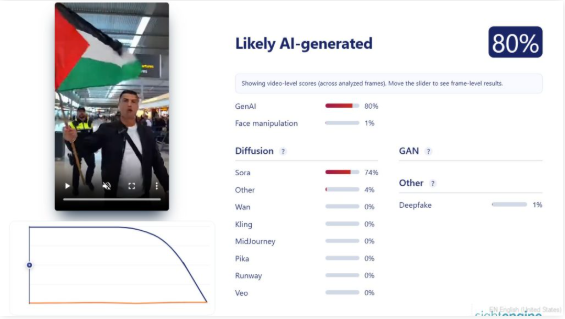
We also analyzed the footage using the Sightengine AI detection tool. The results suggested an 80% likelihood that the video was AI-generated. The tool also indicated that the clip may have been created using Sora, an AI video-generation tool.
Conclusion
The viral video claiming that Cristiano Ronaldo waved the Palestinian flag and chanted “Free Palestine” after the death of Ali Khamenei is AI-generated. It does not depict a real incident and is being shared with a misleading claim.
%20(2).webp)
Introduction
Digitalization in India has been a transformative force, India is also marked as the second country in the world in terms of active internet users. With this adoption of digitalization and technology, the country is becoming a digitally empowered society and knowledge-based economy. However, the number of cyber crimes in the country has also seen a massive spike recently with the sophisticated cyber attacks and manipulative techniques being used by cybercriminals to lure innocent individuals and businesses.
As per recent reports, over 740,000 cybercrime cases were reported to the I4C, in the first four months of 2024, which raises serious concern on the growing nature of cyber crimes in the country. Recently Prime Minister Modi in his Mann Ki Baat address, cautioned the public about a particular rising cyber scam known as ‘digital arrest’ and highlighted the seriousness of the issue and urged people to be aware and alert about such scams to counter them. The government has been keen on making efforts to reduce and combat cyber crimes by introducing new measures and strengthening the regulatory landscape governing cyberspace in India.
Indian Cyber Crime Coordination Centre
Indian Cybercrime Coordination Centre (I4C) was established by the Ministry of Home Affairs (MHA) to provide a framework and eco-system for law enforcement agencies (LEAs) to deal with cybercrime in a coordinated and comprehensive manner. I4C handles the ‘National Cyber Crime Reporting Portal’ (https://cybercrime.gov.in) and the 1930 Cyber Crime Helpline. Recently at the Indian Cyber Crime Coordination Centre (I4C) Foundation Day celebration, Union Home Minister Amit Shah launched the Cyber Fraud Mitigation Centre (CFMC), Samanvay platform (Joint Cybercrime Investigation Facilitation System), 'Cyber Commandos' program and Online Suspect Registry as efforts to combat the cyber crimes, establish cyber resilence and awareness and strengthening capabilities of law enforcement agencies.
Regulatory landscape Governing Cyber Crimes
Information Technology Act, 2000 (IT Act) and the rules made therein, the Intermediary Guidelines, Digital Personal Data Protection Act, 2023 and Bhartiya Nyay Sanhita, 2023 are the major legislation in India governing Cyber Laws.
CyberPeace Recommendations
There has been an alarming uptick in cybercrimes in the country highlighting the need for proactive approaches to counter these emerging threats. The government should prioritise its efforts by introducing robust policies and technical measures to reduce cybercrime in the country. The law enforcement agencies' capabilities must be strengthened with advanced technologies to deal with cyber crimes especially considering the growing sophisticated nature of cyber crime tactics used by cyber criminals.
The netizens must be aware of the manipulative tactics used by cyber criminals to target them. Social media companies must also implement robust measures on their respective platforms to counter and prevent cyber crimes. Coordinated approaches by all relevant authorities, including law enforcement, cybersecurity agencies, and regulatory bodies, along with increased awareness and proactive engagement by netizens, can significantly reduce cyber threats and online criminal activities.
References
- https://www.statista.com/statistics/1499739/india-cyber-crime-cases-reported-to-i4c/#:~:text=Cyber%20crime%20cases%20registered%20by%20I4C%20India%202019%2D2024&text=Over%20740%2C000%20cases%20of%20cyber,related%20to%20online%20financial%20fraud
- https://www.deccanherald.com/india/parliament-panel-to-examine-probe-agencies-efforts-to-tackle-cyber-crime-illegal-immigration-3270314
- https://pib.gov.in/PressReleaseIframePage.aspx?PRID=2003158
