
#FactCheck: Old Protest Video Misleadingly Shared as Police Action During BRICS Summit
Executive Summary
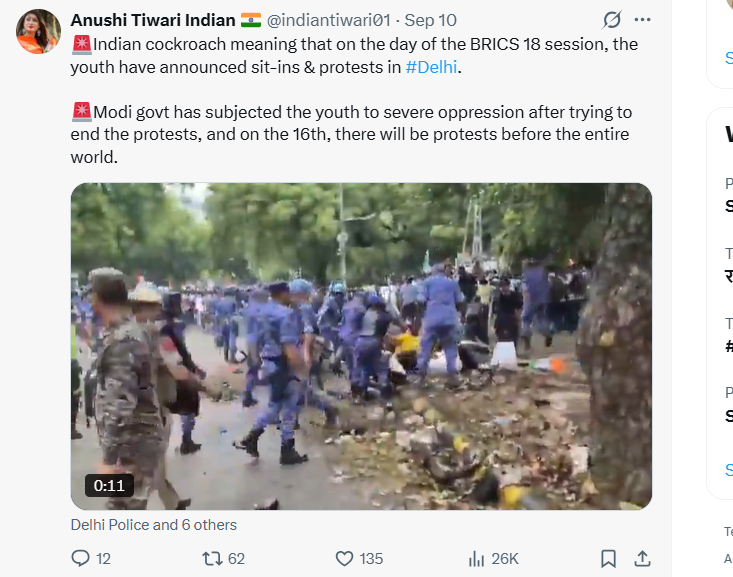
A video is being shared on social media with the claim that youths have announced sit-ins and protests in Delhi during the 18th BRICS Summit. The video is being shared with allegations that the Modi government attempted to suppress the protests and subjected the youth to severe oppression. It also claims that a large-scale protest would be held in Delhi on September 16. The video shows a large gathering of people, with police personnel seen taking action against them.
Research by CyberPeace found that the video is old and has been available online since at least July 20, 2026. According to earlier sources, the video shows police action against CJP protesters who were marching towards Parliament on July 20, 2026. Meanwhile, the 18th BRICS Summit is being held in New Delhi on September 12 and 13, 2026. Therefore, the old video is being misleadingly linked to police action during the BRICS Summit.
Claim:
A video is being shared on social media with the claim that youths have announced sit-ins and protests in Delhi during the 18th BRICS Summit and that the Modi government subjected them to severe oppression while attempting to suppress the protests.
https://x.com/indiantiwari01/status/2098058633825411110?s=20
FactCheck:
To verify the authenticity of the viral claim, we conducted a reverse image search of the keyframes from the video. During the search, we found the same video on the YouTube channel ANKIT'S PEACEFUL MIND, where it was published on July 20, 2026.
https://www.youtube.com/watch?v=uPsm9jueugY
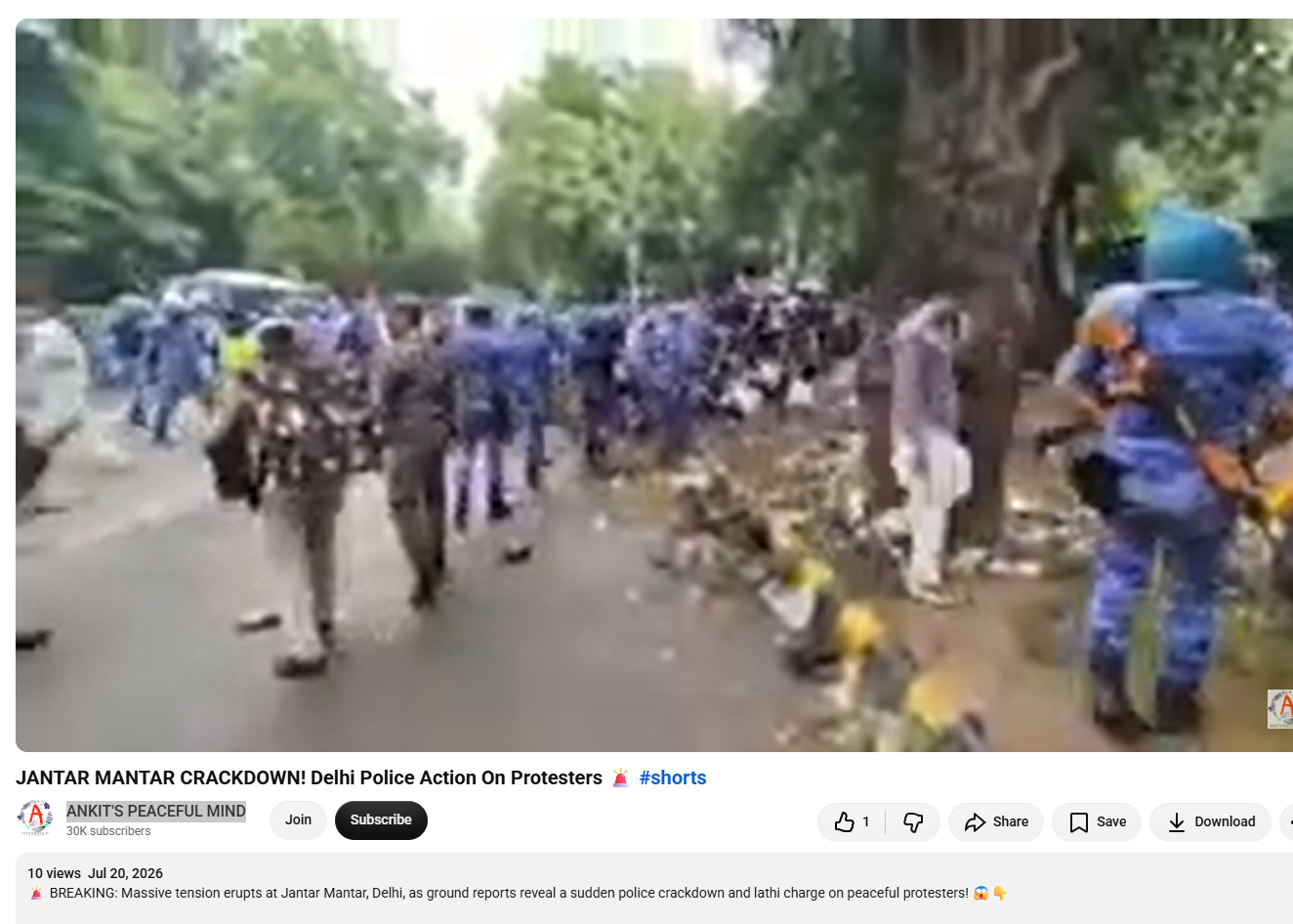
According to the video description, a tense situation unfolded at Jantar Mantar in Delhi, where police took action against people holding a peaceful protest and resorted to a lathi charge. The post claimed that thousands of youths, students and others had gathered in Delhi in support of environmental activist Sonam Wangchuk and the ongoing Ladakh movement. The situation reportedly escalated, leading to clashes between the protesters and the large number of security personnel deployed at the site.
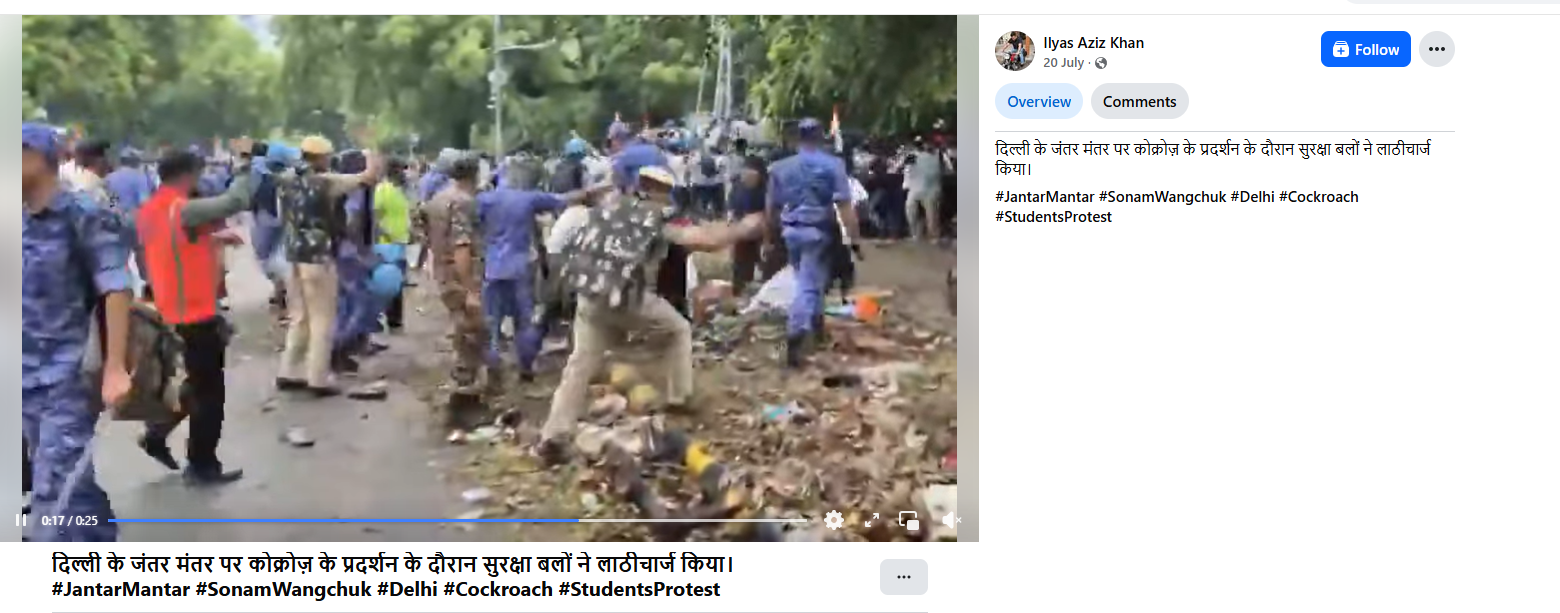
As part of the next step in our research, we found the same video on a Facebook page, where it was published on July 20. The video was also shared with the claim that security forces had resorted to a lathi charge against protesters during a CJP demonstration at Jantar Mantar in Delhi.
https://www.facebook.com/watch/?v=1583508539869113
Conclusion:
Our research found that the video being shared on social media is not related to any incident during the BRICS Summit. The video is old and has been available online since at least July 20, 2026. According to earlier sources, the video shows police action against CJP protesters who were marching towards Parliament on July 20. Meanwhile, the 18th BRICS Summit is being held in New Delhi on September 12 and 13, 2026. Therefore, sharing the old video as footage of police action against protesters during the BRICS Summit is misleading.

Related Blogs

Executive Summary
A video of a young woman without arms performing gymnastics has been widely shared on social media. In the video, the woman can be seen without both arms, yet she performs several difficult gymnastics moves with remarkable ease and confidence. Her impressive physical balance and practice have left viewers amazed. Users sharing the video are praising not only her talent but also her courage, confidence and determination. Many users are also describing it as an inspiring example of overcoming challenges and pursuing one's dreams with unwavering spirit.
However, a probe by the Research Wing of CyberPeace found that the video being shared on social media is not genuine but was generated using Artificial Intelligence (AI). The video shows the young woman performing difficult gymnastics moves with apparent ease, but a technical analysis revealed signs of AI-generated content. Therefore, sharing the video as a real incident or as the performance of an actual gymnast is misleading.
Claim:
A video circulating on social media shows a young woman without arms performing gymnastics, with users hailing her courage and determination.
https://www.facebook.com/reel/1793394471856936

Fact Check
During our research of the viral video, we first conducted a reverse image search of its different keyframes. We also searched Google using relevant keywords. However, we could not find the viral video in any credible media report.
During the reverse search, we found the same viral video on the Instagram account @arenaathletics1, where it was posted on September 13. The post also carries an “AI-generated content” label. The video has garnered more than 20 million views. Several users in the comment section have also identified the video as AI-generated.

We then checked the viral video using the AI detection tool Hive Detect. In its analysis, the tool identified the video as likely AI-generated, assigning it a 93.1 percent score for AI-generated content.
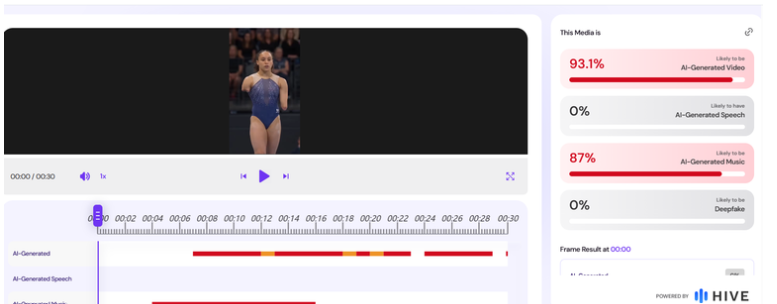
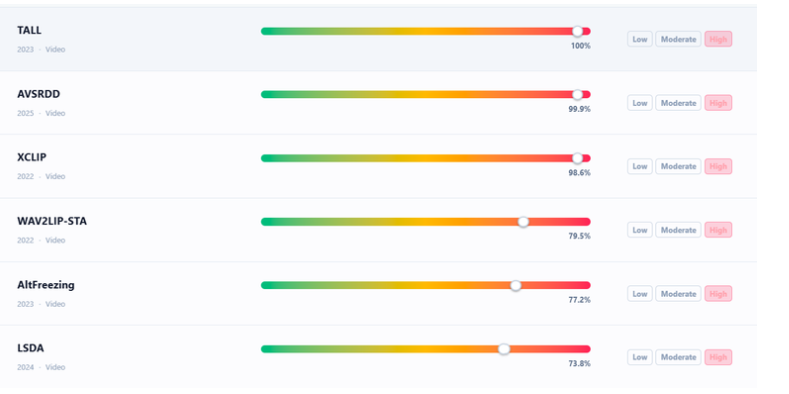
Additionally, six detectors on Deepfake-O-Meter identified the viral video as AI-generated with a high probability.
Conclusion
Our research found sufficient evidence to establish that the viral video showing a young woman without arms performing gymnastics is not genuine. The video was found on an Instagram account carrying an “AI-generated content” label, while analysis using AI detection tools, including Hive Detect and Deepfake-O-Meter, also indicated a high likelihood of AI-generated content. Therefore, the video is AI-generated and is being misleadingly shared as a real-life performance, rather than an authentic video of a gymnast.
Introduction
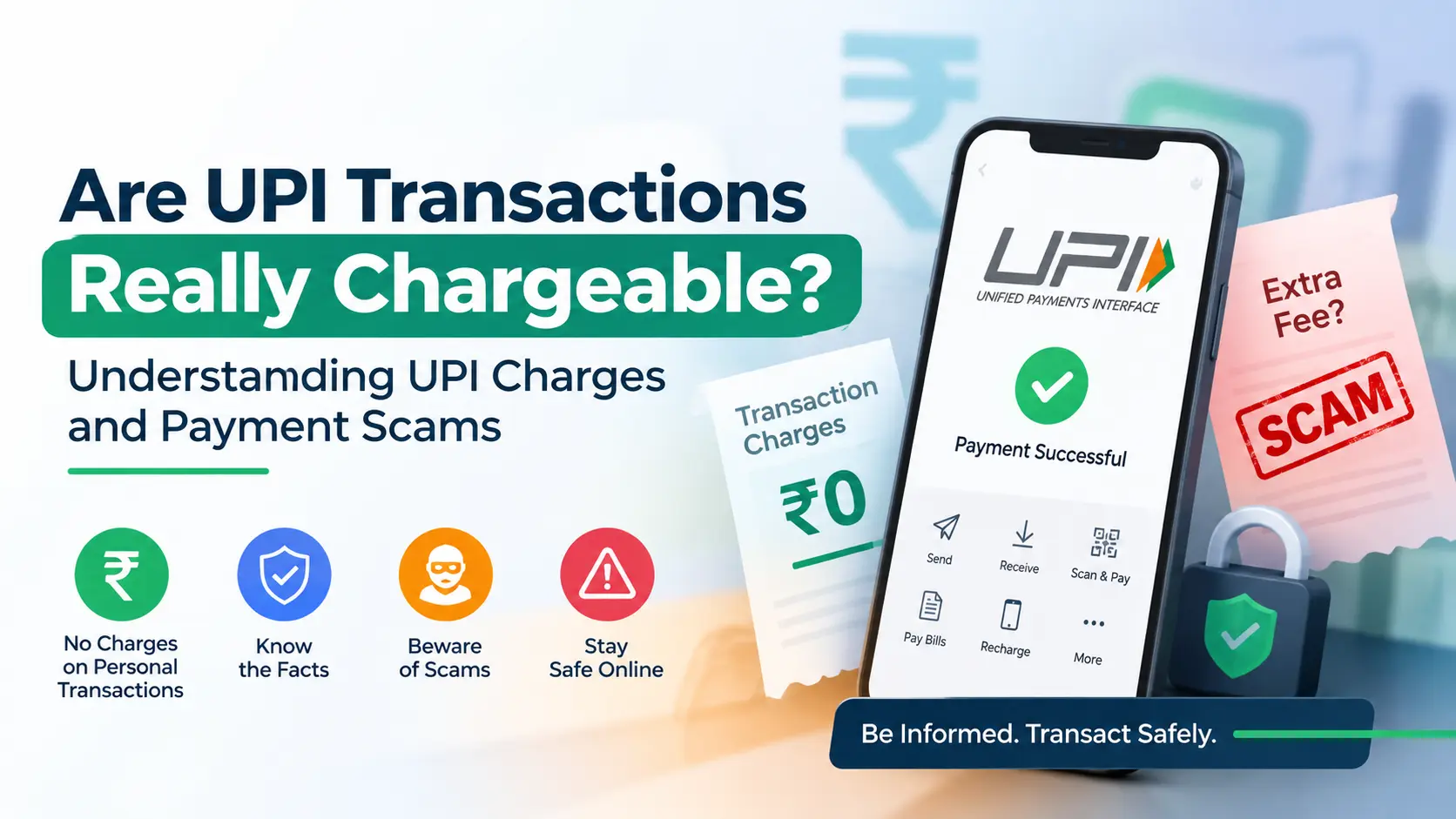
For most of us, UPI is part of daily routine: scan a QR code for chai, send money to family, split a bill, or pay a shopkeeper in seconds. That convenience is exactly why a message saying “UPI charges are coming” can cause confusion. Scammers can use that uncertainty through fake calls, WhatsApp messages, payment links, or edited screenshots. This blog keeps the topic simple: what MDR means, which UPI payments remain free, how scammers misuse the word “fee”, and what a reader should do when a payment request does not look right.
News in Focus: Why the “UPI Charge” Headline Needs Context
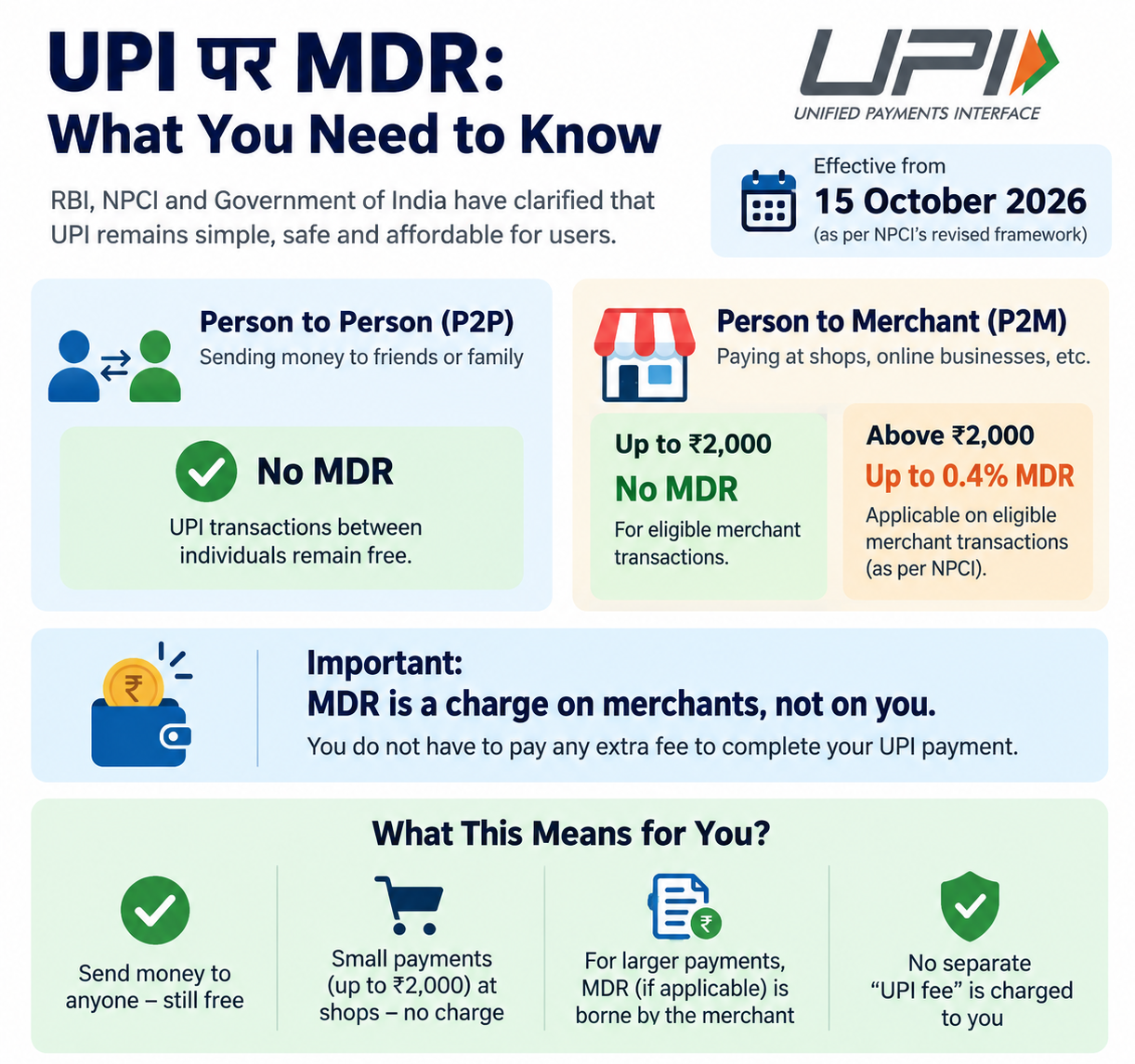
On 15 September 2026, the Ministry of Finance clarified the revised UPI framework. From 15 October 2026, a 0.4% MDR will apply to specified P2M transactions above ₹2,000, subject to the published conditions and caps. P2P transfers remain free, payments to merchants up to ₹2,000 remain free, and the government states that MDR is an ecosystem charge, not a customer fee. Banks are to ensure it is not passed on to customers. [1]
So, What Does This Mean for an Everyday User?
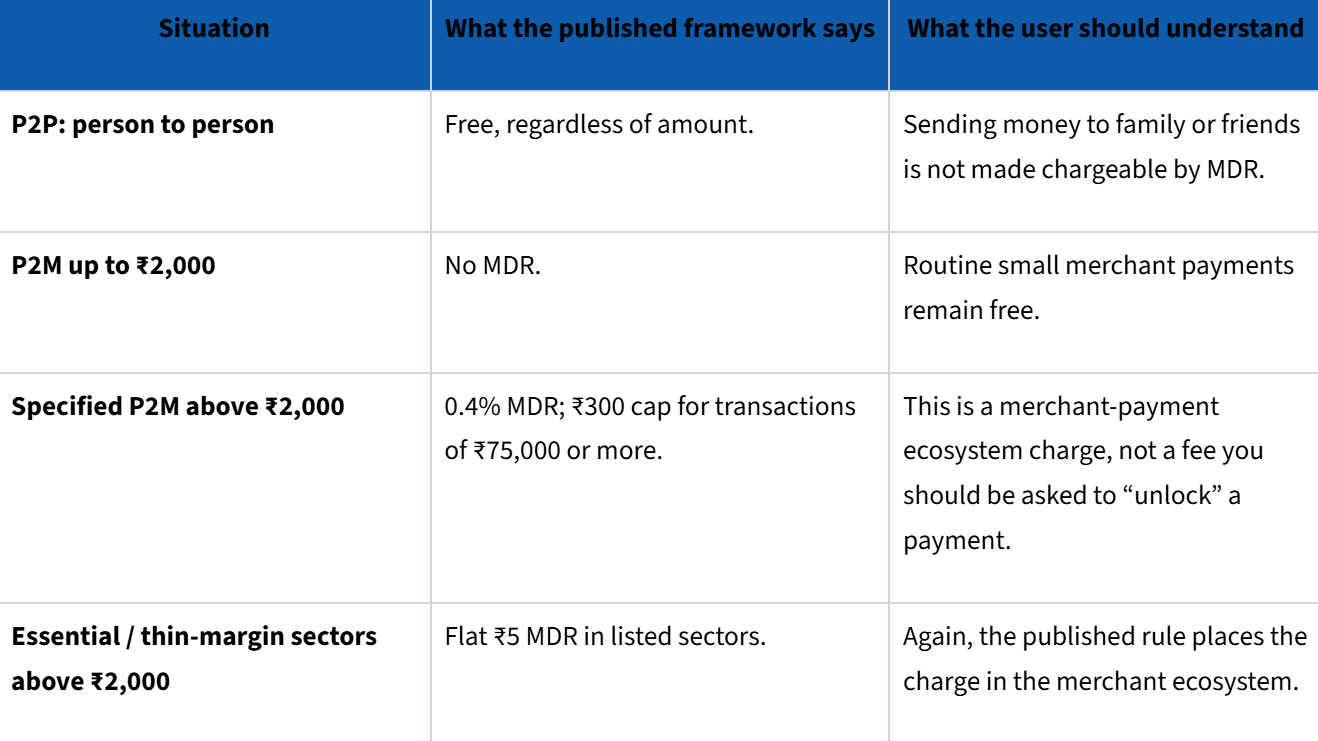
The important distinction is between a legitimate MDR rule and a scammer’s request for money. A message saying “pay ₹99 to release your UPI transaction” is not made genuine by mentioning NPCI, a bank, a government notice, or a news report.
A Related Cyber-Fraud Headline: Do Not Mix Two Different Issues
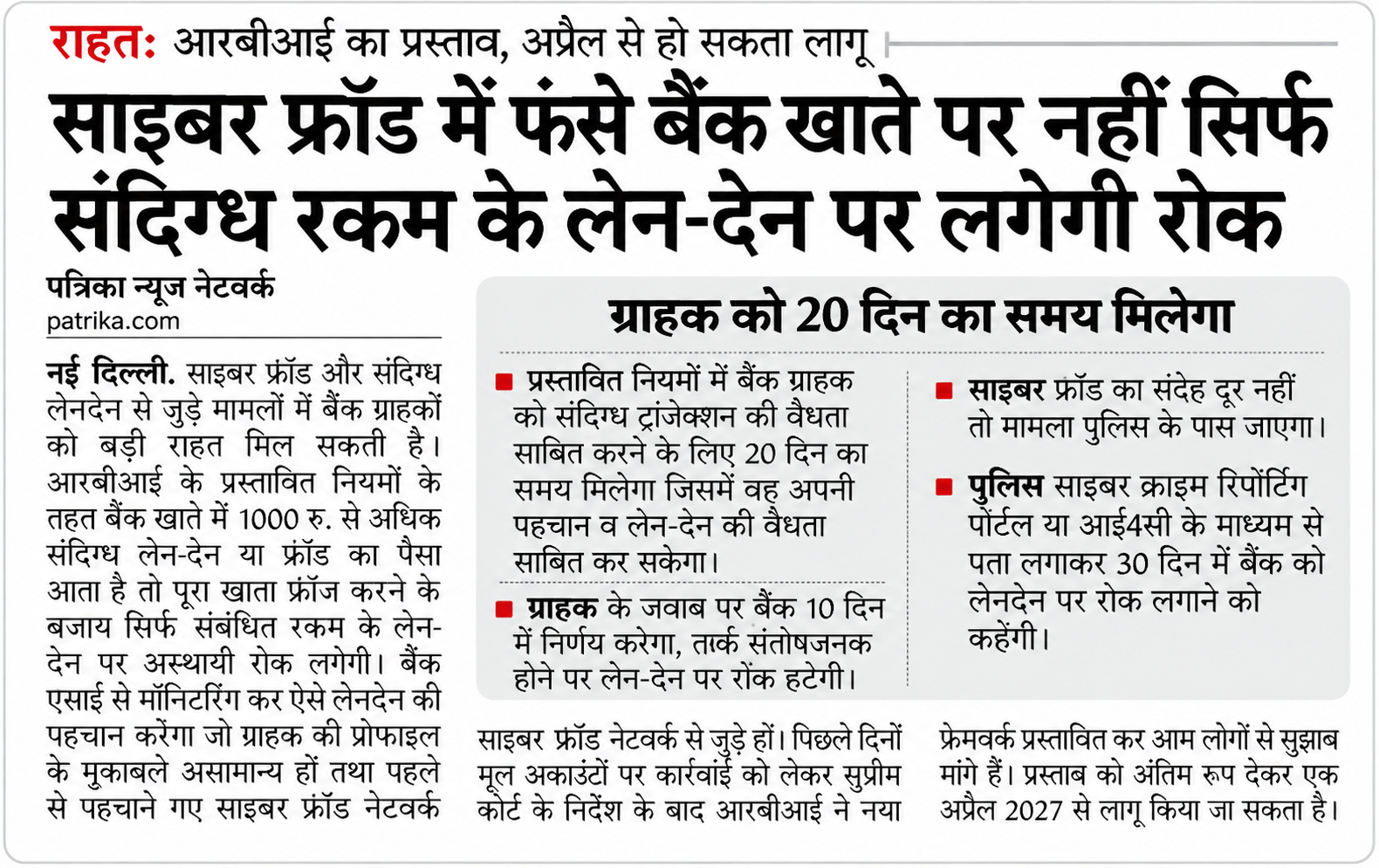
The supplied newspaper clipping discusses a separate cyber-fraud issue involving suspicious transactions and bank accounts linked to cybercrime. It is useful context, but it should not be read as proof that ordinary UPI users must pay a special “verification” or “release” fee. Separating the two issues helps prevent panic and misinformation.
Where Scammers Use the Confusion
“Pay a small fee to receive money”
A simple red flag is the demand for an upfront fee: “Your refund is ready, pay a processing fee first.” NPCI warns that scanning a QR code and entering a UPI PIN is for making a payment, not for receiving money or cashback. [2]
Fake payment success screens
Another common trick targets merchants: a fraudster shows a convincing “Payment Successful” screenshot and collects goods before the seller checks the account. In August 2026, Delhi Police reported a case involving allegedly fake or manipulated Paytm/UPI screenshots, followed by an attempt to gain access to victims’ mobile phones. [3] In September, police in Jharsuguda and Basti reported similar fake-confirmation cases; the Basti case involved a fabricated SBI YONO screenshot. [4][5]
“Your UPI is blocked because of new charges”
Scammers also borrow the language of genuine policy announcements. The caller creates urgency, claims your account is restricted, and asks you to install an app, share an OTP, approve a collect request, or transfer a small amount “for verification”. A real headline does not make an unexpected payment request genuine.
The Five-Second UPI Safety Check
Puse Before You Pay
WHO is asking? WHAT exactly are they asking you to do? WHERE did the payment request appear? WHEN did the request arrive? WHY would you need to pay to receive money? Verify the transaction in your own bank or UPI app. Merchants should not rely on a screenshot shown by a customer. Customers should not treat a QR code, collect request, or incoming message as proof that they are “receiving” money. Read the final authorisation screen before entering the UPI PIN. NPCI says users should never share the PIN and that bank customer support will not ask for it. [6]
If You Think You Have Been Scammed
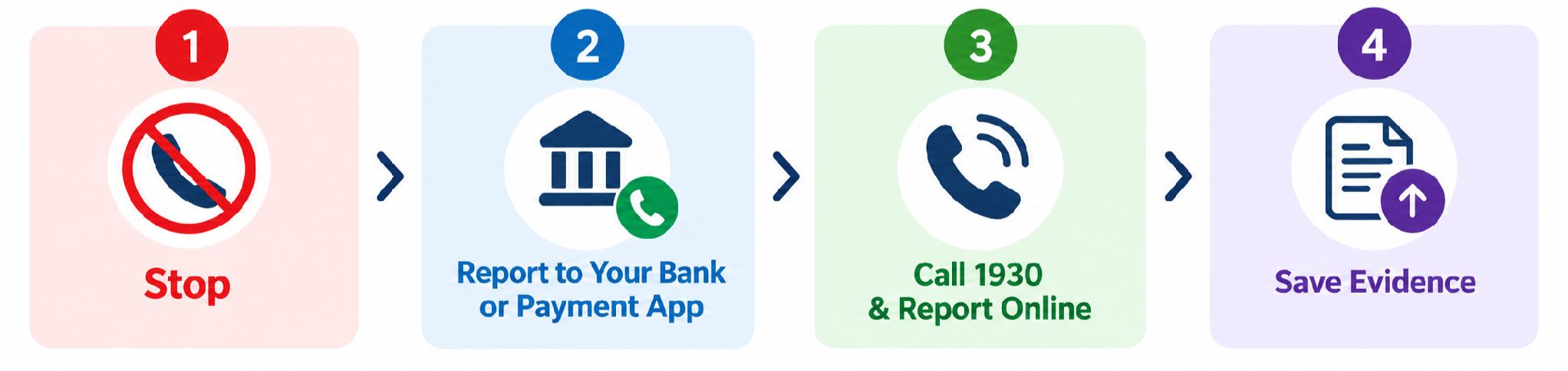
- Stop engaging with the suspected caller, account, or chat. Do not send another payment to “fix” the first one.
- Contact your bank or the relevant payment app using an official support channel and report the transaction.
- For financial cyber fraud in India, call 1930 as soon as possible and report the incident through the National Cyber Crime Reporting Portal. The official portal identifies 1930 as the helpline for immediate reporting of financial cyber fraud. [7]
- Keep the transaction ID, screenshots, phone numbers, messages, and dates. Do not delete useful evidence.
Conclusion
The safest way to understand the UPI charge discussion is to slow the headline down. Yes, a revised MDR framework has been announced for certain merchant transactions above ₹2,000 from 15 October 2026. But that does not make a P2P transfer subject to a “release fee”, and it does not make an unsolicited ₹49, ₹99, or ₹199 demand legitimate. Check the transaction type, confirm where the charge sits, verify the payment in your own app or bank account, and never disclose your UPI PIN. Digital safety is not about fearing every payment; it is about recognising when someone asks you to leave the normal payment process.
Remember
UPI convenience should never require blind trust. Verify the sender, verify the screen, verify the transaction.
References
[1] Press Information Bureau, Ministry of Finance, “UPI Continues to Remain Free for Peer to Peer Transactions and 96% of Merchant Transactions,” 15 September 2026. https://www.pib.gov.in/PressReleseDetailm.aspx?PRID=2310586
[2] National Payments Corporation of India (NPCI), “Fraud Awareness,” current guidance on fake cashback links, QR codes and UPI PIN safety. https://www.npci.org.in/fraud-awareness
[3] Hindustan Times / PTI, “Delhi Police arrest man in ₹30.81 lakh cyber fraud involving fake UPI payments,” 26 August 2026. https://www.hindustantimes.com/cities/delhi-news/delhi-police-arrest-man-in-rs-30-81-lakh-cyber-fraud-involving-fake-upi-payments-101787734051785.html
[4] The Times of India, “Two held for fake UPI payment fraud in Jharsuguda,” 11 September 2026. https://timesofindia.indiatimes.com/city/bhubaneswar/two-held-for-fake-upi-payment-fraud-in-jharsuguda/articleshow/134072823.cms
[5] The Times of India, “Basti: 2 held for fake UPI payment scam,” 13 September 2026. https://timesofindia.indiatimes.com/articleshow/134154561.cms
[6] NPCI, “UPI - Frequently Asked Questions,” UPI PIN and transaction-confirmation guidance. https://www.npci.org.in/what-we-do/upi/faqs
[7] Government of India, National Cyber Crime Reporting Portal, financial cyber fraud reporting guidance and helpline 1930. https://www.cybercrime.gov.in/
[8] Moneycontrol, “Don't trust the screenshot: How to spot a fake UPI payment,” 6 August 2026. https://www.moneycontrol.com/news/business/personal-finance/don-t-trust-the-screenshot-how-to-spot-a-fake-upi-payment-13996275.html
Image note: Both visuals were supplied by the requester. Figure 1 was cross-checked against the Ministry of Finance/PIB clarification cited in Reference [1].

Introduction
In the face of escalating cybercrimes in India, criminals are adopting increasingly inventive methods to deceive victims. Imagine opening your phone to the notification of an incoming message from a stranger with a friendly introduction - a beginning that appears harmless, but is the beginning of an awful financial nightmare. "Pig Butchering '' scam—an increasingly sophisticated form of deception that's gaining more widespread popularity. Unlike any other scams, this one plays a long game, spinning a web of trust before it strikes. It's a modern-day financial thriller happening in the real world, with real victims. "pig butchering" scam, involves building trust through fake profiles and manipulating victims emotionally to extort money. The scale of such scams has raised concerns, emphasising the need for awareness and vigilance in the face of evolving cyber threats.
How does 'Pig Butchering' Scam Work?
At its core, the scam starts innocuously, often with a stranger reaching out via text, social media, or apps like WhatsApp or WeChat. The scammer, hiding behind a well-crafted and realistic online persona, seeks to forge a connection. This could be under the pretence of friendship or romance, employing fake photos and stories to seem authentic. Gradually, the scammer builds a rapport, engaging in personal and often non-financial conversations. They may portray themselves as a widow, single parent, or even a military member to evoke empathy and trust. Over time, this connection pivots to investment opportunities, with the scammer presenting lucrative tips or suggestions in stocks or cryptocurrencies. Initially, modest investments are encouraged, and falsified returns are shown to lure in larger sums. Often, the scammer claims affiliation with a profitable financial institution or success in cryptocurrency trading. They direct victims to specific, usually fraudulent, trading platforms under their control. The scam reaches its peak when significant investments are made, only for the scammer to manipulate the situation, block access to the trading platform, or vanish, leaving the victim with substantial losses.
Real-Life Examples and Global Reach
These scams are not confined to one region. In India, for instance, scammers use emotional manipulation, often starting with a WhatsApp message from an unknown, attractive individual. They pose as professionals offering part-time jobs, leading victims through tasks that escalate in investment and complexity. These usually culminate in cryptocurrency investments, with victims unable to withdraw their funds, the money often traced to accounts in Dubai.
In the West, several cases highlight the scam's emotional and financial toll: A Michigan woman was lured by an online boyfriend claiming to make money from gold trading. She invested through a fake brokerage, losing money while being emotionally entangled. A Canadian man named Sajid Ikram lost nearly $400,000 in a similar scam, initially misled by a small successful withdrawal. In California, a man lost $440,000, succumbing to pressure to invest more, including retirement savings and borrowed money. A Maryland victim faced continuous demands from scammers, losing almost $1.4 million in hopes of recovering previous losses. A notable case involved US authorities seizing about $9 million in cryptocurrency linked to a global pig butchering scam, showcasing its extensive reach.
Safeguarding Against Such Scams
Vigilance is crucial to prevent falling victim to these scams. Be skeptical of unsolicited contacts and wary of investment advice from strangers. Conduct thorough research before any financial engagement, particularly on unfamiliar platforms. Indian Cyber Crime Coordination Center warns of red flags like sudden large virtual currency transactions, interest in high-return investments mentioned by new online contacts, and atypical customer behaviour.
Victims should report incidents to various Indian and foreign websites and the Securities Exchange Commission. Financial institutions are advised to report suspicious activities related to these scams. In essence, the pig butchering scam is a cunning blend of emotional manipulation and financial fraud. Staying informed and cautious is key to avoiding these sophisticated traps.
Conclusion
The Pig Butchering Scams are one of the many new breeds of emerging cyber scams that have become a bone of contention for cyber security organisations. It is imperative for netizens to stay vigilant and well-informed about the dynamics of cyberspace and emerging cyber crimes.
References
- https://www.sentinelassam.com/more-news/national-news/from-impersonating-cbi-officers-to-pig-butchering-cyber-criminals-get-creative
- https://hiindia.com/from-impersonating-cbi-officers-to-pig-butchering-cyber-criminals-get-creative/
