
#FactCheck: Old Modi-Xi Jinping Video Shared With Misleading BRICS Summit Claim
Executive Summary
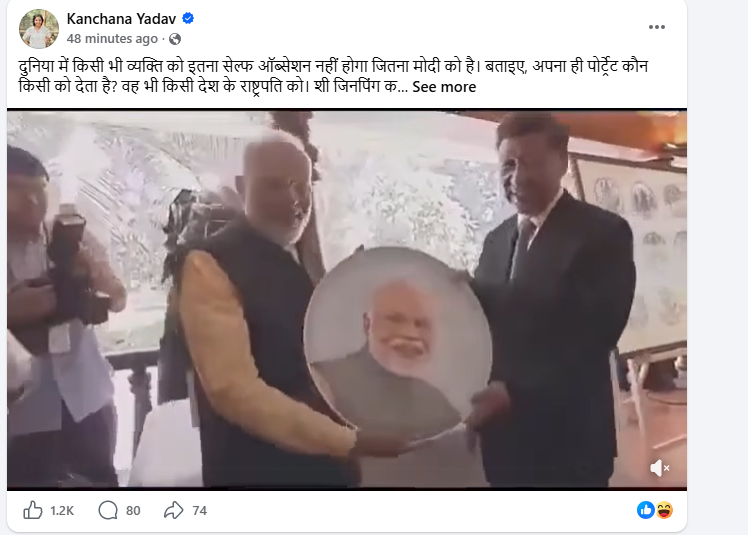
A video of Prime Minister Narendra Modi and Chinese President Xi Jinping is being shared on social media. The video is being shared with the claim that during the BRICS Summit, Prime Minister Modi gifted Xi Jinping a portrait featuring his own image. The post also takes aim at Prime Minister Modi based on this claim. Research by CyberPeace found that the video dates back to October 2019 and shows an exchange of gifts between Prime Minister Narendra Modi and Chinese President Xi Jinping. On the concluding day of the Mamallapuram Summit, Prime Minister Modi gifted Xi Jinping a large, handcrafted silk shawl. In return, Xi Jinping presented Prime Minister Modi with a porcelain souvenir bearing his portrait.
Claim:
A video of Prime Minister Narendra Modi and Chinese President Xi Jinping is being shared on Facebook with the claim that during the BRICS Summit, Prime Minister Modi gifted Xi Jinping a portrait of himself.
https://www.facebook.com/watch/?v=1109664078425193
Fact Check
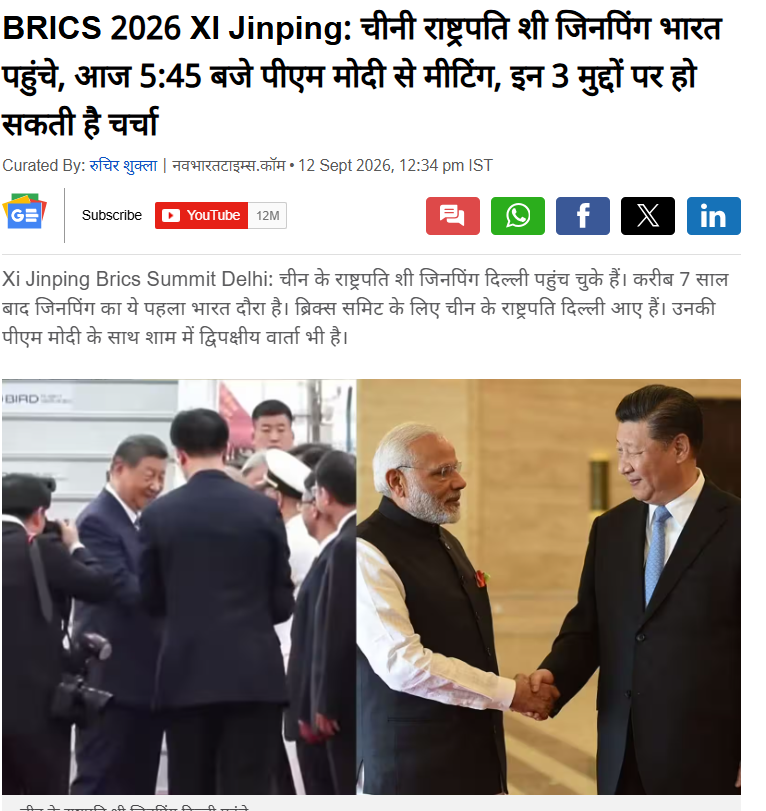
To verify the authenticity of the viral claim, we conducted a Google search using relevant keywords. During the search, we found a report published by Navbharat Times on September 12, 2026. According to the report, Chinese President Xi Jinping has arrived in Delhi to attend the 18th BRICS Summit. His aircraft landed at Palam Airport at around noon on Saturday. This is his first visit to India in nearly seven years.The report further stated that Prime Minister Narendra Modi and Xi Jinping were scheduled to meet at around 5 pm on the same day. This made it clear during our research that the video being shared on social media is not from the current BRICS Summit and is an old video.
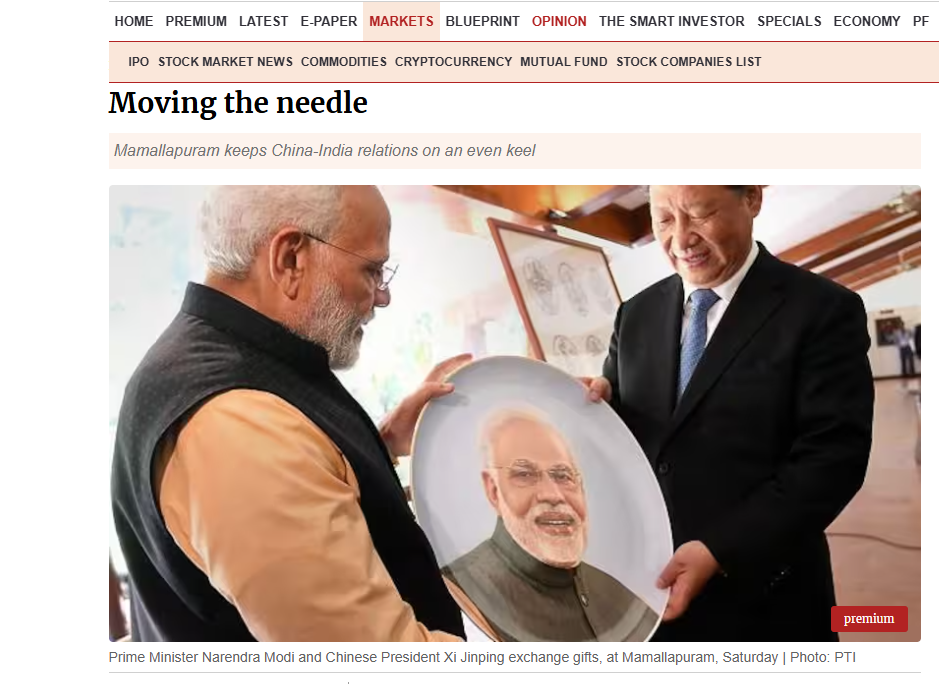
To verify the authenticity of the viral claim, we conducted a reverse image search of the keyframes from the video. During the search, we found a report published by Business Standard on October 13, 2019, which contained visuals from the viral video. According to the report, Chinese President Xi Jinping left for Nepal on Saturday aboard an Air China aircraft, concluding his second informal summit with Prime Minister Narendra Modi, which signalled a recalibration of bilateral ties. Xi spent around 24 hours in India.During his visit, he travelled to Mamallapuram near Chennai and held informal talks with Prime Minister Narendra Modi. Delegation-level talks between the two countries were also held.
https://www.business-standard.com/article/opinion/moving-the-needle-119101300820_1.html
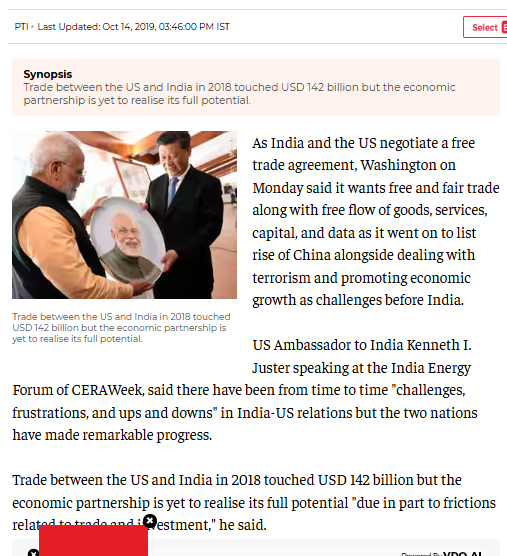
In the next step of our research, we found a report published by Economic Times on October 14, 2019. The report also contained the same visuals from the viral video and presented them in their original context.
Conclusion
The evidence gathered during our research makes it clear that the video being shared on social media is not from the BRICS Summit, but is an old video from 2019. This confirms that the video is being shared on social media by taking it out of its original context and falsely linking it to the BRICS Summit. Therefore, the claim that the viral video is from the BRICS Summit is misleading.

Related Blogs
Introduction
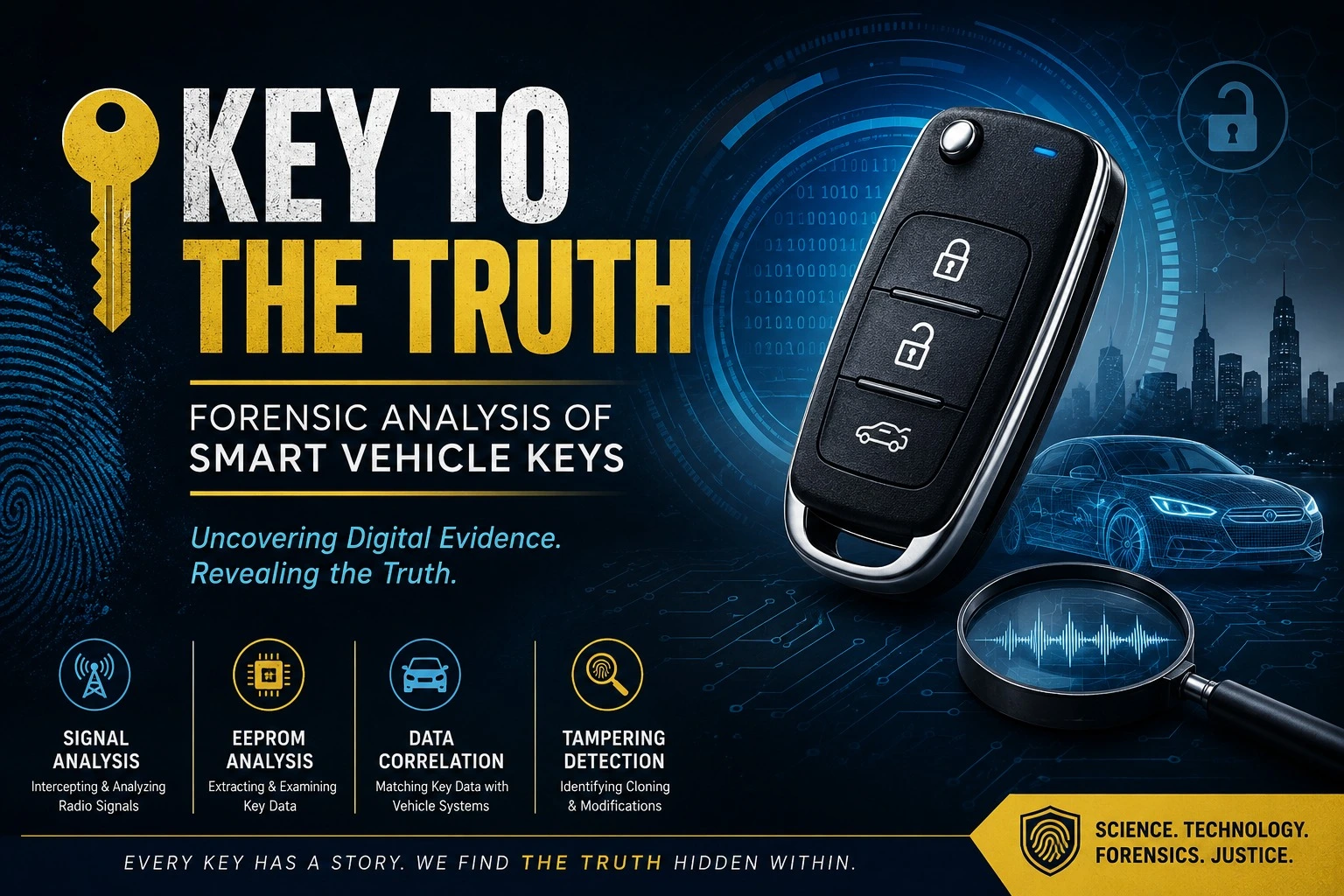
With the modernization of automobiles, so have the methods employed by criminals who seek to commit thefts. The old method of smashing a car window or bypassing an engine lock is no longer prevalent. Modern car thieves employ cloning techniques for keys and digital signals, and sophisticated methods to commit crimes without any traces left behind. In an era where intelligence is crucial, the forensic examination of car keys has become an indispensable tool for investigations, providing clues buried within ordinary car keys.
The Need for Car Key Forensics Today
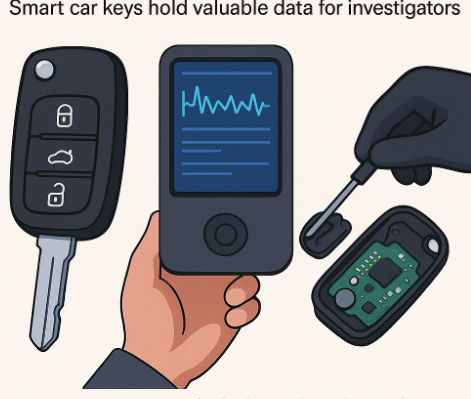
Daily, thousands of cars worth millions are being hacked or stolen around the globe. The shocking thing is that most of these hacks do not have any sign of breakage or forced entry. It is because the thieves use vulnerabilities in the wireless key systems to unlock the vehicles without leaving any trace behind. Therefore, car-key forensics has now become more important than ever before.
Forensic Value of Smart Key
The smart key is not just comprised of locking and unlocking features for vehicles. Actually, it operates as a miniature computer within the key itself. Information such as pairing records, frequency of use, or the last instance that the key was used to unlock something could be contained in smart keys, thus offering evidence of any criminal activity conducted using these items.
Patterns of Vehicle Theft
Through the examination of the chip in a key, one will be able to establish whether the key was legally programmed or had been tampered with by some other means. Such forensics become more important when trying to detect and monitor any car theft rings, which employ cloning machines or software.
Confirming Ownership and Authenticity
In cases involving insurance claims or fraud, smart key data can help confirm whether the person making a claim actually owned or used the car during the incident. It’s digital proof that goes beyond what paperwork or statements can show.
Strengthening Legal Cases
When brought to court, data doesn’t lie. A properly handled forensic examination of a car key can provide hard evidence — the kind that holds up under questioning and supports or disproves claims with complete accuracy. In many cases, this small device becomes the most reliable witness in the investigation.
A Real-Life Example
Consider the following scenario: An expensive SUV is stolen from a parking lot secured with security surveillance. No one is captured on camera and there is no sign of forced entry. After days of investigation, the police end up arresting a suspect with a smart key.
During forensic analysis of the smart key, it is revealed that:
- The transponder has an ID number which can be matched against the immobilizer installed in the vehicle.
- The rolling code counter has been incremented in such a way that the date corresponds with the report of theft of the vehicle.
- The extracted information helps match the pair timestamp of the key with the particular make and model of the vehicle.
All this from a single piece of evidence – the smart key.
Inside a Smart Key: Where the Data Lives
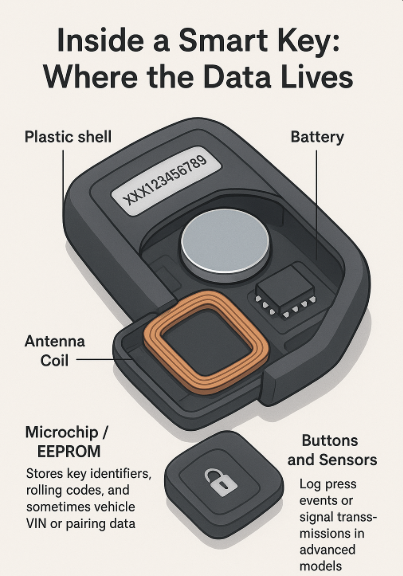
An average smart key is not only a remote but also a multi-level set of data carriers:
- Plastic Shell– could include serial numbers and information on the manufacture.
- Battery – helps calculate the time of using the key or detect any modifications.
- Antenna Coil – sends encrypted information to the immobilizer of a car. Draw the picture of this element.
- Microchip / EEPROM – holds key identification code, rolling code, VIN number, and/or other information of the vehicle.
- Buttons / sensors – could record any pressing or transmission actions in some cases.
All the little devices above, once properly studied via forensics software, provide valuable information.
How the Investigator Uncovers the Truth
In relation to investigating the true story about a vehicle, it is no different than handling other forms of digital evidence, as forensic analysts treat the car key in the same way. It is nothing more than an encrypted device in your hands, and using special techniques, they are able to reveal the information contained within the device.
Some of the methods used by modern forensic laboratories include:
1. Intercepting Radio Signals
Any intelligent key transmits radio signals to communicate with a car. Specialists employ advanced antennas and radio frequency (RF) analysers to catch and analyse them. This way, it is possible to understand the interaction between the key and the car – how often was it used, what kind of authentication procedure takes place, and if the signal matches the car’s one or has been forged somehow.
2. Checking Out the Key’s Brain (Analysis of EEPROM)
There is always a special chip on the key that is responsible for its activity. The chip contains an important memory module (EEPROM – Electrically Erasable Programmable Read-Only Memory), which holds various data, including key IDs and rolling codes. It can be carefully retrieved via advanced tools. Thus, it is possible to determine whether somebody tried to tamper with the key.
3. The Correlation between the Key and Car’s Information
The information stored inside the key will not be used separately since investigators will correlate the key's data with that of the vehicle itself (ECU and immobilizer). If the two kinds of information coincide, the investigation may conclude that the key belongs to the vehicle. Otherwise, this may mean either cloning or tampering.
4. Identifying the Tampering and Cloning Evidence
As was mentioned above, thieves sometimes resort to using unlawful programming devices for duplicating smart car keys. In order to detect possible cloning, experts examine the key using various diagnostic devices to find out whether the keys were modified by changing the encryption code, frequencies, and hardware itself.
At the end of the process, some kind of miracle occurs because of the following: all actions committed with this particular key become documented, recorded inside the device itself. Even if someone tries to hide anything or remove any information concerning this particular incident, there will always remain some data.
Car Key Forensics in the Future
The evolution of cars to connect with other devices and adopt self-driving technologies requires new investigative methods to be used for vehicle-related crimes. Advanced car keys or smartphone apps that replace physical keys will likely incorporate biometric authentication, cloud integration, or blockchain records of key activity in the near future.
Such improvements will pose several threats and offer many benefits:
- Artificial intelligence tools can determine if the car key is cloned based on its behaviour pattern.
- Blockchain validation ensures all key-related activities are recorded and cannot be altered.
- Cyber-forensic protocols will become increasingly necessary for investigating criminal activity related to vehicles.
Car key forensics technology will not only allow solving crimes but may become instrumental in crime prevention.
Conclusion
A car key in this era is more than just an unlocking mechanism; it is a miniature data storage facility, which can yield information about the user, intentions, and access rights. The more cars become technologically advanced, the more the examination of smart keys becomes necessary as part of correlating physical evidence with digital investigation. It clearly indicates how small objects such as keys can play pivotal roles in cracking cases.
Introduction
One of the biggest gaming populations in the world today is found in India. Every day, hundreds of millions of young Indians engage with streaming services, immersive digital content, mobile games and e-sports ecosystems. Yet, despite this massive scale of participation, India remains largely absent from the global conversation on original gaming intellectual property. Although the nation produces very few globally significant gaming worlds of its own, it consumes games on an astonishing scale. This paradox highlights a more serious structural issue with the gaming discourse in India. Our national conversation around gaming often begins and ends with regulation i.e., online betting, taxation, fantasy gaming legality, addiction and compliance. Although these worries are valid they have inadvertently obscured a much more crucial query: is India creating a gaming industry or is it just regulating a gaming market? Various subject-matter experts have expressed their views on this issue, like Shailendra Vikram Singh Former Deputy Secretary (Cyber & Information Security), Ministry of Home Affairs who is of the opinion,
“I believe India’s gaming story presents a unique paradox. While we are one of the world’s largest gaming markets, we have yet to fully realize gaming’s potential as a strategic pillar of the AVGC vision. Much of the conversation remains focused on regulation and consumption, whereas the larger opportunity lies in creation, innovation, and global competitiveness.
In my view, gaming should be recognized as a strategic creative and digital industry. It has the potential to generate high-value employment, foster indigenous intellectual property, and strengthen capabilities in design, storytelling, animation, immersive technologies, and emerging digital skills. Beyond its economic value, gaming can also serve as a powerful platform for education, skilling, and public engagement.
I also see gaming as an important medium for bringing India’s rich cultural heritage, historical narratives, and diverse traditions to global audiences through interactive storytelling. As digital experiences increasingly shape how younger generations learn, engage, and understand the world, culturally rooted content can become a source of both creative expression and national soft power.
At the same time, sustainable growth must be built on trust. Strong safeguards for cybersecurity, child protection, user safety, responsible gaming, and data governance are essential to creating a resilient and trusted ecosystem.
To realize the full promise of the AVGC vision, I believe India must aspire to be more than a large gaming market. A nation of gamers must ultimately become a nation of game creators.”
The Misplaced Focus of Regulating Bodies
A country with one of the world’s oldest storytelling civilizations should not remain from the world’s most influential storytelling medium. Examining how other nations viewed gaming as a strategic cultural enterprise highlights the disparity even further. Japan turned gaming into a tool of soft power by exporting global icons like Mario, Pokémon and Zelda. Along with K-pop and digital culture, South Korea incorporated gaming into its larger cultural export sector. With businesses like Tencent and games like Genshin Impact and Black Myth: Wukong, China is now aggressively marketing gaming as a geopolitical and technological impact ecosystem.
Through The Witcher, Poland even showed how local folklore based storytelling may achieve cultural relevance on a worldwide scale. In contrast, India contributes very little to the global gaming imagination despite having one of the strongest civilisational storytelling traditions in human history, including the Mahabharata, Ramayana, Buddhist Narratives, tribal folklore, Indic mythology and regional legends.
Artificial Intelligence and Lore of Lost Opportunities
The arrival of artificial intelligence now changes this equation dramatically. AI is lowering the barriers to creativity in ways previously unimaginable. For character design, procedural storytelling, localisation, environment creation, NPC interactions, voice synthesis and animation pipelines, independent producers and small studios can now use generative AI. Agile creative ecosystems are increasingly able to accomplish what formerly required enormous infrastructure and production teams. This offers India a once-in-a-lifetime chance to overcome conventional developmental barriers in the gaming sector. India may become a global center for AI-assisted storytelling, culturally grounded gaming storylines and scalable independent game production instead of competing just through capital-intensive AAA ecosystems.
The AVGC Promotion Task Force for India’s Digital future explicitly highlighted the significance of intellectual property development, academic integration, skilling and incubation systems. However, India still views gaming more as a compliance industry than as a significant creative economy. Economists use revenue forecasts to discuss gaming. Taxation frameworks are used by policymakers to discuss it. However, narrative ownership, digital culture, creative sovereignty and gaming as a long-term civilisational export are not sufficiently discussed.
Playing Everyone Else’s Game
The actual danger does not lie in the fact India won’t grow into a sizable gaming industry. The change has already taken place. The bigger risk is that, in a global market that is becoming more and more controlled by foreign narratives, foreign engines and foreign platforms, India may permanently remain a consumer ecosystem. Processors and graphic engines won’t be the only factors influencing gaming in the future, cultures that can emotionally engage worlds will also play a significant role. India possesses the depth of civilisation, creative heritage, technical prowess and population size necessary to develop into such a creator economy. It does not, however, have a consistent institutional focus on supporting studios, storytellers, animators and original intellectual property ecosystems.
References
- AVGC Promotion Task Force Report, Government of India
- KPMG India Media & Entertainment Reports
- EY-FICCI Media & Entertainment Industry Reports
- Newzoo Global Games Market Reports
- Lumikai “State of India Gaming” Reports
- UNESCO Reports on Cultural & Creative Industries
- World Economic Forum reports on AI and Creative Economies

Introduction
Today, on the International Day of UN Peacekeepers, we honour the brave individuals who risk their lives to uphold peace in the world’s most fragile and conflict-ridden regions. These peacekeepers are symbols of hope, diplomacy, and resilience. But as the world changes, so do the arenas of conflict. In today’s interconnected age, peace and safety are no longer confined to physical spaces—they extend to the digital realm. As we commemorate their service, we must also reflect on the new frontlines of peacekeeping: the internet, where misinformation, cyberattacks, and digital hate threaten stability every day.
The Legacy of UN Peacekeepers
Since 1948, UN Peacekeepers have served in over 70 missions, protecting civilians, facilitating political processes, and rebuilding societies. From conflict zones in Africa to the Balkans, they’ve worked in the toughest terrains to keep the peace. Their role is built on neutrality, integrity, and international cooperation. But as hybrid warfare becomes more prominent and digital threats increasingly influence real-world violence, the peacekeeping mandate must evolve. Traditional missions are now accompanied by the need to understand and respond to digital disruptions that can escalate local tensions or undermine democratic institutions.
The Digital Battlefield
In recent years, we’ve seen how misinformation, deepfakes, online radicalisation, and coordinated cyberattacks can destabilise peace processes. Disinformation campaigns can polarise communities, hinder humanitarian efforts, and provoke violence. Peacekeepers now face the added challenge of navigating conflict zones where digital tools are weaponised. The line between physical and virtual conflict is blurring. Cybersecurity has gone beyond being just a technical issue and is now a peace and security issue as well. From securing communication systems to monitoring digital hate speech that could incite violence, peacekeeping must now include digital vigilance and strategic digital diplomacy.
Building a Culture of Peace Online
Safeguarding peace today also means protecting people from harm in the digital space. Governments, tech companies, civil society, and international organisations must come together to build digital resilience. This includes investing in digital literacy, combating online misinformation, and protecting human rights in cyberspace. Peacekeepers may not wear blue helmets online, but their spirit lives on in every effort to make the internet a safer, kinder, and more truthful place. The role of youth, educators, and responsible digital citizens has never been more crucial. A culture of peace must be cultivated both offline and online.
Conclusion: A Renewed Pledge for Peace
On this UN Peacekeepers’ Day, let us not only honour those who have served and sacrificed but also renew our commitment to peace in all its dimensions. The world’s conflicts are evolving, and so must our response. As we support peacekeepers on the ground, let’s also become peacebuilders in the digital world, amplifying truth, rejecting hate, and building safer, inclusive communities online. Peace today is not just about silencing guns but also silencing disinformation. The call for peace is louder than ever. Let’s answer it, both offline and online.
