
#FactCheck: 2020 Video of Bridge Collapse in Uttarakhand Falsely Shared as Recent Incident in Pithoragarh
Executive Summary
Social media and some news media platforms are sharing a video claiming that a bridge in Pithoragarh, Uttarakhand, collapsed under the weight of an overloaded truck. The video shows a truck carrying a Poklane machine crossing the bridge. As the bridge comes under heavy pressure, it breaks apart and collapses. Some social media users are sharing the video as a recent incident. CyberPeace Research found that the viral claim is false. The video of an incident from 2020 is being shared to spread misinformation. The Pithoragarh administration has also refuted the viral claim.
Claim:
On October 23, 2026, the Facebook page ‘ibc24.in’ shared a video claiming, “A bridge in Pithoragarh, Uttarakhand, collapsed as soon as an overloaded truck crossed it.”
https://www.facebook.com/IBC24News/posts/1147810721093030/

Fact Check:
To verify the authenticity of the viral video, we first extracted several keyframes from it. During our research, we found the video on India TV’s website, where it was published on June 23, 2020.
https://www.indiatvnews.com/news/india/video-bailey-bridge-collapse-india-china-border-uttarakhand-628661?fbclid=IwY2xjawVMDC9leHRuA2FlbQIxMQBwZG9mBWJyaWQRMXIzWnJrYmxtdFBtWE5JQzRzcnRjBmFwcF9pZBAyMjIwMzkxNzg4MjAwODkyAAEeQNZNUdAfVUAnd0u0wdKgvNdb9iJ0eg_11GGze7i1fxcZKrDmcI4jo1r_JTo_aem_81T2IfyW21S2h1FzzwVoyQ
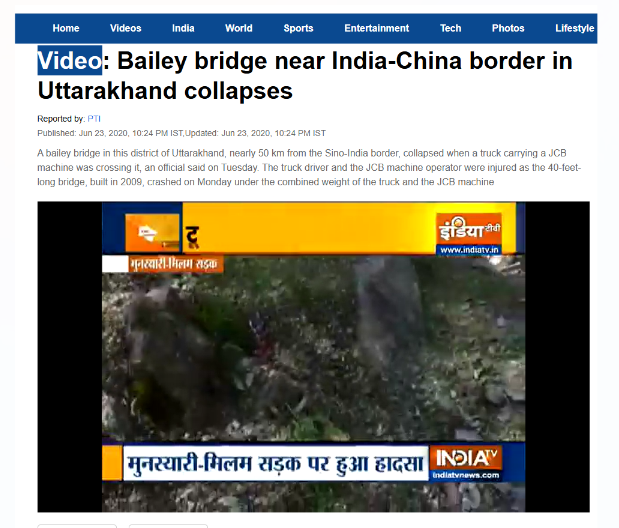
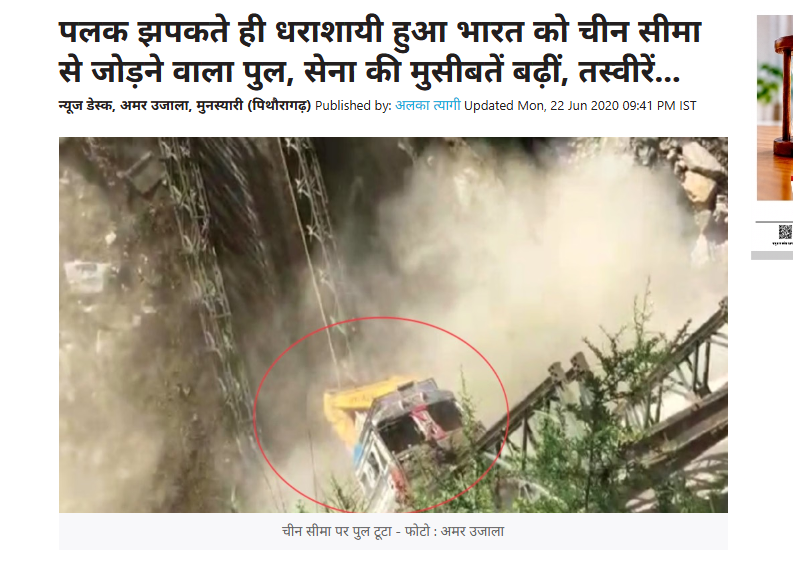
According to India TV’s report, a bridge in Uttarakhand collapsed while a truck carrying an excavator was crossing it. The bridge was built in 2009 and was 40 feet long. As the next step in our research, we found a report published on Amar Ujala’s website on June 22, 2020, carrying similar details about the incident.
https://www.amarujala.com/photo-gallery/dehradun/bridge-broken-on-road-which-connects-india-to-china-see-horrific-visuals
As part of our further research, we checked the X account of Pithoragarh Police Uttarakhand (@PithoragarhPol), where we found a clarification regarding the viral video. On October 22, 2026, Pithoragarh Police refuted the claim, stating that reports circulating on social media about a Bailey bridge near Dhapa Bend in Munsiyari breaking in the middle were fake and misleading.

Conclusion:
Our research found that the viral claim is false. A video of an incident from 2020 is being shared to spread misinformation. The Pithoragarh administration has also refuted the viral claim.

Related Blogs

Smart Wearable devices are designed to track several activities in defined parameters and are increasingly becoming a part of everyday life. According to Markets and Markets Report, the global wearable tech market is projected to reach a staggering USD 256.4 billion by 2026. One of the main areas of use of wearable devices is health, including biomedical research, health care, personal health practices and tracking, technology development, and engineering. These wearable devices often include digital health technologies such as consumer smartwatches that monitor an individual's heart rate and step count, and other body-worn sensors like those that continuously monitor blood glucose concentration.
Wearable devices used by the general population are getting increasingly popular. Health devices like fitness trackers and smartwatches enable continuous monitoring of personal health. Privacy is an emerging concern due to the real-time collection of sensitive data. Vulnerabilities due to unauthorised access or discrimination in case of information being revealed without consent are the primary concerns with these devices. While these concerns are present a lot of related misinformation is emerging due to the same.
While wearable devices typically come with terms of use that outline how data is collected and used, and there are regulations in place such as EU Law GDPR, such regulations largely govern the regulatory compliances on the handling of personal data, however, the implementation and compliances by the manufacturer is a one another aspect which might present the question on privacy protection. In addition, beyond the challenge of regulatory compliance, the rise of myths and misinformation surrounding wearable tech presents a separate issue.
Common Misconceptions About Privacy with Wearable Tech
- With the rapid development and growth of wearable technology their use has been subject to countless rumours which fuel misinformation narratives in the minds of general public. Addressing these misconceptions and privacy concerns requires targeted strategies.
- A prevalent misconception is that they are constantly spying on users. While wearable devices collect users’ data in real time, their vulnerability to unauthorised access is similar to that of a non-wearable device. The issue is of consent when it comes to wearable technology because it gives the ability to record. If permissions are not asked when a person is being recorded then the data is accessible to external entities.
- There is a common myth that wearable tech is surveillance tool. This is entirely a conjecture. These devices collect the user data with their prior consent and have been created to provide them with real-time information, most commonly physical health information. Since users choose the information shared, the idea of wearable tech serving as a surveillance tool is unfounded.
- Another misconception about wearable tech is that it can diagnose medical conditions. These devices collect real-time health data, such as heart rate or activity levels, they are not designed for medical diagnosis. The data collected may not always be accurate or reliable for clinical use to be interpreted by a healthcare professional. This is mainly because the makers of these devices are not held to the safety and liability standards that medical providers are.
- A prevalent misconception is that wearable tech can cure health issues, which is simply untrue. Wearable tech devices are essentially tracking the health parameters that a user sets. It in no way is a cure for any health issue that one suffers from. A user can manage their health based on the parameters they set on the device such as the number of steps that they walk, check on the heart rate and other metrics for their mental satisfaction but they are not a cure to treat diseases. Wearable tech acts as alerts, notifying users of important health metrics and encouraging proactive health management.
Addressing Privacy and Health Concerns in Wearable Tech
Wearable technology raises concerns for privacy and health due to the colossal amount of personal data collected. To address these, strong data protection measures are essential, ensuring that sensitive health information is securely stored and shared only with consent. Providing users with control over their data is one of the ways to build user trust. It includes enabling them to opt in, access, or delete the data in question. Regulators should establish clear guidelines, ensuring wearables ensure the compliances with data protection regulations like HIPPA, GDPR or DPDP Act, whichever is applicable as per the jurisdiction. Furthermore, global standards for data encryption, device security, and user privacy should be implemented to mitigate risks. Transparency in data usage and consistent updates to software security are also crucial for protecting users' privacy and health while promoting the responsible use of wearable tech.
CyberPeace Insights
- Making informed decisions about wearable tech starts with thorough research. Start by reading reviews and comparing products to assess their features, compatibility, and security standards.
- Investigate the manufacturer’s reputation for data protection and device longevity. Understanding device capabilities is crucial. One should evaluate whether the wearable meets their needs, such as fitness tracking, health monitoring, or communication features. Consider software security and updates, and data accuracy when comparing options. Opt for devices that offer two-factor authentication for an additional layer of security.
- Check the permissions requested by the accompanying app; only grant access to data that is necessary for the device's functionality. Always read the terms of use to understand your rights and responsibilities regarding the use of the device. Review and customize data-sharing settings for better control to prevent unauthorised access.
- Staying updated on the tech is equally important. A user should follow the advancements in wearable technology be it regular security updates, or regulatory changes that may affect privacy and usability. This ensures getting tech that aligns with user lifestyle while meeting privacy and security expectations.
Conclusion
Privacy and Misinformation are key concerns that emerge due to the use of wearable tech designed to offer benefits such as health monitoring, fitness tracking, and personal convenience. It requires a combination of informed decision-making by users and stringent regulatory oversight to overcome the issues that emerge due to misinformation about these devices. Users must ensure they understand the capabilities and limitations of their devices, from data accuracy to privacy risks. Additionally, manufacturers and regulators need to prioritise transparency, data protection, and compliance with global standards like GDPR or DPDP to build trust. As wearable tech continues to evolve, a balanced approach to innovation and privacy will be essential in fostering its responsible and beneficial use for all.
References
- https://thehealthcaretechnologyreport.com/privacy-data-security-concerns-rise-as-healthcare-wearables-gain-popularity/
- https://journals.plos.org/digitalhealth/article?id=10.1371/journal.pdig.0000104
- https://www.marketsandmarkets.com/Market-Reports/wearable-electronics-market-983.html?gclid=Cj0KCQjwgMqSBhDCARIsAIIVN1V0sqrk6SpYSga3rcDtWcwh8npZ08L0_s4X91gh7yPAa6QmsctB-lMaAlpqEALw_wcB
- https://www.cambridge.org/core/journals/legal-information-management/article/health-data-on-the-go-navigating-privacy-concerns-with-wearable-technologies/05DAF11EFA807051362BB39260C4814C

Executive Summary
A video is being widely shared on social media showing a purported CRPF trooper accusing Prime Minister Narendra Modi and his government of corruption. In the video, the individual is also seen urging people to vote the BJP government out of power. CyberPeace Research Wing research found that the video was created using artificial intelligence (AI). There is no evidence that any CRPF personnel made such statements.
Claim
An Instagram user shared the viral video, claiming that a CRPF trooper was criticizing Prime Minister Narendra Modi and his government over corruption allegations. The post link, archived link, and screenshot are provided below. https://www.instagram.com/reels/DZ_dbj_SNTf/ , https://www.awesomescreenshot.com/video/53998219?key=46c661b505ba61d19e7d9be97a17c273
FactCheck
A closer examination of the video revealed several inconsistencies. The name tag on the uniform displayed only “CRPF,” which does not match the standard naming format used on official CRPF uniforms. Additionally, several faces visible in the background appeared blurred and distorted, which are common indicators of AI-generated content. We also noticed a visible Grok watermark in the bottom-right corner of the viral clip, suggesting that the video may have been generated or modified using artificial intelligence. Further analysis was conducted using Hive Moderation’s AI detection tool, which indicated the presence of AI-generated or deepfake elements in the video.
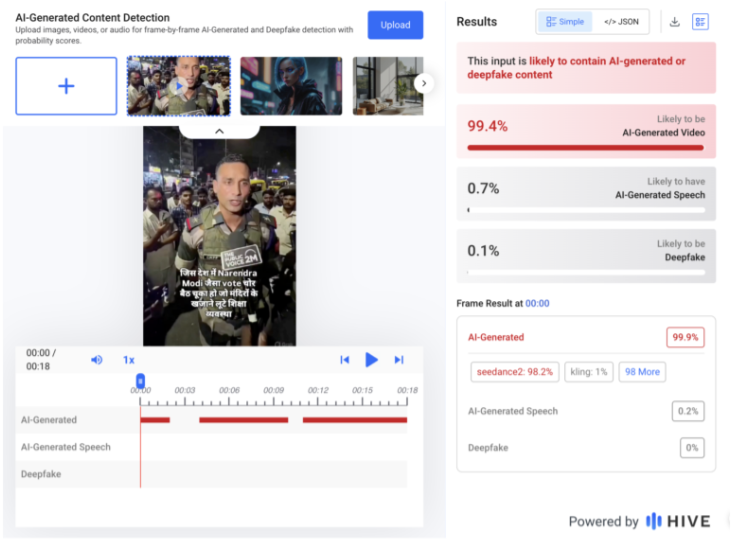

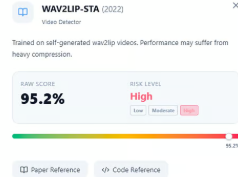
To further verify the authenticity of the clip, we analyzed it using Deepfake-O-Meter. The tool indicated a probability of more than 95 percent that the video was generated using artificial intelligence.
Conclusion
The viral video purportedly showing a CRPF trooper criticizing Prime Minister Narendra Modi and the BJP government is AI-generated. Multiple indicators, AI detection tools, and the clarification issued by the government’s PIB Fact Check confirm that the video is not authentic.
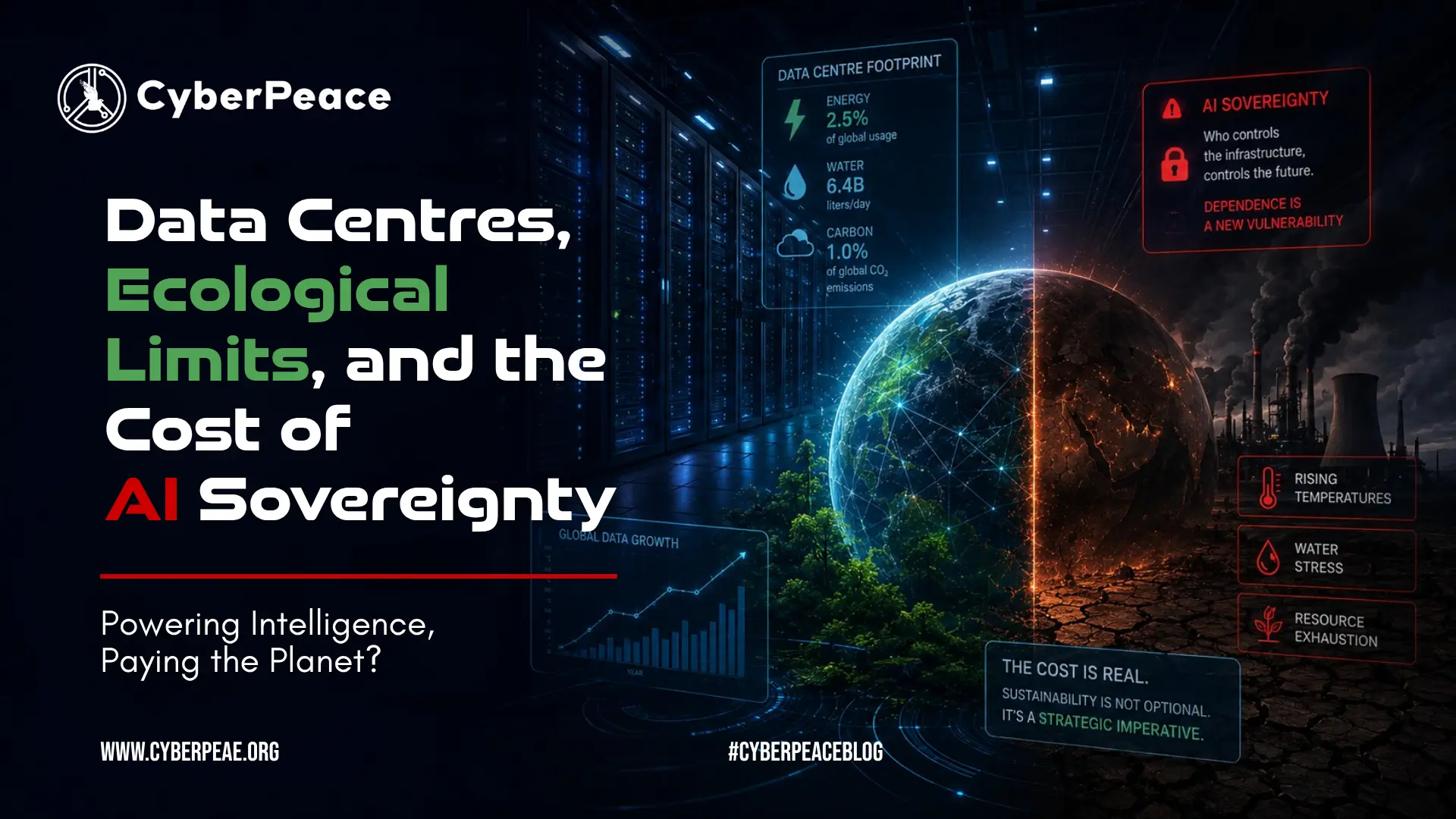
Governments in nations across the globe are consequently vying to draw in data centre investments as components of the wider AI sovereignty policies. However, recent events in Ireland make it clear that such an infrastructure is associated with significant environmental and social price tags. In geographically dense and resource-strained countries such as India, these trade-offs pose some pressing questions of whether today's AI ambitions are socially or environmentally sustainable. The data centre crisis in Ireland provides a handy reminder. It puts emphasis on the capacity of land use, water stress, energy demand, and disruption of communities to amplify quickly as digital infrastructure continues to increase at a faster rate than the regulatory and ecological capacity. These lessons should be paid close attention to as India continues to develop the IndiaAI Mission and establish itself as an AI hub in the future.
Why Data Centres Are Ecological Stress Multipliers
The data centres are sometimes referred to as clean digital infrastructure; however, in an actual sense, they are heavy industrial guardians of resources. Centres of large proportions demand an extensive amount of land, constant electricity, and a significant amount of water to cool down.
The most apparent effect is on energy consumption. Data centres are 24/7, round the clock, and need to be powered with a high-quality and stable electricity supply. By 2022, data centres had more than a quarter of the overall national electricity demand in Ireland, which created problems regarding grid stability and energy security (EirGrid, 2022). This compelled regulators to limit new connections in some of the areas. These trends also bring some similarities to certain regions of the United States, especially in Virginia, where particular data centres have led to peaks in the electricity demand in the region (U.S. Energy Information Administration, 2023).
Another primary source of pressure is the use of water. Heavy liquid coolers are very intensive systems in data centres, which tend to use the local freshwater sources. This may directly compete with residential and agricultural requirements in case of heatwaves or drought. In the western US, environmental advocates have issued notices that data centres contribute to a water deficit in other overextended basins (New York Times, 2023).
It also depends on local pollution and land use. Data centres are normally constructed on large plots close to urban or peri-urban centres, having good accessibility. This may push aside farmlands, increase property rates, and change local ecologies. The backup diesel generators, which are employed during power cuts, add to air and noise pollutants, and they thus impact the adjacent communities.
Ireland’s Experience and the Social Backlash
The low corporate taxes, cool climate, and PIC access to the EU market made Ireland a big data centre hub. The concentration of facilities around Dublin was, however, done unintentionally, leading to its rapid concentration. The population in their local communities also experienced mounting housing pressure, power competition, and underemployment because the number of long-term jobs created by a data centre is comparatively low.
The Irish government later realised that data centre expansion was causing strain on climate commitments and electricity infrastructure on a national level. The grid operators started denying new connections to data centres in sections of the country, which amounted to a kind of moratorium on further growth (TechPolicy.Press, 2024). What was initially a digital success story became a government issue, an ecology versus economic plan clash.
This experience particularly applies to smaller or densely populated countries. Countries such as Ireland and India have concentrated influences on fewer points, unlike the United States or China, which are able to spread data centres over wide areas.
India’s Emerging Data Centre Geography
India is advertising data centres as a way of advancing its digital and AI platforms. There are a number of states that have published data centre policies, such as Maharashtra, Tamil Nadu, Telangana, and Uttar Pradesh. The connectivity, financial infrastructure, and location to large user bases are making Mumbai, Chennai, Hyderabad, and Noida major hubs (MeitY, 2023).
Nevertheless, these areas are already stressed in terms of the environment. Mumbai also suffers from land shortage and flooding. There is a permanent water scarcity in Chennai. Hyderabad and Noida cannot cope with the intensity of population growth and energy demand in urban areas. Locating such large-scale data centres in these locations will pose a risk of augmenting the existing vulnerabilities instead of decentralising the benefits of development.
India, in contrast to the United States or China, does not have continental-scale low-density areas with spare water and power near demand centres. Each additional data centre in India is thus likely to have an impact on an increasing number of people per unit of infrastructure, by land acquisition, water diversion, grid pressure, or environmental externalities.
Community Impacts and Uneven Costs
The cost incurred by local communities to increase their data centre expansion is not proportionate to the benefits enjoyed. The after construction efforts to generate employment is minimal and the long term effects include strains on infrastructure. Tariffs can be increased with the growth of electric power demand. The extraction of water may have impacts on local supply. The prices of real estate may crowd out the lower-income population.
These impacts may be enhanced in India, where urban inequality is already high. The informal settlements along the industrial areas are such that they are vulnerable to pollution as well as diversion of resources. Data centres will otherwise be yet another project that creates unequal development without proper consultation with the community and other environmental protection measures.
What This Means for India’s AI Sovereignty Plans
The IndiaAI Mission of India focuses on developing local AI potential, data networks, and processing units to minimise the use of external systems ( IndiaAI Mission Document, 2024). This vision is based on data centres. Nevertheless, the concept of simple AI autonomy is made difficult by ecological limits.
An AI infrastructure that compromises water security, energy availability, or climate objectives could come under opposition and regulation backlash, as in the case of Ireland. This would delay deployment and add up to more expenses. Physical expansion is not sufficient to have true AI sovereignty. It should also take into consideration sustainability, decentralisation, and efficiency.
This brings about strategic concerns. India must invest more vigorously in energy-efficient computing, edge AI and model optimisation as opposed to scale. Is renewable energy integration viable to maintain the information centre demand? Is data centre siting to comply with long term water and land use planning, and not the short-term incentives of investment?
Towards a Sustainable Digital Infrastructure Strategy
India can still afford to learn not to repeat the errors experienced elsewhere. This will necessitate data centres being regarded as digital assets, not important infrastructures that have an environmental and social impact. Both more robust environmental impact assessments and public water and energy accounting and community involvement must become unavoidable.
From an AI policy perspective, sustainability should be seen as a pillar of sovereignty. An AI ecosystem that depends on fragile ecological foundations is not resilient. By learning from Ireland and adapting global lessons to local realities, India can pursue AI leadership without creating new environmental crises.
The future of AI will not be decided only by algorithms and talent. It will also be shaped by land, water, energy, and the communities that live alongside digital infrastructure. Ignoring those realities would make AI ambition fragile rather than sovereign.
References
- TechPolicy.Press. What Ireland’s Data Center Crisis Means for the EU’s AI Sovereignty Plans. 2024. https://techpolicy.press
- EirGrid. Electricity Demand Forecast Statement. 2022. https://www.eirgridgroup.com
- U.S. Energy Information Administration. Data Centers and Energy Demand. 2023. https://www.eia.gov
- New York Times. Data Centers Are Straining Water Supplies in the American West. 2023. https://www.nytimes.com
- Ministry of Electronics and Information Technology. India Data Centre Policy and Digital Infrastructure Initiatives. 2023. https://www.meity.gov.in
- IndiaAI Mission. Official Mission Document and Framework. 2024. https://indiaai.gov.in
