
#FactCheck- Viral ‘Army Jump Accident’ Video Is AI-Generated
Executive Summary
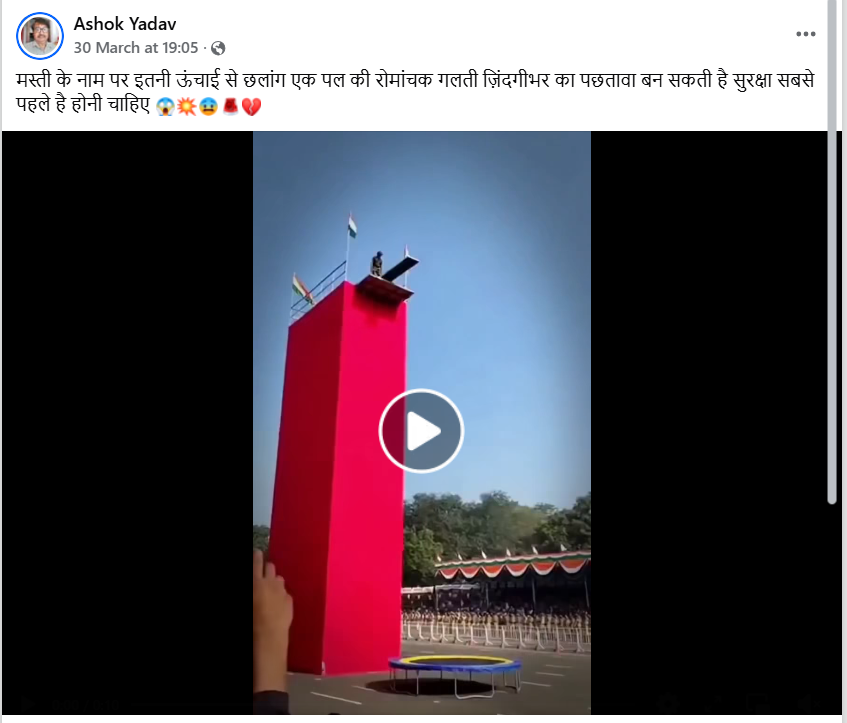
A video is being widely shared on social media showing a man in an army uniform jumping from a height, losing balance mid-air, and appearing to meet with an accident. The clip is being circulated as a real-life incident. However, a research by the CyberPeace found the claim to be false. The viral video is not real but AI-generated.
Claim
On social media platform Facebook, a user shared the video with a caption suggesting it shows a real accident, warning against risky stunts.
- https://archive.ph/BH6dl#selection-347.0-347.122
- https://www.facebook.com/ashok.yadav.9041083/posts/1593460528549619/
Fact Check
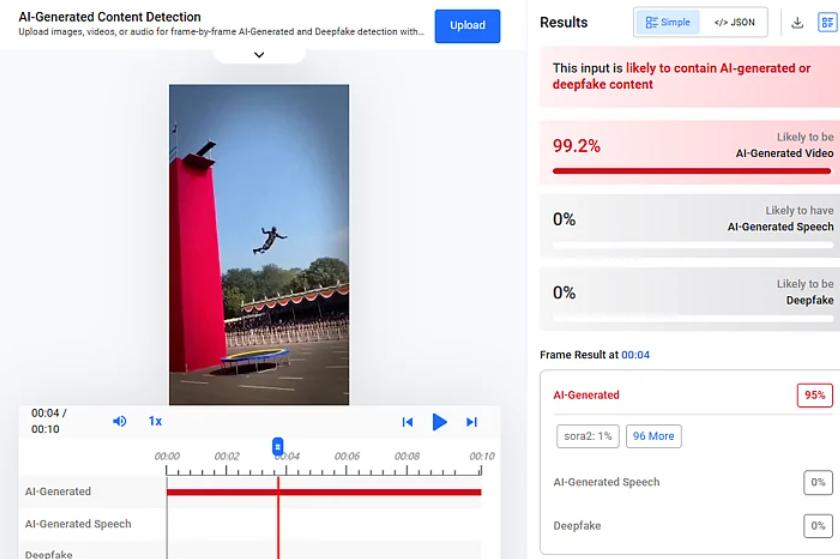
To verify the claim, we conducted a reverse image search using Google Lens but found no credible news reports or official sources mentioning such an incident. A closer look at the video revealed several inconsistencies commonly associated with AI-generated content. For instance, the person appears to disappear momentarily while falling, the head is not clearly visible after impact, and the background audio seems unnatural. We further analyzed the video using AI detection tools. On Hive Moderation, the video showed a 99.2% probability of being AI-generated.
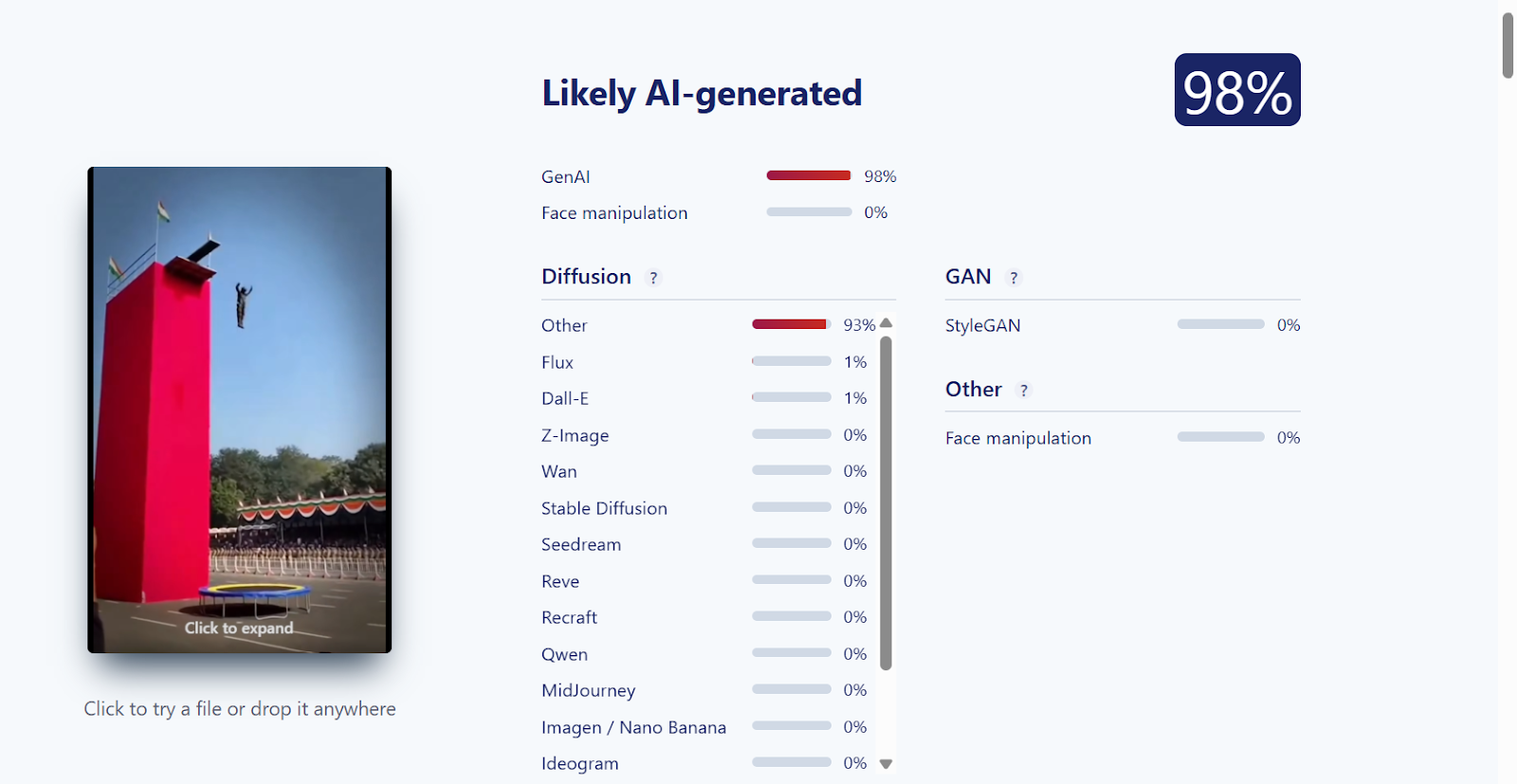
Additionally, analysis using Sightengine indicated a 98% likelihood that the video was synthetically created.
Conclusion
The viral claim is false. The video does not depict a real incident but is an AI-generated clip. It has been shared with a misleading narrative, and there is no evidence to support the claim that it shows an actual accident.

Related Blogs
Introduction
Valentine’s Day celebrates the bond between people, their romantic love, and their deep relationships with others. The increasing use of digital platforms in modern relationships has created a situation where cybercriminals use this time of year to exploit human emotions for money-making schemes. The period around 14 February often sees a rise in online romance scams, phishing attacks, and fake shopping websites that specifically target people who are emotionally vulnerable and active online. People need to be aware of these scams because this awareness helps them protect their personal information and their financial resources.
The Rise of Romance Scams
Modern romance scams have evolved from their original form because criminals now execute their schemes through more advanced methods. Fraudsters create authentic-looking fake identities, which they use to deceive victims through dating applications, social media platforms and networking websites. The profiles use stolen images and fake job histories, together with convincing emotional stories, which help them establish trust with potential victims.
Scammers usually begin their deception after they have built an emotional connection with their targets. Once trust is established, they introduce a crisis or an opportunity that pressures the victim to act quickly. This is often presented as a problem that needs urgent help or a chance that should not be missed, such as:
- A sudden medical emergency that requires money for treatment
- Requests for travel expenses to finally come and meet in person
- Fake investment opportunities that promise quick or guaranteed returns
- Demands for customs, courier, or clearance fees to release a supposed package or gift
They make the victim give money to them and buy gift cards and handle personal banking details. The scam takes place for several weeks or months until the victim starts to show doubt about what is happening. The psychological manipulation that occurs in romance scams causes severe harm to their victims. Victims experience two types of damage because criminals steal their money, and they suffer emotional pain, and their social standing gets damaged.
Fake E-Commerce and “Valentine’s Deals”
Valentine's Day marks the beginning of a shopping rush, which leads people to buy various gifts, including flowers, jewellery and customised products, as well as making reservations for events. Cybercriminals create fake websites to exploit this demand by providing fake discounts and temporary promotional offers.
Common warning signs include:
- Newly registered domains that lack valid user reviews
- Websites that contain multiple spelling mistakes and display poor design
- Payment requests through methods that cannot be tracked
- Online platforms that lack secure payment processing systems
Consumers who make purchases on such sites face the risk of losing money while their card information is stolen for future fraudulent activities.
Phishing in the Name of Love
During the holiday season, phishing campaigns increase their focus on particular targets. Users may receive:
- Valentine's Day discount emails
- Messages that claim to show secret admirer intentions
- Links that lead to supposed romantic surprises
- Delivery notifications that inform about unreceived gifts
Malicious links result in credential theft, malware installation and unauthorised financial transactions. At first glance, these attacks show resemblance to authentic brands and logistics companies, which makes them hard to identify.
Investment and Crypto Romance Fraud
A rising type of romance scams now uses cryptocurrency and online trading platforms as their new approach. Scammers who establish trust with their victims will convince them to invest in digital assets that appear to generate high returns. The fake dashboards display excellent investment results to convince investors to commit more funds. The process stops when they block all withdrawal requests and stop all contact with the user. The combination of emotional manipulation with financial fraud shows how cybercrime develops according to technological advancements.
Why Seasonal Scams Work
Seasonal scams succeed because they match the predictable behaviour patterns that people exhibit during specific times of the year. During Valentine’s season:
- People experience their highest emotional vulnerability
- People shop more frequently through online platforms
- People use digital platforms at increased rates
- Users will decrease their level of scepticism while trying to establish connections with others
Cybercriminals use urgent situations together with emotional ties and social norms as their primary attack methods. The combination of psychological triggers and digital convenience creates fertile ground for deception.
CyberPeace Recommendations for Staying Safe This Valentine’s Season
The digital platforms provide people who search for connections with valuable opportunities to connect with others, yet users must remain careful about their online activities. People can protect themselves from online fraud by following these steps:
- They should confirm identity details before they give away their private data.
- They should not send money to people whom they met only through internet platforms.
- They should verify website ownership and examine customer feedback before making online purchases.
- They should activate multi-factor authentication for their social media accounts and financial accounts.
- People should treat unexpected links with great care, especially those links that create a sense of urgency.
- The Cybercrime reporting portal www.cybercrime.gov.in with 24x7 helpline 1930 is an effective tool at the disposal of victims of cybercrimes to report their complaints.
- In case of any cyber threat, issue or discrepancy, you can also seek assistance from the CyberPeace Helpline at +91 9570000066 or write to us at helpline@cyberpeace.net. Immediate reporting protects victims and helps to combat cybercrime.
Conlusion
Online safety during festive seasons requires shared responsibility among multiple parties. Digital resilience is strengthened through the combined efforts of platforms, financial institutions, regulators, and civil society organisations. The digital ecosystem becomes safer through three essential elements, which include awareness campaigns, stronger verification systems, and timely reporting mechanisms.
Valentine’s Day centres on the building of trust between people who want to connect with each other. To maintain trust in digital environments, users need to practice digital literacy skills, which should be shared by everyone. People who stay updated about cybersecurity threats can celebrate Valentine’s Day more safely, because their expressions of love remain protected from online scams.
References
- https://www.cloudsek.com/blog/valentines-day-cyber-attack-landscape-exploiting-love-through-digital-deception
- https://about.fb.com/news/2025/02/how-avoid-romance-scams-this-valentines-day/
- https://www.fbi.gov/contact-us/field-offices/sanfrancisco/fbi-san-francisco-warns-romance-scams-increasing-across-the-bay-area-this-valentines-day
- https://abc11.com/post/romance-scams-surge-ahead-valentines-day/18581079/
- https://www.moneycontrol.com/technology/5-common-online-scams-you-should-avoid-this-valentine-s-day-article-13820108.html
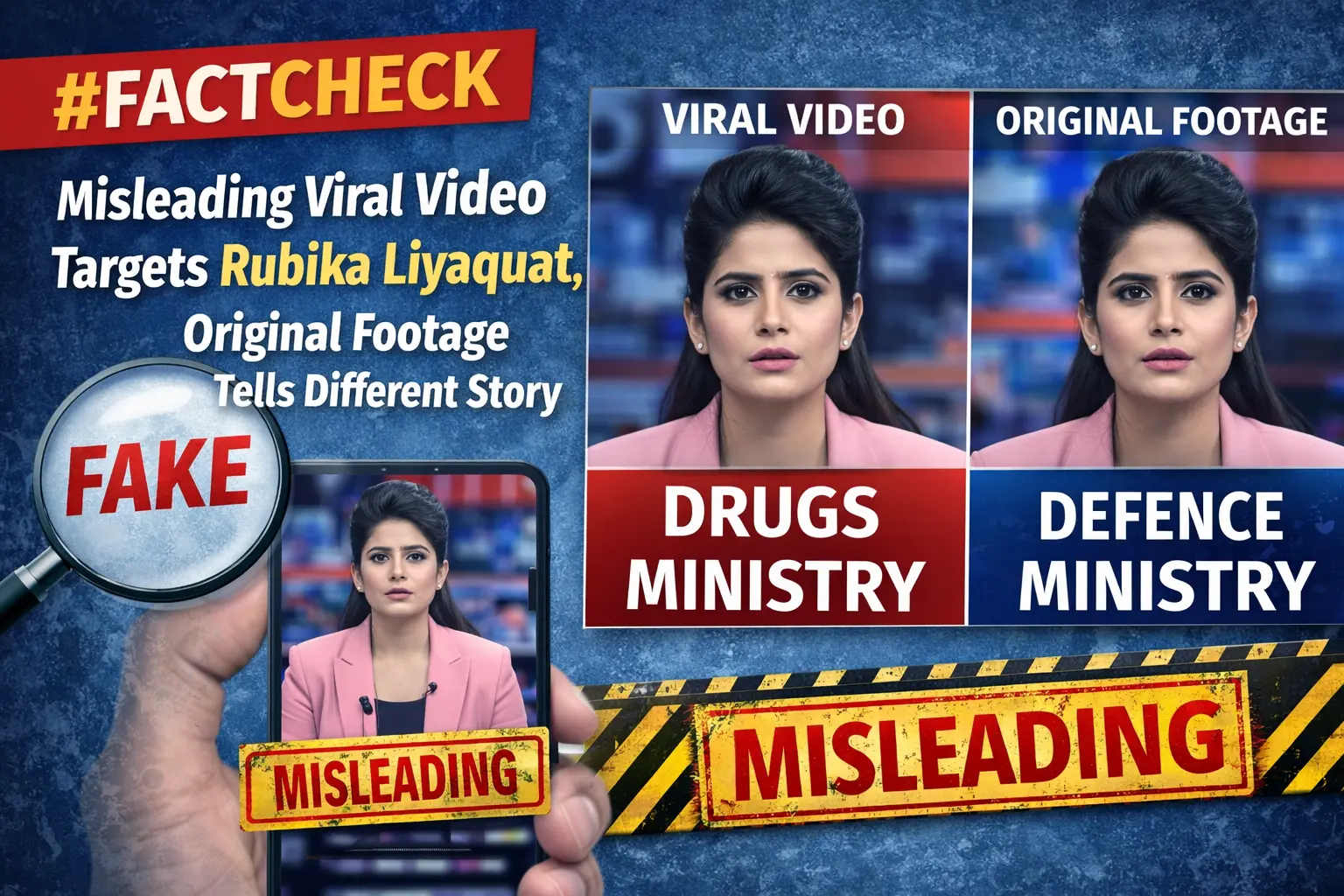
Executive Summary
A video circulating on social media claims that a Pakistani man misbehaved with TV anchor Rubika Liyaquat during a live television debate. Users sharing the clip alleged that the Pakistani participant silenced the anchor on live TV.
However, research by CyberPeace found the viral claim to be false and revealed that the video being shared on social media is edited. In the original video, published on YouTube on November 26, 2025, the alleged Pakistani man was not present in the TV debate.
Claim
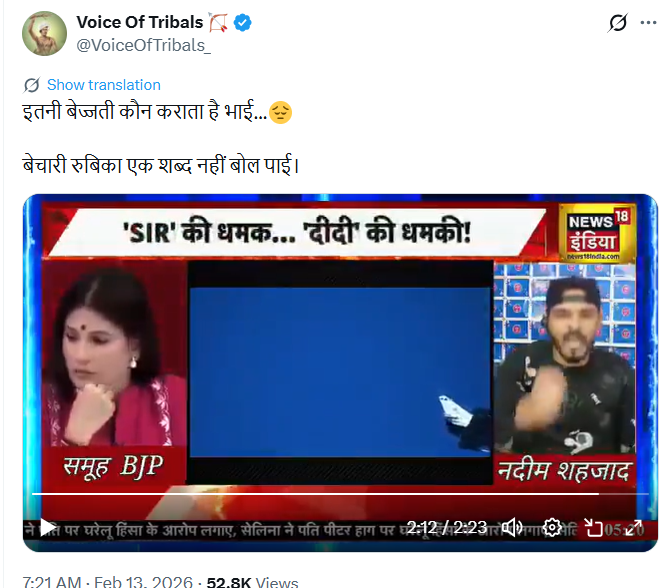
On February 13, 2026, a user shared the viral clip on X (formerly Twitter), claiming that the anchor was insulted during the debate and was left speechless. Another user on February 11, 2026, asked News18 India to verify the video and questioned who allowed such behaviour towards the journalist on air.
Fact Check:
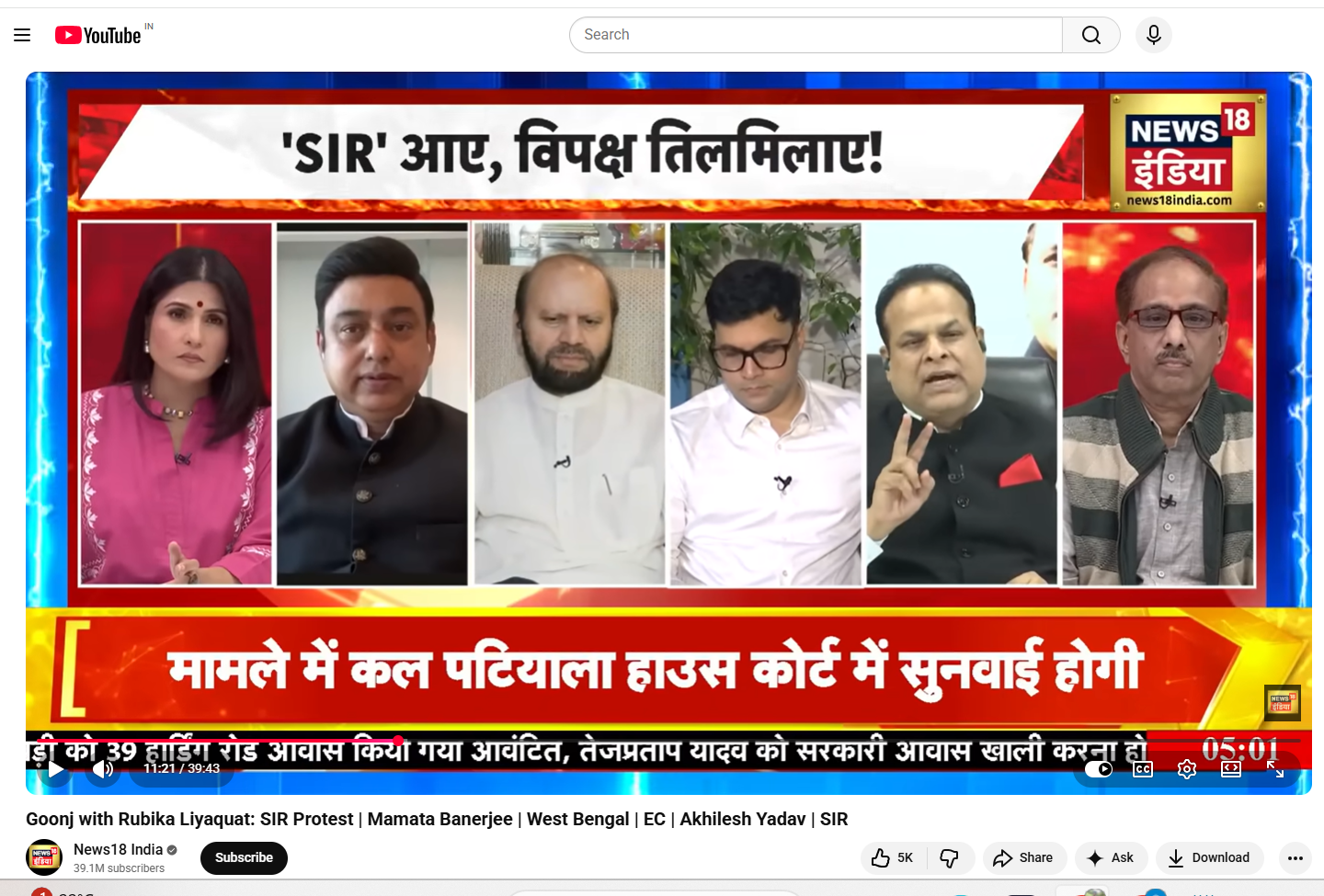
To verify the claim, we extracted key frames from the viral video and conducted a reverse image search using Google Lens. During the research, we found the full version of the debate uploaded on the official YouTube channel of News18 India on November 26, 2025. The nearly 40-minute original broadcast featured anchor Rubika Liyaquat along with panelists Zafar Islam, Varun Purohit, Prateek Kumar, Arvind Kumar Vajpayee, Tausif Ahmed Khan, and Aziz Khan. However, the person seen misbehaving with the anchor in the viral clip was not present in the original video.
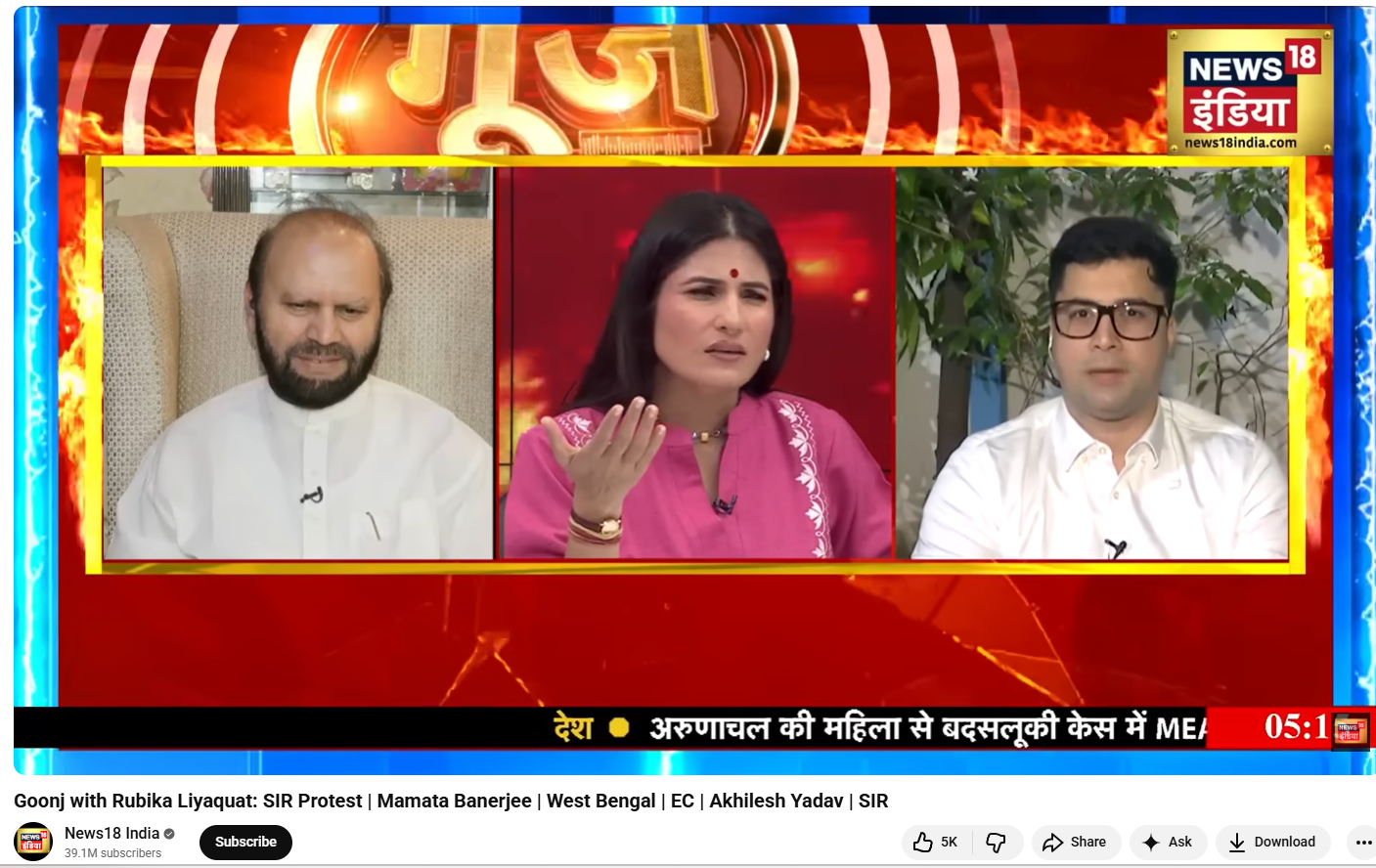
Upon carefully reviewing the footage, we located the actual segment around the 25-minute 40-second mark. In this portion, the anchor can be heard asking panelist Tausif Ahmed Khan to leave the show, using the same words heard in the viral clip. However, the original broadcast does not feature any Pakistani participant or any individual named “Nadeem Shahzad.”
Conclusion
Our research found that the viral claim is false. The circulating video has been edited, and the alleged Pakistani participant does not appear in the original debate uploaded on November 26, 2025.
Executive Summary
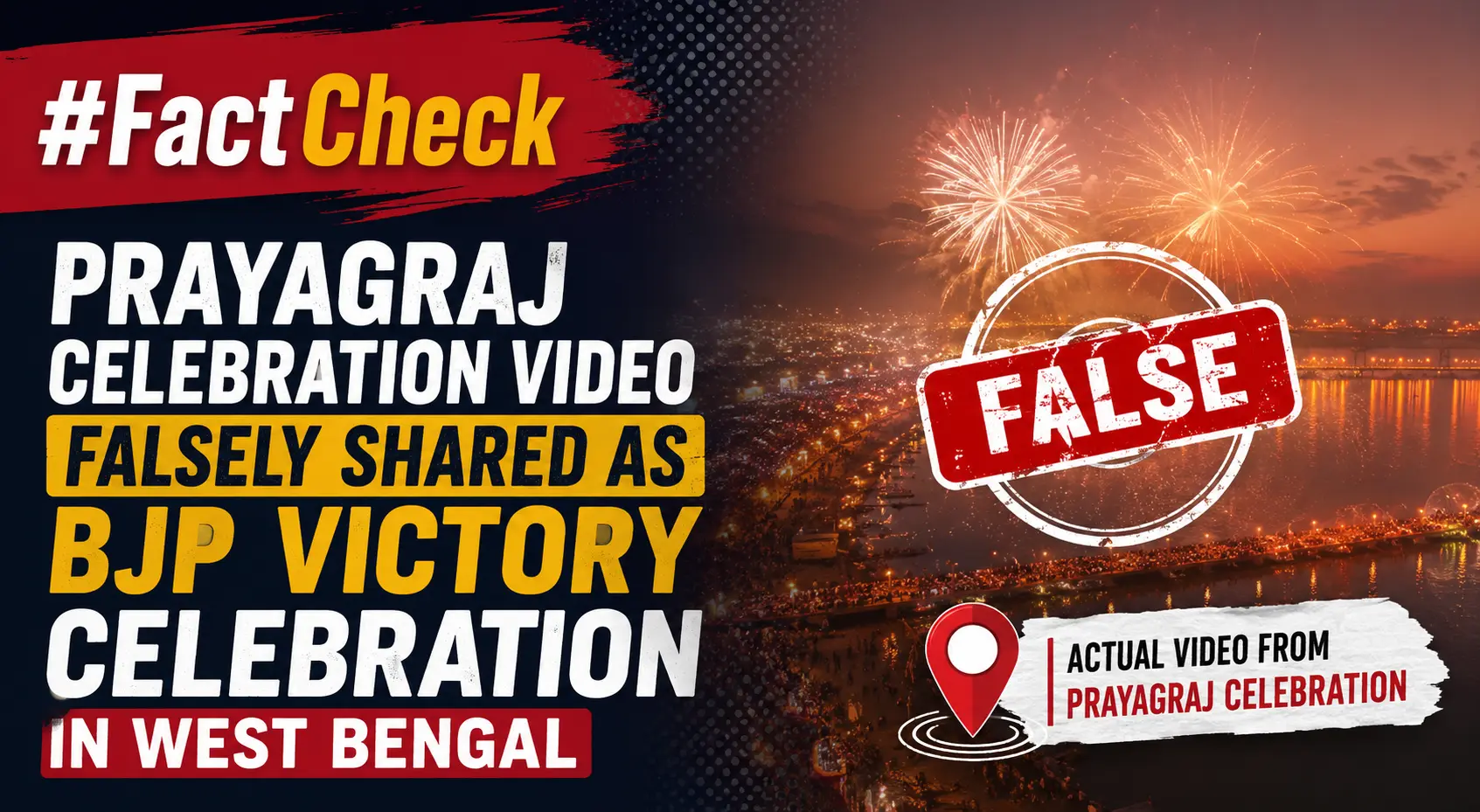
Assembly election results for West Bengal, Assam, Kerala, Tamil Nadu and the Union Territory of Puducherry have been declared, with the Bharatiya Janata Party (BJP) set to form the government in West Bengal after defeating the Trinamool Congress (TMC). Amid celebrations and reports of violence in the state, several misleading videos and images are also circulating on social media. One such viral clip shows people waving the Indian tricolour and saffron flags during a street celebration. Social media users are claiming that the video captures people celebrating a political change and BJP’s victory in West Bengal. Research by CyberPeace Research Wing found that the claim is false. The viral video is not from West Bengal but from Prayagraj and actually shows celebrations after India’s victory in the ICC Men's T20 World Cup 2026.
Claim
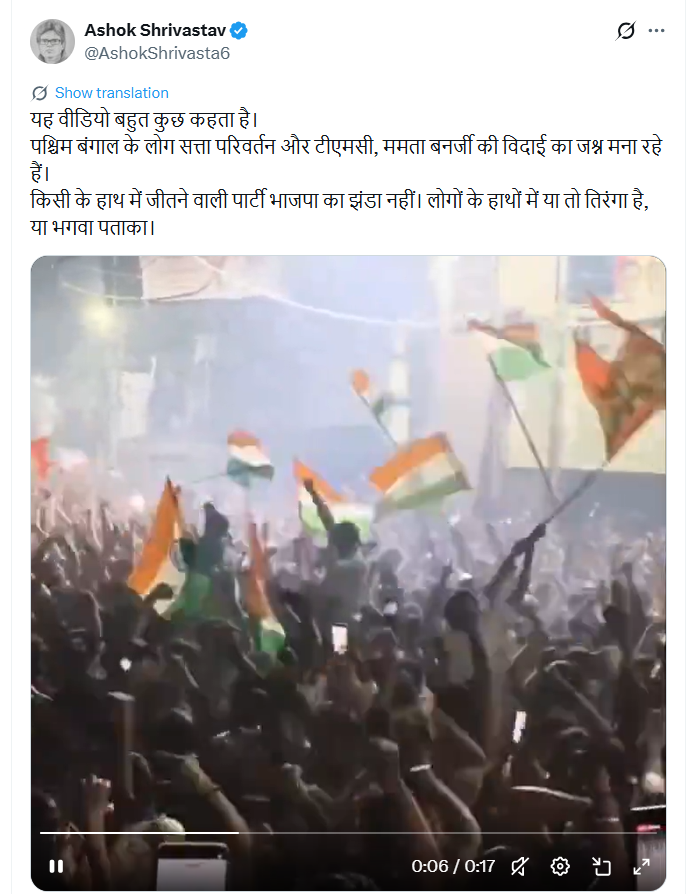
An X user named “Ashok Shrivastav” shared the video on May 6, 2026, claiming that people in West Bengal were celebrating the departure of Mamata Banerjee and the TMC government. The user further claimed that people were waving only the national flag and saffron flags, not BJP flags.
Fact Check
To verify the claim, we extracted several keyframes from the viral video and conducted a reverse image search using Google Lens. The clip was found on multiple social media handles falsely linked to West Bengal.
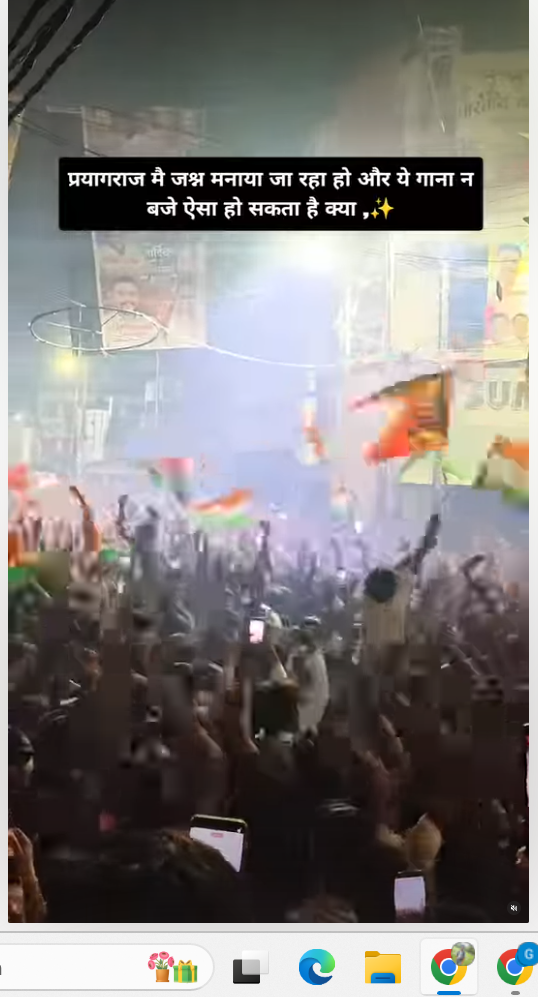
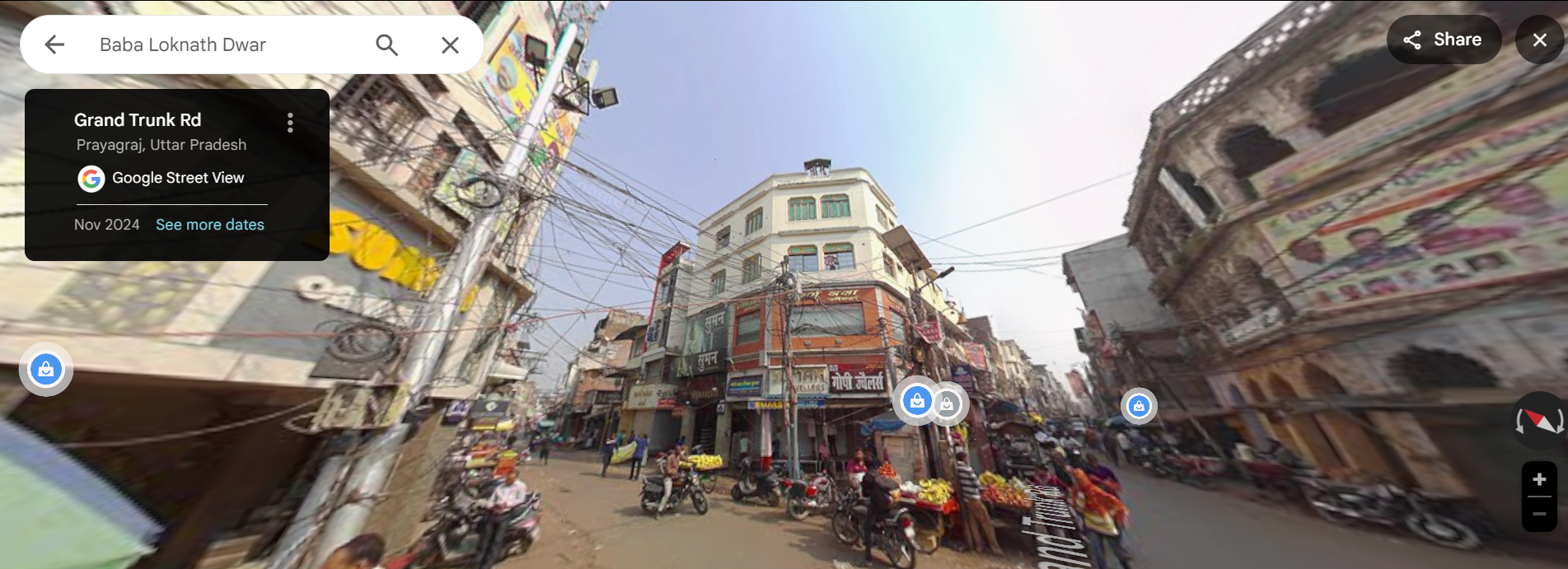
However, the oldest version of the video was uploaded on March 8, 2026, by an Instagram page named “Streets of Sangam.” The caption identified the location as Prayagraj and included hashtags related to the World Cup and Loknath. During the comparison of the viral and original videos, we noticed a shop sign reading “Suman Ornaments.” Using Google Street View, we traced the location to Baba Loknath area in Prayagraj, where the same shop could be identified near Loknath Gate.
Conclusion
Our research confirms that the viral claim is fake. The video being shared as BJP victory celebrations in West Bengal is actually from Prayagraj, Uttar Pradesh, and dates back to March 2026, when locals celebrated Team India’s T20 World Cup victory. The old clip is now being misleadingly circulated with a false political narrative.
