
#FactCheck- Old Kerala church raid video falsely shared with exaggerated ₹7000 crore cash seizure claim
Executive Summary
A set of two images is being widely circulated on social media claiming that the Enforcement Directorate (ED) recently raided a church in Kerala and seized ₹7000 crore in black money. The viral post also alleges that the media deliberately suppressed the news. CyberPeace Research Wing research found the claim to be misleading. The visuals are not recent and are linked to an Income Tax Department action conducted in 2020 at the Believers Eastern Church in Kerala.
Claim:
A Facebook user shared the viral post claiming that ₹7000 crore in black money was seized from a Kerala-based church run by a bishop named Yohannan, and alleged that mainstream media ignored the incident.
Post link: https://www.facebook.com/reel/2143680196569943 , https://archive.ph/submit/

Fact Check:
A keyword search related to the alleged raid on Believers Church in Kerala led to several news reports published in November 2020. A report published in The Hindu on November 6, 2020 stated that a crackdown by the Income Tax Department on the Thiruvalla-based Believers Eastern Church had reportedly uncovered several irregularities. https://www.thehindu.com/news/national/kerala/raids-bring-to-light-shady-deals-of-believers-church/article33041420.ece

Further verification from the official Income Tax Department website confirmed details of the search operation. According to the press release, approximately ₹6 crore in unexplained cash was recovered during the raid, including ₹3.85 crore from a place of worship in Delhi. https://www.incometaxindia.gov.in/Lists/Press%20Releases/Attachments/872/PressRelease_ITD_conducts_searches_in_Kerala_6_11_20.pdf
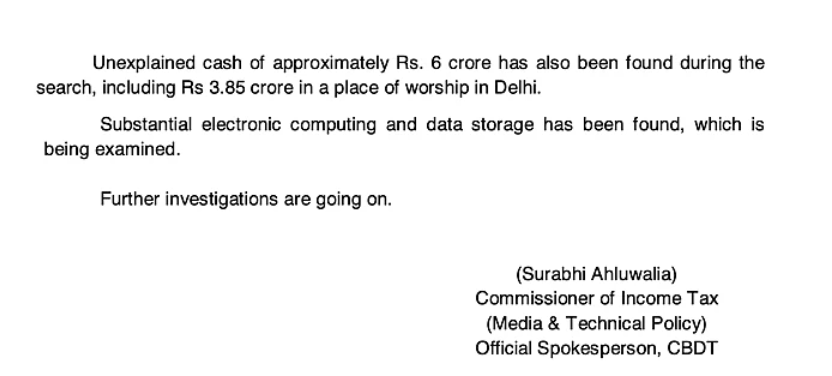
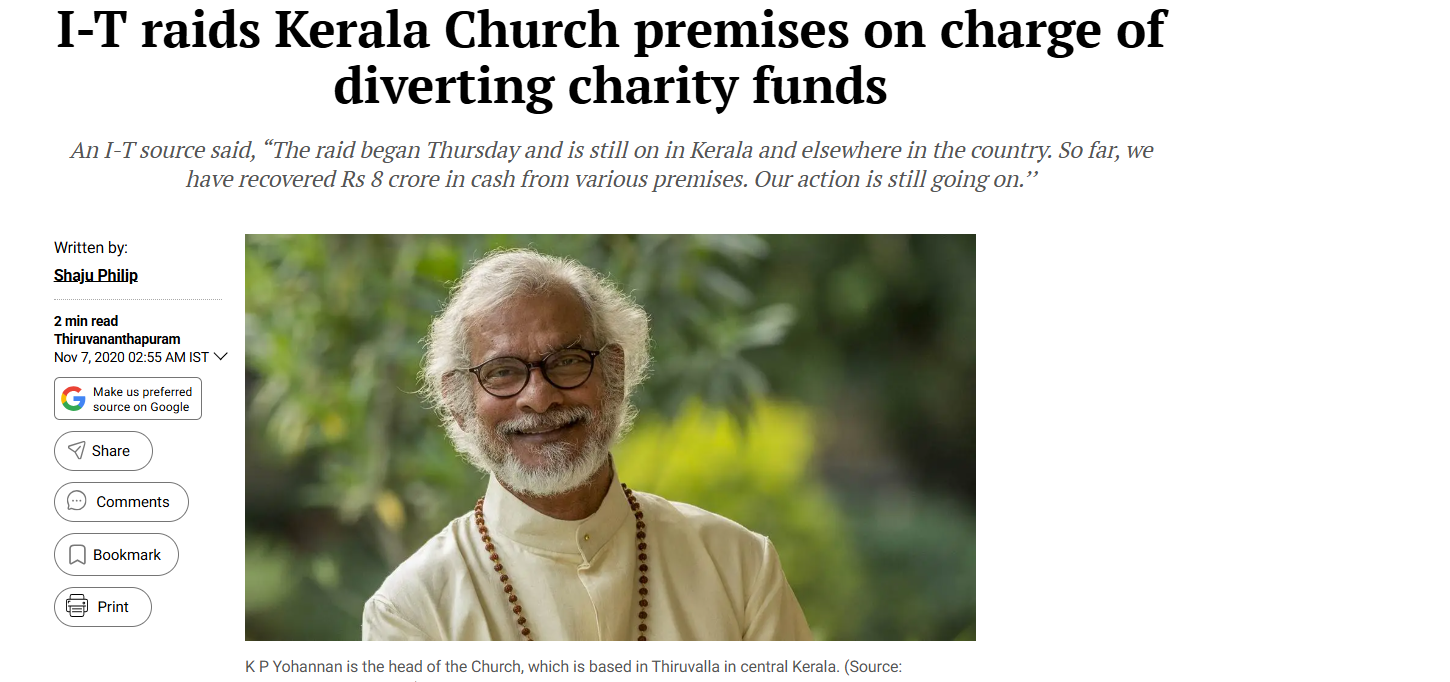
The release also noted that evidence suggested possible cash siphoning running into hundreds of crores of rupees.Additional media reports, including The Indian Express, stated that the total seizure amounted to around ₹14 crore. https://indianexpress.com/article/india/kerala/i-t-raids-kerala-church-premises-on-charge-of-diverting-charity-funds-6984466/
Conclusion:
The research confirms that the viral claim is misleading. The incident is from 2020 and not recent. During the Income Tax Department raid on the Believers Eastern Church in Kerala, around ₹6 crore in cash was recovered, with total seizures reported up to ₹14 crore in media reports. There is no evidence of any ₹7000 crore seizure as claimed in the viral post.

Related Blogs
Executive Summary
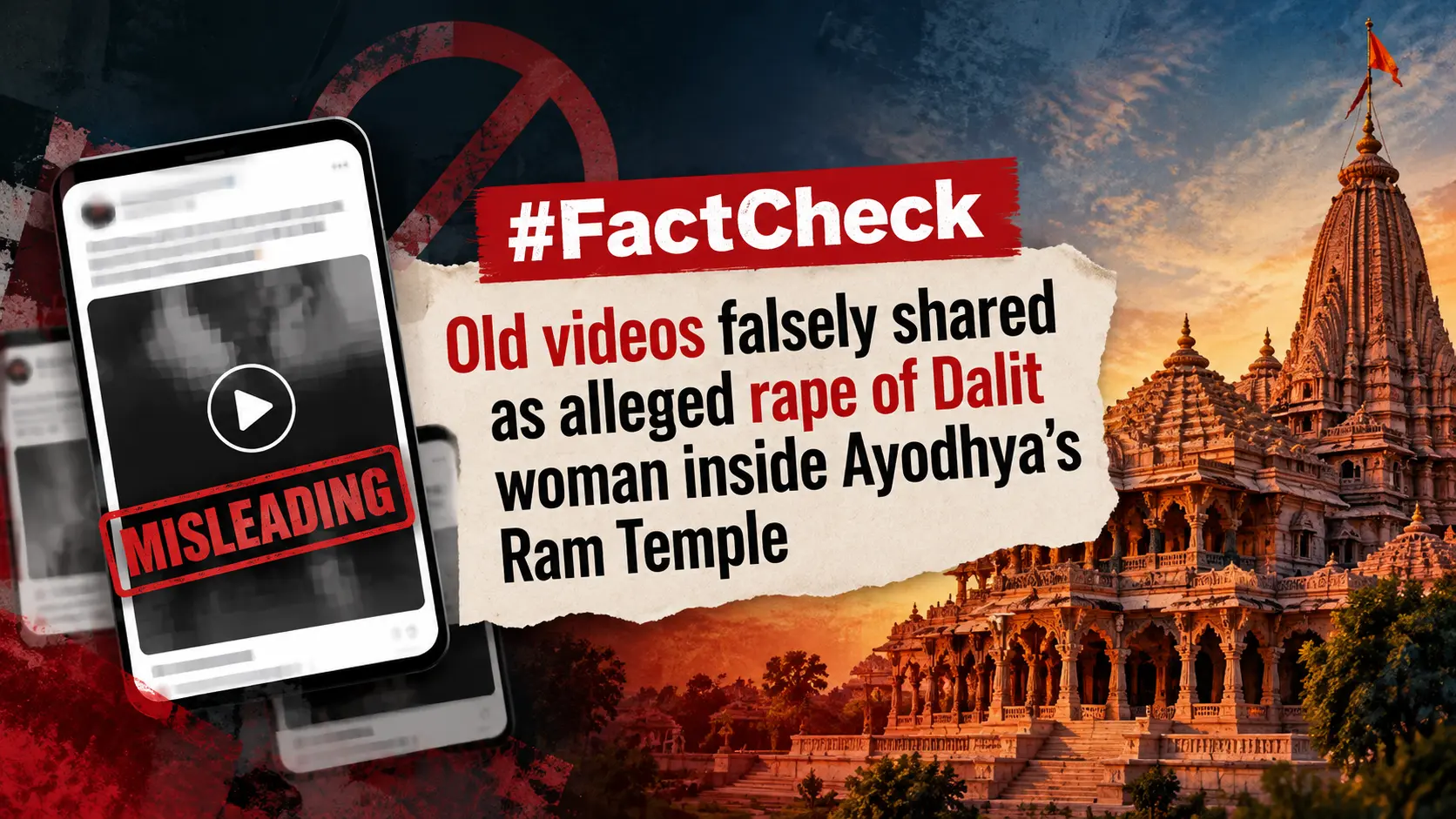
A video is being shared on social media with the claim that a Dalit woman was raped inside the Ram Temple in Ayodhya. In the video, two women can be seen crying, while some people around them appear to be consoling them. CyberPeace Research Wing’s research found the viral claim to be false. Our research found that the viral video has been created by combining two separate clips. In the first part of the video, a woman can be seen staging a protest at Buddha Park in Haldwani and raising issues related to her in-laws. The second part shows a girl expressing her anger. Our research found that this clip has been available on the internet since December 27, 2025. Neither of the two videos is related to the alleged rape of a Dalit woman inside the Ram Temple in Ayodhya.
Claim:
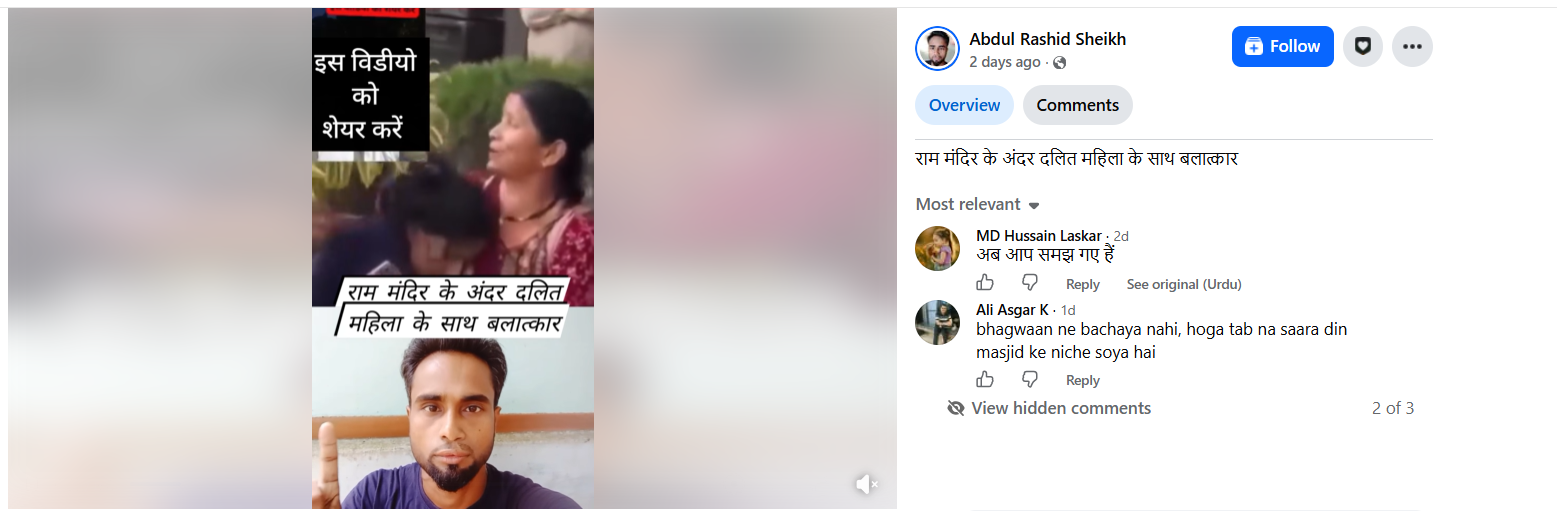
A Facebook user shared the viral video on September 21, 2026, with the caption, “Dalit woman raped inside the Ram Temple.”The post link, archive link and screenshot are provided below.
https://www.facebook.com/watch/?v=1420442086956519
Fact Check
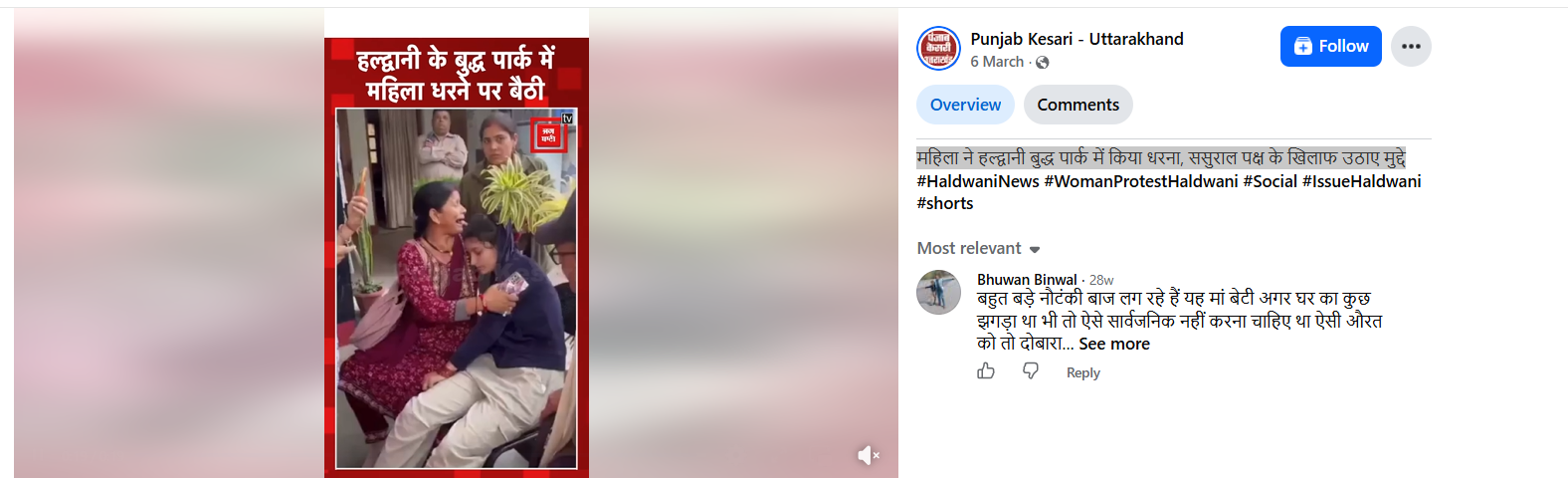
To verify the authenticity of the viral image, we conducted a Google search using relevant keywords. However, we did not find any credible media report related to the viral image during the search. To verify the claim, we conducted a reverse image search of the keyframes from the video. During the search, we found the same video on the Facebook page of Punjab Kesari - Uttarakhand, where it was published on March 6, 2026. According to the post, the woman staged a protest at Buddha Park in Haldwani and raised issues related to her in-laws. The link and screenshot of the relevant post are provided below.
https://www.facebook.com/watch/?v=897776589732940
Meanwhile, we found the second part of the viral video on LinkedIn, where the video was published on December 27, 2025.

Our research makes it clear that two old and unrelated videos are being shared with a misleading claim linking them to the Ram Temple in Ayodhya. The videos have no connection with the alleged incident on the temple premises, and based on the available evidence, there is no confirmation of any such incident taking place at the Ram Temple. Our research found that the viral video was created by combining two separate clips. In the first part of the video, a woman can be seen staging a protest at Buddha Park in Haldwani and raising issues related to her in-laws. In the second part, a girl can be seen expressing her anger. Our research found that this clip has been available on the internet since December 27, 2025. Neither of the two videos is related to the alleged rape of a Dalit woman inside the Ram Temple in Ayodhya.

Introduction
In an era when misinformation spreads like wildfire across the digital landscape, the need for effective strategies to counteract these challenges has grown exponentially in a very short period. Prebunking and Debunking are two approaches for countering the growing spread of misinformation online. Prebunking empowers individuals by teaching them to discern between true and false information and acts as a protective layer that comes into play even before people encounter malicious content. Debunking is the correction of false or misleading claims after exposure, aiming to undo or reverse the effects of a particular piece of misinformation. Debunking includes methods such as fact-checking, algorithmic correction on a platform, social correction by an individual or group of online peers, or fact-checking reports by expert organisations or journalists. An integrated approach which involves both strategies can be effective in countering the rapid spread of misinformation online.
Brief Analysis of Prebunking
Prebunking is a proactive practice that seeks to rebut erroneous information before it spreads. The goal is to train people to critically analyse information and develop ‘cognitive immunity’ so that they are less likely to be misled when they do encounter misinformation.
The Prebunking approach, grounded in Inoculation theory, teaches people to recognise, analyse and avoid manipulation and misleading content so that they build resilience against the same. Inoculation theory, a social psychology framework, suggests that pre-emptively conferring psychological resistance against malicious persuasion attempts can reduce susceptibility to misinformation across cultures. As the term suggests, the MO is to help the mind in the present develop resistance to influence that it may encounter in the future. Just as medical vaccines or inoculations help the body build resistance to future infections by administering weakened doses of the harm agent, inoculation theory seeks to teach people fact from fiction through exposure to examples of weak, dichotomous arguments, manipulation tactics like emotionally charged language, case studies that draw parallels between truths and distortions, and so on. In showing people the difference, inoculation theory teaches them to be on the lookout for misinformation and manipulation even, or especially, when they least expect it.
The core difference between Prebunking and Debunking is that while the former is preventative and seeks to provide a broad-spectrum cover against misinformation, the latter is reactive and focuses on specific instances of misinformation. While Debunking is closely tied to fact-checking, Prebunking is tied to a wider range of specific interventions, some of which increase motivation to be vigilant against misinformation and others increase the ability to engage in vigilance with success.
There is much to be said in favour of the Prebunking approach because these interventions build the capacity to identify misinformation and recognise red flags However, their success in practice may vary. It might be difficult to scale up Prebunking efforts and ensure their reach to a larger audience. Sustainability is critical in ensuring that Prebunking measures maintain their impact over time. Continuous reinforcement and reminders may be required to ensure that individuals retain the skills and information they gained from the Prebunking training activities. Misinformation tactics and strategies are always evolving, so it is critical that Prebunking interventions are also flexible and agile and respond promptly to developing challenges. This may be easier said than done, but with new misinformation and cyber threats developing frequently, it is a challenge that has to be addressed for Prebunking to be a successful long-term solution.
Encouraging people to be actively cautious while interacting with information, acquire critical thinking abilities, and reject the effect of misinformation requires a significant behavioural change over a relatively short period of time. Overcoming ingrained habits and prejudices, and countering a natural reluctance to change is no mean feat. Developing a widespread culture of information literacy requires years of social conditioning and unlearning and may pose a significant challenge to the effectiveness of Prebunking interventions.
Brief Analysis of Debunking
Debunking is a technique for identifying and informing people that certain news items or information are incorrect or misleading. It seeks to lessen the impact of misinformation that has already spread. The most popular kind of Debunking occurs through collaboration between fact-checking organisations and social media businesses. Journalists or other fact-checkers discover inaccurate or misleading material, and social media platforms flag or label it. Debunking is an important strategy for curtailing the spread of misinformation and promoting accuracy in the digital information ecosystem.
Debunking interventions are crucial in combating misinformation. However, there are certain challenges associated with the same. Debunking misinformation entails critically verifying facts and promoting corrected information. However, this is difficult owing to the rising complexity of modern tools used to generate narratives that combine truth and untruth, views and facts. These advanced approaches, which include emotional spectrum elements, deepfakes, audiovisual material, and pervasive trolling, necessitate a sophisticated reaction at all levels: technological, organisational, and cultural.
Furthermore, It is impossible to debunk all misinformation at any given time, which effectively means that it is impossible to protect everyone at all times, which means that at least some innocent netizens will fall victim to manipulation despite our best efforts. Debunking is inherently reactive in nature, addressing misinformation after it has grown extensively. This reactionary method may be less successful than proactive strategies such as Prebunking from the perspective of total harm done. Misinformation producers operate swiftly and unexpectedly, making it difficult for fact-checkers to keep up with the rapid dissemination of erroneous or misleading information. Debunking may need continuous exposure to fact-check to prevent erroneous beliefs from forming, implying that a single Debunking may not be enough to rectify misinformation. Debunking requires time and resources, and it is not possible to disprove every piece of misinformation that circulates at any particular moment. This constraint may cause certain misinformation to go unchecked, perhaps leading to unexpected effects. The misinformation on social media can be quickly spread and may become viral faster than Debunking pieces or articles. This leads to a situation in which misinformation spreads like a virus, while the antidote to debunked facts struggles to catch up.
Prebunking vs Debunking: Comparative Analysis
Prebunking interventions seek to educate people to recognise and reject misinformation before they are exposed to actual manipulation. Prebunking offers tactics for critical examination, lessening the individuals' susceptibility to misinformation in a variety of contexts. On the other hand, Debunking interventions involve correcting specific false claims after they have been circulated. While Debunking can address individual instances of misinformation, its impact on reducing overall reliance on misinformation may be limited by the reactive nature of the approach.
.png)
CyberPeace Policy Recommendations for Tech/Social Media Platforms
With the rising threat of online misinformation, tech/social media platforms can adopt an integrated strategy that includes both Prebunking and Debunking initiatives to be deployed and supported on all platforms to empower users to recognise the manipulative messaging through Prebunking and be aware of the accuracy of misinformation through Debunking interventions.
- Gamified Inoculation: Tech/social media companies can encourage gamified inoculation campaigns, which is a competence-oriented approach to Prebunking misinformation. This can be effective in helping people immunise the receiver against subsequent exposures. It can empower people to build competencies to detect misinformation through gamified interventions.
- Promotion of Prebunking and Debunking Campaigns through Algorithm Mechanisms: Tech/social media platforms may promote and guarantee that algorithms prioritise the distribution of Prebunking materials to users, boosting educational content that strengthens resistance to misinformation. Platform operators should incorporate algorithms that prioritise the visibility of Debunking content in order to combat the spread of erroneous information and deliver proper corrections; this can eventually address and aid in Prebunking and Debunking methods to reach a bigger or targeted audience.
- User Empowerment to Counter Misinformation: Tech/social media platforms can design user-friendly interfaces that allow people to access Prebunking materials, quizzes, and instructional information to help them improve their critical thinking abilities. Furthermore, they can incorporate simple reporting tools for flagging misinformation, as well as links to fact-checking resources and corrections.
- Partnership with Fact-Checking/Expert Organizations: Tech/social media platforms can facilitate Prebunking and Debunking initiatives/campaigns by collaborating with fact-checking/expert organisations and promoting such initiatives at a larger scale and ultimately fighting misinformation with joint hands initiatives.
Conclusion
The threat of online misinformation is only growing with every passing day and so, deploying effective countermeasures is essential. Prebunking and Debunking are the two such interventions. To sum up: Prebunking interventions try to increase resilience to misinformation, proactively lowering susceptibility to erroneous or misleading information and addressing broader patterns of misinformation consumption, while Debunking is effective in correcting a particular piece of misinformation and having a targeted impact on belief in individual false claims. An integrated approach involving both the methods and joint initiatives by tech/social media platforms and expert organizations can ultimately help in fighting the rising tide of online misinformation and establishing a resilient online information landscape.
References
- https://mark-hurlstone.github.io/THKE.22.BJP.pdf
- https://futurefreespeech.org/wp-content/uploads/2024/01/Empowering-Audiences-Through-%E2%80%98Prebunking-Michael-Bang-Petersen-Background-Report_formatted.pdf
- https://newsreel.pte.hu/news/unprecedented_challenges_Debunking_disinformation
- https://misinforeview.hks.harvard.edu/article/global-vaccination-badnews/

Introduction
Meta is the leader in social media platforms and has been successful in having a widespread network of users and services across global cyberspace. The corporate house has been responsible for revolutionizing messaging and connectivity since 2004. The platform has brought people closer together in terms of connectivity, however, being one of the most popular platforms is an issue as well. Popular platforms are mostly used by cyber criminals to gain unauthorised data or create chatrooms to maintain anonymity and prevent tracking. These bad actors often operate under fake names or accounts so that they are not caught. The platforms like Facebook and Instagram have been often in the headlines as portals where cybercriminals were operating and committing crimes.
To keep the data of the netizen safe and secure Paytm under first of its kind service is offering customers protection against cyber fraud through an insurance policy available for fraudulent mobile transactions up to Rs 10,000 for a premium of Rs 30. The cover ‘Paytm Payment Protect’ is provided through a group insurance policy issued by HDFC Ergo. The company said that the plan is being offered to increase the trust in digital payments, which will push up adoption.
Meta’s Cybersecurity
Meta has one of the best cyber security in the world but that diest mean that it cannot be breached. The social media giant is the most vulnerable platform in cases of data breaches as various third parties are also involved. As seen the in the case of Cambridge Analytica, a huge chunk of user data was available to influence the users in terms of elections. Meta needs to be ahead of the curve to have a safe and secure platform, for this Meta has deployed various AI and ML driven crawlers and software which work o keeping the platform safe for its users and simultaneously figure out which accounts may be used by bad actors and further removes the criminal accounts. The same is also supported by the keen participation of the user in terms of the reporting mechanism. Meta-Cyber provides visibility of all OT activities, observes continuously the PLC and SCADA for changes and configuration, and checks the authorization and its levels. Meta is also running various penetration and bug bounty programs to reduce vulnerabilities in their systems and applications, these testers are paid heavily depending upon the scope of the vulnerability they found.
CyberRoot Risk Investigation
Social media giant Meta has taken down over 40 accounts operated by an Indian firm CyberRoot Risk Analysis, allegedly involved in hack-for-hire services along with this Meta has taken down 900 fraudulently run accounts, these accounts are said to be operated from China by an unknown entity. CyberRoot Risk Analysis was responsible for sharing malware over the platform and used it to impersonate themselves just as their targets, i.e lawyers, doctors, entrepreneurs, and industries like – cosmetic surgery, real estate, investment firms, pharmaceutical, private equity firms, and environmental and anti-corruption activists. They would get in touch with such personalities and then share malware hidden in files which would often lead to data breaches subsequently leading to different types of cybercrimes.
Meta and its team is working tirelessly to eradicate the influence of such bad actors from their platforms, use of AI and Ml based tools have increased exponentially.
Paytm CyberFraud Cover
Paytm is offering customers protection against cyber fraud through an insurance policy available for fraudulent mobile transactions up to Rs 10,000 for a premium of Rs 30. The cover ‘Paytm Payment Protect’ is provided through a group insurance policy issued by HDFC Ergo. The company said that the plan is being offered to increase the trust in digital payments, which will push up adoption. The insurance cover protects transactions made through UPI across all apps and wallets. The insurance coverage has been obtained by One97 Communications, which operates under the Paytm brand.
The exponential increase in the use of digital payments during the pandemic has made more people susceptible to cyber fraud. While UPI has all the digital safeguards in place, most UPI-related frauds are undertaken by confidence tricksters who get their victims to authorise a transaction by passing collect requests as payments. There are also many fraudsters collecting payments by pretending to be merchants. These types of frauds have resulted in a loss of more than Rs 63 crores in the previous financial year. The issue of data insurance is new to India but is indeed the need of the hour, majority of netizens are unaware of the value of their data and hence remain ignorant towards data protection, such steps will result in safer data management and protection mechanisms, thus safeguarding the Indian cyberspace.
Conclusion
cyberspace is at a critical juncture in terms of data protection and privacy, with new legislation coming out on the same we can expect new and stronger policies to prevent cybercrimes and cyber-attacks. The efforts by tech giants like Meta need to gain more speed in terms of the efficiency of cyber safety of the platform and the user to make sure that the future of the platforms remains secured strongly. The concept of data insurance needs to be shared with netizens to increase awareness about the subject. The initiative by Paytm will be a monumental initiative as this will encourage more platforms and banks to commit towards coverage for cyber crimes. With the increasing cases of cybercrimes, such financial coverage has come as a light of hope and security for the netizens.
