
#FactCheck -AI-Generated Video Falsely Attributes Communal Remarks to Suvendu Adhikari; Fact Check Finds No Authentic Evidence
Executive Summary
A video circulating on social media falsely claims to show West Bengal leader Suvendu Adhikari making inflammatory and communal remarks. In the viral clip, he is allegedly heard saying that if elected, his party would “work only for Hindus” and “eliminate the 27% Muslim population in West Bengal,” while also claiming that the BJP would remain in power for over 100 years. CyberPeace Research Wing research found that the viral video, which allegedly shows West Bengal leader Suvendu Adhikari making a statement about eliminating the Muslim population in West Bengal to ensure long-term BJP rule, is AI-generated and not real.
Claim
An X user (@Naira_Seth1) shared the clip alleging it reflects “majoritarian extremism disguised as politics,” suggesting that Suvendu Adhikari made communally charged and unconstitutional statements.

Fact Check
A detailed analysis of the video shows clear signs of manipulation. The person appearing in the latter part of the clip does not match Suvendu Adhikari.

Additionally, the video was tested using an AI detection tool (Hive Moderation), which indicated a 98.8% probability of AI-generated content, particularly around the 0:25 timestamp.
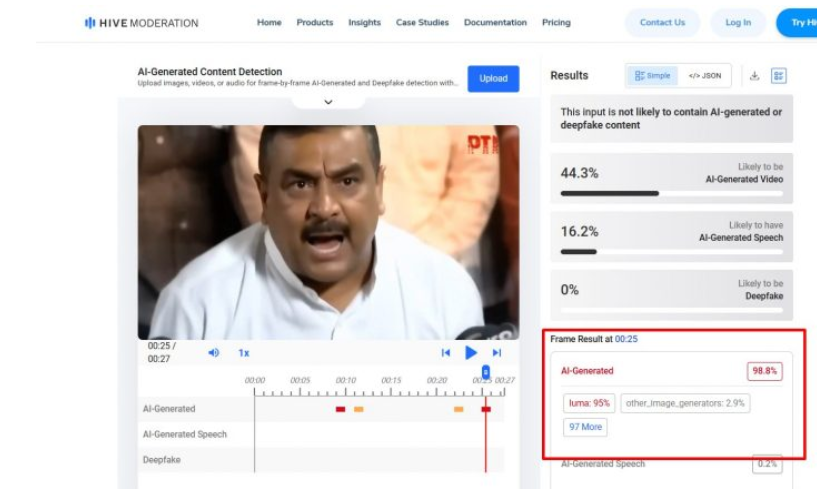
Further verification through reverse image search of key frames led to an original press byte of Suvendu Adhikari posted by PTI News on May 6. In that authentic video, he is seen speaking about taking strict legal action against criminals, with no mention of any religious community or communal statements.
https://x.com/PTI_News/status/2052020784152068114?s=20

Conclusion
The viral video allegedly showing Suvendu Adhikari making communal remarks is AI-generated and misleading. The original footage confirms that no such statements were made, and the clip has been digitally manipulated to spread misinformation.

Related Blogs

Executive Summary
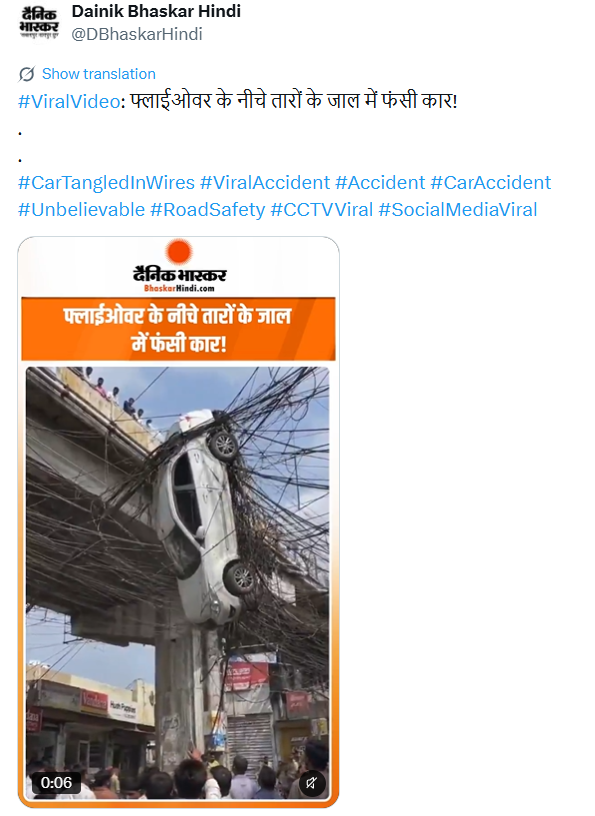
A video showing a car caught in a web of electrical wires beneath a flyover is being widely shared on social media. In the viral video, the car appears to be suspended in mid-air, while a large number of people can be seen gathered below, watching the astonishing scene. People standing on the flyover also appear shocked as they look at the scene below. However, CyberPeace Research found that the video is not authentic but AI-generated and is being circulated with a misleading claim.
Claim:
An X user shared the viral video with the caption: “#ViralVideo: Car caught in a web of wires beneath a flyover!”
https://x.com/DBhaskarHindi/status/2107022982258553245
.
Fact Check
To verify the authenticity of the viral video showing a car caught in electrical wires beneath a flyover, we conducted a reverse image search of its keyframes using Google Lens. During the search, we found the same video uploaded on August 28, 2026, on the Instagram account of an AI content creator, @bhau_mitra_mandal_parbhani. The caption accompanying the video read: “Everyone is shocked to see this sight of a car caught in a web of electrical wires beneath a flyover! The car is dangerously stuck in the wires, drawing the attention of everyone gathered below. How did the car get here? The reason is yet to be revealed.” The caption also clearly mentioned that the visuals were AI-generated. In addition, the words “AI News” and “AI Generated Visuals” were displayed on the video itself, further indicating that the footage was artificially generated.
https://www.instagram.com/reels/DclpJHfgqXr/
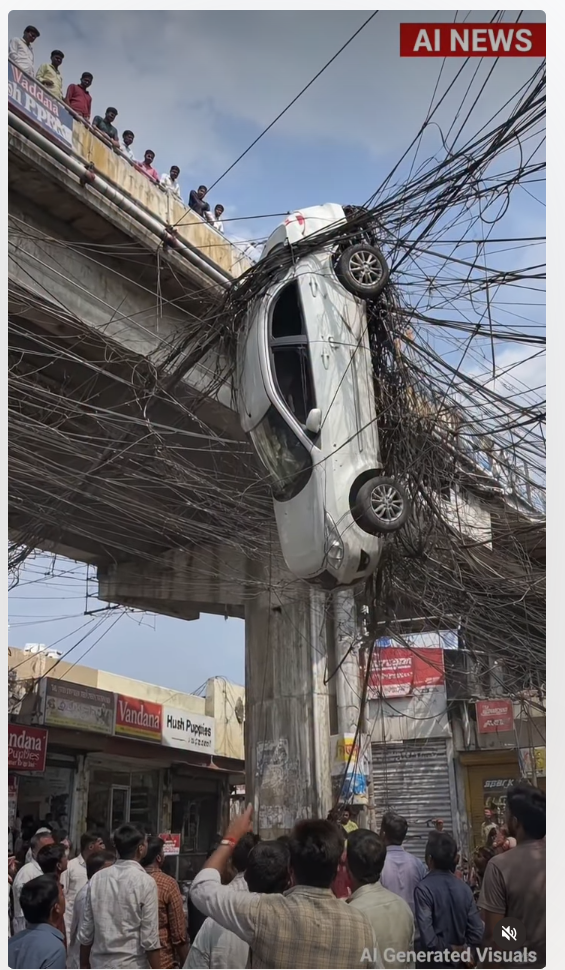
To further verify the authenticity of the viral video, we analysed it using the AI detection tool Hive Detect. The tool’s analysis identified the video as AI-generated with a 99.9 per cent probability.

Another AI detection platform, WasitAI, also identified the visuals in the video as highly likely to be AI-generated.

Conclusion
The evidence gathered during our research makes it clear that the viral video showing a car caught in electrical wires beneath a flyover is not authentic but AI-generated. Our research found that the same video was originally uploaded by an AI content creator, where it was clearly labelled as AI-generated. The findings were further supported by AI detection tools, including Hive Detect and WasitAI, which also identified the visuals as highly likely to be AI-generated. Therefore, the viral video is being circulated on social media with a misleading claim, presenting AI-generated visuals as a real incident.

Executive Summary
A video showing a damaged building allegedly belonging to Amazon is going viral on social media. The clip is being shared with the claim that it depicts the aftermath of an Iranian missile strike on an Amazon data center in Bahrain on April 1, 2026. However, research by CyberPeace has found the claim to be misleading. While reports confirm that Iran targeted a U.S.-linked cloud infrastructure in Bahrain, the viral video itself is not real footage and has been created using artificial intelligence.
Claim
A Facebook user, “Tripti Speaks,” shared the viral video on April 2, 2026, with the caption:“Iranian attack on Amazon’s cloud computing data center in Bahrain. IRGC fired missiles at Batelco in Bahrain where AWS infrastructure is located, damaging servers and disrupting services.”
- Archived link::https://perma.cc/XH7S-QTX6

Fact Check
To verify the claim, we extracted multiple keyframes from the viral video and conducted a reverse image search using Google. However, we did not find any credible sources or reports featuring this specific footage. This raised suspicion about the authenticity of the video. We then analyzed it using the AI detection tool Hive Moderation, which indicated a 63% probability that the video is AI-generated.

According to a report published by Reuters on April 1, 2026, Iran launched a missile attack targeting Amazon’s cloud computing operations in Bahrain. The Islamic Revolutionary Guard Corps (IRGC) had earlier warned that U.S.-linked companies in the Middle East—including Microsoft, Google, and Apple—could be targeted.

Conclusion
Our research found that while there are credible reports confirming an Iranian attack on cloud infrastructure linked to Amazon in Bahrain, the viral video circulating on social media does not depict the real incident. The footage shows no presence in verified news coverage and has been flagged by AI detection tools as likely artificial. Therefore, the video is AI-generated and misleadingly linked to the incident.

Executive Summary:
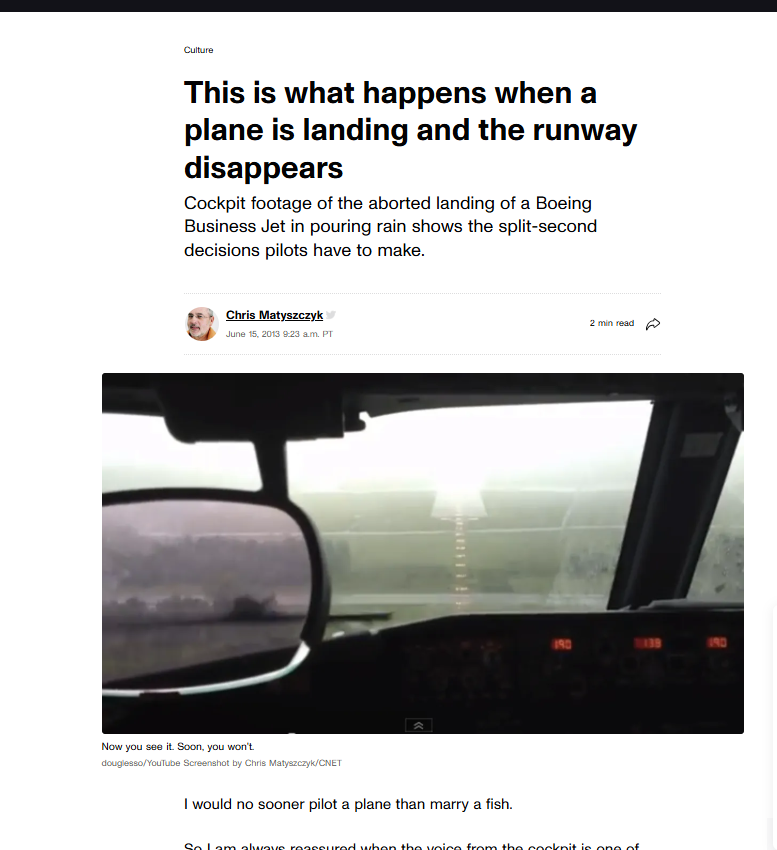
A video showing poor runway visibility from inside an aircraft cockpit is being widely shared on social media, linking it to an alleged aircraft accident involving Maharashtra Deputy Chief Minister Ajit Pawar in Baramati on January 28, 2025. Users claim that the footage captured the final moments before the crash, suggesting that the runway visibility disappeared just seconds before landing. However, research conducted by the CyberPeace found the viral claim to be misleading. The research revealed that the video has no connection to any aircraft accident involving Deputy Chief Minister Ajit Pawar. In reality, the video dates back to 2013 and shows a pilot attempting to land an aircraft amid heavy rain. During the approach, the runway briefly disappears from the pilot’s view, prompting the pilot to abort the landing and execute a go-around. The aircraft later lands safely after weather conditions improve.
Claim
An Instagram user shared the viral video on January 29, 2026, claiming:“Baramati plane crash: video of the aircraft accident surfaces. Runway disappears just three seconds before landing.” (The link to the post, its archived version, and screenshots are provided below.)

Fact Check
To verify the claim, we extracted keyframes from the viral video and conducted a reverse image search using Google Lens. The search led us to the same video uploaded on a YouTube channel named douglesso, which was published on June 12, 2013. (Footage link and screenshot available below.)
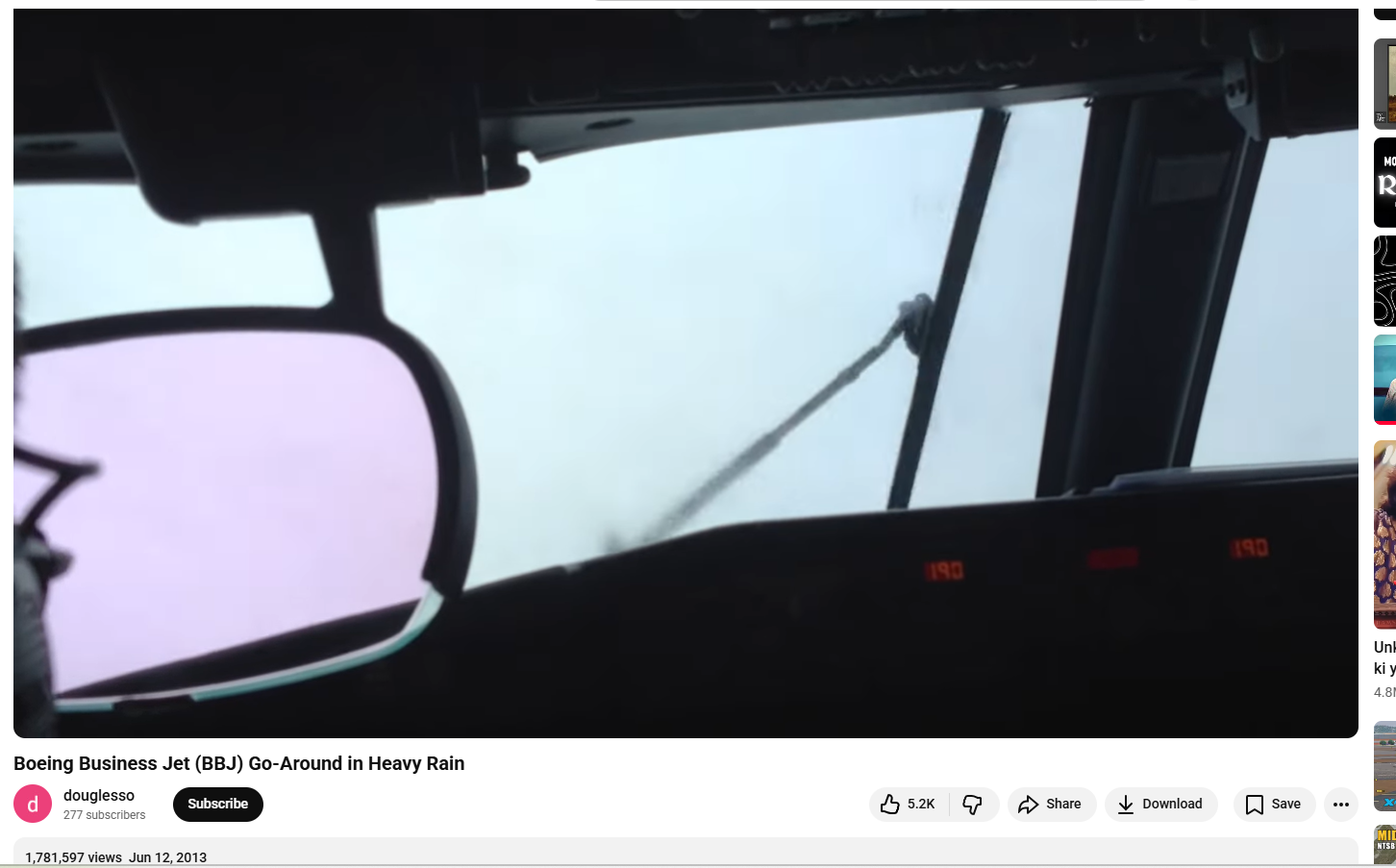
Further research led us to a report published by the American media website CNET, which featured the same visual. According to the report, the video shows a Boeing Business Jet attempting to land during heavy rainfall. The aircraft was conducting a CAT I Instrument Landing System (ILS) approach when a sudden downpour drastically reduced visibility at decision height. As the runway briefly disappeared from view, the pilots aborted the landing and carried out a go-around. The aircraft later landed safely once weather conditions improved. (The link to the CNET report and its screenshot are provided below.)
- https://www.cnet.com/culture/this-is-what-happens-when-a-plane-is-landing-and-the-runway-disappears/
Conclusion
Our research confirms that the video circulating on social media is unrelated to any recent aircraft accident involving Maharashtra Deputy Chief Minister Ajit Pawar. The clip is an old video from 2013, which is now being shared with a false and misleading claim.
