
#FactCheck - AI-Generated Video Falsely Shared as ‘Multi-Hooded Snake’ Sighting in Vrindavan
A video is being widely shared on social media showing devotees seated in a boat appearing stunned as a massive, multi-hooded snake—resembling the mythical Sheshnag—suddenly emerges from the middle of a water body.
The video captures visible panic and astonishment among the devotees. Social media users are sharing the clip claiming that it is from Vrindavan, with some portraying the sight as a divine or supernatural event. However, research conducted by the Cyber Peace Foundation found the viral claim to be false. Our research revealed that the video is not authentic and has been generated using artificial intelligence (AI).
Claim
On January 17, 2026, a user shared the viral video on Instagram with the caption suggesting that God had appeared again in the age of Kalyug. The post claims that a terrifying video from Vrindavan has surfaced in which devotees sitting in a boat were shocked to see a massive multi-hooded snake emerge from the water. The caption further states that devotees are hailing the creature as an incarnation of Sheshnag or Vasuki Nag, raising religious slogans and questioning whether the sight represents a divine sign. (The link to the post, its archive link, and screenshots are available.)
- https://www.instagram.com/reel/DTngN9FkoX0/?igsh=MTZvdTN1enI2NnFydA%3D%3D
- https://archive.ph/UuAqB
Fact Check:
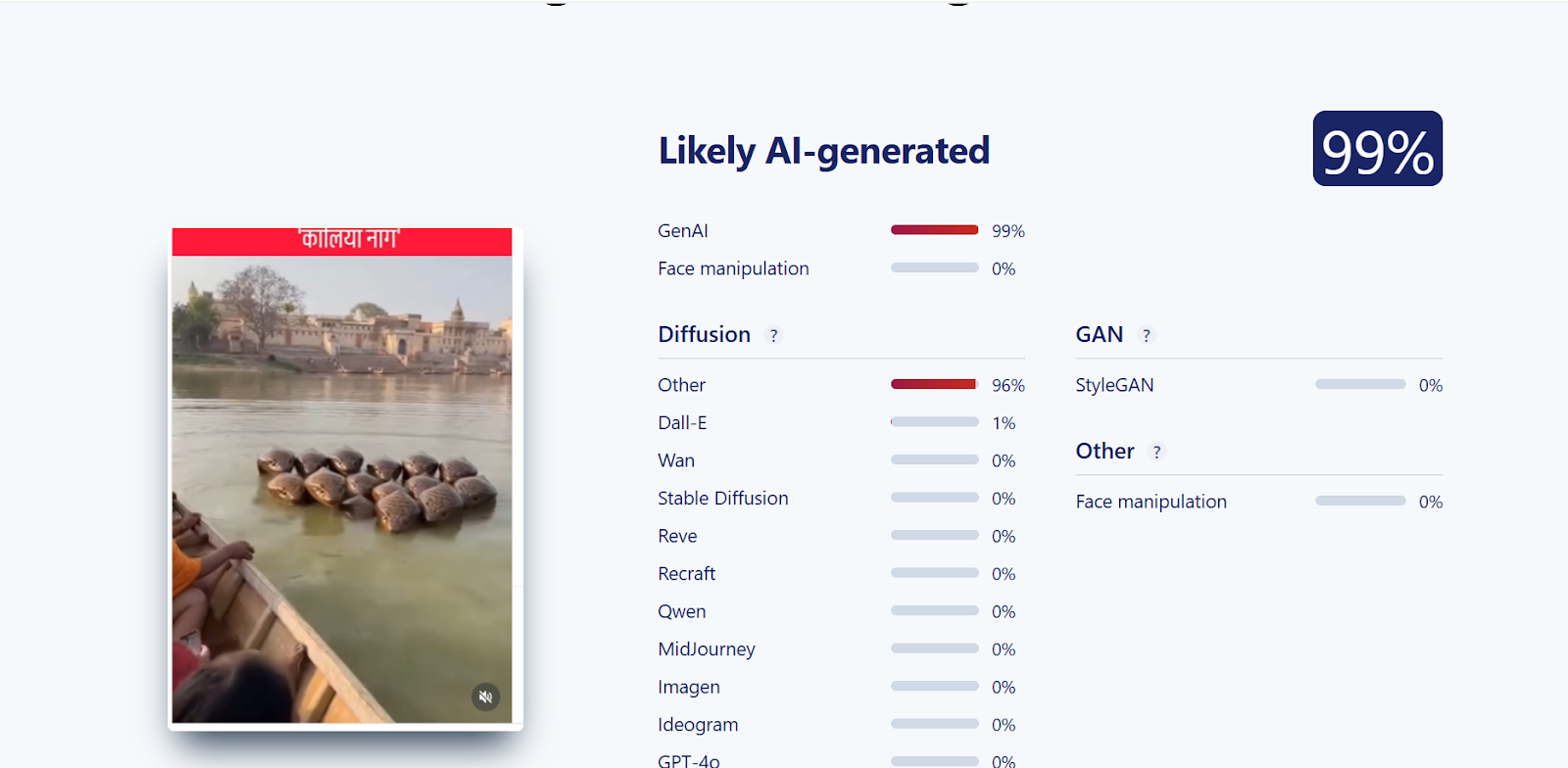
Upon closely examining the viral video, we suspected that it might be AI-generated. To verify this, the video was scanned using the AI detection tool SIGHTENGINE, which indicated that the visual is 99 per cent AI-generated.
In the next step of the research , the video was analysed using another AI detection tool, HIVE Moderation. According to the results obtained, the video was found to be 62 per cent AI-generated.

Conclusion
Our research clearly establishes that the viral video claiming to show a multi-hooded snake in Vrindavan is not real. The clip has been created using artificial intelligence and is being falsely shared on social media with religious and sensational claims.

Related Blogs

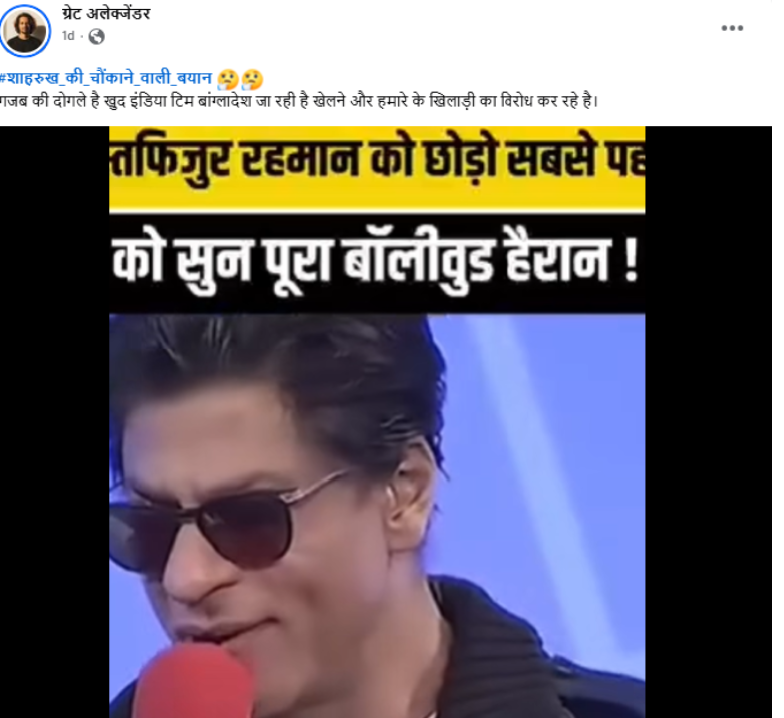
A video of Bollywood actor and Kolkata Knight Riders (KKR) owner Shah Rukh Khan is going viral on social media. The video claims that Shah Rukh Khan is reacting to opposition against Bangladeshi bowler Mustafizur Rahman playing for KKR and is allegedly calling industrialist Gautam Adani a “traitor,” while appealing to stop Hindu–Muslim politics.
Research by the CyberPeace Foundation found that the voice heard in the video is not Shah Rukh Khan’s but is AI-generated. Shah Rukh Khan has not made any official statement regarding Mustafizur Rahman’s removal from KKR. The claim made in the video concerning industrialist Gautam Adani is also completely misleading and baseless.
Claim
In the viral video, Shah Rukh Khan is allegedly heard saying: “People barking about Mustafizur Rahman playing for KKR should stop it. Adani is earning money by betraying the country by supplying electricity from India to Bangladesh. Leave Hindu–Muslim politics and raise your voice against traitors like Adani for the welfare of the country. Mustafizur Rahman will continue to play for the team.”
The post link, archive link, and screenshots can be seen below:
- Archive link: https://archive.is/XsQXp
- Facebook reel link: https://www.facebook.com/reel/1220246633365097
Research
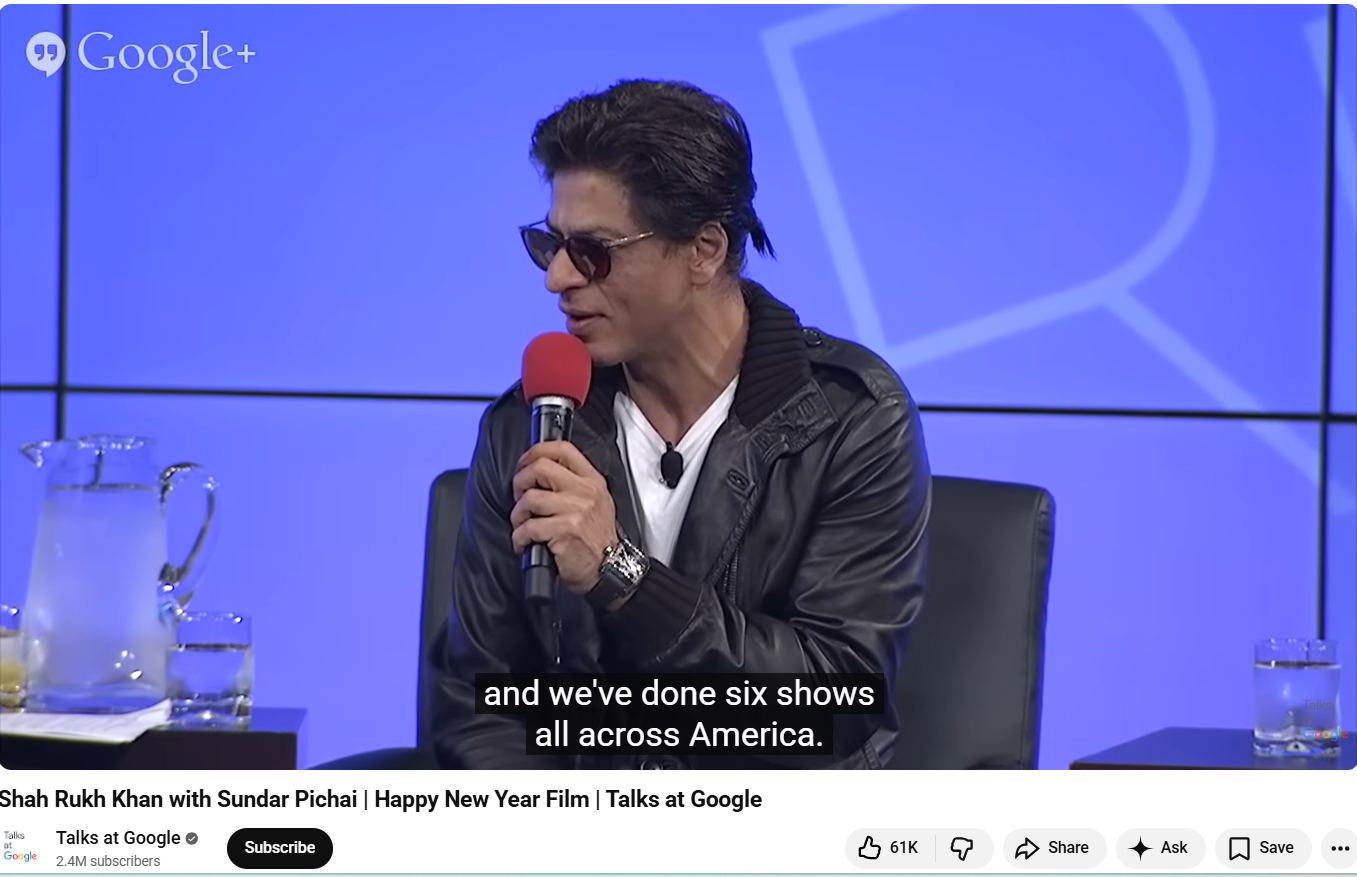
We examined the key frames of Shah Rukh Khan’s viral video using Google Lens. During this process, we found the original video on the official YouTube channel Talks at Google, which was uploaded on 2 October 2014.
In this video, Shah Rukh Khan is seen wearing the same outfit as in the viral clip. He is seen responding to questions from Google CEO Sundar Pichai. The YouTube video description mentions that Shah Rukh Khan participated in a fireside chat held at the Googleplex, where he answered Pichai’s questions and also promoted his upcoming film “Happy New Year.”
The link to the video is given : https://www.youtube.com/watch?v=H_8UBv5bZo0
Upon closely analyzing the viral video of Shah Rukh Khan, we noticed a clear mismatch between his voice and lip movements (lip sync). Such inconsistencies usually appear when the original video or its audio has been tampered with.
We then examined the audio present in the video using the AI detection tool Aurigin. According to the tool’s results, the audio in the viral video was found to be approximately 99 percent AI-generated.
Conclusion
Our research confirmed that the voice heard in the video is not Shah Rukh Khan’s but is AI-generated. Shah Rukh Khan has not made any official comment regarding Mustafizur Rahman’s removal from KKR. Additionally, the claims made in the video about industrialist Gautam Adani are completely misleading and baseless.

A video circulating on social media claims to show former Indian cricketer Sachin Tendulkar commenting on England batter Joe Root’s batting feats. In the clip, Tendulkar is allegedly heard saying that if Joe Root continues scoring centuries, even his (Tendulkar’s) record would be broken. The video further claims that Tendulkar says if Root scores another century, he would give up the bat’s grip, after which the clip abruptly ends.
Users sharing the video are claiming that Sachin Tendulkar has taken a dig at Joe Root through this remark.
Cyber Peace Foundation’s research found the claim to be misleading. Our research clearly establishes that the viral video is not authentic but has been created using Artificial Intelligence (AI) tools and is being shared online with a false narrative.
CLAIM
On January 5, 2025, several users shared the viral video on Instagram, claiming it shows Sachin Tendulkar making remarks about Joe Root’s century-scoring spree.
(Post link and archive link available.)

FACT CHECK
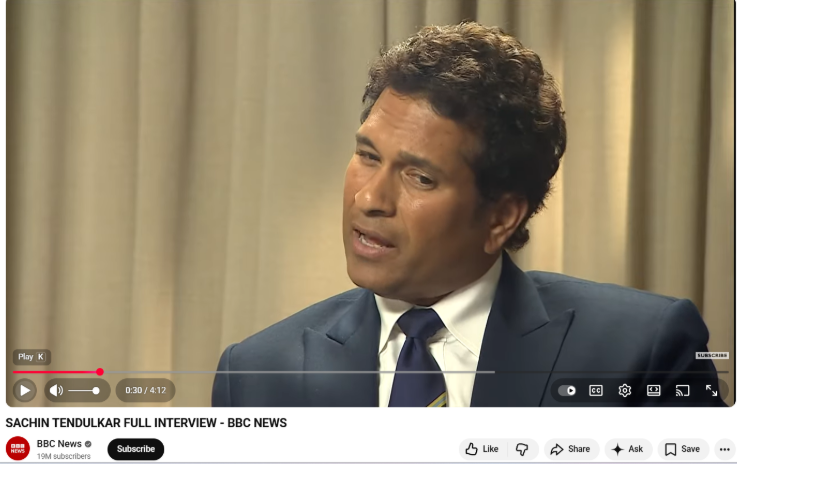
To verify the claim, we extracted keyframes from the viral video and conducted a Google Reverse Image Search. This led us to an interview of Sachin Tendulkar published on the official BBC News YouTube channel on November 18, 2013. The visuals from that interview match exactly with those seen in the viral clip.
This establishes that the visuals used in the viral video are old and have been repurposed with manipulated audio to create a misleading narrative.
Further, Joe Root made his Test debut in 2012. At that time, he had not scored multiple Test centuries and was nowhere close to Sachin Tendulkar’s record tally of hundreds. This timeline itself makes the viral claim factually incorrect.
(Link to the original BBC interview available.)
https://www.youtube.com/watch?v=v6Rz4pgR9UQ
Upon closely examining the viral clip, we noticed that Sachin Tendulkar’s voice sounded unnatural and inconsistent. This raised suspicion of audio manipulation.
We then ran the viral video through an AI detection tool, Aurigin AI. According to the results, the audio in the video was found to be 100 percent AI-generated, confirming that Tendulkar never made the statements attributed to him in the clip.

Conclusion
Our research confirms that the viral video claiming Sachin Tendulkar commented on Joe Root’s centuries is fake. The video has been created using AI-generated audio and misleadingly combined with visuals from a 2013 interview. Users are sharing this manipulated clip on social media with a false claim.

Executive Summary
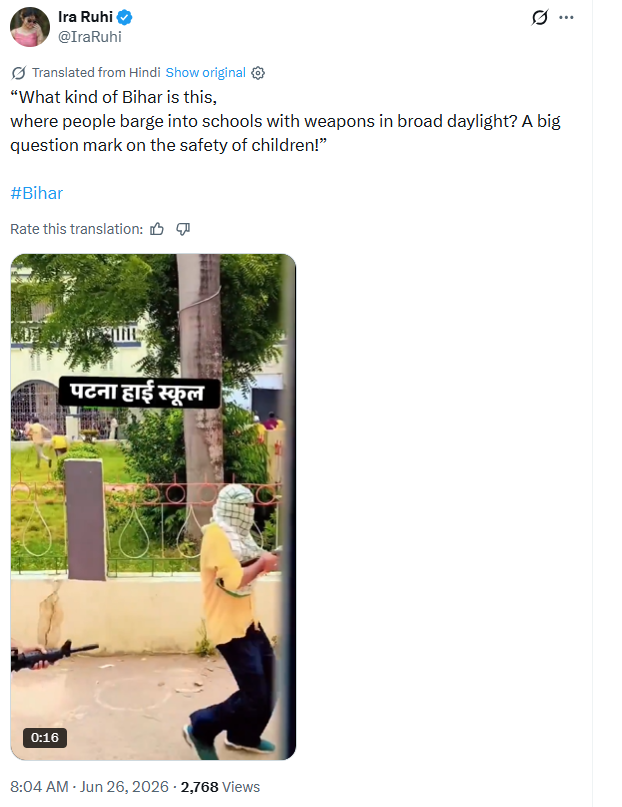
A 22-second video is circulating on social media platform X (formerly Twitter) with a claim that a shooting incident took place at Patna High School in Bihar. The video shows several masked men running around with weapons in their hands, accompanied by the sound of gunfire. A text overlay on the video reads "Patna High School." However, an research by the CyberPeace Research Wing has revealed that this claim is entirely fake and misleading. The video does not depict a real shooting; it captures an authorized movie/web series shooting on the school premises.
The Claim
Social media users are sharing the video claiming that a real firing incident occurred at Patna High School in Patna, Bihar. https://x.com/IraRuhi/status/2070334893830357499
Fact Check
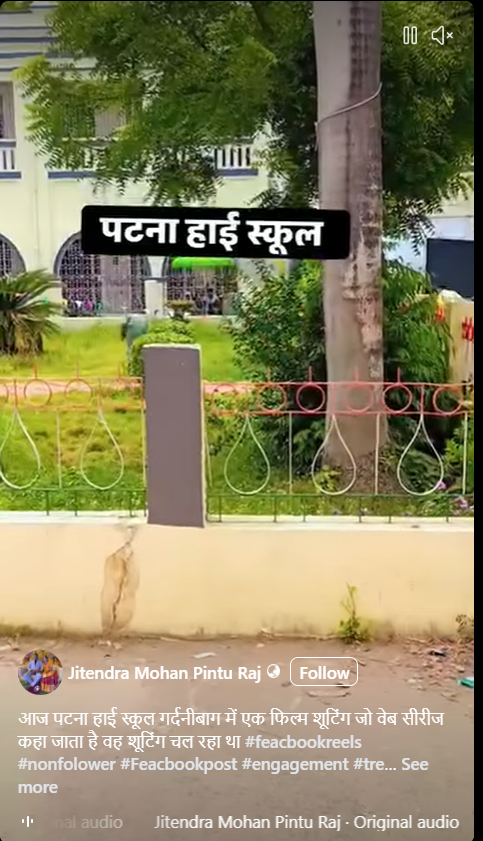
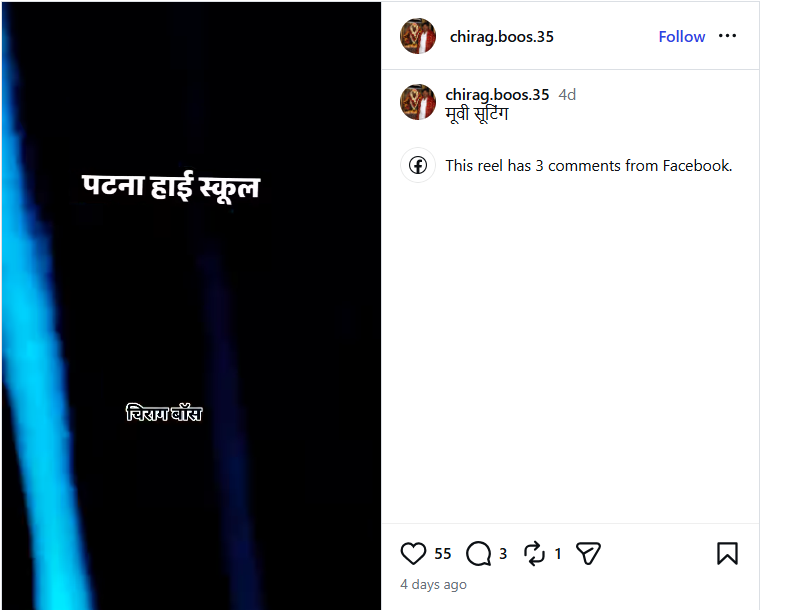
Keyframes from the viral video were analyzed using reverse image search. This led to identical videos uploaded on Facebook and Instagram on June 25, 2026. The captions on both uploads explicitly stated that the footage was from a movie and web series shoot. Furthermore, a closer inspection of the videos revealed professional filmmaking equipment, such as a black flag and a skimmer, visible on the set. https://www.facebook.com/reel/2160248068089642
https://www.instagram.com/p/DaBE0gQglUF/
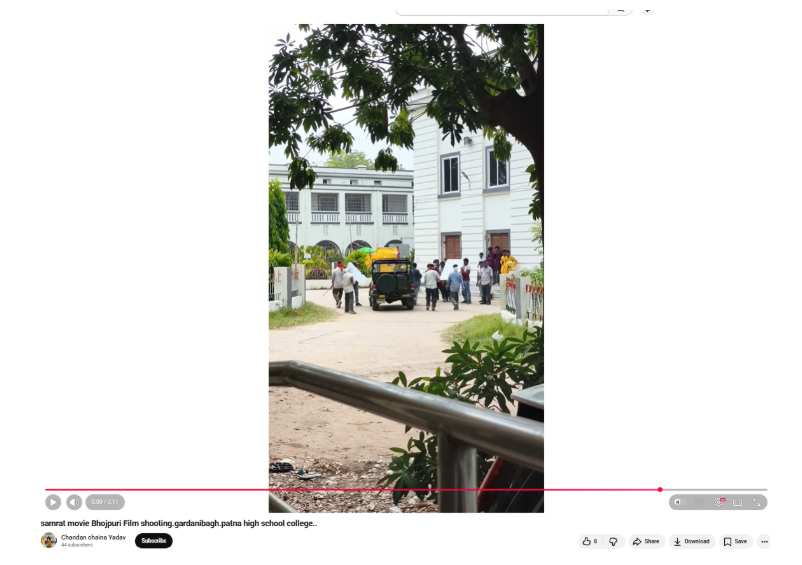
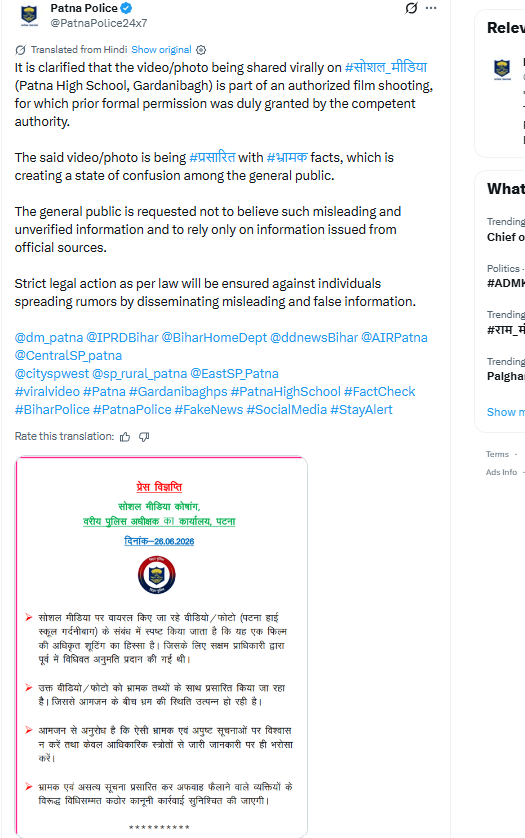
A targeted keyword search led to a YouTube video uploaded on June 20, 2026. The visuals in this video perfectly matched the viral footage, and the individuals seen in the viral clip could be spotted wearing the exact same clothes. "Regarding the video/photo being circulated on social media (Patna High School, Gardanibagh), it is clarified that this is part of an authorized film shooting, for which due permission was previously granted by the competent authority."
To verify further, official statements were checked. The Patna Police issued a formal press release on June 26, 2026, completely dismissing the viral rumors. https://x.com/PatnaPolice24x7/status/2070501501529960581
Conclusion
The evidence gathered confirms that there was no shooting incident at Patna High School. The viral video is behind-the-scenes footage from a pre-approved film production.
