
CCI Imposes ₹213 Crore Penalty on Meta for Abusing Dominance via 2021 WhatsApp Privacy Policy
Introduction
India's Competition Commission of India (CCI) on 18th November 2024 imposed a ₹213 crore penalty on Meta for abusing its dominant position in internet-based messaging through WhatsApp and online display advertising. The CCI order is passed against abuse of dominance by the Meta and relates to WhatsApp’s 2021 Privacy Policy. The CCI considers Meta a dominant player in internet-based messaging through WhatsApp and also in online display advertising. WhatsApp's 2021 privacy policy update undermined users' ability to opt out of getting their data shared with the group's social media platform Facebook. The CCI directed WhatsApp not to share user data collected on its platform with other Meta companies or products for advertising purposes for five years.
CCI Contentions
The regulator contended that for purposes other than advertising, WhatsApp's policy should include a detailed explanation of the user data shared with other Meta group companies or products specifying the purpose. The regulator also stated that sharing user data collected on WhatsApp with other Meta companies or products for purposes other than providing WhatsApp services should not be a condition for users to access WhatsApp services in India. CCI order is significant as it upholds user consent as a key principle in the functioning of social media giants, similar to the measures taken by some other markets.
Meta’s Stance
WhatsApp parent company Meta has expressed its disagreement with the Competition Commission of India's(CCI) decision to impose a Rs 213 crore penalty on them over users' privacy concerns. Meta clarified that the 2021 update did not change the privacy of people's personal messages and was offered as a choice for users at the time. It also ensured no one would have their accounts deleted or lose functionality of the WhatsApp service because of this update.
Meta clarified that the update was about introducing optional business features on WhatsApp and providing further transparency about how they collect data. The company stated that WhatsApp has been incredibly valuable to people and businesses, enabling organization's and government institutions to deliver citizen services through COVID and beyond and supporting small businesses, all of which further the Indian economy. Meta plans to find a path forward that allows them to continue providing the experiences that "people and businesses have come to expect" from them. The CCI issued cease-and-desist directions and directed Meta and WhatsApp to implement certain behavioral remedies within a defined timeline.
The competition watchdog noted that WhatsApp's 2021 policy update made it mandatory for users to accept the new terms, including data sharing with Meta, and removed the earlier option to opt-out, categorized as an "unfair condition" under the Competition Act. It was further noted that WhatsApp’s sharing of users’ business transaction information with Meta gave the group entities an unfair advantage over competing platforms.
CyberPeace Outlook
The 2021 policy update by WhatsApp mandated data sharing with Meta's other companies group, removing the opt-out option and compelling users to accept the terms to continue using the platform. This policy undermined user autonomy and was deemed as an abuse of Meta's dominant market position, violating Section 4(2)(a)(i) of the Competition Act, as noted by CCI.
The CCI’s ruling requires WhatsApp to offer all users in India, including those who had accepted the 2021 update, the ability to manage their data-sharing preferences through a clear and prominent opt-out option within the app. This decision underscores the importance of user choice, informed consent, and transparency in digital data policies.
By addressing the coercive nature of the policy, the CCI ruling establishes a significant legal precedent for safeguarding user privacy and promoting fair competition. It highlights the growing acknowledgement of privacy as a fundamental right and reinforces the accountability of tech giants to respect user autonomy and market fairness. The directive mandates that data sharing within the Meta ecosystem must be based on user consent, with the option to decline such sharing without losing access to essential services.
References

Related Blogs

Introduction
Misinformation in India has emerged as a significant societal challenge, wielding a potent influence on public perception, political discourse, and social dynamics. A potential number of first-time voters across India identified fake news as a real problem in the nation. With the widespread adoption of digital platforms, false narratives, manipulated content, and fake news have found fertile ground to spread unchecked information and news.
In the backdrop of India being the largest market of WhatsApp users, who forward more content on chats than anywhere else, the practice of fact-checking forwarded information continues to remain low. The heavy reliance on print media, television, unreliable news channels and primarily, social media platforms acts as a catalyst since studies reveal that most Indians trust any content forwarded by family and friends. It is noted that out of all risks, misinformation and disinformation ranked the highest in India, coming before infectious diseases, illicit economic activity, inequality and labour shortages. World Economic Forum analysts, in connection with their 2024 Global Risk Report, note that “misinformation and disinformation in electoral processes could seriously destabilise the real and perceived legitimacy of newly elected governments, risking political unrest, violence and terrorism and long-term erosion of democratic processes.”
The Supreme Court of India on Misinformation
The Supreme Court of India, through various judgements, has noted the impact of misinformation on democratic processes within the country, especially during elections and voting. In 1995, while adjudicating a matter pertaining to keeping the broadcasting media under the control of the public, it noted that democracy becomes a farce when the medium of information is monopolized either by partisan central authority or by private individuals or oligarchic organizations.
In 2003, the Court stated that “Right to participate by casting a vote at the time of election would be meaningless unless the voters are well informed about all sides of the issue in respect of which they are called upon to express their views by casting their votes. Disinformation, misinformation, non-information all equally create an uninformed citizenry which would finally make democracy a mobocracy and a farce.” It noted that elections would be a useless procedure if voters remained unaware of the antecedents of the candidates contesting elections. Thus, a necessary aspect of a voter’s duty to cast intelligent and rational votes is being well-informed. Such information forms one facet of the fundamental right under Article 19 (1)(a) pertaining to freedom of speech and expression. Quoting James Madison, it stated that a citizen’s right to know the true facts about their country’s administration is one of the pillars of a democratic State.
On a similar note, the Supreme Court, while discussing the disclosure of information by an election candidate, gave weightage to the High Court of Bombay‘s opinion on the matter, which opined that non-disclosure of information resulted in misinformation and disinformation, thereby influencing voters to take uninformed decisions. It stated that a voter had the elementary right to know the full particulars of a candidate who is to represent him in Parliament/Assemblies.
While misinformation was discussed primarily in relation to elections, the effects of misinformation in other sectors have also been discussed from time to time. In particular, The court highlighted the World Health Organisation’s observation in 2021 while discussing the spread of COVID-19, noting that the pandemic was not only an epidemic but also an “infodemic” due to the overabundance of information on the internet, which was riddled with misinformation and disinformation. While condemning governments’ direct or indirect threats of prosecution to citizens, it noted that various citizens who relied on the internet to provide help in securing medical facilities and oxygen tanks were being targeted by alleging that the information posted by them was false and was posted to create panic, defame the administration or damage national image. It instructed authorities to cease such threats and prevent clampdown on information sharing.
More recently, in Facebook v. Delhi Legislative Assembly [(2022) 3 SCC 529], the apex court, while upholding the summons issued to Facebook by the Delhi Legislative Assembly in the aftermath of the 2020 Delhi Riots, noted that while social media enables equal and open dialogue between citizens and policymakers, it is also a tool in the where extremist views are peddled into mainstream media, thereby spreading misinformation. It noted Facebook’s role in the Mynmar, where misinformation and posts that Facebook employees missed fueled offline violence. Since Facebook is one of the most popular social media applications, the platform itself acts as a power center by hosting various opinions and voices on its forum. This directly impacts the governance of States, and some form of liability must be attached to the platform. The Supreme Court objected to Facebook taking contrary stands in various jurisdictions; while in the US, it projected itself as a publisher, which enabled it to maintain control over the material disseminated from its platform, while in India, “it has chosen to identify itself purely as a social media platform, despite its similar functions and services in the two countries.”
Conclusion
The pervasive issue of misinformation in India is a multifaceted challenge with profound implications for democratic processes, public awareness, and social harmony. The alarming statistics of fake news recognition among first-time voters, coupled with a lack of awareness regarding fact-checking organizations, underscore the urgency of addressing this issue. The Supreme Court of India has consistently recognized the detrimental impact of misinformation, particularly in elections. The judiciary has stressed the pivotal role of an informed citizenry in upholding the essence of democracy. It has emphasized the right to access accurate information as a fundamental aspect of freedom of speech and expression. As India grapples with the challenges of misinformation, the intersection of technology, media literacy and legal frameworks will be crucial in mitigating the adverse effects and fostering a more resilient and informed society.
References
- https://thewire.in/media/survey-finds-false-information-risk-highest-in-india
- https://www.statista.com/topics/5846/fake-news-in-india/#topicOverview
- https://www.weforum.org/publications/global-risks-report-2024/digest/
- https://main.sci.gov.in/supremecourt/2020/20428/20428_2020_37_1501_28386_Judgement_08-Jul-2021.pdf
- Secretary, Ministry of Information & Broadcasting, Govt, of India and Others v. Cricket Association of Bengal and Another [(1995) 2 SCC 161]
- People’s Union for Civil Liberties (PUCL) v. Union of India [(2003) 4 SCC 399]
- Kisan Shankar Kathore v. Arun Dattatray Sawant and Others [(2014) 14 SCC 162]
- Distribution of Essential Supplies & Services During Pandemic, In re [(2021) 18 SCC 201]
- Facebook v. Delhi Legislative Assembly [(2022) 3 SCC 529]
Executive Summary
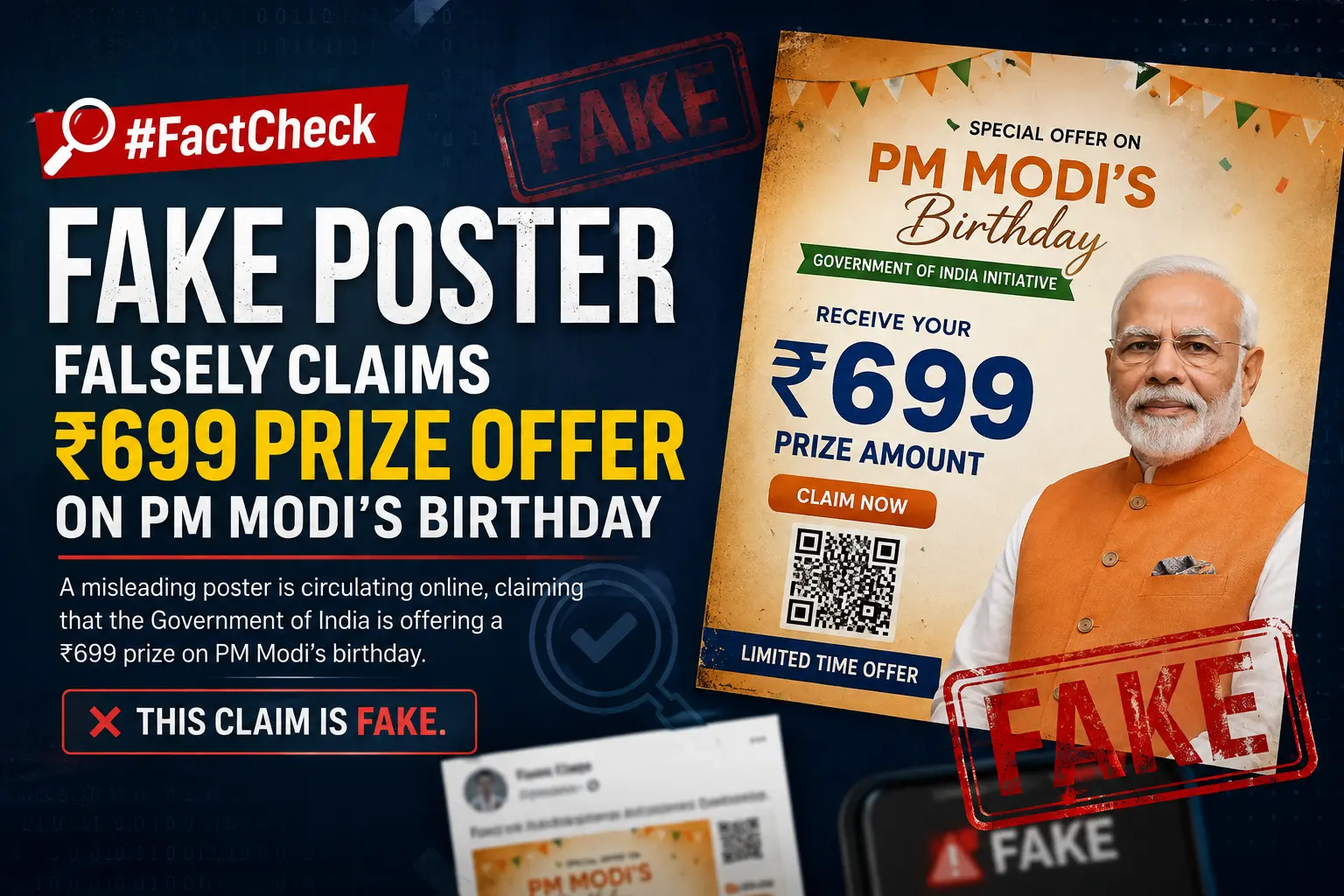
A poster is being shared on social media claiming that people have an opportunity to win up to ₹699 on Prime Minister Narendra Modi’s birthday. The poster carries a “GET OFFER” button and asks users to click on it.
The CyberPeace Research Wing found the claim to be false. The research found that the Government of India has made no such announcement offering ₹699 to people on Prime Minister Narendra Modi’s birthday. The viral post is misleading and fake.
Claim
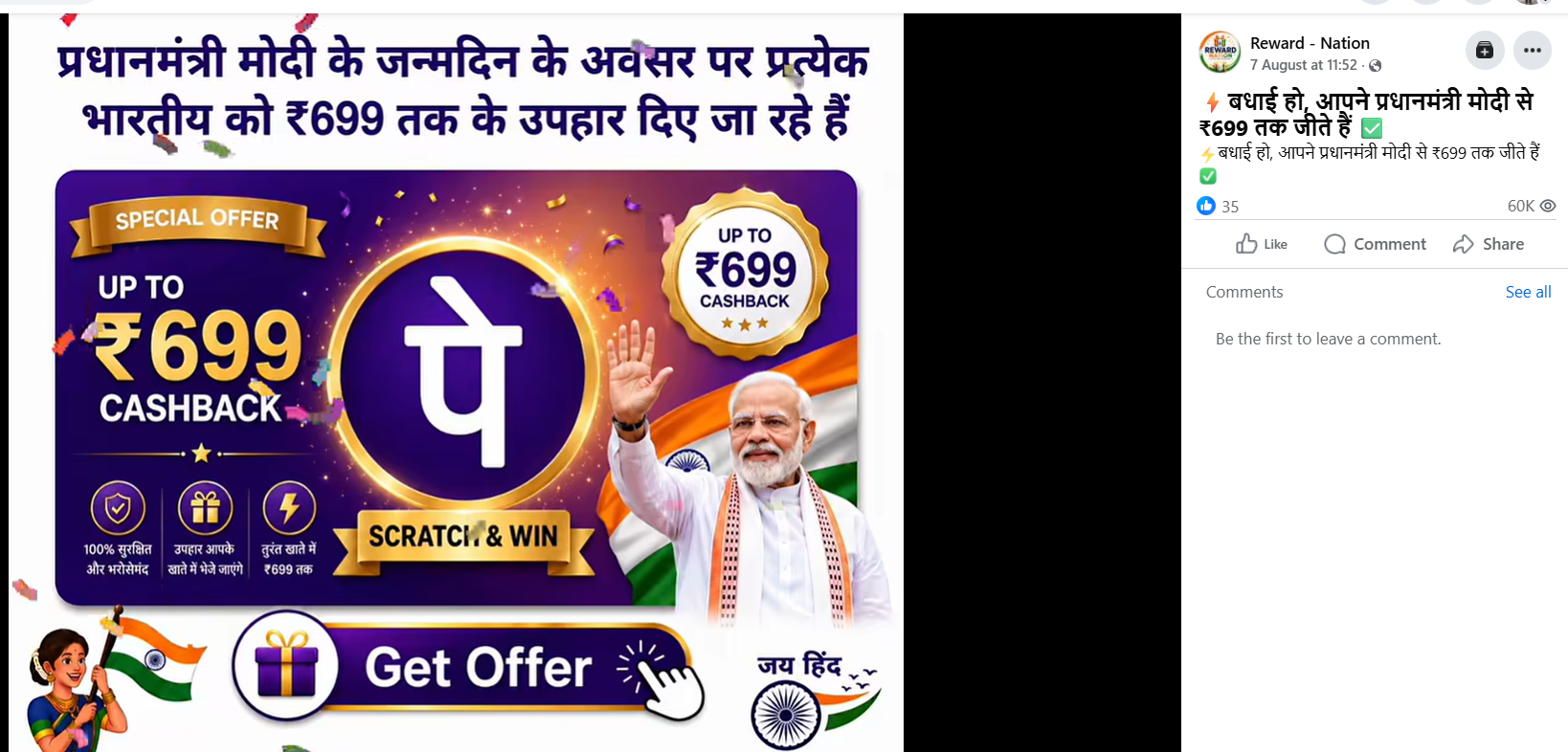
A Facebook user shared the viral poster with the caption:“Congratulations, you have won up to ₹699 from Prime Minister Modi.”
https://www.facebook.com/100083035017578/videos/1533904658280321/
FactCheck
To verify the claim, we conducted a Google search using relevant keywords. However, we did not find any credible media report confirming that the Government of India had announced such an offer.
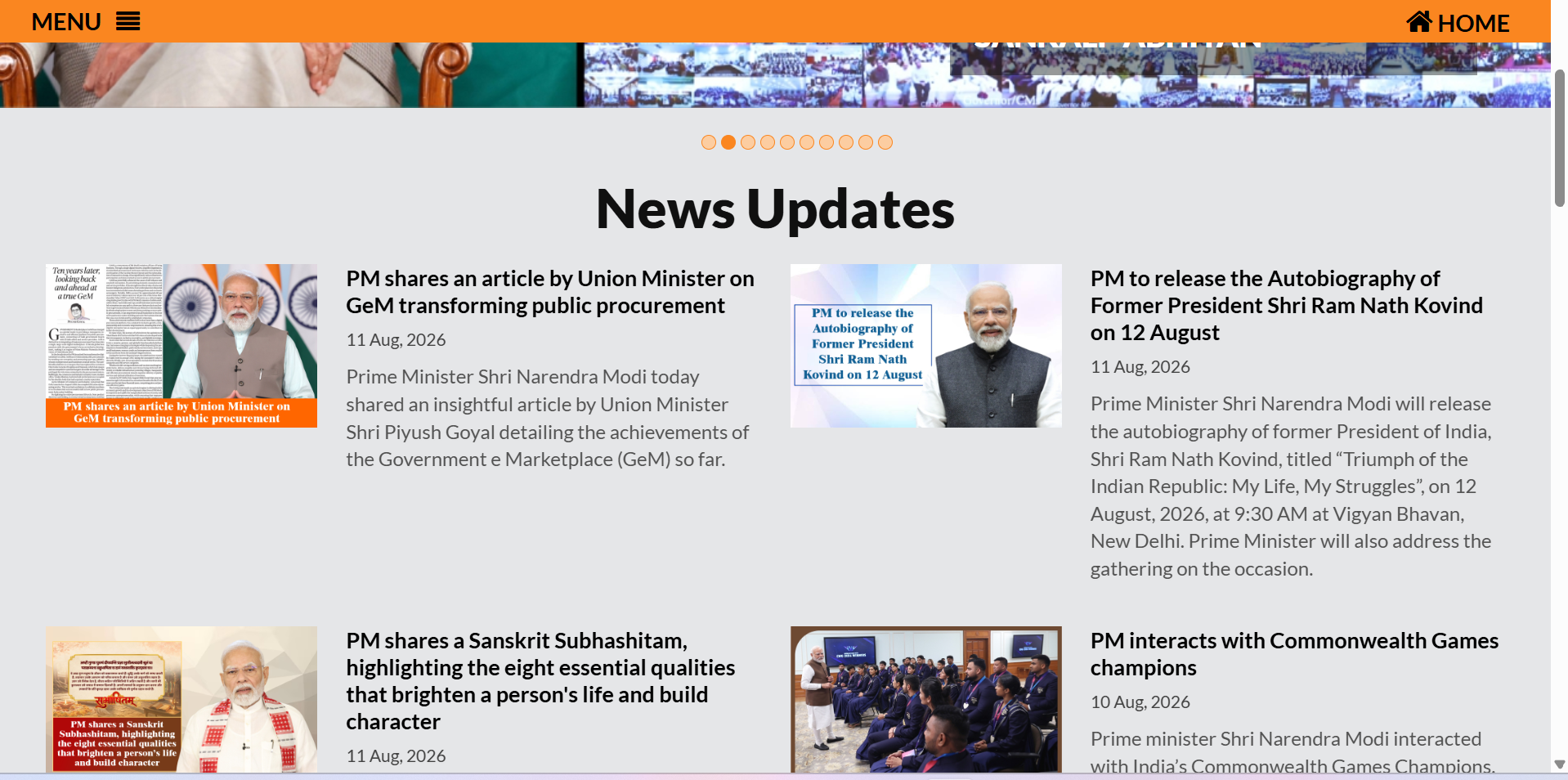
We then checked the official website of the Prime Minister’s Office (PMO) for any announcement related to the alleged ₹699 prize offer. No official notification or report supporting the claim was found.
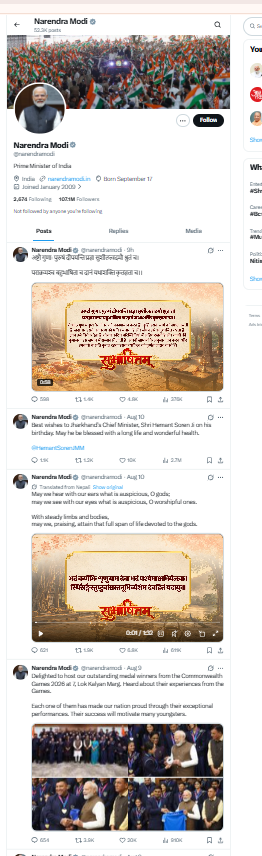
As part of the next stage of verification, we also checked the official X accounts of the PMO and Prime Minister Narendra Modi. We found no post or official announcement confirming the viral claim.
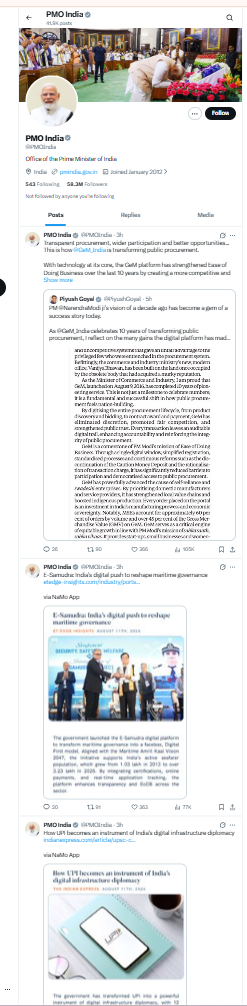
https://x.com/narendramodi
Conclusion
Our research found that the Government of India has not announced any ₹699 prize or offer on the occasion of Prime Minister Narendra Modi’s birthday. The viral poster is therefore fake and misleading. Users should avoid clicking on such suspicious “GET OFFER” links, as they may be designed to redirect users to fraudulent or deceptive websites.

Introduction
The whole world is shifting towards a cashless economy, with innovative payment transaction systems such as UPI payments, card payments, etc. These payment systems require processing, storage, and movement of millions of cardholders data which is crucial for any successful transaction.
And therefore to maintain the credibility of this payment ecosystem, security or secure movement and processing of cardholders data becomes paramount. Entities involved in a payment ecosystem are responsible for the security of cardholders data. Security is also important because if breaches happen in cardholders data it would amount to financial loss. Fraudsters are attempting smart ways to leverage any kind of security loopholes in the payment system.
So these entities which are involved in the payment ecosystem need to maintain some security standards set by one council of network providers in the payment industry popularly known as the Payment Card Industry Security Standard Council.
Overview of what is PCI and PCI DSS Compliance
Earlier every network providers in the payment industry have their own set of security standards but later they all together i.e., Visa, Mastercard, American Express, Discover, and JCB constituted an independent body to come up with comprehensive security standards like PCI DSS, PA DSS, PCI-PTS, etc. And these network providers ensure the enforcement of the security standards by putting conditions on services being provided to the merchant or acquirer bank.
In other words, PCI DSS particularly is the global standard that provides a baseline of technical and operational requirements designed to protect account data. PCI DSS is a security standard specially designed for merchants and service providers in the payment ecosystem to protect the cardholders data against any fraud or theft.
It applies to all the entities including third-party vendors which are involved in processing storing and transmitting cardholders data. In organization, even all CDE (Card Holder Data Environment) including system components or network component that stores and process cardholders data, has to comply with all the requirements of PCI compliance. Recently PCI has released a new version of PCI DSS v4.0 a few months ago with certain changes from the previous version after three years of the review cycle.
12 Requirements of PCI DSS
This is the most important part of PCI DSS as following these requirements can make any organization to some extent PCI compliant. So what are these requirements:
- Installing firewalls or maintaining security controls in the networks
- Use strong password in order to secure the CDE( Card holders data environment)
- Protection of cardholder data
- Encrypting the cardholder data during transmission over an open and public network.
- Timely detection and protection of the cardholders data environment from any malicious activity or software.
- Regular updating the software thereby maintaining a secure system.
- Rule of business need to know should apply to access the cardholders data
- Identification and authentication of the user are important to access the system components.
- Physical access to cardholders data should be restricted.
- Monitoring or screening of system components to know the malicious activity internally in real-time.
- Regular auditing of security control and finding any vulnerabilities available in the systems.
- Make policies and programs accordingly in order to support information security.
How organization can become PCI compliant
- Scope: First step is to determine all the system components or networks storing and processing cardholders data i.e., Cardholders Data Environment.
- Assess: Then test whether these systems or networks are complying with all the requirements of PCI DSS COMPLIANCE.
- Report: Documenting all the assessment through self assessment questionnaire by answering following questions like whether the requirements are met or not? Whether the requirements are met with customized approach.
- Attest: Then the next step is to complete the attestation process available on the website of PCI SSC.
- Submit: Then organization can submit all the documents including reports and other supporting documents if it is requested by other entities such as payment brands, merchant or acquirer.
- Remediate: Then the organisation should take remedial action for the requirements which are not in place on the system components or networks.
Conclusion
One of the most important issues facing those involved in the digital payment ecosystem is cybersecurity. The likelihood of being exposed to cybersecurity hazards including online fraud, information theft, and virus assaults is rising as more and more users prefer using digital payments.
And thus complying and adopting with these security standards is the need of the hour. And moreover RBI has also mandated all the regulated entities ( NBFCs Banks etc) under one recent notification to comply with these standards.
