
Why Ransomware Continues to Threaten Indian SMEs Despite Awareness Campaigns
Introduction
Rapid growth in India’s Digital Economy has opened up various options for companies to utilise digital technology as part of their operations. Examples of these technologies include cloud computing; online payment systems; digitally enabled supply chains; and platforms that facilitate remote working. As small and medium enterprises(SMEs) represent a major part of India’s economy, they have quickly been able to capitalise on the benefits these technologies provide in improving their operational efficiency and developing an increased presence within the market. However, this rapid pace of digitalisation creates an exposure to a much greater breadth of cyber-security threats than ever for SMEs. Today, perhaps the greatest cyber-threat facing SMEs in India is ransomware, an increasing frequent type of cyber-attack that has been increasing on a global scale over the past few years and in response, there have been numerous initiatives by various government agencies, industry organisations, and cyber-security firms designed to educate the general public on the risks of ransomware.
What is Ransomware?
Ransomware is a type of malware, which prevents all users being able to access their file system or access their data until they pay a ransom. In a standard ransomware event an attacker will breach the company's network, and encrypt all critical files so that they are unable to be used. The attacker usually demands payment in bitcoin because it is a difficult trace and promises to provide a key to unlock the data in exchange for the payment. Attackers gain access to company networks by using social engineering techniques such as phishing email, stolen password, or exploiting an unpatched vulnerability in the software that is running on the company's network.
The Rising Threat of Ransomware
Cybercriminals have created one of the most destructive varieties of cybercrimes around the world through ransomware; while experts in the cybersecurity field project losses to global ransomware damage may reach $30 billion by 2025. There has also been a marked increase in SMEs being attacked by ransomware-based cybercriminals throughout India. NASSCOM has done research and found that many SMEs in India have experienced attempted ransomware attacks in the past few years alone. According to incident reports provided through CERT-In, there has been a noticeable increase in the number of cybercrime occurrences throughout different sectors of India’s economy since those reports began. These developments have shown an increase in the size and level of sophistication of ransomware related threats.
Why Indian SMEs Remain Vulnerable Despite Awareness
Despite increased awareness about cyber threats, there is a large number of Indian SMEs that continue to be vulnerable to ransomware. The main reason is financial limitations. Many small businesses typically have limited financial resources and those limited resources more often than not, go towards operations, including production, logistics, and marketing - cybersecurity costs are usually viewed as additional costs.
Another significant problem facing SMEs is a shortage of skilled cybersecurity professionals. Large enterprises typically have dedicated security teams responsible for protecting the enterprise, whereas SMEs will employ IT staff generally without any specific expertise in detecting/countering cyber threats. Human error are also significant contributors to these cyber incursion events. An employee can inadvertently click on an email link or download an infected attachment, or use a weak password - all of which could provide opportunities for cybercriminals to access the company's network. Phishing emails continue to be the most common approach for initiating ransomware.
Furthermore - many SMEs have implemented digital platforms, such as cloud-based applications and payment processing, without appropriately executing cybersecurity planning prior to implementation. Many of the issues that have arisen from such rapid digitisation are due to a lack of sufficient planned cybersecurity measures as part of the implementation process. This has also resulted in a situation where technological advancements such as Ransomware as a Service (RaaS) have created an even larger pool of potential perpetrators (cybercriminals) with little-to-no expertise being able to launch a widespread ransomware campaign using readily available/pre-manufactured tools.
Real-World Cyber Incidents Affecting Indian SMEs
As several examples recently demonstrate, Indian SMEs continue to experience significant cyber attack risks. Recently, a logistics firm located in Gurugram found itself locked out of nearly 4,000 shipments due to a ransomware attack, which cost them ₹12 lakhs to fix because they had poor backups and another incident in Gurugram which highlights how vulnerable many SMEs in the country continue to be to ransomware attacks. In the case of a garments company, a hacker compromised the company's server by placing ransomware on its system. The company was forced to shut down its computerised warehouse system as a result of the attack. Only after the company had lost access to its system, did it receive a ransom demand from the hacker, in the form of an email requesting payment of 15 bitcoins (approximately ₹25 lakh), in order for the hacker to restore the company's access to the system. The hacker also threatened to delete the company's financial and banking records if the ransom were not paid. Gurgaon Police's Cyber Cell received the report of the incident, and registered a first information report (FIR) against unknown hackers. The case represents an opportunity for SMEs to evaluate the risks associated with ransomware.
Bridging the Gap Between Awareness and Implementation
Although awareness campaigns can show organisations what types of cybersecurity risks they’re exposed to, these campaigns will not keep businesses from being victims of a ransomware attack by themselves.. The most critical step forward is the implementation of the principles of cybersecurity from an understanding viewpoint to that of an active action. Organisations need to go beyond being aware of the risks related to cyber and then put measures in place to mitigate those risks.
To improve cybersecurity, organisations may need to spend money on developing and maintaining systems; set up regular training for employees on handling cyber threats and implementing an incident response plan to address security incidents; back up data regularly; maintain the hardware and software used in the organisation's computer systems at least once a month (or more often if necessary); and monitor all aspects of its computer systems continuously for weaknesses or problems.
The Way Forward: Strengthening SME Cybersecurity
In order to truly address the ransomware threat, collaboration by businesses, government agencies and cyber security professionals is mandatory. One of the biggest roles in this collaboration is through governmental initiatives to enhance the overall level of awareness of digital security among SMEs (small to medium-sized enterprises). Improved SME understanding of cyber risks will be based on the availability of affordable security solutions that are specifically tailored for small businesses.
Industry partnerships as well as public-private partnerships also aid the sharing of threat intelligence to strengthen collaborative defense against all cybercriminal activity.
Conclusion
Despite Indian SMEs being aware of cyber threats, they have been unable to implement safeguards or Cyber Security plans due to limited financial resources, insufficient qualified personnel, human errors, and the rapid pace at which digital technology is being adopted without adequate Cyber Security measures. In order to respond effectively to the growing threat of Ransomware, Indian SMEs must evolve from being aware of cyber threats to proactively developing Cyber Security strategies that will allow them to prevent, prepare for, and recover from the increased cyber threat posed by the rapidly growing digitalisation of business within an increasingly globalised economy.
References
- https://www.ibm.com/think/topics/ransomware
- https://primeinfoserv.com/indias-sme-cybersecurity-crisis-real-incidents-real-lessons-2024-2025/
- https://timesofindia.indiatimes.com/city/gurgaon/ransomware-attack-on-apparel-firm-all-data-lost/articleshow/59496777.cms#
- https://ciso.economictimes.indiatimes.com/news/cybercrime-fraud/indian-businesses-face-nearly-700-ransomware-attacks-per-day-kaspersky/120471668
- https://smestreet.in/msmenews/indian-smes-remain-alarmingly-exposed-to-ransomware-threats-sophos-report-2025-9456628
- https://m.economictimes.com/news/how-to/how-can-indian-smes-combat-ransomware-attacks/articleshow/108047111.cms

Related Blogs

A video of Bollywood actor Salman Khan is being widely circulated on social media, in which he can allegedly be heard saying that he will soon join Asaduddin Owaisi’s party, the All India Majlis-e-Ittehadul Muslimeen (AIMIM). Along with the video, a purported image of Salman Khan with Asaduddin Owaisi is also being shared. Social media users are claiming that Salman Khan is set to join the AIMIM party.
CyberPeace research found the viral claim to be false. Our research revealed that Salman Khan has not made any such statement, and that both the viral video and the accompanying image are AI-generated.
Claim
Social media users claim that Salman Khan has announced his decision to join AIMIM.On 19 January 2026, a Facebook user shared the viral video with the caption, “What did Salman say about Owaisi?” In the video, Salman Khan can allegedly be heard saying that he is going to join Owaisi’s party. (The link to the post, its archived version, and screenshots are available.)

Fact Check:
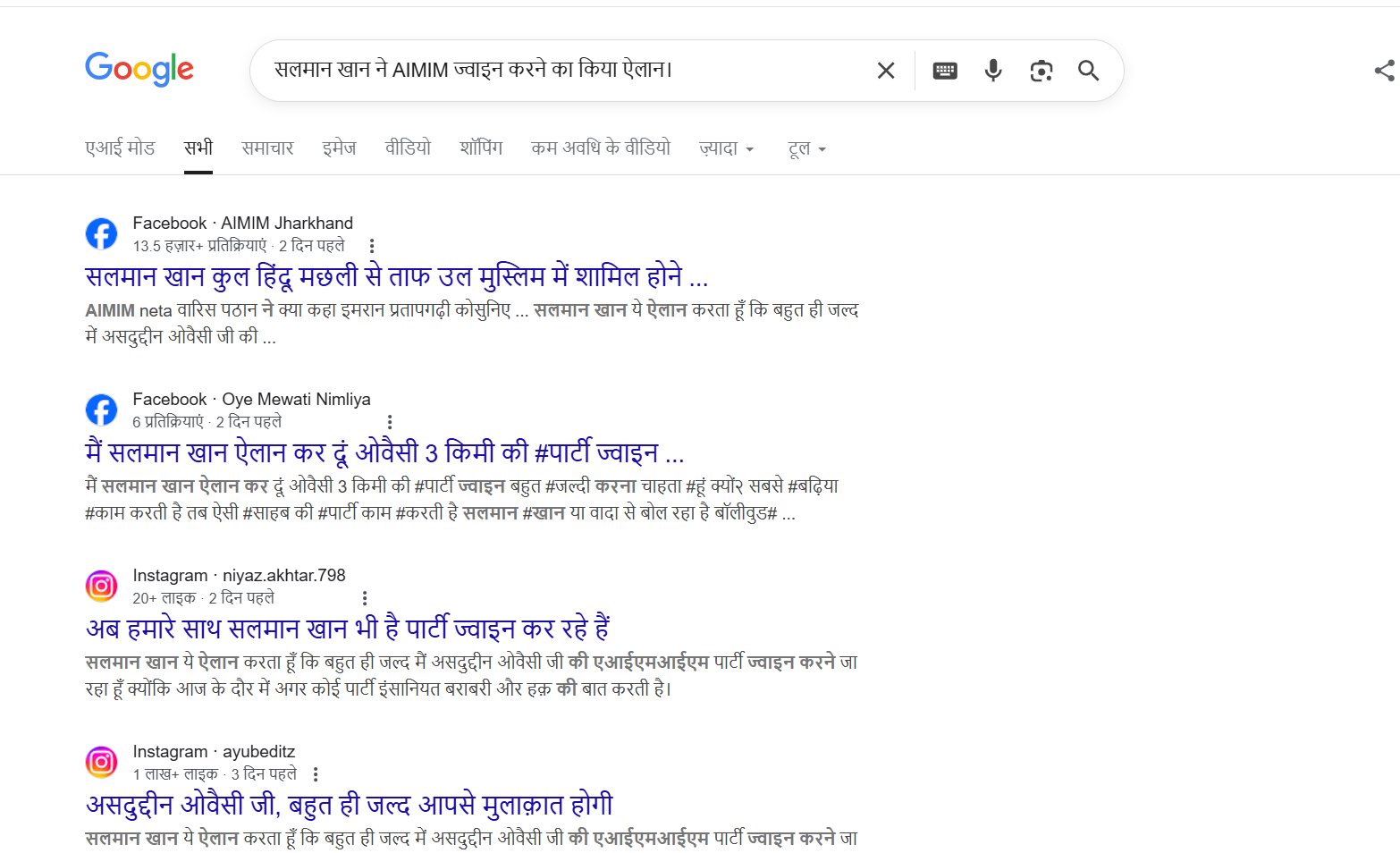
To verify the claim, we first searched Google using relevant keywords. However, no credible or reliable media reports were found supporting the claim that Salman Khan is joining AIMIM.
In the next step of verification, we extracted key frames from the viral video and conducted a reverse image search using Google Lens. This led us to a video posted on Salman Khan’s official Instagram account on 21 April 2023. In the original video, Salman Khan is seen talking about an event scheduled to take place in Dubai. A careful review of the full video confirmed that no statement related to AIMIM or Asaduddin Owaisi is made.

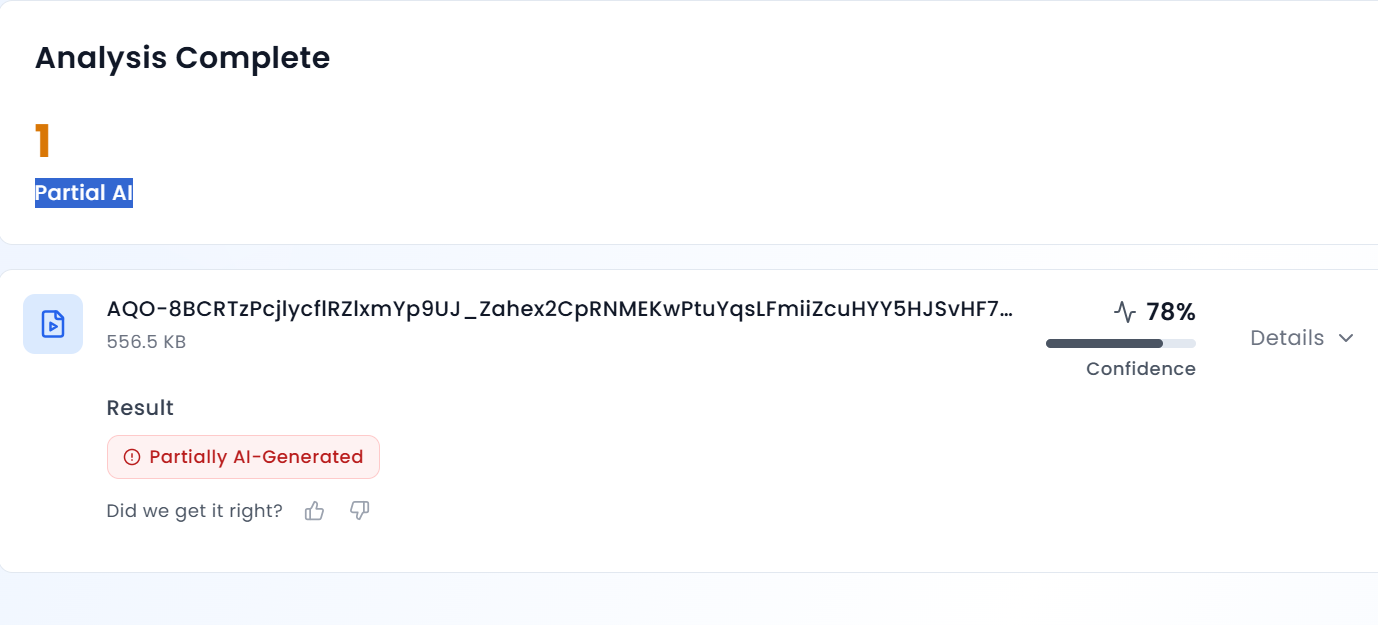
Further analysis of the viral clip revealed that Salman Khan’s voice sounds unnatural and robotic. To verify this, we scanned the video using AURGIN AI, an AI-generated content detection tool. According to the tool’s analysis, the viral video was generated using artificial intelligence.
Conclusion
Salman Khan has not announced that he is joining the AIMIM party. The viral video and the image circulating on social media are AI-generated and manipulated.

In 2023, PIB reported that up to 22% of young women in India are affected by Polycystic Ovarian Syndrome (PCOS). However, access to reliable information regarding the condition and its treatment remains a challenge. A study by the PGIMER Chandigarh conducted in 2021 revealed that approximately 37% of affected women rely on the internet as their primary source of information for PCOS. However, it can be difficult to distinguish credible medical advice from misleading or inaccurate information online since the internet and social media are rife with misinformation. The uptake of misinformation can significantly delay the diagnosis and treatment of medical conditions, jeopardizing health outcomes for all.
The PCOS Misinformation Ecosystem Online
PCOS is one of the most common disorders diagnosed in the female endocrine system, characterized by the swelling of ovaries and the formation of small cysts on their outer edges. This may lead to irregular menstruation, weight gain, hirsutism, possible infertility, poor mental health, and other symptoms. However, there is limited research on its causes, leaving most medical practitioners in India ill-equipped to manage the issue effectively and pushing women to seek alternate remedies from various sources.
This creates space for the proliferation of rumours, unverified cures and superstitions, on social media, For example, content on YouTube, Facebook, and Instagram may promote “miracle cures” like detox teas or restrictive diets, or viral myths claiming PCOS can be “cured” through extreme weight loss or herbal remedies. Such misinformation not only creates false hope for women but also delays treatment, or may worsen symptoms.
How Tech Platforms Amplify Misinformation
- Engagement vs. Accuracy: Social media algorithms are designed to reward viral content, even if it’s misleading or incendiary since it generates advertisement revenue. Further, non-medical health influencers often dominate health conversations online and offer advice with promises of curing the condition.
- Lack of Verification: Although platforms like YouTube try to provide verified health-related videos through content shelves, and label unverified content, the sheer volume of content online means that a significant chunk of content escapes the net of content moderation.
- Cultural Context: In India, discussions around women’s health, especially reproductive health, are stigmatized, making social media the go-to source for private, albeit unreliable, information.
Way Forward
a. Regulating Health Content on Tech Platforms: Social media is a significant source of health information to millions who may otherwise lack access to affordable healthcare. Rather than rolling back content moderation practices as seen recently, platforms must dedicate more resources to identify and debunk misinformation, particularly health misinformation.
b. Public Awareness Campaigns: Governments and NGOs should run nationwide campaigns in digital literacy to educate on women’s health issues in vernacular languages and utilize online platforms for culturally sensitive messaging to reach rural and semi-urban populations. This is vital for countering the stigma and lack of awareness which enables misinformation to proliferate.
c. Empowering Healthcare Communication: Several studies suggest a widespread dissatisfaction among women in many parts of the world regarding the information and care they receive for PCOS. This is what drives them to social media for answers. Training PCOS specialists and healthcare workers to provide accurate details and counter misinformation during patient consultations can improve the communication gaps between healthcare professionals and patients.
d. Strengthening the Research for PCOS: The allocation of funding for research in PCOS is vital, especially in the face of its growing prevalence amongst Indian women. Academic and healthcare institutions must collaborate to produce culturally relevant, evidence-based interventions for PCOS. Information regarding this must be made available online since the internet is most often a primary source of information. An improvement in the research will inform improved communication, which will help reduce the trust deficit between women and healthcare professionals when it comes to women’s health concerns.
Conclusion
In India, the PCOS misinformation ecosystem is shaped by a mix of local and global factors such as health communication failures, cultural stigma, and tech platform design prioritizing engagement over accuracy. With millions of women turning to the internet for guidance regarding their conditions, they are increasingly vulnerable to unverified claims and pseudoscientific remedies which can lead to delayed diagnoses, ineffective treatments, and worsened health outcomes. The rising number of PCOS cases in the country warrants the bridging of health research and communications gaps so that women can be empowered with accurate, actionable information to make the best decisions regarding their health and well-being.
Sources
- https://pib.gov.in/PressReleasePage.aspx?PRID=1893279#:~:text=It%20is%20the%20most%20prevailing%20female%20endocrine,neuroendocrine%20system%2C%20sedentary%20lifestyle%2C%20diet%2C%20and%20obesity.
- https://www.thinkglobalhealth.org/article/india-unprepared-pcos-crisis?utm_source=chatgpt.com
- https://www.bbc.com/news/articles/ckgz2p0999yo
- https://pmc.ncbi.nlm.nih.gov/articles/PMC9092874/
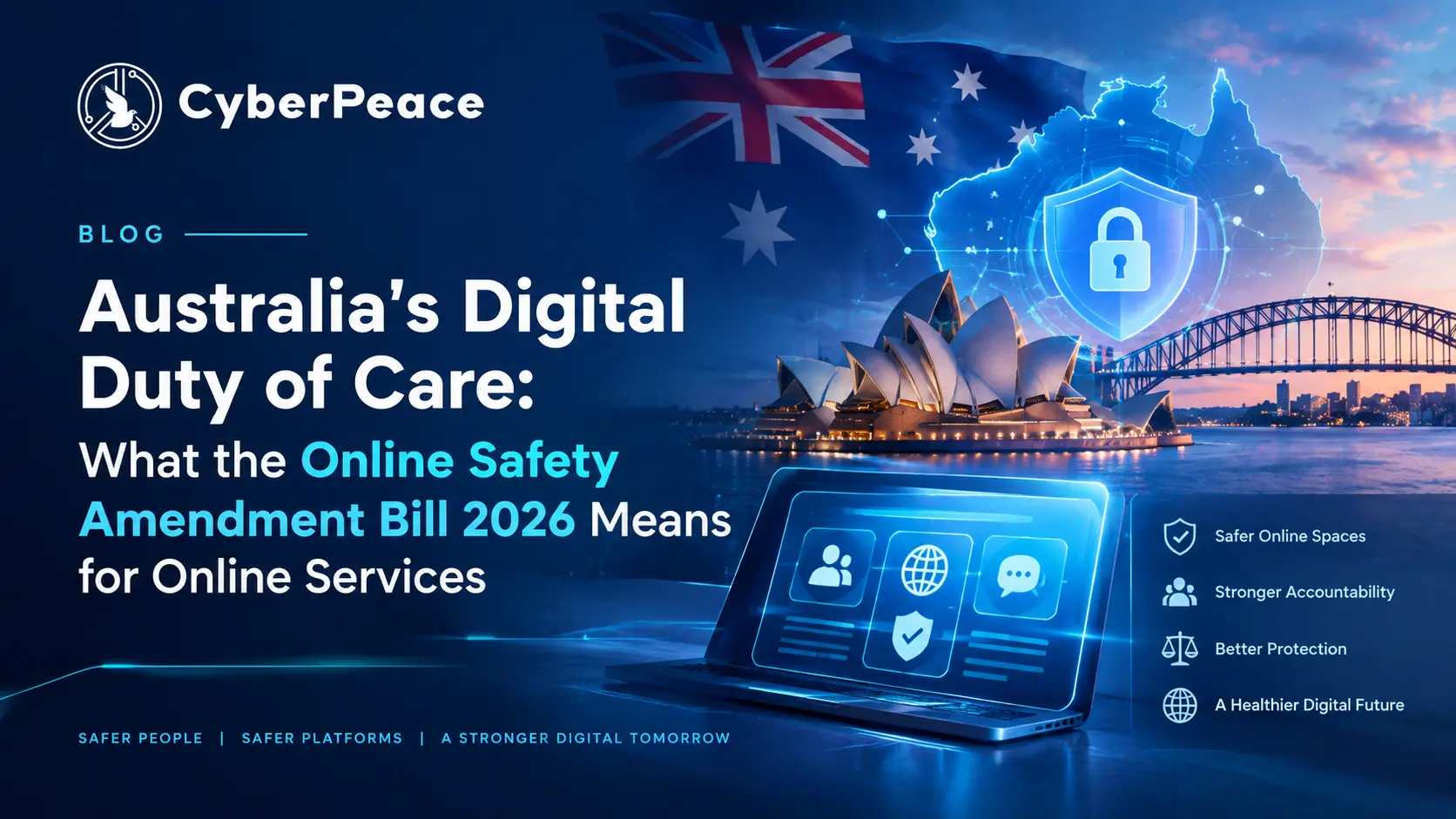
Australia is set to make its most significant reform to online safety laws since the Online Safety Act 2021. On 8 September 2026, the government published a draft of the Online Safety Amendment (Digital Duty of Care) Bill 2026. This would shift the focus of the online safety regime from responding to harmful content to requiring platforms to take steps to prevent foreseeable harms. Consultation closed on 22 September 2026, and the government has signalled its intent to bring legislation to parliament this year. It should be noted that this is a draft document, and there may be changes before any law is made.
What the Bill Proposes
At its core is a single statutory duty: any person responsible for an online service must ensure, “so far as is reasonably practicable”, a safe online environment. The wording is borrowed from work health and safety law, a parallel the Rickard Review itself drew when recommending the duty. The bill would replace the Basic Online Safety Expectations and the industry codes and standards that currently govern harmful content, following a 12-month transition after Royal Assent.
Who Is Covered
The reach is deliberately wide. The duty applies to nine categories of “online service”: internet carriage services, social media, messaging services, designated internet services (websites and platforms), hosting services, search engines, app stores, equipment suppliers, and a new category for AI generation tools such as chatbots and image generators. It attaches both to the provider and to anyone in a position to exercise day-to-day control, so parent companies and subsidiaries could be caught. The minister may exempt low-risk services, and lawful private communications between consenting adults are excluded.
The “Reasonably Practicable” Test
Whether a provider has done enough is judged by weighing the likelihood and degree of harm, what the provider knows or ought reasonably to know, the availability and cost of safety measures, and the privacy impact of those measures. The privacy limb is notable: measures such as age assurance or AI moderation must not intrude on privacy in a way that is “grossly disproportionate” to the risk. Liability is systems-based, meaning a provider is judged on whether it maintains appropriate systems and processes, not on every individual piece of harmful content that slips through.
Three Tiers of Protection
The “safe online environment” is defined in three layers, each more demanding than the last:
- All people in Australia must be protected from seriously harmful material and conduct, including child sexual exploitation material, grooming, terrorism and violent extremism, and content promoting suicide or self-harm.
- Children under 18 must also be protected from material harmful to children, such as pornography, content promoting disordered eating, bullying, and content encouraging hostile attitudes towards women, as well as addictive design features.
- Children under 16 on social media must not be exposed to design features with negative behavioural impacts, regardless of whether they hold an account.
Design Features and “My Feed, My Way”
A distinctive element is the focus on how services are built. The Bill designates five categories of design feature as having negative behavioural impacts: recommender systems, endless feeds, feedback features such as likes and follower counts, time-limited content such as stories, and logged-in versions of these features. The minister could add more. Providers must manage these features appropriately, including by offering “user empowerment tools”. The flagship is “My Feed, My Way”, under which social media users could opt in to algorithmic recommendations or choose to see only content from accounts they follow, with the detail to be set by legislative instrument.
Compliance Obligations
Providers would need to complete a written risk assessment for each service at least annually and before making changes that could give rise to new risks. These assessments would need to be retained for six years and provided to the eSafety Commissioner within 30 days of a request. Additional requirements include transparency reporting, publication of safety information, accessible complaints processes, and, in some cases, an Australian point of contact.
The Bill also includes a number of other reforms, including take-down timeframes for removal notices reducing from 48 to 24 hours from the day after Royal Assent, the power for the Commissioner to direct the removal of 'nudify' apps, the ability to remove reposted material without a new complaint, and approved university researchers being given access to platform data.
Enforcement and Penalties
The Commissioner will have a range of tools available, including the power to issue formal warnings publicly, impose binding remedial directions, and obtain documents and sworn examinations. Civil pecuniary penalties up to 60,000 penalty units may be imposed for failure to comply with obligations, although for the largest platforms this represents a cap well below a hypothetical turnover-based calculation.
Implications
For businesses, the net is wider than just social media. So any website, app, messaging platform, hosting service or AI tool which is accessible in Australia may be subject to assessment. Risk assessments are effectively discoverable enforcement documents. As such they should be prepared with the same degree of rigour and regard for legal privilege as any document likely to come before a regulator. The reforms are also intersecting with the Privacy Act 'tranche two' draft, the Children's Online Privacy Code and the under-16 social media minimum age. So overlaps need to be mapped together. Uncertainty remains around whether compliance with existing codes would meet the new duty, and regulator guidance will be key.
For users, the likely benefits are greater control over algorithmic feeds, faster removal of harmful content and stronger protections for children. For regulators and policymakers, the bill represents a move from content-by-content moderation to regulation of the systems driving and amplifying harm.
Debate and Criticism
The proposal is contested. The Coalition has said it will oppose the Bill in its current form, citing risks to free speech and journalism. The US Government’s consultation submission warned that the Bill could encourage platforms to over-moderate and questioned how “foreseeable harm” would be defined. Academic commentary from Monash University observes that the Bill expressly protects privacy but not freedom of expression, while legal analysis points to broad delegated powers for the minister to expand the harms and services covered. The short consultation window of 18 days has also drawn comment.
Conclusion
The Digital Duty of Care Bill would change online safety in Australia from a complaints-and-takedown model to a proactive, design-focused duty with serious financial consequences. Because it is still an exposure draft, the sensible response is preparation rather than panic: work out whether your services are in scope, review existing safety and risk practices, map overlapping privacy and children’s obligations, and watch for the Bill’s introduction to Parliament.
