
The Insurance Regulatory and Development Authority of India (IRDAI) Cyber Security Guidelines 2026
Introduction
Insurance companies hold a huge amount of sensitive data. Medical history, bank account numbers, identity proofs, years of claims records — all of it sits on insurer servers, waiting. That makes the sector an easy target. India saw close to 370 million malware attacks in a single recent year. Banking, financial services and insurance firms bore the brunt of it. That got the attention of the Insurance Regulatory and Development Authority of India (IRDAI). On 6 April 2026, it released a new set of Information and Cyber Security Guidelines. These replace the old 2023 rules and ask insurers to take much stronger responsibility for protecting their systems, and their customers' data.
Who Must Follow These New Rules
The updated guidelines are not limited to large insurance companies alone. They apply to life, general and health insurers. They also apply to foreign reinsurance branches operating in India, and to intermediaries such as brokers, corporate agents, web aggregators and third-party administrators. Insurance repositories and the Insurance Information Bureau of India fall within scope too. Individual insurance agents, point-of-sale persons and surveyors are not covered directly. But insurers must still make sure these people follow a basic security framework approved by their board. Foreign reinsurance branches get a little more room — they can depart from a specific rule, but only if they can justify it properly to the regulator. Why cast such a wide net in the first place? Because breaches rarely start at the big insurer with the well-staffed Information Technology (IT) team. They start with the small broker or corporate agent who never got around to updating a password policy.
A Stronger Role for the Boardroom
An Independent CISO (Chief Information Security Officer)
The clearest change sits right at the top. A Chief Information Security Officer (CISO) can no longer report to the Head of Information Technology (IT). Nor can the CISO (Chief Information Security Officer) be handed sales targets or any other business goal. Why does this matter so much? Picture a CISO (Chief Information Security Officer) who answers to the same person pushing hard for a product launch next week. Flagging a serious vulnerability suddenly becomes an awkward, career-risking conversation. The IRDAI (Insurance Regulatory and Development Authority of India) has simply removed that awkwardness by rule.
More Frequent Oversight
The Information Security Risk Management Committee used to meet only twice a year. Now it must meet at least once every quarter. A new Information Technology (IT) Steering Committee has also been set up to handle day-to-day technology decisions. This frees the risk committee to focus purely on oversight. There's also a new seat at the table: at least one outside cybersecurity expert must now join the Risk Management Committee. Someone with no stake in internal politics, no department to protect, just technical judgement.
Faster Action When Something Goes Wrong
A Six-Hour Reporting Deadline
No system is completely safe from attack. So the guidelines also focus heavily on how insurers respond once something goes wrong. Every cybersecurity incident now has to reach the Indian Computer Emergency Response Team within six hours of being spotted, with the IRDAI (Insurance Regulatory and Development Authority of India) and other regulators looped in at the same time. Six hours is a tight deadline. It means insurers need detection and escalation systems that work round the clock, not just during office hours.
Testing and Exceptions
Business continuity and disaster recovery plans must be tested at least once a year, and not through some comfortable, pre-planned shutdown either — the test has to feel like a real disaster. Exceptions to security policy are also handled with far more discipline now. A short exception of up to three months can be approved by the CISO (Chief Information Security Officer) alone. One lasting between three months and a year needs sign-off from the risk committee. Anything longer needs approval from the board itself. Gaps found during audits must be closed within twelve months, with the board tracking progress at every stage.
Looking Ahead to Tomorrow's Risks
The guidelines do not stop at today's threats. More insurers are moving their operations to the cloud. So the rules now demand stronger contracts with cloud vendors, and a clear plan for what happens to customer data once a vendor relationship ends. Third-party risk gets close attention too. Many security breaches in the financial sector start with a vendor, not with the insurer's own systems. Before hiring any vendor, insurers must now check their security properly. Every contract must include audit rights and a clause requiring the vendor to report incidents. One of the most forward-looking additions is early preparation for a post-quantum world. Insurers must keep a clear list of their cryptographic assets. In simple terms, this is a map of where and how encryption is used across their systems. It helps them get ready once stronger encryption standards become necessary. Quantum computers capable of breaking today's encryption are still some years away, by most estimates. Mapping out those cryptographic assets now is a lot cheaper than scrambling to do it after the threat has already landed.
Conclusion
Where does all this leave things? Cybersecurity in Indian insurance isn't a server-room problem anymore — it sits squarely in the boardroom now. Directors now own this risk, not just Information Technology (IT) managers tucked away in a basement office. Policyholders benefit too, since their data now sits behind stronger locks, watched more closely and reported on far more often than before. Insurers who treat this as a paperwork exercise will struggle to keep up. Those who actually build these habits into daily operations will likely spend less time firefighting breaches five years from now, and more time competing on service and price instead.
References
3. Medianama, 'IRDAI Updates Cybersecurity Rules, Mandates DPDP Compliance', April 2026.
4. DSCI, brief on IRDAI's Information and Cyber Security Guidelines, 2026, April 2026.
7. Deloitte India, 'IRDAI Tightens Cyber Net: Wake-up Call for Insurers'.

Related Blogs
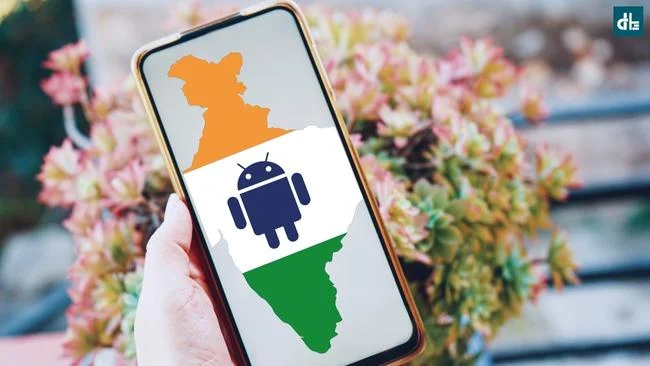
BharOS’s successful testing grabbed massive online attention after Ashwini Vaishnaw, Minister of Communications and Electronics & IT, and Union Education Minister Dharmendra Pradhan unveiled the new mobile operating system. On Data Privacy Day, January 28, it’s appropriate to discuss the safety factors.
The OS is developed by JandKops, which has been incubated by IIT Madras Pravartak Technologies Foundation. It is claimed that BharOS will ensure the prevention of the “execution of any malware” and “execution of any malicious application”.
Even though it is called a Made in India OS, there are many people who disagree with this. It is because the OS is based on an AOSP (Android Open Source Project). It includes similar methodologies, functionalities, and basics used in Google Android.
Global safety factor
Security and data safety has been worldwide issue. A few years ago, Alphabet CEO Sundar Pichai also testified in front of US Congress while facing questions related to privacy, data collection, and location tracking.
While experts say that Android’s app ecosystem is a privacy and security disaster, a study that examined 82,501 apps pre-installed on 1,742 Android smartphones sold by 214 vendors concluded that users are woefully unaware of the significant security and privacy risks posed by pre-installed applications.
Even Apple, which takes cybersafety issues as a top priority, sometimes finds itself in a vulnerable situation. For example, last year Apple users were advised to update their devices to protect against a pair of security flaws that could allow attackers to take complete control.
It was said that one of the software flaws affected the kernel, the deepest layer of the OS shared by all Apple devices, while the other had an impact on WebKit, the technology that powers the Safari web browser.
Security researchers, including NordVPN, said that Apple’s closed development OS makes it more difficult for hackers to develop exploits, while Android raises the threat level since anyone can see its source code to develop exploits.
BharOS is not like iOS but it is kind of similar to Android and based on AOSP. So the question is, how safe would this OS be?
‘Security blanket’
Sandip Kumar Panda, Co-founder and CEO of InstaSafe, told News18: “BharOS acts as a security blanket for devices. The framework is designed in a manner that it prevents the execution of any malicious app and verifies each app on the devices before making it live on the BharOS platform.”
There are no apps without any vulnerabilities, he said. “As the app development progresses, vulnerabilities get introduced either in the form of insecure coding practices or third-party software vulnerabilities integrated with the platform. Since several Android vulnerabilities were discovered over the years, all those bugs would have been fixed now and updates would already have been for AOSP, which will be much more mature now,” he added.
Vineet Kumar, Founder and President of CyberPeace Foundation, believes that “the use of AOSP as the foundation for BharOS is a positive step” as it is a robust platform.
But according to him, it is important to note that no OS can be completely immune to all forms of cyber threats. “The key to staying safe online is to stay vigilant, use security software, keep your software updated, and be mindful of the apps you install and the websites you visit,” he said,
Furthermore, the expert stated that it is possible to make an OS more secure by implementing a variety of security features and technologies such as sandboxing, whitelisting, and application control, as well as rigorous testing and code review processes.
Kumar said: “It would be important for an independent, reputable security firm to evaluate BharOS and test its security features before it can be stated with certainty that it is more secure than other OSs.”
It is difficult to say whether the BharOS will be free of cybersecurity issues without more information about the specific features and security measures that have been implemented, he noted while adding that this OS has to go through a rigorous testing and certification process.
“It will be important to see how it measures up against established security standards and how well it can withstand real-world attacks,” the expert stated.
Reference Link : https://www.news18.com/amp/news/tech/data-privacy-day-how-safe-is-bharos-what-do-cybersecurity-experts-say-you-are-about-to-find-out-6932521.html
Introduction
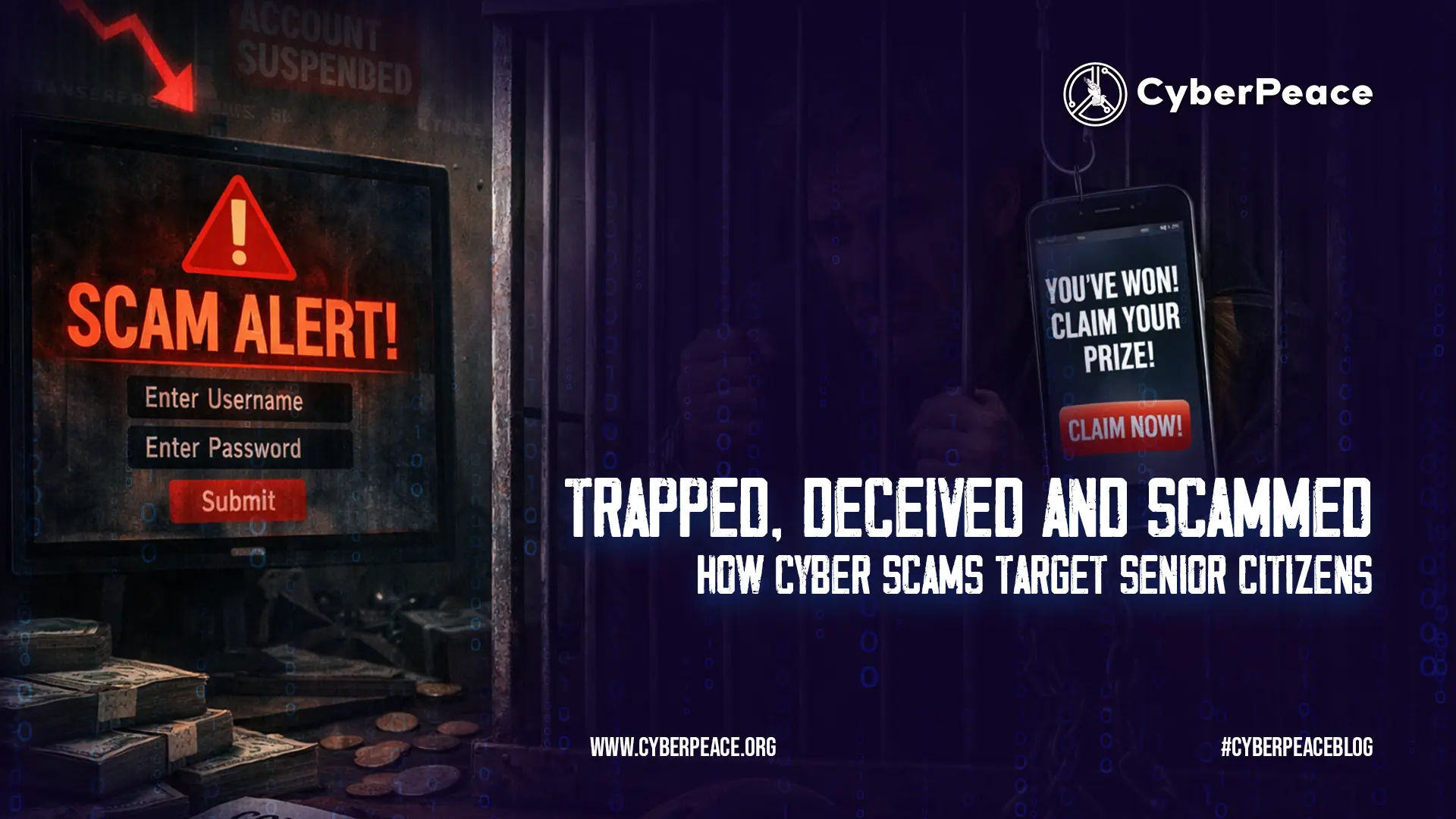
Imagine a scenario where a call is received by a senior citizen. The phone rings, he picks up. On the other side of the line is a polite and seemingly genuine bank official who informs him that his bank account has somehow been jeopardised and that he should quickly move his money to a safer escrow account right away. Or another situation where a police officer ends up threatening a senior citizen over a video call and places him under a digital arrest, pressuring him to pay up money in order to be set free.
This is not the storyline of a heist movie. This is the frightening new digital reality of millions of elderly people living all over the world.
Cybercrime against senior citizens has surged dramatically over the last few years. The year 2023 witnessed people (aged 60 and above), who submitted more than 101,000 complaints to the Federal Bureau of Investigation’s (FBI) Internet Crime Complaint Centre (IC3) in the United States. The total losses reached approximately 3.4 billion dollars, which reflected an increase of 11% in comparison to the previous year. Tech-support scams, investment frauds, government impersonation schemes, etc., have been some of the most recent and significant risks to the financial security of senior citizens.
This sharp increase in cyber fraud that has been targeting the seniors has shocked everyone, from the authorities to families. From phishing emails to fake customer care numbers to various digital payment scams, cyber criminals have deliberately been exploiting the senior population. They have repeatedly displayed the ability to wipe out a senior’s entire lifetime of savings in just a matter of minutes. The rise in cyber scams has been so alarming that even the Supreme Court of India expressed a deep concern over an estimated 3,000 crore rupees that was lost due to digital arrest scams.
Behind these statistics, there have been several individual cases that have revealed the true reality and the personal impact of such scams. The scale of this threat was clearly illustrated when, reportedly, an 86-year-old woman from Mumbai lost 20 crore rupees in a well-planned digital arrest scam in a timeline of 3-4 months between December 2024 and March 2025. In other real-life instances, in December 2025, multiple senior citizens from Hyderabad and Delhi were manipulated into transferring tens of lakhs under the false implication of undergoing a legal action.
This blog aims to focus specifically on the ways and means of:
- How cybercriminals operate against senior citizens,
- The most typical online scams that target seniors and
- How to quickly identify them.
Revealing the Insides of the Scammer’s Playbook: How They Operate, Trick and Steal
- Picking out the prey: Fraudsters use classified information from various leaked online databases, social media profiles, online images, phone directories and in some instances, even obituaries, to build comprehensive lists of potential and vulnerable senior citizen targets. It may be shocking to know that these scammers could already be aware of your age, bank, city and the details of your family members.
- Masquerading and trust theatrics: Scammers pose as authoritative figures such as bank officers, RBI (Reserve Bank of India) or tax officials, telecom staff, Microsoft or Apple tech support, CBI (Central Bureau of Investigation), ED (Enforcement Directorate) and even judges. They further support this spectacle by creating professional emails, logos, illegal websites and forged notices. Caller IDs can be spoofed and can even appear in the name of a trusted bank or a government helpline. In digital arrest scams, scammers may build a fake courtroom or police station to showcase their authority and authenticity over video calls.
- Tugging at emotions and pulling the strings of fear: Cyber fraudsters rarely rely on logic as the basis. Instead, they attack emotions. They may make statements such as: ‘your account is being used for money laundering, you may be arrested today’, thus creating feelings of fear and panic in the mind of the targeted individual. ‘You’ve won a lottery!’, another example that appeals to the emotions of greed and excitement, or ‘Grandma, I’ve been in an accident; please send money and don’t tell anyone’, a classic example that preys on the emotions of love, urgency and concern.
There are more such illustrations: ‘Once in a lifetime investment opportunity’, ‘verify your details in the next 10 minutes or else your account will be frozen, ‘your computer has been hacked; only our technical team can fix it’, and the list goes on.
- The final grab: Cash, Credentials and Control: After all that pretending and emotional manipulation, cyber criminals make their last and final move that essentially closes the deal. They may ask for OTPs (one-time passwords), internet banking credentials, or remote access via screen sharing mode. In other cases, they may pressurise their victims into making direct UPI (Unified Payments Interface) transfers, RTGS (Real-time Gross Settlement) / NEFT (National Electronic Funds Transfer) transfers and payment in the form of gift cards, vouchers or cryptocurrency. This marks the extraction phase. This is the moment where access and control is attained by the fraudster. After this, financial accounts, sensitive information, data, etc., can all be quickly drained, beyond any chance of recovery.
Unveiling the Cyber Scam Spectrum
Below are some of the most commonly deployed online scams that are targeted towards the senior citizens of the present day.
- Imposters in Power: Impersonation scams, on a global level, have proved to be one of the fastest-growing and costliest frauds that occur against seniors. The scammers feign and impersonate officials from banks, income tax departments or even big companies such as Amazon. They would generally warn you about a failed KYC (Know Your Customer) update, your account being blocked or a legal violation. The victim is basically caught off-guard and is forced to share crucial details such as login credentials and OTPs.
- The Digital Arrest Scam: From Call to Con: Lately, digital arrest has become one of the most terrifying scams that senior citizens have had to face. Seniors receive a voice call or a video call from someone who claims to be a police officer or a CBI/ED officer. Then, in a strict and authoritative tone, they make false claims about how the elderly’s Aadhaar, PAN (Permanent Account Number) or phone details have come under scrutiny for being linked to serious crimes such as drug trafficking, money laundering and terrorism. They threaten the elderly that they could be put under immediate arrest, their property could be seized, or they could be publicly humiliated. Once they have established fear, they then go on to show fake documents or court orders to corroborate their assertions.
Thereafter, the senior citizen is informed that he or she has been placed under a digital house arrest. They force the victim to stay on the video call, sometimes for hours and days, ask them to follow certain instructions and repeatedly warn them not to communicate with anyone else. Scammers further exploit the fear of being jailed or the fear of legal action, and gradually extract huge sums of money from the victim. In some cases, this scam can unfold and continue over an extended timeline spanning several months.
- Tech Support Hoax: When Help turns Hostile: As per the FBI and other multiple security analyses, tech support scams are the most commonly reported senior citizen-related frauds in the US.
A pop-up may appear on the elderly’s screen stating that: ‘your computer is infected, call this number now’. Or they might receive a call from a person posing as a tech support person from either Microsoft, Apple, a bank’s IT team or as an internet service provider. He then goes on to guide the elderly to install certain remote access software or to grant screen control access to fix the issue. Once they gain access, they pretend to find some serious infection in the user’s system or they talk about how the speed of the internet is slow and that it needs to be fixed. As a result, they quietly steal passwords, introduce malware into perfectly healthy systems, lock user access and demand ransom in return.
- Payment App Scams: Phishing, Deadly Links and OTP Snares: Phishing as a cyber scam tactic sits at the heart of many payment app scams that target senior citizens. It may begin with a harmless SMS, an email or a WhatsApp alert. These correspondences may look like they have been received from a trusted bank or a familiar online payment platform.
The messages are engineered in a way that aim at grabbing attention and trigger a feeling of panic and pressure. They push the elderly users who spring into action without any caution or thought. The victim may be urged to click a link, coupled with warnings of a blocked account, a failed transaction, a failed delivery or a KYC update. The message may also ask the user to ‘verify’ certain account details. They send urgent payment links that put pressure on the senior citizen to act immediately and transfer the said amount of money.
There are also instances where an SMS or WhatsApp link may claim to offer some kind of discount or reward only if the user enters his or her card details, UPI pin or OTP. This is an extremely dangerous scenario. If these details are given away, scammers acquire access to the user’s bank account.
- Family in Crisis: Staging Fake Emergencies: These cyber-enabled scams, also known as ‘grandparent scams’, specifically target senior citizens by impersonating their kin and creating a fake impression of them being in some kind of trouble. With the help of methods such as AI (Artificial Intelligence) voice cloning, fraudsters mimic the voice of a grandchild or a family member (which they originally obtain from social media posts or videos), making their deception tactics extremely believable. The caller may claim to be in an accident or could say they have been arrested or are stranded somewhere. They may plead with the senior citizen to make an immediate payment.
In order to avoid cross verification of their fraudulent claims, they may insist on maintaining secrecy and brainwash their victim to not inform other family members of their made-up dilemma.
- Fraudulent Friendships and Hijacked Hearts: For many senior citizens who live alone and in the absence of family and support systems, isolation becomes a vulnerability that is very hard to overcome. Fraudsters, who closely monitor such individuals, wait to seize any opportunity to use this weakness as a gateway to carry out their deceptive schemes.
‘Companionship scams’ and ‘romance scams’ are slowly turning into a serious problem among older adults. Cyber criminals befriend or connect with older adults on social networking, matrimonial and dating apps under false pretences. As time goes by, sometimes over weeks or months, these scammers work on building emotional intimacy and trust. Once this is accomplished, they then start making requests for money. These requests can be for (fake) medical emergencies, visas, travel tickets or business deals. Sadly, victims, who are already deeply invested emotionally, end up making these money transfers, sometimes losing their lifetime savings in the process.
In some cases, when things go too far, intimate photos or private conversations are later used by cyber fraudsters for sextortion. They threaten to leak these personal materials unless the victim pays money, further adding elements of fear and pressure to an already manipulative situation.
- Fraud in the name of Health and Benefits: For most senior citizens, their daily life depends on access to basic healthcare, uninterrupted pensions and government benefits. These systems are put in place to provide not just for the seniors’ financial stability, but also to ensure their peace of mind.
Conversely, fraudsters exploit this dependability. Fake medical offers, insurance plans, benefit claims and pension enhancement schemes, etc., are some of the methods that are being used to defraud the seniors. Scammers offer free medical equipment or health checkups in exchange for personal information related to banking and finances.
Another dangerous facet of these scams is ‘counterfeit medications’. These are sold under false claims and big promises and are advertised in a manner that tempts seniors to go for it. These fake medicines not only lead to loss of money but also gravely impact the elderly’s health.
Spot the Scam: Tips to Identify Early Warning Signs before the Scam Unfolds
Cyber criminals are clever, creative and notorious, but their tricks come with familiar warning signs. Timely recognition of these signs can save senior citizens from falling into the scammer’s trap. Some of the most common and apparent warning signs are discussed below:
- Don’t think fast, think twice! The urgency ploy: Cyber criminals thrive on creating a situation of panic and urgency. In instances where a senior citizen feels that he or she is being pushed towards rushed choices, it is better to take a step back to pause and think. Any unreasonable demand to act ‘immediately’ or within minutes, especially when it involves a transfer of money or confidential information, is very likely to be a scam. Not giving in to this hasty push can save the individual from getting tangled in the scammer’s web of lies.
- Scammer’s best friend: Secrecy and silence: First comes the urgency, and then comes the demand to stay silent. Scammers strategically cite and invent so-called ‘security reasons’ and instruct their elderly victims not to inform their bank, friends or family of their situation. This secrecy prevents verification and keeps the victim trapped. Recognising this forced isolation can stop a cybercrime before it escalates and gets out of hand.
- Red flag! When the deal sounds unreal: Scammers lure elderly victims with extraordinary offers and deals. Lottery wins, miracle investment returns, massive discounts or exclusive time-bound rewards are a few examples. These larger-than-life promises are designed in a manner that clouds an elderly person’s sound judgment. Therefore, if an offer feels too good to be true and unlike anything anyone’s ever heard before, then that’s the time to pause and take a step back. In almost all such cases, these unbelievable deals are simply a bait for a looming scam.
- Beware! They want your access codes: Senior citizens need to exercise extra caution when it comes to handing out their personal access codes. No legitimate bank, government office or reputable company will directly ask for OTPs, PINs or full passwords over calls or messaging apps. If someone asks for such details, it is an indication that a fraud may be imminent.
- Don’t pay just yet! Dubious payment gambits: If demands for payments are made in the form of gift cards, cryptocurrency or wire transfers to personal or unknown accounts, it is most definitely a scam. Scammers use these unconventional payment methods to avoid traceability. This strategy allows them to easily disappear with the victim’s funds, which in turn makes recovery of the stolen money nearly impossible.
- Threats and intimidation over a phone call: Hang up! It’s a scam: It is important to understand that legitimate police and court proceedings do not take place over calls or messaging apps. Genuine officials will never demand or negotiate fines, legal payments or bail online. If someone uses the intimidation ploy on a senior citizen and threatens him with legal trouble or police action unless some money is paid, then that’s a clear warning sign of a cyber scam.
Empowered, not Exploited: When Knowledge Becomes the Best Defence
Cyber scams targeting senior citizens are a deliberate and very well-orchestrated industry that thrives on uncertainty, ignorance and fear. The call of the moment is for the elderly and their families to turn awareness into armour. Knowledge about how scammers operate, how they steal, and the techniques they employ can prepare and empower our seniors to protect themselves in such critical situations. The early warning signs mentioned above are more than just mere cautions. They should be taken as ‘cues’ to ‘pause, reflect and re-check’. Being wary of unsolicited communication, safeguarding financial information, double-checking hurried correspondences, etc., can nip a scam in the bud before it plays out. Most importantly, digital safety for the senior citizens is a unified and collaborative responsibility that every responsible individual of the society needs to undertake.
References
- https://frontline.thehindu.com/social-issues/ai-deepfake-digital-arrest-scams-india-cybercrime/article70587955.ece
- https://www.ic3.gov/annualreport/reports/2023_ic3elderfraudreport.pdf
- https://www.thehindu.com/news/national/supreme-court-shocked-over-3000-crore-loss-in-digital-arrest-scams/article70235621.ece
- https://www.thehindu.com/news/cities/mumbai/elderly-woman-loses-20-crore-to-digital-arrest-fraud-3-held/article69353437.ece
- https://timesofindia.indiatimes.com/city/hyderabad/three-senior-citizens-duped-of-rs-1-7cr-in-digital-arrest-scam-spree/articleshow/125876194.cms
- https://www.aninews.in/news/national/general-news/82-year-old-senior-citizen-digitally-arrested-and-cheated-of-rs-116-crore-cyber-cell-arrests-three-key-members-of-syndicate20251213145528/
- https://crr.bc.edu/preventing-cyber-scams-that-target-seniors/
- https://dos.ny.gov/scams-targeting-older-adults
- https://indianexpress.com/article/cities/chandigarh/victims-in-8-of-top-10-digital-arrest-scams-in-chandigarh-are-senior-citizens-data-reveals-10444252/
- https://www.seniorliving.org/research/common-elderly-scams/
- https://www.ftc.gov/news-events/data-visualizations/data-spotlight/2025/08/false-alarm-real-scam-how-scammers-are-stealing-older-adults-life-savings
- https://www.psca.org/news/psca-news/2025/8/scams-against-seniors-increasing-dramatically-ftc-warns/
- https://www.pcmatic.com/blog/the-rising-threat-of-elder-fraud-insights-from-ic3s-2023-report/?srsltid=AfmBOorC069NIYFwFO0W56nPcg_K0Wfv_oq0V-MI7fImI5ityAUrQTO9
- https://www.quickheal.co.in/knowledge-centre/guarding-our-elders-a-comprehensive-report-on-the-elder-fraud-epidemic-in-india/?srsltid=AfmBOorviPvoRuecjsOtAfVxyQEJF2vyICnr15GqbDfP1m3UXAnXndMw
- https://www.ncoa.org/article/top-5-financial-scams-targeting-older-adults/
- https://www.uchealth.org/today/elder-fraud-is-rising-and-it-is-hurting-more-than-just-finances/
- https://centerlighthealthcare.org/protecting-yourself-online-recognizing-and-avoiding-online-scams/

Introduction
Governments worldwide are enacting cybersecurity laws to enhance resilience and secure cyberspace against growing threats like data breaches, cyber espionage, and state-sponsored attacks in the digital landscape. As a response, the EU Council has been working on adopting new laws and regulations under its EU Cybersecurity Package- a framework to enhance cybersecurity capacities across the EU to protect critical infrastructure, businesses, and citizens. Recently, the Cyber Solidarity Act was adopted by the Council, which aims to improve coordination among EU member states for increased cyber resilience. Since regulations in the EU play a significant role in shaping the global regulatory environment, it is important to keep an eye on such developments.
Overview of the Cyber Solidarity Act
The Act sets up a European Cyber Security Alert System consisting of Cross-Border Cyber Hubs across Europe to collect intelligence and act on cyber threats by leveraging emerging technology such as Artificial Intelligence (AI) and advanced data analytics to share warnings on cyber threats with other cyber data centres across the national borders of the EU. This is expected to assist authorities in responding to cyber threats and incidents more quickly and effectively.
Further, it provides for the creation of a new Cybersecurity Emergency Mechanism to enhance incident response systems in the EU. This will include testing the vulnerabilities in critical sectors like transport, energy, healthcare, finance, etc., and creating a reserve of private parties to provide mutual technical assistance for incident response requests from EU member-states or associated third countries of the Digital Europe Programme in case of a large-scale incident.
Finally, it also provides for the establishment of a European Cybersecurity Incident Review Mechanism to monitor the impact of the measures under this law.
Key Themes
- Greater Integration: The success of this Act depends on the quality of cooperation and interoperability between various governmental stakeholders across defence, diplomacy, etc. with regard to data formats, taxonomy, data handling and data analytics tools. For example, Cross-Border Cyber Hubs are mandated to take the interoperability guidelines set by the European Union Agency for Cybersecurity (ENISA) as a starting point for information-sharing principles with each other.
- Public-Private Collaboration: The Act provides a framework to govern relationships between stakeholders such as the public sector, the private sector, academia, civil society and the media, identifying that public-private collaboration is crucial for strengthing EUs cyber resilience. In this regard, National Cyber Hubs are proposed to carry out the strengthening of information sharing between public and private entities.
- Centralized Regulation: The Act aims to strengthen all of the EU's cyber solidarity by outlining dedicated infrastructure for improved coordination and intelligence-sharing regarding cyber events among member states. Equal matching contribution for procuring the tools, infrastructure and services is to be made by each selected member state and the European Cybersecurity Competence Centre, a body tasked with funding cybersecurity projects in the EU.
- Setting a Global Standard: The underlying rationale behind strengthening cybersecurity in the EU is not just to protect EU citizens from cyber-threats to their fundamental rights but also to drive norms for world-class standards for cybersecurity for essential and critical services, an initiative several countries rely on.
Conclusion
In the current digital landscape, governments, businesses, critical sectors and people are increasingly interconnected through information and network connection systems and are using emerging technologies like AI, exposing them to multidimensional vulnerabilities in cyberspace. The EU in this regard continues to be a leader in setting standards for the safety of participants in the digital arena through regulations regarding cybersecurity. The Cyber Solidarity Act’s design including cross-border cooperation, public-private collaboration, and proactive incident-monitoring and response sets a precedent for a unified approach to cybersecurity. As the EU’s Cybersecurity Package continues to evolve, it will play a crucial role in ensuring a secure and resilient digital future for all.
Sources
- https://www.consilium.europa.eu/en/press/press-releases/2024/12/02/cybersecurity-package-council-adopts-new-laws-to-strengthen-cybersecurity-capacities-in-the-eu/
- https://data.consilium.europa.eu/doc/document/PE-94-2024-INIT/en/pdf
- https://digital-strategy.ec.europa.eu/en/policies/cybersecurity-strategy
- https://www.weforum.org/stories/2024/10/cybersecurity-regulation-changes-nis2-eu-2024/
