
Rang Barse, Scam Na Barse: Stay Cyber-Safe This Holi 2025!
Introduction
Holi 2025 is just around the corner. In fact, in the Braj region, Mathura and Vrindavan, the celebrations have already begun, starting from Basant Panchami on 2nd February 2025. Temples in Vrindavan are sprinkling flowers on devotees, creating mesmerising scenes with the spirit of devotion. While cities like Delhi, Bangalore, Mumbai, etc., are all set, with pre-bookings for Holi events, parties and music festivals.
However, in the current digital era, cybercriminals attempt to conduct manipulative campaigns to deceive innocent people. They attempt to send fake cashback offers, freebies, lucrative deals, giveaways, and phishing scams under the guise of Holi deals and offers. The upcoming festival of colors requires you to know the warning signs so you can remain alert and safeguard against digital scams.
How Scammers Might Target You
Holi is a time for joy, colors, and celebrations, but cybercriminals see it as the perfect opportunity to trick people into falling for scams. With increased online shopping, event bookings, and digital transactions, scammers exploit the festive mood to steal money and personal information. Here are some common Holi-related cyber scams and how they operate:
- Exclusive Fake Holi Offers
Scammers send out promotional messages via WhatsApp, SMS, or email claiming to offer exclusive Holi discounts. For example, you might receive a message like:
"Get 70% off on Holi color packs! Limited-time deal! Click here to order now."
However, clicking the link leads to a fraudulent website designed to steal your card details or make unauthorized transactions.
- Fake Holi Cashback Offers
You may get an SMS that reads:
"Congratulations! You’ve won ₹500 cashback for your Holi purchases. Claim now by clicking this link."
The link may take you to a phishing page that asks for your UPI PIN or bank login credentials, allowing scammers to siphon off your money.
- Fake Quizzes to Win Freebies
Scammers circulate links to Holi-themed quizzes or surveys promising free gifts like branded clothing, sweets, or smart gadgets. These often ask users to enter personal details such as phone numbers, email addresses, or even Aadhaar numbers. Once entered, the scammers misuse this information for identity theft or further phishing attempts.
- Fake Social Media Giveaways
Many fraudsters create fake Instagram and Facebook pages mimicking well-known brands, announcing contests with tempting prizes. For example:
"Holi Giveaway! Win a free Bluetooth speaker or chance to win smartphone by following us and sending a small registration fee!"
Once you pay, the page disappears, leaving you with nothing but regret.
- Targeted Phishing Scams
During Holi, phishing attempts surge as scammers disguise themselves as banks, e-wallet services, or e-commerce platforms. You might receive an email with a subject like:
"Urgent: Your Holi order needs confirmation, update your details now!"
The email contains a fake link that, when clicked, prompts you to enter sensitive login information, which the scammers then use to access your account.
- Clickbait Links on Social Media
Cybercriminals circulate enticing headlines such as:
"This New Holi Color Is Banned – Find Out Why!"
These links often lead to malware-infected pages that compromise your device security or steal browsing data.
- Bogus Online Booking Platforms
With many people looking for Holi event tickets or holiday stays, scammers set up fake booking websites. Imagine you come across a site advertising "Holi Pool Party – Entry Just INR 299!" you eagerly make the payment, only to find out later that the event never existed.
How to Stay Safe This Festive Season
- Verify offers directly from official websites instead of clicking on random links.
- Avoid sharing personal or banking details on unfamiliar platforms.
- Look for HTTPS in website URLs before making any payments.
- Be cautious of unsolicited messages, even if they appear to be from known contacts.
- If an offer seems too good to be true, it it is likely a scam or deception.
Conclusion:
As Holi 2025 approaches, make sure your online security remains a priority. Keep an eye on potential frauds that attempt to take advantage of the festive seasons like Holi. Protect yourself against various cyber threats. Before engaging with any Internet content, prioritize the verification of sources. Let us safeguard our celebrations with critical cyber security precautions. Wishing you all a cyber-safe and Happy Holi 2025!

Related Blogs

Executive Summary
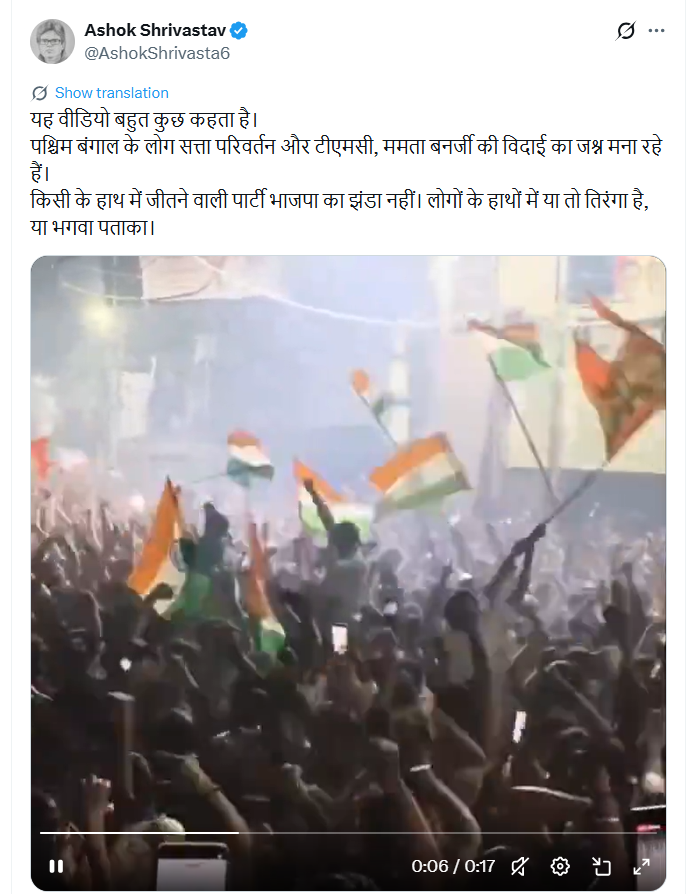
Assembly election results for West Bengal, Assam, Kerala, Tamil Nadu and the Union Territory of Puducherry have been declared, with the Bharatiya Janata Party (BJP) set to form the government in West Bengal after defeating the Trinamool Congress (TMC). Amid celebrations and reports of violence in the state, several misleading videos and images are also circulating on social media. One such viral clip shows people waving the Indian tricolour and saffron flags during a street celebration. Social media users are claiming that the video captures people celebrating a political change and BJP’s victory in West Bengal. Research by CyberPeace Research Wing found that the claim is false. The viral video is not from West Bengal but from Prayagraj and actually shows celebrations after India’s victory in the ICC Men's T20 World Cup 2026.
Claim
An X user named “Ashok Shrivastav” shared the video on May 6, 2026, claiming that people in West Bengal were celebrating the departure of Mamata Banerjee and the TMC government. The user further claimed that people were waving only the national flag and saffron flags, not BJP flags.
Fact Check
To verify the claim, we extracted several keyframes from the viral video and conducted a reverse image search using Google Lens. The clip was found on multiple social media handles falsely linked to West Bengal.

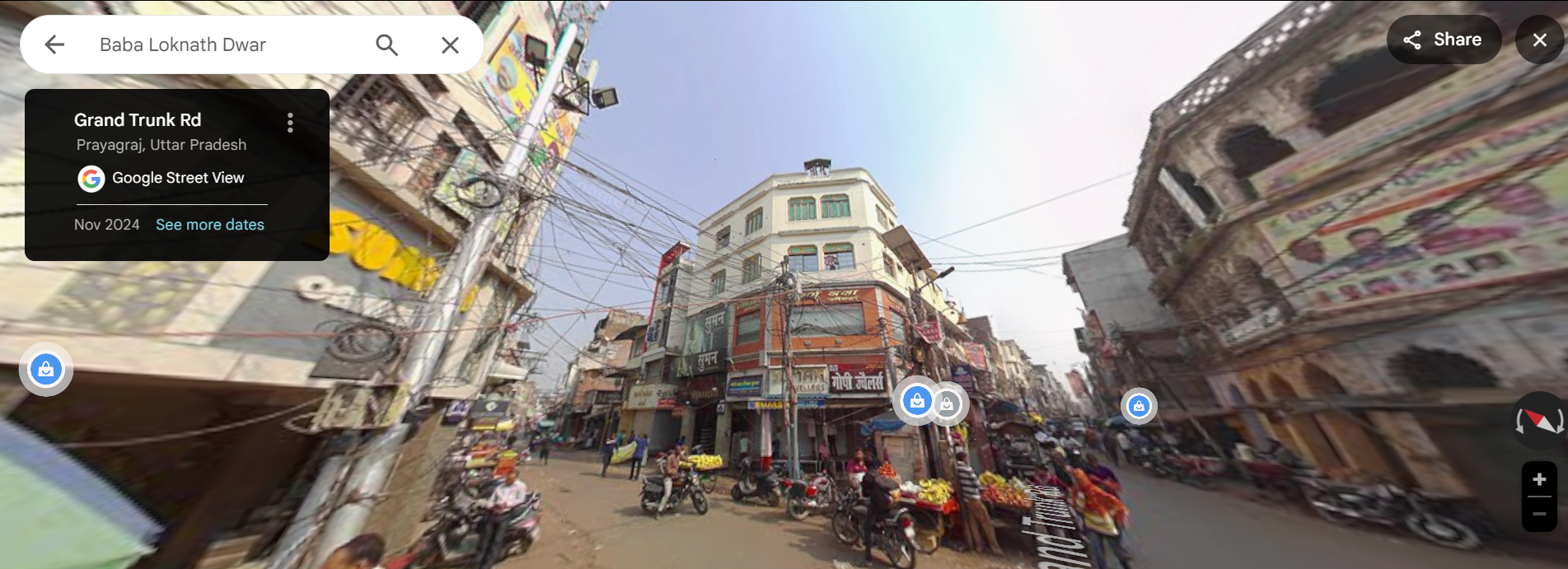
However, the oldest version of the video was uploaded on March 8, 2026, by an Instagram page named “Streets of Sangam.” The caption identified the location as Prayagraj and included hashtags related to the World Cup and Loknath. During the comparison of the viral and original videos, we noticed a shop sign reading “Suman Ornaments.” Using Google Street View, we traced the location to Baba Loknath area in Prayagraj, where the same shop could be identified near Loknath Gate.
Conclusion
Our research confirms that the viral claim is fake. The video being shared as BJP victory celebrations in West Bengal is actually from Prayagraj, Uttar Pradesh, and dates back to March 2026, when locals celebrated Team India’s T20 World Cup victory. The old clip is now being misleadingly circulated with a false political narrative.
.webp)
Introduction
Misinformation is a major issue in the AI age, exacerbated by the broad adoption of AI technologies. The misuse of deepfakes, bots, and content-generating algorithms have made it simpler for bad actors to propagate misinformation on a large scale. These technologies are capable of creating manipulative audio/video content, propagate political propaganda, defame individuals, or incite societal unrest. AI-powered bots may flood internet platforms with false information, swaying public opinion in subtle ways. The spread of misinformation endangers democracy, public health, and social order. It has the potential to affect voter sentiments, erode faith in the election process, and even spark violence. Addressing misinformation includes expanding digital literacy, strengthening platform detection capabilities, incorporating regulatory checks, and removing incorrect information.
AI's Role in Misinformation Creation
AI's growth in its capabilities to generate content have grown exponentially in recent years. Legitimate uses or purposes of AI many-a-times take a backseat and result in the exploitation of content that already exists on the internet. One of the main examples of misinformation flooding the internet is when AI-powered bots flood social media platforms with fake news at a scale and speed that makes it impossible for humans to track and figure out whether the same is true or false.
The netizens in India are greatly influenced by viral content on social media. AI-generated misinformation can have particularly negative consequences. Being literate in the traditional sense of the word does not automatically guarantee one the ability to parse through the nuances of social media content authenticity and impact. Literacy, be it social media literacy or internet literacy, is under attack and one of the main contributors to this is the rampant rise of AI-generated misinformation. Some of the most common examples of misinformation that can be found are related to elections, public health, and communal issues. These issues have one common factor that connects them, which is that they evoke strong emotions in people and as such can go viral very quickly and influence social behaviour, to the extent that they may lead to social unrest, political instability and even violence. Such developments lead to public mistrust in the authorities and institutions, which is dangerous in any economy, but even more so in a country like India which is home to a very large population comprising a diverse range of identity groups.
Misinformation and Gen AI
Generative AI (GAI) is a powerful tool that allows individuals to create massive amounts of realistic-seeming content, including imitating real people's voices and creating photos and videos that are indistinguishable from reality. Advanced deepfake technology blurs the line between authentic and fake. However, when used smartly, GAI is also capable of providing a greater number of content consumers with trustworthy information, counteracting misinformation.
Generative AI (GAI) is a technology that has entered the realm of autonomous content production and language creation, which is linked to the issue of misinformation. It is often difficult to determine if content originates from humans or machines and if we can trust what we read, see, or hear. This has led to media users becoming more confused about their relationship with media platforms and content and highlighted the need for a change in traditional journalistic principles.
We have seen a number of different examples of GAI in action in recent times, from fully AI-generated fake news websites to fake Joe Biden robocalls telling the Democrats in the U.S. not to vote. The consequences of such content and the impact it could have on life as we know it are almost too vast to even comprehend at present. If our ability to identify reality is quickly fading, how will we make critical decisions or navigate the digital landscape safely? As such, the safe and ethical use and applications of this technology needs to be a top global priority.
Challenges for Policymakers
AI's ability to generate anonymous content makes it difficult to hold perpetrators accountable due to the massive amount of data generated. The decentralised nature of the internet further complicates regulation efforts, as misinformation can spread across multiple platforms and jurisdictions. Balancing the need to protect the freedom of speech and expression with the need to combat misinformation is a challenge. Over-regulation could stifle legitimate discourse, while under-regulation could allow misinformation to propagate unchecked. India's multilingual population adds more layers to already-complex issue, as AI-generated misinformation is tailored to different languages and cultural contexts, making it harder to detect and counter. Therefore, developing strategies catering to the multilingual population is necessary.
Potential Solutions
To effectively combat AI-generated misinformation in India, an approach that is multi-faceted and multi-dimensional is essential. Some potential solutions are as follows:
- Developing a framework that is specific in its application to address AI-generated content. It should include stricter penalties for the originator and spreader and dissemination of fake content in proportionality to its consequences. The framework should establish clear and concise guidelines for social media platforms to ensure that proactive measures are taken to detect and remove AI-generated misinformation.
- Investing in tools that are driven by AI for customised detection and flagging of misinformation in real time. This can help in identifying deepfakes, manipulated images, and other forms of AI-generated content.
- The primary aim should be to encourage different collaborations between tech companies, cyber security orgnisations, academic institutions and government agencies to develop solutions for combating misinformation.
- Digital literacy programs will empower individuals by training them to evaluate online content. Educational programs in schools and communities teach critical thinking and media literacy skills, enabling individuals to better discern between real and fake content.
Conclusion
AI-generated misinformation presents a significant threat to India, and it is safe to say that the risks posed are at scale with the rapid rate at which the nation is developing technologically. As the country moves towards greater digital literacy and unprecedented mobile technology adoption, one must be cognizant of the fact that even a single piece of misinformation can quickly and deeply reach and influence a large portion of the population. Indian policymakers need to rise to the challenge of AI-generated misinformation and counteract it by developing comprehensive strategies that not only focus on regulation and technological innovation but also encourage public education. AI technologies are misused by bad actors to create hyper-realistic fake content including deepfakes and fabricated news stories, which can be extremely hard to distinguish from the truth. The battle against misinformation is complex and ongoing, but by developing and deploying the right policies, tools, digital defense frameworks and other mechanisms, we can navigate these challenges and safeguard the online information landscape.
References:
- https://economictimes.indiatimes.com/news/how-to/how-ai-powered-tools-deepfakes-pose-a-misinformation-challenge-for-internet-users/articleshow/98770592.cms?from=mdr
- https://www.dw.com/en/india-ai-driven-political-messaging-raises-ethical-dilemma/a-69172400
- https://pure.rug.nl/ws/portalfiles/portal/975865684/proceedings.pdf#page=62
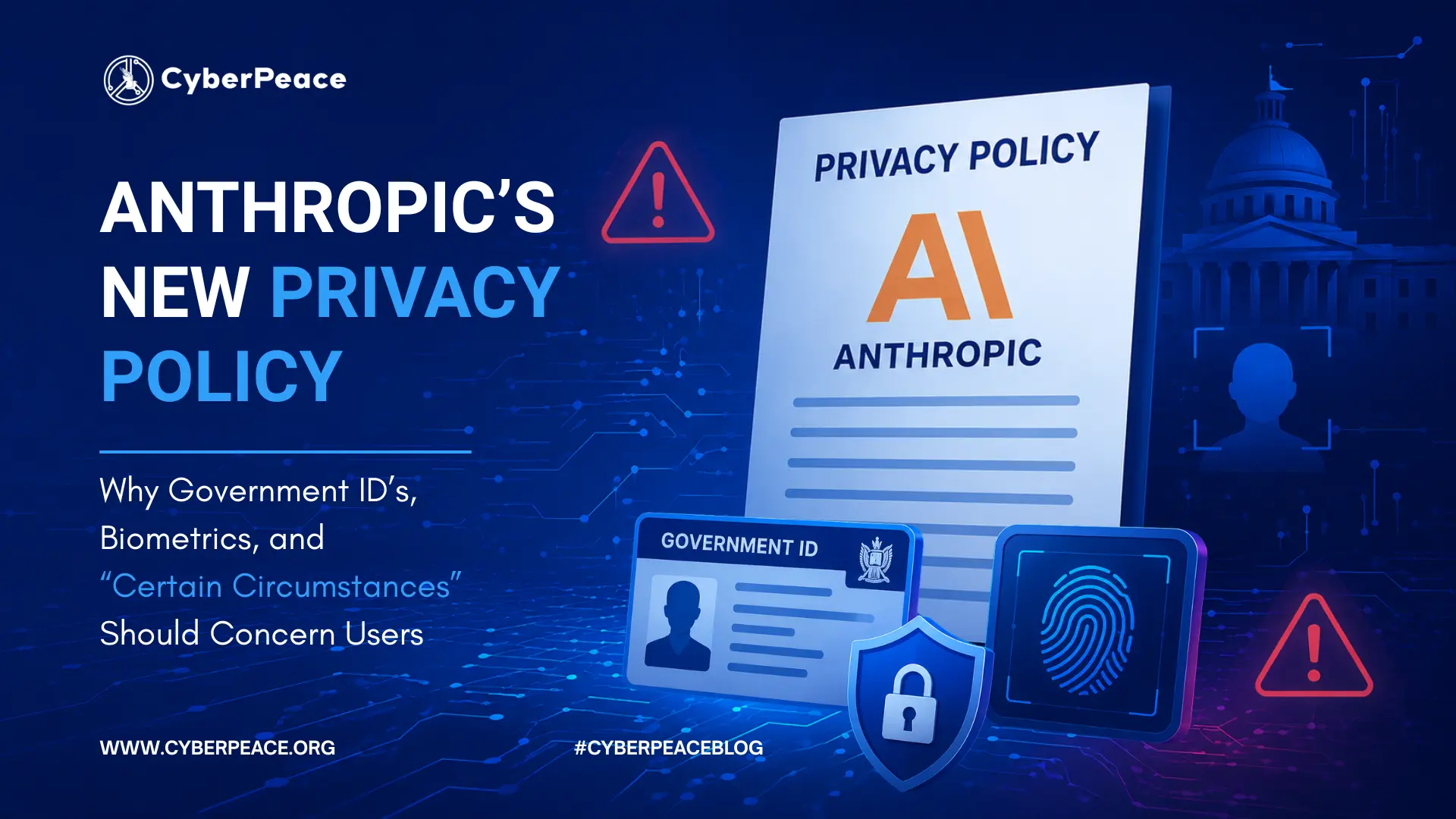
With AI touching new milestones everyday an increasing need for making it secure is also arising. As these AI companies increase their operations and position in the market as providers of powerful tools in the market. A recent concern due to Anthropic's recent privacy policy update which will be effective from July 8, 2026 shows how companies have begun expanding the amount of personal information they collect in the name of safety, compliance, and trust. While they are being demonstrated as measures to improve safety of users and prevent abuse, it raises important questions about privacy, biometric data, surveillance, data retention, and user autonomy, some of which we will be addressing in this article.
Identity Verification of consumers
One of the most notable update to Anthropic's privacy policy is the category of "Verification Data." According to the policy, users may be asked to verify their age or identity in certain circumstances. Depending on the verification method, Anthropic may collect:
- Images of government-issued identity documents;
- Information appearing on those documents, including identification numbers and date of birth for age verification;
- Photographs or videos of the user;
- Facial geometry templates, which may constitute biometric data under certain legal frameworks; and
- The outcome of the verification process.
At first, this may appear similar to the Know Your Customer (KYC) procedures employed by banks or financial institutions but Claude is not a banking service. It is a consumer AI platform. The issue is not that verification exists, but that the circumstances under which it may be required remain undefined.
THE PROBLEM WITH “CERTAIN CIRCUMSTANCES”
The policy refers to verification being required in "certain circumstances." The public notification from Anthropic mentions that these circumstances may include access to particular features, routine platform integrity checks, abuse prevention mechanisms, policy enforcement activities, or legal compliance obligations. The ambiguity of this phrase raises important concerns. From a user perspective, it is difficult to determine, When verification may be triggered ? Whether verification applies only to suspicious accounts ? Whether access to future features may depend upon verification ? Whether users in particular regions will face more frequent verification requirements ? Whether verification requests may increase as AI regulation expands ? This broad language and discretionary power that the company has along with flexibility in the hands of the company creates uncertainty for users who may have initially joined a platform expecting only an email address and payment information to be required.
Government IDs collection: A new risk category
Almost all AI services have operated without collecting government-issued identity documents. Once a company begins processing such information, the privacy implications change dramatically. Because government issued IDs contain: Full legal names, Dates of birth, Identification numbers, Addresses, Photographs and information regarding nationality. When companies collect these documents, they will have an important database of highly sensitive personal information. Even if the company itself does not retain the documents indefinitely, the existence of a verification process introduces additional privacy and security risks. As per Anthropic has stated that identity verification is conducted through third-party providers such as Persona. According to article on the official site titled ‘Identity verification on Claude’, Persona stores the identity documents and selfie data, while Anthropic retains access to verification records when necessary. From the user's perspective, several important realities remain: First, the data still exists somewhere. Second, another third party organization is now involved in processing highly sensitive personal information. Third, Anthropic retains the ability to access verification records under certain circumstances. Therefore, although Anthropic may not directly maintain copies of every uploaded identity document, the practical result remains that sensitive information enters a broader ecosystem of entities and systems. Identity documents today are among the most valuable forms of personal information from the perspective of fraudsters, cybercriminals, and malicious actors. Therefore, any system that handles such documents becomes an attractive target for attack.
More information on persona’s government ID verification- https://withpersona.com/blog/what-is-government-id-verification
The Biometric Dimension
Another significant aspect of the update is the reference to facial geometry templates. Unlike passwords, biometric identifiers cannot easily be changed if compromised. A person can replace a password or even obtain a new identification card, but they cannot simply obtain a new face. Facial geometry templates are sensitive because they enable automated identity matching. Although these templates, as claimed, are not equivalent to photographs, they are nevertheless derived from unique physical characteristics of a person. In many jurisdictions, including parts of the European Union and several U.S. states, biometric data receives enhanced legal protection because of its permanence and sensitivity, let us see how it unfolds in these jurisdictions.
The Unanswered Retention Question
It is unclear in the policy as to how long the data will be retained because retention limits serve as one of the most important safeguards in modern privacy law, they have given another vague answer that “They're bound to protect it with industry-standard security controls and delete it in line with the retention limits we've set and applicable law.” The longer sensitive information remains stored, the greater the likelihood of unauthorized access, misuse, accidental disclosure, or legal compulsion.
Court Orders and Government Access
Anthropic may be required to disclose information pursuant to valid legal processes such as subpoenas, court orders, warrants, or regulatory directives. The existence of identity verification records means that future requests could potentially be linked to verified identities rather than pseudonymous accounts. This does not mean governments receive unrestricted access to user data. However, it does mean that once identity verification information exists within a company's ecosystem, it may become subject to lawful disclosure requirements. The privacy implications are therefore materially different from those associated with anonymous or pseudonymous AI usage.
Shifting Responsibility onto Users
Another concern is that the privacy policy states that users are responsible for ensuring they possess the necessary rights, permissions, or authority when uploading files, connecting third-party services, or instructing Claude to retrieve information. Anthropic is effectively informing users that they bear responsibility for ensuring that uploaded or connected data is lawfully accessible. As AI assistants gain greater capabilities, this transfer of responsibility from platform to user is likely to become increasingly common. Beyond individual privacy, Anthropic's verification policy also raises larger questions about data sovereignty and the cross-border movement of sensitive personal information. In India, the Justice K.S. Puttaswamy (Retd.) v. Union of India judgment recognized privacy as a fundamental right under Article 21 of the Constitution, affirming that individuals have the right to informational self-determination and control over their personal data. Yet, under Anthropic's verification framework, an Indian user may be required to upload a government-issued identity document and biometric information, which are processed by Persona, a U.S.-based identity verification company acting on behalf of Anthropic. Although users voluntarily consent to this process, it nevertheless results in highly sensitive identity information crossing national borders and entering the control of foreign private entities governed primarily by foreign contractual arrangements and multiple legal regimes. While governments issue identity documents as sovereign instruments of citizenship, their verification and processing are increasingly outsourced to multinational technology companies. Questions arise not only about how securely such information is handled, but also about which country's laws ultimately govern access, retention, disclosure, and accountability when personal data leaves the jurisdiction in which it originated. Under the Digital Personal Data Protection Act, 2023, cross-border transfer of personal data is generally permitted unless the Central Government specifically restricts transfers to certain jurisdictions. Therefore, a foreign company processing identity documents is not, by itself, unlawful but this legality does not eliminate legitimate concerns. Users realistically have limited bargaining power and little practical understanding of how long their identity documents, biometric templates, or verification records will be retained, who within the corporate ecosystem may access them, or how they may be disclosed pursuant to foreign legal processes.
Conclusion
The policy is commendable in some respects because it openly identifies the categories of information that may be collected rather than obscuring them behind vague terminology. However, important concerns remain regarding the extent of verification triggers, the handling of biometric information, the absence of clearly disclosed retention periods, and the long-term implications of linking AI accounts to government-issued identities. As AI systems become more integrated into daily life, these questions will likely become central issues in debates about digital privacy, surveillance, autonomy, and the future governance of artificial intelligence.
