
India’s Strategic Leap - Joining Pax Silica at the AI Impact Summit
Introduction
India officially became part of the US-led Pax Silica project on February 20, 2026, at the India AI Impact Summit in New Delhi. This was a significant milestone in India’s involvement in global technology and supply chain cooperation. India joined a coalition of advanced economies by signing the Pax Silica Declaration in a move aimed at strengthening coordination over technology supply chains on which artificial intelligence, semiconductors, critical minerals and advanced manufacturing rely. The entry of India into the global technology landscape is indicative of India’s growing role in the global technology order and reflects broader shifts in how countries are responding to the geopolitics of silicon and AI infrastructure.
What Is Pax Silica and Why It Matters
The United States Department of State introduced Pax Silica as a strategic program launched in December 2025. It seeks to establish safe, resilient and innovation-driven supply chains for emerging technologies that are the foundations of the AI era. This encompasses activities ranging from mining and refining of rare earths, gallium and germanium to semiconductor manufacturing, the creation of advanced computing hardware and energy infrastructure. The project describes cooperation as a method of reducing what are termed as coercive dependencies on any one supplier or economy, thereby supporting sustained access to building blocks of state-of-the-art technology.
Pax Silica derives its name from the Latin terms for 'peace' and the substrate material of 'silicon', meaning that the coalition aims at achieving stability and prosperity by working together in supply chains of technology. Early signatories were the United States, Japan, South Korea, Australia, the United Kingdom, Israel, Singapore, the Netherlands, Greece, Qatar and the United Arab Emirates. India was the twelfth member to sign the declaration.
India’s Strategic Interests in Pax Silica
The move to join Pax Silica is both a diplomatic and economic decision. The incorporation of India into a network led ostensibly by the Western bloc and containing developed economy players in the technological supply chain creates the messaging that it wants to be more deeply integrated into the global high-tech ecosystems.
India currently relies on importing a large proportion of the chips for its electronics production sector, while its domestic manufacturing capacity remains limited. Pax Silica membership could provide Indian firms with advanced manufacturing equipment, process expertise and joint ventures with their partners, who have already developed the fabrication capabilities.
The signing of the declaration was done by the current Union Minister of Electronics and Information Technology (MeitY) , the Union Minister, who noted that India is expanding its technological capabilities and future ambitions. He observed that the Indian engineers already play a role in designing advanced semiconductor chips and that the increase in semiconductor capacity will demand a professional workforce. He also emphasised that the availability of international tools and alliances would help accelerate India’s growth in this sector.
Another strategic area is the critical minerals. India is estimated to have significant rare earth reserves, but the resources remain largely underdeveloped. The diversification strategy of Pax Silica in terms of supply and processing routes provides India with an opportunity to have joint ventures and infrastructure projects that could help unlock domestic mineral potential within the country.
Supply Chains, AI, and Geopolitical Context
Pax Silica has emerged within a broader geopolitical and supply chain context rather than as a purely economic initiative. The last few years have placed a strain on global technology supply chains with disruptions caused by pandemics, trade tensions, export controls, and the concentrated control of some components of the value chain. China currently dominates in the refinement of rare earths as well as in a variety of legacy semiconductor manufacturing. The concentration has raised concerns about resilience and strategic autonomy among the technology-producing democracies.
This initiative is based on the premise that a diversified and trusted supply chain will make the economic security of countries participating in Pax Silica more secure in case of a trade embargo or as a tool of political leverage. The voluntary and non-binding framework by the coalition only provides a guide to cooperation instead of a binding commitment, though it highlights an acknowledgement of risk and opportunity in global technology markets.
Such concerns as strategic autonomy and the extent of India’s involvement in the initiative have been expressed by those who criticise it, particularly because the coalition is perceived to be partially designed to respond to Chinese dominance in the most important technological sectors. Some analysts have also suggested that India will have to balance its participation in Pax Silica by taking special care of its own interests and alliances outside this coalition.
Economic and Industrial Implications for India
Joining Pax Silica offers India potential benefits on multiple fronts.
Strengthening Innovation and Manufacturing Ecosystems
India's membership will allow cooperation in semiconductor production, development of advanced computing infrastructure and implementation of AI. The government and industry players could attract investments through partnerships, technology transfer and joint R&D. India’s emerging design and fabrication projects could use a greater international integration in this venture.
Talent and Skills Development
A recurring theme among Indian policymakers is the issue of a skilled workforce. As the world semiconductor and AI sector is expected to need millions of specialists in the next 10 years, India’s large talent pool presents an opportunity to produce local talent that is capable of catering to local demands as well as international supply needs. Initiatives linked to Pax Silica have the potential to establish training pathways and institutional bridges that facilitate workforce preparedness.
Diversification of Supply Partnerships
In the case of India, the diversification of suppliers and partners goes beyond the availability of materials and technologies. It also implies reducing exposure to supply shocks and enhancing resilience in important industries such as consumer electronics, automotive manufacturing, defence systems and digital infrastructure, all of which rely on semiconductors and advanced computing hardware.
Broader Industrial Readiness and Domestic Challenges
India’s participation in Pax Silica highlights the domestic conditions required to support advanced technology manufacturing. A conducive environment will depend on reliable infrastructure, regulatory stability, specialised industrial clusters and sustained policy coordination across government and industry. Semiconductor and AI hardware production are resource-intensive, requiring significant energy, water and chemical management, making environmental safeguards and sustainable industrial planning essential to prevent long-term ecological strain.
At the same time, India faces gaps in its human resource development ecosystem. While engineering talent is abundant, specialised training in semiconductor fabrication, materials science and advanced manufacturing remains limited. Additionally, the relative lack of applied research and development initiatives aimed at reducing technological and financial risks may constrain large-scale industrial expansion, underscoring the need for stronger industry–academia collaboration and targeted innovation support.
Conclusion: A Strategic Step into the AI Era
India’s formal entry into the Pax Silica initiative at the 2026 India AI Impact Summit reflects a thoughtful recalibration of its global technology engagement. By aligning with a coalition aimed at securing the supply chains that make modern digital economies possible, India has signalled its intent to be more than just a consumer of technology. It seeks to help shape the infrastructure, partnerships and norms that will define the next generation of AI, semiconductors and critical technologies.
While questions around strategic autonomy and long-term dependencies remain important considerations, Pax Silica offers India access to networks, capabilities and collaborative frameworks that can accelerate its semiconductor ambitions and broaden its role in the global tech order. The move underscores how technology cooperation today increasingly interacts with geopolitics, economic strategy and national aspirations for growth and innovation.
Sources
- https://timesofindia.indiatimes.com/technology/tech-news/what-is-pax-silica-and-why-does-india-joining-the-ai-supply-chain-alliance-matter/articleshow/128594775.cms
- https://paxsilica.org/f/pax-silica-securing-the-foundations-of-the-ai-era
- https://www.businesstoday.in/india/story/ai-impact-summit-2026-india-set-to-join-us-led-pax-silica-today-517167-2026-02-20
- https://www.business-standard.com/india-news/pax-silica-india-joins-us-supply-chain-initiative-ai-impact-summit-2026-126022000339_1.html

Related Blogs
.webp)
Introduction
It might seem too good to be true: free movies, live TV and sports without any subscription plan are deals that no one in India could actually refuse, and that’s precisely the explanation as to why applications such as Pikashow have gained tremendous traction in India and all over the world as well. However, cybersecurity authorities have a strong cause of concern: the threat that this type of application poses towards lakhs of Indians with malicious software, stealing information and even money. Pikashow may be a perfect case study to establish this problem, but in fact, it all ties down to how downloading anything without the recognised applications has certain risks attached to it.
The Pikashow Warning
With no monthly subscription fees, Pikashow is a popular free app for streaming movies, web series, live TV channels and sports programmes. Since its development, Pikashow has had a reputation for never being found on the Google Play Store or Apple’s App Store, which necessitates a process of side-loading. A side load, in this case, entails downloading the Pikashow APK file from an unofficial third-party source and manually installing the app, circumventing the security measures of official download channels.
The latter is significant because security experts who have analysed Pikashow argue that it acts as an informal content aggregator; movies and TV series are illegally scooped up from online streaming services, then shared via various third-party links and streamed without a content licence or any agreement with legitimate providers.
Without going through the rigorous checks conducted by Google or Apple, security researchers discovered that even while the app appeared to be working fine with its promised streams, hidden malware within the installer can run silently, leading to potentially significant security risks such as data theft of user logins, one-time passwords, and private files, including banking credentials. This has been cited to be so problematic for India that law enforcement agencies like the Indian Cyber Crime Coordination Centre under the Ministry of Home Affairs and the Cyber Dost platform are expected to have issued public advisories linking Pikashow to a proliferation of cases of cybercrime. Users should take into account the legal implications alongside security concerns, as using piracy apps may not only lead to device-compromising issues but can also be against the Copyright Act of India as well, thus increasing the risk of legal prosecution.
Why This Isn't Just a "Pikashow Problem"
This should not be viewed as a single warning concerning one app. Pikashow is merely an illustration of one app from millions that exists outside official app stores and is built with the same mechanics that make Pikashow dangerous and applicable to virtually any app, game, or "modded" file which is downloaded from a random website, third-party app store, or Telegram channel.
Some issues that persist are-
- Official app stores are like a filter that is not perfect, but it is still critical to the security on a user's device. Both Google and Apple's App stores run automatic and manual malware scanners, screen permissions for legitimate use, and have the ability to remove malicious developers as necessary. Empirical research has estimated just how important this is: more than fifty-times more malware exists on sideloaded, "unofficial" apps versus official. Mobile security firm Zimperium claims nearly 40% of all devices tested with malware were infected due to downloading an app from outside the official app stores; furthermore, nearly 80% of malicious, sideloaded apps contained riskware or trojans.
- Informational channels can also be used to gain the trust of users by mimicking familiar brands One frequently mentioned scheme is one where malicious actors repackage popular apps with a malignant intent to syphon the app, disguised as a free, trustworthy app. Often when these apps are available, they work exactly the same as the legitimate app, as a matter of fact, but quietly in the background steal passwords or log keystrokes; this was discovered to be occurring with a financial trojan called TeaBot, where bank details and login info were intercepted through the device's Accessibility Service.
- There is generally no recourse or legal liability that applies once something has gone wrong. While official app stores are official developers that can be identified to submit complaints against them, if a third-party download leads to damages, that developer generally cannot be located to establish liability or legal standing.
- Excessive app permissions will often go undetected This occurs for the similar reasons that a malicious actor can include such a clause as explained above. There's really nothing to stop the developer from asking to utilise one's SMS, call log, camera, microphone, storage or location when there's not one reason for one application to need access to everything on the device.
- Expired software has the same or more risk It's actually very common to see apps that receive security updates out in the wild that either don't have the appropriate update sent over to third-party app stores or third-party stores don't have the capacity to update the affected applications. That's why most official third-party app downloads should be of fairly new versions; for example, outdated versions of a banking app, which is being patched as well as receiving other updates from Google or Apple still, will continue to persist on third-party download sites for some time after patching, which could then be malicious.
- Even legitimate, globally recognised apps can and have been compromised The same vulnerability was noted for TikTok in 2023, which, when found on unofficial APK download sites, contained hidden data-tracking malware yet looked identical to the official app version.
How to Protect Yourself
The reassuring thing is that the vast majority of this risk can be eliminated through simple, repeatable habits. Use trusted sources like Google Play and Apple's App Store, which are not faultless, of course, but they remove many infected apps from circulation following review.
- Be sceptical of "free" premium-paid apps.
- If something in a file from a site you don't recognise offers content or features that are normally behind a paywall and they want nothing to do with it, that is a bad sign, not a good deal. Review app permissions when you go to install anything. A flashlight doesn't need access to your SMS messages or contacts, as one recently downloaded on a colleague's Android allegedly attempted to acquire them from the Google Play store. After sideloading any app that you do not fully trust, it's always a wise idea to uninstall it and scan the handset to ensure malicious files aren't still lingering around.
- Choose legitimate services to avoid malware.
- In entertainment terms this will apply most clearly to piracy but applies similarly elsewhere in many senses. Trusted sources that are licensed include YouTube, JioCinema, Hotstar, Netflix, Amazon Prime Video, and MX Player, among others, which will offer content similar to illegally acquired or pirated versions without the security, as well as the legal risks. If you have recently used the file installation route to any degree of caution on a sensitive device, then also monitor banking and payment apps.
- That is not least because the most reported consequence of infection from an illicit or unknown source is the theft of financial account login details.
Conclusion
Free entertainment can look tempting, but as cybersecurity experts keep pointing out, "free" often just means the cost has been shifted from your wallet to your data, your device, and potentially your bank account. The safest rule of thumb remains simple: if an app isn't on an official store, ask why and think twice before installing it.
Sources
- Pikashow app risky, may expose users to malware and data theft: Experts — Times of India
- Free OTT Hack or Cyber Trap? Pikashow Flagged for Serious Security Risks — The420.in
- Pikashow Warning: Free Movies Could Empty Your Bank Account, Government Issues Strong Alert — The420.in
- Is Pikashow Safe or Risky to Use in 2025? Expert's Advice — AiPlex AntiPiracy
- Why Pikashow May Not Be Safe for Your Device — AiPlex AntiPiracy
- Concerns Rise Over the Safety of Popular Streaming App Pikashow — openPR
- Beyond the App Store: The Hidden Risks of Sideloading Apps — Zimperium
- App Sideloading: Risks, Rules, and How IT Admins Respond — Trio
- What Are the Risks of Sideloading Apps on Your Smartphone? — Bitdefender
- Sideloading Risk: Alternative App Stores and Brand Protection — Allure Security
- Building a Trusted Ecosystem for Millions of Apps: A Threat Analysis of Sideloading — Apple

Executive Summary:
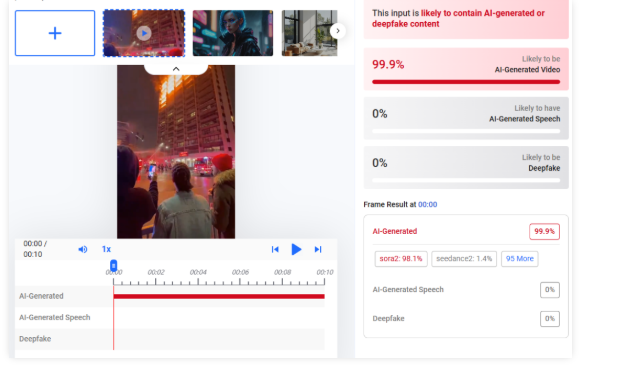
Amid the ongoing conflict in West Asia involving the United States, Israel and Iran, a video is being widely circulated on social media with the claim that Iran attacked the headquarters of tech giants Apple and Microsoft in Israel. The clip shows a building engulfed in flames, with firefighters attempting to douse the fire. However, research by the CyberPeace found that the viral video is AI-generated and is being falsely linked to the ongoing conflict to spread misinformation.
Claim:
An Instagram user ‘bharat_updatenews’ shared the video on March 19, 2026, claiming that Iran had launched an attack on major tech company headquarters, including Apple and Microsoft, in Israel. The post suggested that the incident had raised serious security concerns and was being widely reported by international media.
Link: https://www.instagram.com/bharat_updatenews/reel/DWEUhLEAKaw

Fact Check:
To verify the claim, we extracted keyframes from the viral video and conducted a reverse search using Google Lens. During this process, we found the same video on a TikTok account named ‘dailyupdate122’, where it had been uploaded on March 15, 2026.

The video on this account was clearly labelled as “AI-generated media.” The account also featured several other AI-generated videos, raising doubts about the authenticity of the viral clip. Following this, we analysed the video using the AI detection tool Hive Moderation. The results indicated that the video is nearly 100 percent AI-generated. The tool further suggested with over 98 percent probability that the clip may have been created using OpenAI’s Sora or a similar AI video generation model.
Conclusion:
The viral claim that Iran attacked Apple and Microsoft headquarters in Israel is false. The video circulating online is AI-generated and has no connection to the ongoing conflict in West Asia.

Executive Summary
A disturbing video showing a man assaulting a bhelpuri vendor is being widely shared on social media. In the video, a man approaches the bhelpuri vendor, eats bhelpuri from his basket, spits on him and appears to assault him. Social media users are sharing the video claiming that it is from Patna and are demanding action against the man seen behaving indecently. CyberPeace Research Wing’s Research found that the video is scripted. It is being shared on social media with a misleading claim.
Claim:
A social media user shared the viral video with the caption: “A video has surfaced showing the alleged mistreatment of a young man selling bhelpuri at Patna Junction railway station. It is alleged that some people misbehaved with the vendor after eating bhelpuri and put bhelpuri into his mouth. Why should a poor, hardworking person be treated this way? The Bihar government and the concerned railway authorities should investigate the video and take appropriate action. Samrat Choudhary ji, please also look into this incident reported at Patna railway station.”
https://www.facebook.com/reel/29198229276436585

Fact Check
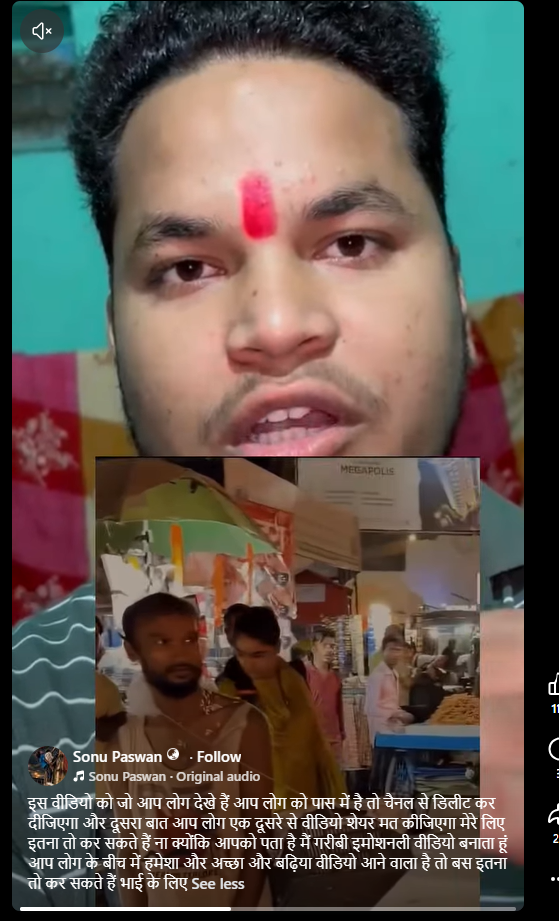
To verify the truth behind the video being shared with the claim that a bhelpuri vendor was assaulted, we conducted a reverse image search of its keyframes. During the search, we found a video uploaded on September 18 on the Facebook account of a user identified as Sonu Paswan. The person seen assaulting the vendor in the viral clip can also be seen in this video. In the video, he explains that the viral clip was scripted and was recorded solely for entertainment purposes. He appeals to people not to take the video seriously or share it further. He also says that after the video went viral, he had to delete several videos, due to which much of his effort went to waste.
https://www.facebook.com/reel/2161698368111775
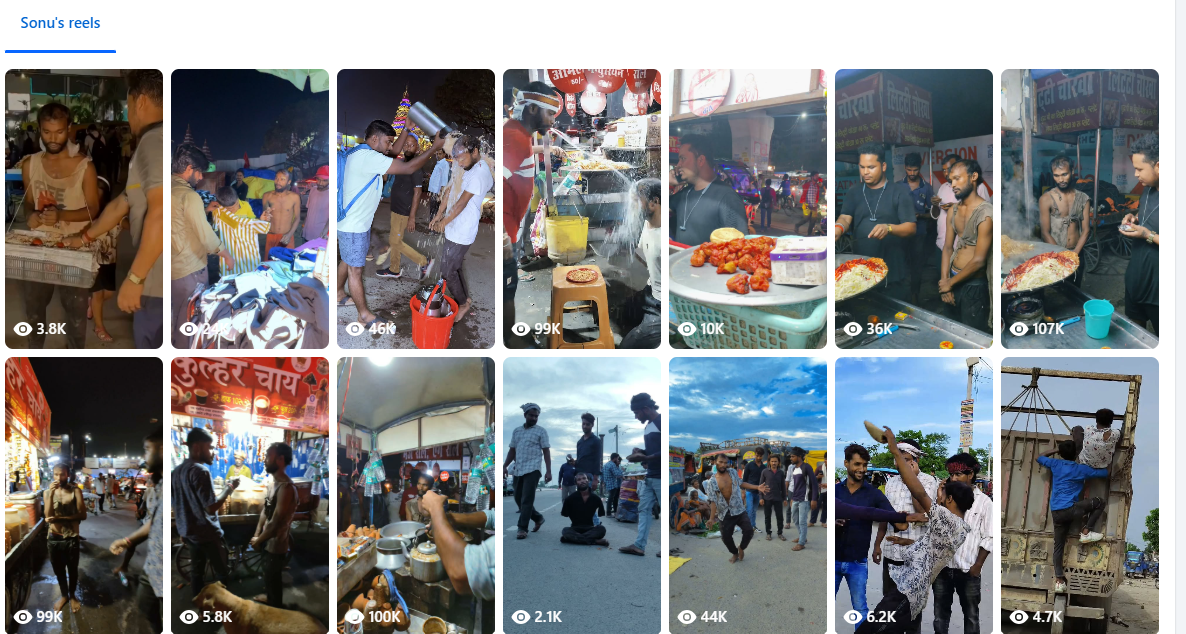
Additionally, upon examining Sonu Paswan’s Facebook account, we found several other videos in which the same two men seen in the viral video can be seen acting together in different situations.
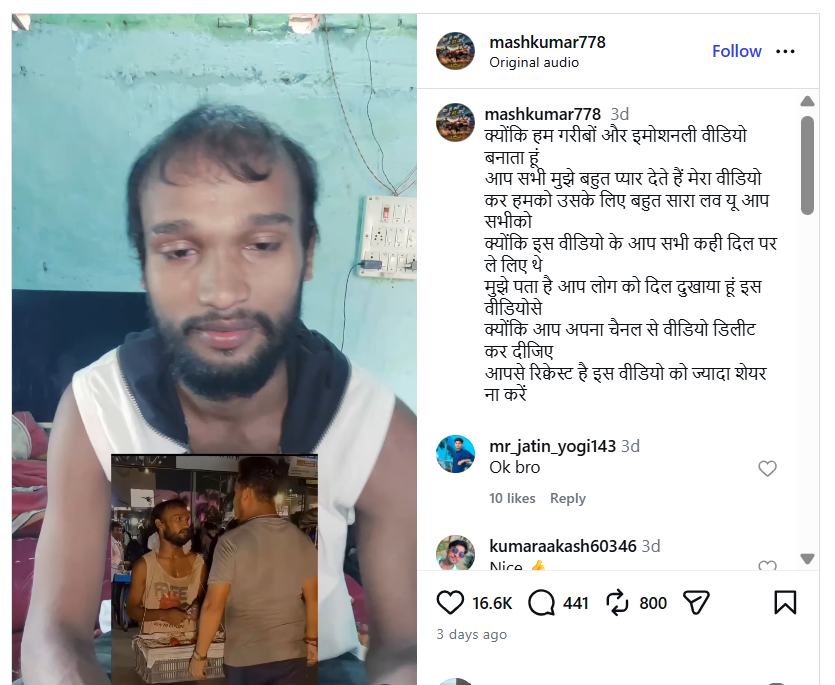
Additionally, we found a video uploaded on Sonu Paswan’s Instagram account on September 18. In the video, he explains that the person selling bhelpuri/bhujia in the viral clip is Sonu Kumar, while the person seen assaulting him is a member of their team. Sonu Kumar says in the video that they work together to create videos on poverty and emotional issues. He also appeals to people to watch the viral clip as entertainment and not share it further. This makes it clear that the viral video is scripted.
https://www.instagram.com/p/Dda41TdzMxO/
Conclusion
Our Research found that the video being shared with the claim that a bhelpuri vendor was assaulted and mistreated at Patna railway station is scripted.
