
India’s Government Crackdown on Obscene Content on OTT Platforms
Introduction
Over-the-Top (OTT) streaming platforms have become a significant part of Indian entertainment consumption, offering users the ability to watch films, web series, and short-format videos directly online. These platforms operate on a subscription-based model, allowing for creative freedom, but they also lack clear accountability. On certain platforms, some content has been criticised for focusing on sensational or sexually explicit themes, particularly targeting young viewers seeking risqué entertainment. Such applications lack strong age verification mechanisms and offer ‘user access’ with minimal restrictions, which raises serious concerns about exposure to obscene content. This has triggered serious concerns among regulators, civil society organisations, advocacy and parental groups about the accessibility of such material and its potential influence, especially on minors.
Blocking order issued by the Ministry of Broadcasting and Information (MIB)
On 23rd July 2025, the Government of India, invoking powers under the Information Technology Act, 2000, and the Information Technology (Intermediary Guidelines and Digital Media Ethics Code) Rules, 2021, has issued a ‘blocking order’ against 25 OTT platforms. A total of 26 websites and 14 mobile applications of the said OTT platforms were on the list, including several prominent OTT platforms for alleged distribution of obscene, vulgar and pornographic content in some cases. This regulatory action follows previous statutory advice and repeated warnings to the platforms in question, some of which continued to operate through new domains and disobeyed Indian laws and regulations.
This action was taken by the Ministry of Broadcasting and Information (MIB) in consultation with Ministry of Home Affairs, Ministry of Women and Child Development, Ministry of Electronics and Information Technology, Department of Legal Affairs, industry bodies and experts in the field of women rights and child rights.
The list of OTT Platforms covered under the said ‘Blocking Order’
The list includes - Big Shots App, Desiflix, Boomex, NeonX VIP, Navarasa Lite, Gulab App, Kangan App, Bull App, ShowHit, Jalva App, Wow Entertainment, Look Entertainment, Hitprime, Fugi, Feneo, ShowX, Sol Talkies, Adda TV, ALTT, HotX VIP, Hulchul App, MoodX, Triflicks, Ullu, and Mojflix.
The government has explicitly directed Internet Service Providers (ISP’s) to disable or remove public access to these websites within India.
Recent Judicial and Centre’s Interventions
- To refresh the memory, last year in March 2024, the Ministry of I&B blocked 18 OTT Platforms for Obscene and Vulgar Content.
- In April 2025, the Apex Court of India heard a petition on the prohibition of streaming of sexually explicit content on over-the-top (OTT) and social media platforms. In response to the petition, the Apex court stated, ‘It's not our domain, the centre has to take action and highlighted the need for executive action in the matter. The apex court has also issued notice to the Centre, OTT platforms, as well as social media platforms in response to a petition seeking a ban on sexually explicit content. (Uday Mahurkar & Ors. v. Union of India & Ors. [WP(C) 313/2025])
- The following recent blocking order dated 23rd July 2025 by the Ministry of I&B is a welcome and commendable step that reflects the government’s firm stance against illicit content on OTT platforms. Kangana Ranaut, Actress and politician, while speaking to a news agency, has appreciated the government's move to ban OTT platforms such as Ullu, ALTT, and Desiflix for showing soft porn content.
Conclusion
The centre’s intervention sends a clear message that OTT platforms cannot remain exempt from accountability. The move is a response to the growing concern of harms caused by unregulated digital content and non-compliances by the platforms, particularly in relation to illicit material, and broader violations of decency laws in India. However, the enforcement must now go beyond issuing orders and require a robust measurable compliance framework for OTT platforms.
In today’s fast-paced era, when subscription-based content platforms place vast libraries at users' fingertips, the government's action is necessary and proportionate, marking a decisive step toward safer digital and healthy regulated environments.
References
- https://www.newsonair.gov.in/govt-bans-25-ott-websites-apps-over-vulgar-and-pornographic-content/
- https://timesofindia.indiatimes.com/technology/tech-news/big-shots-ullu-altt-desiflix-mojflix-and-20-other-ott-apps-banned-what-governments-ban-order-says/articleshow/122918803.cms
- https://www.ndtv.com/india-news/centre-bans-ott-platforms-ullu-altt-desiflix-for-obscene-content-8947100
- https://foxmandal.in/News/sc-takes-note-of-obscenity-plea-issues-notice-to-ott-platforms/
- https://www.morungexpress.com/kangana-ranaut-calls-banning-ott-platforms-for-soft-porn-content-a-much-appreciated-move
- https://www.livemint.com/news/india/do-something-supreme-court-to-centre-ott-platforms-on-obscene-content-pil-netflix-amazon-prime-ullu-altt-x-facebook-11745823594972.html

Related Blogs

Executive Summary
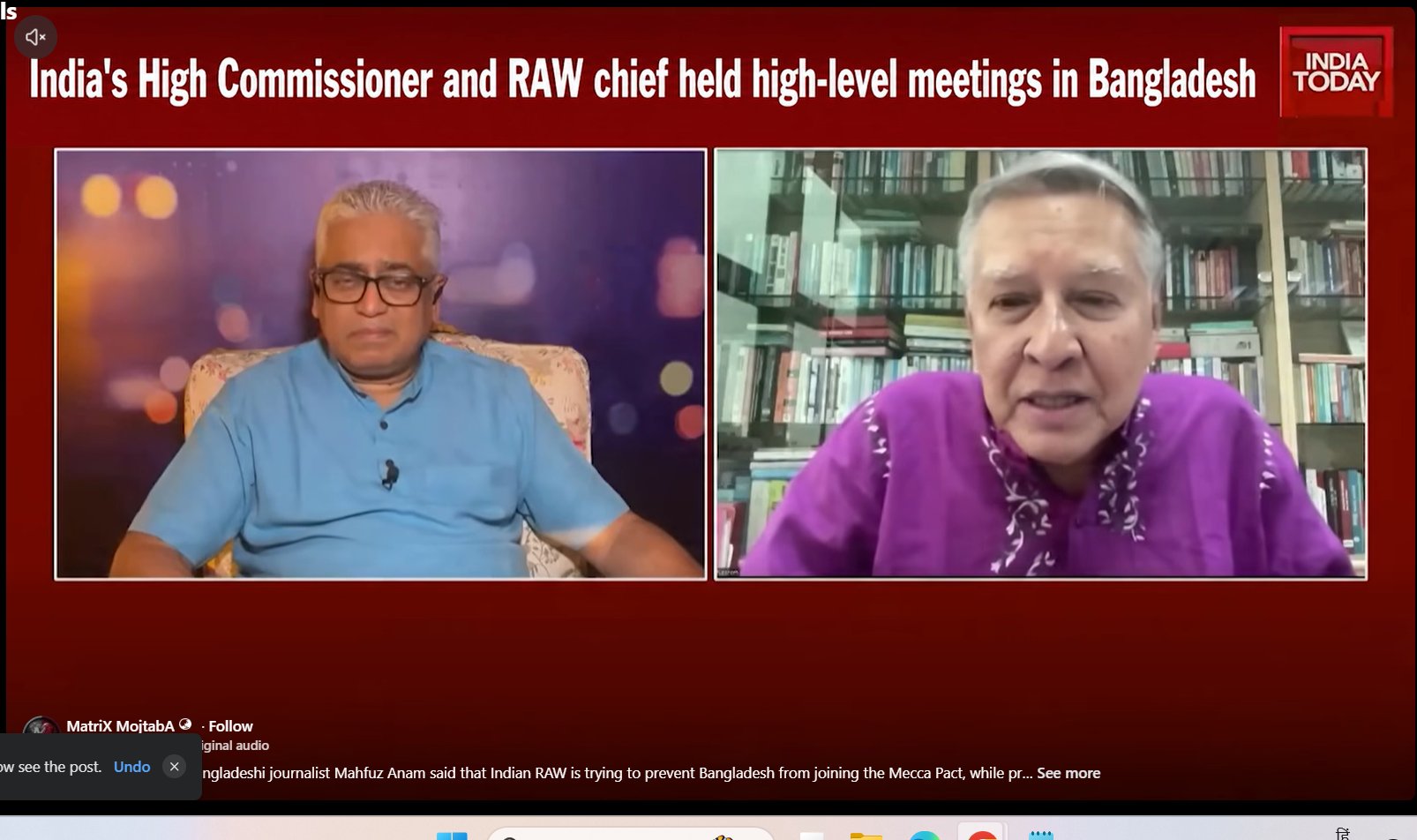
Several social media users shared an India Today news clipping showing an exclusive interaction between senior journalist Rajdeep Sardesai and Bangladeshi journalist Mahfuz Anam. In the purported conversation, Anam was heard claiming that India’s intelligence agency RAW was trying to prevent Bangladesh from joining the Mecca Pact. He was also allegedly heard saying that New Delhi was promoting an alternative defence pact with Bangladesh involving a Middle Eastern country and Israel. However, the CyberPeace Research Wing found that the viral video had been digitally manipulated using AI-generated audio. The original video, uploaded by India Today, showed Anam in conversation with Sardesai in 2024, discussing Bangladesh’s July uprising and the developments that followed.
Claim
A Facebook page, ‘MatriX MojtabA’, shared an India Today news clipping on August 12 showing senior journalist Rajdeep Sardesai interviewing Bangladeshi journalist Mahfuz Anam. In the purported conversation, Anam was heard saying that RAW was trying to prevent Bangladesh from joining the Mecca Pact. He was also allegedly heard claiming that New Delhi was promoting an alternative defence pact with Bangladesh involving a Middle Eastern country and Israel.
https://www.facebook.com/reel/1804199927691664/
Fact Check
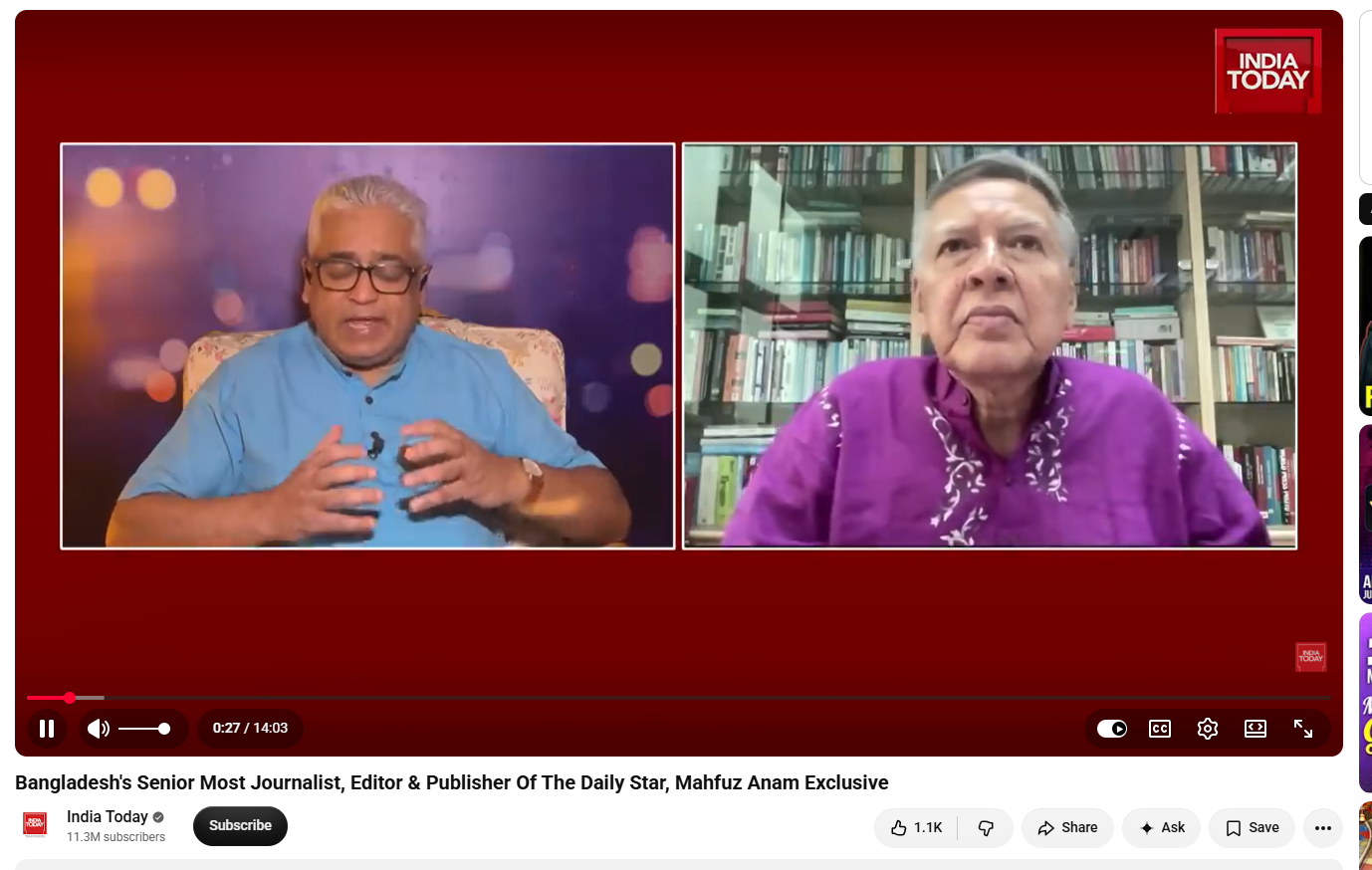
Based on the clue that the viral clip was taken from an exclusive conversation between Mahfuz Anam and India Today, the Desk conducted a customised keyword search on Google. The search led to an extended version of the same interaction uploaded on India Today’s official YouTube channel. The Desk identified the original footage by comparing the background setting and the clothes worn by both Sardesai and Anam, which appeared identical in the viral and original clips. However, an analysis of the original video established that it was an old recording from August 2024. The video showed Anam and Sardesai discussing Bangladesh’s July 2024 uprising and the developments that followed. The Desk analysed the complete 14-minute-and-three-second video and found that Anam did not mention RAW or the Mecca Pact anywhere in the interaction. The Mecca Pact was signed by Pakistan, Saudi Arabia and Turkey on August 7, 2026. This established that the statement attributed to Anam in the viral video was not part of the original conversation and had been digitally manipulated.
https://www.youtube.com/watch?v=gEoyTkOZ8xE
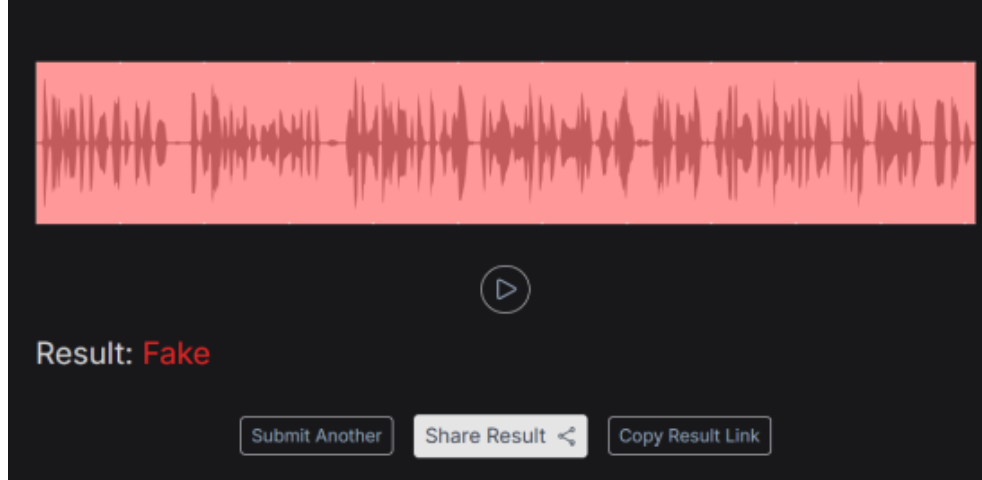
Further, after finding indications that the audio in the viral clip may have been AI-generated, the Desk extracted the audio from the video and analysed it using Resemble AI, an AI audio detection tool. The analysis indicated that the audio was AI-generated and did not contain Mahfuz Anam’s original statement.
Conclusion
The viral video showing Bangladeshi journalist Mahfuz Anam purportedly claiming that India’s RAW was trying to prevent Bangladesh from joining the Mecca Pact is digitally manipulated. The audio in the viral clip was replaced with AI-generated audio to attribute a false statement to Anam. The original India Today video, recorded in 2024, shows Anam speaking with Rajdeep Sardesai about Bangladesh’s July uprising and the developments that followed. He does not make any remarks about RAW, the Mecca Pact or an alternative defence pact involving India, a Middle Eastern country and Israel.

A video circulating on social media claims to show former Indian cricketer Sachin Tendulkar commenting on England batter Joe Root’s batting feats. In the clip, Tendulkar is allegedly heard saying that if Joe Root continues scoring centuries, even his (Tendulkar’s) record would be broken. The video further claims that Tendulkar says if Root scores another century, he would give up the bat’s grip, after which the clip abruptly ends.
Users sharing the video are claiming that Sachin Tendulkar has taken a dig at Joe Root through this remark.
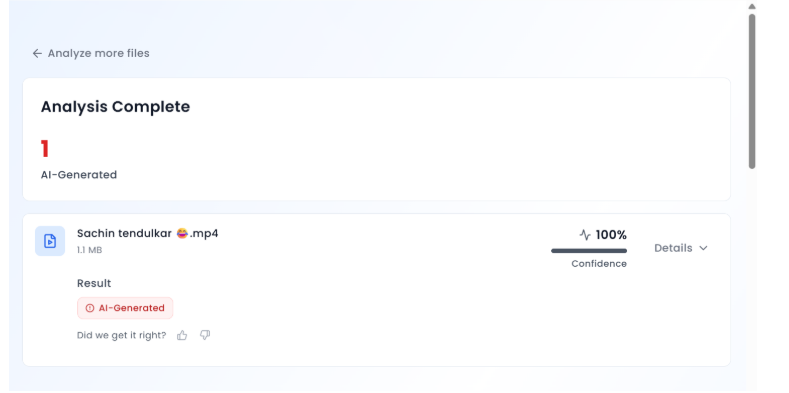
Cyber Peace Foundation’s research found the claim to be misleading. Our research clearly establishes that the viral video is not authentic but has been created using Artificial Intelligence (AI) tools and is being shared online with a false narrative.
CLAIM
On January 5, 2025, several users shared the viral video on Instagram, claiming it shows Sachin Tendulkar making remarks about Joe Root’s century-scoring spree.
(Post link and archive link available.)

FACT CHECK
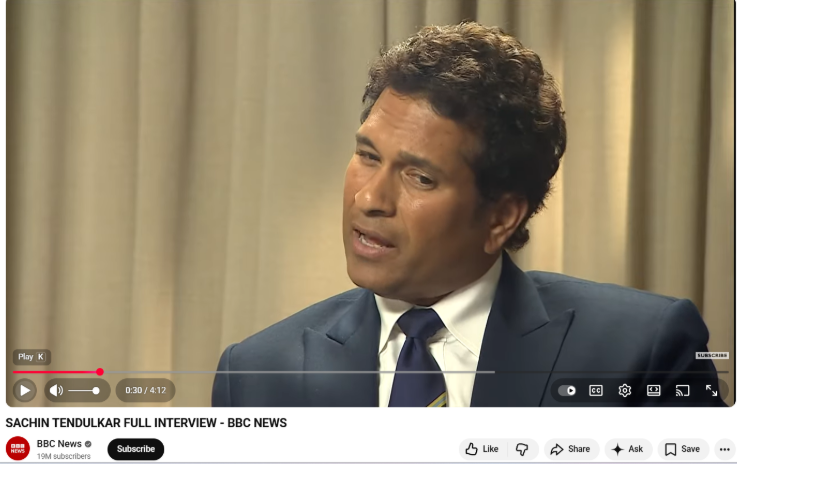
To verify the claim, we extracted keyframes from the viral video and conducted a Google Reverse Image Search. This led us to an interview of Sachin Tendulkar published on the official BBC News YouTube channel on November 18, 2013. The visuals from that interview match exactly with those seen in the viral clip.
This establishes that the visuals used in the viral video are old and have been repurposed with manipulated audio to create a misleading narrative.
Further, Joe Root made his Test debut in 2012. At that time, he had not scored multiple Test centuries and was nowhere close to Sachin Tendulkar’s record tally of hundreds. This timeline itself makes the viral claim factually incorrect.
(Link to the original BBC interview available.)
https://www.youtube.com/watch?v=v6Rz4pgR9UQ
Upon closely examining the viral clip, we noticed that Sachin Tendulkar’s voice sounded unnatural and inconsistent. This raised suspicion of audio manipulation.
We then ran the viral video through an AI detection tool, Aurigin AI. According to the results, the audio in the video was found to be 100 percent AI-generated, confirming that Tendulkar never made the statements attributed to him in the clip.
Conclusion
Our research confirms that the viral video claiming Sachin Tendulkar commented on Joe Root’s centuries is fake. The video has been created using AI-generated audio and misleadingly combined with visuals from a 2013 interview. Users are sharing this manipulated clip on social media with a false claim.
Introduction
In the sprawling online world, trusted relationships are frequently taken advantage of by cybercriminals seeking to penetrate guarded systems. The Watering Hole Attack is one advanced method, which focuses on a user’s ecosystem by compromising the genuine sites they often use. This attack method is different from phishing or direct attacks as it quietly exploits the everyday browsing of the target to serve malicious content. The quiet and exact nature of watering hole attacks makes them prevalent amongst Advanced Persistent Threat (APT) groups, especially in conjunction with state-sponsored cyber-espionage operations.
What Qualifies as a Watering Hole Attack?
A Watering Hole Attack targets and infects a trusted website. The targeted website is one that is used by a particular organization or community, such as a specific industry sector. This type of cyberattack is analogous to the method of attack used by animals and predators waiting by the water’s edge for prey to drink. Attackers prey on their targets by injecting malicious code, such as an exploit kit or malware loader, into websites that are popular with their victims. These victims are then infected when they visit said websites unknowingly. This opens as a gateway for attackers to infiltrate corporate systems, harvest credentials, and pivot across internal networks.
How Watering Hole Attacks Unfold
The attack lifecycle usually progresses as follows:
- Reconnaissance - Attackers gather intelligence on the websites frequented by the target audience, including specialized communities, partner websites, or local news sites.
- Website Exploitation - Through the use of outdated CMS software and insecure plugins, attackers gain access to the target website and insert malicious code such as JS or iframe redirections.
- Delivery and Exploitation - The visitor’s browser executes the malicious code injected into the page. The code might include a redirection payload which sends the user to an exploit kit that checks the user’s browser, plugins, operating system, and other components for vulnerabilities.
- Infection and Persistence - The infected system malware such as RATs, keyloggers, or backdoors. These enable lateral and long-term movements within the organisation for espionage.
- Command and Control (C2) - For further instructions, additional payload delivery, and stolen data retrieval, infected devices connect to servers managed by the attackers.
Key Features of Watering Hole Attacks
- Indirect Approach: Instead of going after the main target, attackers focus on sites that the main target trusts.
- Supply-Chain-Like Impact: An infected industry portal can affect many companies at the same time.
- Low Profile: It is difficult to identify since the traffic comes from real websites.
- Advanced Customization: Exploit kits are known to specialize in making custom payloads for specific browsers or OS versions to increase the chance of success.
Why Are These Attacks Dangerous?
Worming hole attacks shift the battlefield to new grounds in cyber warfare on the web. They eliminate the need for firewalls, email shields, and other security measures because they operate on the traffic to and from real, trusted websites. When the attacks work as intended, the following consequences can be expected:
- Stealing Credentials: Including privileged accounts and VPN credentials.
- Espionage: Theft of intellectual property, defense blueprints, or government confidential information.
- Supply Chain Attacks: Resulting in a series of infections among related companies.
- Zero-Day Exploits: Including automated attacks using zero-day exploits for full damage.
Incidents of Primary Concern
The implications of watering hole attacks have been felt in the real world for quite some time. An example from 2019 reveals this, where a known VoIP firm’s site was compromised and used to spread data-stealing malware to its users. Likewise, in 2014, the Operation Snowman campaign—which seems to have a state-backed origin—attempted to infect users of a U.S. veterans’ portal in order to gain access to visitors from government, defense, and related fields. Rounding up the list, in 2021, cybercriminals attacked regional publications focusing on energy, using the publications to spread malware to company officials and engineers working on critical infrastructure, as well as to steal data from their systems. These attacks show the widespread and dangerous impact of watering hole attacks in the world of cybersecurity.
Detection Issues
Due to the following reasons, traditional approaches to security fail to detect watering hole attacks:
- Use of Authentic Websites: Attacks involving trusted and popular domains evade detection via blacklisting.
- Encrypted Traffic: Delivering payloads over HTTPS conceals malicious scripts from being inspected at the network level.
- Fileless Methods: Using in-memory execution is a modern campaign technique, and detection based on signatures is futile.
Mitigation Strategies
To effectively neutralize the threat of watering hole attacks, an organization should implement a defense-in-depth strategy that incorporates the following elements:
- Patch Management and Hardening -
- Conduct routine updates on operating systems, web browsers, and extensions to eliminate exploit opportunities.
- Either remove or reduce the use of high-risk elements such as Flash and Java, if feasible.
- Network Segmentation - Minimize lateral movement by isolating critical systems from the general user network.
- Behavioral Analytics - Implement Endpoint Detection and Response (EDR) tools to oversee unusual behaviors on processes—for example, script execution or dubious outgoing connections.
- DNS Filtering and Web Isolation - Implement DNS-layer security to deny access to known malicious domains and use browser isolation for dangerous sites.
- Threat Intelligence Integration - Track watering hole threats and campaigns for indicators of compromise (IoCs) on advisories and threat feeds.
- Multi-Layer Email and Web Security - Use web gateways integrated with dynamic content scanning, heuristic analysis, and sandboxing.
- Zero Trust Architecture - Apply least privilege access, require device attestation, and continuous authentication for accessing sensitive resources.
Incident Response Best Practices
- Forensic Analysis: Check affected endpoints for any mechanisms set up for persistence and communication with C2 servers.
- Log Review: Look through proxy, DNS, and firewall logs to detect suspicious traffic.
- Threat Hunting: Search your environment for known Indicators of Compromise (IoCs) related to recent watering hole attacks.
- User Awareness Training: Help employees understand the dangers related to visiting external industry websites and promote safe browsing practices.
The Immediate Need for Action
The adoption of cloud computing and remote working models has significantly increased the attack surface for watering hole attacks. Trust and healthcare sectors are increasingly targeted by nation-state groups and cybercrime gangs using this technique. Not taking action may lead to data leaks, legal fines, and break-ins through the supply chain, which damage the trustworthiness and operational capacity of the enterprise.
Conclusion
Watering hole attacks demonstrate how phishing attacks evolve from a broad attack to a very specific, trust-based attack. Protecting against these advanced attacks requires the zero-trust mindset, adaptive defenses, and continuous monitoring, which is multicentral security. Advanced response measures, proactive threat intelligence, and detection technologies integration enable organizations to turn this silent threat from a lurking predator to a manageable risk.
References
- https://www.fortinet.com/resources/cyberglossary/watering-hole-attack
- https://en.wikipedia.org/wiki/Watering_hole_attack
- https://www.proofpoint.com/us/threat-reference/watering-hole
- https://www.techtarget.com/searchsecurity/definition/watering-hole-attack
