
Frontier AI and Cyber Risk: Reading the CERT In Advisory Beyond Compliance
Introduction
The recent advisory issued by CERT, issued on April 26th, 2026, titled “Defending Against Frontier AI-Driven Cyber Risks”, on AI-driven cyber threats does not merely add to the list of routine cybersecurity warnings. Instead, it marks a shift in how cyber risk itself is understood. The concern, here, is not just that attacks are increasing, but also that their nature is changing. Artificial intelligence is no longer assisting cyber operations- whether legitimate or malicious, in fragments; it is beginning to organise and execute them at scale.
What is emerging is a situation where capability is no longer tied to human skill alone. Systems can now identify vulnerabilities, generate exploits, and carry out coordinated attacks with limited intervention. This alters the baseline assumption of cybersecurity, that attacks require effort, time, and expertise.
The Essence: Automation and Capability
At the core of the advisory lies the recognition that AI has introduced speed and autonomy into cyber operations. Tasks such as analysing code, identifying vulnerabilities, or crafting phishing content are no longer sequential processes. They can happen almost simultaneously and at scale.
This is not simply a matter of efficiency. It changes the structure of the threat itself. When attacks can be automated, they become repeatable and less dependent on specialised actors. The advisory also points to the ability of AI systems to conduct multi-stage attacks, moving across networks and adapting strategies in real time.
In a way, the threat is no longer just external. It is embedded within the logics of the technology being used.
Significance: Lower Barriers, Wider Exposure
One of the more important aspects of the advisory is its emphasis on ‘accessibility’. AI lowers the barrier of complexity in the commission of cybercrimes. Activities that once required coordinated teams can now be performed by individuals with access to advanced tools.
This has two consequences. First, the number of potential attackers increases. Second, the scale at which attacks can be carried out expands significantly. Systems that were previously considered low risk may become viable targets simply because automated tools can scan, test, and exploit them rapidly.
There is also a broader anxiety reflected in what is being described as “Mythos concerns”, a shorthand for uncertainty around frontier AI systems and their unpredictable capabilities. This signals that the risk is not fully mapped yet and that regulatory responses are still catching up.
Element of Continuous Risk
The advisory outlines impacts such as unauthorised access, data breaches, identity theft, and financial fraud. These are familiar categories. What is less explicit, but more important, is the shift in how these harms occur.
When AI enables rapid and repeated exploitation, risk becomes continuous. Systems are not attacked once and then secured. They are exposed to ongoing attempts. This creates pressure not only on technical infrastructure but also on legal frameworks that are designed around discrete incidents.
For instance, obligations under the Information Technology Act, 2000 or even emerging data protection frameworks often assume identifiable breaches and reportable events. Continuous probing complicates that model!
Response Framework: From Compliance to Vigilance
CERT-In’s recommendations reflect this change in threat perception. There is a clear emphasis on vigilance rather than mere compliance. Organisations are advised to adopt zero-trust approaches, reduce exposure surfaces, and treat vulnerabilities as immediately exploitable.
The insistence on rapid patching within short timeframes is particularly telling. It acknowledges that the window between vulnerability disclosure and exploitation is shrinking.
There is also a noticeable expansion of responsibility. The advisory does not limit itself to large organisations. It extends guidance to the MSMEs and individuals, recognising that cyber risk is now distributed across the entire digital ecosystem.
A Subtle Legal Shift
Although the advisory itself is not binding in law, it operates within the framework of Section 70B of the Information Technology Act, 2000, which empowers CERT-In to issue directions on cybersecurity best practices and guidelines.
So, while the advisory does not create liability directly, it influences what may later be considered ‘reasonable security practice’. In that sense, it serves as soft law, gradually informing standards of due diligence.
At the same time, there remains a gap. The advisory focuses on defensive measures, but it does not fully address attribution and accountability in AI driven attacks. When actions are automated and anonymised, identifying responsibility and imposing liability becomes more complex.
Conclusion
The CERT In advisory is not just a warning about new threats. It is an acknowledgement of a transition. Cyber risk is moving from being occasional and targeted to being constant and scalable. AI is not simply adding to existing threats; it is restructuring and advancing them.
For cyber vigilance frameworks, this suggests a need to rethink priorities. Static compliance measures are no longer sufficient. It has become necessary to adopt continuous monitoring, adaptive responses, and a clearer understanding of how technology is reshaping risk.
While the advisory does not resolve these questions, it does bring them into focus. And that, in itself, is significant.
References
- CERT-In issues advisory against AI driven cyber attacks for MSMEs, organisations and individuals, Moneycontrol (Apr. 27, 2026), https://www.moneycontrol.com/technology/cert-in-issues-advisory-against-ai-driven-cyber-attacks-for-msmes-organisations-and-individuals-article-13899942.html.
- CERT-In warns of rising AI driven cyber threats amid Mythos concerns, Ommcom News (2026), https://ommcomnews.com/science-tech/cert-in-warns-of-rising-ai-driven-cyber-threats-amid-mythos-concerns/.
- Indian Computer Emergency Response Team (CERT-In), Defending Against Frontier AI Driven Cyber Risks, Advisory No. CIAD-2026-0020 (Apr. 26, 2026)
- Information Technology Act, 2000, § 70B (India).

Related Blogs

Introduction
The digital expanse of the metaverse has recently come under scrutiny following a gruesome incident. In a digital realm crafted for connection and exploration, a 16-year-old girl’s avatar falls victim to an agonising assault that kindled the fire of ethno-legal and societal discourse. The incident is a stark reminder that the cyberverse, offering endless possibilities and experiences, also has glaring challenges that require serious consideration. The incident involves a sixteen-year-old teen girl being raped through her digital avatar by a few members of Metaverse.
This incident has sparked a critical question of genuine psychological trauma inflicted by virtual experiences. The incident with a 16-year-old girl highlights the strong emotional repercussions caused by illicit virtual actions. While the physical realm remains unharmed, the digital assault can leave permanent scars on the psyche of the girl. This issue raises a critical question about the ethical implications of virtual interactions and the responsibilities of service providers to protect users' well-being on their platforms.
The Judicial Quagmire
The digital nature of these assaults gives impetus to complex jurisdictions which are profound in cyber offences. We are still novices in navigating the digital labyrinth where avatars have the ability to transcend borders with just a click of a mouse. The current legal structure is not equipped to tackle virtual crimes, calling for urgent reforms in critical legal structure. The Policymakers and legal Professionals must define virtual offenses first with clear and defined jurisdictional boundaries ensuring justice isn’t hampered due to geographical restrictions.
Meta’s Accountability
Meta, a platform where this gruesome incident occurred, finds itself at the crossroads of ethical dilemma. The company implemented plenty of safeguards that proved futile in preventing such harrowing acts. The incident has raised several questions about the broader role and responsibilities of tech juggernauts. Some of the questions demanding immediate answers as how a company can strike a balance between innovation and the protection of its users.
The Tightrope of Ethics
Metaverse is the epitome of innovation, yet this harrowing incident highlights a fundamental ethical contention. The real challenge is to harness the power of virtual reality while addressing the risks of digital hostilities. Society is still facing this conundrum, stakeholders must work in tandem to formulate robust and effective legal structures to protect the rights and well-being of users. This also includes balancing technological development and ethical challenges which require collective effort.
Reflections of Society
Beyond legal and ethical considerations, this act calls for wider societal reflections. It emphasises the pressing need for a cultural shift fostering empathy, digital civility and respect. As we tread deeper into the virtual realm, we must strive to cultivate ethos upholding dignity in both the digital and real world. This shift is only possible through awareness campaigns, educational initiatives and strong community engagement to foster a culture of respect and responsibility.
Safer and Ethical Way Forward
A multidimensional approach is essential to address the complicated challenges cyber violence poses. Several measures can pave the way for safer cyberspace for netizens.
- Legislative Reforms - There’s an urgent need to revamp legislative frameworks to mitigate and effectively address the complexities of these new and emerging virtual offences. The tech companies must collaborate with the government on formulating best practices and help develop standard security measures prioritising user protection.
- Public Awareness and Engagement - Initiating public awareness campaigns to educate users on crucial issues such as cyber resilience, ethics, digital detox and responsible online behaviour play a critical role in making netizens vigilant to avoid cyber hostilities and help fellow netizens in distress. Civil society organisations and think tanks such as CyberPeace Foundation are the pioneers of cyber safety campaigns in the country, working in tandem with governments across the globe to curb the evil of cyber hostilities.
- Interdisciplinary Research: The policymakers should delve deeper into the ethical, psychological and societal ramifications of digital interactions. The multidisciplinary approach in research is crucial for formulating policy based on evidence.
Conclusion
The digital Gang Rape is a wake-up call, demanding the bold measure to confront the intricate legal, societal and ethical pitfalls of the metaverse. As we navigate digital labyrinth, our collective decisions will help shape the metaverse's future. By nurturing the culture of empathy, responsibility and innovation, we can forge a path honouring the dignity of netizens, upholding ethical principles and fostering a vibrant and safe cyberverse. In this significant movement, ethical vigilance, diligence and active collaboration are indispensable.
References:
- https://www.thehindu.com/sci-tech/technology/virtual-gang-rape-reported-in-the-metaverse-probe-underway/article67705164.ece
- https://thesouthfirst.com/news/teen-uk-girl-virtually-gang-raped-in-metaverse-are-indian-laws-equipped-to-handle-similar-cases/
.webp)
In what is being stated by experts to be one of the largest data breaches of all time, approximately 16 billion passwords were exposed online last week. According to various news reports, the leak contains credentials spanning a broad array of online services, including Facebook, Instagram, Gmail, etc., creating a serious alarm across the globe. Cybersecurity specialists have noted that this leak poses immense risks of account takeovers, identity theft, and enabling phishing scams. The leaked data is being described as a “collection-of-collections,” with multiple previously breached databases compiled into one easy-to-access repository for cybercriminals.
Infostealer Malware and Why It’s a Serious Threat
This incident brought to light a type of malware that experts refer to as the Infostealer. Just as the name suggests, this is a malware program made expressly to take personal information from compromised computers and devices, including cookies, session tokens, browser data, login credentials, and more. It targets high-value credentials, as opposed to ransomware, which encrypts files for ransom, or spyware that passively watches users. Once installed, they silently gather passwords, screenshots, and other information while hiding inside unassuming software, such as a game, utility, or browser plugin. Once stolen, these credentials are then combined by hackers to create databases, which are then offered for sale on dark web forums or even made public, as was the case in this breach. This is particularly risky since, if session tokens or other browser data are also taken, these credentials can be used to get around even two-factor authentication. As a result, the leak would also enable the rise of other crimes such as phishing.
Guidelines for protection
In response to this breach, India’s Computer Emergency Response Team (CERT-IN) issued an advisory, urging all internet users to take immediate action to protect their accounts. Although this is in response to the specific data leak, these are some key measures advised to be followed to maintain a general standard of cyber hygiene at all times.
- Reset your passwords: In case of incidents such as the above, users are advised to change the passwords of their accounts immediately. More so of the ones that have been compromised and need to be prioritised, such as email, online banking, and social media etc.
- Use strong, unique passwords and password manager features: Avoid password reuse across platforms. Using a password manager on a trusted platform can aid in storing and recalling them for different accounts.
- Monitor account activity: Check activity logs, especially for signs of unrecognised login attempts or password-reset notifications.
- Enable Multi-Factor Authentication (MFA): The user is advised to enable two-step verification (via an app like Google Authenticator or a hardware key), which will add an extra security layer.
- Phishing attacks: Cybercriminals will likely attempt to use leaked credentials to impersonate legitimate companies and send phishing emails. Read carefully before clicking on any links or attachments received.
- Scan devices for malware: Run updated antivirus or anti-malware scans to catch and remove infostealers or other malicious software lurking on your device.
Why This Data Breach is a Wake-Up Call
With 16 billion credentials exposed, this breach highlights the critical need for robust personal cybersecurity hygiene. It also reveals the persistent role of infostealer malware in feeding a global cybercrime economy, one where credentials are the most valuable assets. As Infosecurity Europe and other analysts highlight, infostealers are lightweight, often distributed via phishing or malicious downloads, and are highly effective at lifting data in the background without alerting the user. Even up-to-date antivirus software can struggle to catch new variants, making proactive security practices with respect to such malware all the more essential. In a time where data is everything, access to credentials can derive power and safety, regarding it must be kept in check.
Conclusion
This breach is a reminder that cybersecurity is a shared responsibility. Even with protective systems in place with respect to the industries and official authorities, every internet user must do their part in protecting themselves through cyber hygiene practices such as resetting passwords, using multi-factor authentication, staying vigilant against phishing scams, and ensuring devices are regularly scanned for malware. While breaches like this can seem overwhelming and might create a surge of panic, practical measures go a long way in mitigating exposure. Staying informed and proactive is the best defence one can adopt in a rapidly evolving threat landscape.
References
- https://economictimes.indiatimes.com/news/international/us/16-billion-passwords-exposed-in-unprecedented-cyber-leak-of-2025-experts-raise-global-alarm/articleshow/121961165.cms?from=mdr
- https://timesofindia.indiatimes.com/technology/tech-news/16-billion-passwords-leaked-on-internet-what-you-need-to-know-to-protect-your-facebook-instagram-gmail-and-other-accounts/articleshow/121967191.cms
- https://indianexpress.com/article/technology/tech-news-technology/16-billion-passwords-leaked-online-what-we-know-10077546/
- https://indianexpress.com/article/technology/tech-news-technology/16-billion-passwords-leaked-online-what-we-know-10077546/
- https://www.hindustantimes.com/business/certin-issues-advisory-after-data-breach-of-16-billion-credentials-asks-people-to-change-passwords-101750779940872.html
- https://www.cert-in.org.in/s2cMainServlet?pageid=PUBVLNOTES02&VLCODE=CIAD-2025-0024
- https://www.infosecurityeurope.com/en-gb/blog/threat-vectors/guide-infostealer-malware.html
Introduction
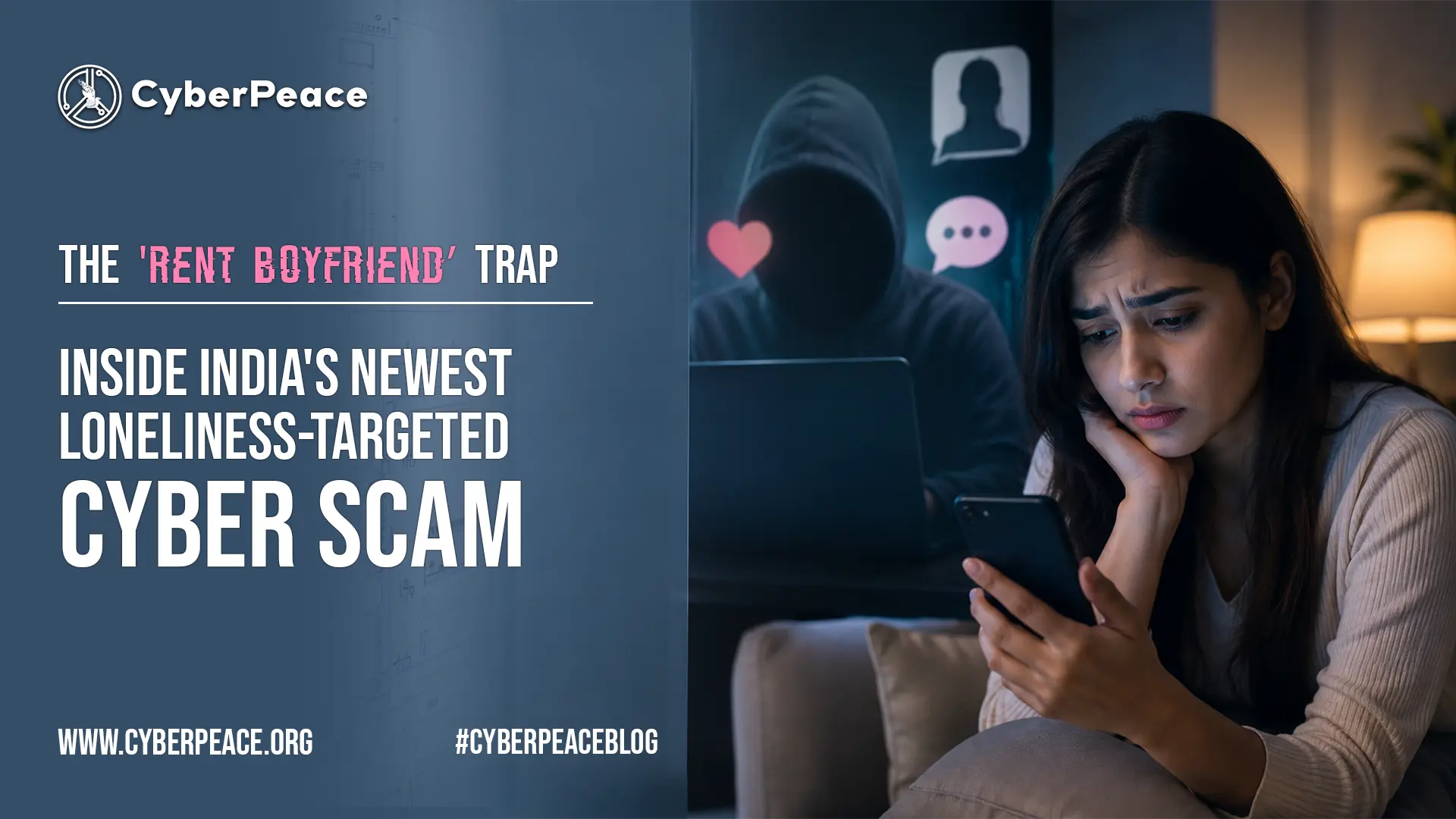
On August 8, 2026, Hyderabad Police Commissioner V.C. Sajjanar posted an unusual warning on X: colourful posters offering a "handsome guy" to join you for coffee or a movie at 50% off: it was not a quirky dating startup but a calculated cyber fraud. Within hours, the "Rent Boyfriend" alert had gone viral, pulling back the curtain on a scam that blends India's growing loneliness economy, classic confidence tricks, and AI-generated imagery. Here is what's actually happening, why it works, and how to protect yourself.
A Trend Growing Fast: In India and Worldwide
Paid-companionship culture itself isn't new. "Rent a friend" services began in Japan and later China, where apps let people hire a company for a movie, a walk, or a family event without romantic or sexual expectations. The idea reached India as early as 2018, when Mumbai's "Rent A Guy" app began recruiting men for casual outings; by 2022, similar pages like "Toy Boy" and "Hire a Friend" had spread to Bengaluru, and Valentine's Day 2025 saw ₹389 "rent a boyfriend" posters plastered across the city. Fraudsters have now hijacked this recognisable, socially normalised idea and weaponised it: the Hyderabad ads promised specific packages, ₹499 for a coffee date, ₹1,249 for a movie, ₹1,999 for a wedding, and ₹4,499 for ten hours collected via QR codes and wallets, then vanished. The underlying numbers show why this template is so attractive to criminals. Complaints filed on India's National Cyber Crime Reporting Portal jumped from roughly 4.5 lakh in 2021 to about 2.3 million by 2026, and the country now logs an estimated 4,000-plus cybercrime complaints a day. Globally, romance and "confidence fraud" are some of the costliest online crimes: the FBI's Internet Crime Complaint Center recorded 23,159 romance-fraud complaints in 2025 worth $929.3 million, which is a 38% jump over 2024, while the UK logged over £102 million in losses and Australia and Canada reported tens of millions more. Crucially, IC3's 2025 report flagged AI as an accelerant for the first time, attributing roughly $19 million in romance-scam losses directly to AI-generated profiles, images and chat exactly the "AI-generated photographs" Hyderabad Police say the Rent Boyfriend network used.
Case Studies
The Rent Boyfriend network is one data point in a wider, well-documented pattern in India:
- Hyderabad, August 2026: Fraudsters ran Instagram, Telegram and Facebook pages using stock or AI-generated photos of "attractive men", collected advance payments and security deposits, and then blocked victims, the case that prompted this advisory.
- Jaipur, 2026: A honey-trap and extortion ring allegedly used AI-manipulated videos and images to blackmail a businessman out of nearly ₹90 lakh, with police examining how far synthetic media was used to fabricate compromising content.
- Mumbai: A gang was arrested for cheating a woman out of ₹16.18 lakh in gold and cash after promising to "reunite" her with a lost partner, a variant that exploits the same emotional vulnerability through a different pretext.
- Gujarat, 2025: A social media influencer with over 10 lakh followers was arrested for allegedly honey-trapping and blackmailing a builder, illustrating how organised such rackets have become.
These sit alongside a global backdrop where FBI data shows confidence and romance fraud disproportionately drains people over 60 (63% of US losses in 2025) even as India's version increasingly targets young women and students, a sign the tactic is being localised for different demographics rather than disappearing.
Why It Works: The Psychology of Loneliness and Grooming
Researchers who study romance-fraud victims consistently find that loneliness, a tendency toward idealised romantic beliefs, and a need for social connection are the strongest predictors of victimisation. Scammers exploit this through a well-rehearsed grooming arc: rapid, excessive flattery ("love bombing") to create instant intimacy; mirroring the target's interests and values to seem like a perfect match; gently discouraging outside opinions so doubts don't surface; and only then introducing a financial ask, framed as something small and reasonable — a booking fee or a security deposit precisely because it feels low-stakes compared to a direct cash demand. The "package" pricing in the Rent Boyfriend ads (₹499 for coffee, scaling up to ₹4,499) mimics legitimate e-commerce, which lowers a target's guard further. Once payment is made and blocked, many victims feel too embarrassed to report it — a shame response researchers and police repeatedly flag as the biggest reason such scams are under-reported.
Red Flags and What To Do?
Red flags to watch for:
- Companionship or dating offers with attractive stock/AI-style photos and steep "discounts"
- Contact only through DMs, with no verifiable business identity, address or reviews.
- Requests for advance payment, "security deposits", or booking fees via UPI/QR code before any service is delivered.
- Reluctance to do a video call or a video call that looks slightly off (a common AI/deepfake tell).
- Pressure to move fast, share personal photos, or keep the interaction secret from friends and family.
Precautions:
- Never send money to confirm a booking with an unverified individual or page.
- Avoid sharing personal photographs, phone numbers, addresses or financial details with strangers online.
- Don't meet anyone in person whom you've only interacted with through such ads.
- Parents should stay engaged with what their children see and who they talk to on social media.
If you suspect a scam or have lost money: Don't panic and don't pay more to "fix" it. Stop all contact, save screenshots and payment records, and call the 1930 cybercrime helpline or file a complaint at cybercrime.gov.in immediately — reporting within the first "golden hour" significantly improves the chance of freezing transferred funds before they're withdrawn.
The Government, Platform and Legal Angle
India already has legal tools for this, though enforcement lags the pace of the fraud. Cheating by personation online is punishable under Section 66D of the IT Act, 2000 (up to three years' imprisonment plus fine), often paired with Section 66C on identity theft; the Bharatiya Nyaya Sanhita's cheating provisions (replacing IPC Sections 420/419) apply where money is dishonestly induced. Under the IT (Intermediary Guidelines) Rules, 2021, platforms like Instagram, Facebook and Telegram must appoint a grievance officer, acknowledge complaints within 24 hours, and take down unlawful content within 36 hours of a court or government notification obligation. Hyderabad's cybercrime wing can invoke to force the removal of these ad networks. Larger "significant social media intermediaries" carry added duties around traceability and proactive monitoring.
The gap is upstream: platforms currently do little to verify who is running a commercial-sounding page before it reaches thousands of users, and AI-generated "profile" images are not systematically flagged. A stronger response would combine faster platform-side KYC for pages soliciting payment, proactive detection of AI-generated advertising imagery, and continued expansion of the 1930 golden-hour fund-freezing mechanism paired with public advisories like Hyderabad's, which remain one of the fastest ways to blunt a scam before it scales.
Conclusion
Loneliness is not something anyone should be ashamed of, but it is exactly what these networks are built to exploit. No genuine companionship service needs an advance QR payment before you've even met the person.
Sources
- Deccan Herald — Hyderabad Police Commissioner cautions young women over 'rent boyfriend' offers
- Republic World — 'Rent Boyfriend' Offers On Social Media?
- Newsdrum — What is 'Rent Boyfriend' trap?
- IndiaSpend — How India's Cyber Crime Incidence Is Rising
- FBI IC3 2025 Annual Report Brochure
