
#FactCheck - Deepfake Video Falsely Shows Aaj Tak Reporting BJP Defeat in Assam Elections
Assembly elections are due to be held in Assam later this year, with polling likely in April or May. Ahead of the elections, a video claiming to be an Aaj Tak news bulletin is being widely circulated on social media.
In the viral video, Aaj Tak anchor Rajiv Dhoundiyal is allegedly seen stating that a leaked intelligence report has issued a warning for the ruling Bharatiya Janata Party (BJP) in Assam. The clip claims that according to this purported report, the BJP may suffer significant losses in the upcoming Assembly elections. Several social media users sharing the video have also claimed that the alleged intelligence report signals the possible removal of Assam Chief Minister Himanta Biswa Sarma from office.
However, an investigation by the Cyber Peace Foundation found the viral claim to be false. Our probe clearly established that no leaked intelligence report related to the Assam Assembly elections exists.
Further, Aaj Tak has neither published nor broadcast any such report on its official television channel, website, or social media platforms. The investigation also revealed that the viral video itself is not authentic and has been created using deepfake technology.
Claim
On social media platform Facebook, a user shared the viral video claiming that the BJP has been pushed on the back foot following organisational changes in the Congress—appointing Priyanka Gandhi Vadra as chairperson of the election screening committee and Gaurav Gogoi as the Assam Pradesh Congress Committee president. The post further claims that an Intelligence Bureau report predicts that the current Assam government will not return to power.
(Link to the post, archive link, and screenshots are available.)
FactCheck:
To verify the claim, we first searched for reports related to any alleged leaked intelligence assessment concerning the Assam Assembly elections using relevant keywords. However, no credible or reliable reports supporting the claim were found. We then reviewed Aaj Tak’s official website, social media pages, and YouTube channel. Our examination confirmed that no such news bulletin has been published or broadcast by the network on any of its official platforms.
- https://www.facebook.com/aajtak/?locale=hi_IN
- https://www.instagram.com/aajtak/
- https://x.com/aajtak
- https://www.youtube.com/channel/UCt4t-jeY85JegMlZ-E5UWtA
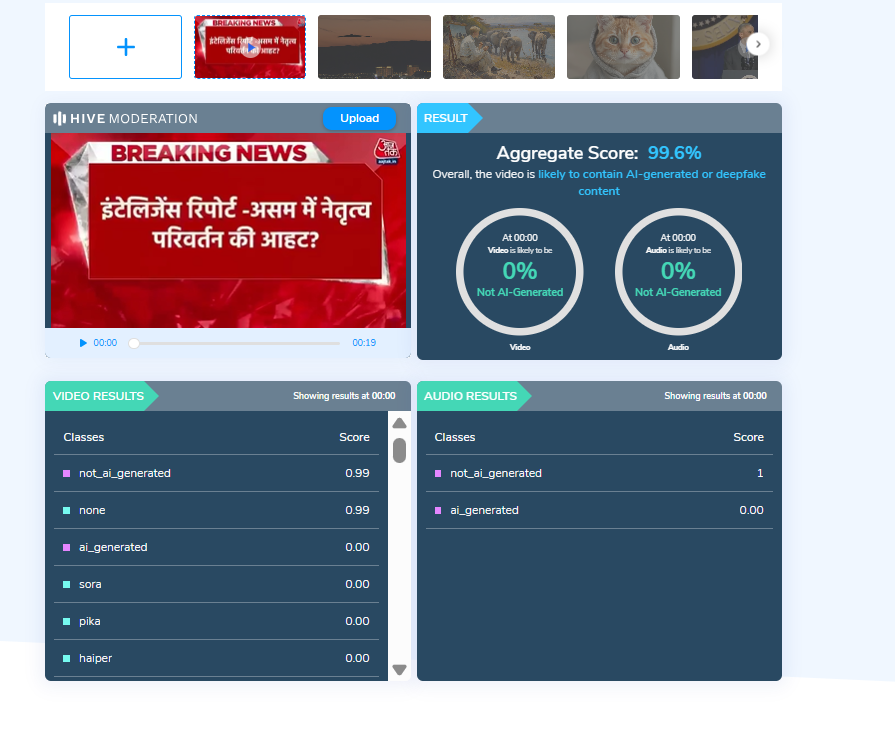
To further verify the authenticity of the video, its audio was scanned using the deepfake voice detection tool HIVE Moderation.
The analysis revealed that the voice heard in the video is 99 per cent AI-generated, clearly indicating that the audio is not genuine and has been artificially created using artificial intelligence.
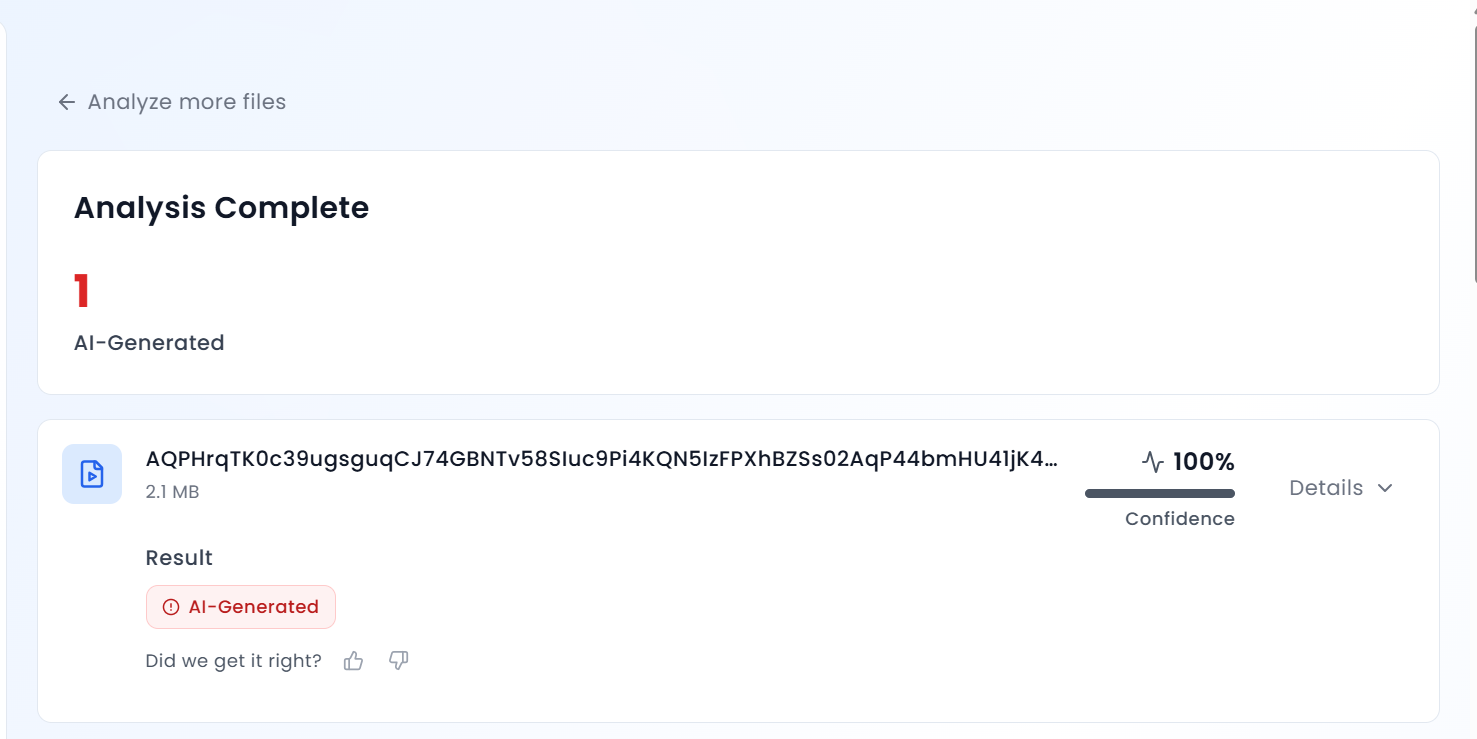
Additionally, the video was analysed using another AI detection tool, Aurigin AI, which also identified the viral clip as AI-generated.
Conclusion:
The investigation clearly establishes that there is no leaked intelligence report predicting BJP’s defeat in the Assam Assembly elections. Aaj Tak has not published or broadcast any such content on its official platforms. The video circulating on social media is not authentic and has been created using deepfake technology to mislead viewers.

Related Blogs
Executive Summary
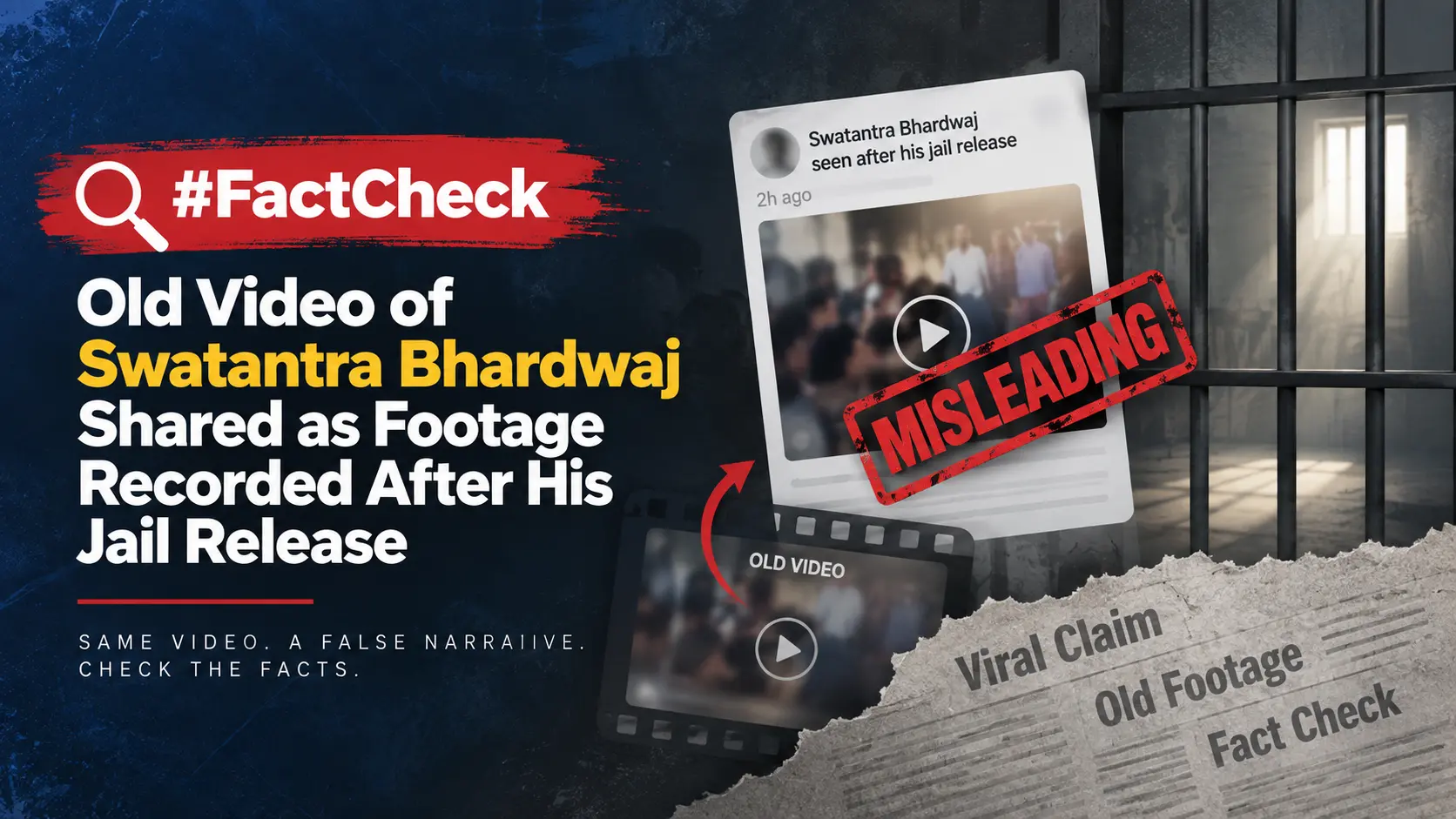
A video of Swatantra Bhardwaj is being shared on social media. Another man can also be seen with Bhardwaj in the video. Swatantra Bhardwaj came into the spotlight following an alleged assault involving the father of a protester during a protest by the Cockroach Janta Party at Jantar Mantar. Social media posts claim that the video was recorded immediately after his release from jail and shows him openly threatening people. CyberPeace Research Wing’s Research found the viral claim to be false. Our Research revealed that the video being shared on social media is old. Swatantra Bhardwaj was released from jail on September 17, while our Research found that the video has been available online since June. Therefore, the claim that the video was recorded immediately after Bhardwaj’s release from jail is misleading.
Claim:
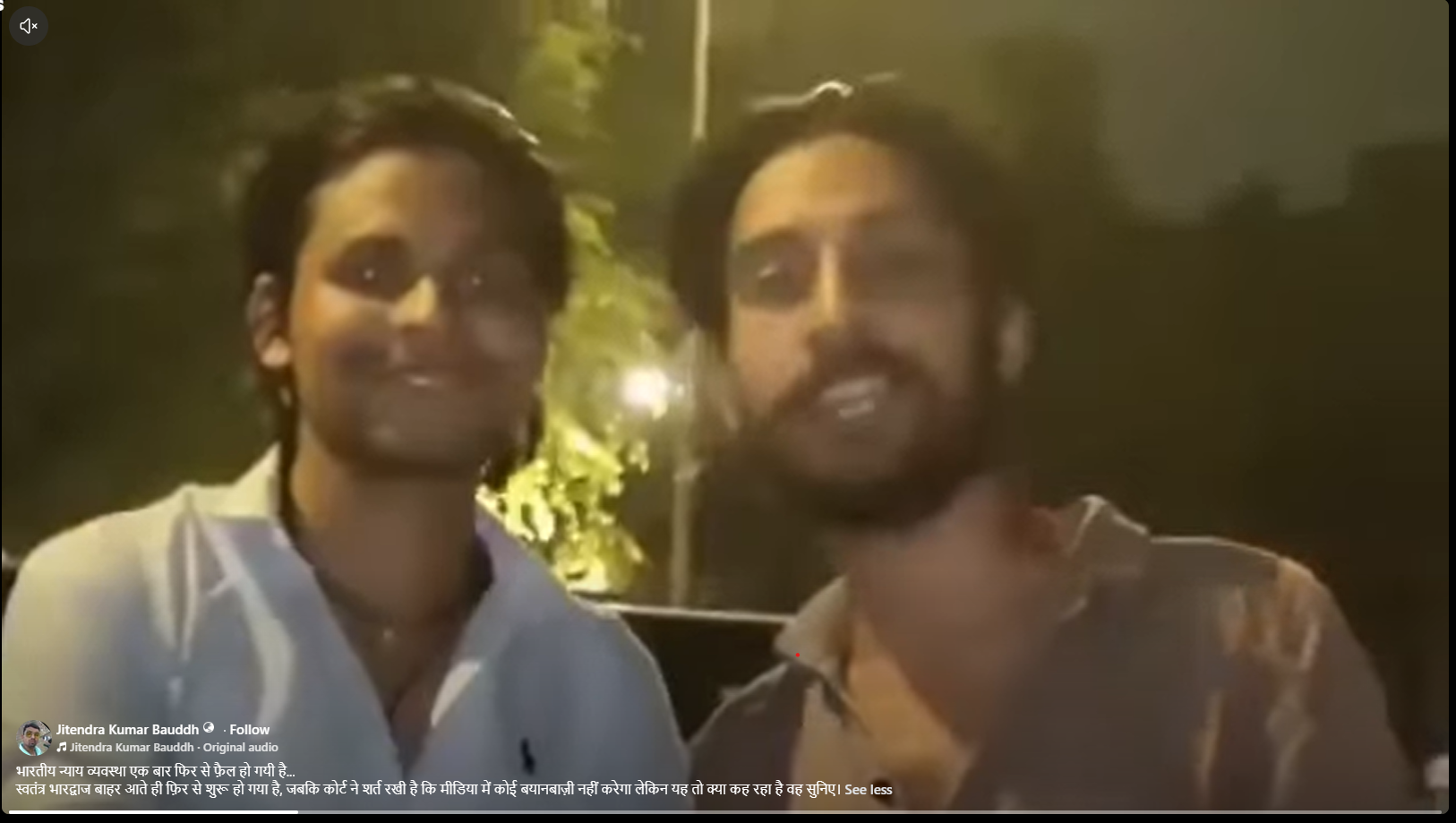
A Facebook user shared the viral video on September 17, 2026, with the caption: “The Indian judicial system has failed once again... Swatantra Bhardwaj has started again immediately after coming out, even though the court has imposed a condition that he will not make any statements to the media. But listen to what he is saying.” The post link, archive link, and screenshot are provided below.
https://www.facebook.com/reel/1349048917301713
Fact Check
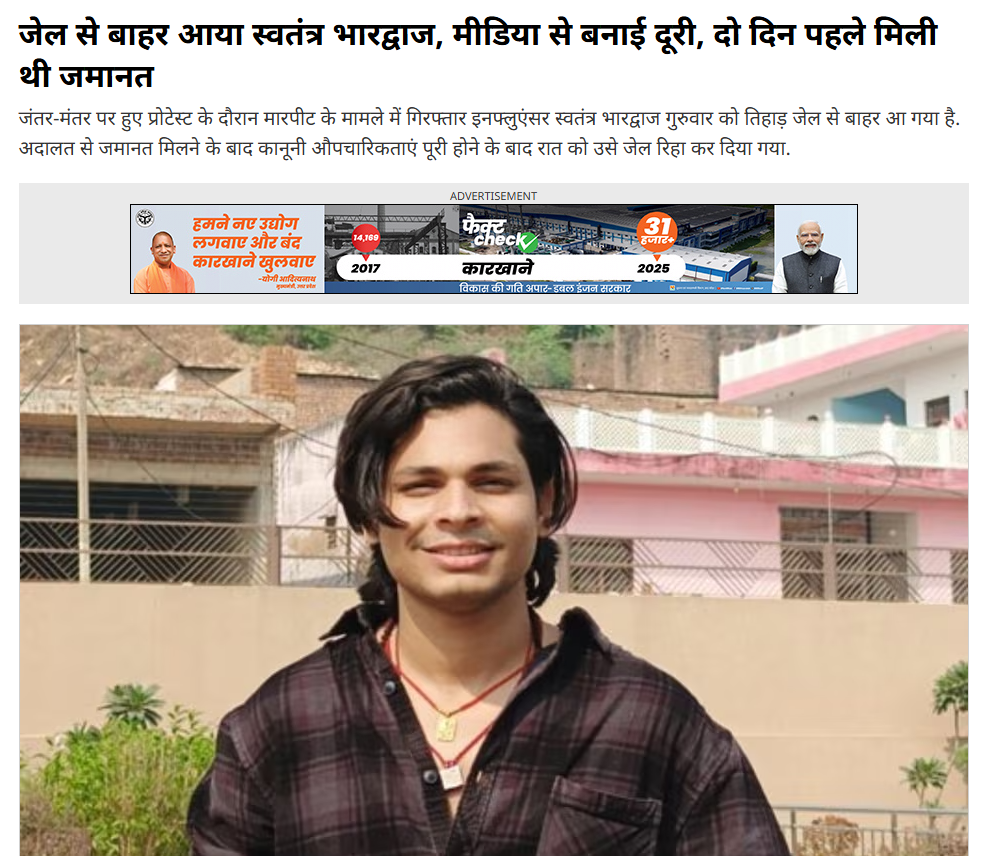
To verify the date of Swatantra Bhardwaj’s release from jail, we searched Google using relevant keywords. During the search, we found a report published by Aaj Tak on September 18, 2026. According to the report, social media influencer Swatantra Bhardwaj, who came into the spotlight following an alleged assault during a protest at Jantar Mantar, was released from Delhi’s Tihar Jail on September 17, 2026, after being granted bail by the court and completing the necessary legal formalities. Soon after walking out of the main gate of the jail, he ran towards a taxi and left without speaking to the media personnel present there. The post link and screenshot are provided below.
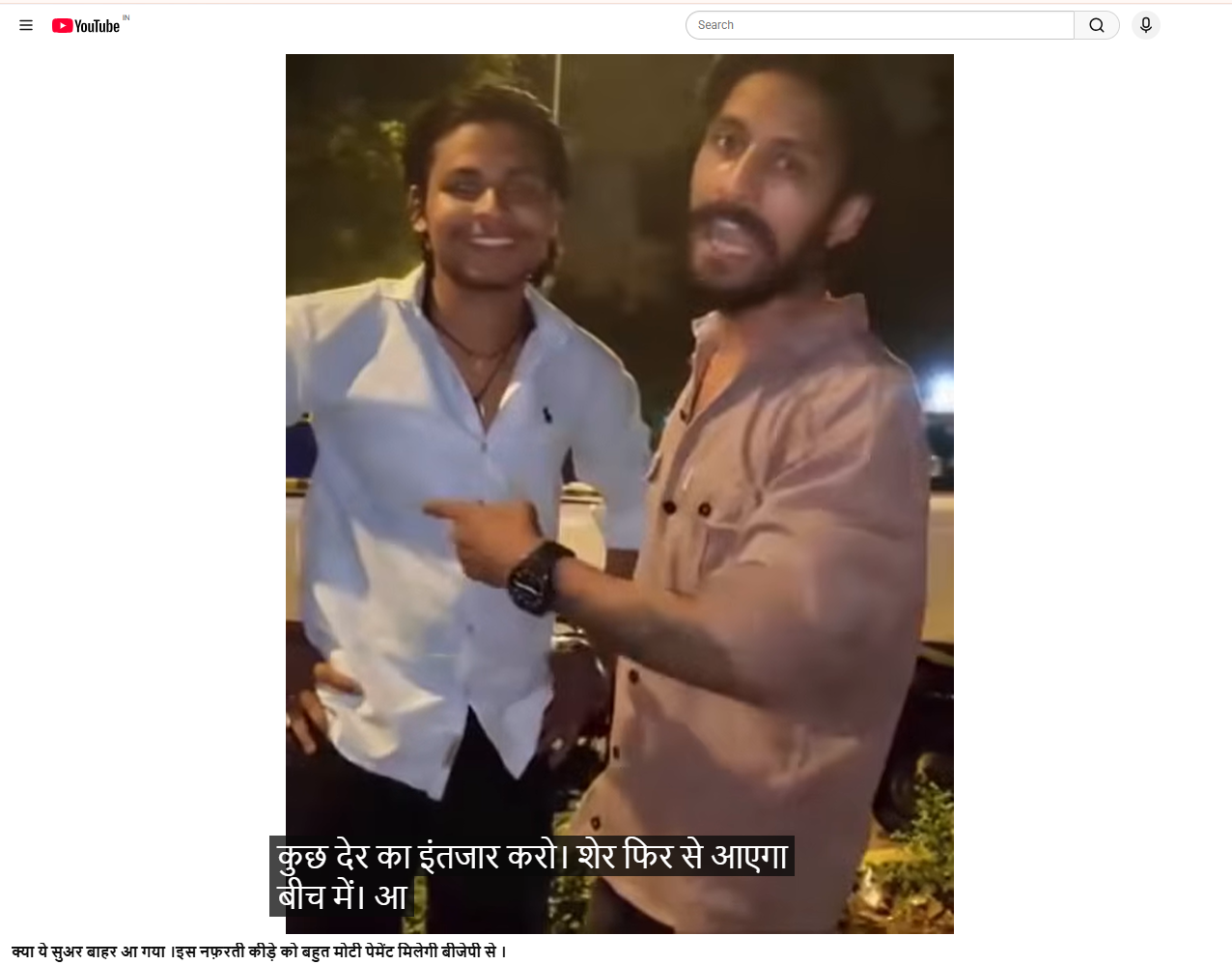
To verify the authenticity of the viral claim, we conducted a reverse image search of the keyframes from the video. During the search, we found the same video on a YouTube channel, where it was published on September 7, 2026. Meanwhile, the report mentioned above clearly states that Swatantra Bhardwaj was released from Delhi’s Tihar Jail on September 17, 2026. The report link and screenshot are provided below.
https://www.youtube.com/watch?v=-3V0pwJbpwg
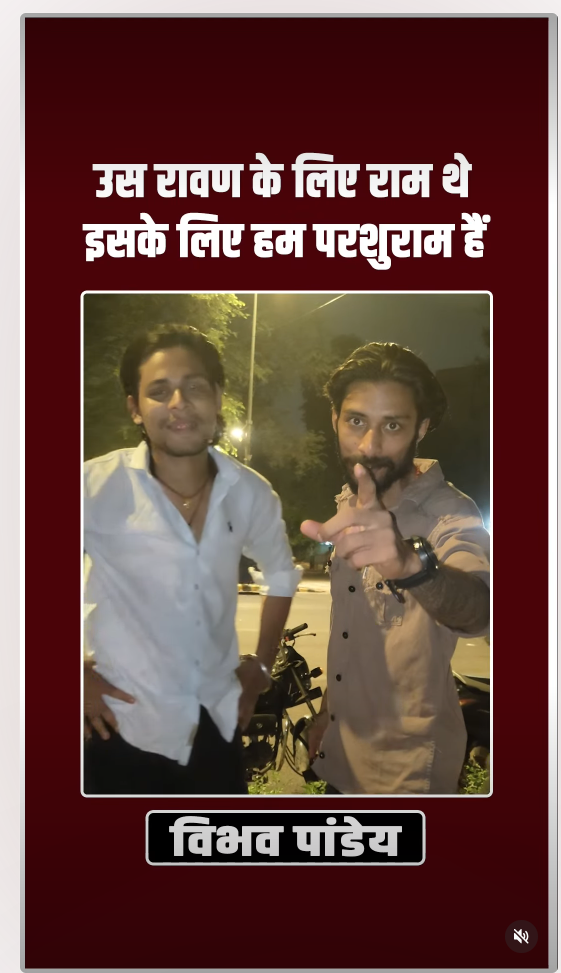
At the end of our Research, we found another version of the same video, which was uploaded by a person identified as Vaibhav Kumar on June 26, 2026. The post link and screenshot are provided below.
https://www.instagram.com/reels/DaBs7Q-T8xc/
Conclusion
Our Research found that the video being shared on social media is old. Swatantra Bhardwaj was released from jail on September 17, while our Research found that the video had already been available online since June. Therefore, the claim that the video was recorded immediately after Bhardwaj’s release from jail is misleading.
Introduction
The misinformation crisis has evolved from being merely an abstract risk to a clear-cut and measurable danger to individuals, families, institutions and the whole information ecosystem. The recent death hoax with the famous actor Dharmendra is a perfect illustration of how the monster of falsehoods rises, conquers the world and does damage before the mechanisms of correction have a chance to operate. The first week of November 2025 saw the first wave of reports from different social media accounts and even some online news outlets that claimed Dharmendra had died at the age of 89. The news travelled like wildfire, causing confusion, grief and emotional suffering in large circles of fans, one could say the whole world. But then, the family came to the scene with the loudest, clearest, and most conclusive denial of them all. This case is not a one-time event. It is part of a cycle of misinformation that goes through the stages from one unverified claim to the next due to the emotional value, the virality of platforms, and the accelerating online engagement.
How One Wrong Post Can Create Worry and Fear
This kind of false news spreads fast on social media because people share emotional posts without checking the source, and automated accounts often repeat the same claim which makes it look true. Such hoaxes create fear, sadness and stress for fans, and they place sudden pressure on the family who must deal with public worry at a time when they need calm and privacy. The message shared by Hema Malini who is the wife of the actor shows how hurtful and careless misinformation can be, and it reminds everyone that even one false post can create real emotional damage for many people.

Why This Hoax Spread So Quickly
- Sensationalism Drives Engagement: Rumours regarding the passing of a public figure, particularly someone who is universally loved, cause an immediate outburst of feelings. Such news is practically taken for granted by the online public, who are very likely to share it, most of the time without checking its authenticity, which, in turn, leads to viral spread.
- Very Fast Weaving-in on social media: Social media networks are very much made for swift sharing. Long before the official sources were able to either confirm or dismiss the matter, posts, reels, and messages ripped through the networks.
- Digital Users Not Verifying Source: A large part of the audience depends on screenshots, forwards, and unverified posts for keeping up with the news. This opens a very nice environment for the spreading of hoaxes.
- Weak Verification Protocols: Although there have been measures to inform the public about misinformation, most news companies still give priority to the speed of reporting rather than its correctness, though not all the time, especially for the more entertaining and attractive topics like the health or death of famous people.
- Algorithmic Amplification Risks: The engagement is mainly driven by algorithms that bring to the surface the posts that evoke strong emotions. In a way, it is very unfair because the false or sensational claims are getting in front at the same time as the corrective updates, hence, the public is getting misled. In the absence of algorithmic safeguards, misinformation is on the rise and becoming stronger.
Best Practices For Users:
- Make sure to verify before sharing, especially if the topic is about health or death.
- Get updates by following official accounts rather than through sharing of viral forwards.
- Be aware of the emotional manipulation tactics used in misleading information.
Conclusion
The rumour surrounding Dharmendra's death is yet another example that misinformation, whether promptly corrected or not, can still inflict distress, cause loss of trust and damage to reputation. It also emphasises the need for stronger information governance, responsible digital journalism, and platform intervention mechanisms as a matter of urgency. This incident, from clicks to consequences, points to a basic truth: misinformation in the digital age is quicker to spread than facts, and the responsibility of putting a stop to it falls on all the stakeholders’ platforms, media, and users.
References
- https://timesofindia.indiatimes.com/entertainment/hindi/bollywood/news/esha-deol-and-hema-malini-dismiss-dharmendras-fake-death-news-relieved-fans-pray-for-actors-speedy-recovery-aap-jld-se-jld-apne-ghar-aye/articleshow/125242843.cms
- https://www.altnews.in/media-misreport-bollywood-actor-dharmendra-hasnt-passed-away-yet/
- https://economictimes.indiatimes.com/news/india/dharmendra-death-news-bollywoods-veeru-and-he-man-passes-away-at-89/articleshow/125238900.cms

Executive Summary
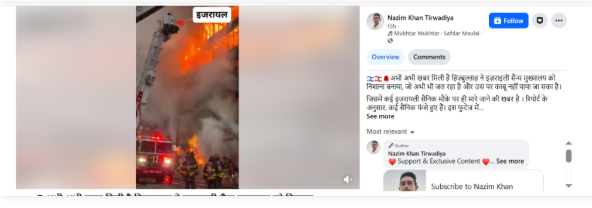
A video showing a building engulfed in flames is going viral on social media, with users claiming it depicts an attack by Hezbollah on Israel’s military headquarters. The clip is being shared with assertions that several Israeli soldiers were killed and many remain trapped inside the burning structure. However, a research by the CyberPeace Research Wing found that the claim is false. The viral video is not from Israel but from New York City in the Manhattan area, where a residential building caught fire.
Claim
A Facebook user, ‘Nazim Khan Tirwadiya’, shared the video on April 15, 2026, claiming that Hezbollah had targeted an Israeli military headquarters, resulting in heavy casualties and ongoing fire.
Fact Check
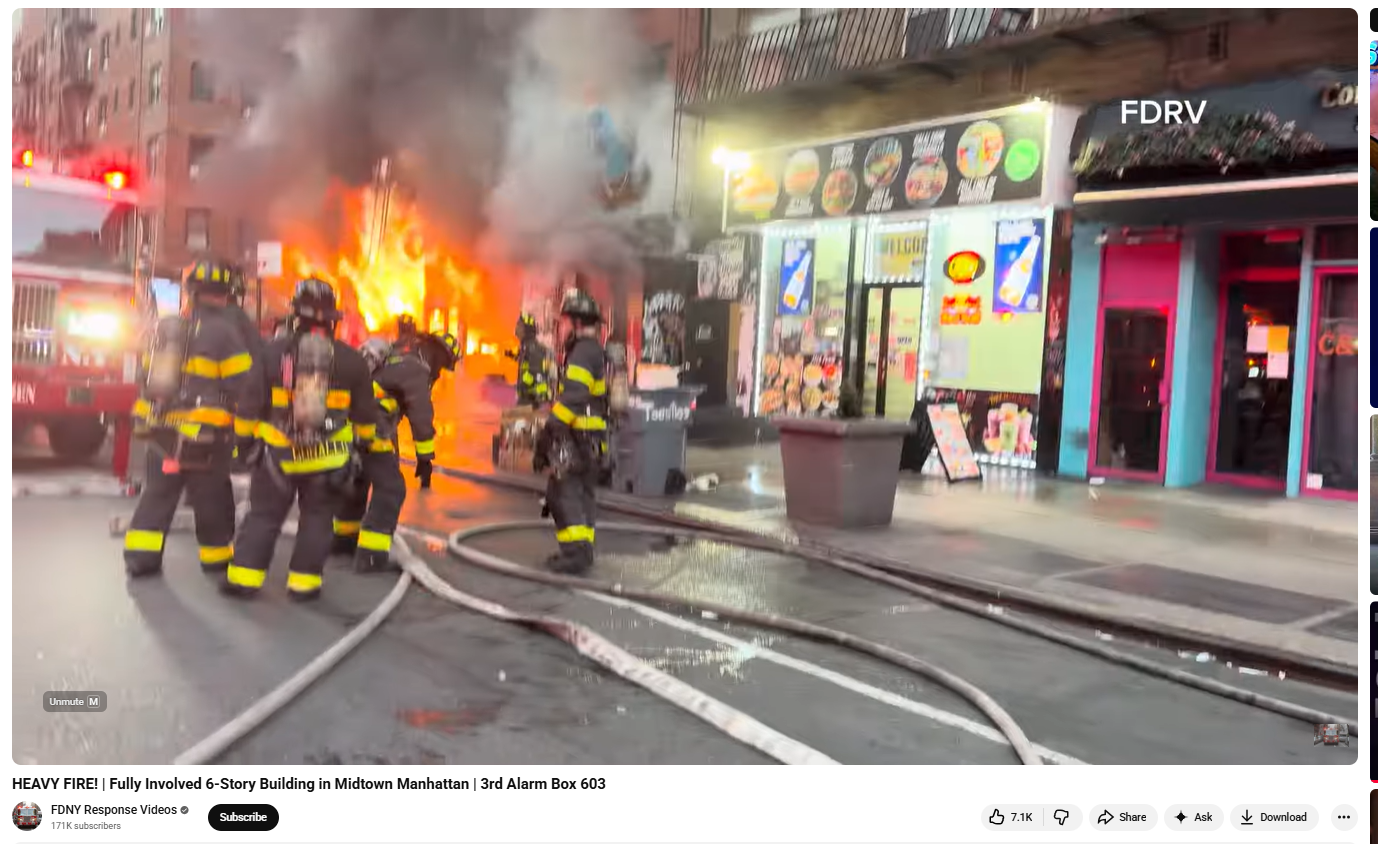
To verify the claim, we extracted keyframes from the viral video and conducted a reverse image search. This led us to a longer version of the same clip uploaded on the YouTube channel “FDNY Response Videos” on April 12, 2026. The video description identified the location as Manhattan, New York City.
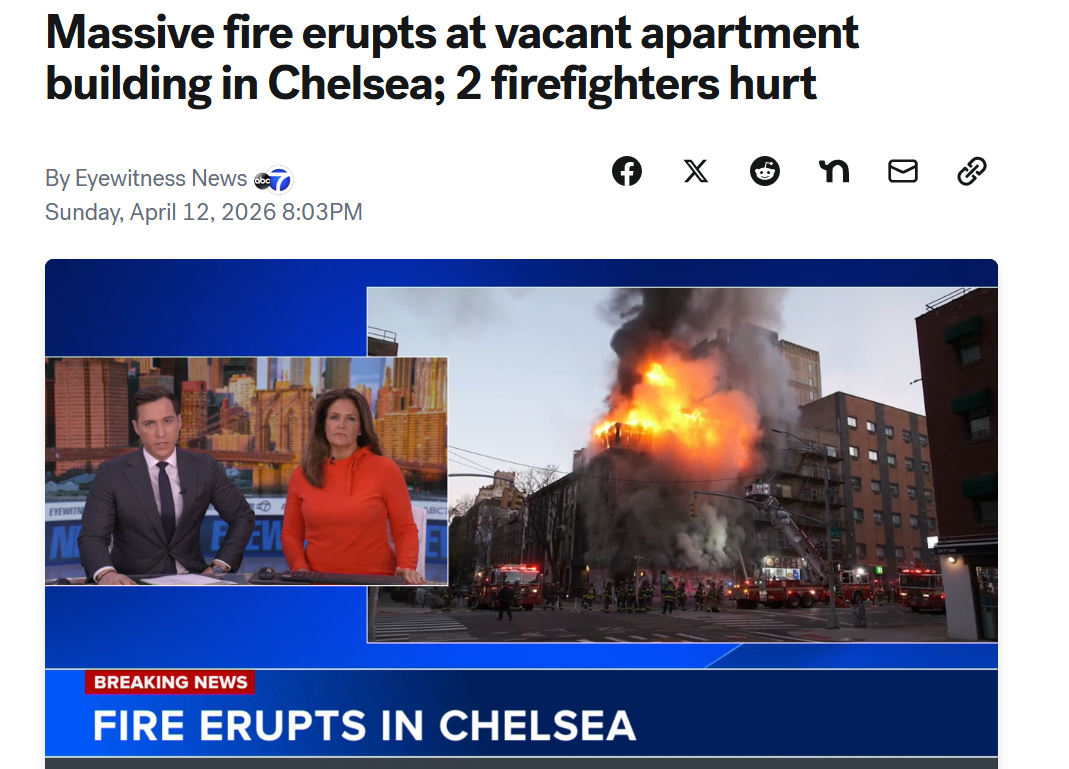
Further keyword searches led us to a report published by ABC7NY on April 12, 2026. According to the report, a massive fire broke out in a six-storey apartment building in Manhattan’s Midtown area around 6 a.m. Firefighters worked extensively to control the blaze, and two firefighters sustained minor injuries. No fatalities were reported.
Conclusion
The viral claim is false. The video does not show an attack on Israel by Hezbollah. Instead, it captures a fire incident in a residential building in Manhattan, New York City. The clip has been shared with a misleading narrative unrelated to the actual event.
