
DEA to Social Media Companies
Introduction
A bill requiring social media companies, providers of encrypted communications, and other online services to report drug activity on their platforms to the U.S. The Drug Enforcement Administration (DEA) advanced to the Senate floor, alarming privacy advocates who claim the legislation transforms businesses into de facto drug enforcement agents and exposes many of them to liability for providing end-to-end encryption.
Why is there a requirement for online companies to report drug activity?
The reason behind the bill is that there was a Kansas teenager died after unknowingly taking a fentanyl-laced pill he purchased on Snapchat. The bill requires social media companies and other web communication providers to provide the DEA with users’ names and other information when the companies have “actual knowledge” that illicit drugs are being distributed on their platforms.
There is an urgent need to look into this matter as platforms like Snapchat and Instagram are the constant applications that netizens use. If these kinds of apps promote the selling of drugs, then it will result in major drug-selling vehicles and become drug-selling platforms.
Threat to end to end encryption
End-to-end encryption has long been criticised by law enforcement for creating a “lawless space” that criminals, terrorists, and other bad actors can exploit for their illicit purposes. End- to end encryption is important for privacy, but it has been criticised as criminals also use it for bad purposes that result in cyber fraud and cybercrimes.
Cases of drug peddling on social media platforms
It is very easy to get drugs on social media, just like calling an Uber. It is that simple to get the drugs. The survey discovered that access to illegal drugs is “staggering” on social media applications, which has contributed to the rising number of fentanyl overdoses, which has resulted in suicide, gun violence, and accidents.
According to another survey, drug dealers use slang, emoticons, QR codes, and disappearing messages to reach customers while avoiding content monitoring measures on social networking platforms. Drug dealers are frequently active on numerous social media platforms, advertising their products on Instagram while providing their WhatApps or Snapchat names for queries, making it difficult for law officials to crack down on the transactions.
There is a need for social media platforms to report these kinds of drug-selling activity on specific platforms to the Drug enforcement administration. The bill requires online companies to report drug cases going on websites, such as the above-mentioned Snapchat case. There are so many other cases where drug dealers sell the drug through Instagram, Snapchat etc. Usually, if Instagram blocks one account, they create another account for the drug selling. Just by only blocking the account does not help to stop drug trafficking on social media platforms.
Will this put the privacy of users at risk?
It is important to report the cybercrime activities of selling drugs on social media platforms. The companies will only detect the activity regarding the drugs which are being sold through social media platforms which are able to detect bad actors and cyber criminals. The detection will be on the particular activities on the applications where it is happening because the social media platforms lack regulations to govern them, and their convenience becomes the major vehicle for the drugs sale.
Conclusion
Social media companies are required to report these kinds of activities happening on their platforms immediately to the Drugs enforcement Administration so that the DEA will take the required steps instead of just blocking the account. Because just blocking does not stop these drug markets from happening online. There must be proper reporting for that. And there is a need for social media regulations. Social media platforms mostly influence people.

Related Blogs
Introduction
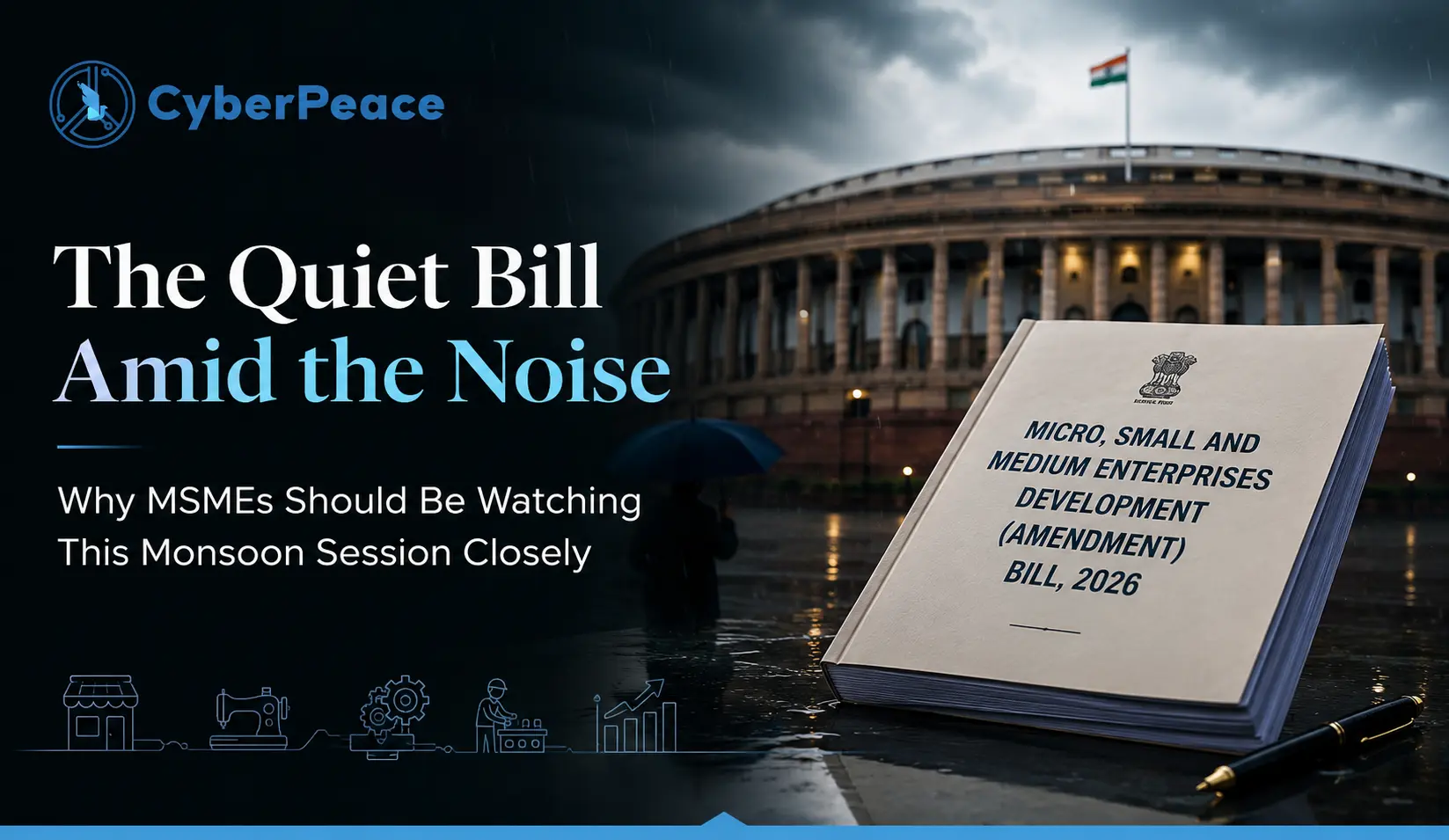
Parliament is about to begin its Monsoon Session from July 20, 2026 to August 13, 2026, and the mood in Delhi already feels charged. Ahead of the opening bell, the government has flagged five new bills for introduction, alongside a couple of pending pieces of legislation it may take up for passage. Predictably, the political oxygen in the run-up has gone almost entirely to what isn't on that list — reports this week noted the conspicuous absence of the long-anticipated Delimitation Bill and a Constitutional amendment for women's reservation in the Lok Sabha, a gap that has already drawn sharp reactions from Congress leaders. What is on the list has generated its own share of noise: a Foreign Contribution (Regulation) Amendment Bill that NGOs are watching warily, a Prevention of Insults to National Honour (Amendment) Bill tied to safeguards for the National Flag and Anthem, and a Supreme Court (Number of Judges) Amendment Bill proposing to raise the Court's sanctioned strength from 33 to 37. Every one of these will command its share of prime-time debate. But tucked quietly among the five is a bill that, headline for headline, may end up mattering more to the everyday Indian economy than all the others combined: the Micro, Small and Medium Enterprises Development (Amendment) Bill, 2026.
MSMEs play a foundational role in India’s economic engine, powering employment, entrepreneurship and growth across the country. That makes this Bill one worth watching closely, because even seemingly technical changes to the MSME framework could have very real consequences for millions of businesses and the people whose livelihoods depend on them.
What the Bill Actually Does
The MSME sector hasn't seen a structural legal update since the original MSMED Act of 2006 nearly two decades in an economy that looks nothing like it did back then. The new amendment is designed to close that gap. According to the government's own description of the bill, it aims to align the 2006 law with the sector's changed realities, improve ease of doing business, and shift toward what officials are calling "trust-based" regulation rather than a purely compliance-driven approach.
Three provisions stand out.
- First, it strengthens the mechanism for resolving delayed payments to micro and small enterprises, arguably the single biggest complaint MSME owners have voiced for years.
- Second, it creates a pathway to enforce arbitral awards specifically for micro and small units, giving smaller suppliers real teeth when a dispute is decided in their favor.
- Third, it gives states more flexibility in deciding the composition of Micro and Small Enterprises Facilitation Councils (MSEFCs) , the bodies that adjudicate payment disputes which should allow more councils to be formed and cut down on case backlogs.
The Delayed Payment Crisis, in Numbers
To understand why this matters, look at the scale of the problem the bill is trying to fix. The MSME Ministry's Samadhaan portal, which lets small enterprises file delayed-payment complaints online, had received close to 2.57 lakh applications as of June 2026, involving claimed dues of roughly ₹55,244 crore. Of these, only about 58,000 cases had actually been resolved by facilitation councils. That's a resolution rate that leaves the vast majority of small businesses waiting often for money already owed to them for goods or services delivered.
The government did tighten the screws somewhat in 2024 through Section 43B(h) of the Income Tax Act, which denies large buyers a tax deduction if they don't pay MSME suppliers within the 15-to-45-day window mandated by law. Enforcement, however, has remained patchy, and industry bodies like Assocham have continued to flag delayed payments including from PSUs and government departments as a core source of financial stress for small firms, with high interest charges on overdue statutory dues compounding the problem.
Why This Is Bigger Than One Bill
A regulation targeting the payments practices of India's micro, small, and medium-sized enterprises is more than just paperwork and procedural wrangling; the stakes for the Indian economy and society are enormous. According to the 2025-26 Economic Survey, MSMEs now contribute about 31.1% of India’s GDP, 35.4% of its manufacturing output, and 48.58% of its exports, while employing 33 to 39 crore people and providing India’s second largest source of employment after agriculture. The official Udyam database of MSMEs crossed the 8.7 crore mark by June 2026, underscoring a clear trend towards the sector’s formalisation in the last few years. Access to finance is the second pillar of MSME empowerment. The Credit Guarantee Fund Trust for Micro and Small Enterprises has authorised several lakh crores in guarantees, and most recently, the government increased its loan guarantee cover ceiling from Rs 5 crore to Rs 10 crore to facilitate more collateral-free loans to businesses. However, the actual credit gap remains estimated in the tens of lakh crores, with the biggest gaps faced by women-led and medium enterprises. While the MSME Bill doesn’t directly address access to finance, improved and quicker payment settlement mechanisms are expected to relieve some working-capital stress and dissuade small firms from falling into expensive informal credit markets. The MSME Bill also adds to a wave of recent measures to de-regulate smaller enterprises, such as the Jan Vishwas (Amendment of Provisions) Bill that was passed earlier in 2026. That Bill modified or deleted criminal offences with a more lenient civil equivalent across numerous central acts, a change industry lobby FISME called a significant move towards ease of doing business.
The Data Protection Clock Is Already Ticking - The Gap Payment Reform Won't Close
It's also worth noting that India's Digital Personal Data Protection (DPDP) Act, 2023 is now in force, with rules notified in November 2025 and full compliance — including breach notification, security safeguards. With nearly half of Indian small businesses already reporting cyber incidents each year, MSMEs have a narrowing runway to build the security practices this regime will expect of them. Given that scale of exposure, there's a real case for the MSME Amendment Bill, or a companion policy, to go further — mandating baseline cyber-hygiene standards for Udyam-registered firms or tying credit-guarantee schemes to demonstrated security practices. Payment reform alone protects an MSME's right to be paid; it does little to protect what happens to that money, or that data, once it arrives.Payment reform alone protects an MSME's right to be paid; it does little to protect what happens to that money, or that data, once it arrives. CyberPeace calls on relevant agencies to issue clearer advisories and introduce additional, cost-friendly cybersecurity safeguards tailored to MSMEs' limited budgets and IT capacity.
What to Watch For
Whether the MSME Bill gets the attention it deserves during this session is an open question. With the Opposition expected to spend political capital on delimitation, the Vande Mataram bill, unemployment, inflation, and the NEET paper-leak controversy, a technical amendment to an enterprise development law is unlikely to dominate floor debate even though it may end up affecting more households than any single headline bill this session.
Conclusion
For India's roughly 7-8 crore MSMEs, most of them family-run and thinly capitalised, the details that get finalised in the coming weeks how MSEFCs are reconstituted, how arbitral awards get enforced, how "trust-based" regulation is actually defined will matter far more than who wins the argument over delimitation. It's worth watching this one closely, even if the cameras are pointed elsewhere.
Sources
- https://www.business-standard.com/india-news/vande-mataram-bill-among-five-new-legislations-listed-for-monsoon-session-126071601319_1.html
- https://www.prokerala.com/news/articles/a1780267.html

Introduction
Misinformation and disinformation are significant issues in today's digital age. The challenge is not limited to any one sector or industry, and has been seen to affect everyone that deals with data of any sort. In recent times, we have seen a rise in misinformation about all manner of subjects, from product and corporate misinformation to manipulated content about regulatory or policy developments.
Micro, Small, and Medium Enterprises (MSMEs) play an important role in economies, particularly in developing nations, by promoting employment, innovation, and growth. However, in the evolving digital landscape, they also confront tremendous hurdles, such as the dissemination of mis/disinformation which may harm reputations, disrupt businesses, and reduce consumer trust. MSMEs are particularly susceptible since they have minimal resources at their disposal and cannot afford to invest in the kind of talent, technology and training that is needed for a business to be able to protect itself in today’s digital-first ecosystem. Mis/disinformation for MSMEs can arise from internal communications, supply chain partners, social media, competitors, etc. To address these dangers, MSMEs must take proactive steps such as adopting frameworks to counter misinformation and prioritising best practices like digital literacy and training, monitoring and social listening, transparency protocols and robust communication practices.
Assessing the Impact of Misinformation on MSMEs
To assess the impact of misinformation on MSMEs, it is essential to get a full sense of the challenges. To begin with, one must consider the categories of damage which can include financial loss, reputational damage, operational damages, and regulatory noncompliance. Various assessment methodologies can be used to analyze the impact of misinformation, including surveys, interviews, case studies, social media and news data analysis, and risk analysis practices.
Policy Framework and Gaps in Addressing Misinformation
The Digital India Initiative, a flagship program of the Government of India, aims to transform India into a digitally empowered society and knowledge economy. The Information Technology Act, 2000 and the rules made therein govern the technology space and serve as the legal framework for cyber security and data protection. The Bhartiya Nyay Sanhita, 2023 also contains provisions regarding ‘fake news’. The Digital Personal Data Protection Act, 2023 is a brand new law aimed at protecting personal data. Fact-check units (FCUs) are government and private independent bodies that verify claims about government policies, regulations, announcements, and measures. However, these policy measures are not sector-specific and lack specific guidelines, which have limited impact on their awareness initiatives on misinformation and insufficient support structure for MSMEs to verify information and protect themselves.
Recommendations for Countering Misinformation in the MSME Sector
To counter misinformation for MSMEs, recommendations include creating a dedicated Misinformation Helpline, promoting awareness campaigns, creating regulatory support and guidelines, and collaborating with tech platforms and expert organisations for the identification and curbing of misinformation.
Organisational recommendations include the Information Verification Protocols for the consumers of Information for the verification of critical information before acting upon it, engaging in employee training for regular training on the identification and management of misinformation, creating a crisis management plan to deal with misinformation crisis, form collaboration networks with other MSMEs to share verified information and best practices.
Engage with technological solutions like AI and ML tools for the detection and flagging of potential misinformation along with fact-checking tools and engaging with cyber security measures to prevent misinformation via digital channels.
Conclusion: Developing a Vulnerability Assessment Framework for MSMEs
Creating a vulnerability assessment framework for misinformation in Micro, Small, and Medium Enterprises (MSMEs) in India involves several key components which include the understanding of the sources and types of misinformation, assessing the impact on MSMEs, identifying the current policies and gaps, and providing actionable recommendations. The implementation strategy for policies to counter misinformation in the MSME sector can be by starting with pilot programs in key MSME clusters, and stakeholder engagement by involving industry associations, tech companies and government bodies. Initiating a feedback mechanism for constant improvement of the framework and finally, developing a plan to scale successful initiatives across the country.
References
- https://publications.ut-capitole.fr/id/eprint/48849/1/wp_tse_1516.pdf
- https://techinformed.com/how-misinformation-can-impact-businesses/
- https://pib.gov.in/aboutfactchecke.aspx

Executive Summary
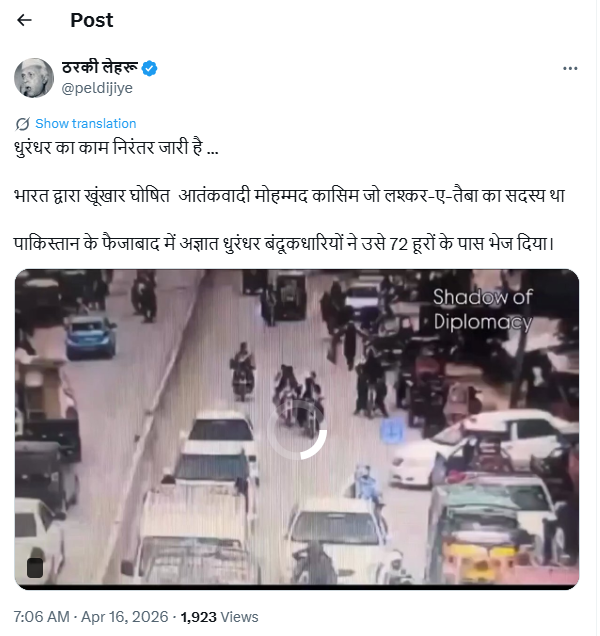
A CCTV video showing a man being shot is being widely circulated on social media with the claim that it depicts the killing of Lashkar-e-Taiba terrorist Amir Hamza in Pakistan. However, research by the CyberPeace Research Wing found that the claim is misleading. The viral video existed online even before the reported attack on Amir Hamza.
Claim
Social media users are sharing a CCTV clip claiming that Lashkar-e-Taiba terrorist Amir Hamza was shot dead in Pakistan.
Fact Check
To verify the claim, we first searched relevant keywords such as “Maulana Amir Hamza firing Lahore.” This led us to a report published on April 17, 2026, by The Hindu. Citing Pakistani channel 24 News HD TV, the report stated that unidentified attackers opened fire on the car of TV host Justice Nazir Ahmed Ghazi. Amir Hamza was injured in the incident, not killed.

We also reviewed the official social media accounts of 24 News HD TV. A post on its X handle (@24NewsHD) confirmed that Justice Ghazi was safe, while Amir Hamza sustained injuries in the firing incident in Lahore.

For further verification, we extracted keyframes from the viral video and performed a reverse image search. The same clip was found uploaded on March 28, 2026, on a Pakistani Facebook page. According to the post, the CCTV footage was linked to the killing of an individual named Saifullah Malakhel.
Although we could not independently verify the exact origin of the video, our findings clearly indicate that the footage predates the recent attack on Amir Hamza and is unrelated to the incident.
Conclusion
The viral claim is false. Amir Hamza was not killed but reportedly injured in the firing incident, as per credible media reports. The CCTV video being shared in this context is old and unrelated, and has been circulated with a misleading narrative.
