
Credible Health Content for All: Evaluating YouTube’s Mission in India’s Digital Ecosystem
Introduction
As digital platforms rapidly become repositories of information related to health, YouTube has emerged as a trusted source people look to for answers. To counter rampant health misinformation online, the platform launched YouTube Health, a program aiming to make “high-quality health information available to all” by collaborating with health experts and content creators. While this is an effort in the right direction, the program needs to be tailored to the specificities of the Indian context if it aims to transform healthcare communication in the long run.
The Indian Digital Health Context
India’s growing internet penetration and lack of accessible healthcare infrastructure, especially in rural areas, facilitates a reliance on digital platforms for health information. However, these, especially social media, are rife with misinformation. Supplemented by varying literacy levels, access disparities, and lack of digital awareness, health misinformation can lead to serious negative health outcomes. The report ‘Health Misinformation Vectors in India’ by DataLEADS suggests a growing reluctance surrounding conventional medicine, with people looking for affordable and accessible natural remedies instead. Social media helps facilitate this shift. However, media-sharing platforms such as WhatsApp, YouTube, and Facebook host a large chunk of health misinformation. The report identifies that cancer, reproductive health, vaccines, and lifestyle diseases are four key areas susceptible to misinformation in India.
YouTube’s Efforts in Promoting Credible Health Content
YouTube Health aims to provide evidence-based health information with “digestible, compelling, and emotionally supportive health videos,” from leading experts to everyone irrespective of who they are or where they live. So far, it executes this vision through:
- Content Curation: The platform has health source information panels and content shelves highlighting videos regarding 140+ medical conditions from authority sources like All India Institute of Medical Sciences (AIIMS), National Institute of Mental Health and Neurosciences (NIMHANS), Max Healthcare etc., whenever users search for health-related topics.
- Localization Strategies: The platform offers multilingual health content in regional languages such as Hindi, Tamil, Telugu, Marathi, Kannada, Malayalam, Punjabi, and Bengali, apart from English. This is to help health information reach viewers across most of the country.
- Verification of professionals: Healthcare professionals and organisations can apply to YouTube’s health feature for their videos to be authenticated as an authority health source on the platform and for their videos to show up on the ‘Health Sources’ shelf.
Challenges
- Limited Reach: India has a diverse linguistic ecosystem. While health information is made available in over 8 languages, the number is not enough to reach everyone in the country. Efforts to reach more people in vernacular languages need to be ramped up. Further, while there were around 50 billion views of health content on YouTube in 2023, it is difficult to measure the on-ground outcomes of those views.
- Lack of Digital Literacy: Misinformation on digital platforms cannot be entirely curtailed owing to the way algorithms are designed to enhance user engagement. However, uploading authoritative health information as a solution may not be enough, if users lack awareness about misinformation and the need to critically evaluate and trust only credible sources. In India, this critical awareness remains largely underdeveloped.
Conclusion
Considering that India has over 450 million users, by far the highest number of users in any country in the world, the platform has recognized that it can play a transformative role in the country’s digital health ecosystem. To accomplish its mission “to combat the societal threat of medical misinformation,” YouTube will have to continue to take several proactive measures. There is scope for strengthening collaborations with Indian public health agencies and trusted public figures, national and regional, to provide credible health information to all. The approach will have to be tailored to India’s vast linguistic diversity, by encouraging capacity-building for vernacular creators to produce credible content. Finally, multiple stakeholders will need to come together to promote digital literacy through education campaigns about identifying trustworthy sources.
Sources
- https://indianexpress.com/article/technology/tech-news-technology/youtube-health-dr-garth-graham-interview-9746673/
- https://economictimes.indiatimes.com/news/india/cancer-misinformation-extremely-prevalent-in-india-trust-in-science-medicine-crucial-report/articleshow/115931783.cms?from=mdr
- https://health.youtube/our-mission/
- https://health.youtube/features-application/
- https://backlinko.com/youtube-users

Related Blogs

Executive Summary
A video is being shared on social media with the claim that it shows a recent Houthi attack on King Khalid International Airport in Riyadh, the capital of Saudi Arabia. The video shows people running inside a building amid chaos, followed by a loud explosion that appears to shatter glass. The post claims that the visuals show the Riyadh airport during a Houthi missile attack. However, CyberPeace Research Wing’s research found that the video is actually from Russia.
Claim:
A social media post is being shared with the claim that the video shows a Houthi attack on Riyadh Airport in Saudi Arabia.
https://www.facebook.com/reel/1491107586179716
https://ghostarchive.org/archive/O9X4A

Fact Check
To verify the truth behind the video being shared with the claim that it shows a Houthi attack on an airport in Riyadh, Saudi Arabia, we conducted a reverse image search of its keyframes. During the search, we found a video uploaded on June 19, 2026, by the Kazakh YouTube account @AzattyqAsia, which contains the same visuals seen in the viral video. According to the report, the video shows Russia’s Sadovod Market, where a massive fire broke out following a drone attack.
https://www.youtube.com/shorts/D2-m4l5Obc8
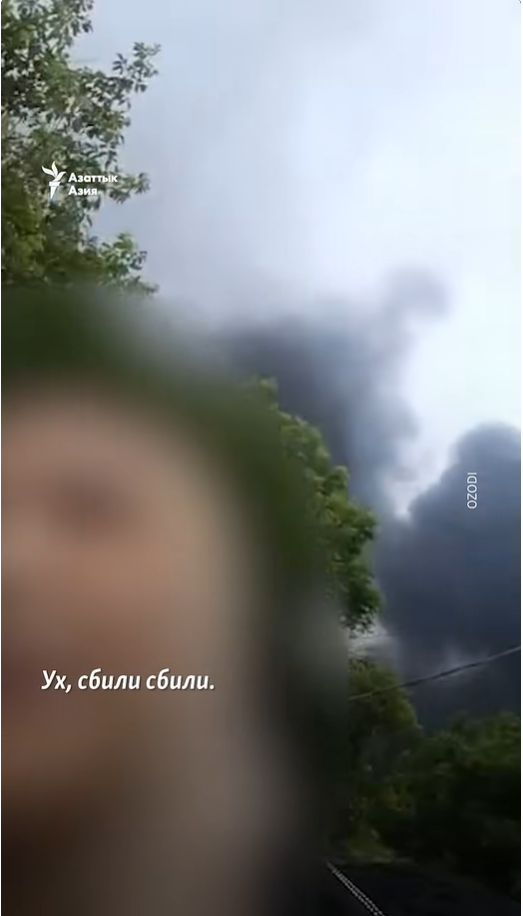
Additionally, we found another video shot from a different angle on the Facebook account Yenisafak.com/ru, uploaded on June 18, 2026. The video contains the same visuals seen in the viral clip. The post states that the video was filmed at Moscow’s Sadovod Market, where a massive fire broke out at a complex following a drone attack.
https://www.facebook.com/reel/980820447900927

Conclusion
The evidence gathered during our research makes it clear that the viral video does not show a Houthi attack on an airport in Saudi Arabia, but is actually from Moscow, the capital of Russia.
.jpeg)
Introduction and Brief Analysis
A movie named “The Artifice Girl” portrayed A law enforcement agency developing an AI-based personification of a 12-year-old girl who appears to be exactly like a real person. Believing her to be an actual girl, perpetrators of child sexual exploitation were caught attempting to seek sexual favours. The movie showed how AI aided law enforcement, but the reality is that the emergence of Artificial Intelligence has posed numerous challenges in multiple directions. This example illustrates both the promise and the complexity of using AI in sensitive areas like law enforcement, where technological innovation must be carefully balanced with ethical and legal considerations.
Detection and Protection tools are constantly competing with technologies that generate content, automate grooming and challenge legal boundaries. Such technological advancements have provided enough ground for the proliferation of Child Sexual Exploitation and Abuse Material (CSEAM). Also known as child pornography under Section 2 (da) of Protection of Children from Sexual Offences Act, 2012, it defined it as - “means any visual depiction of sexually explicit conduct involving a child which includes a photograph, video, digital or computer-generated image indistinguishable from an actual child and image created, adapted, or modified, but appears to depict a child.”
Artificial Intelligence is a category of technologies that attempt to shape human thoughts and behaviours using input algorithms and datasets. Two Primary applications can be considered in the context of CSEAM: classifiers and content generators. Classifiers are programs that learn from large data sets, which may be labelled or unlabelled and further classify what is restricted or illegal. Whereas generative AI is also trained on large datasets, it uses that knowledge to create new things. Majority of current AI research related to AI for CSEAM is done by the use of Artificial neural networks (ANNs), a type of AI that can be trained to identify unusual connections between items (classification) and to generate unique combinations of items (e.g., elements of a picture) based on the training data used.
Current Legal Landscape
The legal Landscape in terms of AI is yet unclear and evolving, with different nations trying to track the evolution of AI and develop laws. However, some laws directly address CSEAM. The International Centre for Missing and Exploited Children (ICMEC) combats Illegal sexual content involving children. They have a “Model Legislation” for setting recommended sanctions/sentencing. According to research performed in 2018, Illegal sexual content involving children is illegal in 118 of the 196 Interpol member states. This figure represents countries that have sufficient legislation in place to meet 4 or 5 of the 5 criteria defined by the ICMEC.
CSEAM in India can be reported on various portals like the ‘National Cyber Crime Reporting Portal’. Online crimes related to children, including CSEAM, can be reported to this portal by visiting cybercrime.gov.in. This portal allows anonymous reporting, automatic FIR registration and tracking of your complaint. ‘I4C Sahyog Portal’ is another platform managed by the Indian Cyber Crime Coordination Centre (I4C). This portal integrates with social media platforms.
The Indian legal front for AI is evolving and CSEAM is well addressed in Indian laws and through judicial pronouncements. The Supreme Court judgement on Alliance and Anr v S Harish and ors is a landmark in this regard. The following principles were highlighted in this judgment.
- The term “child pornography” should be substituted by “Child Sexual Exploitation and Abuse Material” (CSEAM) and shall not be used for any further judicial proceeding, order, or judgment. Also, parliament should amend the same in POCSO and instead, the term CSEAM should be endorsed.
- Parliament to consider amending Section 15 (1) of POCSO to make it more convenient for the general public to report by way of an online portal.
- Implementing sex education programs to give young people a clear understanding of consent and the consequences of exploitation. To help prevent Problematic sexual behaviour (PSB), schools should teach students about consent, healthy relationships and appropriate behaviour.
- Support services to the victims and rehabilitation programs for the offenders are essential.
- Early identification of at-risk individuals and implementation of intervention strategies for youth.
Distinctive Challenges
According to a report by the National Centre for Missing and Exploited Children (NCMEC), a significant number of reports about child sexual exploitation and abuse material (CSEAM) are linked to perpetrators based outside the country. This highlights major challenges related to jurisdiction and anonymity in addressing such crimes. Since the issue concerns children and considering the cross-border nature of the internet and the emergence of AI, Nations across the globe need to come together to solve this matter. Delays in the extradition procedure and irregular legal processes across the jurisdictions hinder the apprehension of offenders and the delivery of justice to victims.
CyberPeace Recommendations
For effective regulation of AI-generated CSEAM, laws are required to be strengthened for AI developers and trainers to prevent misuse of their tools. AI should be designed with its ethical considerations, ensuring respect for privacy, consent and child rights. There can be a self-regulation mechanism for AI models to recognise and restrict red flags related to CSEAM and indicate grooming or potential abuse.
A distinct Indian CSEAM reporting portal is urgently needed, as cybercrimes are increasing throughout the nation. Depending on the integrated portal may lead to ignorance of AI-based CSEAM cases. This would result in faster response and focused tracking. Since AI-generated content is detectable. The portal should also include an automated AI-content detection system linked directly to law enforcement for swift action.
Furthermore, International cooperation is of utmost importance to win the battle of AI-enabled challenges and to fill the jurisdictional gaps. A united global effort is required. Using a common technology and unified international laws is essential to tackle AI-driven child sexual exploitation across borders and protect children everywhere. CSEAM is an extremely serious issue. Children are among the most vulnerable to such harmful content. This threat must be addressed without delay, through stronger policies, dedicated reporting mechanisms and swift action to protect children from exploitation.
References:
- https://www.sciencedirect.com/science/article/pii/S2950193824000433?ref=pdf_download&fr=RR-2&rr=94efffff09e95975
- https://aasc.assam.gov.in/sites/default/files/swf_utility_folder/departments/aasc_webcomindia_org_oi d_4/portlet/level_2/pocso_act.pdf
- https://www.manupatracademy.com/assets/pdf/legalpost/just-rights-for-children-alliance-and-anr-vs-sharish-and-ors.pdfhttps://www.icmec.orghttps://www.missingkids.org/theissues/generative-ai
.webp)
Introduction
The advent of frontier AI has significantly widened the range of actors who can launch cyberattacks, extending beyond state actors with immense capabilities or organized professional cybercriminal rings. In its most critical advisory, CIAD-2026-0020, titled "Defending against frontier AI-driven cyber risks," which was released on April 26, 2026, the Indian Computer Emergency Response Team (CERT-In) officially stated that AI can now carry out autonomous cyber activities of unprecedented scale and speed. The advisory highlights that these frontier AI models can perform automated reconnaissance, phishing, malware creation, vulnerability identification, and social engineering with minimal human involvement, thus "lowering the barrier to orchestrating complex cyber attacks." The risks that such AI models pose are not restricted to state actors and corporate entities anymore and also extend to MSMEs, public organizations, and individuals.
India’s Escalating Cybercrisis
The Indian digital economy has been developing at a very fast pace, but the same cannot be said about its cybersecurity. Having a base of over 850 million internet users and a digital payment sector that records a massive 22,495 crore in monthly transaction volumes, coupled with the fastest-growing cloud sector in the world, India continues to remain a lucrative prey for cybercriminals. There were over 265 million attempts reported in the last year, 2025, alone, where close to 46% of all incidents detected were in enterprises with fewer than 1,000 employees, a very grave reality for MSMEs. MHA confirmed there were 28.15 lakh reported cybercrime complaints in 2025 as compared to 2024, with a jump of 24%. In this worsening environment the advisory is a breakthrough in Indian cyber governance. Where previously advisories covered only conventional threats like phishing and malware, the new warning names frontier agentic AI systems as autonomous multipliers of threats, capable of conducting operations at scale and speed with significantly reduced human oversight.
What is “Frontier AI” and why does it matter?
CERT-In’s decision to adopt the term "Frontier AI" is deliberate and meaningful. The advisory’s scope is a new category of agentic AI, which moves well beyond traditional chatbot-style AI, having the capacity to reason, plan, perform multiple actions in a single task autonomously, and carry out complicated tasks with minimal or no human guidance. CERT-In highlights that these tools now possess the capabilities that were "previously carried out by a coordinated team of skilled cybersecurity professionals." The advisory clearly flags the risk that these advanced models have the capability to generate malicious code, conduct network scans, probe systems for vulnerabilities, and even orchestrate intricate multi-stage cyberattacks in a single session. Their capacity to analyse a vast number of source code libraries to identify vulnerabilities, even unknown zero-day ones, and then develop proof-of-concept exploits at high speed. This means that the historical lead time to turn a vulnerability discovery into an exploit tool has reduced from weeks to just hours.
Six Core Threat Vectors identified by CERT-In
- AI-driven Automatic Zero-Day Discovery: AI-based solutions discover zero-day vulnerabilities and automatically create exploits in minutes, reducing the time taken by defenders.
- AI-driven Autonomous Reconnaissance: AI-driven agents scan cloud infra, APIs, and enterprise networks and outline attack vectors.
- AI-driven phishing & deepfakes: Multilingual, highly targeted phishing emails, deepfake audio, and deepfake voice/video calls bring sophistication to social engineering.
- Deepfake Financial Fraud: AI creates deepfake executives for high-value money transfers. For example, reports have indicated crore-level fund loss cases in India.
- AI-powered Autonomous Attack Chains: Advanced AI models are able to automatically perform multiple malicious stages like privilege escalation, lateral movement, data exfiltration, and data extraction.
- Cascading failures of interconnected systems: A single AI-supported security breach can have catastrophic domino effects on connected digital systems and critical infrastructures.
Why are MSMEs a target?
CERT-In’s warning is specifically targeted toward the weakness of the Indian MSMEs. Contributing almost 30% to India's GDP and employing over 110 million individuals, most MSMEs have failed to adequately prepare themselves against contemporary cyber threats. While a large corporation would have a full-time cybersecurity team, a security operation centre, and frequent vulnerability assessments, the majority of MSMEs lack such infrastructure due to budget constraints, out-of-date software, etc. This lack of security has proved to be quite disadvantageous for smaller businesses, as India was identified as one of the top global targets for cyberattacks, where approximately 46% of the total breaches worldwide targeted organizations having fewer than 1000 employees. The advisory claims that frontier AI systems have significantly increased the threats, for the skills necessary to carry out advanced cyberattacks have dramatically decreased. Ransomware, phishing and data exfiltration can be executed by even unsophisticated attackers. The aftermath could result in critical financial, operational, and compliance impact on these MSMEs.
The Global Context
These developments seem to validate CERT-In's warning about threats posed by frontier AI. In its 2026 State of Cybersecurity Report, ISACA listed AI-related threats as the top concern of cybersecurity professionals; 61% of those surveyed reported generative AI/large language models as the top technology trend impacting cyber risk. Worryingly, in 2026 only 7% were confident in their organizations' defenses against ransomware. Check Point Software's Cyber Security Report 2026 corroborates this; in 2025 the report stated that in a single year, the trend of combined social engineering-based campaigns with automated operational execution has risen considerably. In all phases of the lifecycle of a cyberattack reconnaissance, social engineering, and tactical decision-making AI is being applied. KPMG is warning of deepfake-enabled fraud now "spreading at a faster rate than that experienced at the beginning of the phishing era, which is currently still the leading type of attack in the world."
CERT-In Recommendations
For Large Organisations:
- The use of security monitoring, threat detection, and log analysis should be increased.
- DDoS protection systems and multi-factor authentication (MFA) should be implemented on all internet-facing devices and assets.
- Critical security patches should be installed within 24 hours of release.
- Old VPN and remote-access infrastructure should be updated or replaced.
- AI-driven cyber drills and incident response simulations should be regularly performed.
For MSMEs:
- Software and security updates should be automatically enabled on all devices and systems.
- MFA should be enabled on organisational accounts and sensitive platforms.
- MSMEs should utilize MSSPs for specialized support and monitoring.
- Detailed inventories of IT assets and system logs should be kept for fast incident response.
- Staff should be educated about identifying AI-generated phishing, deepfakes, and scams.
For Individuals:
- Independent communication channels should be used to verify any dubious message or money request.
- Software from unverified sources or unauthorised channels should not be downloaded.
- The use of strong and unique passwords along with MFA wherever possible should be enforced.
From Advisory to Action
The May 2026 cybersecurity road map released by CERT-In signals a departure from identification of threats to enabling operations against frontier AI-led cyber threat landscapes. This initiative builds on their April advice and delineates a clearly articulated three-phase roadmap comprising immediate cyber readiness, AI governance controls, and deep integration of AI-driven defenses. It also provides for the establishment of a focused AI Cyber Defense Center and various multisector governance provisions. A prominent area is the increased threat of impersonation via deepfakes, and companies are encouraged to institute executive verification procedures prior to approving high-value transactions. The framework also emphasizes the establishment of an AI asset register requiring formal accounting and governance of all AI systems utilized in an enterprise. Meanwhile, CERT-In also recognizes the twin-use nature of frontier AI: for every threat, the same technology can bolster security with automated threat detection, phishing, and log analysis in real time. However, the deployment of state-of-the-art defenses is uneven, especially with MSMEs, where there isn’t the requisite domain expertise and funding for this infrastructure. Accordingly, the road map puts the emphasis on immediate and stronger cyber hygiene, compulsory incident reporting, enhancing AI literacy, and proper implementation of the Digital Personal Data Protection Act for long-term security investment and resilience.
Conclusion
The CERT-In advisory CIAD-2026-0020 signifies a vital acknowledgment of AI's transformational impact on the cybersecurity ecosystem. Capabilities formerly exclusive to elite state actors are being deployed by low-skilled users, leveraging state-of-the-art frontier AI tools. India’s MSMEs, enterprises, and digital citizens are experiencing a rapidly accelerating threat milieu. In this context, the CERT-In advisory and the ensuing blueprint can no longer be dismissed as ordinary government pronouncements but as critical operational imperatives. It is the country’s ability over the next few years to shore up its collective cyber resilience to the ever-increasing scale and sophistication of AI-powered attacks that will prove crucial.
References:
- https://www.cert-in.org.in/s2cMainServlet?pageid=PUBVLNOTES02&VLCODE=CIAD-2026-0020
- https://www.zeebiz.com/technology/news-cert-in-flags-high-severity-ai-cyber-risks-amid-claude-mythos-concerns-394448
- https://www.business-standard.com/technology/tech-news/cert-in-warning-ai-scams-frontier-models-mythos-gpt-5-5-what-it-means-126042800988_1.html
- https://www.businesswire.com/news/home/20251020612551/en/
- https://corporate.indiamart.com/2025/07/29/staying-ahead-of-cyber-threats/
- https://kpmg.com/kpmg-us/content/dam/kpmg/pdf/2025/deepfakes-real-threat.pdf
