
Australia’s Digital Duty of Care: What the Online Safety Amendment Bill 2026 Means for Online Services
Australia is set to make its most significant reform to online safety laws since the Online Safety Act 2021. On 8 September 2026, the government published a draft of the Online Safety Amendment (Digital Duty of Care) Bill 2026. This would shift the focus of the online safety regime from responding to harmful content to requiring platforms to take steps to prevent foreseeable harms. Consultation closed on 22 September 2026, and the government has signalled its intent to bring legislation to parliament this year. It should be noted that this is a draft document, and there may be changes before any law is made.
What the Bill Proposes
At its core is a single statutory duty: any person responsible for an online service must ensure, “so far as is reasonably practicable”, a safe online environment. The wording is borrowed from work health and safety law, a parallel the Rickard Review itself drew when recommending the duty. The bill would replace the Basic Online Safety Expectations and the industry codes and standards that currently govern harmful content, following a 12-month transition after Royal Assent.
Who Is Covered
The reach is deliberately wide. The duty applies to nine categories of “online service”: internet carriage services, social media, messaging services, designated internet services (websites and platforms), hosting services, search engines, app stores, equipment suppliers, and a new category for AI generation tools such as chatbots and image generators. It attaches both to the provider and to anyone in a position to exercise day-to-day control, so parent companies and subsidiaries could be caught. The minister may exempt low-risk services, and lawful private communications between consenting adults are excluded.
The “Reasonably Practicable” Test
Whether a provider has done enough is judged by weighing the likelihood and degree of harm, what the provider knows or ought reasonably to know, the availability and cost of safety measures, and the privacy impact of those measures. The privacy limb is notable: measures such as age assurance or AI moderation must not intrude on privacy in a way that is “grossly disproportionate” to the risk. Liability is systems-based, meaning a provider is judged on whether it maintains appropriate systems and processes, not on every individual piece of harmful content that slips through.
Three Tiers of Protection
The “safe online environment” is defined in three layers, each more demanding than the last:
- All people in Australia must be protected from seriously harmful material and conduct, including child sexual exploitation material, grooming, terrorism and violent extremism, and content promoting suicide or self-harm.
- Children under 18 must also be protected from material harmful to children, such as pornography, content promoting disordered eating, bullying, and content encouraging hostile attitudes towards women, as well as addictive design features.
- Children under 16 on social media must not be exposed to design features with negative behavioural impacts, regardless of whether they hold an account.
Design Features and “My Feed, My Way”
A distinctive element is the focus on how services are built. The Bill designates five categories of design feature as having negative behavioural impacts: recommender systems, endless feeds, feedback features such as likes and follower counts, time-limited content such as stories, and logged-in versions of these features. The minister could add more. Providers must manage these features appropriately, including by offering “user empowerment tools”. The flagship is “My Feed, My Way”, under which social media users could opt in to algorithmic recommendations or choose to see only content from accounts they follow, with the detail to be set by legislative instrument.
Compliance Obligations
Providers would need to complete a written risk assessment for each service at least annually and before making changes that could give rise to new risks. These assessments would need to be retained for six years and provided to the eSafety Commissioner within 30 days of a request. Additional requirements include transparency reporting, publication of safety information, accessible complaints processes, and, in some cases, an Australian point of contact.
The Bill also includes a number of other reforms, including take-down timeframes for removal notices reducing from 48 to 24 hours from the day after Royal Assent, the power for the Commissioner to direct the removal of 'nudify' apps, the ability to remove reposted material without a new complaint, and approved university researchers being given access to platform data.
Enforcement and Penalties
The Commissioner will have a range of tools available, including the power to issue formal warnings publicly, impose binding remedial directions, and obtain documents and sworn examinations. Civil pecuniary penalties up to 60,000 penalty units may be imposed for failure to comply with obligations, although for the largest platforms this represents a cap well below a hypothetical turnover-based calculation.
Implications
For businesses, the net is wider than just social media. So any website, app, messaging platform, hosting service or AI tool which is accessible in Australia may be subject to assessment. Risk assessments are effectively discoverable enforcement documents. As such they should be prepared with the same degree of rigour and regard for legal privilege as any document likely to come before a regulator. The reforms are also intersecting with the Privacy Act 'tranche two' draft, the Children's Online Privacy Code and the under-16 social media minimum age. So overlaps need to be mapped together. Uncertainty remains around whether compliance with existing codes would meet the new duty, and regulator guidance will be key.
For users, the likely benefits are greater control over algorithmic feeds, faster removal of harmful content and stronger protections for children. For regulators and policymakers, the bill represents a move from content-by-content moderation to regulation of the systems driving and amplifying harm.
Debate and Criticism
The proposal is contested. The Coalition has said it will oppose the Bill in its current form, citing risks to free speech and journalism. The US Government’s consultation submission warned that the Bill could encourage platforms to over-moderate and questioned how “foreseeable harm” would be defined. Academic commentary from Monash University observes that the Bill expressly protects privacy but not freedom of expression, while legal analysis points to broad delegated powers for the minister to expand the harms and services covered. The short consultation window of 18 days has also drawn comment.
Conclusion
The Digital Duty of Care Bill would change online safety in Australia from a complaints-and-takedown model to a proactive, design-focused duty with serious financial consequences. Because it is still an exposure draft, the sensible response is preparation rather than panic: work out whether your services are in scope, review existing safety and risk practices, map overlapping privacy and children’s obligations, and watch for the Bill’s introduction to Parliament.

Related Blogs

Executive Summary
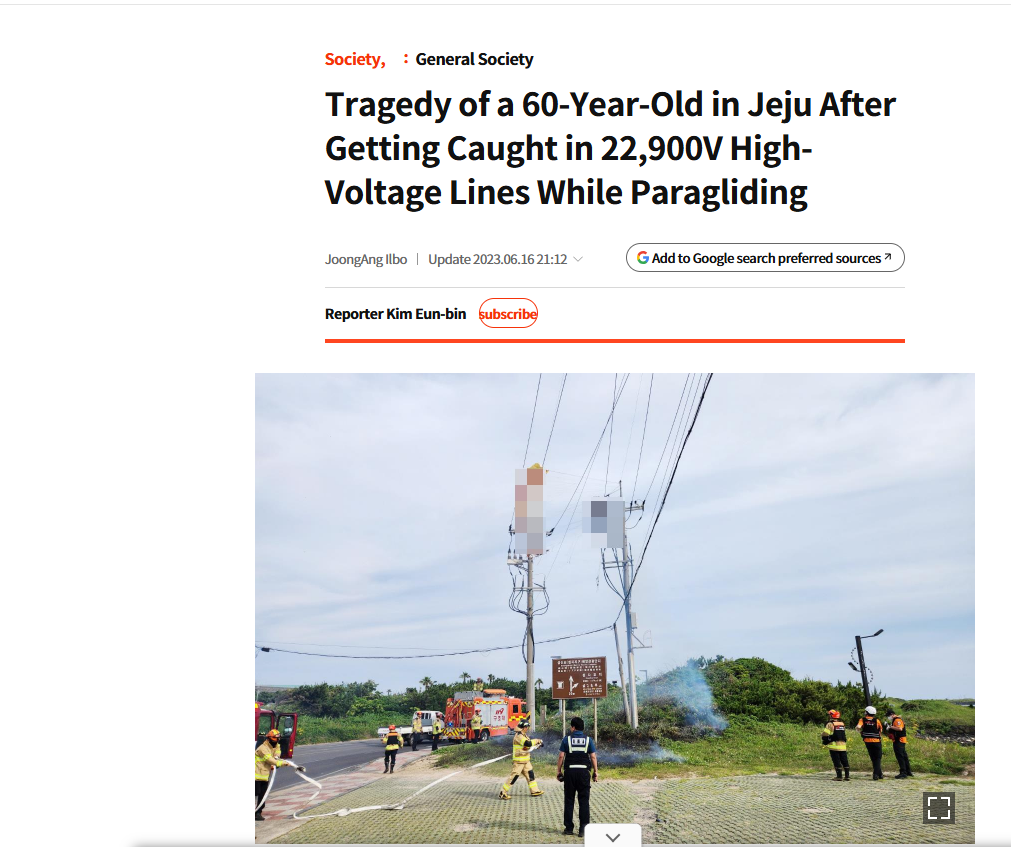
A video is being shared on social media claiming that a person who was paragliding came into contact with high-voltage electric wires during a recent incident. The video shows a paraglider coming into contact with electric wires while descending towards the ground, following which a fire can be seen breaking out. Social media users are sharing the post claiming that the incident is recent and linking it to the ongoing developments. CyberPeace Research found the viral claim to be misleading. Our research found that the viral video is not recent but dates back to a paragliding accident that took place in South Korea in June 2023. According to available media reports, on June 16, 2023, a 60-year-old man who was paragliding near Seopjikoji Beach on Jeju Island, South Korea, came into contact with high-voltage electric wires. He died in the accident.
Claim:
A video being shared on social media claims that a person descending towards the ground with a parachute unfortunately came into contact with high-voltage electric wires. The video shows the area around the person catching fire after he came into contact with the electric wires. The post is being shared on social media claiming that the incident is recent.
https://x.com/i/birdwatch/t/2101315570067189899?source=6

Fact Check
To verify the viral claim, we conducted a Google search using relevant keywords. During the search, we did not find any credible media reports related to the claim. To further verify the authenticity of the viral claim, we conducted another search on Google using relevant keywords. During the search, we found a similar video on a YouTube channel. This made it clear that the video is not recent. As part of our research, we also found the video on the South Korean website Bobaedream. According to the website, on June 16, 2023, a tourist aged around 60 came into contact with a high-voltage electric wire while paragliding near Seopjikoji Beach in Seongsan-eup, Seogwipo-si, Jeju-do Province, South Korea.
https://www.bobaedream.co.kr/bike2/board/view.php?code=strange&No=5785730

At the end of our research, we found a report published by South Korean news outlet The JoongAng on June 16, 2023. Citing the Jeju Eastern Fire Department, the report stated that at around 4:35 p.m. that day, a person flying a motorized paraglider near Seopjikoji Beach was reported to have become entangled in a high-voltage electric wire. According to the report, the person died after coming into contact with the high-voltage current.
https://www.joongang.co.kr/article/25170445#home
Conclusion
Our research found that the video being shared on social media does not show a recent incident. Available media reports and other sources confirm that the video is from a paragliding accident that took place on Jeju Island, South Korea, in June 2023. According to reports, on June 16, 2023, a man aged around 60 who was paragliding near Seopjikoji Beach became entangled in a high-voltage electric wire. He died after coming into contact with the electric current. Therefore, the claim that the video shows a recent incident is misleading.

Executive Summary
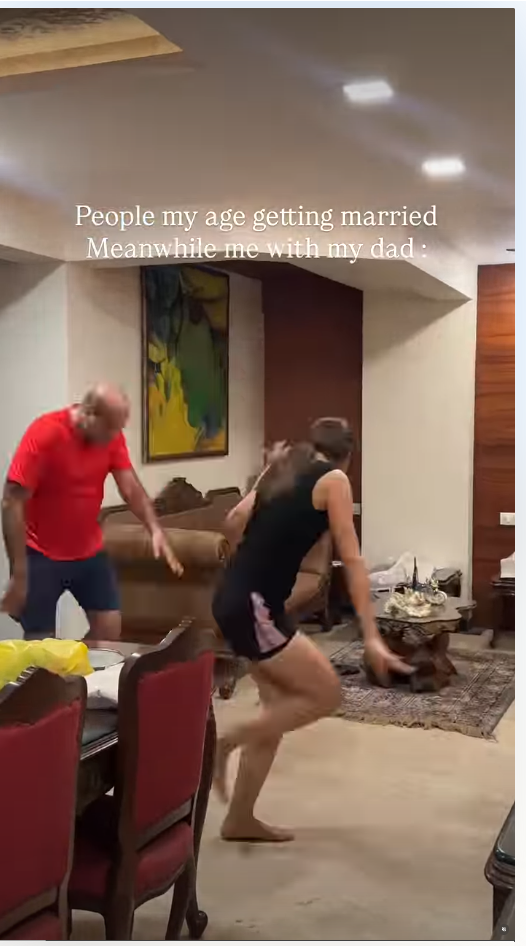
A video circulating on social media claims to show the Deputy Chief of Army Staff and former DGMO of the Indian Army, Lieutenant General Rajiv Ghai, dancing with a young woman at a party. Users sharing the clip further allege that other junior military officers were also present at the event. CyberPeace Research Wing research found the claim to be misleading. The viral video has no connection with the Indian Army, Lt Gen Rajiv Ghai, or any official military function. The person seen in the video is actually the father of content creator Akanksha Sehgal, who has featured him in multiple videos on her social media accounts.
Claim:
A Pakistani handle ‘Baba Thoka’ shared the video on X, alleging that Lt Gen Rajiv Ghai was seen dancing with young women at a party and that junior officers were also present.
- https://x.com/ThokaReturns/status/2068069535715147896?s=20
- https://archive.ph/H9EA0

Fact Check:
A reverse image search of keyframes from the viral video led to the same clip being found on Instagram handle ‘akku_sehgal_’, posted on December 14, 2025. The video caption read: “POV – when your dad and your music taste match.”

Further examination of the content creator Akanksha Sehgal’s Instagram profile showed multiple videos featuring the same father-daughter duo, confirming that the man in the viral clip frequently appears in her content.
Conclusion:
The viral video claiming to show Lieutenant General Rajiv Ghai dancing at a party is misleading. The individual seen in the video is not the senior Indian Army officer but the father of content creator Akanksha Sehgal.

A few of us were sitting together, talking shop - which, for moms, inevitably circles back to children, their health and education. Mothers of teenagers were concerned that their children seemed to spend an excessive amount of time online and had significantly reduced verbal communication at home.
Reena shared that she was struggling to understand her two boys, who had suddenly transformed from talkative, lively children into quiet, withdrawn teenagers.
Naaz nodded. “My daughter is glued to her device. I just can’t get her off it! What do I do, girls? Any suggestions?”
Mou sighed, “And what about the rising scams? I keep warning my kids about online threats, but I’m not sure I’m doing enough.”
Not just scams, those come later. What worries me more are the videos and photos of unsuspecting children being edited and misused on digital platforms,” added Reena.
The Digital Parenting Dilemma
For parents, it’s a constant challenge—allowing children internet access means exposing them to potential risks while restricting it invites criticism for being overly strict.
‘What do I do?’ is a question that troubles many parents, as they know how addictive phones and gaming devices can be. (Fun fact: Even parents sometimes struggle to resist endlessly scrolling through social media!)
‘What should I tell them, and when?’ This becomes a pressing concern when parents hear about cyberbullying, online grooming, or even cyberabduction.
‘How do I ensure they stay cybersafe?’ This remains an ongoing worry, as children grow and their online activities evolve.
Whether it’s a single-child, dual-income household, a two-child, single-income family, or any other combination, parents have their hands full managing work, chores, and home life. Sometimes, children have to be left alone—with grandparents, caregivers, or even by themselves for a few hours—making it difficult to monitor their digital lives. While smartphones help parents stay connected and track their child’s location, they can also expose children to risks if not used responsibly.
Breaking It Down
Start cybersafety discussions early and tailor them to your child’s age.
For simplicity, let’s categorize learning into five key age groups:
- 0 – 2 years
- 3 – 7 years
- 8 – 12 years
- 13 – 16 years
- 16 – 19 years
Let’s explore the key safety messages for each stage.
Reminder:
Children will always test boundaries and may resist rules. The key is to lead by example—practice cybersafety as a family.
0 – 2 Years: Newborns & Infants
Pediatricians recommend avoiding screen exposure for children under two years old. If you occasionally allow screen time (for example, while changing them), keep it to a minimum. Children are easily distracted—use this to your advantage.
What can you do?
- Avoid watching TV or using mobile devices in front of them.
- Keep activity books, empty boxes, pots, and ladles handy to engage them.
3 – 7 Years: Toddlers & Preschoolers
Cybersafety education should ideally begin when a child starts engaging with screens. At this stage, parents have complete control over what their child watches and for how long.
What can you do?
- Keep screen time limited and fully supervised.
- Introduce basic cybersecurity concepts, such as stranger danger and good picture vs. bad picture.
- Encourage offline activities—educational toys, books, and games.
- Restrict your own screen time when your child is awake to set a good example.
- Set up parental controls and create child-specific accounts on devices.Secure all devices with comprehensive security software.
8 – 12 Years: Primary & Preteens
Cyber-discipline should start now. Strengthen rules, set clear boundaries, and establish consequences for rule violations.
What can you do?
- Increase screen time gradually to accommodate studies, communication, and entertainment.
- Teach them about privacy and the dangers of oversharing personal information.
- Continue stranger-danger education, including safe/unsafe websites and apps.
- Emphasize reviewing T&Cs before downloading apps.Introduce concepts like scams, phishing, deepfakes, and virus attacks using real-life examples.
- Keep banking and credit card credentials private—children may unintentionally share sensitive information.
Cyber Safety Mantras:
- STOP. THINK. ACT.
- Do Not Trust Blindly Online.
13 – 16 Years: The Teenage Phase
Teenagers are likely to resist rules and demand independence, but if cybersecurity has been a part of their upbringing, they will tolerate parental oversight.
What can you do?
- Continue parental controls but allow greater access to previously restricted content.
- Encourage open conversations about digital safety and online threats.
- Respect their need for privacy but remain involved as a silent observer.
- Discuss cyberbullying, harassment, and online reputation management.
- Keep phones out of bedrooms at night and maintain device-free zones during family time.
- Address online relationships and risks like dating scams, sextortion, and trafficking.
16 – 19 Years: The Transition to Adulthood
By this stage, children have developed a sense of responsibility and maturity. It’s time to gradually loosen control while reinforcing good digital habits.
What can you do?
- Monitor their online presence without being intrusive.Maintain open discussions—teens still value parental advice.
- Stay updated on digital trends so you can offer relevant guidance.
- Encourage digital balance by planning device-free family outings.
Final Thoughts
As a parent, your role is not just to set rules but to empower your child to navigate the digital world safely. Lead by example, encourage responsible usage, and create an environment where your child feels comfortable discussing online challenges with you.
Wishing you a safe and successful digital parenting journey!
