
Assam's Cybercrime Turnaround: How the State Achieved a 55% Drop While India's Numbers Climbed
Introduction
In today's era, where the threat from the digital world is growing rapidly, good developments in the war against cybercrimes cannot be ignored when they do happen. The state, which was notorious for being one of the most notorious criminal states in the country concerning digital crimes, has brought about remarkable changes in the law and order situation in the country in the last few years. According to the most recent data released by the Union Ministry of Home Affairs, Assam recorded only 408 cybercrimes in the year 2024, while the figure for the previous year was 909, which means a decline of over 55% in one year. But what is even more notable about the feat is the fact that, on the other hand, the country as a whole witnessed a rise of nearly 18% in the cybercrimes recorded.
Assam's Cybercrime Journey
To understand where Assam is today can only achieve this by understanding how far it has come. In 2021, it was ranked the 5th highest state or union territory in India in the realm of cybercrime, with a staggering number of 4846 cases. The state kept the worrisome numbers continuing in the year 2022, as it ranked 9th with 1,733 cases before sliding down to 13th place in 2023 with 909 cases. However, the steep fall to a minuscule 408 cases in 2024 is an amazing narrative of how a state managed to completely eradicate the cybercrime infrastructure.
This is not a mere coincidence in statistics. This has proved to be a sustained, systematic operation by the law-enforcing agencies. Police sources say the decline is the result of consistent law enforcement action against cybercrime networks and the positive effect of awareness campaigns. Assam recorded 360 arrests under cybercrime-related offences and charge-sheeted 285 in the year 2024.
The National Picture: A Troubling Contrast
While the case of Assam is inspiring, the numbers on a pan-Indian level look bleak. India saw as many as 101,928 cybercrimes registered on its soil in the year 2024; a sharp rise from 2023, when 86,420 incidents had been reported. And it's not just in the number of cases that have seen an alarming rise; the economic implications are equally devastating. As many as 19.18 lakh complaints were lodged on the National Cyber Crime Reporting Portal in 2024. These complaints were an outcome of the financial losses to the tune of almost Rs 22,811.95 crore, according to a statement by the Home Ministry.
In 2024, the states that stood out at the top were Telangana (27,230), Karnataka (21,993), Uttar Pradesh (11,073), Maharashtra (9,922), and Bihar (6,380), among others. This clearly goes on to prove how the occurrences of cybercrime are not uniform across all states in the country due to various local and state-specific factors like the enforcement provided by state police forces, literacy levels of the general public, and the range of awareness campaigns carried out.
Even within Assam, the trend is not uniform, as almost every other Northeastern state has recorded a rise in cybercrimes this year, the figures being Arunachal Pradesh 24 to 78, Mizoram 31 to 50, Meghalaya 64 to 97, and Nagaland 2 to 14. It is only Tripura that saw a dip in reported cybercrimes, from 36 to 33. Considering these statistics, it becomes even more crucial to study and emulate Assam's success.
The Drivers and Disrupters of Cybercrime
It is in understanding how cybercrimes in Assam are committed that one might derive how these should be combatted. Of the 408 cases registered so far in 2024, 253 were registered for transmitting, or publishing, electronically, any obscene or sexually explicit material, and 115 cases were under computer-related offences. As for motive, they vary widely; 121 cases were registered out of revenge, 55 for fraud, 43 for extortion, and 42 for sexual exploitation. Sadly, out of 408 crimes reported so far in 2024, 196 victims are women, and 20 are children; in essence, the real impact is on society's most vulnerable.
This is a useful categorisation for the policymakers. It would not be beneficial if it were an all-encompassing strategy against cybercrimes when the motives and mechanisms behind them differ so widely. Customised campaigns educating women on cyberbullying, educating children on online security, and cautioning the public against online fraudulent schemes would be much more effective than general advice.
On the national front, significant investments have been made by the central government for developing cybercrime-fighting infrastructure. Since the I4C was established in 2018, the launch of NCRP in 2019 provides a reporting and coordination framework against cybercrimes, and it is reported that over 5,489 crore have been saved by freezing illegal transactions, stemming from over 17.88 lakh complaints, through these platforms. Over 9.42 lakh SIM cards and 263,248 International Mobile Equipment Identities (IMEI) numbers have been blocked due to involvement in cybercrime.
The Role of Awareness and Enforcement
The biggest, and perhaps most transferable, lesson learned from Assam is the importance of both enforcement and awareness. Alone, neither proves useful: an enforcement operation without public knowledge leaves the public at risk for the next offence, while a purely informational approach gives criminals the license to proceed. Assam seems to have a more pragmatic approach; at least the statistics support this notion.
As the most persistent weakness, cyber hygiene is still a critical issue for India's cybersecurity. The core problem is the limited public knowledge on the importance of safer online practices, and it has been one of the primary hurdles to reducing crimes online; in instances where crimes were committed and reported, insufficient processes and infrastructure remained challenges in their investigation. Therefore, institutional investment in resources such as local police cyber cells and national coordinating agencies is an integral component to overcoming these challenges.z
Conclusion
By decreasing the rate of cybercrime in Assam by 55%, the successful combination of vigorous prosecution, constant pressure to uphold the law, and thorough public awareness campaigns has demonstrated a viable solution to ever-increasing online threats throughout India. Assam presents an attainable blueprint to diminish cybercrime, although the criminals of this evolving landscape cannot be constrained by individual state borders. To successfully achieve an e-economy that thrives on security and trust, India must adapt and expand the same law enforcement and awareness campaign strategies.
References
- https://assamtribune.com/assam/assam-records-over-55-decline-in-cyber-crime-cases-in-2024-mha-1611895
- https://ddnews.gov.in/en/cybercrime-complaints-cross-19-lakh-in-2024-97-drop-in-spoofed-calls-post-new-measures/
- https://www.medianama.com/2025/08/223-india-cybercrime-500-percent-increase-2021-2024/
- https://statista.com/topics/5054/cyber-crime-in-india
- https://i4c.mha.gov.in

Related Blogs

Executive Summary
A video is being shared on social media showing a young calf running behind a milk truck on a road. A large image of a white cow is printed on the back of the truck. The calf appears to mistake the image for its real mother and tries to reach its udders. The video is being widely shared online with emotional captions. Research by the CyberPeace Research Wing found the viral claim to be false. Our research revealed that the viral video is AI-generated.
Claim:
An Instagram user shared the viral video with the caption: “A helpless calf was so hungry that it mistook the cow shown in the poster for its mother and tried to drink milk from her. This heartwarming video of innocence is rapidly going viral on social media.
https://www.instagram.com/reels/Dc5Gh-1DUl7/

Fact Check
To verify the viral claim, we conducted a Google search using relevant keywords but found no credible media reports supporting the claim. In the next step of our research, we extracted keyframes from the video and performed a reverse image search on Google. This led us to the same video on an account named ‘realishai’. Our research found that the account creates and shares AI-generated videos.”
https://www.instagram.com/realishai/

We also found several other AI-generated videos similar to the viral clip on the same account.

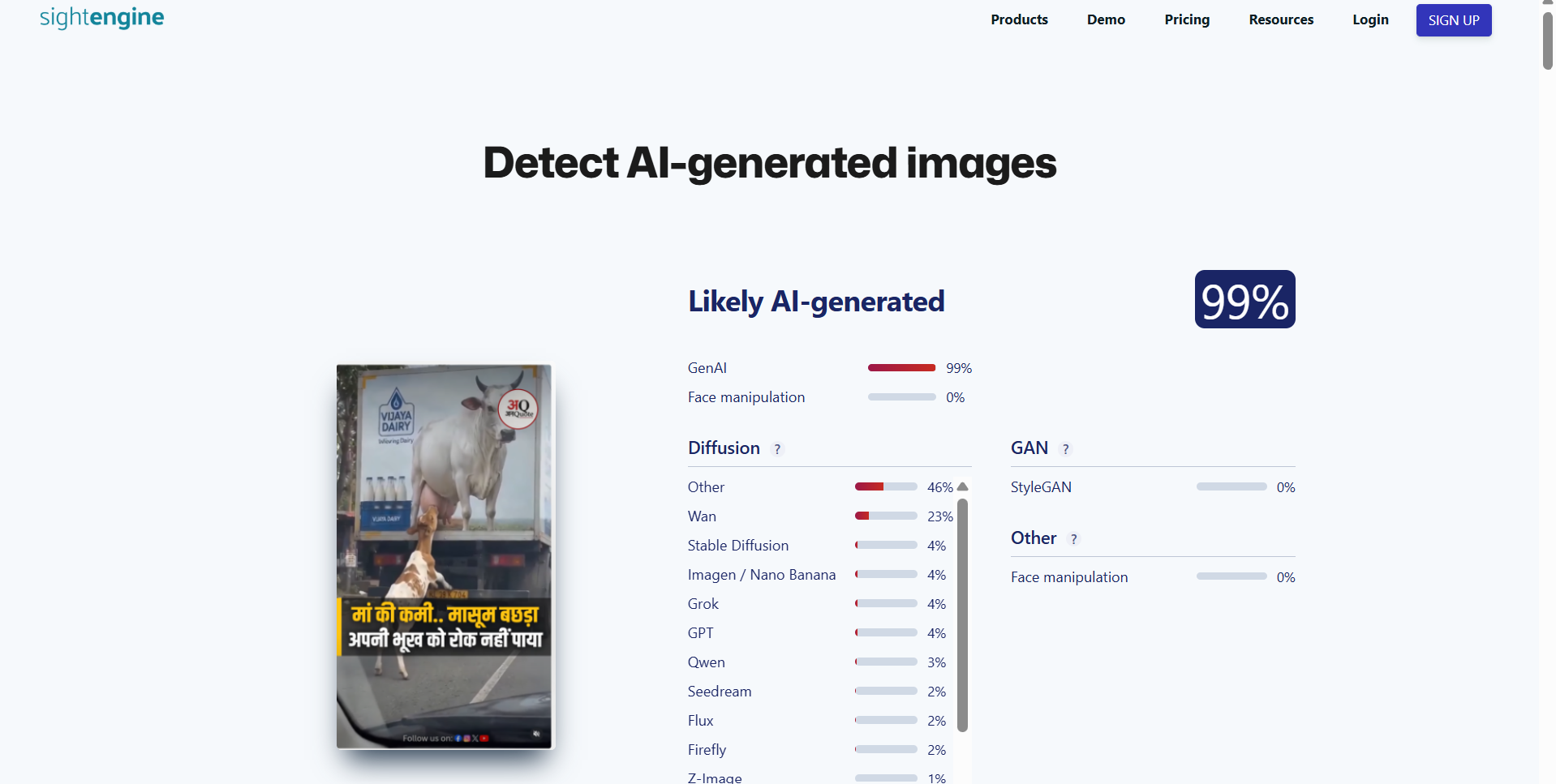
In the next step of our research, we scanned the viral video using the AI detection tool Sightengine. According to the results, the viral video is 99 per cent AI-generated.
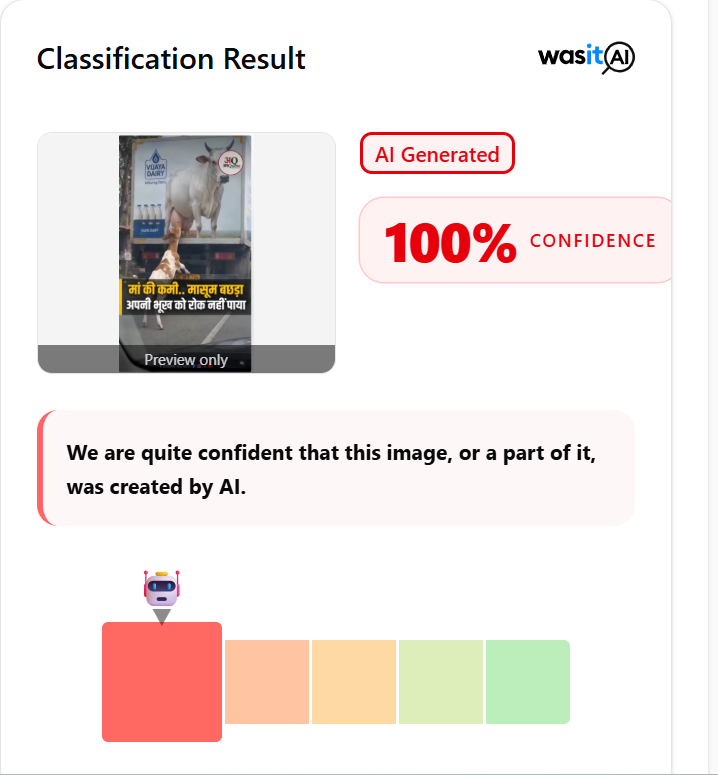
In the next step of our research, we scanned the viral video using the AI detection tool Wasit AI. According to the results, the viral video is AI-generated.
Conclusion
Our research found the viral claim to be false. The research established that the viral video is AI-generated and does not depict a real incident.
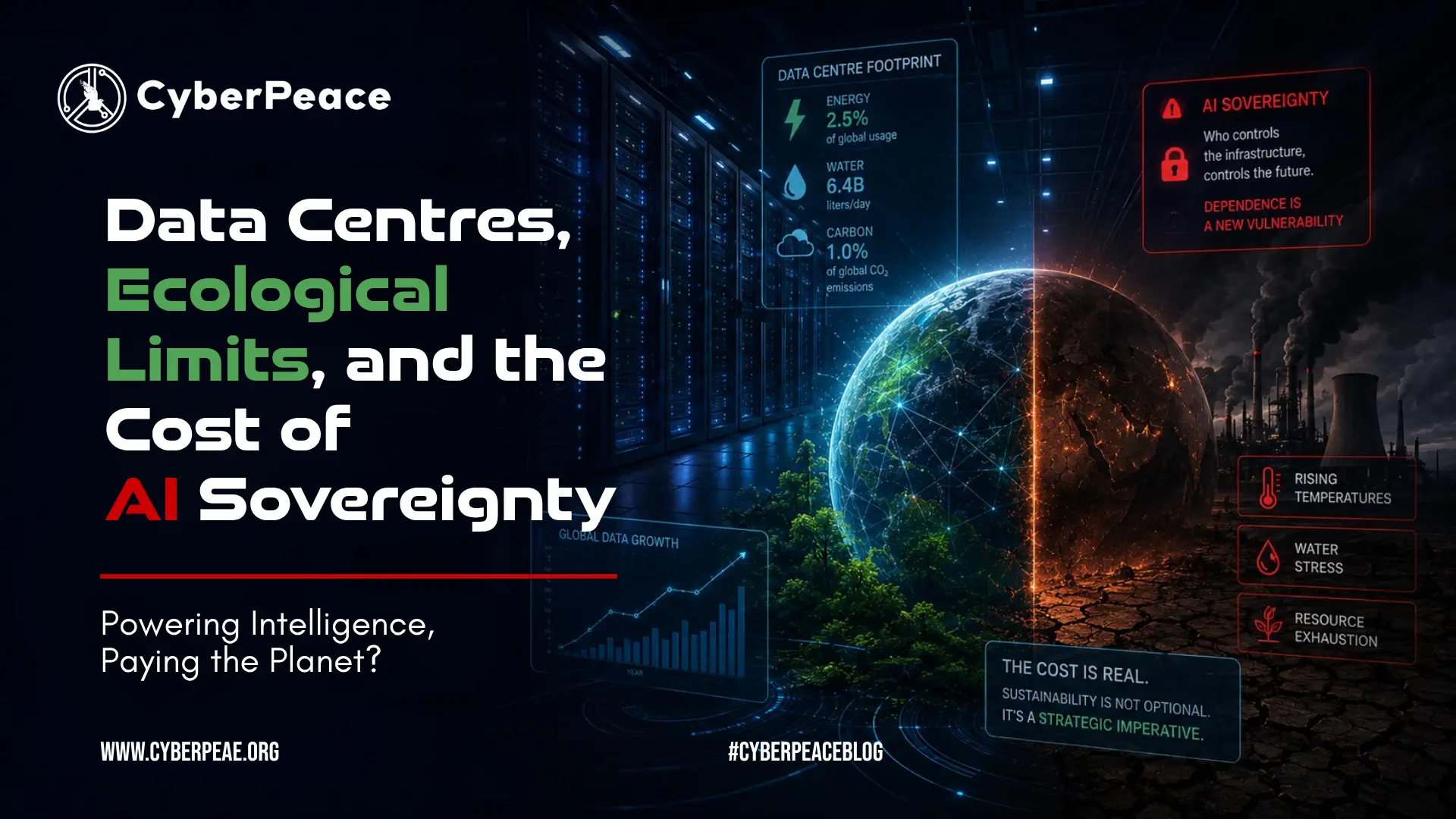
Governments in nations across the globe are consequently vying to draw in data centre investments as components of the wider AI sovereignty policies. However, recent events in Ireland make it clear that such an infrastructure is associated with significant environmental and social price tags. In geographically dense and resource-strained countries such as India, these trade-offs pose some pressing questions of whether today's AI ambitions are socially or environmentally sustainable. The data centre crisis in Ireland provides a handy reminder. It puts emphasis on the capacity of land use, water stress, energy demand, and disruption of communities to amplify quickly as digital infrastructure continues to increase at a faster rate than the regulatory and ecological capacity. These lessons should be paid close attention to as India continues to develop the IndiaAI Mission and establish itself as an AI hub in the future.
Why Data Centres Are Ecological Stress Multipliers
The data centres are sometimes referred to as clean digital infrastructure; however, in an actual sense, they are heavy industrial guardians of resources. Centres of large proportions demand an extensive amount of land, constant electricity, and a significant amount of water to cool down.
The most apparent effect is on energy consumption. Data centres are 24/7, round the clock, and need to be powered with a high-quality and stable electricity supply. By 2022, data centres had more than a quarter of the overall national electricity demand in Ireland, which created problems regarding grid stability and energy security (EirGrid, 2022). This compelled regulators to limit new connections in some of the areas. These trends also bring some similarities to certain regions of the United States, especially in Virginia, where particular data centres have led to peaks in the electricity demand in the region (U.S. Energy Information Administration, 2023).
Another primary source of pressure is the use of water. Heavy liquid coolers are very intensive systems in data centres, which tend to use the local freshwater sources. This may directly compete with residential and agricultural requirements in case of heatwaves or drought. In the western US, environmental advocates have issued notices that data centres contribute to a water deficit in other overextended basins (New York Times, 2023).
It also depends on local pollution and land use. Data centres are normally constructed on large plots close to urban or peri-urban centres, having good accessibility. This may push aside farmlands, increase property rates, and change local ecologies. The backup diesel generators, which are employed during power cuts, add to air and noise pollutants, and they thus impact the adjacent communities.
Ireland’s Experience and the Social Backlash
The low corporate taxes, cool climate, and PIC access to the EU market made Ireland a big data centre hub. The concentration of facilities around Dublin was, however, done unintentionally, leading to its rapid concentration. The population in their local communities also experienced mounting housing pressure, power competition, and underemployment because the number of long-term jobs created by a data centre is comparatively low.
The Irish government later realised that data centre expansion was causing strain on climate commitments and electricity infrastructure on a national level. The grid operators started denying new connections to data centres in sections of the country, which amounted to a kind of moratorium on further growth (TechPolicy.Press, 2024). What was initially a digital success story became a government issue, an ecology versus economic plan clash.
This experience particularly applies to smaller or densely populated countries. Countries such as Ireland and India have concentrated influences on fewer points, unlike the United States or China, which are able to spread data centres over wide areas.
India’s Emerging Data Centre Geography
India is advertising data centres as a way of advancing its digital and AI platforms. There are a number of states that have published data centre policies, such as Maharashtra, Tamil Nadu, Telangana, and Uttar Pradesh. The connectivity, financial infrastructure, and location to large user bases are making Mumbai, Chennai, Hyderabad, and Noida major hubs (MeitY, 2023).
Nevertheless, these areas are already stressed in terms of the environment. Mumbai also suffers from land shortage and flooding. There is a permanent water scarcity in Chennai. Hyderabad and Noida cannot cope with the intensity of population growth and energy demand in urban areas. Locating such large-scale data centres in these locations will pose a risk of augmenting the existing vulnerabilities instead of decentralising the benefits of development.
India, in contrast to the United States or China, does not have continental-scale low-density areas with spare water and power near demand centres. Each additional data centre in India is thus likely to have an impact on an increasing number of people per unit of infrastructure, by land acquisition, water diversion, grid pressure, or environmental externalities.
Community Impacts and Uneven Costs
The cost incurred by local communities to increase their data centre expansion is not proportionate to the benefits enjoyed. The after construction efforts to generate employment is minimal and the long term effects include strains on infrastructure. Tariffs can be increased with the growth of electric power demand. The extraction of water may have impacts on local supply. The prices of real estate may crowd out the lower-income population.
These impacts may be enhanced in India, where urban inequality is already high. The informal settlements along the industrial areas are such that they are vulnerable to pollution as well as diversion of resources. Data centres will otherwise be yet another project that creates unequal development without proper consultation with the community and other environmental protection measures.
What This Means for India’s AI Sovereignty Plans
The IndiaAI Mission of India focuses on developing local AI potential, data networks, and processing units to minimise the use of external systems ( IndiaAI Mission Document, 2024). This vision is based on data centres. Nevertheless, the concept of simple AI autonomy is made difficult by ecological limits.
An AI infrastructure that compromises water security, energy availability, or climate objectives could come under opposition and regulation backlash, as in the case of Ireland. This would delay deployment and add up to more expenses. Physical expansion is not sufficient to have true AI sovereignty. It should also take into consideration sustainability, decentralisation, and efficiency.
This brings about strategic concerns. India must invest more vigorously in energy-efficient computing, edge AI and model optimisation as opposed to scale. Is renewable energy integration viable to maintain the information centre demand? Is data centre siting to comply with long term water and land use planning, and not the short-term incentives of investment?
Towards a Sustainable Digital Infrastructure Strategy
India can still afford to learn not to repeat the errors experienced elsewhere. This will necessitate data centres being regarded as digital assets, not important infrastructures that have an environmental and social impact. Both more robust environmental impact assessments and public water and energy accounting and community involvement must become unavoidable.
From an AI policy perspective, sustainability should be seen as a pillar of sovereignty. An AI ecosystem that depends on fragile ecological foundations is not resilient. By learning from Ireland and adapting global lessons to local realities, India can pursue AI leadership without creating new environmental crises.
The future of AI will not be decided only by algorithms and talent. It will also be shaped by land, water, energy, and the communities that live alongside digital infrastructure. Ignoring those realities would make AI ambition fragile rather than sovereign.
References
- TechPolicy.Press. What Ireland’s Data Center Crisis Means for the EU’s AI Sovereignty Plans. 2024. https://techpolicy.press
- EirGrid. Electricity Demand Forecast Statement. 2022. https://www.eirgridgroup.com
- U.S. Energy Information Administration. Data Centers and Energy Demand. 2023. https://www.eia.gov
- New York Times. Data Centers Are Straining Water Supplies in the American West. 2023. https://www.nytimes.com
- Ministry of Electronics and Information Technology. India Data Centre Policy and Digital Infrastructure Initiatives. 2023. https://www.meity.gov.in
- IndiaAI Mission. Official Mission Document and Framework. 2024. https://indiaai.gov.in

Executive Summary
Images showing collapsed buildings are being widely shared on social media following a powerful earthquake in Indonesia, with users claiming they depict the aftermath of the recent 7.4-magnitude quake. However, research by the CyberPeace Research Wing found the claim to be misleading. The viral images are not from the recent earthquake but from past tremors, and were published by major international news agencies in 2018, 2021 and 2022.
- https://perma.cc/6BTK-2V6T
- https://www.facebook.com/reel/1272067278357847%20no%20other%20snapshots%20from%20this%20url

Fact Check
The posts surfaced after a 7.4-magnitude earthquake struck off the coast of Kota Ternate in eastern Indonesia in the early hours of April 2, 2026, killing one person after a building collapse, as reported by international media.
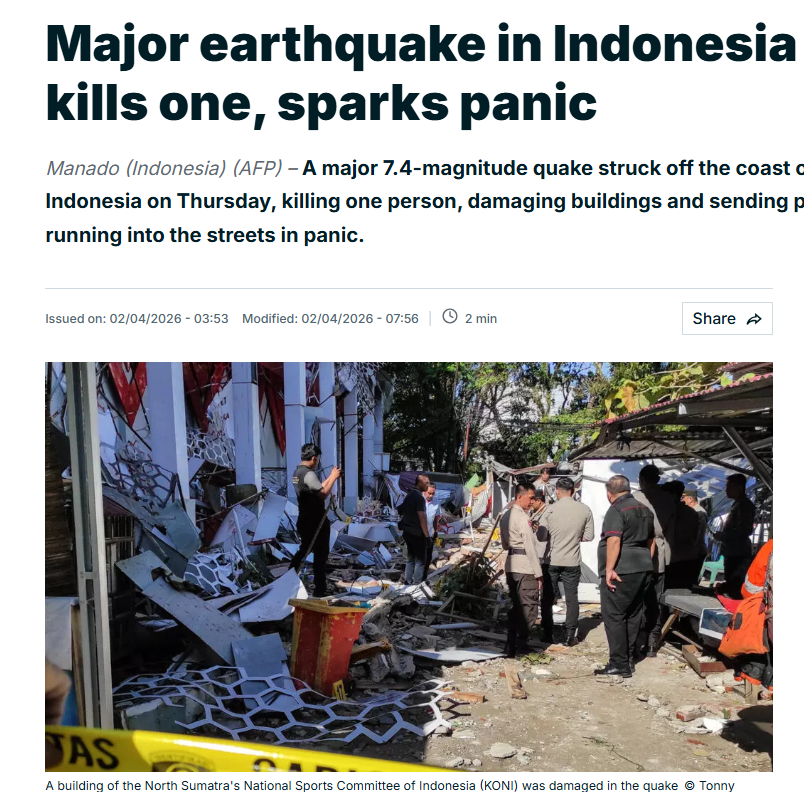
To verify the authenticity of the images, we conducted reverse image and keyword searches on Google. The first image was found to be part of a wider photograph published by The Associated Press on January 15, 2021.

The third image was traced to Getty Images, which published it on October 2, 2018. According to its description, the image shows rubble and debris around a mosque in Palu, Central Sulawesi, following a 7.5-magnitude earthquake.

These findings confirm that the viral images are unrelated to the recent earthquake and have been taken from older incidents.
Conclusion
The viral claim is misleading. The images circulating online do not show the aftermath of the April 2026 earthquake in Indonesia. Instead, they are old visuals from previous earthquakes, reused with a false and misleading context.
