
CyberPeace First Responder Program | Kendriya Vidyalaya Sangathan (KVS) July 2026
00
00
00
00


1. Executive Summary
Kendriya Vidyalaya Sangathan, in collaboration with the concerned cybersecurity awareness stakeholders, conducted a nationwide webinar series on “Cyber Security and How to Be Safe Online” during July 2026.
The initiative was designed to strengthen cybersecurity awareness among students, teachers, and the wider KVS community. The sessions focused on practical cyber hygiene, responsible digital behaviour, online safety, social media security, phishing awareness, password protection, privacy, cyber fraud prevention, and safe use of digital platforms.
The webinar series witnessed participation from 27 scheduled sessions/locations, covering multiple States and Union Territories across India.
Based on the consolidated figures provided:
- Total participants recorded: 337,572
- Total female participants: 136,872
- Total male participants: 183,127
- Total registrations/combined participation count: 319,999
- Sessions/engagement count: 864
- Additional participation/engagement: 16,718
- Overall recorded reach: 337,572
2. Objectives of the Webinar
The primary objectives of the webinar series were:
- Create awareness about cyber threats affecting students, teachers, and citizens.
- Promote safe and responsible internet usage.
- Educate participants about phishing, online scams, identity theft and cyber fraud.
- Encourage the use of strong passwords and multi-factor authentication.
- Promote awareness about privacy and protection of personal information.
- Enable participants to identify and respond to suspicious links, messages, emails and websites.
- Encourage safe and responsible use of social media and digital platforms.
- Introduce participants to the importance of cyber hygiene and device security.
- Explain appropriate steps for reporting cybercrime and online abuse.
- Build a culture of cybersecurity awareness among the KVS community.
3. Key Topics Covered
The webinar focused on practical cybersecurity issues relevant to everyday digital users.
Cyber Hygiene
Participants were introduced to basic cyber hygiene practices, including:
- Regular software and operating-system updates
- Use of antivirus/security solutions
- Secure Wi-Fi practices
- Device locking
- Safe installation of applications
- Avoiding unknown USB devices and files
Password & Account Security
The sessions emphasized:
- Creating strong and unique passwords
- Avoiding password reuse
- Using password managers
- Enabling Multi-Factor Authentication (MFA)
- Protecting recovery email addresses and phone numbers
Phishing & Social Engineering
Participants were educated on how attackers manipulate users through:
- Phishing emails
- Fake websites
- Fraudulent SMS messages
- Malicious WhatsApp messages
- Fake customer-support calls
- Impersonation
- Urgency-based scams
Social Media Safety
The webinar highlighted:
- Privacy settings
- Risks of oversharing
- Fake profiles
- Account takeover
- Malicious links
- Cyberbullying
- Online impersonation
Online Financial Fraud
Participants were advised about common fraud techniques involving:
- UPI
- QR codes
- OTPs
- Fake payment requests
- Investment scams
- Job scams
- Loan scams
- Fake customer-care numbers
Safe Digital Behaviour
The programme encouraged participants to:
Think Before You Click, Verify Before You Trust, and Secure Before You Share.
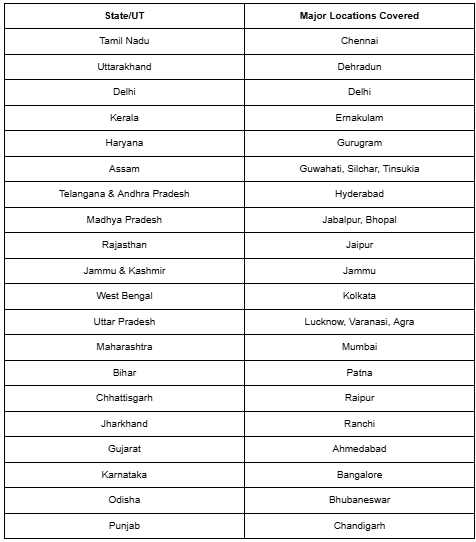
4. Geographic Coverage
The programme achieved extensive geographic coverage across India.
The webinar sessions covered:
5. Overall Participation Highlights
The consolidated dataset indicates:
Total Recorded Reach : 337,572
This represents the overall figure obtained from the final engagement/reach column supplied in the dataset.
Gender-wise Participation
- Male: 183,127
- Female: 136,872
This indicates substantial participation from both male and female participants.
Sessions/Activity
- Primary activity/session count: 864
- Secondary participation/engagement count: 855
- Additional engagement: 16,718
The data demonstrates considerable engagement generated through the nationwide webinar initiative.
7. Major Participation Highlights
Several locations recorded particularly high participation.
Delhi:The Delhi session recorded 35,038 participants in the primary participation field, making it one of the highest-performing sessions.
Mumbai:The Mumbai session recorded 34,700 participants, demonstrating strong engagement from the Maharashtra region.
Hyderabad:The Telangana & Andhra Pradesh session in Hyderabad recorded 26,073 participants.
Ernakulam:The Kerala session recorded 20,383 participants.
Kolkata:The West Bengal session recorded 20,684 participants.
Bangalore:The Karnataka session recorded 19,307 participants.
These figures highlight strong interest in cybersecurity awareness programmes across major educational regions.
8. Impact of the Programme
The webinar series contributed to strengthening cybersecurity awareness across the KVS ecosystem.
Awareness:Participants gained greater awareness of emerging cyber threats and common online scams.
Behavioural Change:The programme encouraged participants to adopt safer online practices, including stronger passwords, MFA, privacy controls and cautious handling of links and attachments.
Digital Resilience:By educating students and teachers about cyber threats, the programme helped strengthen the broader digital resilience of educational institutions.
Wider Outreach:The online format enabled cybersecurity awareness to reach a large audience across geographically dispersed regions.
Youth-Focused Cybersecurity:Students were introduced to responsible digital citizenship and the importance of making informed decisions while using online platforms.
9. Key Takeaways for Participants
The webinar reinforced several important cybersecurity principles:
1. Never share OTPs, passwords or PINs.
2. Verify links before clicking them.
3. Use strong and unique passwords.
4. Enable Multi-Factor Authentication wherever possible.
5. Keep devices and applications updated.
6. Avoid sharing sensitive personal information publicly.
7. Be cautious of unknown callers and messages.
8. Verify payment requests before transferring money.
9. Report suspicious cyber incidents promptly.
10. Think before you click, download or share.
10. Conclusion
The Kendriya Vidyalaya Sangathan Webinar on “Cyber Security and How to Be Safe Online” represented a significant effort toward strengthening cybersecurity awareness within the educational ecosystem.
With sessions conducted across multiple States and cities, the programme demonstrated the effectiveness of digital platforms in delivering cybersecurity education at scale.
The recorded participation and engagement figures indicate strong interest in cybersecurity awareness among the KVS community. More importantly, the programme helped translate cybersecurity concepts into practical guidance that students, teachers and other participants can apply in their everyday digital lives.
Cybersecurity is no longer limited to technical professionals. Every student, teacher and citizen is now an active participant in the digital ecosystem. Initiatives such as this webinar therefore play an important role in building a safer, more responsible and cyber-resilient India.
You're invited! Join hands with the cyber peace movement and register for our upcoming event.


InMobi Group
eRaksha Winners
CyberPeace Corps Volunteers
• Mitigating the Risk of AI

