
No Gaming or Social Media during Work Hours Kerala HC to ban employees from using their phones for non-official purposes during working hours
Introduction
The Kerala High Court banned the use of mobile phones during office hours on the 2nd of December 2024, and issued an Official Memorandum titled, ‘Indulgence In Online Gaming And Watching Social Media Content During Office Hours’. This memorandum, issued by the Registrar General, prohibits mobile phone usage for personal activities such as gaming and social media during working hours. This memorandum aims to curb the productivity woes and reinforce professional discipline and further ensure the smooth functioning of the office operations.
The memorandum reiterated its earlier notices from 2009 and 2013, where the High Court had emphasised that violations would be taken seriously. This reflects the High Court’s commitment to maintaining efficiency and professionalism in the workplace. According to the memorandum, controlling officers will monitor the staff for violations and strict actions will be taken if the rules are flouted.
Background
The circumstances that led to the Kerala HC’s decision are as follows: staff engaged in playing online games, browsing social media, watching videos or movies and even engaging in online shopping or trading during work hours, excluding the allocated lunch recess (as per the memorandum).
As mentioned earlier, this memorandum is not the first of its kind. There were similar directives that were issued in 2009 and 2013 to target the poor productivity standards, rooted in the staff members' behaviours. The present memorandum is unlike the previously mentioned ones as, it specifically addresses the rise in mobile-based distractions, like online gaming and trading. The present directive does not outline any exceptions to senior officials with designated responsibilities, and emphasises universal adherence for all levels of the workforce.
According to Cell Phones at Workplace Statistics, around 97% of workers use their smartphones during work hours, mixing personal and job-related activities. And more than 55% of managers say that cell phones are a major reason for lower productivity among employees.
Therefore, it can be safely concluded that even though smartphones have become indispensable tools for communication, their misuse has wider implications for overall organisational productivity.
CyberPeace Outlook
The Kerala High Court's decision to restrict personal mobile phone usage during work hours underscores the importance of fostering a disciplined and focused workplace environment. While smartphones are vital for communication, their misuse poses significant productivity challenges. Some proactive steps that employers can take are implementing clear policies, conducting regular training sessions and promoting a culture of accountability. Balancing digital freedom and professional responsibility is the key to ensuring that technological tools serve as enablers of efficiency rather than distractions in the workplace.
References
- https://www.thehindu.com/sci-tech/technology/kerala-high-court-issues-memo-banning-staff-from-gaming-and-social-media-during-work-hours/article68963949.ece
- https://timesofindia.indiatimes.com/technology/tech-news/kerala-high-court-bans-mobile-gaming-and-social-media-for-staff-during-work-hours/articleshow/116101149.cms
- https://images.assettype.com/barandbench/2024-12-05/1hiq8ffv/Kerala_High_Court_OM.pdf
- https://www.coolest-gadgets.com/cell-phones-at-workplace-statistics/

Related Blogs
.webp)
Introduction
Conversations surrounding the scourge of misinformation online typically focus on the risks to social order, political stability, economic safety and personal security. An oft-overlooked aspect of this phenomenon is the fact that it also takes a very real emotional and mental toll on people. Even as we grapple with the big picture questions about financial fraud or political rumors or inaccurate medical information online, we must also appreciate the fact that being exposed to misinformation and becoming aware of one’s own vulnerability are both significant sources of mental stress in today’s digital ecosystem.
Inaccurate information causes confusion and worry, which has negative consequences for mental health. Misinformation may also impair people's sense of well-being by undermining their trust in institutions, authority figures, and their own judgment. The constant bombardment of misinformation can lead to information overload, wherein people are unable to discriminate between legitimate sources and misleading content, resulting in mental exhaustion and a sense of being overwhelmed by the sheer volume of information available. Vulnerable groups such as children, the elderly, and those with pre-existing health conditions are more sensitive or susceptible to the negative effects of misinformation.
How Does Misinformation Endanger Mental Health?
Misinformation on social media platforms is a matter of public health because it has the potential to confuse people, lead to poor decision-making and result in cognitive dissonance, anxiety and unwanted behavioural changes.
Unconstrained misinformation can also lead to social disorder and the prevalence of negative emotions amongst larger numbers, ultimately causing a huge impact on society. Therefore, understanding the spread and diffusion characteristics of misinformation on Internet platforms is crucial.
The spread of misinformation can elicit different emotions of the public, and the emotions also change with the spread of misinformation. Factors such as user engagement, number of comments, and time of discussion all have an impact on the change of emotions in misinformation. Active users tend to make more comments, engage longer in discussions, and display more dominant negative emotions when triggered by misinformation. Understanding the evolution pattern of emotions triggered by misinformation is also important in view of the public’s emotional fluctuations under the influence of misinformation, and social media often magnifies the impact of emotions and makes emotions spread rapidly in social networks. For example, the sentiment of misinformation increases when there are sensitive topics such as political elections, viral trending topics, health-related information, communal and local information, information about natural disasters and more. Active misinformation on the Internet not only affects the public's psychology, mental health and behavior, but also has an impact on the stability of social order and the maintenance of social security.
Prebunking and Debunking To Build Mental Guards Against Misinformation
As the spread of misinformation and disinformation rises, so do the techniques aimed to tackle their spread. Prebunking or attitudinal inoculation is a technique for training individuals to recogniseand resist deceptive communications before they can take root. Prebunking is a psychological method for mitigating the effects of misinformation, strengthening resilience and creating cognitive defenses against future misinformation. Debunking provides individuals with accurate information to counter false claims and myths, correcting misconceptions and preventing the spread of misinformation. By presenting evidence-based refutations, debunking helps individuals distinguish fact from fiction.
What do health experts say about online misinformation?
“In the21st century, mental health is crucial due to the overwhelming amount of information available online. The COVID-19 pandemic-related misinformation was a prime example of this, with misinformation spreading online, leading to increased anxiety, panic buying, fear of leaving home, and mistrust in health measures. To protect our mental health, it is essential to cultivate a discerning mindset, question sources, and verify information before consumption. Fostering a supportive community that encourages open dialogue and fact-checking can help navigate the digital information landscape with confidence and emotional support. Prioritising self-care routines, mindfulness practices, and seeking professional guidance are also crucial for safeguarding mental health in the digital information era.”
In conversation with CyberPeace ~ Says Dubai-based psychologist, Aishwarya Menon, (BA,in Psychology and Criminology from the University of Westen Ontario, London and MA in Mental Health and Addictions (Humber College, University of Guelph),Toronto.
CyberPeace Policy Recommendations:
1) Countering misinformation is everyone's shared responsibility. To mitigate the negative effects of infodemics online, we must look at developing strong legal policies, creating and promoting awareness campaigns, relying on authenticated content on mass media, and increasing people's digital literacy.
2) Expert organisations actively verifying the information through various strategies including prebunking and debunking efforts are among those best placed to refute misinformation and direct users to evidence-based information sources. It is recommended that countermeasures for users on platforms be increased with evidence-based data or accurate information.
3) The role of social media platforms is crucial in the misinformation crisis, hence it is recommended that social media platforms actively counter the production of misinformation on their platforms. Local, national, and international efforts and additional research are required to implement the robust misinformation counterstrategies.
4) Netizens are advised or encouraged to follow official sources to check the reliability of any news or information. They must recognise the red flags by recognising the signs such as questionable facts, poorly written texts, surprising or upsetting news, fake social media accounts and fake websites designed to look like legitimate ones. Netizens are also encouraged to develop cognitive skills to discern fact and reality. Netizens are advised to approach information with a healthy dose of skepticism and curiosity.
Final Words:
It is crucial to protect mental health by escalating and disturbing the rise of misinformation incidents on various subjects, safeguarding our minds requires cognitive skills, building media literacy and verifying the information from trusted sources, prioritising mental health by self-care practices and staying connected with supportive authenticated networks. Promoting prebunking and debunking initiatives is necessary. Netizen scan protect themselves against the negative effects of misinformation and cultivate a resilient mindset in the digital information age.
References:
- https://www.hindawi.com/journals/scn/2021/7999760/
- https://www.ncbi.nlm.nih.gov/pmc/articles/PMC8502082/
Executive Summary
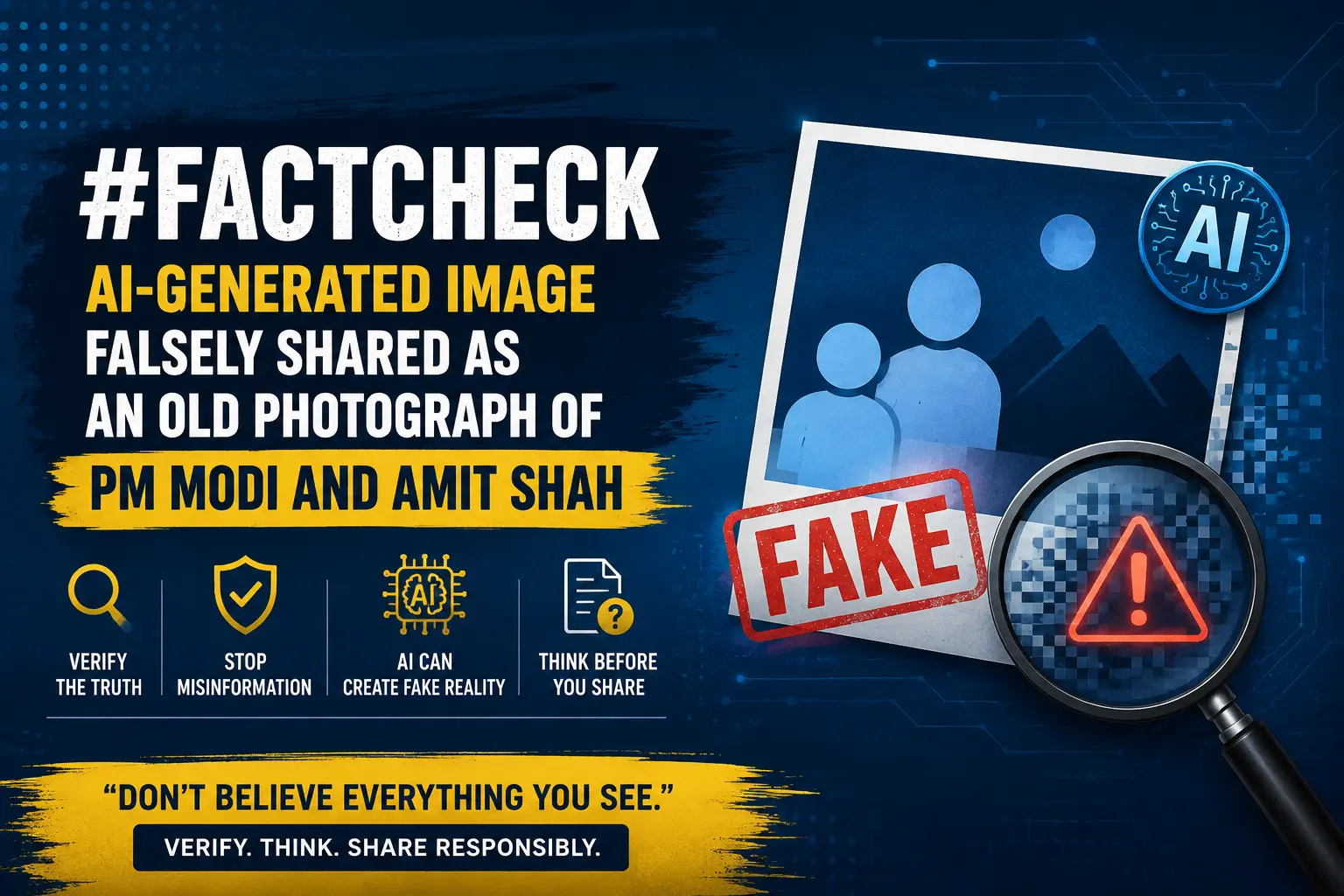
An image featuring Prime Minister Narendra Modi and Union Home Minister Amit Shah is being widely shared on social media. The image is being circulated with the claim that it is a decades-old photograph of the two leaders. A research by the Research Wing of CyberPeace found that the viral image is not authentic and was generated using artificial intelligence (AI).
Claim
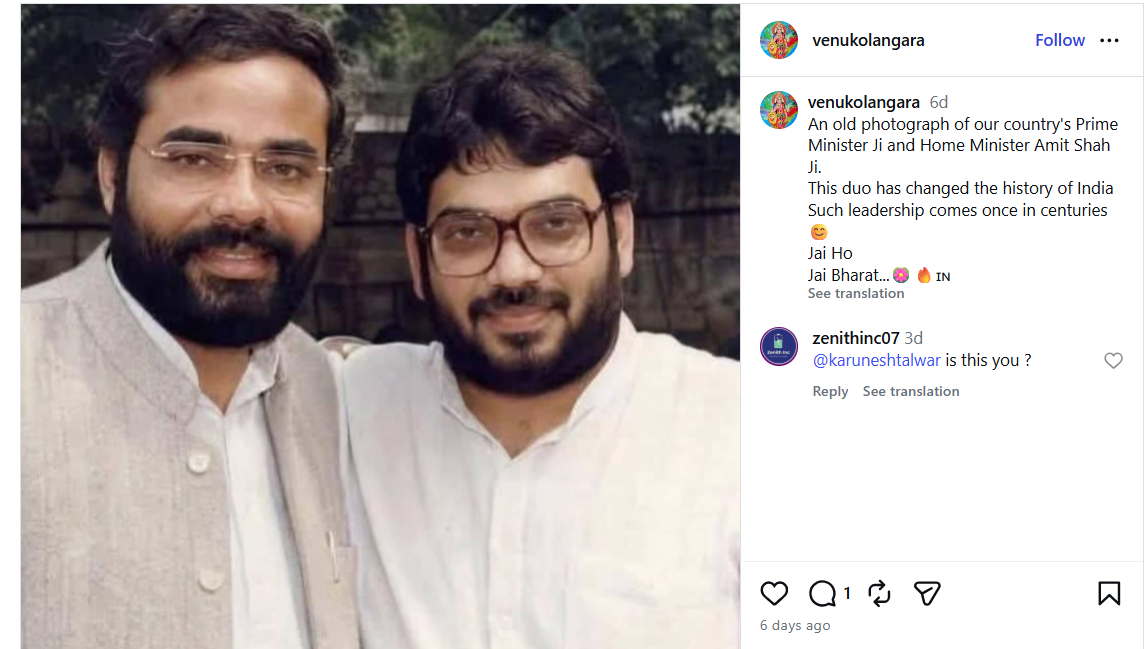
On August 14, 2026, a user shared the viral image on Instagram with the caption: “An old photograph of our country's Prime Minister Ji and Home Minister Amit Shah Ji. This duo has changed the history of India. Such leadership comes once in centuries.”
https://www.instagram.com/p/DcAsngdyjQ0/
Fact Check:
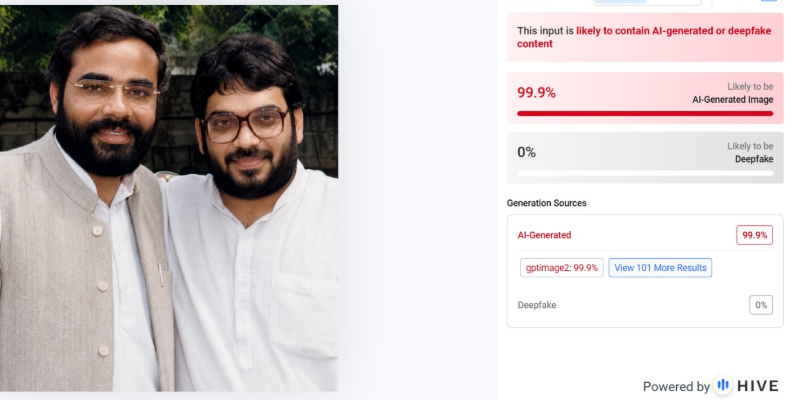
On closely examining the viral image, we noticed several visual inconsistencies that raised suspicion that it may have been AI-generated. We subsequently analysed the image using Hive Moderation, an AI-detection tool. The tool indicated a 99 per cent probability that the image was AI-generated.
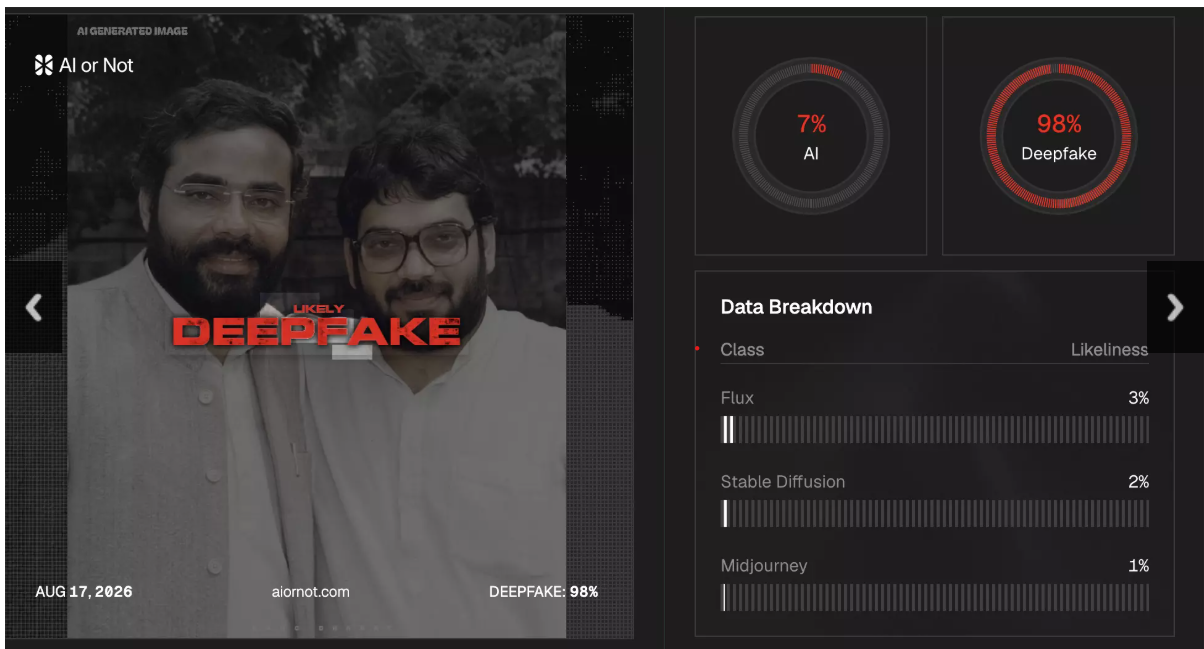
As part of the next stage of our research, we analysed the viral image using another AI-detection tool, AI or Not. The tool's results indicated a 98 per cent probability that the image was AI-generated.
Conclusion:
The viral image being circulated as a decades-old photograph of Prime Minister Narendra Modi and Union Home Minister Amit Shah is fake. Our research found that the image was generated using AI and is being falsely presented as a genuine old photograph.
.webp)
Introduction
The recent events in Mira Road, a bustling suburb on the outskirts of Mumbai, India, unfold like a modern-day parable, cautioning us against the perils of unverified digital content. The Mira Road incident, a communal clash that erupted into the physical realm, has been mirrored and magnified through the prism of social media. The Maharashtra Police, in a concerted effort to quell the spread of discord, issued stern warnings against the dissemination of rumours and fake messages. These digital phantoms, they stressed, have the potential to ignite law and order conflagrations, threatening the delicate tapestry of peace.
The police's clarion call came in the wake of a video, mischievously edited, that falsely claimed anti-social elements had set the Mira Road railway station ablaze. This digital doppelgänger of reality swiftly went viral, its tendrils reaching into the ubiquitous realm of WhatsApp, ensnaring the unsuspecting in its web of deceit.
In this age of information overload, where the line between fact and fabrication blurs, the police urged citizens to exercise discernment. The note they issued was not merely an advisory but a plea for vigilance, a reminder that the act of sharing unauthenticated messages is not a passive one; it is an act that can disturb the peace and unravel the fabric of society.
The Massacre
The police's response to this crisis was multifaceted. Administrators and members of social media groups found to be the harbingers of such falsehoods would face legal repercussions. The Thane District, a mosaic of cultural and religious significance, has been marred by a series of violent incidents, casting a shadow over its storied history. The police, in their role as guardians of order, have detained individuals, scoured social media for inauthentic posts, and maintained a vigilant presence in the region.
The Maharashtra cyber cell, a digital sentinel, has unearthed approximately 15 posts laden with videos and messages designed to sow discord among the masses. These findings were shared with the Mira-Bhayandar, Vasai-Virar (MBVV) police, who stand ready to take appropriate action. Inspector General Yashasvi Yadav of the Maharashtra cyber cell issued an appeal to the public, urging them to refrain from circulating such unverified messages, reinforcing the notion that the propagation of inauthentic information is, in itself, a crime.
The MBVV police, in their zero-tolerance stance, have formed a team dedicated to scrutinizing social media posts. The message is clear: fake news will be met with strict action. The right to free speech on social media comes with the responsibility not to share information that could incite mischief. The Indian Penal Code and Information Technology Act serve as the bulwarks against such transgressions.
The Aftermath
In the aftermath of the clashes, the police have worked tirelessly to restore calm. A young man, whose video replete with harsh and obscene language went viral, was apprehended and has since apologised for his actions. The MBVV police have also taken to social media to reassure the public that the situation is under control, urging them to avoid circulating messages that could exacerbate tensions.
The Thane district has witnessed acts of vandalism targeting shops, further escalating tensions. In response, the police have apprehended individuals linked to these acts, hoping that such measures will expedite the return of peace. Advisories have been issued, warning against the dissemination of provocative messages and rumours.
In total, 19 individuals have been taken into custody in relation to numerous incidents of violence. The Mira-Bhayandar and Vasai-Virar police have underscored their commitment to legal action against those who spread rumours through fake messages. The authorities have also highlighted the importance of brotherhood and unity, reminding citizens that above all, they are Indians first.
Conclusion
In a world where old videos, stripped of context, can fuel tensions, the police have issued a note referring to the aforementioned fake video message. They urge citizens to exercise caution, to neither believe nor circulate such messages. Police Authorities have assured that no one involved in the violence will be spared, and peace committees are being convened to restore harmony. The Mira Road incident serves as a sign of the prowess of information and responsibility that comes with it. In the digital age, where the ephemeral and the eternal collide, we must navigate the waters of truth with care. Ultimately, it is not just the image of a locality that is at stake, but the essence of our collective humanity.
References
- https://youtu.be/gK2Ac1qP-nE?feature=shared
- https://www.mid-day.com/mumbai/mumbai-crime-news/article/mira-road-communal-clash-those-spreading-fake-messages-to-face-strict-action-say-mira-bhayandar-vasai-virar-cops-23331572
- https://www.mid-day.com/mumbai/mumbai-news/article/mira-road-communal-clash-cybercops-on-alert-for-fake-clips-23331653
- https://www.theweek.in/wire-updates/national/2024/01/24/bom43-mh-shops-3rdld-vandalism.html
