
DPDP 2023 - A Netizen’s Perspective

Introduction
The nation got its first consolidated data protection regulation in the form of the Digital Personal Data Protection Act, 2023, in the month of August, and the Indian netizens got their independence in terms of data protection and privacy. The act lays heavy penalties for non-compliance with the provisions, and the same is under the jurisdiction of a Data Protection Board set up by the Central Government, which enjoys powers equivalent to a civil court. The act upholds the right to data privacy as the fundamental right under Article 19 (1)(A) and 21 of the Constitution of India. The same has been judicially supported in the form of the landmark judgement, Jus. K.S Puttawamy vs. Union of India of 2018. Let us take a look at the impact the act will make on the Indian netizens.
What is Personal Data?
Personal Data refers to any form of digitised data which can be directly replicated by any person. This includes email IDs, mobile numbers, health data, banking data, photos, etc. A person to whom the personal data belongs is called the Data Principle. A Data principle is anyone who is above the age of 18 years and consents to the data of children/minors. In the case of children/minors, it is mandatory for the parents or guardians to provide their express consent for the processing of personal data for all or any purposes. Any individual who is processing personal data is known as the Data Fiduciry, and individuals registered under the act may act as consent managers to make the consent transparent. When it comes to the rights of the netizens, it is seen that the act is created with an aspect of “Safety by Design” to secure the rights and responsibilities of the netizens.
Rights secured under the DPDP Act 2023
- Right to Grievance Redressal: The Data fiduciary and the consent manager are required to respond to the grievances of the Data Principal within a time period, which is soon to be prescribed, thus creating a blanket of responsibility for the data fiduciary and consent manager.
- Right to Nominate: Data Principals have the right to nominate any other individual who shall, in the event of death or incapacity of the data principal, exercise his/her rights.
- Right to access to information: The Data principal has the right to seek confirmation from Data fiduciaries regarding the processing of their personal data and the summary of the processed data as well.
- Right to Erasure and Correction: Data principals can reach out to the data fiduciaries in order to exercise their right to correct, complete, update and erasure of their personal data.
- Territorial Rights: The data is to be processed within India, and processing outside India should be in regard to the services provided in India.
- Material Rights: The rights are applicable to any personal data collected in digitised form and also for the data collected in a non-digital form but subsequently digitised.
Obligations for Data Fiduciaries
The data fiduciaries are mandated to oblige with the following provisions in order to maintain compliance with the laws of the land and by securing the Digital rights of the netizens.
These are the obligations of the data fiduciaries:
- Implement technical and organisational measures to safeguard Personal Data.
- Determine the legal grounds for processing and obtaining consent from Data principals where required.
- Provide a privacy notice while obtaining consent from Data principals.
- Implement a mechanism for data principals to exercise their rights.
- Implement a grievance redressal mechanism for handling the queries from Data principals.
- Irrecoverably delete personal data after the purpose for which it was collected has expired or when the consent has been withdrawn.
- Have a breach management policy to notify the data protection board and the data principals in accordance with prescribed timelines.
- Sign a valid contract with Data processors to ensure key obligations are abided by them, including timely deletion of data.
Conclusion
As the world steps into the digital age, it is pertinent for the governments of the world to come up with efficient and effective legislation to protect cyber rights and responsibilities, but as cyberspace has no boundaries, nations need to work in synergy to protect their cyber interests and netizens. This can only begin once all nations have indigenous Cyber laws and rights to protect netizens, and the same has been addressed by the Indian Government in the form of the Digital Perosnl Data Protection Act, 2023. The future is full of emerging technologies and the evolution of cyber laws; hence, consolidating a basic legal structure now is of utmost importance and the same is expected to be strengthened in India by the soon-to-be-released Draft Digital India Bill.

Related Blogs

Executive Summary:
The internet is a nest of scams and there's much need to be careful with predatory ideas that prey on the naïve people. Within the recent days, a malicious campaign has emerged falsely alleging 28 day free recharge by courtesy of the Prime Minister Narendra Modi. This blog seeks to analyze the tactics used by this scam in luring the victims and give an overview on how one can identify and keep away from such fraudulent activities.
Claim:
In view of the increasing support for the BJP 2024 election, a rumor has allegedly claimed that the Prime Minister Narendra Modi offering a free recharge with a validity period of up-to twenty eight days at cost of ₹239 to all Indian users. The message encourages the users to click on a given link in order to redeem the free recharge, pointing out that this offer is valid until January 26th of 2024.
The Deceptive Journey:
- Insecure Links:The research begins with a suspicious link (http://offerintro[.]com/BJP2024), without any credibility that honest sites use to protect the user information. We should keep in mind that the links which aren’t secure may easily lead to phishing and other cyber threats.
- Multiple Redirects:When users click the link, they are immediately directed through a series of links. This common tactic used by scammers is designed to hide the true origin of their fraudulent scheme, making it difficult for users' efforts to identify the malicious activity.
- False Promises and Fake Comments:The landing page has a banner of the Prime Minister Narendra Modi that makes it look like this is an official channel and hence authentic. Further, false comments can be also included to compliment the alleged initiative. But remember that genuine government announcements are made through legal channels, not by the shady websites.
- Mobile Number Request:As the next step, the users enter their mobile numbers in the specified field. True initiatives never really need the personal information to pass through unofficial lines. This is actually a trick that scammers use to acquire the important information.
- Share to Activate:Once a user has entered the mobile number, he/she is prompted to share the link with others in order to “activate” promised free recharge. This method is most often used by scammers for spreading their fraudulent message beyond the targeted victim.
- Fake Progress Display:When the users have done their part by sharing the link, a false recharge in progress bar is shown to make them believe that it has started. But the consumers are unwittingly playing a part in the fraud.
- Recharge Completion Pop-up:The last stage of fraud includes a pop-up saying that the recharge is done; leaving users with the false belief that they have benefited from a legitimate government initiative.
What we Analyze :
- It is important to note that at this particular point, there has not been any official declaration or a proper confirmation of an offer made by the Prime Minister or from their government. So, people must be very careful when encountering such messages because they are often employed as lures in phishing attacks or misinformation campaigns. Before engaging or transmitting such claims, it is always advisable to authenticate the information from trustworthy sources in order to protect oneself online and prevent the spread of wrongful information.
- The campaign is hosted on a third party domain instead of any official Government Website, this raised suspicion. Also the domain has been registered in very recent times.

- Domain Name: offerintro[.]com
- Registry Domain ID: 2791466714_DOMAIN_COM-VRSN
- Registrar WHOIS Server: whois.godaddy[.]com
- Registrar URL: https://www.godaddy[.]com
- Registrar: GoDaddy[.]com, LLC
- Registrar IANA ID: 146
- Updated Date: 2023-06-18T20:37:20Z
- Creation Date: 2023-06-18T20:37:20Z
- Registrar Registration Expiration Date: 2024-06-18T20:37:20Z
- Name Server: ANAHI.NS.CLOUDFLARE.COM
- Name Server: GARRETT.NS.CLOUDFLARE.COM
CyberPeace Advisory:
- Stay Informed: Beware of the scams and keep yourself updated through authentic government platforms.
- Verify Website Security: Do not get engaged with any insecure HTTP links but focus on URLs that have secure encryption (HTTPS).
- Protect Personal Information: However, be cautious when sharing personal information – especially in a non-official channel.
- Report Suspicious Activity: If you discover any scams or fraudulent activities, report it and the relevant sites to help avoid others from being defrauded of their hard earned money.
Conclusion:
Summing up, Prime Minister Narendra Modi Free Recharge fraud is an excellent illustration that there is always some danger within cyberspace. The way of the method, from insecure links and also multiple redirects to false promises and really data collection make it clear that internet users should be more careful. The importance of staying up-to-date with what is happening in this new digital world, verifying credibility and also privacy are paramount. By being cautiously aware, the people can keep themselves safe from such fraudulent acts and also play a role in ensuring security even for an online world. Remember that an offer which is in a perfect world should be illegal. Therefore, after doing a thorough research we found this campaign to be fake.

Executive Summary
A dramatic video showing several people jumping from the upper floors of a building into what appears to be thick snow has been circulating on social media, with users claiming that it captures a real incident in Russia during heavy snowfall. In the footage, individuals can be seen leaping one after another from a multi-storey structure onto a snow-covered surface below, eliciting reactions ranging from amusement to concern. The claim accompanying the video suggests that it depicts a reckless real-life episode in a snow-hit region of Russia.
A thorough analysis by CyberPeace confirmed that the video is not a real-world recording but an AI-generated creation. The footage exhibits multiple signs of synthetic media, including unnatural human movements, inconsistent physics, blurred or distorted edges, and a glossy, computer-rendered appearance. In some frames, a partial watermark from an AI video generation tool is visible. Further verification using the Hive Moderation AI-detection platform indicated that 98.7% of the video is AI-generated, confirming that the clip is entirely digitally created and does not depict any actual incident in Russia.
Claim:
The video was shared on social media by an X (formerly Twitter) user ‘Report Minds’ on January 25, claiming it showed a real-life event in Russia. The post caption read: "People jumping off from a building during serious snow in Russia. This is funny, how they jumped from a storey building. Those kids shouldn't be trying this. It's dangerous." Here is the link to the post, and below is a screenshot.

Fact Check:
The Desk used the InVid tool to extract keyframes from the viral video and conducted a reverse image search, which revealed multiple instances of the same video shared by other users with similar claims. Upon close visual examination, several anomalies were observed, including unnatural human movements, blurred and distorted sections, a glossy, digitally-rendered appearance, and a partially concealed logo of the AI video generation tool ‘Sora AI’ visible in certain frames. Screenshots highlighting these inconsistencies were captured during the research .
- https://x.com/DailyLoud/status/2015107152772297086?s=20
- https://x.com/75secondes/status/2015134928745164848?s=20


The video was analyzed on Hive Moderation, an AI-detection platform, which confirmed that 98.7% of the content is AI-generated.

The viral video showing people jumping off a building into snow, claimed to depict a real incident in Russia, is entirely AI-generated. Social media users who shared it presented the digitally created footage as if it were real, making the claim false and misleading.
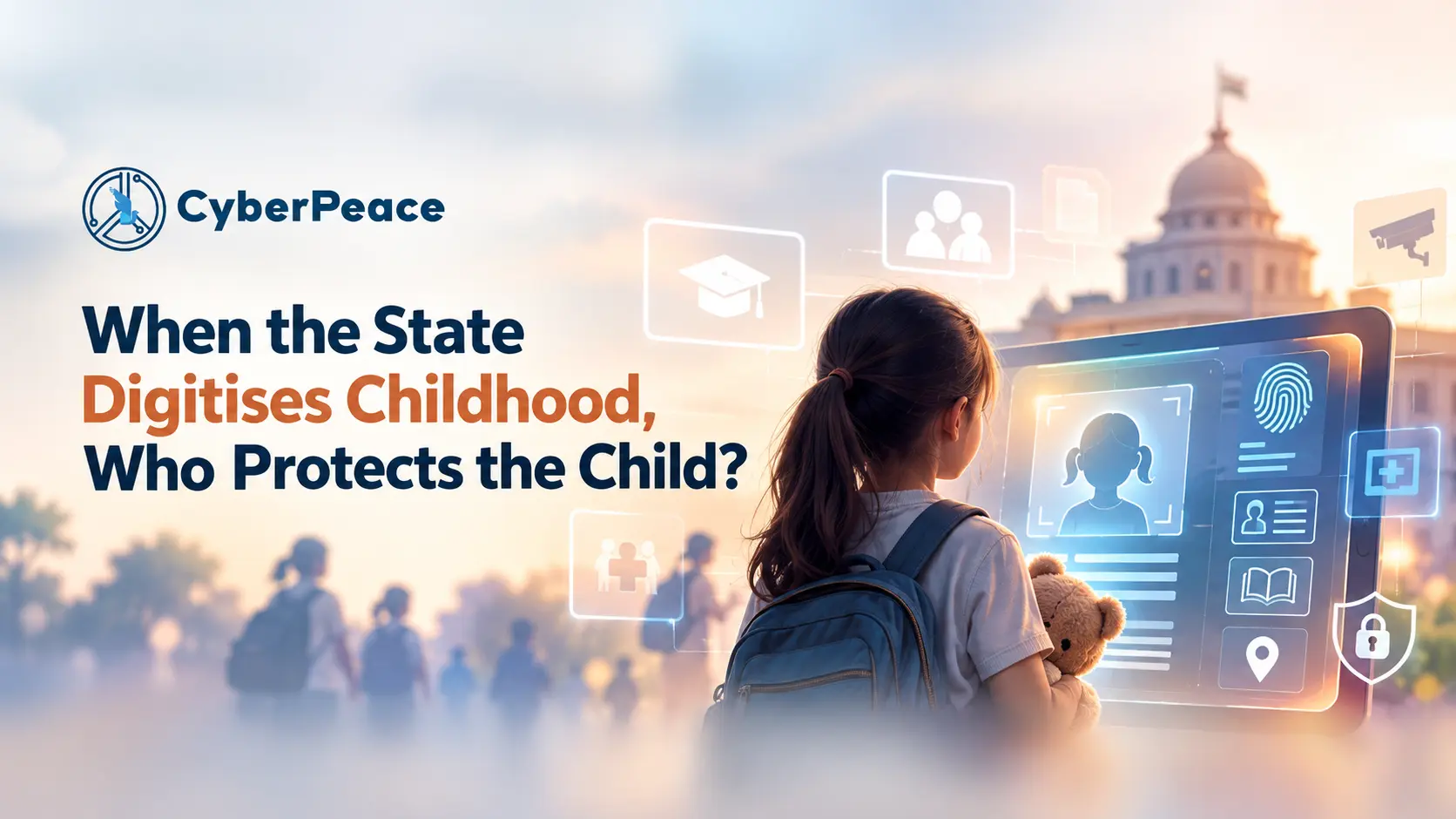
"India’s digital public infrastructure promises inclusion and efficiency. But when essential services depend on handing over data, children become legible to the state long before anyone listens to them."
India’s digital transformation deserves much of the praise it gets. Digital Public Infrastructure (DPI) has taken public services to people at a scale few countries have managed. Still, one question gets less attention than it should: what happens when the state’s wish for a neatly administered citizen starts to override the rights of a child?
Aditi Pillai takes this up in From Principle(al) to Practice: The Child as a Datafied Digital Citizen in India’s Digital Public Infrastructure. She doesn’t argue against digital infrastructure. Her point is that its claim to serve the public can’t be separated from the power it holds over the people enrolled in it. The most obvious example is children. When they are persons with rights today, they run the risk of being reduced to administrative categories, data points and future projections. A child’s citizenship is suspended until adulthood. These days, identity, privacy and agency are important but digital governance frequently views childhood as something that needs to be tracked, controlled and maximised.
Protection without participation
Pillai’s sharpest idea is what she calls “double paternalism.” She uses 49-story completion responses from parents who completed brief hypothetical situations regarding enrolling a child in a computerised system, as well as expert interviews. Her focus is on how parental and institutional power reinforce one another and prevent kids from making decisions about their own online life.
Consider the Automated Permanent Academic Account Registry (APAAR), which provides a permanent academic identification for every student. Consolidating records may well help administrators. The harder questions are whether enrolment is truly voluntary, whether refusing carries a penalty, and whether a family can question how data is collected and linked without risking the child’s schooling.
The answers weren’t encouraging. Many parents either accepted enrolment despite their reservations or viewed it as a requirement that wasn’t worth challenging. Out of the 48, only four exhibited aggressive resistance and just one admitted that the adolescent in the scenario might have a voice. It is not appropriate to interpret this little qualitative study as a statistical representation of Indian parents. Nevertheless, it implies that there was never a choice and that obedience may be mistaken for informed agreement.
That is the double edge. The state compels, or strongly nudges, parents to enrol their children. Parents then decide on the child’s behalf without involving them. Both layers claim to protect the child’s interests, and the child’s own voice is missing from both.
When convenience becomes compulsion
It is easy to treat digital systems as neutral tools. They aren’t. Every system embodies decisions about what is collected, which records are linked, who can see them, and what happens to someone who can’t or won’t comply.
Pillai points to what can follow when educational records are tied to identity systems. Persistent data trails can expose children to long-term profiling. Rigid identification rules can shut out those whose lives don’t fit the institutional template: children without reliable documents, those who have left abusive homes, those who can’t provide valid biometrics.
There is an irony here. A system built to make citizens more visible to the state can make its most vulnerable citizens less visible as people. When a child can’t meet the system’s requirements, the result is often exclusion, not accommodation.
All of this does not imply that India should abandon digital infrastructure.The true debate is whether people’s freedom of choice, privacy and equitable access should be sacrificed for efficiency. A system can’t call itself inclusive if participation is compulsory in practice and the exceptions are badly designed.
Parents can’t carry this alone
Pillai also names “potentiality risk,” the worry that data gathered in childhood will quietly shape future opportunities, reputation or identity. A school record can outlast the circumstances that produced it. A bad year, once logged, may follow a student if institutions come to read them through a permanent digital profile.
Parents are left in an impossible spot. They are expected to guard their children against risks they may not fully understand and have little power to control. Responsibility slides from the institutions that build and run these systems to the families who must live with them. That is a weak form of accountability. Parental consent can’t justify every kind of data processing involving a child, and parents shouldn’t have to bargain one by one with schools or authorities when the alternative is losing an essential service.
The Digital Personal Data Protection Act, 2023, treats children as a distinct category of data principals and requires verifiable parental consent, subject to its provisions and rules. That is a start. The deeper question remains: does a child-focused data regime only regulate what adults decide about children, or does it also leave room for children’s own evolving views and abilities? Protection without participation can turn into control by another name.
From data subjects to digital citizens
Pillai’s strategy is built on two interconnected concepts: a rights-based perspective of data justice rooted in the UN Convention on the Rights of the Child (UNCRC) and participatory digital citizenship.
In actuality, this entails consulting kids before systems are developed rather than after. Parents need clear information and practical options to raise concerns about enrolment. Accessible grievance procedures, real alternatives when necessary and safeguards against exclusion are all necessary for institutions. Collection and linking of data should be proportionate to a legitimate purpose with clear accountability for how it is used later. Above all, the child’s best interests should be a standard that actually governs decisions, not a phrase invoked to excuse administrative convenience.
India’s digital ambitions and children’s rights don’t have to collide. A public system is best judged by how it treats the people least able to challenge it. The real test of a digital state is not how many people it can enrol or connect, but whether they keep their dignity and agency once inside. Children should not end up as records to be maintained or risks to be managed. They are citizens now, and their rights matter now.
References
- Aditi Pillai, ‘From Principle(al) to Practice: The Child as a Datafied Digital Citizen in India’s Digital Public Infrastructure’ (2026) 22(2) Indian Journal of Law and Technology, Article 3. DOI: 10.55496/NFYV5618.
- Digital Personal Data Protection Act 2023, s 9.
- United Nations Convention on the Rights of the Child (adopted 20 November 1989, entered into force 2 September 1990) 1577 UNTS 3.
- Government of India, ‘G20 New Delhi Leaders’ Declaration’ (2023).
