
Karnataka Government Launched the Cyber Security Policy, 2024
Introduction
Cybersecurity remains a crucial component in the modern digital era, considering the growing threat landscape caused by our increased reliance on technology and the internet. The Karnataka Government introduced a new ‘Cyber Security Policy 2024’ to address increasing cybercrimes and enhance protection measures for the State's digital infrastructure through awareness, skill development, public-private collaborations, and technology integration. Officials stated that the policy highlights various important aspects including raising awareness and providing education, developing skills, supporting the industry and start-ups, as well as forming partnerships and collaborations for enhancing capacity.
Key Highlights
- The policy consists of two components. The initial segment emphasizes creating a robust cyber security environment involving various sectors such as the public, academia, industry, start-ups, and government. The second aspect of the policy aims to enhance the cybersecurity status of the State's IT resources. Although the initial section will be accessible to the public, the second portion will be restricted to the state's IT teams and departments for their IT implementation.
- The Department of Electronics, IT, BT and S&T, the Department of Personnel and Administrative Reforms (e-Governance),and the Home Department, in collaboration with stakeholders from government and private sectors, have collectively formulated this policy. The Indian Institute of Science, the main institute for the state's K-tech Centre of Excellence for Cyber Security (CySecK), also examined the policy.
- The Department of Electronics, IT, BT and S&T, the Department of Personnel and Administrative Reforms (e-Governance),and the Home Department, in collaboration with stakeholders from government and private sectors, have collectively formulated this policy. The Indian Institute of Science, the main institute for the state's K-tech Centre of Excellence for Cyber Security (CySecK), also examined the policy.
- Approximately ₹103.87 crore will be spent over five years to implement the policy, which would be fulfilled from the budget allocated to the Department of Information Technology and Biotechnology and Science & Technology. A total of ₹23.74 crore would be allocated for offering incentives and concessions.
- The policy focuses on key pillars of building awareness and skills, promoting research and innovation, promoting industry and start-ups, partnerships and collaborations for capacity building.
- Karnataka-based undergraduate and postgraduate interns will receive a monthly stipend of INR 10,000- Rs15,000 fora maximum duration of three months under the internship program. The goal is to support 600 interns at the undergraduate level and 120 interns at the post-graduate level within the policy timeframe.
- Karnataka-based start-ups collaborating with academic institutes can receive matching grants of up to 50% of the total R&D cost for cybersecurity projects, or a maximum of ₹50 lakh.
- Reimbursement will be provided for expenses up to a maximum of INR 1 Lakh for start-ups registered with Karnataka Start-up Cell who engage CERT-In empanelled service providers from Karnataka for cyber security audit.
- The Karnataka government has partnered with Meta to raise awareness on cyber security. By reaching out to educational institutions, schools and colleges, it is piloted to provide training to 1 lakh teachers and educate 1 million children on online safety.
CyberPeace Policy Wing Outlook
The Cyber Security Policy, 2024 launched by the Karnataka government is a testament to the state government's commitment to strengthening the cyber security posture and establishing cyber resilience. By promoting and supporting research and development projects, supporting startups, and providing skill training internships, and capacity building at a larger scale, the policy will serve asa positive step in countering the growing cyber threats and establishing a peaceful digital environment for all. The partnership and collaboration with tech companies will be instrumental in implementing the capacity-building initiatives aimed at building cognitive and skill defenses while navigating the digital world. The policy will inspire other state governments in their policy initiatives for building safe and secure cyber-infrastructure in the states by implementing strategies tailored to the specific needs and demands of each state in building safe digital infrastructure and environment.
References:
- https://www.hindustantimes.com/cities/bengaluru-news/karnataka-govt-launches-new-cyber-security-policy-amid-frequent-scams-101722598078117.html
- https://ciso.economictimes.indiatimes.com/amp/news/grc/karnataka-govt-launches-new-cyber-security-policy/112214121
- https://cybermithra.in/2024/08/09/karnataka-cyber-security-policy/

Related Blogs
Executive Summary
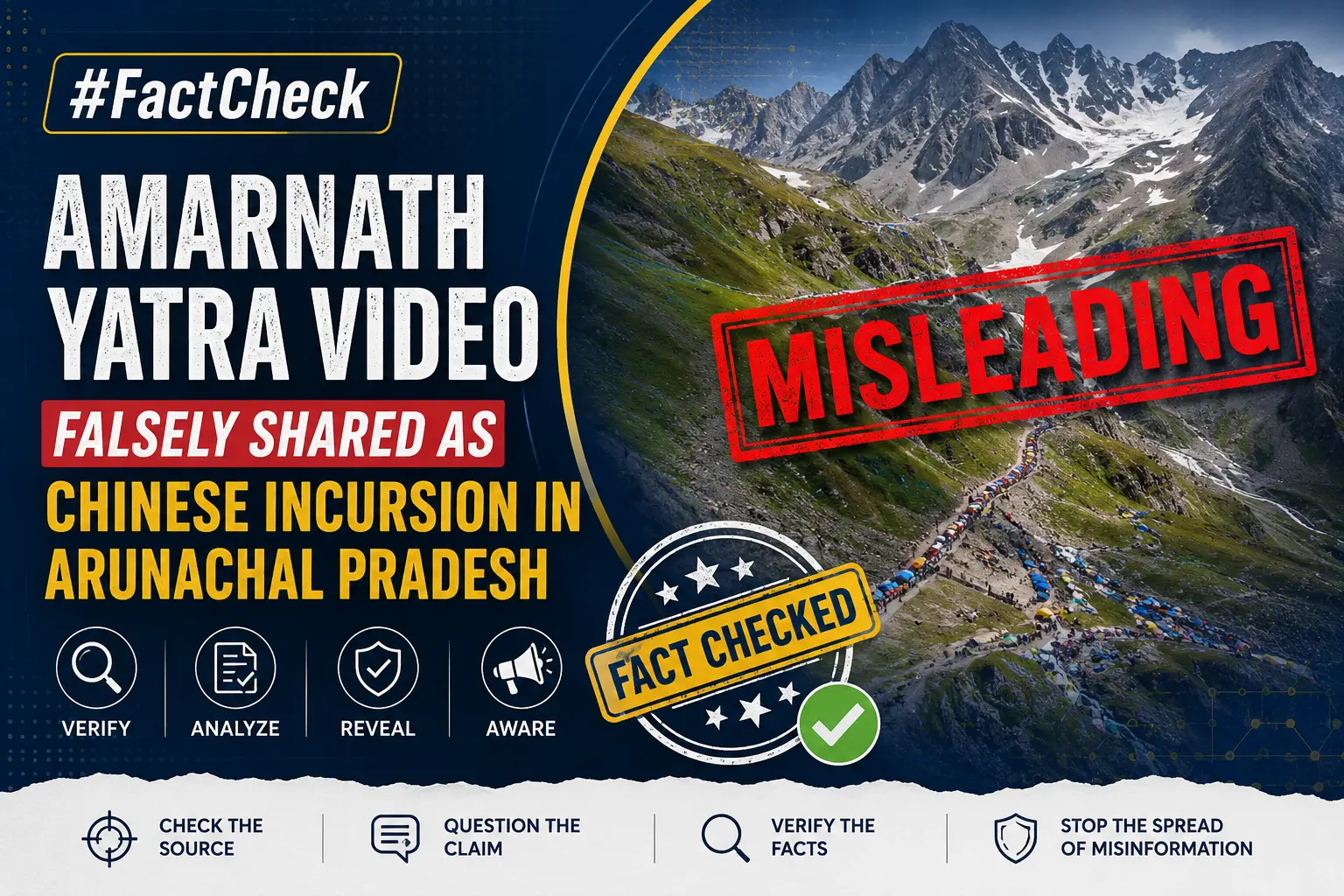
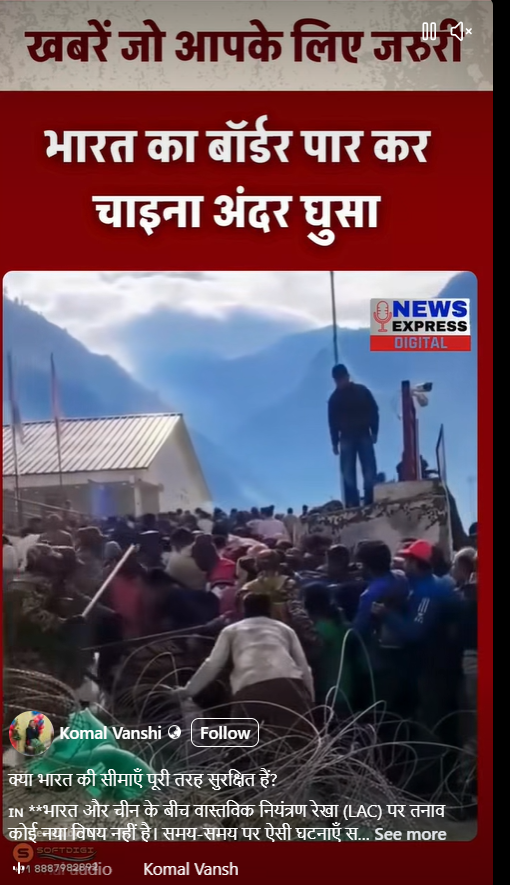
Several social media posts are claiming that Chinese troops have entered nearly 60 kilometres inside Arunachal Pradesh. Amid these claims, a video showing security personnel managing a large crowd is being widely circulated as footage from Arunachal Pradesh. Users are sharing the clip claiming it captures the situation following the alleged Chinese intrusion. CyberPeace Research Wing found the claim to be false. The viral video is not from Arunachal Pradesh. It actually shows Baltal Base Camp during the Amarnath Yatra in Jammu and Kashmir. The Government of India has also categorically denied reports of any recent Chinese intrusion into Indian territory.
Claim
A Facebook user, "Komal Vanshi," shared the video on July 8, 2026, claiming that Chinese People's Liberation Army (PLA) soldiers had entered deep inside Arunachal Pradesh and referring to alleged incidents along the Line of Actual Control (LAC). The post was accompanied by the viral video, suggesting it was related to the alleged intrusion.
https://www.facebook.com/reel/1585091393251089
Fact Check
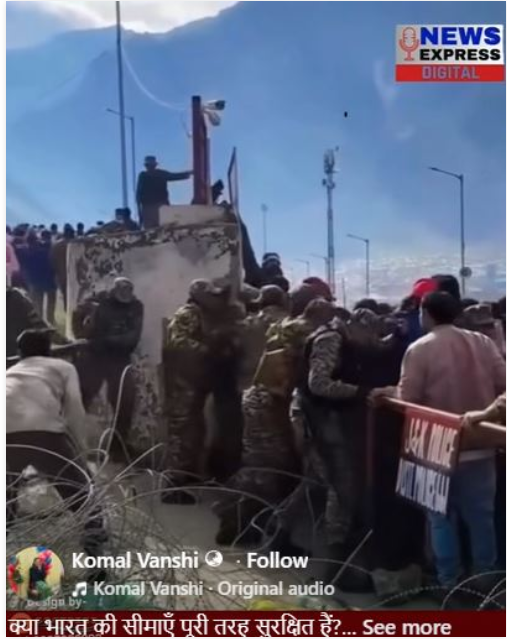
We first carefully examined the viral video. During the analysis, we noticed barricades bearing the words "Jammu & Kashmir Police." This clearly indicated that the footage could not have been recorded in Arunachal Pradesh.
In the next step, we extracted multiple keyframes from the video and conducted a reverse image search using Google Lens. Although the video was widely shared with the Arunachal Pradesh claim, our search led us to a YouTube Shorts video uploaded on July 7, 2026, identifying the location as Baltal, one of the main base camps for the annual Amarnath Yatra in Jammu and Kashmir.
https://www.youtube.com/watch?v=EEfP2RckyJM
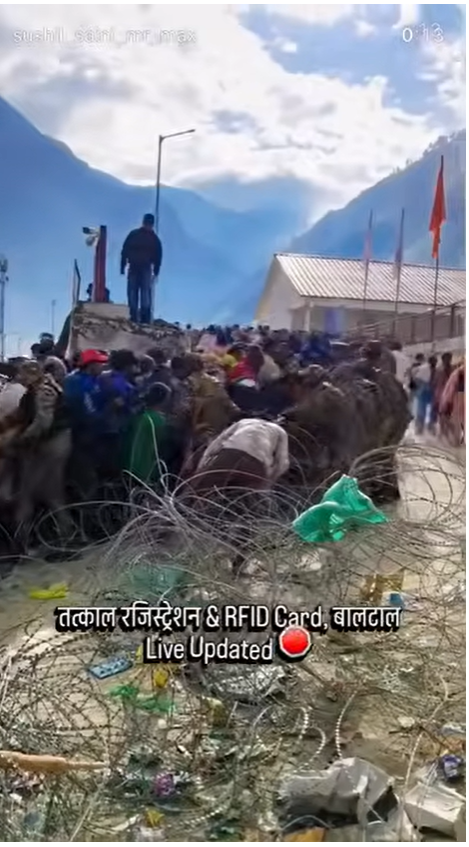
The visual details in the YouTube video matched the viral footage, confirming that it was filmed at Baltal Base Camp and had no connection with Arunachal Pradesh or any alleged Chinese military movement
Conclusion
CyberPeace Research Wing found that the viral claim is false. The video being circulated as evidence of a Chinese military incursion into Arunachal Pradesh actually shows crowd management arrangements at Baltal Base Camp during the Amarnath Yatra in Jammu and Kashmir. The footage has been falsely linked to an unrelated claim about Chinese troops entering Indian territory. There is no evidence that the video depicts any incident related to the India-China border.
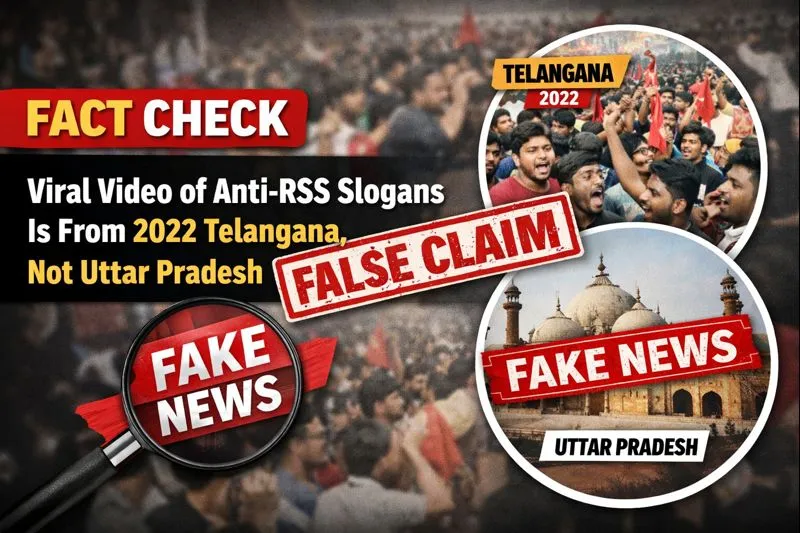
Executive Summary
A video showing a group of people wearing Muslim caps raising provocative slogans against the Rashtriya Swayamsevak Sangh (RSS) is being widely shared on social media. Users sharing the clip claim that the incident took place recently in Uttar Pradesh. However, CyberPeace research found the claim to be false. The probe established that the video is neither recent nor related to Uttar Pradesh. In fact, the footage dates back to 2022 and is from Telangana. The slogans heard in the video were raised during a protest against Goshamahal MLA T. Raja Singh, and the clip is now being circulated with a misleading claim.
Claim
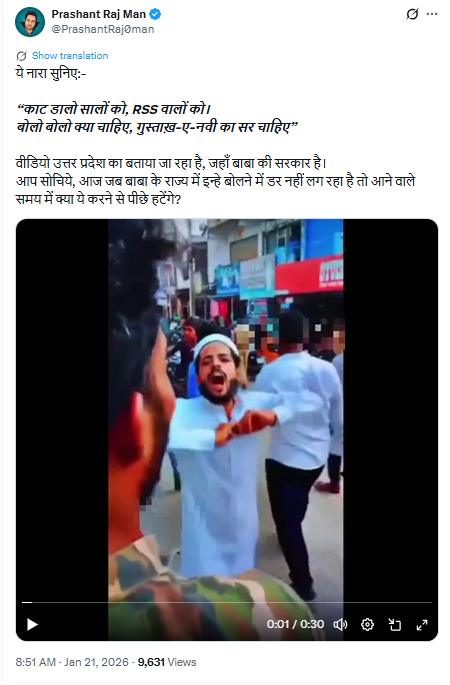
On January 21, 2026, a user on social media platform X (formerly Twitter) shared the video claiming it showed people in Uttar Pradesh chanting slogans such as, “Kaat daalo saalon ko, RSS walon ko” and “Gustakh-e-Nabi ka sar chahiye.” The post suggested that such slogans were being raised openly in Uttar Pradesh despite strict law enforcement. Links to the post and its archive are provided below.
Fact Check:
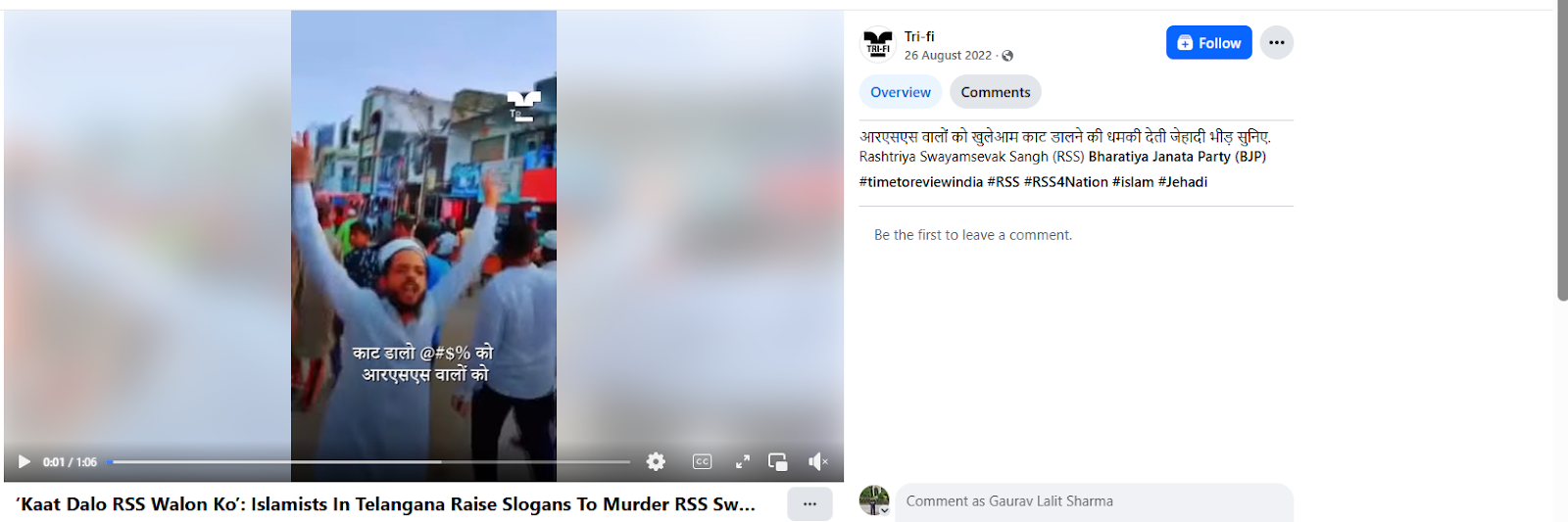
To verify the claim, CyberPeace research conducted a reverse image search using keyframes from the viral video. The same footage was found on a Facebook account where it had been uploaded on August 26, 2022, indicating that the video is not recent.
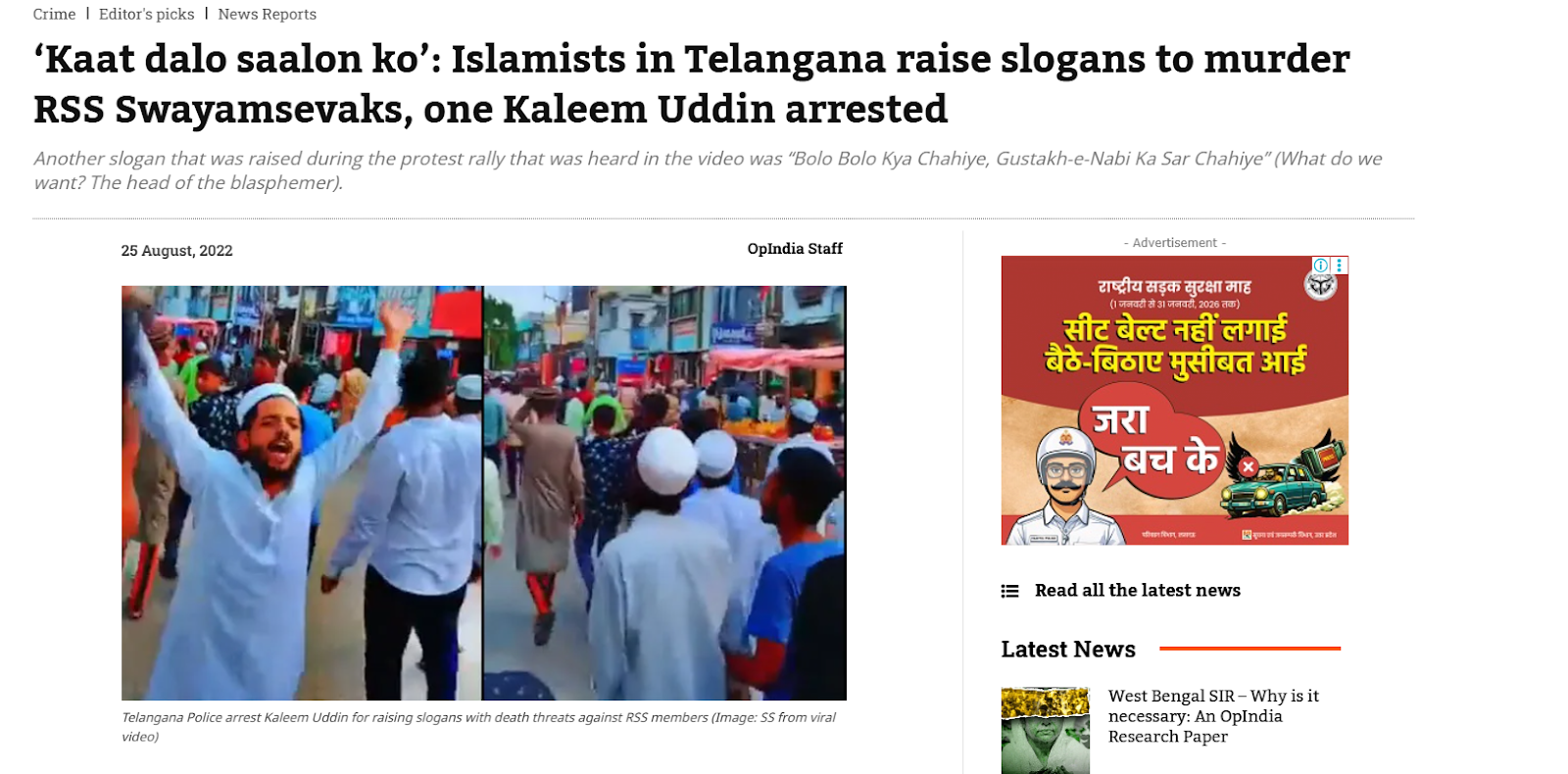
Further verification led the team to a report published by news portal OpIndia on August 25, 2022, which featured identical visuals from the viral clip. According to the report, the video showed a protest march organised against BJP MLA T. Raja Singh following his alleged controversial remarks about Prophet Muhammad. The report identified one of the individuals in the video as Kaleem Uddin, who was allegedly heard raising the slogan “Kaat daalo saalon ko,” to which the crowd responded “RSS walon ko.” The slogan was linked to incitement against RSS members.
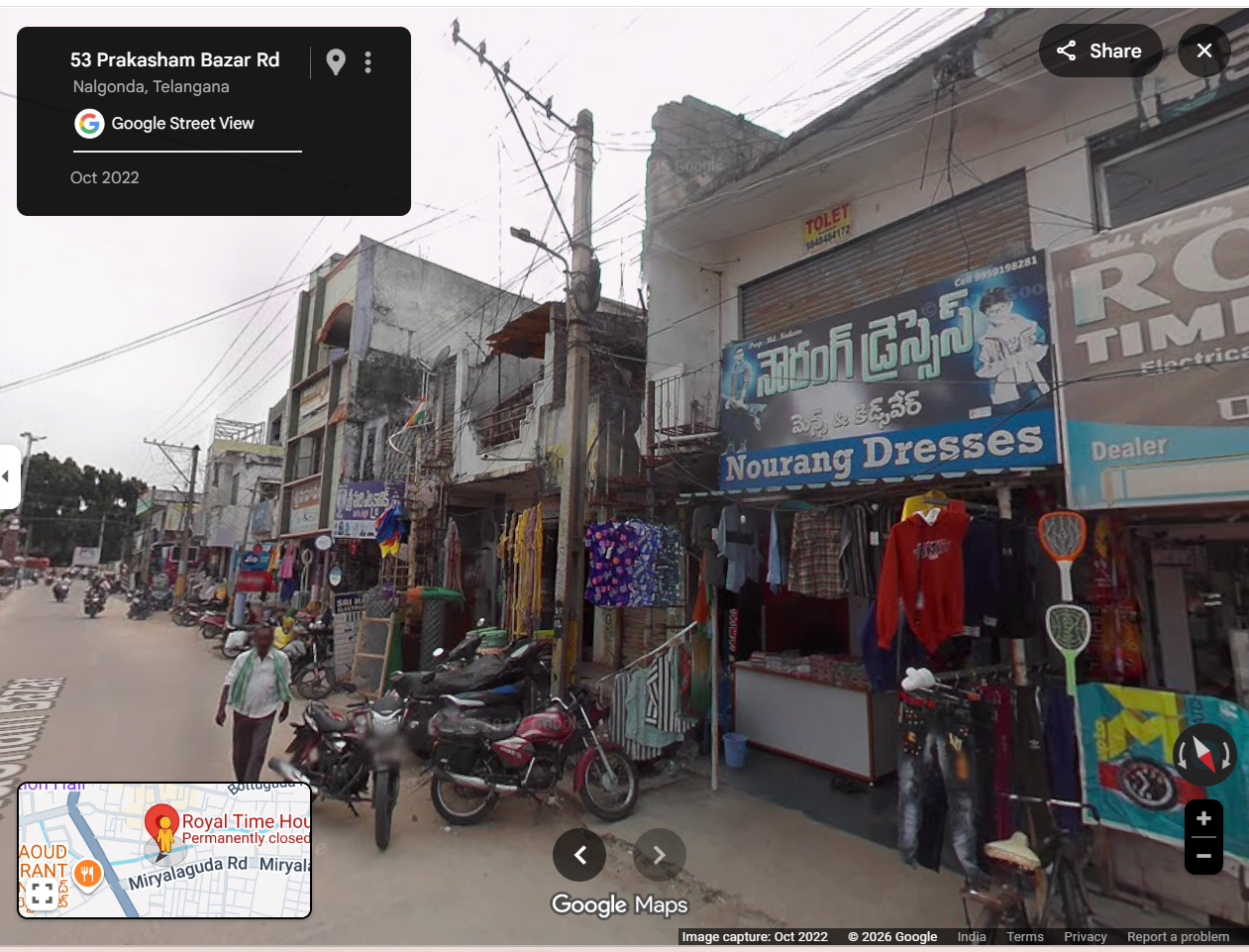
To confirm the location, the video was examined closely. A shop sign reading “Royal Time House” was visible in the footage. Using Google Street View, the same shop was located in Nalgonda, Telangana, conclusively establishing that the video was filmed there and not in Uttar Pradesh.
Conclusion
CyberPeace research confirmed that the viral video is from 2022 and was recorded in Telangana, not Uttar Pradesh. The clip is being falsely circulated with a misleading claim to give it a communal and political angle.
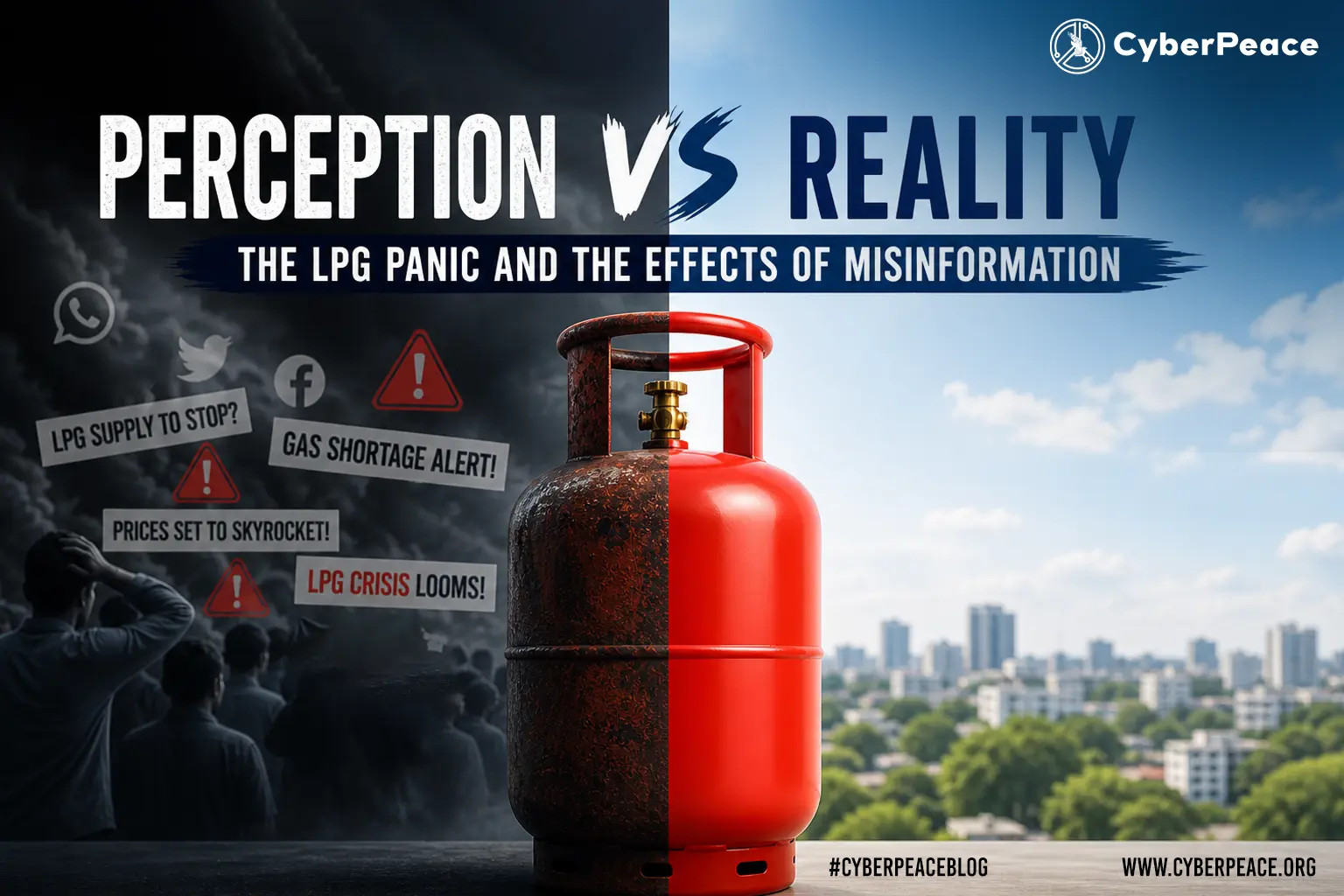
In recent months, conversations around the possible shortage of liquefied petroleum gas (LPG), a basic cooking fuel in Indian households, have quietly resurfaced across the country. From whispers in local markets to viral messages circulating on social media, concerns about LPG availability began to take hold in the public imagination. Though the immediacy of the situation has since faded, its echoes remain, reminding us how quickly uncertainty can spread. Like a ripple across still water, a single rumour can travel far, gathering force as it moves and blurring the line between perception and reality.
Against this backdrop, in April 2026, reports began circulating about a potential LPG shortage. The Union Government moved quickly to counter what it identified as misinformation, emphasising that supply remained stable and urging citizens not to engage in panic buying. A noticeable disconnect emerged between official communication and public perception. Across different regions, signs of anxiety-driven behaviour became evident. Instances of panic buying and hoarding increased, law enforcement agencies conducted raids to address such actions, and opportunistic thefts were reported, often exploiting widespread concern. These incidents highlight how misinformation, even when addressed promptly, can continue to shape public behaviour.
It is worth noting that rising prices also played a role in shaping public response, as increases in LPG rates contributed to a sense of urgency among consumers. Therefore, the surge in panic buying cannot be attributed solely to misinformation, but rather to a combination of economic pressures and perceived scarcity.
Misinformation Ecosystem - From Rumours to Behaviour
The spread of misinformation is occurring at an unprecedented pace and is, in large part, driven by the viral nature of social media. Digital platforms not only enable the rapid dissemination of information but also allow it to be amplified in ways that would not be possible through traditional media outlets. Often, the drive for virality outweighs any concern for accuracy, meaning that many individuals who spread misinformation are motivated more by the pursuit of attention than by any ideological agenda. Recent arrests of individuals involved in spreading misinformation about LPG and petrol shortages, much of which went viral, suggest that misinformation today is frequently driven by the desire for visibility rather than ideological motives. The information being circulated has largely followed a similar pattern, focusing on fears of an LPG shortage, expectations of price increases, and concerns about supply disruptions. Even though this information has not been verified, it has triggered behavioural responses among individuals. In several areas, including parts of Uttar Pradesh and Goa, the spread of misinformation through social media has led to panic buying, despite official assurances that there would be sufficient LPG supply to meet demand.
The impact of panic buying, and its associated misinformation, has already been seen in multiple sectors; these increased demands have placed pressure on the distribution network, leading to disruptions in access, as well as being out of stock of certain products. In many cases, commercial users of products (especially restaurants) have experienced significant disruption, threatening their continued operations, and industry representatives have alerted others about the inconsistent supply of commercial cylinders; likewise, consumers (households) are beginning to switch to alternative products (e.g., induction cooking) as a reflection of the anticipatory mindset to address the uncertainty created through perceptions of Product Scarcity.
State Response: Managing Misinformation or Behaviour?

The government has taken a variety of approaches, from advisories and enforcement actions to communicating with citizens indirectly. For example, State Governments have been directed to combat misinformation, monitor supply chains and take action against hoarding and black market activity. There has been a significant increase in the level of large- scale enforcement activity, with over 3,700 raids carried out to crack down on hoarding and black marketing related to LPG, in addition to confiscating cylinders and issuing penalties to those who break the law. In addition, the authorities have also focused on maintaining regular communication with the public in order to reassure them about the supply of LPG and fuel stability.
Geopolitical Context: Why Rumours Are Believable
Understanding today’s panic requires an understanding of the global environment: i.e., due to the ongoing conflict in West Asia, the energy markets are unstable, and energy supply is uncertain not only in West Asia but across a large part of the world. Even if domestic supply remains stable, public perception is affected by global instability. A clear example of this can be seen in neighbouring countries to India; Pakistan has seen significant increases in the cost of fuel, implemented measures such as reducing the number of days individuals work each week, and has created public support mechanisms; Bangladesh has imposed restrictions on the use of energy, has shortened the number of hours individuals can operate businesses each day, and has restricted the total amount of energy used; Sri Lanka has begun to ration fuel, and to increase the price of petrol; and Nepal has reduced the numbers of days individuals may work each week, and has adjusted supply.
All of these examples are not isolated instances, but are markers of a common regional environment. As we live in a global community that is connected in many ways, these developments will quickly affect public expectations everywhere. Therefore, for consumers in India, seeing evidence of rationing of fuel and shortages of fuel in neighbouring countries increases their belief that these types of problems could occur in their country.
Critical Perspective: Between Panic and Precaution
The LPG incident has brought about questions surrounding the nature of misinformation in terms of its definition & regulation. One of the main concerns is whether or not "misinformation" is being cast too widely. To be sure, false claims need to be addressed; however, not everything that is responded to publicly is based on untrue facts, as many times public responses are based on perceived risk via global and/or local incidents that occur. Perhaps the greatest challenge is the difficulty in differentiating precaution and panic. People’s memories of the COVID-19 pandemic are fresh in their minds and will serve to influence their behaviours moving onward, in that many people are stockpiling or preparing for uncertainty not out of irrational fear, but as an anticipatory response to their prior experiences.
Conclusion
The Indian LPG "crisis" is not so much a problem with actual supply chain breakdown as it is a result of how information and behaviour are connected through perception. This cohabitating environment of panic buying, law enforcement, and government assurance demonstrates an evident disconnect and gap between how governments present a narrative and how the public responds. While there is some role of misinformation within this discourse, the misinformation itself extends beyond any or all false claims about LPG supply and operates within a greater ecosystem of global uncertainty and personal experience. As such, and because of this, perception becomes an incredibly strong force in itself that produces true economic consequences.
Reference
- https://www.pib.gov.in/PressReleasePage.aspx?PRID=2248640&utm_source®=3&lang=2
- https://www.pmindia.gov.in/en/news_updates/pm-addresses-the-lok-sabha-on-the-ongoing-conflict-in-west-asia/
- https://www.ndtv.com/delhi-news/iran-war-middle-east-conflict-why-the-lpg-crisis-is-forcing-migrants-to-quietly-leave-delhi-11313629
- https://timesofindia.indiatimes.com/city/bareilly/thieves-steal-108-lpg-cylinders-from-godown-in-up/articleshow/130035518.cms
- https://indianexpress.com/article/india/arrested-rumours-lpg-petrol-shortage-police-chasing-views-10614193/
- https://www.hindustantimes.com/cities/lucknow-news/social-media-rumours-fuel-panic-buying-in-some-up-districts-situation-normal-in-lucknow-101774465353107.html
- https://timesofindia.indiatimes.com/city/goa/fear-of-shortage-price-rise-fuels-panic-buying-across-goa/articleshow/129810144.cms
- https://www.news18.com/cities/new-delhi-news/online-rumours-offline-rush-panic-buying-sweeps-petrol-pumps-across-cities-whats-the-truth-ws-ln-9995684.html
- https://m.economictimes.com/news/india/3700-raids-conducted-across-country-to-wipe-out-lpg-black-marketing-says-centre/articleshow/130025232.cms
- https://www.reuters.com/business/energy/induction-stoves-fly-off-shelves-india-gas-shortage-fears-spark-panic-buying-2026-03-12/
- https://www.ndtv.com/india-news/restaurant-body-warns-of-closures-over-commercial-lpg-supply-concerns-writes-to-minister-11194418
- https://www.freepressjournal.in/mumbai/fpj-dialogue-we-are-getting-only-1-cylinder-instead-of-10-says-ahar-president-vijay-shetty-on-mumbai-lpg-crisis
- https://www.hindustantimes.com/world-news/fuel-cuts-wfh-and-more-how-indias-neighbours-are-dealing-with-global-energy-crisis-triggered-by-us-iran-war-101775397199941.html
- https://www.abc.net.au/news/2026-03-30/four-step-fuel-supply-plan-national-cabinet-fuel-crisis/106512706
- https://tribune.net.ph/2026/04/07/philippines-scrambles-as-regional-oil-crisis-hits
